Low-level laser therapy including laser acupuncture (LLLT/LA) has been widely used for non-specific chronic low back pain (NCLBP). However, there is no critically appraised evidence of its potential benefits. This study aimed to evaluate the effectiveness of LLLT/LA for NCLBP. There were 12 databases (MEDLINE, CENTRAL, EMBASE, KoreaMed, KMBASE, KISS, NDSL, KISTI, OASIS, CNKI, CiNII, J-stage) searched for randomized controlled trials using LLLT/LA for NCLBP up until June 2019. The primary outcome was pain intensity and functional status/disability due to NCLBP. A random-effects meta-analysis was conducted on 20 studies involving 1,323 participants. LLLT/LA showed a significant positive effect on pain relief scores compared with sham treatments (SMD -0.51, 95% CI: -0.88 to -0.13; χ
2= 31.12, I
2= 74%). Alone, the therapy showed a significant positive effect on function/disability scores (30 participants, MD -11.90, 95% CI: -17.37 to -6.43).
As an add-on treatment, it showed a significant positive effect on pain relief (80 participants, MD -5.10, 95%
CI: -9.31 to -0.88; χ
2= 28.99, I
2= 97%) and improved function/disability scores (120 participants, MD 5.44, 95% CI: 2.19 to 8.68; χ
2= 4.07, I
2= 75%). Among 20 studies, 9 studies reported no adverse events and 1 study reported mild adverse events. LLLT/LA may be an alternative or add-on treatment for NCLBP.
©2021 Korean Acupuncture & Moxibustion Medicine Society. This is an open access article under the CC BY- NC-ND license (http://creativecommons.org/licenses/by-nc-nd/4.0/).
Article history:
Submitted: September 16, 2020 Revised: November 06, 2020 Accepted: December 11, 2020 Keywords:
acupuncture, laser, low-level laser therapy, low back pain
https://doi.org/10.13045/jar.2020.00283 pISSN 2586-288X eISSN 2586-2898
Review Article
Low-Level Laser Therapy including Laser Acupuncture for Non-Specific Chronic Low Back Pain: Systematic Review and Meta-Analysis
Hyewon Yeum, Yejin Hong, Dongwoo Nam*
Department of Acupuncture and Moxibustion Medicine, Kyung Hee University Korean Medicine Hospital, Seoul, Korea
ABSTRACT
Journal of Acupuncture Research
Journal homepage: http://www.e-jar.org
Introduction
Low back pain (LBP) is a common musculoskeletal disorder affecting 80% of people at some point in their lives. It is estimated that 10% to 20% of affected adults develop symptoms of chronic LBP (CLBP) lasting over 12 weeks [1]. A survey on the use of Korean Medical Institutions and consumption of Korean Herbal Medicine, conducted by the Korean Ministry of Health and Welfare in 2011 and 2017, reported that patients with LBP accessed Korean medical institutions the most, and accounted for 12.89% in 2011 and 52.7% in 2017 [2,3]. Non-specific chronic low back pain (NCLBP) is defined as pain lasting over 12 weeks with no clear underlying etiology. Aging is associated with lower recovery rates and higher levels or chronicity and severity [4]. According to the bio-psychosocial model, chronic pain is associated with biological, psychological, and social factors such as distress (depression, anxiety, and fear), self-efficacy, smoking, drinking, and working life [5]. Therefore, while NCLBP is not life-threatening, it reduces a
patient’s quality of life.
Low-level laser therapy including laser acupuncture (LLLT/
LA) induces a photochemical reaction in cells (biostimulation or photobiomodulation) to aid tissue repair and relieve pain [6]. In 2017, the American College of Physicians developed guidelines to provide clinical recommendations for non-invasive treatment of LBP, and strongly recommended that non-pharmacological treatments including LLLT should be considered for patients with CLBP [7-9].
To date, there have been no studies about LLLT/LA for NCLBP that incorporated data collected in Korea, China, and Japan; this study addressed this and critically evaluated the efficacy of LLLT/
LA for NCLBP.
Materials and Methods
This systematic review was reported according to the Preferred Reporting Items for Systematic Reviews and Meta-analyses
* Corresponding author. Nam Dongwoo
Department of Acupuncture and Moxibustion, College of Korean Medicine, Kyung Hee University, 26 Kyungheedae-ro, Dongdaemun-gu, Seoul, 02447, Korea E-mail: [email protected]
ORCID: Yeum Hyewon https://orcid.org/0000-0002-2859-5195, Hong Ye Jin https://orcid.org/0000-0002-8817-136X, Nam Dong Woo https://orcid.org/0000-0002-7957-3121
©2021 Korean Acupuncture & Moxibustion Medicine Society. This is an open access article under the CC BY-NC-ND license (http://creativecommons.org/licenses/by-nc-
nd/4.0/).
(PRISMA) [10]. The protocol for this systematic review was prospectively registered on PORSPERO CRD42019140419.
Database search and study selection
There were 12 bibliographic databases searched up until June 2019: MEDLINE (PubMed), EMBASE (Ovid), the Cochrane Central Register of Controlled Trials (CENTRAL), Korean database (KoreaMed, KMBASE, KISS, NDSL, KISTI, OASIS), the China National Knowledge Infrastructure Database (CNKI), and Japanese databases (CiNII, J-STAGE).
The search strategy followed the study protocol. The search terms comprised of 2 parts, LLLT/LA (e.g., laser, laser acupuncture, laser puncture, laser needle, low-dose laser acupuncture, LLLT, low-level laser, laser therapy, laser treatment) and CLBP (e.g., lower back pain, sciatica, radiculopathy, lumbago, backache, back pain, lumbo-sacral, NCLBP). To increase the sensitivity of the search for NCLBP, concepts such as radiculopathy and sciatica were included. In some cases, the LLLT/LA parameters were classified, however, in the case of the lower back, it was difficult to avoid using acupuncture points during treatment due to their high density of use. Moreover, laser treatments have an “Alpha- phenomenon” effect that shows an indirect biostimulation effect on the surrounding tissues. In this review, all randomized controlled trials (RCTs) where LLLT/LA was performed were analyzed.
Observational, cohort, case reports, case series, non-RCT, animal and experimental studies were excluded from this review.
Two reviewers independently screened the studies and after analysis made the final decision of which studies to include.
Data extraction and assessment of risk bias
Study data including the intervention description, baseline, demographics, and values for outcomes was extracted by 2 reviewers and checked for accuracy by a third reviewer. The primary outcomes were: (1) Pain intensity measured on a visual analog scale (VAS) or the numeric rating scale (NRS) and (2) Functional status/disability measured by the Oswestry disability index (ODI) or Japanese orthopaedic association (JOA) scale. The secondary outcomes included range of motion (ROM), results from the Modified Schober test, global assessment of quality of life, and negative side effects.
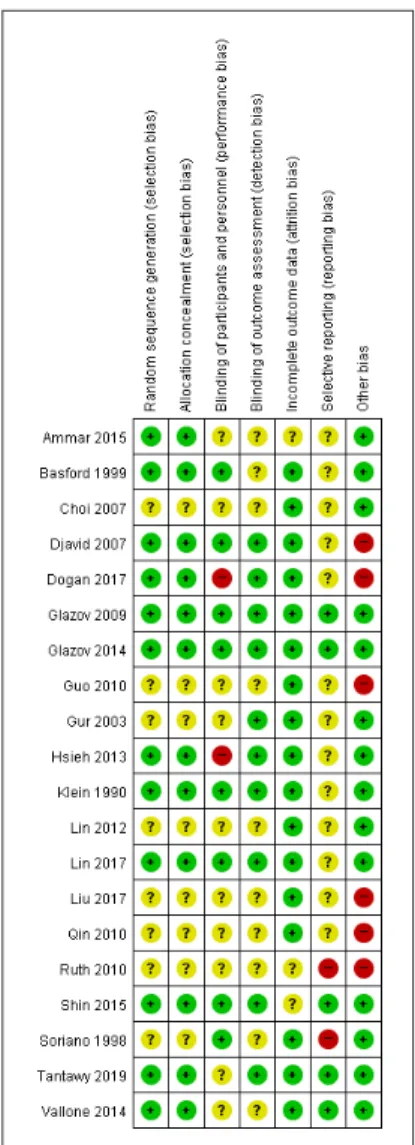
The study quality was assessed according to the criteria described in the Cochrane Handbook for Systematic Review of Intervention, and RCTs were assessed using the Cochrane Bias Risk tool.
Statistical analysis
The Review Manager (e.g., Cochrane Collaboration Software, RevMan version 5.3.5) was used for data management and statistical analysis. For continuous data, treatment effects were expressed as a mean difference (MD) or standardized mean difference (SMD) with a 95% confidence interval (CI) level. Meta- analysis was used to combine the results of trials using a random- effects model. Data was presented as a forest plot. Heterogeneity was evaluated using heterogeneity test (I
2statistic).
Results
Description of the included studies
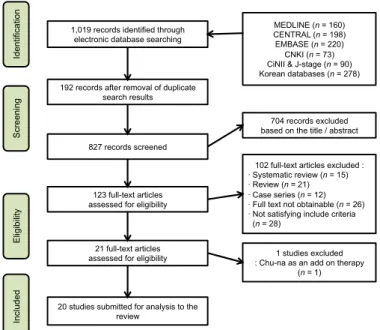
A total of 1,019 studies were retrieved from 12 online databases.
After screening the articles and removing duplicates, 20 studies (RCTs) were selected according to the inclusion criteria [8,9,11-28],
and were conducted in 11 countries with a combined total of 1,323 patients (Fig. 1).
Intervention analysis
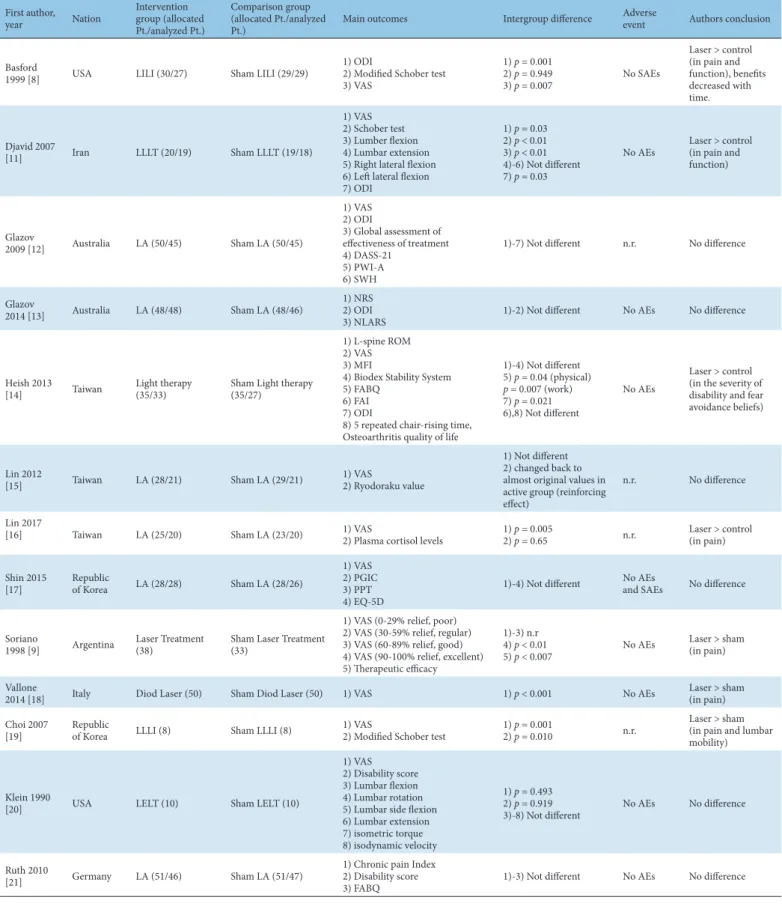
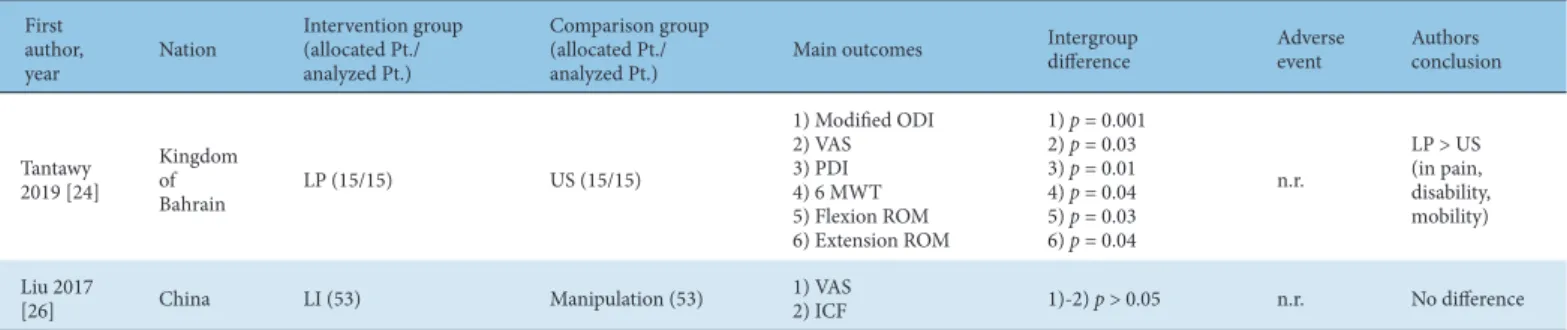
The 20 studies consisted of 13 RCTs comparing LLLT/LA with sham laser therapy [8,9,11-21], 2 trials comparing LLLT/LA with no treatment [24,26], 4 trials comparing LLLT/LA used as add- on therapy with a control group [24,25,27,28], and 1 study which compared the effects of 2 laser treatment methods on different conditions [23].
Of these 20 studies, 2 trials were 3-arm RCTs, 1 compared low-dose laser treatment with high-dose laser treatment, and sham laser treatment [13], 1 compared LLLT and exercise in combination with ultrasound and exercise in combination, and to exercise alone [24]. Three of the studies could not be included in the analysis because the laser treatment methods varied between individual groups [13,22,23]. The characteristics of the included studies are listed (Tables 1-4).
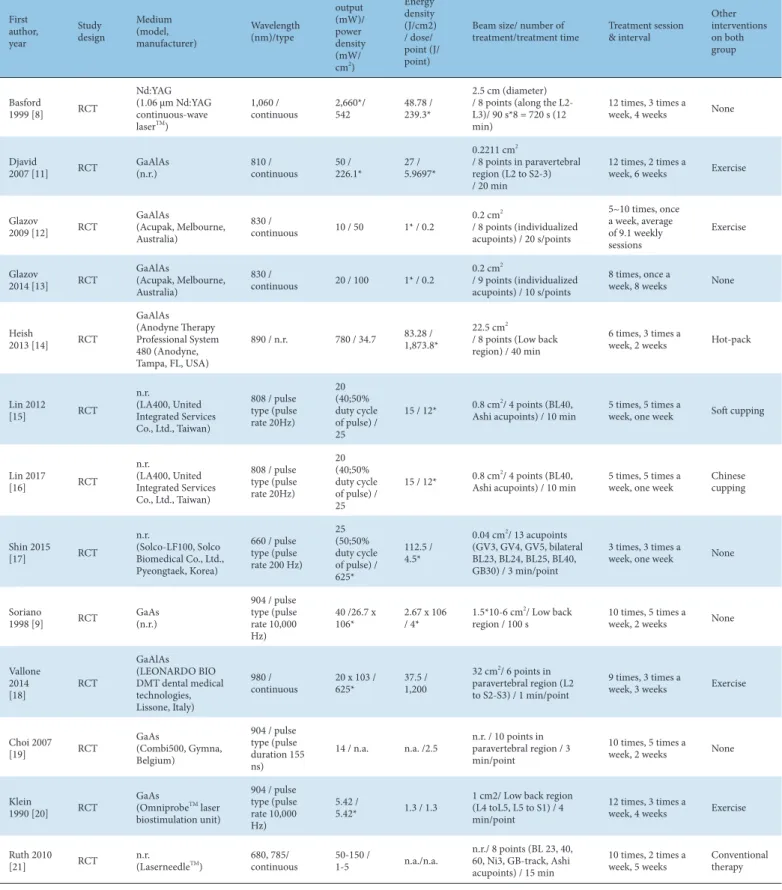
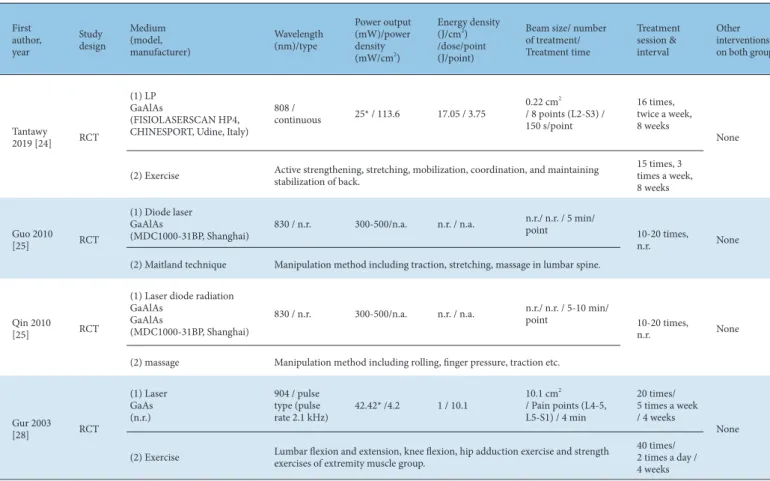
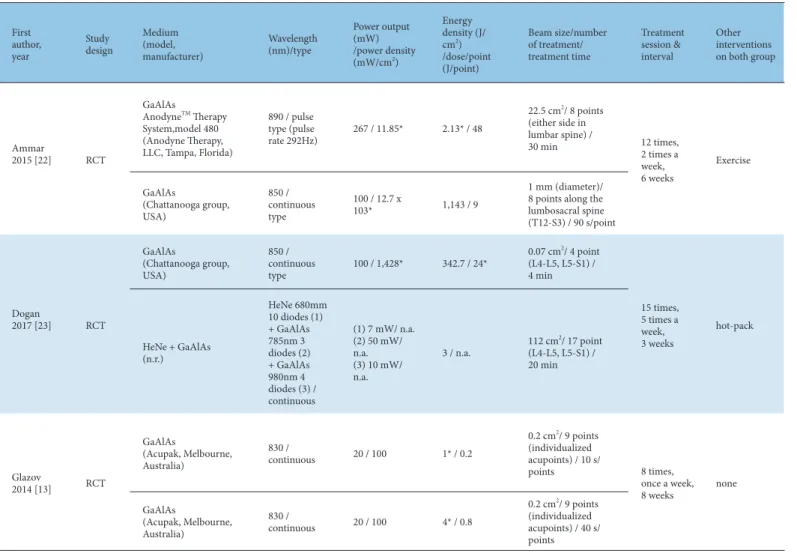
Furthermore, LLLT/LA is a treatment method that uses a laser device, therefore, the following laser parameters and treatment characteristics were recorded: wavelength, power, energy density, beam size, number of treatments, treatment time, treatment sessions and treatment intervals. Where particular laser parameters were not reported, values were calculated from formulas using the reported parameters. The characteristics of the laser parameters are listed (Tables 5-8).
Primary outcomes
Comparing LLLT/LA with sham-LLLT/LA therapy
With regards to pain, 4 of the 13 studies were excluded. Three studies evaluated pain relief by the amount of change in the
Fig. 1. A PRISMA flow diagram of the literature screening and selection processes.
MEDLINE, PubMed; CENTRAL, the Cochrane Central Register of Controlled Trials;
EMBASE, Ovid; CNKI, the China National Knowledge Infrastructure Database;
CiNII, Scholarly and Academic Information Navigator, pronounced like "sigh-knee";
J-STAGE, Science and Technology Agency Electronic journal platform; PRISMA, Preferred Reporting Items for Systematic Reviews and Meta-analyses.
Fig. 1. A PRISMA flow diagram of the literature screening and selection processes.
MEDLINE, PubMed. CENTRAL, the Cochrane Central Register of Controlled Trials. EMBASE, Ovid. CNKI, the China National Knowledge Infrastructure Database. CiNII, Scholarl y and Academic Information Navigator, pronounced like "sigh-knee". J-STAGE, Science and Technology Agency Electronic journal platform.
1,019 records identified through electroni c database searching
192 records after removal of duplicate se arch results
704 records excluded based on the title / abstract
123 full-text articles assessed for eligibility
21 full-text articles assessed for eligibility
20 studies submitted for analysis to the re view
IdentificationScreeningEligibilityIncluded
827 records screened
102 full-text articles excluded :
· Systematic review (n = 15)
· Review (n = 21)
· Case series (n = 12)
· Full text not obtainable (n = 26)
· Not satisfying include criteria (n
= 28)
1 studies excluded : Chu-na as an add on therapy (n
= 1) MEDLINE (n = 160) CENTRAL (n = 198) EMBASE (n = 220) CNKI (n = 73) CiNII & J-stage (n = 90) Korean databases (n = 278)
Fig. 1. A PRISMA flow diagram of the literature screening and selection processes.
MEDLINE, PubMed. CENTRAL, the Cochrane Central Register of Controlled Trials. EMBASE, Ovid. CNKI, the China National Knowledge Infrastructure Database. CiNII, Scholarl y and Academic Information Navigator, pronounced like "sigh-knee". J-STAGE, Science and Technology Agency Electronic journal platform.
1,019 records identified through electronic database searching
192 records after removal of duplicate search results
704 records excluded based on the title / abstract
123 full-text articles assessed for eligibility
21 full-text articles assessed for eligibility
20 studies submitted for analysis to the review
IdentificationScreeningEligibilityIncluded
827 records screened
102 full-text articles excluded :
· Systematic review (n = 15)
· Review (n = 21)
· Case series (n = 12)
· Full text not obtainable (n = 26)
· Not satisfying include criteria (n = 28)
1 studies excluded : Chu-na as an add on therapy
(n = 1) MEDLINE (n = 160) CENTRAL (n = 198) EMBASE (n = 220) CNKI (n = 73) CiNII & J-stage (n = 90) Korean databases (n = 278)
First author,
year Nation Intervention
group (allocated Pt./analyzed Pt.)
Comparison group (allocated Pt./analyzed
Pt.) Main outcomes Intergroup difference Adverse
event Authors conclusion
Basford
1999 [8] USA LILI (30/27) Sham LILI (29/29) 1) ODI
2) Modified Schober test 3) VAS
1) p = 0.001 2) p = 0.949
3) p = 0.007 No SAEs
Laser > control (in pain and function), benefits decreased with time.
Djavid 2007
[11] Iran LLLT (20/19) Sham LLLT (19/18)
1) VAS 2) Schober test 3) Lumber flexion 4) Lumbar extension 5) Right lateral flexion 6) Left lateral flexion 7) ODI
1) p = 0.03 2) p < 0.01 3) p < 0.01 4)-6) Not different 7) p = 0.03
No AEs Laser > control (in pain and function)
Glazov
2009 [12] Australia LA (50/45) Sham LA (50/45)
1) VAS 2) ODI
3) Global assessment of effectiveness of treatment 4) DASS-21
5) PWI-A 6) SWH
1)-7) Not different n.r. No difference
Glazov
2014 [13] Australia LA (48/48) Sham LA (48/46) 1) NRS
2) ODI
3) NLARS 1)-2) Not different No AEs No difference
Heish 2013
[14] Taiwan Light therapy
(35/33) Sham Light therapy (35/27)
1) L-spine ROM 2) VAS 3) MFI
4) Biodex Stability System 5) FABQ
6) FAI 7) ODI
8) 5 repeated chair-rising time, Osteoarthritis quality of life
1)-4) Not different 5) p = 0.04 (physical) p = 0.007 (work) 7) p = 0.021 6),8) Not different
No AEs
Laser > control (in the severity of disability and fear avoidance beliefs)
Lin 2012
[15] Taiwan LA (28/21) Sham LA (29/21) 1) VAS
2) Ryodoraku value
1) Not different 2) changed back to almost original values in active group (reinforcing effect)
n.r. No difference
Lin 2017
[16] Taiwan LA (25/20) Sham LA (23/20) 1) VAS
2) Plasma cortisol levels 1) p = 0.005
2) p = 0.65 n.r. Laser > control
(in pain) Shin 2015
[17] Republic
of Korea LA (28/28) Sham LA (28/26)
1) VAS 2) PGIC 3) PPT 4) EQ-5D
1)-4) Not different No AEs
and SAEs No difference
Soriano
1998 [9] Argentina Laser Treatment
(38) Sham Laser Treatment
(33)
1) VAS (0-29% relief, poor) 2) VAS (30-59% relief, regular) 3) VAS (60-89% relief, good) 4) VAS (90-100% relief, excellent) 5) Therapeutic efficacy
1)-3) n.r 4) p < 0.01
5) p < 0.007 No AEs Laser > sham (in pain) Vallone
2014 [18] Italy Diod Laser (50) Sham Diod Laser (50) 1) VAS 1) p < 0.001 No AEs Laser > sham
(in pain) Choi 2007
[19] Republic
of Korea LLLI (8) Sham LLLI (8) 1) VAS
2) Modified Schober test 1) p = 0.001
2) p = 0.010 n.r. Laser > sham
(in pain and lumbar mobility)
Klein 1990
[20] USA LELT (10) Sham LELT (10)
1) VAS 2) Disability score 3) Lumbar flexion 4) Lumbar rotation 5) Lumbar side flexion 6) Lumbar extension 7) isometric torque 8) isodynamic velocity
1) p = 0.493 2) p = 0.919
3)-8) Not different No AEs No difference
Ruth 2010
[21] Germany LA (51/46) Sham LA (51/47) 1) Chronic pain Index
2) Disability score
3) FABQ 1)-3) Not different No AEs No difference
LILI, low-intensity laser irradiation; LLLT, low-level laser therapy; LA, laser acupuncture; LLLI, low-level laser irradiation; LELT, low-energy laser treatment; ODI, Oswestry disability index; VAS, visual analog scale; DASS, depression anxiety stress scale; PWI, personal wellbeing index; SWH, satisfaction with health; NRS, numerical rating scale; NLARS, numerical rating scale of limitation of activities; MFI, multi-fatigue inventory; FABQ, fear-avoidance behavior questionnaire; FAI, Frenchay activities index; PGIC, patient global impression of change; PPT, pressure pain threshold; EQ-5D, Euro-Wuality-of-Life Five Dimensions; n.r., not reported; AE, adverse event; SAE , serious adverse event; allocated Pt., number of allocated patients; analyzed Pt., number of analyzed patients.
Table 1. Summary of the Included Studies Comparing LLLT / LA and Sham-LLLT/LA Therapy.
First author,
year Nation Intervention group
(allocated Pt./
analyzed Pt.)
Comparison group (allocated Pt./
analyzed Pt.) Main outcomes Intergroup
difference Adverse
event Authors
conclusion
Tantawy 2019 [24]
Kingdom
of Bahrain LP (15/15) US (15/15)
1) Modified ODI 2) VAS 3) PDI 4) 6 MWT 5) Flexion ROM 6) Extension ROM
1) p = 0.001 2) p = 0.03 3) p = 0.01 4) p = 0.04 5) p = 0.03 6) p = 0.04
n.r.
LP > US (in pain, disability, mobility) Liu 2017
[26] China LI (53) Manipulation (53) 1) VAS
2) ICF 1)-2) p > 0.05 n.r. No difference
LP, laser photomodulaton; US, ultrasound therapy; LI, linear-polarized near- infared light; ODI, Oswestry disability index; VAS, visual analog scale; PDI, pain disability index; 6 MWT, 6-minute walk test; ROM, range of motion; ICF, international classification of functioning, disability and health; Preferred Reporting Items for Systematic Reviews and Meta-analyses.
Table 2. Summary of the Included Studies Comparing LLLT/ LA as Alone with Other Therapies.
First author,
year Nation Intervention group
(allocated Pt./analyzed Pt.)
Comparison group (allocated Pt./
analyzed Pt.) Main outcomes Intergroup
difference Adverse
event Authors
conclusion
Tantawy 2019 [24]
Kingdom
of Bahrain (1) LP+ (2) Ex (15/15) (2) Ex (15/15)
1) Modified ODI 2) VAS 3) PDI 4) 6 MWT 5) Flexion ROM 6) Extension ROM
1)-6) p < 0.05 n.r.
LP+Ex. > Ex.
(in pain, disability, mobility)
Guo 2010
[25] China (1) Diode Laser+ (2)
Maitland technique (30)
(2) Maitland
technique (30) 1) JOA 1) p < 0.01 n.r. Laser (1) + (2)
> (2) (in disability) Qin 2010
[27] China (1) Laser diode
radiation + (2)
Massage (30) (2) Massage (30) 1) JOA 1) p < 0.01 n.r. Laser (1) + (2)
> (2) (in disability)
Gur 2003
[28] Turky (1) LPLT + (2) Ex. (25) (2) Ex. (25)
1) VAS
2) Roland disability questionnaire 3) Modifide ODI 4) Schober test
5) Antero-posterior flexion 6) lateral flexion (right) 7) lateral extension (left)
1)-5) p > 0.05 n.r. No difference
LP, laser photomodulaton; Ex., exercise; LPLT, low power laser therapy; ODI, Oswestry disability index; VAS, visual analog scale; PDI, pain disability index; 6 MWT, 6-minute walk test;
ROM, range of motion; JOA, Japanese orthopaedic association; n.r., not reported; allocated Pt., number of allocated patients; analyzed Pt., number of analyzed patients.
Table 3. Summary of the Included Studies Comparing LLLT/ LA as Add-on Treatment.
First author,
year Nation Intervention group
(allocated Pt./
analyzed Pt.)
Comparison group (allocated Pt./
analyzed Pt.) Main outcomes Intergroup
difference Adverse
event Authors
conclusion
Ammar
2015 [22] Egypt MIPE (39/35) LLLT (37/35)
1) FRI 2) VAS 3) Flexion ROM 4) Extension ROM
1) p = 0.21 2) p = 0.41 3) p = 0.81 4) p = 0.16
n.r. No difference
Dogan
2017 [23] Turky LLLT 1 (20) LLLT 2 (29)
1) VAS 2) Patient’s global assessment 3) Physician’s global assessment
4) Modified Schober test 5) Right lateral flexion 6) Left lateral flexion 7) Modifide ODI
1) p = 0.901 2) p = 0.569 3) p = 0.925 4) p = 0.061 5)-7) p < 0.01
No AEs No difference
Glazov
2014 [13] Australia LA1 (48/48) LA2 (48/47) 1) NRS
2) ODI 3) NLARS
1)-2) Not
different No AEs No difference
MIPE, monochromic infrared photo energy; LLLT, low-level laser therapy; LA, laser acupuncture; LLLI, low-level laser irradiation; LELT, low-energy laser treatment; FRI, functional rating index; VAS, visual analog scale; ROM, range of motion; ODI, Oswestry disability index; NRS, numerical rating scale; NLARS, numerical rating scale of limitation of activities; n.r., not reported; AE, adverse event; allocated Pt., number of allocated patients; analyzed Pt., number of analyzed patients.
Table 4. Summary of the Included Studies Comparing Two Methods of LLLT/ LA.
First author, year
Study design
Medium (model, manufacturer)
Wavelength (nm)/type
Power output (mW)/
power density (mW/ cm
2)
Energy density (J/cm2) / dose/
point (J/
point)
Beam size/ number of
treatment/treatment time Treatment session
& interval
Other interventions on both group
Basford
1999 [8] RCT
Nd:YAG (1.06 μm Nd:YAG continuous-wave laser
TM)
1,060 /
continuous 2,660*/
542 48.78 /
239.3*
2.5 cm (diameter) / 8 points (along the L2- L3)/ 90 s*8 = 720 s (12 min)
12 times, 3 times a
week, 4 weeks None
Djavid
2007 [11] RCT GaAlAs
(n.r.) 810 /
continuous 50 /
226.1* 27 /
5.9697*
0.2211 cm
2/ 8 points in paravertebral region (L2 to S2-3) / 20 min
12 times, 2 times a
week, 6 weeks Exercise
Glazov
2009 [12] RCT GaAlAs
(Acupak, Melbourne, Australia)
830 /
continuous 10 / 50 1* / 0.2 0.2 cm
2/ 8 points (individualized acupoints) / 20 s/points
5~10 times, once a week, average of 9.1 weekly sessions
Exercise
Glazov
2014 [13] RCT GaAlAs
(Acupak, Melbourne, Australia)
830 /
continuous 20 / 100 1* / 0.2 0.2 cm
2/ 9 points (individualized acupoints) / 10 s/points
8 times, once a
week, 8 weeks None
Heish
2013 [14] RCT
GaAlAs (Anodyne Therapy Professional System 480 (Anodyne, Tampa, FL, USA)
890 / n.r. 780 / 34.7 83.28 / 1,873.8*
22.5 cm
2/ 8 points (Low back region) / 40 min
6 times, 3 times a
week, 2 weeks Hot-pack
Lin 2012
[15] RCT
n.r. (LA400, United Integrated Services Co., Ltd., Taiwan)
808 / pulse type (pulse rate 20Hz)
20 (40;50%
duty cycle of pulse) / 25
15 / 12* 0.8 cm
2/ 4 points (BL40,
Ashi acupoints) / 10 min 5 times, 5 times a
week, one week Soft cupping
Lin 2017
[16] RCT
n.r. (LA400, United Integrated Services Co., Ltd., Taiwan)
808 / pulse type (pulse rate 20Hz)
20 (40;50%
duty cycle of pulse) / 25
15 / 12* 0.8 cm
2/ 4 points (BL40,
Ashi acupoints) / 10 min 5 times, 5 times a
week, one week Chinese cupping
Shin 2015
[17] RCT
n.r. (Solco-LF100, Solco Biomedical Co., Ltd., Pyeongtaek, Korea)
660 / pulse type (pulse rate 200 Hz)
25 (50;50%
duty cycle of pulse) / 625*
112.5 / 4.5*
0.04 cm
2/ 13 acupoints (GV3, GV4, GV5, bilateral BL23, BL24, BL25, BL40, GB30) / 3 min/point
3 times, 3 times a
week, one week None
Soriano
1998 [9] RCT GaAs
(n.r.)
904 / pulse type (pulse rate 10,000 Hz)
40 /26.7 x
106* 2.67 x 106
/ 4* 1.5*10-6 cm
2/ Low back
region / 100 s 10 times, 5 times a
week, 2 weeks None
Vallone 2014
[18] RCT
GaAlAs (LEONARDO BIO DMT dental medical technologies, Lissone, Italy)
980 /
continuous 20 x 103 /
625* 37.5 /
1,200
32 cm
2/ 6 points in paravertebral region (L2 to S2-S3) / 1 min/point
9 times, 3 times a
week, 3 weeks Exercise
Choi 2007
[19] RCT GaAs
(Combi500, Gymna, Belgium)
904 / pulse type (pulse duration 155 ns)
14 / n.a. n.a. /2.5 n.r. / 10 points in paravertebral region / 3 min/point
10 times, 5 times a
week, 2 weeks None
Klein
1990 [20] RCT GaAs
(Omniprobe
TMlaser biostimulation unit)
904 / pulse type (pulse rate 10,000 Hz)
5.42 /
5.42* 1.3 / 1.3 1 cm2/ Low back region (L4 toL5, L5 to S1) / 4 min/point
12 times, 3 times a
week, 4 weeks Exercise
Ruth 2010
[21] RCT n.r.
(Laserneedle
TM) 680, 785/
continuous 50-150 /
1-5 n.a./n.a. n.r./ 8 points (BL 23, 40, 60, Ni3, GB-track, Ashi acupoints) / 15 min
10 times, 2 times a
week, 5 weeks Conventional therapy
*Calculated parameters.
RCT, randomized controlled trial; Nd YAG, Neodymium yttrium-aluminum-garnet; GaAlAs, gallium-aluminum-arsenide; GaAs, gallium arsenide; n.r., not reported; n.a., not available.
Table 5. LLLT/LA Methods of Included Studies Comparing LLLT/ LA and Sham-LLLT/ LA Therapy.
First author, year
Study design
Medium (model, manufacturer)
Wavelength (nm)/type
Power output (mW)/power density (mW/cm
2)
Energy density (J/cm
2) /dose/point (J/
point)
Beam size/number of treatment/treatment time
Treatment session &
interval
Other interventions on both group
Tantawy 2019
[24] RCT
(1) LP GaAlAs
(FISIOLASERSCAN HP4,
CHINESPORT, Udine, Italy)
808 /
continuous 25* / 113.6 17.05 / 3.75 0.22 cm
2/ 8 points (L2-S3) / 150 s/point
16 times, twice a week,
8 weeks Exercise
(2) US
(Chattanooga, 278 w/Ultrasound, New York, USA)
Frequency: 1 MHz /Continuous wave /Intensity: 1 W/cm
25 cm
2/ Lumbar vertebral region / 10 min
Liu 2017
[26] RCT
(1) LI
n.r. (Super Lazer HA- 2200)
n.r. n.a. n.a. n.r / Acu points in
lumbar region / 7 min/points
20 times, every day,
20 days None
(2) Manipulation
1) Patient in prone position with abdominal pad with soft pillow and
Rolling method to make a large massage on the waist and hips. Gradually roll from around to the center of the pain point, repeated several times from slight to heavy.
2) Take a finger manipulation method to take BL23, BL25, BL52, and BL40, and push each point for about 1 minute.
3) Then, along the sides of the waist, along the BL-track is scrolled up and down.
Finally, take passive traction of the lower back muscles, fascia and ligaments.
*Calculated parameters.
RCT, randomized controlled trial; LP, laser photomodulaton; US, ultrasound therapy; LI, linear-polarized near-infared light; n.r., not reported; n.a., not available.
Table 6. LLLT/LA Methods of Included Studies Comparing LLLT/ LA as Alone with Other Therapies.
First author, year
Study design
Medium (model, manufacturer)
Wavelength (nm)/type
Power output (mW)/power density (mW/cm
2)
Energy density (J/cm
2) /dose/point (J/point)
Beam size/ number of treatment/
Treatment time
Treatment session &
interval
Other interventions on both group
Tantawy 2019 [24] RCT
(1) LP GaAlAs
(FISIOLASERSCAN HP4, CHINESPORT, Udine, Italy)
808 /
continuous 25* / 113.6 17.05 / 3.75 0.22 cm
2/ 8 points (L2-S3) / 150 s/point
16 times, twice a week, 8 weeks
None (2) Exercise Active strengthening, stretching, mobilization, coordination, and maintaining
stabilization of back.
15 times, 3 times a week, 8 weeks
Guo 2010
[25] RCT
(1) Diode laser GaAlAs
(MDC1000-31BP, Shanghai) 830 / n.r. 300-500/n.a. n.r. / n.a. n.r./ n.r. / 5 min/
point 10-20 times,
n.r. None
(2) Maitland technique Manipulation method including traction, stretching, massage in lumbar spine.
Qin 2010
[25] RCT
(1) Laser diode radiation GaAlAs
GaAlAs
(MDC1000-31BP, Shanghai)
830 / n.r. 300-500/n.a. n.r. / n.a. n.r./ n.r. / 5-10 min/
point 10-20 times,
n.r. None
(2) massage Manipulation method including rolling, finger pressure, traction etc.
Gur 2003
[28] RCT
(1) Laser GaAs (n.r.)
904 / pulse type (pulse
rate 2.1 kHz) 42.42* /4.2 1 / 10.1 10.1 cm
2/ Pain points (L4-5, L5-S1) / 4 min
20 times/
5 times a week / 4 weeks
None (2) Exercise Lumbar flexion and extension, knee flexion, hip adduction exercise and strength
exercises of extremity muscle group.
40 times/
2 times a day / 4 weeks
*Calculated parameters.
RCT, randomized controlled trial; LP, laser photomodulaton; GaAlAs, gallium-aluminum-arsenide; GaAs, gallium arsenide; n.r., not reported; n.a., not available.
Table 7. LLLT Including LA Methods of Included Studies Comparing LLLT/ LA as Add-on Treatment.
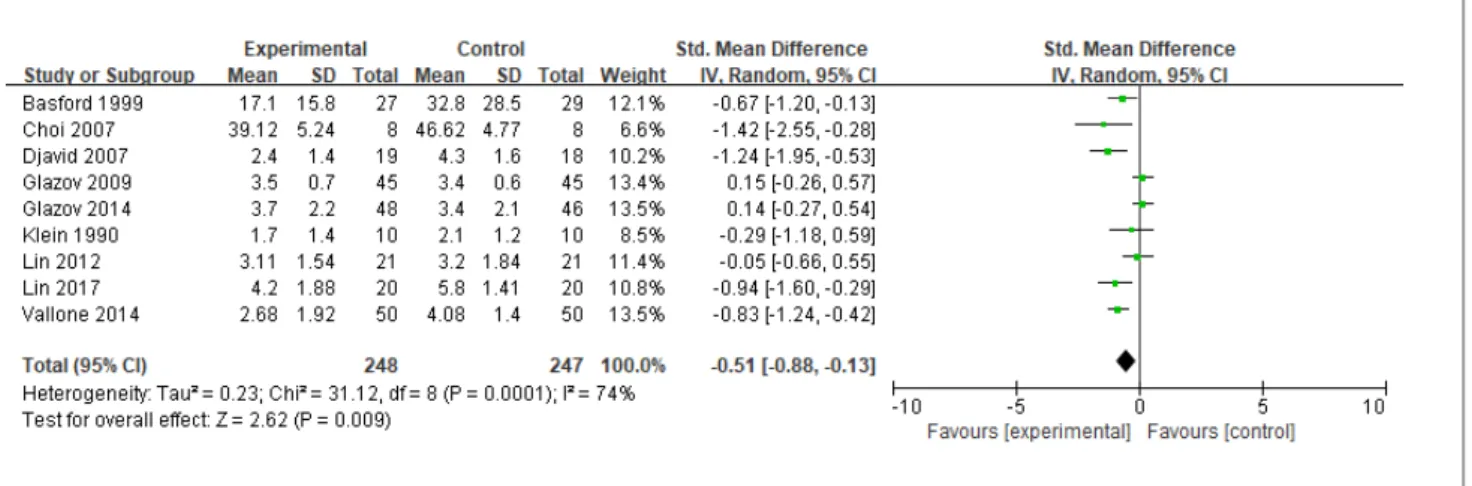
VAS score without reporting exact values [9,14,17], and 1 study described the results by the degree of change in the chronic pain index [21]. In 9 studies involving 495 participants, the VAS and NRS were used to evaluate the degree of pain relief, and LLLT/LA significantly reduced pain compared with sham treatment (SMD -0.51, 95% CI: -0.88 to -0.13; χ
2= 31.12, I
2= 74%; Fig. 2).
With regards to function/disability, 4 out of 13 studies evaluated outcomes using ODI values [8,11-13]. In 4 studies (277 participants), LLLTs with LA had no significant effect compared with sham treatment (MD -2.68, 95% CI: -9.15 to 3.79; χ
2= 38.40, I
2= 92%; Fig. 3).
Comparing LLLT/LA as alone with other therapies
With regards to pain, 2 studies applied LLLT/LA alone; 1 study compared LLLT/LA with ultrasound treatment [24], and 1 study compared LLLT/LA with chu-na therapy [26]. There was significant pain relief in the study where LLLT/LA alone was compared with ultrasound therapy alone (30 participants, MD -1.12, 95% CI: -2.09 to -0.15). In the study comparing LLLT/LA with chu-na therapy, there was no significant effect on pain relief (106 participants, MD 0.03, 95% CI: -0.31 to 0.37; Fig. 4).
With regards to function/disability, 1 study showed a significant positive effect on the ODI between LLLT/LA alone and ultrasound therapy alone [26] (30 participants, MD -11.90, 95% CI: -17.37 to -6.43; Fig. 5).
Comparing LLLT/LA as add-on treatment
With regards to pain, 2 studies where LLLT/LA was applied as add-on treatment showed a significant positive effect on pain relief [24,28] (80 participants, MD -5.10, 95% CI: -9.31 to -0.88; χ
2= 28.99, I
2= 97%; Fig. 6).
With regards to function/disability, 2 studies used the JOA scale to evaluate outcomes [25,27], and a further 2 used the ODI [24,28].
A higher JOA scale score and a lower ODI score post-treatment indicated increased effectiveness at improving dysfunction. As an add-on treatment, LLLT/LA significantly improved function and disability in the studies evaluated using the JOA scale (120 participants, MD 5.44, 95% CI: 2.19 to 8.68; χ
2= 4.07, I
2= 75%).
In the studies using the ODI, there was no significance noted (80 participants, SMD -0.81, 95% CI: -2.74 to 1.13; χ
2= 14.05, I
2= 93%;
Figs. 7 and 8).
First author, year
Study design
Medium (model, manufacturer)
Wavelength (nm)/type
Power output (mW) /power density (mW/cm
2)
Energy density (J/
cm
2) /dose/point (J/point)
Beam size/number of treatment/
treatment time
Treatment session &
interval
Other interventions on both group
Ammar
2015 [22] RCT
GaAlAs
Anodyne
TMTherapy System,model 480 (Anodyne Therapy, LLC, Tampa, Florida)
890 / pulse type (pulse
rate 292Hz) 267 / 11.85* 2.13* / 48
22.5 cm
2/ 8 points (either side in lumbar spine) /
30 min 12 times,
2 times a week, 6 weeks
Exercise GaAlAs
(Chattanooga group, USA)
850 / continuous type
100 / 12.7 x
103* 1,143 / 9
1 mm (diameter)/
8 points along the lumbosacral spine (T12-S3) / 90 s/point
Dogan
2017 [23] RCT
GaAlAs
(Chattanooga group, USA)
850 / continuous
type 100 / 1,428* 342.7 / 24* 0.07 cm
2/ 4 point
(L4-L5, L5-S1) / 4 min
15 times, 5 times a week, 3 weeks
hot-pack HeNe + GaAlAs
(n.r.)
HeNe 680mm 10 diodes (1) + GaAlAs 785nm 3 diodes (2) + GaAlAs 980nm 4 diodes (3) / continuous
(1) 7 mW/ n.a.
(2) 50 mW/
n.a. (3) 10 mW/
n.a.
3 / n.a. 112 cm
2/ 17 point (L4-L5, L5-S1) / 20 min
Glazov
2014 [13] RCT
GaAlAs
(Acupak, Melbourne, Australia)
830 /
continuous 20 / 100 1* / 0.2
0.2 cm
2/ 9 points (individualized acupoints) / 10 s/
points 8 times,
once a week,
8 weeks none
GaAlAs
(Acupak, Melbourne, Australia)
830 /
continuous 20 / 100 4* / 0.8
0.2 cm
2/ 9 points (individualized acupoints) / 40 s/
points
*Calculated parameters.
RCT, randomized controlled trial; GaAlAs, gallium-aluminum-arsenide; He-Ne, helyum-neon; n.r., not reported; n.a., not available.
Table 8. LLLT/LA Methods of Included Studies Comparing 2 Methods of LLLT/LA.
Fig. 2. The effectiveness of LLLT/LA versus sham LLLT including LA on pain relief
CI, confidence interval; Df, degree of freedom; IV, information value; LA, laser acupuncture; LLLT, low-level laser therapy.
Fig. 2. The effectiveness of LLLT/LA versus sham LLLT including LA on pain relief
CI, confidence interval; Df, degree of freedom; IV, information value; LA, laser acupuncture; LLLT, low-level laser therapy.
Fig. 3. The effectiveness of LLLT/LA versus sham LLLT/LA on function and disability measured by ODI.
CI, confidence interval; Df, degree of freedom; IV, information value; LA, laser acupuncture; LLLT, low-level laser therapy; ODI, Oswestry disability index.
Fig. 3. The effectiveness of LLLT/LA versus sham LLLT/LA on function and disability measured by ODI.
CI, confidence interval; Df, degree of freedom; IV, information value; LA, laser acupuncture; LLLT, low-level laser therapy; ODI, Oswestry d isability index.
Fig. 4. The effectiveness of LLLT/LA as alone on pain relief
CI, confidence interval; Df, degree of freedom; LA, laser acupuncture; LLLT, low-level laser therapy; IV, information value. Fig. 4. The effectiveness of LLLT/LA as alone on pain relief
CI, confidence interval; Df, degree of freedom; LA, laser acupuncture; LLLT, low-level laser therapy; IV, information value.
Fig. 5. The effectiveness of LLLT/ LA as alone on function and disability measured by ODI
CI, confidence interval; Df, degree of freedom; IV, information value; LA, laser acupuncture; LLLT, low-level laser therapy; ODI, Oswestry disability index. Fig. 5. The effectiveness of LLLT/ LA as alone on function and disability measured by ODI
CI, confidence interval; Df, degree of freedom; IV, information value; LA, laser acupuncture; LLLT, low-level laser therapy; ODI, Oswestry d isability index.
Fig. 6. The effectiveness of LLLT/LA as add-on treatment of pain relief
CI, confidence interval; Df, degree of freedom; LA, laser acupuncture; LLLT, low-level laser therapy; IV, information value.
Fig. 6. The effectiveness of LLLT/LA as add-on treatment of pain relief
CI, confidence interval; Df, degree of freedom; LA, laser acupuncture; LLLT, low-level laser therapy; IV, information value.
Fig. 7. The effectiveness of LLLT/LA as add-on treatment on function and disability measured by JOA
CI, confidence interval; Df, degree of freedom; IV, information value; JOA, Japanese orthopaedic association; LA, laser acupuncture; LLLT, low-level laser therapy.
Fig. 7. The effectiveness of LLLT/LA as add-on treatment on function and disability measured by JO
CI, confidence interval; Df, degree of freedom; IV, information value; JOA, Japanese orthopaedic association; LA, laser acupuncture; LLLT,
A
low-level laser therapy.
Fig. 8. The effectiveness of LLLT/LA as add-on treatment on function and disability measured by ODI
CI, confidence interval; Df, degree of freedom; IV, information value; LA, laser acupuncture; LLLT, low-level laser therapy; ODI, Oswestry disability index.
Fig. 8. The effectiveness of LLLT/LA as add-on treatment on function and disability measured by OD I
CI, confidence interval; Df, degree of freedom; IV, information value; LA, laser acupuncture; LLLT, low-level laser therapy; ODI, Oswestry d isability index.