INTRODUCTION
Korea’s elderly population, age 65 and over, reached 7.2% in 2000 and is projected to reach 15.1% in 2020 leading to an aged society (Ministry of Health and Welfare, 2001). This rapid increase in the older segment of the population raises a need for health care services and an increase for nursing services for the elderly. In facing these societal needs, health care professionals who are well equipped and willing to work with the el- derly are needed to provide quality nursing services.
Earlier studies found that caring for the elderly or working in a nursing home was least preferred among Korean nursing students (Kim, 1981) and nurses (Cho,
1992; Choi, 1976). An unwillingness to work with the elderly is regarded as an expression of students’nega- tive attitudes toward older people (Small, 1991).
Attitudes affect not only willingness to work with the el- derly, but also the nursing care that clients receive (Arnold, 2001; Small, 1991). Modifying students’nega- tive attitudes toward the elderly could enhance nursing resources with proper preparation for a gerontological nursing career. Hence nursing educators that are sensi- tive to students’attitudes toward the elderly may devise educational experiences to promote a positive attitude toward the elderly and to increase the pool of profes- sional nurses that can take public responsibility for the current and future nursing needs of an aging society.
Attitudes toward the elderly have received attention
Attitudes toward the Elderly among Nursing Students in Korea
Jung Hee Kim1, Gwi-Ryung Son2, Donna L. Algase3
1. Associate Professor, Department of Nursing, Inha University,
2. Assistant Research Scientist, School of Nursing, the University of Michigan 3. Professor, School of Nursing, the University of Michigan
Corresponding author: Jung Hee Kim, 70, Chongro 6-Ka, Chongro-Gu, Seoul 110-783, Korea Tel: 82-2-760-5119 Fax: 82-2-760-5129 E-mail: [email protected]
Received October 13, 2004 ; Accepted November 18, 2004
Purpose. The primary purpose of this study was to reexamine underlying dimensions of attitudes toward the elderly held by undergraduate nursing students. A secondary purpose was to investigate characteristics of nursing students associated with attitudes toward elders.
Methods. A survey was performed using self-report questionnaire completed by nursing students from a total of 10 nursing schools or departments each selected randomly from one province of Korea. Students’ responses (N=366) were analyzed using factor analysis, correlation coefficients, t-test, and ANOVA.
Results. Three attitudinal dimensions explaining 35.29% of the variance were extracted: vitality, generosity and flexibility. From a neutral point of 4.0 in the range of 1 to 7, only generosity (4.47) was evaluated positively, whereas vitality (3.31) and flexibility (2.91) were evaluated negatively. The mean scores of the vitality and generosity dimensions were significantly different by students’ level of communication with the elderly, experience living with the elderly, and interest in elders or in issues related to elders. Interest in elders/elder issues was the only characteristic affecting significant mean score difference in flexibility.
Conclusion. Educational process should increase students’ exposure to healthy elderly to modify negative atti- tudes toward the elderly among nursing students.
Key Words : Attitude, Aged, Nursing students, Factor analysis
from researchers in various fields including nursing (Arnold, 2001; Seefeldt, Jantz, Galper, & Serock, 1977;
Singlton, 1998; Thorson & Perkins, 1981). Although various attitudes toward the elderly have been studied in relation to student characteristics, such as sex, age, years of education, contact with old people, interest in issues related to the elderly, communication with the elderly, and knowledge of aging in several cultural groups (Naus, 1973; Rosencranz & McNevin, 1969; Seo & Kim, 1999;
Takeda, Hosoe, Sodei, Cheng, & Sue, 1991; Thorson &
Perkins, 1981), no standardized instrument applicable across various different cultures exists for measuring atti- tudes. However, an effort to develop such an attitude scale for Asian cultures was made, but the underlying factors and factor loadings of items varied among college students in Korea, Japan and Taiwan (Takeda, Hosoe, Sodei, Cheng & Sue, 1991). Although these countries are all Asian, different attitudinal dimensions toward the elderly emerged by country and culture. In a later study applying the same instrument to Korean college stu- dents, yet another constellation of factors resulted. In addition to the common dimensions such as activity, mildness, happiness, cooperativeness, and greatness found in at least two countries, extraversion was report- ed in Japanese students, while cheerfulness in Taiwanese students, and preciseness in Korean students.
Considering that an attitude scale may be culture-specif- ic and multidimensional, further study is needed to es- tablish a stable structure and psychometric properties representing attitudes of Korean nursing students.
Further, information about student characteristics asso- ciated with various dimensions of attitude is needed for practical application in designing learning activities to modify negative attitudes. Dimensions of attitudes to- ward the elderly may differ academic major of under- graduate and graduate students (Thorson & Perkins, 1981). Thus, it is important to examine the attitudes of nursing students, as distinct from other fields, because they will be a key health professional for the elderly in the future. Therefore, the primary purpose of this study was to re-examine underlying dimensions of attitudes to- ward the elderly among undergraduate nursing students in Korea. A secondary purpose was to investigate related characteristics of attitudes toward the elderly in the same population.
METHODS
Design: A survey study design with the cross-sectional method was used to examine the attitudes to elders among nursing students in Korea.
Sample: After all nursing colleges in Korea were divid- ed into ten provinces; one college from each province was randomly selected for a total of ten recruiting sites.
There were 50 four-year nursing schools or departments (total nursing students = 9,561) in Korea at the time of data collection in 2000 (Korean Nurses Association, 2002). From the 10 selected schools, only one grade from each school was randomly selected. Through this stratified sampling at an organizational level, 3.9% (n = 369) of nursing students in Korea were recruited.
One professor at each school received an explanation of the study purpose. Then, a package including the sur- vey questionnaire and a return envelope was sent to the contacted professors. The inclusion criteria of partici- pants in the study were college students who 1) were in the Bachelor’s Science of Nursing (BSN) program at the time of data collection, and 2) agreed to answer the questions by responding to the questionnaire. After all participants filled out the questionnaire, the contacted professor collected the forms and returned them in the return envelope. Data collection was conducted in November 2000. Three subjects who did not complete the questionnaire in full were deleted from the analysis.
Hence, the current analyses were based upon the re- sponses of 366 subjects.
The mean age of nursing students was 21.29 (SD = 6.01) and ranged from 18 to 39. Most of the respon- dents were females (99.2%) and juniors (44.5%).
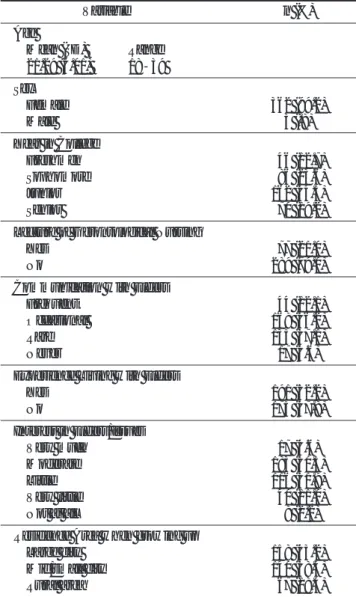
Seventy-seven students (21%) took lectures about gerontological nursing, and the rest of the students who did not take them were freshmen or sophomores. One hundred sixty eight students (46.2%) occasionally com- municated with elders, and interestingly, 17 students (4.6%) had never communicated with the elderly. One hundred ninety one students (52.2%) had experiences in living with the elderly including grandparents or older relatives, and 200 (54.9%) had at least a moderate inter- est in the elderly or issues related to the elderly. One hundred sixty four nursing students (45.1%) had little, very little or no interest in the elderly or issues related to the elderly. One hundred fifty eight students (43.2%) grew up in large cities. Table 1 describes participants’
characteristics.
Instrument: Attitude was measured by using an instru- ment developed by Takeda and her colleagues (1991).
The 108 adjectives in the attitude scale were originally developed by collaborative work among several re- searchers from Japan, Taiwan and Korea based upon free association, literature review, and dictionary (Takeda et al, 1991). The original 108 items were antonyms of each other describing an attitude toward the elderly. Among them, 58 items were deleted because: 1) they were very similar in meaning to another pair of antonyms, 2) they were too ambiguous, and/or 3) they were not able to be translated into each language, Japanese, Taiwanese, or Korean. The finalized 50 pairs of adjectives describing an attitude toward the elderly were rated using a seven- point semantic differential rating ranging from 1 to 7, with 4 being neutral (neither one nor the other). A fa- vorable or an unfavorable attitude is revealed when the score falls more toward a either end, while intensity is shown by how far out from the neutral point the score lies along the 7-point scale that makes it possible to ex- amine both the direction and the intensity of attitudes (Osgood, Suci, & Tannenbaum, 1957). Each pair of antonyms was asked using the same question: “Please circle the number that describes your perception of the image of the elderly.”
Data Analysis: SPSS 12.0 was used to analyze the da- ta. Descriptive statistics were calculated to examine the mean, standard deviation, and frequency of the variables of interest in this study. Both exploratory and confirma- tory factor analysis was done to reexamine the underly- ing dimensions of attitude. Factors were expected to be correlated with each other, which is a general phenome- non in social behavioral science (Lee, 1995). Correlated factors of the attitudes toward the elderly were also em- pirically found by Seo and Kim (1999). ANOVA and t- tests were used to examine group differences in the iden- tified factors and a Scheffe post-hoc test was utilized to examine the detailed group difference.
RESULTS
Reexamination of the underlying dimensions
The exploratory factor analysis using Principal Axis Factoring (PAF) with Promax rotation method was con- ducted initially. The Kaiser-Meyer-Olkin test for examin- ing the adequacy of sampling was significance (KMO = .90, p < .00), for confirming that the sample size was ad-
equate. Based upon the assumption of correlated latent factors one of oblique methods, Promax, was applied to improve interpretation of results. Based on scree plot and eigen value, three factors were extracted (Total cu- mulative percentage = 32.4).
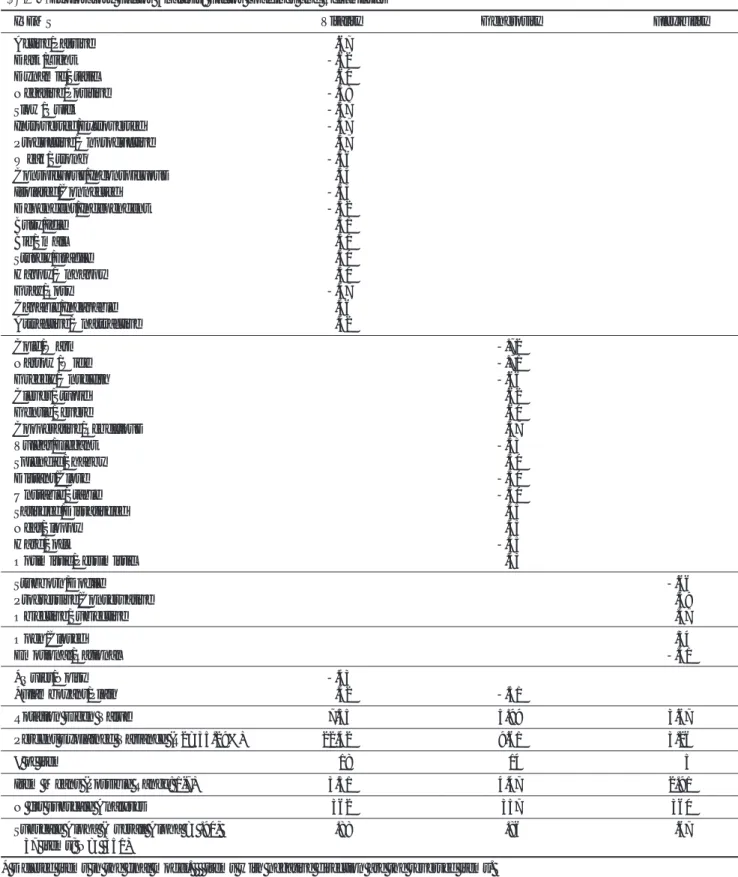
After the initial extraction with Promax rotation, eleven items (e.g., superior/inferior, happy/sad, poor/rich) that did not load to any of the three extracted factors (<.40) were deleted. Then, another factor analy- sis forcing three factors was conducted (Table 2). In the final model, a total of three factors explained 35.29% of variance. Factor 1, vitality, was composed of 18 items.
For subsequent analyses, the item, quiet/noisy, was ex- cluded from factor 1 because it did not fit well with the rest of items (e. g., active/passive, slow/quick) in the vi- tality dimension. The item of happy/unhappy double
Table 1. Characteristics of Participants (N=366)
Variable n (%)
Age
Mean (SD) Range 21.29 (6.01) 18-39 Sex
Female 362 (99.2)
Male 3 (.8)
Year in College
Freshmen 046 (12.7)
Sophomore 086 (23.6)
Junior 162 (44.5)
Senior 070 (19.2)
Lecture of Gerontological Nursing
Yes 077 (21.0)
No 289 (79.0)
Communication with Elders
Frequent 044 (12.1)
Occasional 168 (46.2)
Rare 135 (37.1)
Never 17 (4.6)
Experience Living with Elders
Yes 191 (52.2)
No 175 (47.8)
Interest in Elders/Issues
Very much 17 (4.6)
Moderate 183 (50.3)
Little 116 (31.9)
Very little 040 (11.0)
Not at all 08 (2.2)
Residence Area when growing up
Large city 158 (43.2)
Mid/small city 140 (38.4)
Rural area 067 (18.4)
Excluded missing value
loaded (.50 and .40) on both the vitality and generosity dimensions. However, the happy/unhappy item was as- signed to the vitality dimension because it loaded more strongly with vitality and went better with other vitality
items than with generosity ones. Another item, open/closed, was deleted from the vitality dimension and moved to the flexibility dimension because it con- ceptually better matched with the rest of items (e. g., ob-
Table 2. Exploratory Factor Analysis: Factor Loadings and Reliabilities
ITEMS Vitality Generosity Flexibility
Active/Passive .67
Dark/Light -.62
Dynamic/Static .60
Negative/Positive -.58
Slow/Quick -.57
Introverted/Extroverted -.57
Productive/Unproductive .57
Weak/Strong -.56
Conspicuous/Inconspicuous .54
Isolated/Connected -.53
Dependent/Independent -.52
Busy/Idle .51
Big/Small .51
Sturdy/Fragile .50
Happy/Unhappy .50
Gray/Rosy -.47
Capable/Incapable .46
Attractive/Unattractive .42
Cold/Warm -.72
Narrow/Wide -.71
Greedy/Unselfish -.66
Clever/Stupid .62
Gentle/Severe .60
Cooperative/Rebellious .57
Vulgar/Elegant -.53
Splendid/Shabby .50
Distant/Close -.50
Unstable/Stable -.50
Satisfied/Dissatisfied .45
Neat/Sloppy .45
Hard/Soft -.45
Optimistic/Pessimistic .43
Stubborn/Docile -.66
Progressive/Conservative .59
Objective/Subjective .47
Open/Closed .34
Emotional/Rational -.41
*Quiet/Noisy -.43
*Flamboyant/Plain .42 -.51
Rotation Eigen Value 7.35 5.99 3.67
Percent Explained Variance (R2=35.29%) 22.42 9.61 3.26
# of item 18 14 5
Item Means (Possible Range: 1-7) 3.31 4.47 2.91
N for subscale Analyses 362 357 360
Subscale Alpha (Overall Alpha = .90, .88 .86 .67
37 items; N= 351)
* Deleted items in the final model. Items with negative direction are the reversed items.
jective/subjective, stubborn/docile) in the flexibility di- mension, although its loading was .34 on the flexibility dimension.
Factor 2, named generosity, kept 14 items. The item, flamboyant/shabby, was deleted because it loaded in a different direction (negative and positive) on factors 1 and 2, causing less communality with the rest of items.
Finally, factor 3 was named flexibility, keeping 5 items including the item open/closed.
The internal consistencies of vitality, generosity, and flexibility dimensions were further assessed with Cronbach’s alpha coefficient showing .88, .86, and .67, respectively. The mean score of each factor was 3.31, 4.47, and 2.91. As a group, students rated vitality (mean score = 3.31) and flexibility (mean score = 2.91) of the elderly negatively, whereas their rating of generosity (mean score = 4.47) was positive. Yet, the intensity of both positive and negative ratings were not strong. Table 2 describes factor loadings and reliabilities. The factor correlation matrix showed low to moderate relationships among factors ranging from .21 (between generosity and flexibility) to .50 (between vitality and flexibility).
Please see Table 3.
Examination of the relationship between the identified dimensions of attitude and nursing student’s characteristics
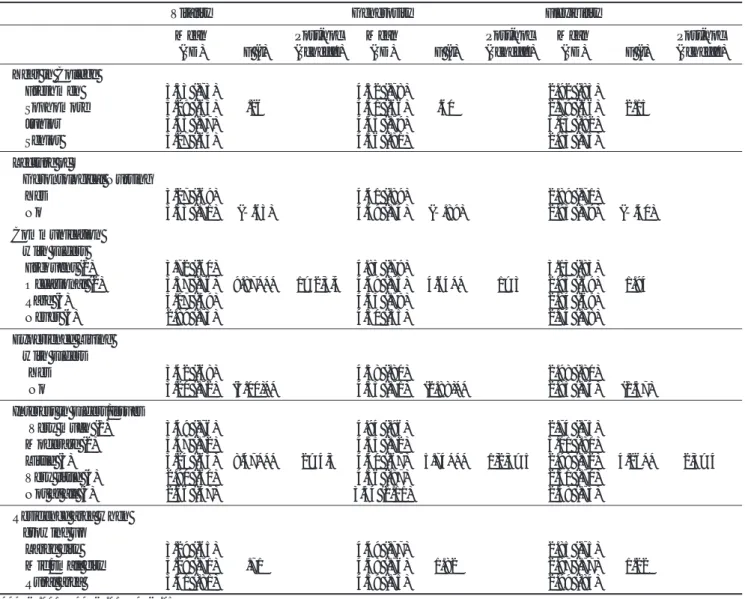
No significant mean difference in the attitude of the el- derly was found among nursing students by year in col- lege. The attitudes to elders between nursing students who had taken (or not) a gerontological nursing lecture were also not significantly different on t-test. However, the mean score between groups was lower in those who had taken the lecture on each of the three dimensions.
Frequency of communication with the elderly had a significant effect on attitudes toward the elderly in ANO- VA analyses. A Scheffe test revealed significant group differences on the vitality dimension (F=9.87, p < .001), demonstrating that nursing students who frequently communicated with elders had a higher score (3.72) than those with occasional (3.37), rare (3.17), and no (2.89) communication. Furthermore, nursing students who frequently communicated with elders had the high- est score on generosity dimension and a significantly higher score (4.83) than nursing students who rarely (4.35) communicated with elders (F=4.64, p < .01).
Mean scores in the flexibility dimension were ranked by the frequency of communication with the elderly; how-
ever, differences did not reach significance (F=1.94, p >
.05).
Experience living with the elderly, such as grandpar- ents, was another contributing characteristic in evaluat- ing the elderly. Both the vitality (t=3.0, p < .01) and gen- erosity (t=2.88, p < .01) dimensions had a statistically significant mean difference between nursing students who had (3.42 for vitality, 4.58 for generosity) and had not had (3.20 for vitality, 4.35 for generosity) experi- ence living with the elderly. Again, mean scores in flexi- bility were ranked with a higher score in the group who had experience living with the elderly; however, it did not reach significance (t=1.57, p > .05).
The level of interest in the elderly or issues related to the elderly was the only characteristic that made a signif- icant difference in all three dimensions. For vitality, stu- dents who had a moderate interest in the elderly or is- sues related to the elderly showed a significantly higher score (3.47) than that of those who had either very little (2.90) or no (2.66) interest in the elderly or elder issues (F=8.47, p < .001). For generosity, students who had very much (4.94), moderate (4.55) and little (4.40) inter- est showed a significantly higher score than that of those who had no (3.54) interest in the elderly or elder issues (F=5.74, p < .001). For flexibility, nursing students who had moderate (3.01) and little (2.98) interest in the el- derly or elder issues demonstrated a higher score than that of those who had very little (2.51) interest in the el- derly or elder issues (F=4.26, p < .01).
The area where students were raised did not reach sta- tistical significance on any dimension of attitude; howev- er, the highest mean score in each attitude dimension was reported from the students who grew up in the rural area. Please refer to Table 4 for ANOVA analyses in de- tail.
DISCUSSION
Underlying Dimensions of Attitudes toward the Elderly
Attitudes are defined as“predispositions to respond to- ward a person or thing in either a positive or a negative
Table 3. Factor Correlation Matrix
Vitality Generosity Flexibility
Vitality 1.00
Generosity .37 1.00
Flexibility .50 .21 1.00
way”(Seltzer & Atchley, 1971, p226). In examining un- derlying dimensions of attitudes toward the elderly, the present study extracted 3 factors, while the previous studies using the same instrument reported 6 (Takeda et al, 1991) and 4 factors (Seo & Kim, 1999). These two previous studies shared 4 identically named factors such as activity/independence, happiness, mildness and coop- erativeness, although the items for each factor were not identical. The two factors reported by Takeda and her colleagues (1991) were preciseness and greatness, and preciseness was not well defined by having 2 items only.
Of the three factors in the current study, the vitality and flexibility were similar to activity/independence and co- operativeness reported in the previous studies respec- tively, by sharing more than 70% of the same items in each factor. Generosity in the current study is defined in
a more complicated way by sharing 10 items out of total 14 items with those items from happiness and mildness found in the previous studies.
Lack of information in previously published studies prevented the authors from comparing the psychometric properties of the attitude scale. Based upon the current analysis, low Cronbach’s alpha (.67) indicated a room for improving the measures of flexibility. The reliability coefficients for vitality and generosity dimensions were strong (both greater than .85). Given the current mea- surement properties, the differences in attitude dimen- sions discussed above might be attributed to different study population. Nursing students seemed to conceptu- alize attitudes toward the elderly somewhat differently than those students majoring in other areas. Further in- vestigations are required to reveal this.
Table 4. Attitudes on Elders: t-test and ANOVA by Characteristics
Vitality Generosity Flexibility
Mean Post-hoc Mean Post-hoc Mean Post-hoc
(SD) F (t) (Scheffe´) (SD) F (t) (Scheffe´) (SD) F (t) (Scheffe´) Year in College
Freshmen 3.33 (.73) 4.52 (.78) 2.92 (.83)
Sophomore 3.29 (.63) .26 4.41 (.66) .60 2.79 (.66) 2.15
Junior 3.35 (.77) 4.45 (.79) 3.03 (.82)
Senior 3.27 (.64) 4.56 (.81) 2.83 (.75)
Lecture of
Gerontological Nursing
Yes 3.27 (.69) 4.41 (.89) 2.89 (.71)
No 3.33 (.71) (-.63) 4.49 (.74) (-.89) 2.93 (.79) (-.40)
Communication with Elders
Frequent (1) 3.72 (.60) 4.83 (.79) 3.13 (.83)
Occasional (2) 3.37 (.76) 9.87*** 1>2,3,4 4.49 (.75) 4.64** 1>3 2.95 (.69) 1.94
Rare (3) 3.17 (.59) 4.35 (.78) 2.84 (.69)
Never (4) 2.89 (.73) 4.30 (.55) 2.74 (.78)
Experience Living with Elders
Yes 3.42 (.68) 4.58 (.80) 2.98 (.80)
No 3.20 (.72) (3.00)** 4.35 (.71) (2.88)** 2.85 (.74) (1.57)
Interest in Elders/Issues
Very much (1) 3.49 (.76) 4.94 (.96) 2.74 (.75)
Moderate (2) 3.47 (.72) 4.55 (.72) 3.01 (.80)
Little (3) 3.24 (.63) 8.47*** 2>4,5 4.40 (.67) 5.74*** 1,2,3>5 2.98 (.72) 4.26** 2,3>4
Very little (4) 2.90 (.60) 4.36 (.87) 2.51 (.70)
Not at all (5) 2.66 (.47) 3.54 (1.11) 2.58 (.73)
Residence area when growing up
Large city 3.29 (.65) 4.49 (.77) 2.85 (.75)
Mid/small city 3.29 (.71) .71 4.38 (.76) 1.82 2.97 (.77) 1.22
Rural area 3.41 (.81) 4.59 (.75) 2.99 (.84)
***p<.001 **p<.01 *p<.05 Excluded missing values
Overall, students evaluated the elderly negatively on vitality and flexibility, but positively on generosity.
These findings are very similar to those college students’
attitudes reported by Takeda et al (1991) and Seo and Kim (1999) considering similarity between flexibility and cooperative and between vitality and activity/inde- pendence as noted above. Although our students had negative attitudes in the two dimensions, the intensity was not strong and the same was true for generosity. In nursing curricula, increased exposure to elders who dis- play vitality and flexibility may help in modifying the at- titudes of nursing students. Generosity should also be a part of target attitudes to promote the intensity of posi- tive attitude.
Characteristics Associated with the Attitudes toward the Elderly
Year in College: Interestingly, mean differences of each attitudinal dimension were not significant by year in col- lege, which was inconsistent to the finding with nursing students in Sweden (Sodeorhamn, Lindencrona, &
Gustavsson, 2001). They reported more unfavorable feelings toward the elderly in the first year students than in the third year students, who were at the end of their education. Considering year in college as educational level of individual person, the current subjects were con- fined to undergraduate students only, leaving small vari- ation in level of education from one to four. This finding has importance for nursing education. Upperclassmen (juniors and seniors) who had been exposed to a variety of age groups including the elderly through clinical practicum, did not demonstrate higher (or lower) views of older people than sophomores and freshmen, whose experiences were more limited. Either education alone may not be sufficient to change attitudes or the specific learning experiences generally in nursing curricula were of insufficient weight to affect such change. However, cross-sectional data obtained in this study constrains us in revealing the actual effect of college education on atti- tudes toward the elderly among nursing students.
However, nurse educators need to pay attention to the influence of nursing education in producing nurses with positive attitudes toward older clients.
Lecture Course of Gerontological Nursing: No signifi- cant difference was observed in the students’attitudes toward the elderly between those who took and those who did not take a lecture course of gerontological nurs- ing. In this study sample, only 21% of the students took
such a course, which seems small considering that the portion of junior and senior students together was 63.7% of the sample. When the survey was performed in 2000, 80% of baccalaureate nursing programs in the nation included a lecture course of gerontological nurs- ing in their curriculums (Chon et al, 2001). The lack of significance indicates that changes in the students’atti- tudes toward the elderly are not simply acquired by in- creasing knowledge in related area. This notion is sup- ported by the former studies reporting no effect of gerontological nursing education on the attitudes in Korean students (Kim, 1981; Kong, 1999; Yoo et al, 1991). Particularly, Kong (1999) reported no effect of the gerontological nursing lecture course on the attitudes to elders among third year students, despite the increase in knowledge about aging after the course. Furthermore, Yoo and her colleagues (1991) reported no significant difference in the attitudes toward the elderly and the ag- ing process between senior students majoring in human ecology and senior nursing students who had taken both lectures and clinical practicum in gerontological nursing.
In contrast, Gunter’s study (1971) revealed more neg- ative attitudes toward older people at the end of course for senior nursing students that focused on normal devel- opment in later life, although the number of stereotypes held by students was reduced significantly. She identified several possibilities in explaining her findings including, students’feeling freer to express feelings at the end of the course and obtaining more insight about older peo- ple. As for the effect of those courses incorporating both lecture and practicum, Greenhill and Baker (1986) re- ported increased knowledge and improved attitudes to- ward older adults regardless of the type of clinical expe- rience, after providing two sets of clinical and theory courses. They argued that knowledge and attitude change does not depend on the particular type of clini- cal learning activity. Regarding attitude toward working with the elderly as an indirect measure of attitude to- ward the elderly, significant improvements in attitudes toward working with the elderly were noticed after de- livering a course of gerontological nursing having both theory and practicum in a variety of community and in- stitutional settings (Fox & Wold, 1996). In the study of Fox and Wold, the theoretical content emphasized maxi- mizing individual capabilities and quality of life.
Although not all empirical studies reported consistent findings, it seems clear that simple provision of a geron- tological nursing course cannot modify students’atti-
tudes toward the elderly. Attitudes are thought to be learned by trial and error or by teaching process of so- cialization (Seefeldt, et al, 1977). We need to focus on making this socialization useful in changing students’at- titudes toward the elderly. Nurse educators should de- vise teaching strategies to facilitate this type of socializa- tion in nursing education both in lecture and clinical practicum courses. Another important component in the socialization is the attitudes of faculty members toward the elderly, which are conveyed to the students (Small, 1991).
Communication and Experience Living with Elders:
Communication with elders appeared an important characteristic in relation to students’attitudes toward the elderly in that frequent communication with elders was related to less negative attitudes toward the elderly regarding vitality and more positive attitudes in generos- ity. The same tendency in the dimensions of vitality and generosity was also observed among those having living experience with elders compared to those with no expe- rience living with elders, where most elders whom stu- dents had lived or were living at the time of the survey were grandparents.
Seo and Kim (1999) reported positive correlations be- tween the degree of communication with older adults and each dimension of the attitudes toward the elderly among college students. Among male students, commu- nication with the elderly was significantly associated with activity/independence and happiness. In their study, those having an experience of living with an older person had less negative attitudes in cooperativeness on- ly. This finding was significant among female students only, with reverse direction; those female students with no experience of living with an elder had less negative attitude in cooperativeness. Considering 99.2% of our subjects were females, the present finding of vitality di- mension does not seem to be consistent with the report of activity/independence dimension of Seo and Kim (1999). This poses a need for a further analysis of the at- titudes toward the elderly by sex, which could not be done in the current study due to very small number of male subjects. It is not clear whether this can be attrib- uted to nursing major without further study. In Kim’s study (1981) with nursing students, no significant differ- ence in attitudes toward the elderly was reported by ex- perience of living with older people.
In studying undergraduate students’attitudes toward men, Rosencranz and McNevin (1969) reported positive
effects of close grandparent contact in evaluating the older male more favorably. They also found that mean- ingful associational contact with at least one older per- son showed more favorable attitudes toward older men.
Yet, the researchers found that those students with hos- pital contact had unfavorable attitudes toward older males in some aspects. This latter finding may raise a question of placing clinical practicum in hospitals only.
As for the reason of positive stereotype from direct con- tact with the elderly, Brubaker and Powers (1976) assert- ed that the likelihood that a negative stereotype is ac- cepted is lessened due to the decreased distance be- tween the observer and the observed and the declines in the ambiguity of the situation.
Interest in Elders: Findings of significant attitudinal dif- ference by interest in elders or in issues related to the el- derly were consistent with Seo and Kim’s (1999) study;
where they reported positive correlation of interests in issues of the elderly with all four dimensions of atti- tudes. It is noteworthy that flexibility dimension was not significantly different by both communication and living experience with elders; yet, those who had frequent communication and those having living experience with elders tended to have less negative attitudes toward the elders. Flexibility might have been associated with indi- rect contacts such as mass media rather than direct con- tacts adopted in the present study; or the nature of the dimension might be less prone to change. The influence of a somewhat low reliability for the flexibility dimen- sion cannot be excluded as a reason for the present find- ings.
Implications
Measurement of attitudes toward the elderly deserves further work. The instrument adopted in the present study was developed almost 20 years ago. Meanwhile, society has changed in many different aspects, especially the rise of nuclear families. Thus, communication has de- creased and isolation has increased between families and the elderly. Therefore, some other adjectives represent- ing attitudes toward the elderly need to be explored.
In the future, we need to examine those influencing variables on attitudes toward elders further to have a better understanding of the characteristics shaping nurs- ing students’attitudes toward the elderly. The effects of clinical practicum on attitudes also needs further explo- ration. In addition, multivariate analysis should be adopted to control interrelated characteristics. These ad-
vances could lead us to devise better strategies for modi- fying or promoting nursing students’attitudes toward elders.
As Seefeldt et al (1977) indicated, educating children to develop positive attitudes toward the elders is a life long process. We need to facilitate this process to contin- ue toward the positive direction through nursing educa- tion. We may not need to wait until gerontological nurs- ing curriculum begins in junior or senior level, instead we should consider modifying or promoting students’
attitudes toward elders throughout the whole education- al process. In particular, we can increase the chance or experience of good communication with the elderly through classroom teaching as well as clinical practicum.
To increase nursing students’interest in the elderly and related issues, educators can encourage discussions, pre- sent problems, and emphasize the positive aspects of ag- ing. In terms of clinical practicum, nurse educators need to make students involved with a wide variety of elders rather than limiting them to hospitalized older patients.
In this way, we can reflect the great diversity of the el- derly population (e.g., diverse in living arrangement, economic status, health, etc.) and bring our new nursing generation into the reality of our older generation with positive attitudes. Finally and most importantly, nurse educators themselves should have positive attitudes to- ward the elderly, since their attitudes affect the educa- tional process that can benefit students.
CONCLUSION
The study investigated dimensions of attitudes toward the elderly and associated characteristics among nursing students. Self-report questionnaires from 366 students were analyzed using factor analysis, correlation coeffi- cients, t-test, and ANOVA.
Three dimensions were identified as a result of factor analysis such as vitality, generosity and flexibility. The reliability coefficients for vitality and generosity were .88 and .86, respectively, while being somewhat lower for flexibility, .67. Students evaluated generosity in a positive direction. Negative evaluation was observed with both vitality and flexibility dimensions. The intensi- ty of the direction tended to be weak for all three di- mensions.
Of those characteristics analyzed, the mean scores of the vitality and generosity dimensions were significantly different by communication with the elderly, experience
living with the elderly and having an interest in elders or in issues related to elders. The flexibility dimension was significantly different by interest in elders or in issues re- lated to elders only. In particular, year in college and ex- perience of a lecture course in gerontological nursing re- vealed no significant difference in terms of the three di- mensions of the attitudes toward the elderly.
The above findings suggest the need for further im- provements in measures of attitudes toward the elderly in nursing students. In modifying or promoting students’
attitudes toward the elderly, the chance of direct interac- tion including communication with the elderly should be provided through both classroom teaching and clinical practicum. In particular, educators need to arrange di- verse settings for clinical practicum to experience a vari- ety of older people rather than limiting to hospitalized or institutionalized frail older people.
References
Arnold, M. (2001). The decision to work with the older adult: at- tachment, death anxiety and attitudes toward old people.
Doctoral dissertation. Columbia University, New York.
Brubaker, T.H., & Powers, E.A. (1976). The stereotype of “Old”: a review and alternative approach. J Gerontol, 31(4), 441-447.
Cho, S.H. (1992). Attitudes toward elderly patients among nurses.
Journal of Soonchun College of Nursing, 59-78.
Choi, K.O. (1976). A study of the attitudes of nurses toward the geriatric nursing care, Taehan Kanho Hakhoe Chi, 6(2), 1-9.
Chon, S.J., Kong, E.S., Kim, G.B., Kim, N.C., Kim, C.H., Kim, C.K., Kim, H.K, Ro, Y.J., Shin, K.R., Song, M.S., Ahn, S.Y., Lee, K.J., Lee, Y.W., Cho, N.O., Cho, M.O., & Choi, K.S. (2001). A study of gerontological nursing curriculum. Taehan Kanho Hakhoe Chi, 31(5), 808-817.
Fox, S.D., & Wold, J.E. (1996). Baccalaureate student gerontologi- cal nursing experiences: raising consciousness levels and affect- ing attitudes. J Nurs Educ, 35(8), 348-355.
Greenhill, E.D., & Baker, M.F. (1986). The effects of a well older adult clinical experience on students’knowledge and attitudes.
J of Nur Educ, 25(4), 145-147.
Gunter, L.M. (1971). Students’attitudes toward geriatric nursing.
Nurs Outlook, 19(7), 466-469.
Kim, E.I. (1981). Study of attitudes toward the elderly among nurs- ing students. Master’s thesis, Ewha Womans University, Seoul.
Korean Nurses Association (2002). Annual statistical reports of nursing. Korea.
Kong, E.S. (1999). The effects of gerontological nursing education on the attitudes toward the elderly: focused on 3-year nursing college students. Journal of the Margaret Pritchard College of Nursing, 12(2), 7-16.
Lee, S.M. (1995). Factor Analyses I. Seoul : Hakjisa.
Ministry of Health and Welfare (2001). Annual statistical reports of health and welfare. Korea.
Naus, P.J. (1973). Some correlates of attitudes towards old people.
Int J Aging Hum Dev, 4(3), 229-243.
Osgood, C.E., Suci, G.J., & Tannenbaum, P.H. (1957). The mea- surement of meaning. University of Illinois Press.
Rosencranz, H.A., & McNevin, T.E. (1969). A factor analysis of at- titudes toward the aged. Gerontologist, 9, 55-59.
Seefeldt, C., Jantz, R.K., Galper, A., & Serock, K. (1977). Children’
s attitudes toward the elderly: educational implications. Educ Gerontol, 2, 301-310.
Seltzer, M.M., & Atchley, R.C. (1971). The concept of old: changing attitudes and stereotypes. The Gerontologist, Autumn Part I, 226-230.
Seo, B.S., & Kim, S. H. (1999). A study on the elderly image of uni- versity students. Journal of the Korea Gerontological Society, 19(2), 97-111.
Singlton, C.A. (1998). Service providers’attitudes toward aging, the aged and senescence. J of Appl Soc Sci, 23(1), 57-62.
Small, N.R. (1991). Impact of Attitudes on the quality of nursing care: patient and staff perceptions. In M.S. Harper (Ed.), Management and care of the elderly: psychosocial perspec- tives. Newbury Park, CA : Sage Publications.
Sodeo¨rhamn, O., Lindencrona, C., & Gustavsson, S.M. (2001).
Attitudes toward older people among nursing students and reg- istered nurses in Sweden. Nurse Education Today, 21, 225- 229.
Takeda, K., Hosoe, Y., Sodei, T., Cheng, S., & Sue, P.S. (1991). The attitude and the sense of responsibility of university students toward the aged: cross cultural study in Japan, Taiwan and Korea (Part 3). Journal of Home Economics of Japan, 42(5), 405-413.
Thorson, J.A. Whatley, L., & Hancock, K (1974). Attitudes toward the aged as a function of age and education. Gerontologist, August, 316-318.
Thorson, J.A., & Perkins, M.L. (1981). An examination of personal- ity and demographic factors on attitudes toward old people. Int J Aging and Hum Dev, 12(2), 139-148.
Yoo, J.S, Kim, C.J., Lee, W.H., Hur, H.K., Kim, K.S., & Lim, S.M.
(1991). The effectiveness of the gerontological nursing educa- tion on the knowledge and attitudes toward the aging process.
Yonsei Nursing, 14, 11-30.