Lysophosphatidylcholine, Oxidized Low-Density Lipoprotein and Cardiovascular Disease in Korean Hemodialysis Patients:
Analysis at 5 Years of Follow-up
Although oxidized low-density lipoprotein (LDL) and lysophosphatidylcholine (LPC) have been proposed as important mediators of the atherosclerosis, the long-term contribution to the risk of cardiovascular disease (CVD) in hemodialysis patients has not been evaluated.
This study investigated the relation between oxidized LDL and LPC levels with long term risk of CVD. Plasma oxidized LDL and LPC levels were determined in 69 Korean hemodialysis patients as a prospective observational study for 5 yr. During the observation period, 18 cardiovascular events (26.1%) occurred including 6 deaths among the hemodialysis patients. The low LPC level group (≤ 254 μM/L, median value) had much more increased risk of CVD compared to the high LPC level group (> 254 μM/L) (P = 0.01). However, serum levels of oxidized LDL were not significantly different between groups with and without CVD. In adjusted Cox analysis, previous CVD, (hazard ratio [HR], 5.68; 95%
confidence interval [CI], 1.94-16.63, P = 0.002) and low LPC level (HR, 3.45; 95% CI, 1.04-11.42, P = 0.04) were significant independent risk factors for development of CVD.
It is suggested that low LPC, but not oxidized LDL, is associated with increased risk of CVD among a group of Korean hemodialysis patients.
Key Words: Renal Dialysis; Cardiovascular Disease; Lipoproteins; Oxidized LDL;
Lysophosphatidylcholines Young-Ki Lee,1 Dong Hun Lee,1
Jin Kyung Kim,1 Min-Jeong Park,2 Ji-Jing Yan,3 Dong-Keun Song,3
Nosratola D Vaziri,4 and Jung-Woo Noh1
1Department of Internal Medicine, Hallym Kidney Research Institute, Hallym University College of Medicine, Seoul; 2Department of Laboratory Medicine, Hallym University College of Medicine, Seoul; 3Department of Pharmacology, Hallym University College of Medicine, Chuncheon, Korea;
4Division of Nephrology and Hypertension, Department of Medicine, University of California, Irvine, Irvine, California, USA
Received: 24 June 2012 Accepted: 16 November 2012 Address for Correspondence:
Jung-Woo Noh, MD
Department of Internal Medicine, Kangnam Sacred Heart Hospital, Hallym University College of Medicine, 1 Singil-ro, Yeongdeungpo-gu, Seoul 150-950, Korea
Tel: +82.2-829-5108, Fax: +82.2-848-9821 E-mail: [email protected]
This work was supported by a grant from Hallym University Medical Center Research Fund (01-2006-08).
http://dx.doi.org/10.3346/jkms.2013.28.2.268 • J Korean Med Sci 2013; 28: 268-273 Nephrology
INTRODUCTION
Patients with end-stage renal disease have a high incidence of cardiovascular disease (CVD). Traditional and non-traditional risk factors contribute to the atherosclerotic process in this pop- ulation. Dyslipidemia could be one of the key factors for athero- sclerosis and oxidized low-density lipoprotein (LDL) would pres- ent a critical step in the initiation and progression of atheroscle- rosis (1, 2).
Lysophosphatidylcholine (LPC) consists of a glycerin frame, one fatty acid and a phosphochloine. LPC is a major component of oxidized LDL and is generated by phospholipase A2-depen- dent hydrolysis of phosphatidylcholine (2). LPC modulates many biologic effects of oxidized LDL including induction of monocyte chemotaxis, expression of adhesion molecules and growth factors in endothelial cells, stimulation of smooth mus- cle cell proliferation, gene transcription and secretion of pro- inflammatory cytokines (2). In addition, oxidized phospholip- ids and LPC accumulate in atherosclerotic lesions in experimen-
tal animals, supporting their involvement in atherogenesis (3).
Based on these observations, LPC has been considered to be an important mediator of the atherogenic actions of oxidized LDL.
Among dialysis patients, a number of lipid abnormalities have been identified, including low levels of high-density lipo- protein (HDL), elevated triglycerides levels, and normal or near- normal levels of total cholesterol and LDL (4, 5). Although sev- eral studies have shown increased concentrations of oxidized LDL (6), as well as LPC (7, 8) in patients with renal disease, the relative long-term contribution of oxidized LDL and LPC to CVD has not been evaluated in hemodialysis patients. The objective of present study was to address this issue.
MATERIALS AND METHODS Study subjects
Oxidized LDL and LPC levels were measured in two groups (he- modialysis and healthy controls). The subjects in the study were 69 patients on maintenance hemodialysis (32 men and 37 wom-
en, mean age 56.2 ± 12.1 yr) and 33 controls (16 men and 17 women, mean age 55.6 ± 12.2 yr). The two groups were compa- rable in age and gender. Patients were enrolled from Hallym University Kanganam Sacred Heart Hospital.
A prospective follow-up study of 69 chronic hemodialysis patients was conducted for 60 months (August 2004-July 2009) and cardiovascular morbidity and mortality were determined.
Patients received three 4 hr sessions of hemodialysis weekly us- ing bicarbonate-buffered dialysate. The dialysis membrane used in all patients was composed of polysulfone (Fresenius® F6HPS, Bad Homberg, Germany) with a surface area of 1.3 m2. Exclu- sion criteria were: less than 18 yr old, dialysis duration of less than 3 months, history of acute infection or systemic inflamma- tory disease within 3 months, malignancy or chronic liver dis- ease. The mean hemodialysis duration was 40.6 months (range 3 to 172 months). Fifty-four patients (78.3%) undergoing dialy- sis had arteriovenous fistula. The underlying renal diseases con- sisted of diabetes mellitus (53.6%), hypertension (23.2%), chron- ic glomerulonephritis (14.5%), urologic disease (2.9%) and un- known (5.8%).
Study design
Longitudinal data were collected for each patient at entry into the study and updated whenever a cardiovascular event oc- curred. The endpoints of the study were new fatal and non-fatal cardiovascular events requiring admission. Coronary artery dis- ease, cerebrovascular disease and peripheral artery disease were defined as CVD.
Venous blood was collected after an overnight fasting before the start of the mid-week hemodialysis session. Samples for he- moglobin, blood urea nitrogen (BUN), creatinine, albumin, cal- cium, phosphate, C-reactive protein (CRP), parathyroid hor- mone and lipid profile were transferred to laboratory immedi- ately. For the other parameters, the samples were centrifuged and frozen at -70ºC until examination. Total cholesterol, triglyc- eride and HDL cholesterol levels were measured by enzymatic methods. LDL cholesterol was calculated using Friedewald’s formula. Oxidation of LDL was assessed by using an enzyme linked immunosorbent assay kit (Mercodia, Uppsala, Sweden).
LPC concentrations were determined as described previously (9), based on the standard curve for 18:0 LPC. Patient serum samples were mixed with LPC assay reagents, and their chang- es in absorbance were assayed.
Statistical analysis
All values were expressed as mean ± standard deviations. Mann- Whitney U-test for categorical variables, chi-square test for con- tinuous variables, and Spearman’s coefficient for correlation analysis were performed for the statistical analysis. In a prospec- tive follow-up study, the primary analysis used was a Cox re- gression analysis of CVD from the time of entry. We investigated
the relationship between predictor variables, including oxidized LDL and LPC, and CVD. Survival analysis was performed using the Kaplan-Meier estimation. The log-rank test was used for uni- variate comparisons. Patients were censored when they were transferred to another dialysis center, switched to peritoneal di- alysis, received a renal transplantation, or died on the final ob- servation date (July 31, 2009). All reported P values are two-sid- ed, and P < 0.05 was considered statistically significant.
Ethics statement
The protocol was reviewed and approved by the institutional review board of Hallym University Medical Center (research number 01-2006-08). Informed consents were obtained from all of the participants.
RESULTS
Case-control study
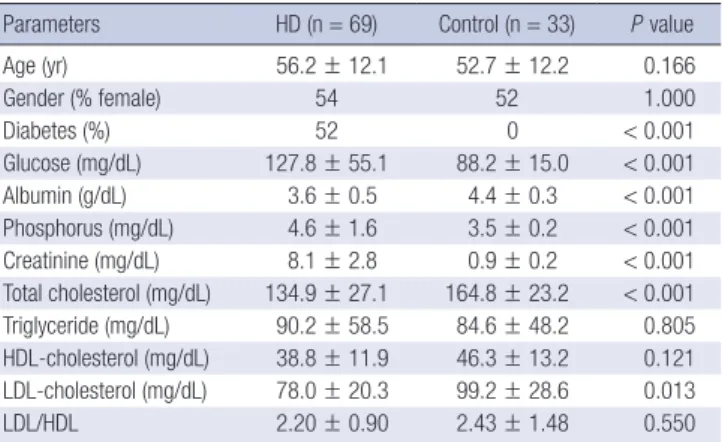
The baseline clinical characteristics of 69 hemodialysis patients and 33 controls are shown in Table 1. Total cholesterol and LDL- cholesterol levels were significantly lower in hemodialysis pa- tients than in controls (P < 0.001). Lipid profiles such as HDL, LDL, and LDL/HDL were not significantly different between the two groups. There were differences in serum creatinine, glu- cose, albumin, and phosphorus levels between two groups. Ox- idized LDL level was lower in hemodialysis patients than in con- trols (P = 0.003) (Table 2). Hemodialysis patients also showed decreased LPC compared to controls (P < 0.001). The oxidized LDL/LDL, LPC/oxidized LDL and LPC/(LDL + HDL) were com- parable in two groups.
In patients with hemodialysis and controls together, oxidized LDL was found to have significant positive correlations with to- tal cholesterol (r = 0.75; P < 0.001), triglyceride (r = 0.38; P = 0.001), LDL-cholesterol (r = 0.66; P < 0.001), albumin (r = 0.26;
P = 0.02) and LPC (r = 0.28; P = 0.004). LPC also had significant positive correlations with total cholesterol (r = 0.39; P < 0.001), triglyceride (r = 0.31; P = 0.006), LDL-cholesterol (r = 0.28; P =
Table 1. Clinical and laboratory characteristics of hemodialysis and control groups Parameters HD (n = 69) Control (n = 33) P value
Age (yr) 56.2 ± 12.1 52.7 ± 12.2 0.166
Gender (% female) 54 52 1.000
Diabetes (%) 52 0 < 0.001
Glucose (mg/dL) 127.8 ± 55.1 88.2 ± 15.0 < 0.001 Albumin (g/dL) 3.6 ± 0.5 4.4 ± 0.3 < 0.001 Phosphorus (mg/dL) 4.6 ± 1.6 3.5 ± 0.2 < 0.001 Creatinine (mg/dL) 8.1 ± 2.8 0.9 ± 0.2 < 0.001 Total cholesterol (mg/dL) 134.9 ± 27.1 164.8 ± 23.2 < 0.001 Triglyceride (mg/dL) 90.2 ± 58.5 84.6 ± 48.2 0.805 HDL-cholesterol (mg/dL) 38.8 ± 11.9 46.3 ± 13.2 0.121 LDL-cholesterol (mg/dL) 78.0 ± 20.3 99.2 ± 28.6 0.013
LDL/HDL 2.20 ± 0.90 2.43 ± 1.48 0.550
HD, hemodialysis; HDL, high-density lipoproteins; LDL, low-density lipoproteins.
0.01) and albumin (r = 0.25; P = 0.03) (Fig. 1).
In hemodialysis group, oxidized LDL concentration was not different between the patients with or without diabetes. But, LPC in dialysis patients with diabetes (252.6 ± 63.5 μM/L) was significantly lower than patients without diabetes (284.8 ± 65.2 μM/L, P = 0.04). There were 18 patients (26%) who had previ- ous CVD. Serum lipid levels, oxidized LDL and LPC were not statistically different between the patients with or without pre- vious CVD.
A prospective follow-up study
A total of 69 patients was evaluated for cardiovascular disease.
Patients were observed over an average follow-up of 43 months (2-60 months). During the study period, 20 patients (29%) died,
Table 2. Comparison of oxidized LDL and LPC in hemodialysis and control groups
Items HD (n = 69) Control (n = 33) P value
Oxidized LDL (U/L) 32.6 ± 9.1 38.6 ± 9.6 0.003
LPC (µM/L) 268.0 ± 65.9 332.7 ± 57.2 < 0.001 Oxidized LDL/LDL 0.43 ± 0.10 0.42 ± 0.18 0.882 LPC/oxidized LDL 8.76 ± 2.98 9.04 ± 2.47 0.641
LPC/(LDL + HDL) 2.37 ± 0.72 2.26 ± 42 0.686
HD, hemodialysis; LDL, low-density lipoproteins; LPC, Lysophosphatidylcholine; HDL, high-density lipoproteins.
Fig. 1. Correlation between total cholesterol, LDL-cholesterol, albumin and LPC. LDL, low-density lipoproteins; LPC, Lysophosphatidylcholine.
Cholesterol (mg/dL)Albumin (g/dL) LDL (mg/dL)
LPC (µM/L)
LPC (µM/L)
r = 0.39; P < 0.001
r = 0.25; P = 0.03
r = 0.28; P = 0.01
LPC (µM/L) 0.00 100.00 200.00 300.00 400.00 500.00
0.00 100.00 200.00 300.00 400.00 500.00
0.00 100.00 200.00 300.00 400.00 500.00 200.00
150.00
100.00
50.00
0.00
5.00 4.00 3.00 2.00 1.00 0.00
150.00
100.00
50.00
0.00
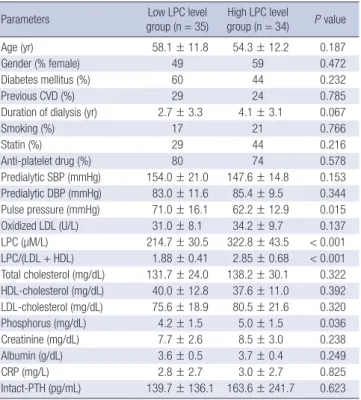
Table 3. Clinical parameters of the hemodialysis patients according to LPC at baseline
Parameters Low LPC level
group (n = 35) High LPC level
group (n = 34) P value
Age (yr) 58.1 ± 11.8 54.3 ± 12.2 0.187
Gender (% female) 49 59 0.472
Diabetes mellitus (%) 60 44 0.232
Previous CVD (%) 29 24 0.785
Duration of dialysis (yr) 2.7 ± 3.3 4.1 ± 3.1 0.067
Smoking (%) 17 21 0.766
Statin (%) 29 44 0.216
Anti-platelet drug (%) 80 74 0.578
Predialytic SBP (mmHg) 154.0 ± 21.0 147.6 ± 14.8 0.153 Predialytic DBP (mmHg) 83.0 ± 11.6 85.4 ± 9.5 0.344 Pulse pressure (mmHg) 71.0 ± 16.1 62.2 ± 12.9 0.015
Oxidized LDL (U/L) 31.0 ± 8.1 34.2 ± 9.7 0.137
LPC (µM/L) 214.7 ± 30.5 322.8 ± 43.5 < 0.001
LPC/(LDL + HDL) 1.88 ± 0.41 2.85 ± 0.68 < 0.001 Total cholesterol (mg/dL) 131.7 ± 24.0 138.2 ± 30.1 0.322 HDL-cholesterol (mg/dL) 40.0 ± 12.8 37.6 ± 11.0 0.392 LDL-cholesterol (mg/dL) 75.6 ± 18.9 80.5 ± 21.6 0.320 Phosphorus (mg/dL) 4.2 ± 1.5 5.0 ± 1.5 0.036 Creatinine (mg/dL) 7.7 ± 2.6 8.5 ± 3.0 0.238
Albumin (g/dL) 3.6 ± 0.5 3.7 ± 0.4 0.249
CRP (mg/L) 2.8 ± 2.7 3.0 ± 2.7 0.825
Intact-PTH (pg/mL) 139.7 ± 136.1 163.6 ± 241.7 0.623 CVD, cardiovascular disease; LDL, low-density lipoproteins; LPC, Lysophosphatidylcho- line; HDL, high-density lipoproteins; CRP, C-reactive protein; PTH, parathyroid hormone.
12 patients were transferred to other centers, and five patients were transplanted. The primary objective of this study was to determine possible association between oxidized LDL or LPC and new fatal or non-fatal cardiovascular events. There were 18 cardiovascular events (26%) (12 coronary artery disease, 4 cere- brovascular disease and 2 peripheral vascular disease) includ- ing 6 deaths among the hemodialysis patients.
The subjects were divided two groups according to serum LPC levels at baseline (median value of LPC: 254 μM/L) (Table 3).
The low LPC level group showed higher pulse pressure and de- creased phosphorus level compared to the high LPC level group.
Age, gender, blood pressure, total cholesterol, triglyceride, HDL, LDL, oxidized LDL, albumin and CRP levels were not signifi- cant different between two groups. The low LPC level group had much more increased risk of CVD compared to the high LPC level group (P = 0.01, Table 4). There was also significant differ- ence in the probability of the cardiovascular events-free rate be- tween two groups (log-rank test, P = 0.02, Fig. 2). The subjects were also divided two groups according to serum oxidized LDL levels at baseline (median value: 31.1 U/L). But, oxidized LDL levels were not significant different between groups with CVD and without CVD.
The results of Cox proportional hazard analysis for CVD are summarized in Table 5. In univariate analysis, previous history of cardiovascular events, low LPC level (≤ 254 μM/L), diabetes mellitus and duration of dialysis were found to be significantly
risk factors for CVD. In adjusted Cox model, previous CVD (haz- ard ratio [HR], 5.68; 95% confidence interval [CI], 1.94-16.63, P = 0.002) and low LPC level (HR, 3.45; 95% CI, 1.04-11.42, P = 0.042) had significant independent risks for development of CVD. However, neither diabetes mellitus nor duration of dialy- sis was significantly associated with the risk of CVD in the study population.
DISCUSSION
The present study examined whether a serum level of LPC or oxidized LDL predicts CVD in a cohort of 69 hemodialysis pa- tients who were followed up for 5 yr. We demonstrated that lower LPC and previous history of CVD are the major risk factors for CVD. To our knowledge, this is the first study to demonstrate that a decreased LPC concentration is an independent predic- tor of a higher risk of CVD in hemodialysis patients.
Our results showed that low LPC was associated with signifi- cantly higher risk of CVD, but the underlying mechanism for this phenomenon is presently unclear. LPC appears to be a pro- inflammatory mediator and may affect endothelial function re- sulting in vascular inflammation. In vitro studies have demon- strated that LPC has effects on vascular wall cells that could con- tribute to all stages of atherosclerosis (1). Messner et al. (10) re- cently provided evidence that LPC was elevated in human ath- erosclerotic tissue. Conversely, LPC is reported as being protec- tive against vascular injury in animal model. A study shows that LPC pretreatment prevents lung injury by N-formyl-methionyl- leucyl-phenylalanine (fMLP)-induced neutrophils activation in an isolated perfused lung model (11). In another study, subcu- Table 4. LPC levels of the hemodialysis patients according to development of CVD at
the end of follow-up
Outcomes Low LPC level group (n = 35)
High LPC level group
(n = 34) P value
CVD 14 (40%) 4 (12%) 0.01
Mortality 13 (37%) 7 (21%) 0.19
LPC, Lysophosphatidylcholine; CVD, cardiovascular disease.
Table 5. Cox proportional hazard model of CVD
Variables HR (95% CI) P value
Unadjusted
Low LPC level (≤ 254 µM/L) Age (per 1 yr)
Female gender CRP Albumin Phosphorus Pulse pressure Previous CVD Diabetes mellitus Duration of dialysis (per 1 yr)
3.53 (1.16-10.73) 1.03 (0.98-1.07) 1.36 (0.53-3.44) 1.14 (0.98-1.32) 0.73 (0.23-2.31) 1.07 (0.77-1.48) 1.02 (0.98-1.05) 5.67 (2.20-14.59) 8.42 (1.93-36.65) 0.75 (0.59-0.97)
0.026 0.243 0.522 0.097 0.591 0.698 0.320
< 0.001 0.005 0.028 Adjusted
Low LPC level (≤ 254 µM/L) Previous CVD
Diabetes mellitus Duration of dialysis (per 1 yr)
3.45 (1.04-11.42) 5.68 (1.94-16.63) 4.48 (0.98-20.39) 0.86 (0.68-1.09)
0.042 0.002 0.052 0.219 HR, hazard ratio; CI, confidence interval; LPC, Lysophosphatidylcholine; CRP, C-reac- tive protein; CVD, cardiovascular disease.
Fig. 2. Kaplan-Meier estimate of CVD-free survival in hemodialysis patients accord- ing to LPC levels. The test demonstrated a statistically significant value (log-rank test, P = 0.017).
High LPC group
Low LPC group
CVD-free survival
Time (months)
0 10 20 30 40 50 60
34 33 32 31 31 30 30
35 33 33 32 27 24 21
High LPC group Low LPC group Number at risk
1.0 0.8 0.6 0.4 0.2 0.0
taneous administration of LPC protected mice against sepsis after cecal ligation and puncture or intraperitoneal injection of Escherichia coli (12). These data suggest that LPC could prevent sepsis and microbial infections. Along the same lines, Drobnik et al. (13) demonstrated the plasma LPC levels were inversely correlated with mortality in sepsis patients. Based on these data, LPC may also exert pro- and anti-atherogenic roles, depending on the arterial cell type and oxidation/inflammation status (14).
Several studies have shown increased concentrations of LPC in hemodialysis patients (7) and with nephrotic syndrome (15).
Only one study reported lower LPC values in patients with chronic renal failure (16). The present study demonstrated that LPC levels were obviously decreased in hemodialysis patients.
In hemodialysis group, LPC concentration in patients with dia- betes was significantly lower than patients without diabetes. It is not readily answered why hemodialysis patients had lower LPC concentrations. Another explanation has to do with the changes of the plasma enzyme lecithin-cholesterol acyltransfer- ase in patients with end-stage renal disease (17). In the general population, higher serum cholesterol levels typically increase CVD risk. By comparison, in maintenance dialysis patients, the relationship of dyslipidemia with CVD and mortality is conflict- ing and often paradoxical. This may reflect the profound adverse effect of malnutrition and chronic inflammation upon mortali- ty (18, 19). This observation suggests that LPC level has some linkage to the nutritional status.
The most common methods published for LPC measurement involve thin-layer chromatography followed by gas chromatog- raphy and a high-performance liquid chromatography. How- ever, the application of these methods of LPC assay is now lim- ited because they are complicated, time-consuming, required skilled techniques that are partly insensitive (9). Recently, the analytic possibilities for LPC measurement considerably im- proved. We use a new enzymatic method of LPC assay using ly- sophospholipase, glycerophosphorylcholine phosphodiester- ase and choline oxidase. It is simple and measures total LPC in a sample. This method provides a good correlation when com- pared to a gas chromatography of fatty acid analysis for LPC in human (9).
Although a several studies have shown that circulating oxi- dized LDL levels were associated with stable coronary artery disease and acute coronary syndromes (20), there are conflict- ing findings in hemodialysis patients. A study showed that oxi- dized LDL titer was one of the principal risk factors for cardio- vascular mortality in the population of hemodialysis patients (21). However, oxidized LDL is not associated with coronary ar- tery calcification in maintenance hemodialysis patients (22).
And, oxidized LDL is of limited clinical value in identifying young hemodialysis patients at risk for vascular complications (23). In our study, oxidized LDL is not different among groups with CVD and without CVD.
The primary strength of our study is based on the prospective design and longitudinal nature of the protocol. The limitation of the study is its relatively small sample size. Likewise the po- tential impacts of such risk factors as lipoprotein-associated phospholipase A2 and other oxidative stress markers were not tested. Another limitation of the present study is the possibility of violating the assumption of non-informative censoring due to inability to follow patients who transferred to other centers.
In conclusion, the study demonstrates that low level of LPC, but not oxidized LDL, is the principal risk factors for CVD in a population of Korean hemodialysis patients. Larger-scale longi- tudinal studies are needed to confirm our results and to explore this phenomenon in dialysis population.
ACKNOWLEDGMENTS
The authors wish to acknowledge the contributions of the fol- lowing individuals to this study: the nurses in dialysis centers in Kangnam Sacred Heart Hospital and nephrology staffs in Hal- lym University Medical Center. The authors thank professor Dong Hyun Kim of Department of Social and Preventive Medi- cine, College of Medicine, Hallym University for his work in sta- tistical analysis. The authors have no conflicts of interest to dis- close.
REFERENCES
1. Matsumoto T, Kobayashi T, Kamata K. Role of lysophosphatidylcholine (LPC) in atherosclerosis. Curr Med Chem 2007; 14: 3209-20.
2. Steinberg D, Parthasarathy S, Carew TE, Khoo JC, Witztum JL. Beyond cholesterol. Modifications of low-density lipoprotein that increase its atherogenicity. N Engl J Med 1989; 320: 915-24.
3. McIntyre TM, Zimmerman GA, Prescott SM. Biologically active oxidized phospholipids. J Biol Chem 1999; 274: 25189-92.
4. Vaziri ND. Dyslipidemia of chronic renal failure: the nature, mecha- nisms and potential consequences. Am J Physiol Renal Physiol 2006; 290:
F262-72.
5. Vaziri ND, Navab M, Fogelman AM. HDL metabolism and activity in chronic kidney disease. Nat Rev Nephrol 2010; 6: 287-96.
6. Maggi E, Bellazzi R, Falaschi F, Frattoni A, Perani G, Finardi G, Gazo A, Nai M, Romanini D, Bellomo G. Enhanced LDL oxidation in uremic pa- tients: an additional mechanism for accelerated atherosclerosis? Kidney Int 1994; 45: 876-83.
7. Sasagawa T, Suzuki K, Shiota T, Kondo T, Okita M. The significance of plasma lysophospholipids in patients with renal failure on hemodialy- sis. J Nutr Sci Vitaminol 1998; 44: 809-18.
8. Vuong TD, Stroes ES, Willekes-Koolschijn N, Rabelink TJ, Koomans HA, Joles JA. Hypoalbuminemia increases lysophosphatidylcholine in low- density lipoprotein of normocholesterolemic subjects. Kidney Int 1999;
55: 1005-10.
9. Kishimoto T, Soda Y, Matsuyama Y, Mizuno K. An enzymatic assay for lysophosphatidylcholine concentration in human serum and plasma.
Clin Biochem 2002; 35: 411-6.
10. Messner MC, Albert CJ, McHowat J, Ford DA. Identification of lysophos- phatidylcholine-chlorohydrin in human atherosclerotic lesions. Lipids 2008; 43: 243-9.
11. Lin P, Welch EJ, Gao XP, Malik AB, Ye RD. Lysophosphatidylcholine mod- ulates neutrophil oxidant production through elevation of cyclic AMP. J Immunol 2005; 174: 2981-9.
12. Yan JJ, Jung JS, Lee JE, Lee J, Huh SO, Kim HS, Jung KC, Cho JY, Nam JS, Suh HW, et al. Therapeutic effects of lysophosphatidylcholine in experi- mental sepsis. Nat Med 2004; 10: 161-7.
13. Drobnik W, Liebisch G, Audebert FX, Frohlich D, Gluck T, Vogel P, Rothe G, Schmitz G. Plasma ceramide and lysophosphatidylcholine in- versely correlate with mortality in sepsis patients. J Lipid Res 2003; 44:
754-61.
14. Schmitz G, Ruebsaamen K. Metabolism and atherogenic disease associ- ation of lysophosphatidylcholine. Atherosclerosis 2010; 208: 10-8.
15. Thukkani AK, McHowat J, Hsu FF, Brennan ML, Hazen SL, Ford DA.
Identification of alpha-chloro fatty aldehydes and unsaturated lysophos- phatidylcholine molecular species in human atherosclerotic lesions. Cir- culation 2003; 108: 3128-33.
16. Jia L, Chen J, Yin P, Lu X, Xu G. Serum metabonomics study of chronic renal failure by ultra performance liquid chromatography coupled with Q-TOF mass spectrometry. Metabolomics 2008; 4: 183-9.
17. Gillett MP, Obineche EN, Lakhani MS, Abdulle AM, Amirlak I, Al Rukhai-
mi M, Suleiman MN. Levels of cholesteryl esters and other lipids in the plasma of patients with end-stage renal failure. Ann Saudi Med 2001;
21: 283-6.
18. Iseki K, Yamazato M, Tozawa M, Takishita S. Hypocholesterolemia is a significant predictor of death in a cohort of chronic hemodialysis patients.
Kidney Int 2002; 61: 1887-93.
19. Kalantar-Zadeh K, Block G, Humphreys MH, Kopple JD. Reverse epide- miology of cardiovascular risk factors in maintenance dialysis patients.
Kidney Int 2003; 63: 793-808.
20. Tsimikas S, Brilakis ES, Miller ER, McConnell JP, Lennon RJ, Kornman KS, Witztum JL, Berger PB. Oxidized phospholipids, Lp(a) lipoprotein, and coronary artery disease. N Engl J Med 2005; 353: 46-57.
21. Bayés B, Pastor MC, Bonal J, Foraster A, Romero R. Oxidative stress, in- flammation and cardiovascular mortality in haemodialysis--role of se- niority and intravenous ferrotherapy: analysis at 4 years of follow-up.
Nephrol Dial Transplant 2006; 21: 984-90.
22. Kraśniak A, Drozdz M, Pasowicz M, Chmiel G, Michałek M, Szumilak D, Podolec P, Klimeczek P, Konieczyńska M, Wicher-Muniak E, et al. Fac- tors involved in vascular calcification and atherosclerosis in maintenance haemodialysis patients. Nephrol Dial Transplant 2007; 22: 515-21.
23. Nissel R, Faraj S, Sommer K, Henning L, van der Giet M, Querfeld U.
Oxidative stress markers in young hemodialysis patients: a pilot study.
Clin Nephrol 2008; 70: 135-43.