Ⅰ. 서 론
악안면 보철이란 결손된 악안면 부위를 인공 대체 물을 사용하여 해부학적, 기능적 및 심미적으로 재 건하는 과학이자 예술로 정의할 수 있다33).
최근에는 선천적 기형, 악성 종양등의 질환 및 외 상에 의해 악안면 보철물을 필요로 하는 환자가 점 점 늘고 있는 추세다. 따라서 이런 악안면 보철물을 제작하기 위한 악안면 보철 재료 분야에서도 많은 발전을 이루어 왔다12,36,38,40)
.
악안면 보철물의 재료로는 과거에 나무, 금속, 상 아 등이 이용됐으며, 1945년 Clarke15)가 고무로 악안 면 보철물을 제작하는 방법을 제시한 후로 폴리비닐 클로라이드, 애크릴릭 레진, 폴리우레탄, 폴리메틸 메타크릴레이트 등이 개발됐으나, 그 어느 것도 적 절한 물성을 보여주지는 못했다23,57). 1943년 실리콘 이 최초로 상품화되고 1953년 의료용으로 사용되기 시작한 이래, 1960년 Barnhart8)가 처음으로 구강외 보철물을 실리콘으로 제작하였다4). 비록 실리콘이 화학적으로 불활성이고, 내구성 및 강도가 우수하며 조작이 용이할 뿐만 아니라 심미적이어서 악안면 보 철 재료로 현재 가장 널리 사용되고 있으나17,48,58), 약 한 찢김강도, 낮은 접착특성, 비젖음성 (nonwetta- bility), 비연마성, 세균 성장 가능성, 오일과 그리스 (grease)의 흡수, 및 색의 안정성 결여 등의 많은 문 제점들을 가지고 있다59).
이상적인 악안면 보철 재료가 갖추어야 할 이상적 요구조건으로는, 생체적합성이 좋고, 화학물이나 환
경으로부터 저항성이 있으며, 무게가 가볍고, 제작 및 관리가 용이하며 경제적이어야 한다는 것이다.
이외에도 물리적 성질이 우수해야 하고 심미적으로 도 만족스러워야 하지만, 아직까지는 이러한 모든 성질을 만족시킬만한 재료는 개발되지 않았다
10,38,42,63).
악안면 보철의 성공은 재료 자체가 가지는 물리적 성질 외에도 보철물의 유지와도 관련이 있다43). 과거 에는 금속선, 스프링, 고리, 안경테 등이 이용되었으 나, 상용화되지는 못했다. 그러나, 최근 해부학적 언 더컷(undercut)이나 피부 접착제 또는 골유착성 임 플랜트의 개발로 유지력에 관한 문제는 크게 향상되
었다32,41,49). 따라서 현재 악안면 보철의 실패는 유지
력 부족보다는 재료 자체의 물리적 성질의 변성과 색상의 불안정과 밀접한 관련이 있다55).
악안면 보철 재료의 색상의 변화는 자연광에 의한 자외선 조사, 실리콘의 땀 등에 의한 수분에의 노출, 및 화장품을 바르고 지울 때 발생하는 마찰 등에 의 해 발생한다6,7,30,31,36). 이중 자외선에 대한 문제는 현재 자연 및 오존의 파괴로 인해서 더욱 심해지고 있는 추세다. 최근 대도시의 자외선 조사량을 측정한 결 과 약 350nm의 자외선이 조사되는 것으로 알려져 있다26). 이런 자외선을 차단하는 방법으로 개발된 것 으로는 현재 자외선 차단제가 가장 널리 사용되고 있다. 그러나 이러한 자외선 차단제의 효과에 대한 의견은 분분하다.
본 연구는 악안면 실리콘 (Silastic MDX4-4210 Medical Grade Elastomer ; Dow Corning, U.S.A.) 대한치과보철학회지:Vol. 37, No. 3, 1999
자외선 차단제가 악안면 실리콘의 색변화에 미치는 영향에 관한 연구
단국대학교 치과대학 보철학교실 송윤석∙임주환∙조인호
에 3가지 dry pigment (Titanium white, Cadmium yellow, Cosmetic red), 및 자외선 차단제를 혼합한 후, 350nm의 자외선을 조사하여 자외선 차단제가 악안면 실리콘의 색변화에 미치는 영향에 대해 연구 하여 다소의 지견을 얻었기에 보고하는 바이다.
Ⅱ. 실험재료 및 방법 1. 실험재료
본 실험에서는 Table 1에 정리한 바와 같이 실온 중합형(RTV) 실리콘인 Silastic MDX4-4210 Medical Grade Elastomer (Dow Corning., U.S.A.)와 자외 선 차단제 EZ-UP SPF 52 (LG Chem., Korea), 그 리고 3종류의 착색제 (dry pigment) ; Titanium white, Cadmium yellow 및 Cosmetic red (Factor II Inc., U.S.A.)가 사용되었다(Table 1).
2. 시편제작
시편의 수량과 군의 분류는 Table 2에 정리한 바와 같다.
1) 금속 음형 주형 제작
실리콘 시편의 제작을 위해서 직경 12mm 두께 2mm의 원형이 있는 three-piece stainless steel 음 형 주형을 다음과 같이 제작하였다(Fig. 1).
2) 실리콘 시편의 제작
제조회사의 지시에 따라 Silastic MDX4-4210 Medical Grade Elastomer (Dow Corning, USA) (Fig.
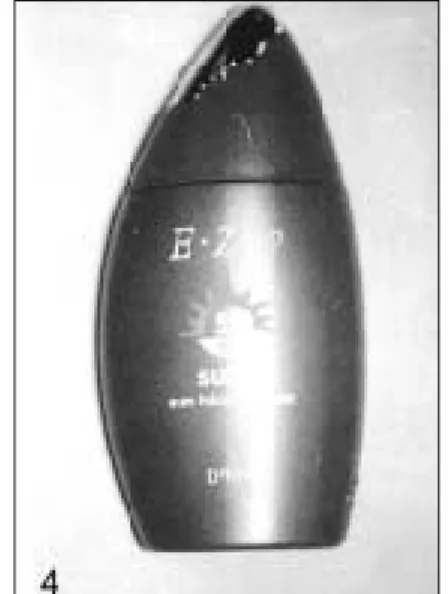
2)를 base와 catalyst를 중량비로 10 : 1로, 그리고 여 기에 중량비 0.2%로 세종류의 착색제 (dry pig- ment : cadmium yellow, titanium white, cosmetic red)(Factor II Inc., U.S.A.)(Fig. 3)를 각각 첨가하 여 대조군과 자외선 차단제 표면 도포군을 제작하고 혼합군을 위해서는 자외선 차단제 EZ-UP SPF 52 (LG Chem., Korea)(Fig. 4)를 중량비로 0.25% 첨 가하여 제작했다(Fig. 5).
3) 자외선 조사
자외선 조사기 (FLR40D/AC, Kumdong Inc., Korea) 내에 시편을 위치시키고, UVA 광원 (350 nm) 하에서 각각 200시간, 400시간 및 600시간 자외선을 조사하였다(Fig. 6).
Table 1. Material summary
Titanium white Factor II Inc., USA
Dry pigment Cadmium yellow Factor II Inc., USA
Cosmetic red Factor II Inc., USA
UV light absorber EZ-UP SPF 52 LG Chem., Korea
Silastic MDX4-4210 Silicone elastomer
Medical Grade Elastomer Dow Corning, USA
Materials Types Manufacturer
Table 2. Experimental groups and numbers of specimens
None 6
CY Mix 6
Surface application 6
None 6
UVA TW Mix 6 At 200, 400
(350nm)
Surface application 6 and 600 hours 54
None 6
CR Mix 6
Surface application 6
(CY : Cadmium yellow, TW : Titanium white, CR : Cosmetic red)
UV Light Pigment UV Light Absorber No. Measurement Total
Fig. 5. Diagram of specimen Fig. 6. Feature of 350nm UV lamp
Fig. 1. Feature of three-piece stainless steel mold Fig. 2. Feature of Silastic MDX4-4210 silicone elatomer
Fig. 3. Feature of three dry pigments Fig. 4. Feature of UV light absorber
4) 색변화 측정
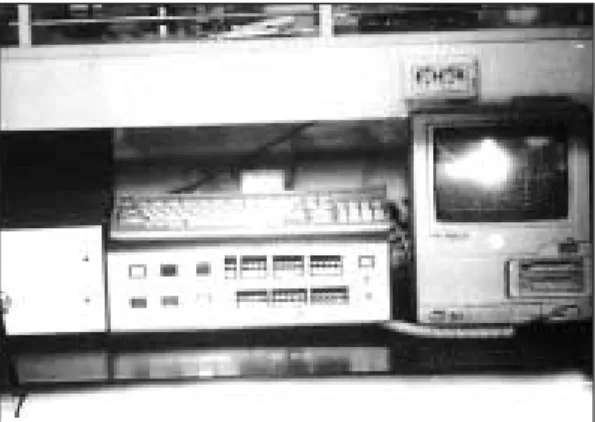
색의 변화는 reflectance spectrophotometer (TC- 6FX Color, Denshoku, Japan)를 이용하여 C.I.E.
Lab의 기준에 따라 L (명도), a (적색-녹색), 및
b(황색-청색)의 값을 측정하여 ΔE = [(ΔL)2+ (Δ a)2+ (Δb)2]1/2의 공식에 따라 색의 변화량을 측정하 였다(Fig. 7).
3. 통계처리
색변화량에 각각의 착색제 (dry pigment), 자외선 차단제의 적용 방법, 및 자외선 조사기간이 미치는 영향을 측정하기 위해 SPSS V5.02 for Win (SPSS Inc., U.S.A.)을 사용하였다.
각군들이 정규분포 (normal distribution)를 이루 는지를 검사하기 위해 K-S test (Kolmogorov - Smirnov Goodness of Fit test)를 시행하였고, 각 요 소가 결과에 미치는 영향을 알아보기 위해 ANOVA 검정 및 multiple comparison Scheffe test를 통하여 각 군간의 유의성을 분석하였다.
Table 4. Result of ANOVA test for color change (ΔE) after 200 hours of UV light exposure
Main Effects 514.378 4 128.595 213.680 .000
Pigment 467.785 2 233.892 388.648 .000
UV absorber 46.594 2 23.297 38.711 .000
2-Way Interactions 30.300 4 7.575 12.587 .000
Pigment UV absorber 30.300 4 7.575 12.587 .000
Explained 44.678 8 68.085 113.133 .000
Residual 27.081 45 .602
Total 571.760 53 10.788
Source of variation Sum of Mean
Squares DF
Square F Sig of F
Fig. 7. Feature of reflectance spectrophotometer
Table 3. Color change (ΔE) after 200 hours of UV light exposure
None 5.11 ± 0.82
CY Mix 3.40 ± 0.96
Surface application 4.52 ± 0.53
None 3.52 ± 0.97
TW Mix 3.14 ± 0.75
Surface application 3.38 ± 0.81
None 12.48 ± 1.05
CR Mix 7.76 ± 0.46
Surface application 9.84 ± 0.28
CY : Cadmium yellow, TW : Titanium white, CR : Cosmetic red)
Pigment UV light
absorber treatment ΔE (Mean ±SD)
Table 5. Results of one-way ANOVA test for color change (ΔE) after 200 hours according to type of pig- ment regardless of UV light absorber treatment
BetweenGroup 2 467.7846 233.8923 114.7245 .0000
WithinGroup 51 103.9752 2.0387
Total 53 571.7598
Source DF Sum of Mean
F Ratio F prob
Squares Squares
Table 6. Results of multiple range test for color change (ΔE) after 200 hours according to type of pig- ment regardless of UV light absorber treatment (Scheffe test)
TW CY
CR * *
* Denotes pair of groups significantly different at the 0.05 level
TW CY CR
3.34 ± 0.95 4.34 ± 1.04 10.03 ± 2.09
Table 8. Results of multiple range test for color change (ΔE) after 200 hours according to treatment of UV light absorber in the CY group (Scheffe test)
Mix Surface treatment
None * *
* Denotes pair of groups significantly different at the 0.05 level
Mix Surface treatment None
3.40 ± 0.96 4.52 ± 0.53 5.11 ± 0.82
Table 7. Results of one-way ANOVA test for color change (ΔE) after 200 hours according to treatment of UV light absorber in the CY group
BetweenGroup 2 9.1221 4.5611 7.2830 .0062
WithinGroup 15 9.3939 .6232
Total 17 18.5160
Source DF Sum of Mean
F Ratio F prob
Squares Squares
Ⅲ. 실험결과 1. 200시간 조사
200 시간 동안 자외선 (350nm) 조사한 결과는 다 음과 같다(Table 3).
350nm의 자외선을 200 시간 조사후 ANOVA 검정 의 결과다(Table 4).
200시간 동안 자외선 조사한 후 각 pigment간의
색변화량에 대한 one-way ANOVA 및 multiple range test (Scheffe test)를 시행한 결과는 다음과 같 다 (Table 5, 6).
Cadmium yellow를 혼합한 군에서 200 시간의 자 외선 조사후 자외선 차단제 처리방법이 색변화량에 미치는 결과에 대한 one-way ANOVA 및 multiple range test (Scheffe test)를 시행한 결과는 다음과 같 다 (Table 7, 8).
Titanium white군에서의 200 시간의 자외선 조사
후 자외선 차단제 처리방법에 대한 one-way ANO- VA 및 multiple range test (Scheffe test)의 결과는 다음과 같다(Table 9).
Cosmetic red군에서 200시간의 자외선 조사후 자 외선 차단제 처리방법에 대한 one-way ANOVA 및
multiple range test (Scheffe test)의 결과는 다음과 같다(Table 10, 11).
Table 11. Results of multiple range test for color change (ΔE) after 200 hours according to treatment of UV light absorber in the CR group (Scheffe test)
Mix Surface treatment
None * *
* Denotes pair of groups significantly different at the 0.05 level
Mix Surface treatment None
7.76 ± 0.46 9.84 ± 0.28 12.48 ± 1.05
Table 10. Results of one-way ANOVA test for color change (ΔE) after 200 hours according to treatment of UV light absorber in the CR group
BetweenGroup 2 67.3267 33.6633 72.4928 .0000
WithinGroup 15 6.9655 .4644
Total 17 74.2922
Source DF Sum of Mean
F Ratio F prob
Squares Squares
Table 12. Color change (ΔE) after 400 hours of U.V. light exposure
None 9.91±1.00
CY Mix 7.63±0.67
Surface application 9.00±0.47
None 5.28±0.65
TW Mix 4.47±0.80
Surface application 4.84±0.62
None 46.96±1.14
CR Mix 36.99±0.85
Surface application 42.04±0.96 CY : Cadmium yellow, TW : Titanium white, CR : Cosmetic red)
Pigment UV light
absorber treatment ΔE (Mean ±SD) Table 9. Results of one-way ANOVA test for color change (ΔE) after 200 hours according to treatment
of UV light absorber in the TW group
BetweenGroup 2 .4450 .2225 .3113 .7371
WithinGroup 15 10.7220 .7148
Total 17 11.1670
Source DF Sum of Mean
F Ratio F prob
Squares Squares
Table 13. Result of ANOVA test for color change (ΔE) after 200 hours of UV light exposure
Main Effects 15127.274 4 3781.819 5612.446 .000
Pigment 14956.684 2 7478.342 11098.308 .000
UV absorber 170.590 2 85.295 126.583 .000
2-Way Interactions 144.957 4 36.239 53.781 .000
Pigment UV absorber 144.957 4 36.239 53.781 .000
Explained 15272.232 8 1909.029 2833.114 .000
Residual 30.322 45 .674
Total 15302.554 53 288.727
Source of variation Sum of Mean
Squares DF
Square F Sig of F
Table 14. Results of one-way ANOVA test for color change (ΔE) after 400 hours according to type of pigment regardless of UV light absorber treatment
BetweenGroup 2 14956.6838 7478.3419 1102.7135 .0000
WithinGroup 51 345.8699 6.7818
Total 53 15302.5538
Source DF Sum of Mean
F Ratio F prob
Squares Squares
Table 15. Results of multiple range test for color change (ΔE) after 400 hours according to type of pig- ment regardless of UV light absorber treatment (Scheffe test)
TW
CY *
CR * *
* Denotes pair of groups significantly different at the 0.05 level
TW CY CR
4.86 ± 1.08 8.84 ± 1.20 41.99 ± 4.29
Table 16. Results of one-way ANOVA test for color change (ΔE) after 400 hours according to treatment of UV light absorber in the CY group
BetweenGroup 2 15.8218 7.9564 14.2533 .0003
WithinGroup 15 8.3732 .5582
Total 17 24.2860
Source DF Sum of Mean
F Ratio F prob
Squares Squares
Table 17. Results of multiple range test for color change (ΔE) after 400 hours according to treatment of UV light absorber in the CY group (Scheffe test)
Mix
Surface treatment *
None *
* Denotes pair of groups significantly different at the 0.05 level
Mix Surface treatment None
7.63 ± 0.67 9.00 ± 0.47 9.91 ± 1.00
Table 21. Result of multiple range test for color change (ΔE) after 600 hours according to treatment of UV light absorber in TW group Scheffe test)
Mix
Surface treatment *
None *
* Denotes pair of groups significantly different at the 0.05 level
Mix Surface treatment None
5.42 ± 0.66 6.69 ± 0.22 7.02 ± 0.68
Table 18. Color change (ΔE) after 600 hours of UV light exposure
None 11.85±0.95
CY Mix 9.32±0.61
Surface application 11.45±0.40
None 7.02±0.68
TW Mix 5.42±0.66
Surface application 6.69±0.22
None 60.32±1.23
CR Mix 47.12±0.71
Surface application 53.42±1.27 CY : Cadmium yellow, TW : Titanium white, CR : Cosmetic red)
Pigment UV light
absorber treatment ΔE (Mean ±SD)
Table 19. Result of ANOVA test for color change (ΔE) after 600 hours of UV light exposure
Main Effects 24774.336 4 6193.584 9288.711 .000
Pigment 24472.498 2 12236.249 18351.085 .000
UV absorber 301.838 2 150.191 226.338 .000
2-Way Interactions 252.092 4 63.023 94.517 .000
Pigment UV absorber 252.092 4 63.023 94.517 .000
Explained 25026.428 8 3128.303 4691.614 .000
Residual 30.005 45 .667
Total 25056.433 53 472.763
Source of variation Sum of Mean
Squares DF
Square F Sig of F
Table 20. Result of one-way ANOVA test for color change (ΔE) after 600 hours according to treat- ment of UV light absorber in TW group
BetweenGroup 2 8.5546 4.2773 13.5426 .0004
WithinGroup 15 4.7376 .3158
Total 17 13.2923
Source DF Sum of Mean
F Ratio F prob
Squares Squares
2. 400시간 조사
400시간 동안 자외선 (350nm)을 조사한 결과는 다음과 같다(Table 12 - 15).
Cadmium yellow를 혼합한 군에서 400시간의 자외 선 조사후 자외선 차단제 처리방법이 색변화량에 미 치는 결과에 대한 one-way ANOVA 및 multiple range test (Scheffe test)를 시행한 결과는 다음과 같 다(Table 16, 17).
Titanium white와 Cosmetic red군은 200시간 에서와 같은 결과가 나타났다.
3. 600시간 조사
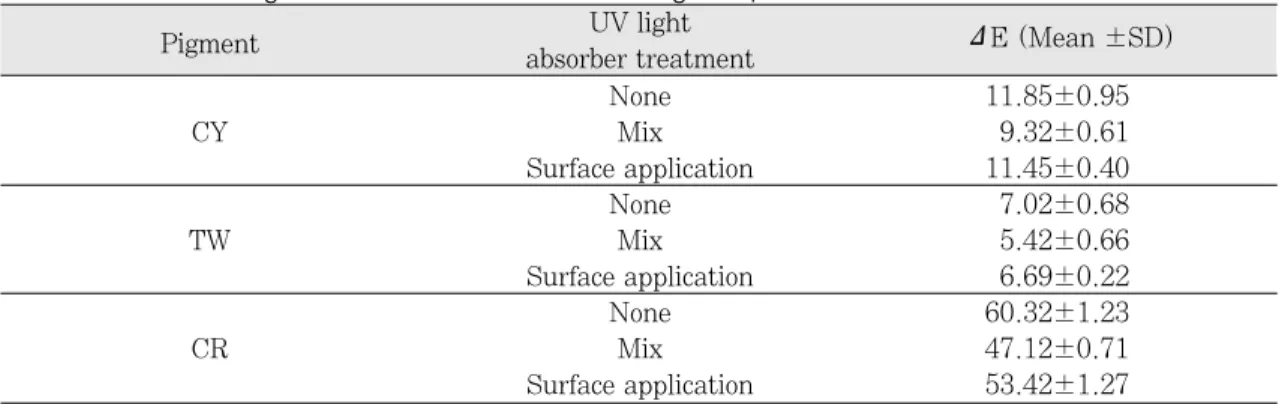
600시간 동안 자외선 (350nm)을 조사한 후에도 200, 400시간과 같은 결과가 나타났다(Table 18, 19).
600시간 동안 자외선 조사한 후 각 pigment간의 색변화량에 대한 one-way ANOVA 및 multiple range test의 결과는 400시간과 동일했다..
Titanium white군에서 600시간의 자외선 조사후 자외선 차단제 처리방법이 색변화량에 미치는 결과 는 200, 400시간과는 다른 결과가 나타났다(Table 20, 21).
Cadmium yellow와 Cosmetic red를 혼합한 군에 서는 600시간의 자외선 조사후의 결과는 400시간과 동일했다.
Ⅴ. 총괄 및 고안
최근에는 선천적 기형, 악성 종양 등의 질환 및 외 상에 의해 악안면 보철물을 필요로 하는 환자가 점 점 늘고 있는 추세다. 따라서 이런 악안면 보철물을 제작하기 위한 악안면 보철재료 분야 및 이런 악안 면 결손부를 재건하려는 시도와 연구도 함께 발전해 왔다34).
악안면 보철의 성공에 대한 여러 가지 기준들이 있 다 : 결손조직의 범위를 적절히 수복할 수 있고, 형 태적인 내구성 및 유연성을 가지며, 색상, 표면성질 그리고 보다 자연스러운 외형을 표현해 줄 수 있어 야한다. 그 외에도 보철물의 장착이 용이하고 유지 가 좋아야 한다12,28,67-69).
이런 악안면 보철 재료의 이상적 성질에 대해 Rahn과 Boucher46), Sweeney 등55), Beumer와 Zlotolow10), Moore 등42), Lewis와 Castleberry38), 김 등1), 나 등2), 조 등3)외에도 많은 학자들이 보고하였 다. 악안면 재료는 높은 인장강도, 신장율, 찢김강도, 적절한 경도와 표면장력, 체적의 안정성 및 화학물 이나 자외선에 대한 저항성 같은 기계적 성질과 비 독성, 비발암성, 위생성, 가벼운 비중을 가지고 환자 들에 널리 공급하기 위해서 경제성을 가지고 있어야 한다2,3).
1973년 치과 생체재료 협회(Dental Biomaterials Research Priorities)의 심포지움13)에서는 보다 진보 된 악안면 보철재료의 필요성에 대해 언급하였다.
그 후 지난 20여년간 악안면 보철재료는 상당한 발 전을 거듭하였다. 최근 폴리실록산, 폴리비닐클로라 이드, 폴리우레탄, 폴리메틸메타크릴레이트, 실리콘 등이 악안면 보철 재료로 흔히 사용되고 있다. 그렇 지만 현재 사용되고 있는 다수의 재료 중에서 악안 면 보철재료가 갖추어야 할 요구조건을 모두 만족시 키는 이상적인 재료는 아직까지도 개발되지 않았다1-
3,57).
본 실험에 사용된 Silastic MDX4-421038,42,62,65)
은 그 사용이 가장 보편화된 실리콘 중 하나이며, 중합하 기에 편리한 실온 중합형 (RTV) 실리콘으로서 중합 후에도 우수한 물리적 성질을 가지며 내면 색상화가 가능하다. 그러나 실온에서의 중합시간이 상당히 길 고 변연강도가 부족하며 환경 및 시간 경과에 따른 변색 등의 단점들을 가지고 있는 것으로 보고되고 있다3,18,35,64,66)
. Yu 등65)과 Udagama60)는 새로운 실리 콘인 Silastic Medical Adhesive Type A를 소개하였 고, Farah 등20,21)은 이들 실리콘의 혼합 사용으로 조 금 더 유연한 재료를 형성하여 안면 표정의 자연스 러움을 증가시킬 수 있다고 발표했다37,44,61). 1976년 Firtell 등23)은 물리적 성질의 향상을 위한 재료의 혼 합에 대한 개념을 소개했으며, 이렇게 함으로써 보 철물의 무게를 감소시킬 수 있다고 보고하였다.
이런 악안면 보철 재료의 물성에 관한 연구들이 발 표됨과 함께 악안면 보철물의 심미성에 관한 문제들 이 제기되고, 이에 관한 문헌들도 보고된 바가 있다.
과거에는 악안면 보철재료의 수도 제한되었을 뿐 아니라, 기능적인 면에 비해서 심미적인 면에 대한 중요성은 무시되었다. 그러나 Chalian과 Drane14)
이 악안면 부위의 보철적인 재건이 환자의 심리적, 사회적 생활에 상당히 중요한 역할을 한다고 연구, 발표한 이래 심미성도 하나의 중요한 요소가 되었 다. 즉 악안면 보철이란 결손된 악안면 부위를 인공 적인 물질을 이용하여 해부학적으로나 기능적, 심미 적으로 재건하는 과학이자 예술로 부각되었다34).
악안면 보철물의 심미는 바로 재료를 피부색과 얼 마나 조화를 이룰 수 있게 해주는가에 달려 있다. 초 기에는 악안면 보철물의 적절한 피부색을 형성하기 위해 Kazanjian 등33), Bulbulian11), Clarke15) 및 Ackerman5)은 적절한 피부색을 만들기 위해 악안면 실리콘 외부에 색을 도포하는 법을 소개했다. 그 후 1960년에 Barnhart8)는 특정 색을 지닌 메틸메타크 릴레이트 (methyl methacrylate)를 실리콘에 혼합함 으로써 조금더 자연스럽고 오래 지속되는 방법을 소 개하여 악안면 보철물의 색상 형성에 새로운 장을 열었다. 1960년대 말 Tashma56)는 무기 염료 가루 (inorganic pigment powder)를 메틸메타크릴레이트 와 같이 혼용하는 방법을 소개하고, Firtell과 Bartlett24)은 나아가서 메틸메타크릴레이트를 배제하 고 무기 염료 가루(inorganic pigment powder)만을 실리콘에 혼합하는 방법을 소개하여, 실리콘의 내부 색형성의 발전을 가져왔다. 그러나 내부에 색소를 혼합함에도 불구하고 자외선을 장기간 조사하는 경 우 색이 변색되는 단점이 있었다. Quellette45)은 화가 들이 사용하는 분무기를 이용하여 악안면 보철물의 외면에 색을 분사하였다. 이 방법은 색의 균일한 분 사로 인해 실제 피부같은 색을 형성하기는 했으나 이 방법 또한 장기적인 색안정을 보이지는 못했기에 널리 통용되지는 못했다. 1970년 Schaff47)는 악안면 보철물의 색상을 형성하기 위해“tatooing tech- nique”를 소개했으나, 변연부위의 강도를 약화시키 는 단점이 있어 널리 사용되지는 못했다.
앞서 소개한 많은 시도들에도 불구하고 악안면 보 철 재료의 색상을 형성하는 이상적인 방법은 아직까 지 개발되지 못했다. 대부분의 방법들이 나름대로의 장점들을 지니고는 있었으나 장기적으로는 적절한 색안정성을 보이는 방법은 없었다. 이런 악안면 보 철물의 색변화는, 악안면 보철물의 수명을 단축시켰 다. 이런 색상을 변화시키는 요인은 수분에의 노출, 화장품을 바르고 지울 때 발생하는 마찰력, 미생물 의 증식59)에 의해서도 나타나나, 주원인은 태양에 의
한 장기적인 자외선 조사 때문인 것으로 밝혀졌다.
현재 이러하 자외선에 관한 문제는 자동차 배기 가 스 등의 환경 오염으로 인한 오존층의 파괴로 더욱 심해지고 있는 추세다. 이러한 자외선을 억제하기 위한 방법들이 연구되고 있지만, 현재 자외선 차단 제의 도포외에는 상용되고 있는 방법이 없다. 이러 한 자외선 차단제는 자외선 차단의 주기능을 담당하 는 성분인 폴리메톡시신나메이트(polymethoxysi- namate)에 의해 자외선의 영향을 최소화하고 이 성 분의 함량이 증가함에 따라 자외선 차단 지수가 높 아진다. 그러나 아직까지도 이러한 자외선 차단제의 효과에 대해서는 의견이 분분하다.
따라서 본 실험에서는 현재 가장 흔히 사용되는 방 법인 착색제 (dry pigment)를 이용한 실리콘의 내부 에 색소를 첨가하는 방법을 이용하였다. 3종류의 착 색제 (dry pigment) (Cadmium yellow, Titanium white, Cosmetic red)를 실리콘에 혼합하고 자외선 조사에 대한 저항성을 증진시키기 위해 자외선 차단 제를 혼합하거나, 표면 도포한 결과, 각각의 착색제 (dry pigment)마다 자외선 차단제가 미치는 영향은 동일하지는 않았으나, 자외선 차단제를 혼합한 군이 모든 색상에서, 장시간 자외선을 조사할 경우 표면 도포 하거나 혼합하지 않은 군보다 색변화량이 적은 것으로 나타났다. 이상의 결과로 미루어 보아 악안 면 보철물의 색안정성을 위해서는 자외선 차단제를 일정량 혼합하는 것이 추천되나 아직까지는 자외선 차단제를 혼합할 경우 악안면 실리콘의 물리적 성질 에 어떤 변화를 일으키는지에 대한 자료는 미비하기 에, 보다 심미적이면서 이상적 물리적 성질을 가진 악안면 보철물을 제작하기 위해서 자외선 차단제를 혼합했을 때 악안면 실리콘의 물리적 성질에 미치는 영향에 관해 앞으로 다양한 연구가 필요한 것으로 사료된다.
Ⅵ. 결 론
악안면 보철 재료의 색상의 변화는 자연광에 의한 자외선 조사, 실리콘의 땀 등에 의한 수분에의 노출, 및 화장품을 바르고 지울 때 발생하는 마찰 등에 의 해 발생한다.
따라서 본 연구에서는 악안면 실리콘 (Silastic MDX4-4210 Medical Grade Elastomer ; Dow
Corning., U.S.A.)에 3가지 착색제 (dry pigment) (Titanium white, Cadmium yellow 및 Cosmetic red) 를 각각 첨가하고 자외선 차단제 적용 방법에 따라 (혼합한 군, 표면 도포한 군, 혼합하지 않은 군) 처리 한 후, 350nm의 자외선을 200, 400, 및 600시간 동 안 조사하여 자외선 조사에 따른 실리콘 혼합물과 각각의 색소의 색 안정성과, 자외선 차단제가 색안 정성에 미치는 결과를 측정했다.
각 시간대에서 측정된 값들은 ANOVA 검증 및 multiple comparison Scheffe test를 이용하여 다음 과 같은 결론을 얻었다.
1. 착색제(dry pigment)간의 비교에서는, 200시간에 서는 CR군이 TW 및 CY군에 비해 유의성 있게 큰 색변화량을 나타냈고, 400 및 600시간에서는 CR, CY, TW군 순서로 유의하게 큰 색변화량을 나타냈다(p< 0.05).
2. Cosmetic red를 혼합한 시편(CR군)은 모든 시간 대에서 자외선 차단제를 혼합하지 않은 군, 표면 도포한 군, 혼합한 군의 순서으로 유의하게 큰 색 변화량을 나타냈다(p<0.05).
3. Cadmium yellow를 혼합한 시편(CY군)은 200 시 간 조사후에는 자외선 차단제를 혼합하지 않은 군이 혼합한 군에 비해 유의하게 큰 색변화량을 나타냈으나, 400 및 600시간 조사후에는 자외선 차단제를 혼합하지 않은 군 및 표면 도포한 군이 혼합한 군에 비해 유의하게 큰 색변화량을 나타 냈다(p<0.05).
4. Titanium white를 혼합한 시편(TW군)은 200, 400시간 조사후에는 3군간에 유의한 차이가 없었 으나, 600시간 후에는 자외선 차단 제를 표면 도 포한 군 및 혼합하지 않은 군이 혼합한 군에 비해 유의하게 큰 색변화량을 나타냈다(p<0.05).
이상의 결과로 볼 때 자외선 차단제의 혼합에 대 한 영향은 착색제(dry pigment)의 종류에 따라 다르 게 나타났지만, 장시간의 자외선 노출에서는 자외 선 차단제를 혼합한 경우가 다른 군들에 비해서 색 변화에 대한 저항성이 증가되었다. 따라서 악안면 실리콘 재료의 자외선에 의한 색변화량을 감소시키 는데 자외선 차단제의 혼합이 유리한 것으로 사료 된다.
참 고 문 헌
1. 김봉구, 조인호 : 악안면 보철용 실리콘 재료들 의 물리적 성질에 관한 비교연구. 단국대학교 치의학 연구소 논문집. 1995.
2. 나경란, 조인호 : 다양한 처리방법에 따른 실리 콘 악안면 보철재료의 물리적 성질에 관한 연 구. 단국대학교 치의학 연구소 논문집. 1995.
3. 조상준, 조인호 : 악안면 보철용 폴리우레탄과 실리콘의 접착도에 관한 실험적 연구. 단국대학 교 치의학 연구소 논문집. 1996.
4. Abdelnnabi, M.M. and Moore, D.J. : In Vitro comparison study of MDX4-4210 and polymethyl siloxane silicone materials. J Prosthet Dent. 51:523, 1984.
5. Ackerman, A.J. : Prosthetic management of oral and facial defects following cancer surgery. J Prosthet Dent. 5:413, 1955.
6. Andres, C.J., Haug, S.P., Brown, D.J. : Effects of environmental factors on max- illofacial elastomers : Part I - Literature review. J Prosthet Dent. 68:327, 1992.
7. Andres, C.J., Haug, S.P., Brown, D.J. : Effects of environmental factors on max- illofacial elastomers : Part II - Report of sur- vey. J Prosthet Dent. 68:519, 1992.
8. Barnhart, G.W. : A New Material and Technic in the Art of Somato- Prosthesis. J Dent Res. 30:836, 1960.
9. Barnhart, G.W. : Maxillofacial prosthetics.
Philadelphia 1970
10. Beumer, Z.and Zlotlow, I. : Restoration of facial defects 1st ed., St Louis, CV Mosby, 311, 1979.
11. Bulbulian, A.J. : Congenital and postoperative loss of the ear. D Digest 48:472, 1942.
12. Cantor, R., Webber, R.L., Stroud, L. : Methods for evaluating prosthetic facial materials. J Prosthet Dent. 21:324, 1969.
13. Castleberry, D.J. : Materials for External Prostheses, The choice and the challenge.
Proceedings Symposium on Dental Biomaterials Research Priorities, DHEW Publication No.
NIH-74:548, 1973.
14. Chalian, V.A. : Evaluation and comparison of physical properties of materials used in max- illofacial prosthetics. Master’s Thesis, Indiana University, 1976.
15. Clarke, C.D. : Facial and body prosthesis. The GV Mosby Company, St. Louis, 1945.
16. Chu, C.C., Fischer, T.E. : Evaluation of sunlight stability of polyure- thane elas- tomers for maxillofacial use I. J Biomed Mater Res. 12:347, 1978.
17. Craig, R.E., Koran, A., Yu,R. : Elastomers for maxillofacial applications. Biomaterials 1:112, 1980.
18. Craig, R.E., Koran, A., Yu R, Spencer J. : Color stability of elastomers for maxillofacial appliances. J Dent Res. 21:324, 1978.
19. Crewdson, L. : Correlaion of outdoor and lab- oratory axcellerated weathering tests at cur- rently used and higher irradiance levels.
Part I. Atlas Sun Spots 21, 1991.
20. Farah, J.W., Robinson, J.C., Hood, A.A. : Force-displacement properties of a modi- fied cross-linked silicone compared with facial tissues. J Oral Rehab. 15:277, 1988.
21. Farah, J.W., Robinson, J.C., Koran, A. : Properties of a modified cross -linked silicone for maxillofacial prostheses. J Oral Rehab.
14:599, 1987.
22. Fine, L., Robinson, J.E., Barnhart, G.W., Karl, L. : New method for coloring facial prosthe- ses. J Prosthet Dent. 46:538, 1978.
23. Firtell, D.N., Donnan, M.L. : Leight-weight RTV silicone for Maxillo- facial prostheses. J Prosthet Dent. 36:544, 1976.
24. Firtell, D.N., Bartlett, S.O. : Maxillofacial pros- thesis : Reproducible fabrication. J Prosthet Dent. 22:247, 1969.
25. Goldberg, A.J., Craig, R.G. : Polyurethane Elastomers as Maxillofacial Prosthetic Materials. J Dent Res. 57:563, 1978.
26. Goldberg, A.J., Craig, R.G., Fillisko, F.E. UV
light stability of external maxillofacial pros- thetic materials International Association of Dental Research Program and Abstracts of Papers. 55:B138, 1976.
27. Gonzalez, J.B., Chao, E.Y.S., An, Kai-Nan.
: Physical and mechanical behavior of polyurethane elastomer formulations used for facial prostheses. J Prosthet Dent. 39:307, 1978.
28. Gonzalez, J.B. : Polyurethane elastomers for facial prostheses. J Pros-thet Dent. 39:179, 1978.
29. Hanson, M.D., Shipman, B., Blomfield, JV., Janus, CE. Commercial cosmetics and their role the colorinf of facial prostheses. J Prosthet Dent. 50:818, 1983.
30. Haug, S.P., Andres, C.J., Munoz, C.A., Brnal, G. : Effects of environ- mental factors on maxillofacial elastomers : Part III - Physical properties. J Prosthet Dent. 68:644, 1992.
31. Haug, S.P., Andres, C.J., Munoz, C.A., Brnal, G. : Effects of environ- mental factors on maxillofacial elastomers : Part IV - opti- cal properties. J Prosthet Dent. 68:820, 1992.
32. Jani, R.M., Schaaf, N.G. : An evaluation of facial prostheses. J Prosthet Dent. 39:546, 1978.
33. Kazanjian, V.H., Rowe, A.T., Young, H.A. : Prosthesis of the Mouth and Face, J Dent Res.
12:651, 1932.
34. Khan, Z. : Conference Report : Materials Research in Maxillofacial Prosthetics. J Dent Res. 1541, 1992.
35. Koran, A., Yu, R., Powers, J.M., Craig, R.G. : Color stability of a pigmented elastomer for maxillofacial appliances. J Dent Res.
58:1450, 1979.
36. Koran, A., Craig, R.G. : Dynamic mechan- ical properties of maxillofacial materials. J Dent Res. 54:1216, 1975.
37. Kouyoumdjian, J., Chalian, V.A., Moore, B.K. : A comparison of the physical proper- ties of a room temperature vulcanizing sili- cone modified and unmodified. J Prosthet Dent.
53:388, 1985.
38. Lewis, D.H., Castleberry, D.J. : An assess- ment of recent advances in external max- illofacial materials. J Prosthet Dent. 43:426, 1980.
39. Lewis, D.H., Fisher, T.E., Koran, A. : A exter- nal maxillofacial prostheses. Restorative dental materials: an overview. vol. 1. London:
Quintessence, 214, 1985.
40. Lontz, J.E., Schweiger, J.W., Burger, A.W.
: Modifying Stress-Strain Profiles of Polysiloxane Elastomers for Improved Maxillofacial con- formity. J Dent Res. 53:Abstract No.890, 1974.
41. Lontz, J.F. : State-of-the-art materials used for maxillofacial prosthetic reconstruc- tion. Dent Clin North Am. 43:307, 1990.
42. Moore, D.J., Glaser, Z.R., Tabacco, M.J. : Evaluation of polymeric materials for max- illofacial prosthetics. J Prosthet Dent. 38:319, 1977.
43. Polyzois, G.L., Arne Hensten-Pettersen. : An Assessment of the physical properties and bio- compatibility of three silicone elastmers. J Prosthet Dent. 71:500, 1994.
44. Polyzois, G.L., Andreopoulos, A.G. : Some physical properties of an improved facial elastomer : A comparative study. J Prosthet Dent. 70:26, 1993.
45. Quellette, J.E. : Spray coloring of silicone elas- tomer maxillofacial prosthesis. J Prosthet Dent.
22:271, 1969.
46. Rahn, A.O., Boucher, L.J. : Maxillofacial prosthodontics. Philadelphia:WB Saunders Co, 18:30, 1970.
47. Schaaf, N.G.: Color characterizing silicone rub- ber facial prosthesis. J Prosthet Dent.
24:198, 1970.
48. Schaaf, N.G. : Reactions of the Maxillofacial
Tissues to Facial Appliances. Int Dent J.
18:790, 1968.
49. Seals, R.R., Cortes, A.L., Parel, S.M. : Fabrication of facial prostheses by applying the osseointegration concept for retention. J Prosthet Dent. 61:712, 1989.
50. Seghi, R.R., Hewlett, E.R., Kim, J. : Visual and instrumental colorimetric assesment of small color differences on translucent dental porcelain. J Dent Res. 68:1760, 1989.
51. Society of automative Engineers. Accelerated exposure of automated exterior materials using a controlled irradiance water cooled xenon arc apparatus. Specification SAEJ June, 1989.
52. Standard practice for atmospheric environ- mental exposure testings of non metallic materials (ASTM G7-83). In Annual Book of ASTM Standards 2740, 1989.
53. Standard practice for exposure of cover materials for solar collectors to natural weathering under conditions simulating operational modes (ASTM E782-81). In Annual Book of ASTM Standards 4264, 1989.
54. Standard method for calculation of color differences from instrumentally measured color coordinates(ASTM D2244-85). In Annual Book of ASTM Standards 213, 1989.
55. Sweeney, W.T., Fisher, T.E., Castleberry, D.J.
: Evaluation of Improved Maxillofacial Prosthetic Materials. J Prosthet Dent.
27:297, 1972.
56. Tashma, J. : Coloring somato prosthesis. J Prosthet Dent 11:303, 1967.
57. Turner, G.E. and Fischer, T.E. : Intrinsic col- or of isophoronepolyure- thane for maxillofacial prosthetics. Part I : Physical properties. J Prosthet Dent. 51:519, 1984.
58. Tylman, S.D. : Resiliant and Elastic Resin : Technique for Their use in Maxillofacial Prostheses. Dent dig. 50:260, 1944.
59. Udagama, A. : Urethane-lined silicone facial prostheses. J Prosthet Dent. 58:351, 1987.
60. Udagama, A. : Use of medical-glade methyl triacetoxy silane crosslinked silicone for facial prostheses. J Prosthet Dent. 48:86, 1982.
61. Vares, E.M. and Wolfaarrdt, J.F. : An Evaluation of the surface chara -cteristics of a facial prosthetic elastomer. Part I : Review of the literature on the surface characteris- tics of dental materials with maxillofacial pros- thetic application. J Prosthet Dent. 63:193, 1990.
62. Vares, E.M. and Wolfaarrdt, J.F. : An Evaluation of the surface characteristics of a facial prosthetic elastomer. Part III : Wettability and hardness. J Prosthet Dent. 63:193,
1990.
63. Vergo, T.J. and Andrew, R. : Maxillofacial prosthetics : Rehabilitation of head and neck cancer patient(III). QDT 8:427, 1984.
64. Wien, J.P. : A comparative study of select- ed elastomers subjected to accelerated and out- door weathering. Thesis. University of Minnesota. 1:183, 1980.
65. Yu, R., Koran, A., Craig, R.G. : Physical Properties of Maxillofacial Elastomers under Conditions of Accelerated Aging. J Dent Res. 59:1041, 1980.
66. Yu, R. Koran, A., Craig, R.G. : Physical Properties of a Pigmented Silicone Maxillofacial Material as a Function of Accelerated Aging.
J Dent Res. 59: 1141, 1980
The color change of maxillofacial silicone has been attributed to certain environmental factors such as exposure to the UV component of natural sunlight, wetting and drying of the elastomer, and surface abrasion resulting from the application and removal of cosmetics.
The purpose of this study was to evaluate the color change of maxillofacial silicone (Silastic MDX4- 4210) according to type of pigment (cadmium yellow, titanium white, cosmetic red), and UV absorber application method after 200, 400, and 600 hours of 350nm UV light irradiation.
The results were as follows.
1. According to type of pigments, after 200 hours cosmetic red showed significantly larger color change than cadmium yellow and titanium white, and after 400 and 600 hours color change significantly decreased in the order of cosmetic red, cadmium yellow, and titanium white (p<0.05).
2. In the cadmium yellow group, after 200 hours, the non-treatment group showed significant- ly larger color change, but after 400 and 600 hours, color change significantly decreased in the order of non-treatment, surface application and mixed group (p<0.05).
3. In the titanium white group, there was no significant color change difference between the three groups after 200 and 400 hours, but after 600 hours, the mixed group showed significantly small- er color change than the non-treatment and surface application groups (p<0.05).
4. In the cosmetic red group, there was significant decrease in color change in the order of non- treatment, surface application and mixed group (p<0.05).
From the results above, the effect of UV light absorber differed according to the type of pigment, but mixing UV light aborber with maxillofacial silicone is thought to give superior resistance against UV light irradiation in the long run.
A STUDY ON THE EFFECT OF UV LIGHT ABSORBER ON THE COLOR CHANGE OF MAXILLOFACIAL SILICONE
Yun-Seok Song, Ju-Hwan Lim, In-Ho Cho
Department of Prosthodontics, College of Dentistry, School Dankook University ABSTRACT
Key words : Cadmium yellow, Cosmetic red, Maxillofacial silicone, Titanium white, UV light absorber