Journal of Bacteriology and Virology 2008. Vol. 38, No. 4 p.249 – 257
Molecular Epidemiologic Investigation of Norovirus Infections in Incheon City, Korea, from 2005 to 2007
Young-Woo Gong
1, Bo-Young Oh
1, Hye-young Kim
1, Mi-yeon Lee
1*, Yong-Hee Kim
1, Jong-Myoung Go
1, Jea-Mann Lee
1, Hye-sook Jeong
2and Doo-Sung Cheon
21Incheon Institute of Health & Environment:18-4, Sinheung-dong 2-ga, Jung-gu, Incheon 400-102,
2Division of Enteric and Hepatitis Viruses, Center for Infectious Diseases, National Institute of Health, Seoul, 122-701, Republic of Korea
Received : August 18, 2008 Revised : November 30, 2008 Accepted : December 11, 2008
Noroviruses (NoVs) cause major epidemic gastroenteritis in humans. To obtain the molecular epidemiological information on gastroenteritis sporadic cases in Incheon city, Korea, we analyzed the nucleotide sequences of NoV strains detected during 2005~2007. We performed one step RT-PCR amplifying the open reading frame (ORF) 2 (capsid region) followed by semi-nested PCR from the stool samples from acute gastroenteritis patients from 2005 to 2007.
Amplicons of the capsid region of norovirus strains were sequenced and analyzed using MegAlign in DNAstar software.
Faecal samples were collected from 6,618 acute gastroenteritis patients during the study period. The incidence of NoV infection was about 10.7% (n=708) among patients with acute gastroenteritis and genotypes of the 320 positive samples were determined by sequence analysis. Sequence comparison of NoV strains revealed that 16 genotypes of GII NoV strains were circulated in Incheon city, from 2005 to 2007. Among norovirus strains, the most prevalent genotype GII/4 was most common 69.7% (223 strains), followed by GII/3 17.2% (55 strains), GII/12 4.4% (14 strains), GII/1 2.2% (7 strains), GII/5 1.6% (5 strains), GII/15 1.3% (4 strains) and 0.6% (2 strains) each of GII/9 and GII/16. The GII-3 strains were most frequently detected in Incheon, 2005. From the phylogenetic analysis of NoV strains, we detected 16 genotypes of GII NoV strains during 2005~2007 in Incheon. Our results suggest that various genotypes of human NoV strains in sporadic case of AGE were circulated in Incheon, Korea.
Key Words: Norovirus, Gastroenteritis, Faecal specimens, RT-PCR, Genotypes
서 론
바이러스성 설사질환의 주요 병원체로 로타바이러스, 노로바이러스, 사포바이러스를 포함한 사람 칼리시바이
러스, 장 아데노바이러스, 아스트로바이러스 등이 있다 (4). 이중 노로바이러스는 영 · 유아뿐 아니라 성인층에도 감염이 높고 집단 식중독을 일으키는 주요한 원인체로 알려져 있다 (10,12,17). 노로바이러스는 미국 오하이오 주 Norwalk 지방에서 발생한 집단 식중독에서 그 지역 의 지명을 따서 Norwalk virus로 불리기 시작하였으며, 정확한 바이러스의 분류가 이루어지기 전에는 형태학 적으로 유사한 소형의 구형바이러스들과 더불어 Small Round Structural Virus (SRSV)로 총칭되었다 (2,26). 이후 International Committee on Taxonomy of Viruses (ICTV)에서 바이러스의 유전체 염기서열, 유전자의 구성, 숙주동물의
249
*Corresponding author: Mi-yeon Lee. Incheon Institute of Health and Environment, Sinheung-dong 2-ga, Jung-gu, Incheon, 400-102, Republic of Korea.
Phone: +82-32-440-5607, Fax: +82-32-440-5619, e-mail: [email protected]
**This research was performed as a part of the laboratory investigation of acute diarrhea, managed by the National Institute of Health, Republic of Korea.
특성 분석을 통한 분류법에 의거하여 Norwalk-Like virus 는 norovirus로 Sapporo-like virus는 sapovirus로 명명되어 사용되고 있다 (34).
Norovirus는 Sapovirus, Lagovirus, Vesivirus 등과 Calici- viridae에 속하는 7.5 kb의 single positive stranded RNA 바 이러스로서 유전자는 세 개의 단백질 (open reading frame) 을 코딩하는 것으로 알려져 있다. 노로바이러스는 capsid 부위와 RNA dependent RNA polymerase (RDRP)의 조성에 따라 다양한 유전형으로 분류되며, 대부분의 인체 감염은 GI형, GII형에 의한 것으로 알려져 있다 (7,15,16,27,44,45).
유전자형은 변이 정도에 따라 GI형은 14종, GII형은 17종 의 유전형으로 알려져 있으나, 최근 새로운 아형이 검출 되어 GI형은 15종, GII형은 18종으로 분류되고 있다 (22, 25,36,42).
노로바이러스는 12~48시간의 잠복기를 거쳐 메스꺼움, 구토, 설사, 복통의 주요 증상을 나타내며 때로 두통, 오 한 및 근육통을 유발하기도 한다. 증상은 보통 1~2일 정 도 짧게 나타나지만, 하루에도 몇 번씩 구토 등의 심각한 증세를 보이기도 한다 (38).
노로바이러스는 1차적으로 경구에서 분변의 경로로 사 람과 사람간의 전파뿐만 아니라 오염된 식품, 물 등을 매 개로 하여 전 연령층에서 집단 발병의 원인체로 작용하 며 (3,6,9,10,32,43), 전염성이 강하여 병원 내 감염, 유람 선, 놀이방, 거주지 등의 밀집된 환경 내에서 감염자와 의 접촉으로 공기전염이나 오염된 바닥을 통한 전파로 폭발적인 유행의 형태를 보이기도 하여 이로 인한 2차 발병율이 30% 이상으로 증가하고 있다 (11,31).
2000년 이후부터 국립보건연구원에서는 설사원인 병원 체에 의한 국내 발생현황을 지속적으로 감시하고자 전국 17개 시 · 도 보건환경연구원에 의해 급성설사질환감시사 업이 진행되고 있다. 특히 집단 급식과 같은 대형 식중독
을 일으키는 바이러스성 장염의 원인 병원체로 대두되고 있는 노로바이러스의 조기 검출을 위하여 2004년부터 바 이러스성 설사질환 감시체계를 수행하고 실험실 감시기 관에 유전자 검출 kit가 보급되어 검사방법의 표준화가 이루어져 노로바이러스에 의한 원인 병원체의 조기 검출 이 용이하게 되었다. 본 연구는 2005년부터 2007년까지 3년간 인천지역에서 산발적으로 발생한 급성 위장관염 검체를 대상으로 노로바이러스를 검출하여 유전자형을 분석하였다. 다양하게 검출된 유전자형을 통해 년 도별, 연령별, 계절적 특성 및 노로바이러스의 분자 역학적 특 성을 규명하여 새로운 유전자형의 유입을 조기에 탐지하 고, 최근 집단 식중독 등으로 인한 사회경제적 피해예방 및 홍보에 대한 기초 자료로 활용하고자 하였다.
재료 및 방법
1. 재료 및 가검물 전처리
본 연구는 2005년부터 2007년까지 인천지역의 병 · 의 원을 통해 설사로 내원한 환자의 대변을 수집하여 2005 년 2,049건, 2006년 2,288, 2007년 2,281건으로 총 6,618건 의 분변가검물을 사용하였다. 전처리 과정은 대변 1 g을 멸균된 9 ml PBS (phosphate buffered saline 7.2, Sigma St.
Louis, MO, USA)에 3~4개의 glass beads를 넣고 진탕하여 부유된 가검물을 4℃에서 20분간 3,000 rpm으로 원심분 리하여 상층액 1,000 μl를 취해 새로운 시험관에 소분하 여 -70℃에서 보관하였다.
2. 노로바이러스의 RNA추출
노로바이러스 RNA 추출은 200 μl의 100% stool suspen- sion을 600 μl Tri reagent (Molecular Research Center, Inc., Cincinnati, OH, USA)와 잘 섞은 후 10분간 상온에서 방치
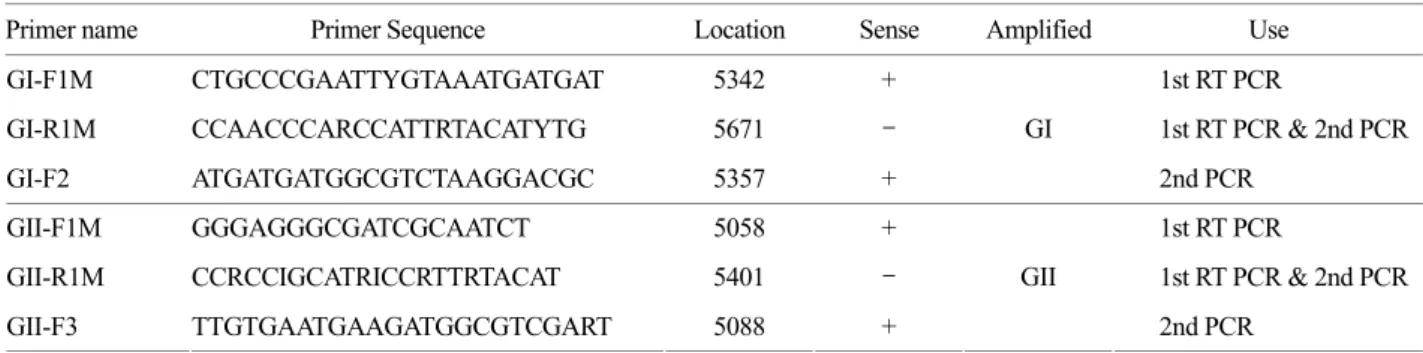
Table 1. The nucleotide sequences of primers used in this study
Primer name Primer Sequence Location Sense Amplified Use
GI-F1M CTGCCCGAATTYGTAAATGATGAT 5342 + 1st RT PCR
GI-R1M CCAACCCARCCATTRTACATYTG 5671 - 1st RT PCR & 2nd PCR GI-F2 ATGATGATGGCGTCTAAGGACGC 5357 +
GI
2nd PCR
GII-F1M GGGAGGGCGATCGCAATCT 5058 + 1st RT PCR
GII-R1M CCRCCIGCATRICCRTTRTACAT 5401 - 1st RT PCR & 2nd PCR GII-F3 TTGTGAATGAAGATGGCGTCGART 5088 +
GII
2nd PCR
한 다음 chloroform (Sigma) 200 μl를 첨가하여 혼합하고 15분간 상온에 방치하였다. 13,000 rpm/4℃에서 15분간 원심분리 후 450 μl 상층액을 취하여, 동량의 isopropanol (Sigma)을 넣고 혼합한 후 -20℃에서 하룻밤 동안 방치 시켰다. 다음날 13,000 rpm/4℃에서 30분간 원심한 후 상 층액을 버리고 1,000 μl의 cold 70% ethanol (Sigma)을 넣 고 13,000 rpm/4℃에서 10분간 원심분리하여 상층액을 제거하였다. RNA pellet은 실온에서 20분간 건조시킨 후 DEPC-DW를 30 μl 첨가하여 RT-PCR을 위한 주형으로 사용하였다.
3. 노로바이러스 유전자 검출
1) One step RT-PCR
Onestep RT-PCR를 위해 국립보건연구원에서 분양된 primer 조건에 따라 수행하였다 (Table 1). RNA template 2 μl에 2 X RT-PCR Master mix 12.5 μl, 노로바이러스 RNA polymerase와 capsid 부위에서 유래한 sense primer와 anti- sense primer를 각각 2 μl (10 pmol), DW 6 μl를 넣어 총 25 μl 반응액을 사용하였다. 유전자 증폭을 위해 PCR System 2700 (Applied Biosystems, Foster City, CA, USA)을 이용하 여 48℃에서 40분간 reverse transcription을 수행하고, 94℃ 3분 동안 denaturation 반응시킨 뒤 94℃ 30초, 56℃ 30초, 72℃ 45초로 25 cycle을 반복한 후 72℃에서 7분간 extension하였다.
2) Semi-nested PCR
Nested PCR은 RT-PCR 산물 2 μl를 이용하여 10 X PCR reaction buffer, 2.5 mM dNTP, 20 pmol primer, 1 U Taq polymerase (Bioneer, Daejeon, Korea)를 넣어서 50 μl 반응 액을 제조한 후 실험에 사용하였다. 94℃에서 3분 동안 denaturation 반응시킨 후 94℃ 30초, 58℃ 30초, 72℃ 45 초로 25 cycle을 반복한 후 72℃에서 7분간 반응시켰다.
PCR을 수행한 후 5 μl의 PCR 산물을 1% agarose gel (Cambrex Bio Science Rockland, Inc., Baltimore, MD, USA)에 전기영동하였다.
4. 노로바이러스 유전형 분석
노로바이러스 유전형 분포양상을 분석하기 위해서 2005년부터 2007년까지의 노로바이러스 유전자 검출 결 과 양성검체로 확인된 검체 708건 중에서 320건을 대상 으로 다음과 같이 genotype 분석을 실시하였다.
1) PCR 산물의 정제
증폭된 PCR 산물은 1% agarose gel (Cambrex Bio Science Rockland, Inc.)로 전기영동하여 확인한 뒤, DNA 절편을 절단한 후, AccuPrep Gel Purification kit (Bioneer)를 사용하 여 정제하였다. 절편을 effendorf 튜브에 넣고 3배 부피의
Table 2. Norovirus reference strains used for genotypic analysis Strain name Genbank accession No. Genotype
Norwalk M87661 GI-1
Southampton L07418 GI-2
Desertshield U04469 GI-3
Chiba AB022679 GI-4
Musgrove AJ277614 GI-5
Sindlesham AJ277615 GI-6
Winchester AJ277609 GI-7
BS5-98DE AF093797 GI-8
SaitamaSzUG1 AB039774 GI-9
Boxer AF538679 GI-10
SaitamaKu8 AB058547 GI-11
SaitamaKu19a AB058525 GI-12
SaitamaT35a AB112132 GI-13
Saitama25 AB097911 GI-14
Hawaii U07611 GII-1
Snow mountain agent U70059 GII-2
Toronto U02030 GII-3
Grimsby AJ04864 GII-4
Hillingdon AJ277607 GII-5
Seacroft AJ277620 GII-6
Leeds AJ277608 GII-7
Wortley AJ277618 GII-8
Alphatron AF195847 GII-9
Amsterdam AF195848 GII-10
VA97207-US AY038599 GII-11
M7-US AY130761 GII-12
Erfurt546 AF427118 GII-13
Fayeteville-US AY113106 GII-14
SaitamaKU80a AB058585 GII-15
SaitamaT53 AB112260 GII-16
SaitamaT27 AY502009 GII-17
젤 용해용 완충용액 (Buffer GB)을 첨가하고 50℃에서 젤을 용해시킨 뒤, spin column으로 옮겨 4℃에서 14,000 rpm으로 1분간 원심한 후, 세척용 완충용액 750 μl을 첨 가하고 14,000 rpm에서 1분간 원심한 후, 상층액을 취하 여 잔여 세척용 완충용액을 제거하고 30~50 μl의 증류수 로 DNA를 회수하여 다음 실험에 이용하였다.
2) Sequencing analysis
염기서열 분석을 위해 정제된 PCR 산물을 이용하여 각각의 nested PCR에 사용한 프라이머를 사용하여 양쪽
방향으로 Bigdye sequencing kit (Applied Biosystems)을 사용 하여 sequencing reaction을 하였다. 얻어진 산물을 Bigdye removal kit (Amersham Pharmacia Biotech., Little Chalfont, UK)로 정제한 뒤, automated DNA sequencer (model 377;
Applied Biosystems)를 이용하여 염기서열을 분석하였다.
Sequencing된 염기서열은 Lasergene (Copyrightc 1997 by DNASTAR, Inc., Madison, WI, USA)의 MegAlign Programme 을 사용한 phylogenetic analysis를 통해서 Table 2에서 나타 낸 prototype strain과 비교하여 유전자형을 결정하였다.
Figure 1. Monthly distribution of norovirus-associated gastroenteritis in Incheon, Korea, from January 2005 to December 2007.
Figure 2. Age group distribution of studied cases tested for norovirus detection in Incheon, Korea, 2005~2007.
결 과
1. 노로바이러스의 검출현황
2005년 1월에서 2007년 12월까지 인천지역에서 산발적 으로 발생한 급성 위장관염 환자를 대상으로 노로바이러 스 GI-314 bp, GII-313 bp의 특이적인 유전자로 전체 검사 검수 6,618건 중 10.7%인 708건이 양성으로 확인되었다.
년 도별 검출현황은 2005년 3.6% (74/2,049), 2006년 9.9%
(227/2,288), 2007년 17.8% (407/2,281)로 연도별 검출율이 점차 증가하는 것으로 확인되었다.
월별 분석 결과는 2005년에는 11월이 12.3% (28/227)로 가장 높은 검출율을 보였고, 2006년과 2007년에는 각각 3월에 35.3% (79/224), 45.9% (62/135)로 가장 높은 검출율 을 보였다 (Fig. 1).
환자 기초정보 중 연령을 알 수 있는 검체를 분석한 결과 1세 미만에서 10.1%, 1세 12.0%, 2세 12.3%, 3~4세 12.4 %, 5~9세 8.3%, 10~19세 7.5%, 20~39세 5.9%, 40~59 세 5.7%, 60세 이상에서 4.2%로 확인되었다 (Fig. 2).
2. 노로바이러스의 유전자형 분포
2005년부터 2007년까지 인천지역에서 발생한 노로바이 러스 양성검체 중 320건을 대상으로 유전자형을 분석한 결과 GI형이 2종류, GII형이 14종으로 총 16종의 유전자 형이 검출되었다. 2005년 이후 3년간 GII-4형에 의한 유 Table 3. Annual genotypic distribution of norovirus in Incheon, Korea, from 2005 to 2007
2005 2006 2007 Sub-total
Year
Genogroup Genotype No. % No. % No. % No. %
GI-04 1 0.6 1 0.3
GI GI-06 1 0.6 1 0.3
GII-01 4 3.7 3 1.7 7 2.2
GII-02 0.0 1 0.6 1 0.3
GII-03 20 60.6 15 13.9 20 11.2 55 17.2 GII-04 12 36.4 72 66.7 139 77.7 223 69.7 GII-05 1 3.0 3 2.8 1 0.6 5 1.6
GII-06 1 0.9 0.0 1 0.3
GII-09 0.0 2 1.1 2 0.6
GII-10 1 0.9 0.0 1 0.3
GII-12 6 5.6 8 4.5 14 4.4
GII-13 0.0 1 0.6 1 0.3
GII-14 1 0.9 0.0 1 0.3
GII-15 3 2.8 1 0.6 4 1.3
GII-16 2 1.9 0.0 2 0.6
GII
GII-17 0.0 1 0.6 1 0.3
Sub-total 33 100.0 108 100.0 179 100.0 320 100.0
Figure 3. Annual genotypic prevalence of norovirus strains in Incheon, Korea, from 2005 to 2007.
전자형이 69.7%로 가장 많은 발생을 보였고, 다음으로 GII-3형 17.2%, GII-12형이 4.4%, GII-1형 2.2%, GII-5형 1.6%, GII-15형 1.3%의 발생빈도를 확인하였다. 그 외 GII-9형, GII-16형은 각각 0.6%를 보였고, GI-4형, GI-6형, GII-2형, GII-6형, GII-10형, GII-13형, GII-14형, GII-17형은 각각 0.3%의 낮은 발생빈도를 보였다 (Table 3).
노로바이러스의 년도별 유전자형 분포를 살펴보면, 2005년에는 GII-3형, GII-4형, GII-5형이 검출되었으며 이 중 GII-3형이 가장 유행하였으며, 2006년에는 GII-4형이 가장 높은 빈도로 확인되었고, 다음으로 GII-3형, GII-12 형, GII-1형, GII-5형, GII-15형, GII-16형, GII-6형, GII-10형, GII-14형으로 10종의 유전자형이 발생하였다.
2007년에는 좀 더 다양한 12종의 유전자형으로 GII-4 형이 가장 우세하였고, 다음으로 GII-3형, GII-12형, GII-1 형, GII-9형, 그 외 GI-4형과 GI-6형, GII-2형, GII-5형, GII- 13형, GII-15형, GII-17형의 순으로 유행하였다 (Table 3).
고 찰
급성 위장관염 바이러스는 최근 분자생물학의 빠른 발 전과 진단기술이 발달함에 따라 과거에 진단하지 못했던 원인들이 밝혀지고 있다. 국내에서는 집단 급식이 증가되 면서 식품, 물 등을 매개로 한 급성 위장관염 및 집단 식중독의 빈도가 증가하고 있고, 이에 대한 원인 병원체 로 노로바이러스의 공중보건학적인 중요성이 인식되고 있다 (33).
본 연구는 인천지역에서 2005년부터 2007년까지 인천 지역 병 · 의원에 입원 및 내원한 급성 위장관염 환자를 대상으로 노로바이러스 감염실태 및 지역에서 유행하 고 있는 유전자형의 분포양상을 조사하였다. 본 실험은 ORF1과 ORF2 인접부위에 반응하는 primer를 사용하여 RT-PCR 및 nested PCR을 통하여 분석한 결과 노로바이 러스 양성으로 확인된 검체 중 계통학적 분석 결과 320 건의 유전자형이 결정되어 3년간 인천지역에서 산발적으 로 발생한 급성 위장관염에 의한 노로바이러스 감염증의 경우 GI형은 0.6%, GII형이 99.4%로 주로 GII 유전자형이 주요한 원인 병원체로 확인되었다. 이는 국내발생과 (21), 1999~2004년 일본 Chiba 현 (36), 1999~2005년 중국의 유행한 사례 (13) 및 2000~2004년 미국의 (8) 연구와도 일치한 결과를 보였다. 유전자형의 분포를 보면 2005년 에는 GII-3형이 가장 많이 발생하였고, 다음으로 GII-4
형, GII-5형의 3종의 유전자형이 발생하였다. 2006년에는 10가지 유형의 유전자형으로 GII-4형을 비롯한 GII-3형, GII-12형, GII-1형, GII-5형, GII-15형, GII-16형, GII-6형, GII- 10형, GII-14형이 검출되었다. 2007년에는 좀더 다양한 12가지 유전자형이 검출되어 그 중 GII-4형이 가장 우 세하였고, 다음으로 GII-3형, GII-12형, GII-1형, GII-9형, 그 외 GI-4형, GI-6형, GII-2형, GII-5형, GII-13형, GII-15형, GII-17형의 유전형이 검출되었다. 인천지역에서 발생한 주요한 GII 유전자형의 경우 검출된 14가지 유형의 유전 자형 중 GII-4형이 69.7%로 가장 많이 발생하였고, 다음 으로 GII-3형이 17.2%, GII-12형 4.4%, GII-1형이 2.2%의 유행을 보였다. 국내 발생의 경우 2004년 하반기부터 2005년 상반기에는 GII-4형이, 2005년 하반기에는 GII-3형 이 많이 보고되었는데 (20), 인천지역에서도 2005년에는 GII-4형 보다 GII-3형의 유전자형이 많이 발생하였으며, 2006년과 2007년에는 GII-4형에 의한 검출이 증가하였다 (Fig. 3). GI형의 경우는 2005년과 2006년에는 발생이 없다 가 2007년에 GI-4형과 GI-6형이 새로운 노로바이러스 유 전자형으로 검출되었다. 연령을 알 수 있는 검체를 분석 한 결과 영아인 1세 미만에서 10.1%를 비롯하여 1~4세 까지 36.7%로 가장 높게 나왔고, 학령기인 5~19세 15.8%, 장년층인 20~59세 11.6%, 60세 이상의 고령층에서 4.2%
의 검출을 보여 영 · 유아 및 청소년 연령층과 성인에 이 르기까지 전 연령층에 걸쳐 감염이 확인되었다 (5).
유행 시기는 일반적인 노로바이러스의 감염 양상처럼 (20,35,39) 11월에서 3월까지 년 평균 81.9%의 양성율을 보여 인천지역에서도 겨울철에 유행하는 것으로 확인되 었다. 산발적인 발생이 추운 계절에 유행하는 것과 달리 최근 들어 집단 식중독에서는 국외의 경우 2006년 5월 홍콩과 (18), 국내에서는 2004년 5월 제주지역에서 발생 한 지하수음용과 관련된 감염 사례에서 GI-3형이 검출되 었고 (28), 2006년 6월 인천지역을 포함한 서울, 경기지역 32개 학교에서 2,782명의 대규모 집단 식중독이 발생하 여 GI-11형이 검출되어 계절적으로 비전형적인 사례를 보여주었다.
노로바이러스는 환경적 요인에 저항성이 매우 큰 바이 러스로 높은 감염성과 광범위한 전염력을 보이는데, 최근 단체 급식 사업이 본격적으로 대형화, 산업화로 진행되고 외식 기회가 증가함에 따라 대부분의 식중독은 식품 및 수인성 병원체에 의한 발생이 급증하고 있다. 식중독 발 생의 경우 치료 후 신고하지 않거나, 뒤늦은 신고로 원인
추적에 소홀할 가능성이 있어 신속한 역학조사와 정확한 원인 규명 및 재발방지를 위한 대책수립 등에 어려움을 겪고 있는 실정이다. 이에 질병관리본부에서는 실험실 감시사업의 검체 및 집단설사환자에서 검출되는 병원체 에 대한 전파 방지 및 2차 감염을 막기 위해 2006년 6월 12일 노로바이러스를 포함한 설사유발 병원체를 신고대 상 병원체로 추가 지정하였다. 노로바이러스 감염의 경 우 경미한 증상을 보이며 특별한 치료 없이 회복되는 것 으로 알려져 있지만 (19,31,32), ml당 102 미만의 바이러스 입자만으로도 감염이 되어 사람과 사람간의 전파가 가능 하고, 증상이 없는 상태에서도 바이러스 배출이 가능하기 때문에 2차 감염의 위험성이 증가된다고 보고하고 있다 (38). 특히 항원성의 다양성으로 한 가지 항원형에 감염 되는 경우에도 다른 형에 의한 재감염이 일어나기도 하 며, 면역력은 평생 지속되는 것이 아니라 반복적인 노출 에 재감염이 가능하다 (14,23,29). 이러한 보건학적인 중 요성에 비해 배양법이 개발되어 있지 않아 인체의 위해 성 및 면역반응에 대한 연구가 미흡한 것으로 보여진다 (37). 본 연구를 통해 인천지역 노로바이러스에 의한 발 생률이 2005년 3.6%에서 2006년에는 9.9%, 2007년 17.8%
로 매년 증가하였는데 이는 노로바이러스에 의한 급성 위장관염 환자의 증가 및 유전자 검출을 위한 RT-PCR 방법의 개선 및 숙련도와 관련이 있다고 보여진다. 현재 가장 흔한 방법으로 사용하고 있는 RT-PCR 등을 이용한 분자생물학적 방법 (16,40)에서 좀 더 신속한 진단과 감 도 높은 결과를 위해 real-time 방법으로 개선하는 것이 적절할 것으로 보여진다 (24,25,30,41). 현재 질병관리본 부에서는 국내에서 검출되는 노로바이러스의 유전형 분 포양상과 새로운 유전자형이나 변이 주를 조기에 검출하 고자 실시간으로 분자 역학적 분석체계를 위해 www.K- Calici.Net을 운영하여 전국 보건환경연구원의 실험실 감 시망을 통한 결과를 환류하고 있다.
이제까지 인천지역 급성설사질환 환자에서 발생한 노 로바이러스의 역학적 분석 자료가 미비한 실정에서 본 연구를 통해 인천지역 노로바이러스의 감염실태와 유행 하고 있는 유전자형을 분석하였고, 다양한 유전자형이 해마다 새롭게 증가하고 있는 것을 볼 수 있었다. 이러한 노력들이 최근 급증하고 있는 노로바이러스에 의한 집단 식중독 발생의 지속적인 감시와 새로운 유전자형에 의한 폭발적 발생을 조기에 예방하고, 유행을 차단하기 위한 효과를 가져 올 것으로 기대한다.
Acknowledgement
The author gives her best thanks to the staffs of clinic and the hospitals in Incheon Metropolitan City for their kind contribution and help.
참 고 문 헌
1)지영미: 국내 바이러스성 설사질환의 발생현황에 대한
역학적 고찰. 소아감염 10: 26-36, 2003.
2) Adler JL, Zickl R: Winter vomiting disease. J Infect Dis 119:
668-673, 1969.
3) Anderson AD, Heryford AG, Sarisky JP, Higgins C, Monroe SS, Beard S, Newport CM, Cashdollar JL, Fout GS, Robbins DE, Seys SA, Musgrave KJ, Medus C, Vinj J, Bresee JS, Mainzer HM, Glass RI: A waterborne outbreak of Norwalk-like virus among snowmobilers-Wyoming, 2001.
J Infect Dis 187: 303-306, 2003.
4) Ando T, Mulders MN, Lewis DC, Estes MK, Monroe SS, Glass RI: Comparison of the polymerase region of small round structured virus strains previously classified in three antigenic types by solid-phase immune electron microscopy.
Arch Virol 135: 217-226, 1994.
5) Atmar RL, Estes MK: Diagnosis of noncultivatable gastro- enteritis viruses, the human caliciviruses. Clin Microbiol Rev 14: 15-37, 2001.
6) Beller M, Ellis A, Lee SH, Drebot MA, Jenkerson SA, Funk E, Sobsey MD, Simmons OD 3rd, Monroe SS, Ando T, Noel J, Petric M, Middaugh JP, Spika JS: Outbreak of viral gastroenteritis due to a contaminated well. International consequences. JAMA 278: 563-568, 1997.
7) Belliot G, Noel JS, Li JF, Seto Y, Humphrey CD, Ando T, Glass RI, Monroe SS: Characterization of capsid genes, expressed in the baculovirus system, of three new genetically distinct strains of "Norwalk-like viruses". J Clin Microbiol 39: 4288-4295, 2001.
8) Blanton LH, Adams SM, Beard RS, Wei G, Bulens SN, Widdowson MA, Glass RI, Monroe SS: Molecular and epidemiologic trends of caliciviruses associated with outbreaks of acute gastroenteritis in the United States, 2000~2004. J Infect Dis 193: 413-421, 2006.
9) Boccia D, Tozzi AE, Cotter B, Rizzo C, Russo T, Buttinelli G, Caprioli A, Marziano ML, Ruggeri FM: Water-borne outbreak of Norwalk-like virus gastroenteritis at a tourist resort,
Italy. Emerg Infect Dis 8: 563-568, 2002.
10) Chikhi-Brachet R, Bon F, Toubiana L, Pothier P, Nicolas JC, Flahault A, Kohli E: Virus Diversity in a Winter Epidemic of Acute Diarrhea in France. J Clin Microbiol 40: 4266-4272, 2002.
11) Cramer EH, Blanton CJ, Blanton LH, Vaughan GH Jr, Bopp CA, Forney DL: Epidemiology of gastroenteritis on cruise ships, 2001~2004. Am J Prev Med 30: 252-257, 2006.
12)Dey SK, Nguyen TA, Phan TG, Nishio O, Salim AF, Rahman M, Yagyu F, Okitsu S, Ushijima H: Molecular and epidemiological trend of norovirus associated gastroenteritis in Dhaka City, Bangladesh. J Clin Virol 40: 218-223, 2007.
13) Fang ZY, Xie HP, Lv HX, Zhang Q, Duan ZJ, Steele D, Jiang B, Jiang X: Investigation of human calicivirus (HuCV) diarrhea among infantile and young children in China, 1999~
2005. Bing Du Xue Bao 23: 9-15, 2007.
14) Gallimore CI, Cubitt D, du Plessis ND, Gray JJ: Asympto- matic and symptomatic excretion of noroviruses during a hospital outbreak of gastroenteritis. J Clin Microbiol 42: 2271 -2274, 2004.
15) Green J, Wright PA, Gallimore CI, Mitchell O, Morgan- Capner P, Brown DW: The role of environmental contami- nation with small round structured viruses in a hospital out- break investigated by reverse-transcriptase polymerase chain reaction assay. J Hosp Infect 39: 39-45, 1998.
16) Green KY, Ando T, Balayan MS, Berke T, Clarke IN, Estes MK, Matson DO, Nakata S, Neill JD, Studert MJ, Thiel HJ: Taxonomy of the caliciviruses. J Infect Dis 181:
S322-S330, 2000.
17) Guntapong R, Hansman GS, Oka T, Ogawa S, Kageyama T, Pongsuwanna Y, Katayama K: Norovirus and sapovirus infections in Thailand. Jpn J Infect Dis 57: 276-278, 2004.
18) Ho EC, Cheng PK, Lau AW, Wong AH, Lim WW: Atypical norovirus epidemic in Hong Kong during summer of 2006 caused by a new genogroup II/4 variant. J Clin Microbiol 45:
2205-2211, 2007.
19) Inouye S, YamashitaK, Yamadera S, Yoshikawa M, Kato N, Okabe N: Surveillance of viral gastroenteritis in Japan:
pediatric cases and outbreak incidents. J Infect Dis 181: S270 -S274, 2000.
20) Jee YM: Norovirus food poisoning and laboratory surveillance for viral gastroenteritis in Korea. Health and Welfare Policy Forum 118: 26-34, 2006.
21) Jee Y, Kim KS, Cheon DS, Park JK, Kang YH, Chung YS,
Go U, Shin YH, Yoon JD: Sequence analysis of small round structured viruses (SRSV) isolated from a diarrheal patient in Wonju. J Korean Soc Virol 29: 247-259, 1999.
22) Jiang X, Wang M, Wang K, Estes MK: Sequence and genomic organization of Norwalk virus. Virology 195: 51-61, 1993.
23) Johnson PC, Mathewson JJ, DuPont HI, Greenberg HB:
Multiple-challenge study of host susceptibility to Norwalk gastroenteritis in US adults. J Infect Dis 161: 18-21, 1990.
24) Kageyama T, Kojima S, Shinohara M, Uchida K, Fukushi S, Hoshino FB, Takeda N, Katayama K: Broadly reactive and highly sensitive assay for Norwalk-like viruses based on real-time quantitative reverse transcription-PCR. J Clin Micro- biol 41: 1548-1557, 2003.
25) Kageyama T, Shinohara M, Uchida K, Fukushi S, Hoshino FB, Kojima S, Takai R, Oka T, Takeda N, Katayama K:
Coexistence of multiple genotypes, including newly identified genotypes, in outbreaks of gastroenteritis due to Norovirus in Japan. J Clin Microbiol 42: 2988-2995, 2004.
26) Kapikian AZ, Wyatt RG, Dolin R, Thornhill TS, Kalica AR,Chanock RM: Visualization by immune electron micro- scopy of a 27-nm particle associated with acute infectious nonbacterial gasteroenteritis. J Virol 10: 1075-1081, 1972.
27) Karst SM, Wobus CE, Lay M, Davidson J, Virgin HW 4th: STATI-dependent innate immunity to a Norwalk-like virus.
Science 299: 1575-1578, 2003.
28) Kim SH, Cheon DS, Kim JH, Lee DH, Jheong WH, Heo YJ, Chung HM, Jee Y, Lee JS: Outbreaks of gastroenteritis that occurred during school excursions in Korea were associated with several waterborne strains of norovirus. J Clin Microbiol 43: 4836-4839, 2005.
29) Lambden PR, Caul EO, Ashley CR, Clarke IN: Sequence and genome organization of a human small round-structured (Norwalk-like) virus. Science 259: 516-519, 1993.
30) Logan C, O'Leary JJ, O'Sullivan N: Real-time reverse tran- scription PCR detection of norovirus, sapovirus and astrovirus as causative agents of acute viral gastroenteritis. J Virol Methods 146: 36-44, 2007.
31)Lopman BA, Brown DW, Koopmans M: Human calici- viruses in Europe. J Clin Virol 24: 137-160, 2002.
32) Lopman BA, Reacher MH, Vipond IB, Sarangi J, Brown DW: Clinical manifestation of norovirus gastroenteritis in health care settings. Clin Infect Dis 39: 318-324, 2004.
33) Ma SH: Acute infectious diarrhea in pediatric patients. Korean
J Pediatr 48: 235-250, 2005.
34)Mayo MA: A summary of taxonomic changes recently approved by ICTV. Arch Virol 147: 1655-1663, 2002.
35) Mounts AW, Ando T, Koopmans M, Bresee JS, Noel J, Glass RI: Cold weather seasonality of gastroenteritis associated with Norwalk-like viruses. J Infect Dis 181: S284-S287, 2000.
36) Okada M, Ogawa T, Kaiho I, Shinozaki K: Genetic analysis of noroviruses in Chiba Prefecture, Japan, between 1999 and 2004. J Clin Microbiol 43: 4391-4401, 2005.
37) Parashar UD, DowL, Fankhauser RL, Humphrey CD, Miller J, Ando T, Williams KS, Eddy CR, Noel JS, Ingram T, Bresee JS, Monroe SS, Glass RI: An outbreak of viral gastroenteritis associated with consumption of sandwiches:
implications for the control of transmission by food handlers.
Epidemiol Infect 121: 615-621, 1998.
38)Parashar U, Quiroz ES, Mounts AW, Monroe SS, Fankhauser RL, Ando T, Noel JS, Bulens SN, Beard SR, Li JF, Bresee JS, Glass RI: "Norwalk-like viruses". Public health consequences and outbreak management. MMWR Recomm Rep 50: 1-17, 2001.
39)Paraventsis DC, Dove W, Cunliffe NA, Nakagomi O, Combe P, Grosjean P, Hart CA: Norovirus infection in children with acute gastroenteritis, Madagascar, 2004-2005.
Emerg Infection Dis 13: 908-911, 2007.
40) Saito H, Saito S, Kamada K, Harata S, Sato H, Morita M,
Miyajima Y: Application of RT-PCR designed from the sequence of the local SRSV strain to the screening in viral gastroenteritis outbreaks. Microbiol Immunol 42: 439-446, 1998.
41) Seto Y, Iritani N, Kubo H, Kaida A, Murakami T, Haruki K, Nishio O, Ayata M, Ogura H: Genotyping of Norovirus strains detected in outbreaks between April 2002 and March 2003 in Osaka City, Japan. Microbiol Immunol 49: 275-283, 2005.
42) Shiota T, Okame M, Takanashi S, Khamrin P, TakagiM, Satou K, Masuoka Y, Yagyu F, Shimizu Y, Kohno H, Mizuguchi M, Okitsu S, Ushijima H: Characterization of a broadly reactive monoclonal antibody against norovirus geno- groups I and II: recognition of a novel conformational epitope.
J Virol 81: 12298-12306, 2007.
43) Svraka S, Duizer E, Vennema H, de Bruin E, van der Veer B, Dorresteijn B, Koopmans M: Etiological role of viruses in outbreaks of acute gastroenteritis in the Netherlands from 1994 through 2005. J Clin Microbiol 45: 1389-1394, 2007.
44) Wang QH, Han MG, Cheetham S, Souza M, Funk JA, Saif LJ: Porcine noroviruses related to human noroviruses.
Emerg Infect Dis 11: 1874-1881, 2005.
45) Zheng DP, Ando T. Fankhauser RL, Beard RS, Glass RI, Monroe SS: Norovirus classification and proposed strain nomenclature. Virology 346: 312-323, 2006.