Relationship between Serum Uric Acid Concentration and Acute Kidney Injury after Coronary Artery Bypass Surgery
An elevated serum concentration of uric acid may be associated with an increased risk of acute kidney injury (AKI). The aim of this study was to investigate the impact of preoperative uric acid concentration on the risk of AKI after coronary artery bypass surgery (CABG).
Perioperative data were evaluated from patients who underwent CABG. AKI was defined by the AKI Network criteria based on serum creatinine changes within the first 48 hr after CABG. Multivariate logistic regression was utilized to evaluate the association between preoperative uric acid and postoperative AKI. We evaluated changes in C statistic, the net reclassification improvement, and the integrated discrimination improvement to determine whether the addition of preoperative uric acid improved prediction of AKI. Of the 2,185 patients, 787 (36.0%) developed AKI. Preoperative uric acid was significantly associated with postoperative AKI (odds ratio, 1.18; 95% confidence interval, 1.10-1.26; P < 0.001).
Adding uric acid levels improved the C statistic and had significant impact on risk reclassification and integrated discrimination for AKI. Preoperative uric acid is related to postoperative AKI and improves the predictive ability of AKI. This finding suggests that preoperative measurement of uric acid may help stratify risks for AKI in in patients undergoing CABG.
Keywords: Coronary Artery Bypass Grafts; Kidney; Preoperative Care; Uric Acid Eun-Ho Lee,1 Jeong-Hyun Choi,2
Kyoung-Woon Joung,1 Ji-Yeon Kim,1 Seung-Hee Baek,3 Sung-Mi Ji,4 Ji-Hyun Chin,1 and In-Cheol Choi1
1Department of Anesthesiology and Pain Medicine, Asan Medical Center, University of Ulsan College of Medicine, Seoul; 2Department of Anesthesiology and Pain Medicine, Kyung Hee University Medical Center, Seoul; 3Department of Clinical Epidemiology and Biostatistics, Asan Medical Center, University of Ulsan College of Medicine, Seoul; 4Department of Anesthesiology and Pain Medicine, College of Medicine, Dankook University, Cheonan, Korea Received: 23 March 2015
Accepted: 1 July 2015 Address for Correspondence:
In-Cheol Choi, MD
Department of Anesthesiology and Pain Medicine, Asan Medical Center, University of Ulsan College of Medicine, 88 Olympic-ro 43-gil, Songpa-gu, Seoul 05505, Korea
Tel: +82.2-3010-3862, Fax: +82.2-470-1363 E-mail: [email protected]
http://dx.doi.org/10.3346/jkms.2015.30.10.1509 • J Korean Med Sci 2015; 30: 1509-1516
INTRODUCTION
Postoperative acute kidney injury (AKI) occurs frequently after coronary artery bypass surgery (CABG), worsening short-term and long-term clinical outcomes and survival, and increasing patient costs (1-3). Because there is currently no effective thera- py for AKI, factors predictive of AKI and predictive models that estimate patient risk for AKI may be useful in optimizing peri- operative care and preventing AKI in these patients. However, although several predictive risk models for AKI have been pro- posed, these models are currently limited by differing defini- tions, small cohorts, or a lack of validation (4).
Several recent studies suggested that elevated serum concen- trations of uric acid may be associated with kidney disease with- out intrarenal uric acid crystal deposition (5, 6). Additionally, hyperuricemia associates directly with hypertension, metabolic syndrome, chronic kidney disease, and peripheral vascular dis- ease (7). Moreover, hyperuricemia is a common finding in pa- tients with coronary vascular disease (7, 8). Thus, preoperative hyperuricemia may be linked to an increased risk of AKI after CABG.
Recent few studies found a link between preoperative uric acid concentrations and postoperative AKI (9-11), although these
studies included the relatively small numbers of patients or sev- eral types of operations. Therefore, to confirm previous findings, we performed a retrospective cohort study investigating the as- sociation between preoperative elevated uric acid concentra- tions and the frequency of postoperative AKI in a large and ho- mogeneous cohort of adult CABG patients. Furthermore, we also investigated whether preoperative uric acid is a useful pre- dictor of postoperative AKI in patients undergoing CABG by discrimination and reclassification measures.
MATERIALS AND METHODS
A review of the Asan Medical Center Coronary Artery Bypass Surgery and Anesthesia Database identified patients who un- derwent CABG between January 1, 2006, and October 31, 2011.
Information in this database was prospectively collected, be- ginning in 2006, for continuous assessment and improvements in quality of care for all patients undergoing CABG at our insti- tution (12). Patients were excluded if their serum uric acid and creatinine concentrations were missing; if they had undergone preoperative dialysis; if they had undergone emergent surgery;
if they had undergone any other type of cardiac surgery in addi- tion to CABG; if they had a prior history of organ transplantation Anesthesiology & Pain
or nephrectomy; or if they had been treated with allopurinol.
Patient data, including demographic, laboratory, and medica- tion data, comorbidities, perioperative management, and mor- tality, were acquired using the Asan Medical Center Coronary Artery Bypass Surgery and Anesthesia Database and the com- puterized patient record system (Asan Medical Center Infor- mation System Electronic Medical Record). This observational study was performed in accordance with Strengthening the Re- porting of Observational Studies in Epidemiology guidelines.
The primary end point was the occurrence of AKI (increase in serum creatinine of ≥ 0.3 mg/dL or ≥ 150% from baseline or initiation of renal replacement therapy [RRT]) after CABG. AKI was staged using the AKI Network Classification of changes in serum creatinine concentration within the first 48 hr after oper- ation (13). Data on urine output were not used for diagnosis of AKI due to insufficient recording in all patients and the effects of administered diuretics. RRT was defined as any use of inter- mittent hemodialysis or continuous venovenous hemodiafil- tration. Serum creatinine levels were measured preoperatively, on arrival at the ICU, 6 hr after surgery, and 1 and 2 days after surgery. The concentration that was measured closest to the time of surgery was considered to be the baseline creatinine level.
The highest concentration that was measured in the first 48 hr after surgery was used for the primary endpoint evaluation. The preoperative estimated glomerular filtration rate (eGFR) was determined using the Chronic Kidney Disease Epidemiology Collaboration (CKD-EPI) equation (eGFR = 141 × min (SCr/κ, 1)α× max (SCr/κ, 1)-1.209× 0.993age× 1.018 [if female] × 1.159 [if Black], where SCr is serum creatinine, κ is 0.7 for females and 0.9 for males, α is -0.329 for females and -0.411 for males, min indicates the minimum of SCr/K or 1 and max indicates the maximum of SCr/K or 1) (14). Serum uric acid was measured by an enzymatic method using an automatic biochemistry ana- lyzer (Cobas® 8000 modular analyzer series; Roche Diagnostics GmbH, Vienna, Austria) and the reference range for this uric acid assay at our institution is 3.0-7.0 mg/dL. As previously de- scribed (12, 15), CABG and perioperative management were performed using standard techniques.
Statistical analysis
Continuous variables were reported as mean ± standard devia- tion or median with interquartile range, and categorical variables as numbers and percentages. Univariate comparisons between groups were performed using the chi-square test for categorical variables and Student’s t-test or the Mann-Whitney rank-sum test for continuous variables, as appropriate. To test the hypoth- esis that preoperative uric acid is associated with postoperative AKI, logistic regression analyses were performed. Initially, all preoperative and intraoperative variables in Table 1 were evalu- ated independently for their possible effect on the occurrence of postoperative AKI. All variables with a P value < 0.20 in uni-
variate analysis and some important risk covariates (age, sex, body mass index, diabetes mellitus, hypertension, peripheral vascular disease, preoperative eGFR < 60 mL/min/1.73 m2, he- matocrit, logistic EuroSCORE, preoperative serum albumin lev- el, use of diuretics, cardiopulmonary bypass time, intraoperative infused crystalloid volume, use of packed red blood cell and platelet concentrate during surgery) were then entered into the multivariate logistic regression model. The final models were determined by backward elimination procedures. The model retention criteria were set at P < 0.05. Serum uric acid was ana- lyzed as continuous variable, sex-specific quartiles (i.e., Quar- tile 1, < 4.8 mg/dL for males and < 4.2 mg/dL for females; Quar- tile 2, 4.8-5.5 mg/dL and 4.2-4.9 mg/dL; Quartile 3, 5.6-6.4 mg/
dL and 5.0-5.8 mg/dL; Quartile 4, ≥ 6.5 mg/dL and ≥ 5.9 mg/
dL) and dichotomous variable (i.e., ≥ 5.6 mg/dL vs. < 5.6 mg/
dL for males and ≥ 5.0 mg/dL vs. < 5.0 mg/dL for females) based on the distribution of study population.
We conducted further analyses using severe AKI (≥ AKI Net- work stage 2 with RRT) as the outcome and using subgroups of patients. A priori subgroup analysis was performed based on sex, ejection fraction, preoperative eGFR, use of diuretics, and use of cardiopulmonary bypass. For additional analyses, we an- alyzed uric acid as a continuous variable, and models were con- structed as logistic regression identical to the final model above.
Adjusted odds ratio (OR) with 95% confidence interval (CI) were calculated to summarize the strength of the association of each variable with postoperative AKI. Model calibration and discrim- ination ability were evaluated using the Hosmer-Lemeshow go- odness-of-fit test and C statistic, respectively.
We evaluated whether the addition of preoperative uric acid improved the predictive ability of our models for AKI in the over- all population (model 1), in patients undergoing off-pump CA- BG (model 2), and in patients undergoing CABG with cardio- pulmonary bypass (model 3) by using C statistic, the net reclas- sification improvement (NRI), and the integrated discrimina- tion improvement (IDI) (16, 17). CIs for the difference in C sta- tistics between models were calculated by bootstrap resampling.
In this study, we used category-free reclassification measure (category-free NRI) due to absence of clinically relevant cut-off values for the risk of AKI after CABG. Reclassification analyses were performed using uric acid as a continuous variable. We also examined the extent of improvement of their predictive val- ue for AKI by adding uric acid in the existing risk model (North- ern New England Cardiovascular Disease Study Group [NNE- CDSG] model) that has been developed to predict AKI after car- diac surgery (18). Risk factors for NNECDSG model included age, sex, diabetes mellitus, white blood cell > 12,000, prior CA- BG, congestive heart failure, peripheral vascular disease, hyper- tension, and preoperative intraaortic balloon pump.
All reported P values are two-sided, and P values < 0.05 were considered statistically significant. SAS® Version 9.1 (SAS Insti-
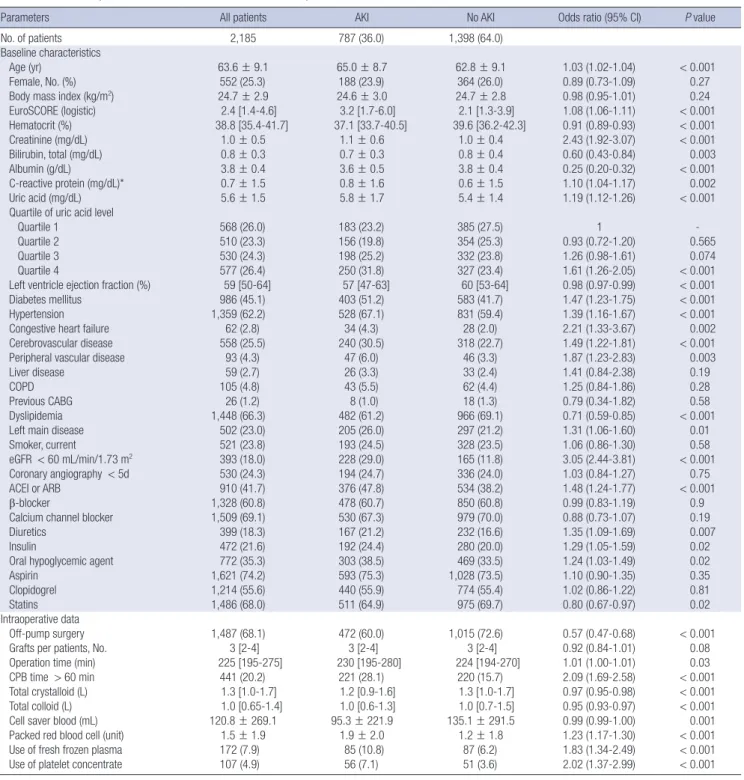
Table 1. Baseline and operative characteristics and univariate relationship to AKI
Parameters All patients AKI No AKI Odds ratio (95% CI) P value
No. of patients 2,185 787 (36.0) 1,398 (64.0)
Baseline characteristics
Age (yr) 63.6 ± 9.1 65.0 ± 8.7 62.8 ± 9.1 1.03 (1.02-1.04) < 0.001
Female, No. (%) 552 (25.3) 188 (23.9) 364 (26.0) 0.89 (0.73-1.09) 0.27
Body mass index (kg/m2) 24.7 ± 2.9 24.6 ± 3.0 24.7 ± 2.8 0.98 (0.95-1.01) 0.24
EuroSCORE (logistic) 2.4 [1.4-4.6] 3.2 [1.7-6.0] 2.1 [1.3-3.9] 1.08 (1.06-1.11) < 0.001
Hematocrit (%) 38.8 [35.4-41.7] 37.1 [33.7-40.5] 39.6 [36.2-42.3] 0.91 (0.89-0.93) < 0.001
Creatinine (mg/dL) 1.0 ± 0.5 1.1 ± 0.6 1.0 ± 0.4 2.43 (1.92-3.07) < 0.001
Bilirubin, total (mg/dL) 0.8 ± 0.3 0.7 ± 0.3 0.8 ± 0.4 0.60 (0.43-0.84) 0.003
Albumin (g/dL) 3.8 ± 0.4 3.6 ± 0.5 3.8 ± 0.4 0.25 (0.20-0.32) < 0.001
C-reactive protein (mg/dL)* 0.7 ± 1.5 0.8 ± 1.6 0.6 ± 1.5 1.10 (1.04-1.17) 0.002
Uric acid (mg/dL) 5.6 ± 1.5 5.8 ± 1.7 5.4 ± 1.4 1.19 (1.12-1.26) < 0.001
Quartile of uric acid level
Quartile 1 568 (26.0) 183 (23.2) 385 (27.5) 1 -
Quartile 2 510 (23.3) 156 (19.8) 354 (25.3) 0.93 (0.72-1.20) 0.565
Quartile 3 530 (24.3) 198 (25.2) 332 (23.8) 1.26 (0.98-1.61) 0.074
Quartile 4 577 (26.4) 250 (31.8) 327 (23.4) 1.61 (1.26-2.05) < 0.001
Left ventricle ejection fraction (%) 59 [50-64] 57 [47-63] 60 [53-64] 0.98 (0.97-0.99) < 0.001
Diabetes mellitus 986 (45.1) 403 (51.2) 583 (41.7) 1.47 (1.23-1.75) < 0.001
Hypertension 1,359 (62.2) 528 (67.1) 831 (59.4) 1.39 (1.16-1.67) < 0.001
Congestive heart failure 62 (2.8) 34 (4.3) 28 (2.0) 2.21 (1.33-3.67) 0.002
Cerebrovascular disease 558 (25.5) 240 (30.5) 318 (22.7) 1.49 (1.22-1.81) < 0.001
Peripheral vascular disease 93 (4.3) 47 (6.0) 46 (3.3) 1.87 (1.23-2.83) 0.003
Liver disease 59 (2.7) 26 (3.3) 33 (2.4) 1.41 (0.84-2.38) 0.19
COPD 105 (4.8) 43 (5.5) 62 (4.4) 1.25 (0.84-1.86) 0.28
Previous CABG 26 (1.2) 8 (1.0) 18 (1.3) 0.79 (0.34-1.82) 0.58
Dyslipidemia 1,448 (66.3) 482 (61.2) 966 (69.1) 0.71 (0.59-0.85) < 0.001
Left main disease 502 (23.0) 205 (26.0) 297 (21.2) 1.31 (1.06-1.60) 0.01
Smoker, current 521 (23.8) 193 (24.5) 328 (23.5) 1.06 (0.86-1.30) 0.58
eGFR < 60 mL/min/1.73 m2 393 (18.0) 228 (29.0) 165 (11.8) 3.05 (2.44-3.81) < 0.001
Coronary angiography < 5d 530 (24.3) 194 (24.7) 336 (24.0) 1.03 (0.84-1.27) 0.75
ACEI or ARB 910 (41.7) 376 (47.8) 534 (38.2) 1.48 (1.24-1.77) < 0.001
β-blocker 1,328 (60.8) 478 (60.7) 850 (60.8) 0.99 (0.83-1.19) 0.9
Calcium channel blocker 1,509 (69.1) 530 (67.3) 979 (70.0) 0.88 (0.73-1.07) 0.19
Diuretics 399 (18.3) 167 (21.2) 232 (16.6) 1.35 (1.09-1.69) 0.007
Insulin 472 (21.6) 192 (24.4) 280 (20.0) 1.29 (1.05-1.59) 0.02
Oral hypoglycemic agent 772 (35.3) 303 (38.5) 469 (33.5) 1.24 (1.03-1.49) 0.02
Aspirin 1,621 (74.2) 593 (75.3) 1,028 (73.5) 1.10 (0.90-1.35) 0.35
Clopidogrel 1,214 (55.6) 440 (55.9) 774 (55.4) 1.02 (0.86-1.22) 0.81
Statins 1,486 (68.0) 511 (64.9) 975 (69.7) 0.80 (0.67-0.97) 0.02
Intraoperative data
Off-pump surgery 1,487 (68.1) 472 (60.0) 1,015 (72.6) 0.57 (0.47-0.68) < 0.001
Grafts per patients, No. 3 [2-4] 3 [2-4] 3 [2-4] 0.92 (0.84-1.01) 0.08
Operation time (min) 225 [195-275] 230 [195-280] 224 [194-270] 1.01 (1.00-1.01) 0.03
CPB time > 60 min 441 (20.2) 221 (28.1) 220 (15.7) 2.09 (1.69-2.58) < 0.001
Total crystalloid (L) 1.3 [1.0-1.7] 1.2 [0.9-1.6] 1.3 [1.0-1.7] 0.97 (0.95-0.98) < 0.001
Total colloid (L) 1.0 [0.65-1.4] 1.0 [0.6-1.3] 1.0 [0.7-1.5] 0.95 (0.93-0.97) < 0.001
Cell saver blood (mL) 120.8 ± 269.1 95.3 ± 221.9 135.1 ± 291.5 0.99 (0.99-1.00) 0.001
Packed red blood cell (unit) 1.5 ± 1.9 1.9 ± 2.0 1.2 ± 1.8 1.23 (1.17-1.30) < 0.001
Use of fresh frozen plasma 172 (7.9) 85 (10.8) 87 (6.2) 1.83 (1.34-2.49) < 0.001
Use of platelet concentrate 107 (4.9) 56 (7.1) 51 (3.6) 2.02 (1.37-2.99) < 0.001
Data are expressed as number of patients (%), mean ± standard deviation, or median [first-third quartiles]. Quartile 1, < 4.8 mg/dL for men and < 4.2 mg/dL for women;
Quartile 2, 4.8-5.5 mg/dL and 4.2-4.9 mg/dL; Quartile 3, 5.6-6.4 mg/dL and 5.0-5.8 mg/dL; Quartile 4, ≥ 6.5 mg/dL and ≥ 5.9 mg/dL. *C-reactive protein was available only in 1,979 (90.6%) patients. AKI, acute kidney injury; CI, confidence interval; EuroSCORE, European System for Cardiac Operative Risk Evaluation; COPD, chronic obstructive pulmonary disease; CABG, coronary artery bypass grafting; eGFR, estimated glomerular filtration rate; ACEI, angiotensin-converting enzyme inhibitor; ARB, angiotensin receptor blocker; CPB, cardiopulmonary bypass.
tute Inc., Cary, NC, USA) software was used for all data manip- ulations and statistical analyses.
Ethics statement
This study was approved by the institutional review board of Asan Medical Center, Seoul, Korea (IRB number: 2012-0836).
Informed consent was waived by the board.
RESULTS
Of the 2,308 patients identified, 123 were excluded, including five for not having uric acid and/or creatinine measurements,
Incidence of AKI (%)
Serum uric acid (mg/dL)
< 3 < 4 < 5 < 6 < 7 < 8 < 9 ≥ 9 100
80 60
40 20
0
Male Female Total
Serum uric acid
Proportion of patients (%)
Quartile 1 Quartile 2 Quartile 3 Quartile 4 60
50 40 30 20 10 0
*
* * Acute kidney injury
Acute kidney injury network stage ≥ 2 Renal replacement therapy
A B
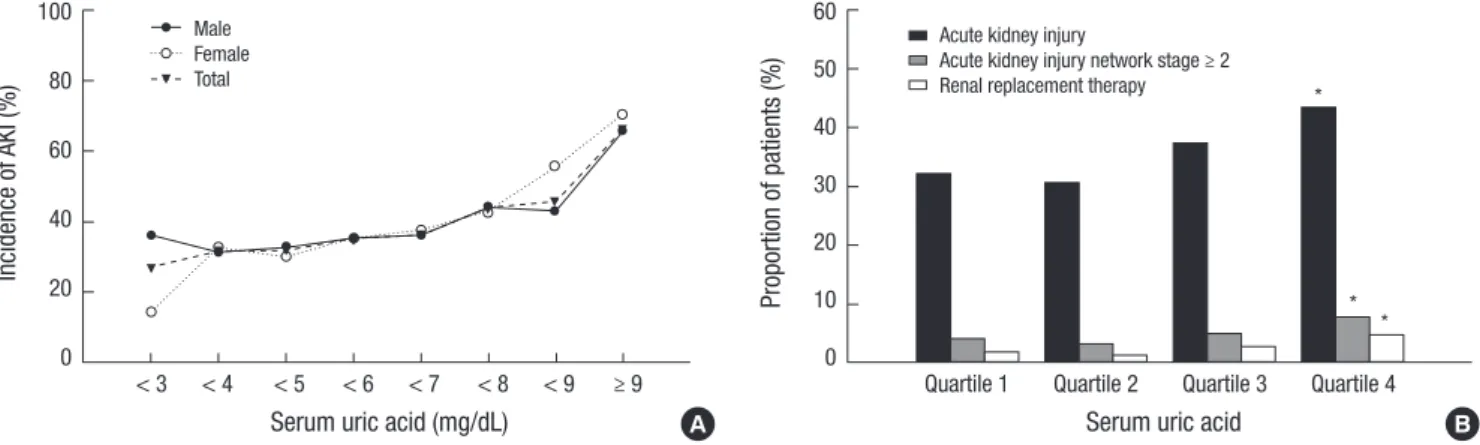
Fig. 1. Incidence of acute kidney injury after coronary artery bypass grafting (A) and proportion of patients according to acute kidney injury network classification (B) as a func- tion of preoperative serum uric acid levels. *P < 0.05 compared with quartile 1 (< 4.8 mg/dL for men and < 4.2 mg/dL for women).
Table 2. Multivariate predictors for acute kidney injury after coronary artery bypass grafting
Predictors Odds ratio 95% CI P value
Age (yr) 1.02 1.01-1.03 0.014
Male 1.51 1.20-1.92 0.001
Diabetes mellitus 1.30 1.07-1.59 0.008
Hypertension 1.27 1.04-1.56 0.021
Preoperative eGFR < 60 mL/min/1.73 m2 1.71 1.31-2.24 < 0.001
Peripheral vascular disease 1.66 1.05-2.61 0.029
Preoperative diuretics use 1.34 1.03-1.73 0.029
Preoperative serum albumin concentration (g/dL) 0.36 0.28-0.47 < 0.001 Preoperative uric acid concentration (mg/dL) 1.18 1.10-1.26 < 0.001 Cardiopulmonary bypass time > 60 min 1.63 1.26-2.11 < 0.001 Total crystalloid volume (per 100 mL)* 0.97 0.96-0.99 0.001 Packed red blood cell (unit)* 1.08 1.01-1.15 0.020
Use of platelet concentrate* 1.68 1.09-2.60 0.020
*Used during surgery. CI, confidence interval; eGFR, estimated glomerular filtration rate.
87 who underwent preoperative dialysis, 14 who underwent other types of cardiac surgery besides CABG, five with a prior history of organ transplantation or nephrectomy, and 12 who received allopurinol. The remaining 2,185 patients met the study criteria and were analyzed.
The baseline and perioperative characteristics of the study population are shown in Table 1. Mean age was 63.6 ± 9.1 yr and 552 (25.3%) were female. The mean preoperative uric acid concentration was 5.6 ± 1.5 mg/dL (range, 1.0 to 13.8 mg/dL).
Of the 2,185 patients, 787 (36.0%) experienced AKI after CABG, including 674 (30.9%) with an AKI Network classification of stage 1, 34 (1.6%) with stage 2, and 79 (3.6%) with stage 3, and 61 pa- tients (2.8%) required RRT. Compared to patients without AKI, patients with AKI were older, had higher logistic EuroSCORE and preoperative creatinine, uric acid and C-reactive protein concentrations, and lower ejection fraction and preoperative hematocrit, total bilirubin and albumin concentrations. Patients with AKI were also more likely to have histories of diabetes mel- litus, hypertension, congestive heart failure, cerebrovascular disease, peripheral vascular disease and eGFR < 60 mL/min/
1.73 m2, and to be receiving angiotensin-converting enzyme in- hibitor or angiotensin receptor blocker therapy and diuretics.
In addition, patients with AKI were more likely to undergo CABG with cardiopulmonary bypass.
The relationship between postoperative AKI rate and preop- erative serum uric acid concentration is shown in Fig. 1. Patients with higher uric acid had a progressively higher incidence of AKI and severe AKI (≥ AKI Network stage 2 and RRT). In multi- variate analyses, preoperative serum uric acid was a significant predictor of AKI after CABG (OR, 1.18; 95% CI, 1.10-1.26; P<0.001 for continuous variable, OR, 1.53; 95% CI, 1.16-2.01; P = 0.003 in quartile 3 and OR, 1.63; 95% CI, 1.24-2.15; P = 0.001 in quar- tile 4 vs. quartile 1, and OR, 1.51; 95% CI, 1.24-1.85; P < 0.001 in uric acid ≥ 5.6 mg/dL for males and ≥ 5.0 mg/dL for females).
Additionally, preoperative serum uric acid was also significant- Fig. 2. Association between preoperative uric acid and acute kidney injury in subgroups.
Subgroup No. OR (95% CI)
Sex
Male 1,633 1.17 (1.08-1.26)
Female 552 1.24 (1.08-1.42)
Ejection fraction
≥ 50% 1,659 1.20 (1.10-1.30)
< 50% 526 1.18 (1.04-1.35)
eGFR
≥ 90 mL/min/1.73 m2 712 1.22 (1.05-1.42)
60-89 mL/min/1.73 m2 1,080 1.16 (1.05-1.29)
45-59 mL/min/1.73 m2 270 1.27 (1.04-1.53)
< 45 mL/min/1.73 m2 123 1.03 (0.88-1.22)
Cardiopulmonary bypass
On pump 698 1.21 (1.07-1.37)
Off pump 1,487 1.14 (1.04-1.24)
Diuretics
No 1,786 1.18 (1.08-1.28)
Yes 399 1.26 (1.08-1.47)
Overall 2,185 1.18 (1.10-1.26)
0.6 0.8 1.0 1.2 1.4 1.6 1.8 2.0 2.2
ly associated with severe AKI after CABG (OR, 1.19; 95% CI, 1.067- 1.35; P = 0.003). Other risk factors associated with postoperative AKI were shown in Table 2. As shown in Fig. 2, preoperative uric acid was also significantly related to postoperative AKI in sub- groups, except for the subgroup with preoperative eGFR < 45 mL/min/1.73 m2.
As listed in Table 3, the addition of preoperative uric acid to the multivariate model (model 1) yielded slightly increases in the significant C statistic for AKI. Moreover, both the category- free NRI (0.216; 95% CI, 0.129-0.302; P < 0.001) and the IDI (0.013;
95% CI, 0.008-0.018; P < 0.001) were significant for AKI. Adding preoperative uric acid to subgroup and other risk prediction mo- dels (model 2, model 3, and NNECDSG model) yielded slightly increased C statistics that were not significant for AKI. However, both the category-free NRI (0.127; 95% CI, 0.022-0.232; P = 0.021 in Model 2, 0.306; 95% CI, 0.162-0.450; P < 0.001 in Model 3, and 0.177; 95% CI, 0.090-0.264; P < 0.001 in NNECDSG model) and the IDI (0.006; 95% CI, 0.002-0.010; P = 0.003 in Model 2, 0.014; 95% CI, 0.005-0.024; P < 0.001 in Model 3, and 0.013; 95%
CI, 0.008-0.017; P < 0.001 in NNECDSG model) were significant for AKI in all models.
Of the 2,185 patients, 25 (1.1%) died in-hospital or within 30 days of CABG, with the rate being significantly higher in patients with AKI compared with those without AKI (2.8% vs. 0.2%; P <
0.001). The mean durations of stay in the ICU and hospital were 2.7 days and 10.5 days, respectively. Patients with AKI had pro- longed extubation time, ICU stay, and hospital stay compared with those without AKI (19.0 ± 33.0 hr vs. 10.1 ± 6.5 hr; P < 0.001, 3.6 ± 6.8 days vs. 2.2 ± 1.4 days; P < 0.001, and 13.4 ± 21.6 days vs. 8.9 ± 6.4 days; P < 0.001, respectively).
DISCUSSION
In this large single-center observational study of 2,185 patients undergoing CABG, preoperatively elevated uric acid concen-
tration was strongly associated with increased risk of postoper- ative AKI, with the incidence of AKI near linearly increasing with increasing uric acid. Even after adjustment for important pre- operative and intraoperative confounders, patients with preop- erative elevated serum uric acid were at significantly higher risk of postoperative AKI. Additionally, preoperative uric acid sig- nificantly improved risk discrimination and reclassification over the baseline risk models. Furthermore, consistent with previ- ous findings, we also identified that patients with postoperative AKI, despite mild form not requiring RRT in most cases, had a significantly higher mortality rate and poorer outcomes com- pared with patients without AKI.
Hyperuricemia has been strongly linked to renal disease in various clinical conditions (7), and recent experimental and clin- ical studies suggest that hyperuricemia may be an independent risk factor for AKI and chronic kidney disease (6, 19, 20). Despite these strong associations, few studies to date have evaluated the effect of preoperative hyperuricemia on postoperative AKI in patients undergoing cardiac surgery (9, 10). One study, in 58 patients undergoing complicated cardiac surgery, found that preoperative uric acid > 6.0 mg/dL was associated with a near- ly 4-fold increased risk of AKI and a longer hospital stay than preoperative uric acid ≤ 6.0 mg/dL (9). Another study, in 190 patients undergoing cardiovascular surgery, found that, after adjustment for confounders by multivariate logistic regression analysis, serum uric acid concentrations ≥ 7.0 mg/dL were as- sociated with a 35-fold higher risk of AKI, and increased hospi- tal stay and duration of mechanical ventilation support, than serum uric acid concentrations < 7.0 mg/dL (10). Our previous study in patients undergoing cardiovascular surgery also found that preoperative hyperuricemia was an independent risk fac- tor of postoperative AKI and was related to poor outcomes (11).
Our findings are in agreement with those of the above studies and suggest a similar relationship between preoperative uric acid and postoperative AKI. Our study, however, included a much Table 3. Summary and comparison of the proposed models
Model C statistic Difference (95% CI) P value Category-free NRI (95% CI) P value IDI (95% CI) P value H-L test (P value)
Model 1* 0.726 0.373
Model 1 + UA 0.735 0.008 (0.001-0.015) 0.017 0.216 (0.129-0.302) < 0.001 0.013 (0.008-0.018) < 0.001 0.339
Model 2† 0.719 0.464
Model 2 + UA 0.723 0.005 (-0.002-0.012) 0.184 0.127 (0.022-0.232) 0.021 0.006 (0.002-0.010) 0.003 0.598
Model 3‡ 0.726 0.155
Model 3 + UA 0.735 0.009 (-0.005-0.024) 0.209 0.306 (0.162-0.450) < 0.001 0.014 (0.005-0.024) < 0.001 0.873
NNECDSG 0.611 0.442
NNECDSG + UA 0.623 0.012 (-0.003-0.026) 0.114 0.177 (0.090-0.264) < 0.001 0.013 (0.008-0.017) < 0.001 0.825 Model 1 = clinical model for AKI in the overall population; Model 2 = clinical model for AKI in patients undergoing off pump coronary artery bypass surgery; Model 3 = clinical model for AKI in patients undergoing coronary artery bypass surgery with cardiopulmonary bypass; NNECDSG = Northern New England Cardiovascular Disease Study Group.
*Adjusted for age, sex, body mass index, EuroSCORE, diabetes mellitus, hypertension, peripheral vascular disease, eGFR < 60 mL/min/1.73 m2, hematocrit, serum albumin, use of diuretics, cardiopulmonary bypass time, intraoperative infused crystalloid, packed red blood cell and platelet concentrate; †adjusted for age, sex, body mass index, Eu- roSCORE, diabetes mellitus, hypertension, chronic obstructive pulmonary disease, eGFR < 60 mL/min/1.73 m2, hematocrit, serum albumin, use of diuretics, intraoperative in- fused crystalloid, packed red blood cell and platelet concentrate; ‡adjusted for age, sex, body mass index, EuroSCORE, diabetes mellitus, hypertension, peripheral vascular dis- ease, eGFR < 60 mL/min/1.73 m2, serum albumin, use of diuretics, cardiopulmonary bypass time, intraoperative packed red blood cell. CI, confidence interval; NRI, net reclas- sification improvement; IDI, integrated discrimination improvement; H-L test, Hosmer-Lemeshow test; UA, uric acid; AKI, acute kidney injury.
larger number and more homogeneous population of consecu- tive patients undergoing CABG, as well as adjusting for a great number of confounders, known as risk factors of AKI in other studies, using a comprehensive and accurate data obtained by data abstractors who were blinded to the objectives of this study.
Furthermore, our results were consistent across several subgr- oups and in the analysis using severe AKI as outcome. These characteristics may enhance the robustness of our results.
Given the growing burden of AKI in patients undergoing CA- BG, validation of uric acid as a simple and convenient prognos- tic indicator would be valuable. Most studies assessing renal risk have not included preoperative measure of uric acid. In our study, C statistics increased slightly, albeit significantly, after adding uric acid to the multivariate model in the whole study cohort, whereas the increase did not reach significance in other mod- els. However, C statistic may be relatively an insensitive method to evaluate the impact of adding new predictors to established predictive models (21). In the present study, the improvement in model performance and the added predictive value obtained by adding serum uric acid to the baseline risk models, as gauged by two new metrics (IDI and NRI), which could overcome the limitation of C statistics and quantify risk prediction improve- ment offered by a new marker, were significant for AKI. More- over, the additional predictive values of serum uric acid were consistent across existing reference models (NNECDSG mod- els) and models for different subgroup population (CABG with and without cardiopulmonary bypass). These findings indicate that preoperative serum uric acid can improve the predictive ability of established risk prediction models for AKI in patients undergoing CABG.
Serum uric acid is excreted mainly by the kidney, which means that a rise in the serum uric acid level may be inevitable in pa- tients with renal dysfunction. Therefore, whether preoperative elevated uric acid level is simply a marker of preoperative renal dysfunction or whether it is actually responsible for postopera- tive AKI remains unknown. However, our subgroup analyses showed that, in patients with preoperative normal renal func- tion, preoperative elevated uric acid level was also independent- ly related to the increased risk of postoperative AKI. In addition, several studies suggest that uric acid may itself be a potential contributor to renal injury. Uric acid is reported to impair renal blood flow autoregulation through renal vasoconstriction, which is caused by activation of renin-angiotensin system and inhibi- tion of renal neuronal nitric oxide synthase (7). Uric acid was also shown to induce proinflammatory activities and oxidative stress (7, 22, 23). Furthermore, our present data show a dose- response relationship between serum uric acid level and the incidence of AKI, which could support the hypothesis of a caus- al relationship (24). Overall, these observations indicate that hyperuricemia may be causally associated with postoperative AKI rather than just being a simple marker. Thus, preoperative
elevated serum uric acid may promote a higher incidence of postprocedural AKI in patients undergoing CABG. Further stud- ies are needed to test this hypothesis.
Our study did not show a J-shaped relationship between se- rum uric acid and AKI as seen in a previous study (10). This dis- crepancy may be explained by the difference in baseline char- acteristics of study populations (ethnicity, cormobidities, or in- clusion of off-pump surgery), or differences in perioperative ma- nagement strategies. In addition, although uric acid has been known to be a major antioxidant and the relative contributions of the individual antioxidants may be different, a decrease in the levels of one antioxidant (i.e., uric acid) could be compen- sated by other oxidants (25). In other words, a lack of uric acid and its antioxidant capacities, but maintained by other antioxi- dants, may be associated with lower postoperative AKI in our cohort.
We found that the incidence of post-CABG AKI was higher in patients with serum uric acid ≥ 5.6 mg/dL for males and ≥ 5.0 mg/dL for females than < 5.6 mg/dL and < 5.0 mg/dL, respec- tively. This cut-off level is well below that usually used to define hyperuricemia. Thus, our results suggest that the association between preoperative hyperuricemia and postoperative AKI is not restricted to the normal range. In other words, elevated pre- operative serum uric acid, even when within the normal range, may be associated with a higher risk of postoperative AKI in pa- tients undergoing CABG. These findings are consistent with the results of previous studies, showing that mildly elevated uric acid concentrations within the normal range (≥ 5.5 mg/dL) have ox- idant and inflammatory effects, and were associated with AKI and increased cardiovascular risk (10, 26). However, the clinical significance of this cut-off value requires validation in larger clin- ical studies.
Our results may have some important clinical implications.
First, measuring preoperative serum uric acid may be of value in identifying patients at high risk for AKI. That is, our findings suggest that patients with preoperatively elevated uric acid could be considered at high risk for AKI. These patients may therefore require intensive monitoring and care during the perioperative period to prevent post-CABG AKI. Second, if the relationship between preoperative hyperuricemia and post-CABG AKI is in- deed causal, preoperative hyperuricemia may be a modifiable risk factor. That is, reducing uric acid concentration, especially in patients undergoing elective surgery, may minimize the risk of AKI after CABG. Indeed, several recent small clinical studies showed that uric acid-lowering treatment could slow the pro- gression of renal disease and reduce cardiovascular risk in pa- tients with chronic kidney disease, as well as reducing renal stru- ctural injury in patients undergoing cardiovascular surgery (27- 29). Additional large, prospective, controlled randomized trials may be needed to determine whether hyperuricemia correc- tion prior to CABG improves renal outcome.
The present study has some limitations. First, due to its retro- spective, observational design, our findings should be deemed hypothesis-generating, and the causal association between pre- operative hyperuricemia and post-CABG AKI not definitively determined. Second, as with any observational study, despite including many variables in our analyses, we could not exclude the effects of other hidden or unknown factors on the observed relationship. Third, although subgroup analyses can provide additional information, issues related to multiple statistical test- ing, the lack of power, and the occurrence of false positive and/
or false negative results may limit these findings. Fourth, despite excluding patients treated with allopurinol, other drug therapy including angiotensin-converting enzyme inhibitor or angio- tensin receptor blocker could also affect preoperative serum uric acid levels (30). Thus, we could not exclude the effects of these agents on our results. Additionally, the value of risk mod- els may be dependent on the outcome and the population be- ing examined. The NNECDSG model was originally developed to predict severe renal insufficiency in patients with CABG with a preoperative normal renal function (18). This may explain the lower predictive power compared to C statistic (0.72) shown in original papers. Finally, this was a single-center study performed at a tertiary care academic medical center. Therefore, caution is advised when generalizing these results to centers with differ- ent patient profiles.
In conclusion, our current large observational study confirm- ed that preoperatively elevated serum uric acid was significant- ly associated with AKI and improved the ability to predict the development of AKI in patients undergoing CABG. Further stud- ies are warranted to evaluate the additional predictive value of serum uric acid in other cohorts and the benefit of preoperative- ly lowering uric acid levels to reduce postoperative AKI.
DISCLOSURE
The authors have no conflicts of interest to disclose.
AUTHOR CONTRIBUTION
Conception & design of the study: Lee EH, Choi IC. Acquisition of data: Choi JH, Joung KW, Kim JY. Interpretation and analysis of the data: Lee EH, Baek SH. Writing the draft and paper: Lee EH, Choi JH, Ji SM, Chin JH. Agree with manuscript results and conclusions: Lee EH, Chin JH, Choi IC. Review and approval of final manuscript: all authors.
ORCID
Eun-Ho Lee http://orcid.org/0000-0002-6369-7429 In-Cheol Choi http://orcid.org/0000-0002-7386-5043
REFERENCES
1. Dasta JF, Kane-Gill SL, Durtschi AJ, Pathak DS, Kellum JA. Costs and outcomes of acute kidney injury (AKI) following cardiac surgery. Nephrol Dial Transplant 2008; 23: 1970-4.
2. Hobson CE, Yavas S, Segal MS, Schold JD, Tribble CG, Layon AJ, Biho- rac A. Acute kidney injury is associated with increased long-term mor- tality after cardiothoracic surgery. Circulation 2009; 119: 2444-53.
3. Lee EH, Baek SH, Chin JH, Choi DK, Son HJ, Kim WJ, Hahm KD, Sim JY, Choi IC. Preoperative hypoalbuminemia is a major risk factor for acute kidney injury following off-pump coronary artery bypass surgery. Inten- sive Care Med 2012; 38: 1478-86.
4. Huen SC, Parikh CR. Predicting acute kidney injury after cardiac surgery:
a systematic review. Ann Thorac Surg 2012; 93: 337-47.
5. Kang DH, Nakagawa T, Feng L, Watanabe S, Han L, Mazzali M, Truong L, Harris R, Johnson RJ. A role for uric acid in the progression of renal disease. J Am Soc Nephrol 2002; 13: 2888-97.
6. Ryoo JH, Choi JM, Oh CM, Kim MG. The association between uric acid and chronic kidney disease in Korean men: a 4-year follow-up study. J Korean Med Sci 2013; 28: 855-60.
7. Feig DI, Kang DH, Johnson RJ. Uric acid and cardiovascular risk. N Engl J Med 2008; 359: 1811-21.
8. Hillis GS, Cuthbertson BH, Gibson PH, McNeilly JD, Maclennan GS, Jeffrey RR, Buchan KG, El-Shafei H, Gibson G, Croal BL. Uric acid levels and outcome from coronary artery bypass grafting. J Thorac Cardiovasc Surg 2009; 138: 200-5.
9. Ejaz AA, Beaver TM, Shimada M, Sood P, Lingegowda V, Schold JD, Kim T, Johnson RJ. Uric acid: a novel risk factor for acute kidney injury in high- risk cardiac surgery patients? Am J Nephrol 2009; 30: 425-9.
10. Lapsia V, Johnson RJ, Dass B, Shimada M, Kambhampati G, Ejaz NI, Arif AA, Ejaz AA. Elevated uric acid increases the risk for acute kidney injury.
Am J Med 2012; 125: 302.e9-17.
11. Joung KW, Jo JY, Kim WJ, Choi DK, Chin JH, Lee EH, Choi IC. Associa- tion of preoperative uric acid and acute kidney injury following cardio- vascular surgery. J Cardiothorac Vasc Anesth 2014; 28: 1440-7.
12. Lee EH, Yun SC, Chin JH, Choi DK, Son HJ, Kim WC, Choi SS, Song JG, Hahm KD, Sim JY, et al. Prognostic implications of preoperative E/e’ ra- tio in patients with off-pump coronary artery surgery. Anesthesiology 2012; 116: 362-71.
13. Mehta RL, Kellum JA, Shah SV, Molitoris BA, Ronco C, Warnock DG, Levin A; Acute Kidney Injury Network. Acute Kidney Injury Network:
report of an initiative to improve outcomes in acute kidney injury. Crit Care 2007; 11: R31.
14. Levey AS, Stevens LA, Schmid CH, Zhang YL, Castro AF 3rd, Feldman HI, Kusek JW, Eggers P, Van Lente F, Greene T, et al.; CKD-EPI (Chronic Kidney Disease Epidemiology Collaboration). A new equation to estimate glomerular filtration rate. Ann Intern Med 2009; 150: 604-12.
15. Kim JB, Kang JW, Song H, Jung SH, Choo SJ, Chung CH, Lee JW, Lim TH. Late improvement in graft patency after coronary artery bypass graft- ing: Serial assessment with multidetector computed tomography in the early and late postoperative settings. J Thorac Cardiovasc Surg 2011; 142:
793-9.
16. DeLong ER, DeLong DM, Clarke-Pearson DL. Comparing the areas un- der two or more correlated receiver operating characteristic curves: a non-
parametric approach. Biometrics 1988; 44: 837-45.
17. Pencina MJ, D’Agostino RB Sr, D’Agostino RB Jr, Vasan RS. Evaluating the added predictive ability of a new marker: from area under the ROC curve to reclassification and beyond. Stat Med 2008; 27: 157-72; discus- sion 207-12.
18. Brown JR, Cochran RP, Leavitt BJ, Dacey LJ, Ross CS, MacKenzie TA, Kun- zelman KS, Kramer RS, Hernandez F Jr, Helm RE, et al.; Northern New England Cardiovascular Disease Study Group. Multivariable prediction of renal insufficiency developing after cardiac surgery. Circulation 2007;
116: I139-43.
19. Shimada M, Dass B, Ejaz AA. Paradigm shift in the role of uric acid in acute kidney injury. Semin Nephrol 2011; 31: 453-8.
20. Filiopoulos V, Hadjiyannakos D, Vlassopoulos D. New insights into uric acid effects on the progression and prognosis of chronic kidney disease.
Ren Fail 2012; 34: 510-20.
21. Cook NR. Use and misuse of the receiver operating characteristic curve in risk prediction. Circulation 2007; 115: 928-35.
22. Kanellis J, Watanabe S, Li JH, Kang DH, Li P, Nakagawa T, Wamsley A, Sheikh-Hamad D, Lan HY, Feng L, et al. Uric acid stimulates monocyte chemoattractant protein-1 production in vascular smooth muscle cells via mitogen-activated protein kinase and cyclooxygenase-2. Hyperten- sion 2003; 41: 1287-93.
23. Sánchez-Lozada LG, Soto V, Tapia E, Avila-Casado C, Sautin YY, Nak- agawa T, Franco M, Rodriguez-Iturbe B, Johnson RJ. Role of oxidative
stress in the renal abnormalities induced by experimental hyperuricemia.
Am J Physiol Renal Physiol 2008; 295: F1134-41.
24. Hill AB. The environment and disease: association or causation? Proc R Soc Med 1965; 58: 295-300.
25. Szeto YT, Kwok TC, Benzie IF. Effects of a long-term vegetarian diet on biomarkers of antioxidant status and cardiovascular disease risk. Nutri- tion 2004; 20: 863-6.
26. Jin YL, Zhu T, Xu L, Zhang WS, Liu B, Jiang CQ, Yu H, Huang LM, Cheng KK, Thomas GN, et al. Uric acid levels, even in the normal range, are as- sociated with increased cardiovascular risk: the Guangzhou Biobank Cohort Study. Int J Cardiol 2013; 168: 2238-41.
27. Siu YP, Leung KT, Tong MK, Kwan TH. Use of allopurinol in slowing the progression of renal disease through its ability to lower serum uric acid level. Am J Kidney Dis 2006; 47: 51-9.
28. Goicoechea M, de Vinuesa SG, Verdalles U, Ruiz-Caro C, Ampuero J, Rincón A, Arroyo D, Luño J. Effect of allopurinol in chronic kidney dis- ease progression and cardiovascular risk. Clin J Am Soc Nephrol 2010; 5:
1388-93.
29. Ejaz AA, Dass B, Lingegowda V, Shimada M, Beaver TM, Ejaz NI, Abou- hamze AS, Johnson RJ. Effect of uric acid lowering therapy on the pre- vention of acute kidney injury in cardiovascular surgery. Int Urol Nephrol 2013; 45: 449-58.
30. Reyes AJ. Cardiovascular drugs and serum uric acid. Cardiovasc Drugs Ther 2003; 17: 397-414.