Fallow Cover Crop Species and Nitrogen Rate of Fertigated Solution on Cucumber Yield and Soil Sustainability in Greenhouse Condition
Seong Eun Lee*, Jin Myeon Park, Jae Seung Noh, and Tae Jun Lim
Horticultural & Herbal Crop Environment Division, National Institute of Horticultural & Herbal Science, Suwon 441-440, Korea
(Received: November 29 2013, Accepted: January 15 2014)
Nutrient accumulation in surface soil has become a serious problem for cucumber production in greenhouse.
However, still in many cases, soil management practices are only focused on maintaining crop yield, regardless of sustainability related with soil chemical properties. This study was conducted to propose a sustainable soil management practice by investigating the impact of cover crop species and nitrogen rate of fertigated solution on cucumber yield and soil chemical properties in greenhouse condition. Rye and hairy vetch were tested as a fallow cover crop, and each amount of urea (1/2, 3/4, 1 times of N fertilizer recommendations), determined by soil testing result, was supplied in fertigation plots as an additional nitrogen source. The result showed that the yield of cucumber was higher in rye treatment than control and hairy vetch treatment. In addition, rye effectively reduced EC and accumulated nutrients from the soil. Meanwhile, N concentration of fertigated solution showed no significant effect on the growth and yield of cucumber.
Consequently, these results suggest that it is desirable to choose rye as a fallow catch crop for sustainable cucumber production in greenhouse.
Key words: Cucumis sativus, Green manure, Fertigation, Soil chemical properties, Controlled horticulture
Effect of cover crop species and N rate of fertigated solution on the yield of cucumber and soil chemical properties in greenhouse condition (2013).
Treatment† pH EC O.M. Avail. P2O5
Exch. cation
Yield
K Ca Mg
1:5 dS m-1 g kg-1 mg kg-1 --- cmol kg-1 --- kg ha-1 Control 7.14 bcd 5.93 c 1.84 cde 544.03 cd 0.51 c 11.45 c 2.26 bc 48.4 c
1.0N 7.08 cd 6.18 c 1.94 bcd 546.49 bcd 0.54 c 11.73 c 2.38 b 59.7 ab
R 7.16 bc 1.47 d 1.73 ef 502.01 d 0.13 d 8.98 d 1.84 c 59.8 ab
R+ 1/2N 7.46 a 2.81 d 1.66 f 517.94 d 0.12 d 10.01 d 1.93 bc 62.8 a
R+ 3/4N 7.35 a 1.94 d 1.81 def 505.76 d 0.12 d 9.62 d 2.33 b 63.5 a
R+ 1.0N 7.22 b 1.56 d 1.70 ef 490.80 d 0.13 d 9.39 d 1.82 c 62.3 a
HV 6.92 ef 8.99 b 2.07 ab 619.56 a 0.76 ab 13.08 b 2.87 a 53.6 bc
HV+ 1/2N 7.03 de 12.81 a 1.91 bcd 603.05 ab 0.92 a 15.45 a 3.34 a 58.4 ab HV+ 3/4N 6.90 f 9.17 b 2.00 abc 579.16 abc 0.69 bc 13.67 b 2.91 a 57.2 ab
HV+ 1.0N 6.84 f 10.69 b 2.15 a 630.41 a 0.78 ab 14.81 a 3.02 a 60.8 ab
†N: nitrogen fertilizer recommendations based on soil test, R: rye, HV: hairy vetch
‡Mean separation within columns by Duncan's multiple range test at P=0.05.
1)
*Corresponding author : Phone: +82312906225, Fax: +82312906259, E-mail: [email protected]
§Acknowledgement: This work was funded and supported by RDA, Project PJ008397.
Table 1. Soil chemical properties used in this experiment (Oct. 2012).
pH EC O.M. Avail.
P2O5
Exch. cation
NO3-N
K Ca Mg
1:5 dS m-1 g kg-1 mg kg-1 --- cmol kg-1 --- mg kg-1 7.2 3.45 23.3 593 0.70 9.05 2.10 139.6
Table 2. The amount of green manure production and nitrogen content in rye and hairy vetch (Apr. 4, 2013).
Cover crop
species Fresh weight Dry weight N content --- Mg ha-1 --- g kg-1
Rye 36.1 4.42 24.1
Hairy vetch 25.0 2.87 40.5
Significance
(t-test) ** ** **
NS,*,** nonsignificant or significant at the P≤ 0.05, 0.01, respectively.
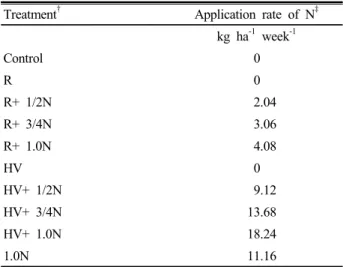
Table 3. Nitrogen fertigation rates during greenhouse cultivation of cucumber.
Treatment† Application rate of N‡ kg ha-1 week-1
Control 0
R 0
R+ 1/2N 2.04
R+ 3/4N 3.06
R+ 1.0N 4.08
HV 0
HV+ 1/2N 9.12
HV+ 3/4N 13.68
HV+ 1.0N 18.24
1.0N 11.16
†N: nitrogen fertilizer recommendations based on soil test, R: rye, HV: hairy vetch
‡Fertigated for 12 weeks from April 16 to July 15 with 3.72mm water supply per day.
Introduction
Cucumber (Cucumis sativus) is one of the main fruit vegetable crops cultivated largely in greenhouse. However, vegetable cultivation, especially in greenhouse, requires a great degree of management and large input of nutrients and irrigation (Power and Schepers, 1989). For instance, in some vegetable cultivation regions, the annual nitrogen (N) input by mineral fertilizers, manure and irrigation water reached more than 3,000 kg N ha-1 (Ju et al., 2006), and this over-fertilization for vegetable cultivation often resulted in nutrient accumulation in soil and led to soil salinity (Stigter et al., 1998; Chen et al., 2004). In this way, greenhouse soil degradation resulting from recropping of vegetables has become a serious problem for cucumber production (Liang et al., 2012). Thus, if not properly managed, the soil chemical properties would be worsen, and it might lead to a substantial decrease in cucumber yield after all (Shi et al., 2009).
Still, in many cases, soil management practices are only focused on maintaining the crop yield, regardless of sustainability determined by soil chemical properties, although there have been some efforts to effectively reduce the accumulated nutrients in the soil surface, such as by using various organic amendments as an alternative to conventional synthetic fertilizer or by cultivating catch crops as a fallow crop in recent times. So, it is urgent to find and recommend the proper soil management techniques for sustainable vegetable production, especially in the winter season under greenhouse conditions.
The objective of this study was to investigate the impact of cover crop species and N rate of fertigated solution on cucumber yield and soil chemical properties in greenhouse condition in order to propose possible tools for a sustainable soil management in greenhouse crop production.
Materials and Methods
Fallow cover crop and cucumber cultivation in greenhouse The experiment was carried out during 2012-2013 in a plastic film house with cucumber (Cucumis sativus). The cucumber was planted in sandy loam, located in NIHHS, suwon, Korea, and the soil chemical properties of the plastic film house used in this experiment is presented on Table 1.
The experimental plots were designed by randomized complete block design with three replicates. The tested cover crops were rye (Secale cereale) and hairy vetch (Vicia villosa), and the seeds of each cover crop species were sown on October 29, 2012 as a fallow crop. 16 kg ha-1 of rye and hairy vetch seeds were used in this experiment.
The N content, fresh and dry weights of green manure were measured after cover crops were cut on April 4, 2013 (Table 2).
After that, the green manure produced by each fallow cover crop was incorporated into the soil, and for 12 weeks after planting the seedlings of cucumber on April 16, each amount of urea determined by soil testing result was supplied in fertigation plots by irrigation pipe, which is presented in Table 3. Plant height and the number of nodes were measured as growth parameters on July 9 and the cultivation was terminated on July 15. The total cultivation period of cucumber in plastic film house was 91 days.
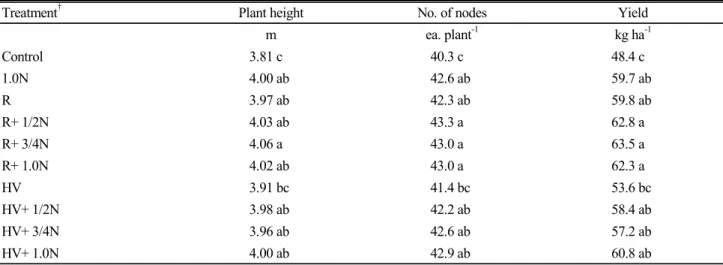
Table 4. Effect of cover crop species and N rate of fertigated solution on the growth and yield of cucumber in greenhouse cultivation (2013).
Treatment† Plant height No. of nodes Yield
m ea. plant-1 kg ha-1
Control 3.81 c 40.3 c 48.4 c
1.0N 4.00 ab 42.6 ab 59.7 ab
R 3.97 ab 42.3 ab 59.8 ab
R+ 1/2N 4.03 ab 43.3 a 62.8 a
R+ 3/4N 4.06 a 43.0 a 63.5 a
R+ 1.0N 4.02 ab 43.0 a 62.3 a
HV 3.91 bc 41.4 bc 53.6 bc
HV+ 1/2N 3.98 ab 42.2 ab 58.4 ab
HV+ 3/4N 3.96 ab 42.6 ab 57.2 ab
HV+ 1.0N 4.00 ab 42.9 ab 60.8 ab
†N: nitrogen fertilizer recommendations based on soil test, R: rye, HV: hairy vetch
‡Mean separation within columns by Duncan's multiple range test at P=0.05.
Sample analysis Chemical analysis for determination of the mineral content of each sample was conducted according to methods of soil chemical analysis (NIAST, 1988). For the determination of soil pH, air-dried soil samples were mixed with deionized water with a ratio of 1 : 5 (soil : water) and the pH of the clear supernatant was measured by pH electrode (Orion VERSA STAR, Thermo fisher scientific, US), and then, soil electric conductivity (EC) was measured by electric conductivity meter (CM-30R, DKK-TOA, Japan). Soil nitrate was extracted from fresh soil sample with 2 M KCl (soil : solution ratio was 1 : 5) for 30 minutes. Nitrate concentration of the extract was determined by Kjeldahl apparatus (K-314, BUCHI, Switzerland).
Soil available phosphate was determined according to the method of Lancaster. For determination of soil exchangeable cation (K, Ca, and Mg), air-dried soil samples were extracted with 1 N ammonium acetate (soil : solution ratio was 1 : 10) for 30 minutes, and concentration of the extract was determined by ICP (SDS-720, GBC, Australia). Quantitative analysis of plant N followed Kjeldahl method. About 3 g catalyst mixture (K2SO4 : CuSO4 = 9 : 1) and 10 mL concentrated sulfuric acid were added to 0.50 g of dry plant samples for digestion, and then the distillate obtained by Kjeldahl apparatus (Kjeltec 8400, Foss, Sweden) was titrated with standardized 0.1 N HCl.
Statistical analysis Analysis of variance and t-test were performed using the GLM procedure of the SAS statistical package (version 9.2, SAS Institute, Cary, NC).
Results and Discussion
Green manure production and N content of cover crops The fresh and dry weight of green manure and N
content of cover crops were significantly different depending on the species in greenhouse condition (Table 2). When the cover crops were cut before planting the seedlings of cucumber, the dry weight of rye was about 1.5 times higher than that of hairy vetch, whereas the N content of cover crop was 1.7 times higher in hairy vetch than rye.
The difference in biomass production and N content between cover crop species have also been reported in other studies:
The three-year average yield of green manure between two perennial cover crops was different by 21% (Shinners et al., 2010), and annual yield of organic matter and crude protein in the years following establishment were higher in lucerne than in fodder galega (Moller et al., 1997).
Cover crop species and N rate of fertigated solution on the growth and yield of cucumber The response of cucumber in growth and yield was different according to cover crop species. Plant height, the number of nodes and yield were lowest in control plot, and all parameters tended to be higher in rye treatments than hairy vetch treatments.
Meanwhile, N concentration of fertigated solution showed no significant effect on the growth and yield of cucumber (Table 4). These results were same as previous reports mentioning that high N input by excessive application for greenhouse vegetable production could be effectively reduced without yield loss (Olfs et al., 2005; He et al., 2007), and this may not only increase the economic benefit for farmers but also greatly reduce the pollution potential and provide a sustainable use of soil and water resources (Shi et al., 2009). Other study said that the average threshold EC values for total and marketable fruit yield were, respectively, 3.2 and 3.3 dS m-1, and the total and marketable yield decreased linearly with increasing salinity above a threshold
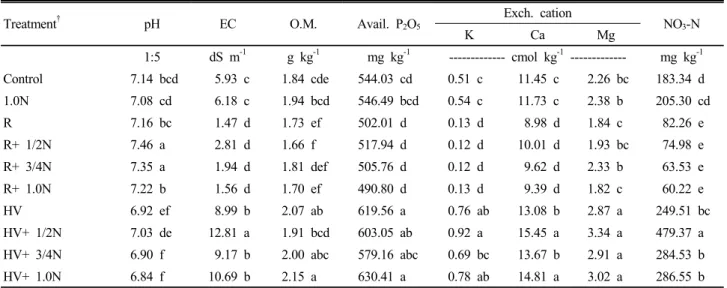
Table 5. Effect of cover crop species and N rate of fertigated solution on the soil chemical properties (Oct. 2013).
Treatment† pH EC O.M. Avail. P2O5
Exch. cation
NO3-N
K Ca Mg
1:5 dS m-1 g kg-1 mg kg-1 --- cmol kg-1 --- mg kg-1
Control 7.14 bcd 5.93 c 1.84 cde 544.03 cd 0.51 c 11.45 c 2.26 bc 183.34 d
1.0N 7.08 cd 6.18 c 1.94 bcd 546.49 bcd 0.54 c 11.73 c 2.38 b 205.30 cd
R 7.16 bc 1.47 d 1.73 ef 502.01 d 0.13 d 8.98 d 1.84 c 82.26 e
R+ 1/2N 7.46 a 2.81 d 1.66 f 517.94 d 0.12 d 10.01 d 1.93 bc 74.98 e
R+ 3/4N 7.35 a 1.94 d 1.81 def 505.76 d 0.12 d 9.62 d 2.33 b 63.53 e
R+ 1.0N 7.22 b 1.56 d 1.70 ef 490.80 d 0.13 d 9.39 d 1.82 c 60.22 e
HV 6.92 ef 8.99 b 2.07 ab 619.56 a 0.76 ab 13.08 b 2.87 a 249.51 bc
HV+ 1/2N 7.03 de 12.81 a 1.91 bcd 603.05 ab 0.92 a 15.45 a 3.34 a 479.37 a
HV+ 3/4N 6.90 f 9.17 b 2.00 abc 579.16 abc 0.69 bc 13.67 b 2.91 a 284.53 b
HV+ 1.0N 6.84 f 10.69 b 2.15 a 630.41 a 0.78 ab 14.81 a 3.02 a 286.55 b
†N: nitrogen fertilizer recommendations based on soil test, R: rye, HV: hairy vetch
‡Mean separation within columns by Duncan's multiple range test at P=0.05.
EC value. According to that study, there were only small effects of climate and cultivar on the threshold EC value for yield. And the decrease of fresh fruit yield with salinity was mostly due to a linear decrease of the fruit weight of 6.1% per dS m-1 from an threshold EC of 3.0 dS m-1 for marketable fruits, whereas reduction in fruit number with salinity made a smaller relative contribution to reduced yield (Magan et al., 2008). The level of the NO3- was also significantly related to the tomato height and yield (p
< 0.05) (Zhang et al., 2011). Incorporation of a catch crop prior to sowing obtained grain yields similar to levels achieved in the system where inorganic fertilizer was applied (Chirinda et al., 2010). These results suggest that within organic cropping systems, crop yield could be enhanced through inclusion of catch crops. The same result was achieved in the previous report which maintains that cover crop residue-supplemented tomatoes exhibited high vigor, higher marketable yield, and delayed senescence compared to those grown in bare soil under greenhouse condition (Kumar et al., 2005).
Cover crop species and N rate of fertigated solution on soil chemical properties The soil chemical properties were also different according to the cover crop species. In rye treatments, EC, available soil phosphate, exchangeable cation such as K, Ca, Mg, and soil nitrate were significantly alleviated compared with control and fertilizer plots, whereas hairy vetch treatments showed opposite results. Also, all parameters tended to be higher in hairy vetch treatments than control. These results suggest that rye is more appropriate as a fallow cover crop than hairy vetch in greenhouse cultivation. N concentration of fertigated solution showed no significant effect on the soil chemical properties, either
(Table 5). Soil nitrate, available phosphate and salt concentrations declined in summer under open-field conditions and significantly increased from December to May under greenhouse conditions and the accumulation of nitrate significantly correlated with soil EC and soil acidification.
(Shi et al., 2009). Also, as the number of recropping years increased, the soil available N, available phosphorus, available potassium, and organic content increased (Liang et al., 2012).
Most of the soil available nutrients were significantly accumulated in the shallow horizons of the greenhouse soils, and the nutrient ions contributed differently to the formation of the soil secondary salinization. (Huan et al., 2007). This soil secondary salinization commonly induced by greenhouse vegetable cultivation and over-ferilization degrades soil quality, subsequently reducing agricultural efficiency (Zhang et al., 2011). The NO3-
concentration affects soil EC in the surface soils, implying that the change in soil quality resulted from the difference in nitrate contents (Herencia et al., 2011). Fresh and dry fruit weights were significantly increased by compost addition (Arthur et al., 2012). These results indicate that the incorporation of rye can be a powerful soil management practice in greenhouse vegetable production.
Conclusion
In conclusion, it is necessary to choose rye as a fallow catch crop rather than hairy vetch containing a lot of N when cultivating cucumber in nutrient accumulated soil induced by combined effect of excessive fertilization and greenhouse condition.
References
Arthur, E., W. Cornelis, and F. Razzaghi. 2012. Compost Amendment to Sandy Soil Affects Soil Properties and Greenhouse Tomato Productivity. Compost Sci. Util. 20:215-221.
Chen, Q., X.S. Zhang, H.Y. Zhang, P. Christie, X.L. Li, and D.
Horlacher. 2004. Evaluation of current fertilizer practice and soil fertilizer in vegetable production in the Beijing region.
Nutr Cycl Agroecosyst 69:51-58.
Chirinda, N., J.E. Olesen, J.R. Porter, and P. Schjonning. 2010.
Soil properties, crop production and greenhouse gas emissions from organic and inorganic fertilizer-based arable cropping systems. Agric. Ecosyst. Environ. 139:584-594.
He, F., Q. Chen, R. Jiang, X. Chen, and F.S. Zhang. 2007. Yield and nitrogen balance of greenhouse tomato (Lycopersicum esculentum Mill.) with conventional and site-specific nitrogen management in Northern China. Nutr Cycl Agroecosyst 77:1-14.
Herencia, J.F., P.A. Garcia-Galavis, and C. Maqueda. 2011.
Long-term effect of organic and mineral fertilization on soil physical properties under greenhouse and outdoor management practices. Pedosphere 21:443-453.
Huan, H.F., J.M. Zhou, Z.Q. Duan, H.Y. Wang, and Y.F. Gao.
2007. Contributions of greenhouse soil nutrients accumulation to the formation of the secondary salinization: a case study of Yixing city, China. Agrochimica 51, 207-221.
Ju, X.T., C.L. Kou, F.S. Zhang, and P. Christie. 2006. Nitrogen balance and groundwater nitrate contamination: comparison among three intensive cropping systems on the North China Plain. Environ Pollut 143:117-125.
Kumar, V., A. Abdul-Baki, J.D. Anderson, and A.K. Mattoo.
2005. Cover crop residues enhance growth, improve yield, and delay leaf senescence in greenhouse-grown tomatoes. Hortscience 40:1307-1311.
Liang, Y.L., X.J. Lin, S. Yamada, M.J. Zhou, M. Inoue, and K.
Inosako, 2012. Cucumber productivity and soil degradation in
recropping system in greenhouse. Commun. Soil Sci. Plant Anal. 43:1743-1748.
Magan, J.J., M. Gallardo, R.B. Thompson, and P. Lorenzo. 2008.
Effects of salinity on fruit yield and quality of tomato grown in soil-less culture in greenhouses in Mediterranean climatic conditions. Agricultural Water Management 95:1041-1055.
Moller, E., S.B. Hostrup, and B. Boelt. 1997. Yield and quality of fodder galega (Galega orientalis Lam.) at different harvest managements compared with lucerne (Medicago sativa L.).
Acta Agric. Scand. Sect. B-Soil Plant Sci. 47:89-97.
NIAST. 1988. Methods of soil chemical analysis. National Institute of Agricultural Science and Technology, RDA, Suwon, Korea.
Olfs, H.W., K. Blankenau, F. Brentrup, J. Jasper, A. Link, and J.
Lammel. 2005. Soil- and plant-based nitrogen-fertilizer recommendations in arable farming. J. Plant Nutr. Soil Sci.
168:414-431.
Power, J.F. and J.S. Schepers. 1989. Nitrate contamination of groundwater in North America. Agric Ecosyst Environ 26:165-187.
Shi, W.M., J. Yao, and F. Yan. 2009. Vegetable cultivation under greenhouse conditions leads to rapid accumulation of nutrients, acidification and salinity of soils and groundwater contamination in South-Eastern China. Nutrient Cycling in Agroecosystems 83:73-84.
Shinners, K.J., G.C. Boettcher, R.E. Muck, P.J. Weimer, and M.D. Casler. 2010. Harvest and storage of two perennial grasses as biomass feedstocks. Trans. ASABE 53:359-370.
Stigter, T.Y., S.P.J. Ooijen, V.E.A. Post, C.A.J. Applello, and A.M.M.C. Dill. 1998. A hydrogeological and hydrochemical explanation under irrigated land in a Mediterranean environment, Algarve, Portugal. J Hydrol (Amst) 208:262-279.
Zhang, J.J., Z.Q. Duan, X. Li, and P.G. Kerr. 2011. The classification of NO3- soil secondary salinization in a tomato-based greenhouse in China’s Yangtze River delta.
Fresenius Environ. Bull. 20:3068-3075.