Journal of the Korea Society of Systems Engineering
공공 홀의 설계 프로세스 향상을 위한 시스템 엔지니어링 적용
요시하라사키* 토우마테츠야
케이오대학대학원 시스템 디자인 엔 메니지먼트 연구과
Application of Systems Engineering for Improving the Design Process of Public Halls
Saki Yoshihara*, Tetsuya Toma
Graduate School of System Design and Management, Keio University
Abstract : The major challenge of designing public halls or performing arts centers in Japan is meeting the expectations of the regional community; greater stakeholder involvement is required in order to solve this problem. The purpose of this paper is to examine whether stakeholders can become more involved in public hall design by using systems engineering (SE), which has never before been applied when designing public halls. As such, this study redesigned an actual public hall (Iwaki Alios) using an SE approach. The results revealed that applying SE was effective in the creation of a public hall concept.
Key Words : Public Hall; Public Theater; Design Process; Concept Design; Social System
* 교신저자 : Saki Yoshihara, [email protected]
* This is an Open-Access article distributed under the terms of the Creative Commons Attribution Non-Commercial
License(http://creativecommons.org/licenses/by-nc/3.0) which permits unrestricted non-commercial use, distribution,
and reproduction in any medium, provided the original work is properly cited.
[Figure 1] General design process of public halls
[Figure 2] Main stakeholders in the design process of public halls
1. Introduction
Public halls’ contributions to their communities have recently been reconsidered due to the recent situation in Japan that is discussed below.
Many public halls or performing arts centers in Japan that were built in the 1960–1970s have reached a period of reconstruction or renovation due to decrepitude and the obso- lescence of equipment, which has given rise to the opportunity for people to reconsider the role of public facilities. In addition, “the law for the activation of theaters, music halls, and the like”[1] was enacted in 2012, which is the first law to define the role of theaters and music halls in Japan, as well as conventional safety and security regulations. Moreover, public halls that stage performing arts are also included under this law.
However, public halls, in contrast to private halls, are often established without due con- sideration of demand, and as a result there have been cases where upon opening, it was discovered that the rate of operation of public halls was lower than predicted by local gov- ernments or too much seating existed due to competition with other public halls in various communities.
It is thought that this happens because stakeholder involvement is insufficient in the design process; Figure 1 shows the general design process of public halls. In addition, the
main stakeholders concerned in the design processes are shown in Figure 2. Stakeholders on the left of this figure are heavily engaged in the early stages of design, and it is difficult to involve those on the right side.
However, how to involve these stakeholders is an important issue when creating public halls, as this can contribute to the local community.
Although some good practices have been put in place to respond to this situation, these approaches are not formalized and have remained isolated in separate cases; therefore, a meth- odology that public hall designers are able to refer to and follow in order to remedy this situation is required.
To contribute to solving this problem, this paper aimed to confirm whether public hall design can facilitate greater stakeholder in- volvement using a systems engineering (SE) approach, which has never before been applied in the design of public halls. Specifically, Iwaki Alios was used for this case study, which is often referred to as a public hall that is currently well managed where the design process went well.
2. Problems and Previous Studies
In this section, we first describe what public halls in Japan are. Then, the positioning of this paper is described through a comparison of previous studies.
[Figure 3] What is needed when designing public halls
2.1 Problems and previous studies regarding public hall design
A public hall is a facility established by the local government that can either have one multipurpose hall or be a complex comprised of one or several halls, including music halls, theaters for the performing arts, and conference halls.
Most of the previous studies on public halls have focused on the evaluation of existing theaters or analyses of good practices.[2][3][4]
Therefore, there is almost no research on the planning or design of public halls. In this paper, we examined these previous studies, and focused on planning and designing the concept of a public hall to respond to the current situation.
2.2 Positioning of this paper
Secondly, we describe the positioning of this paper.
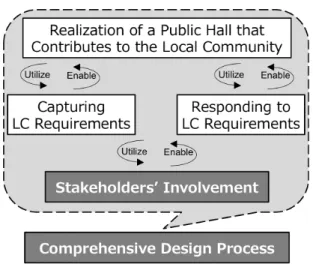
Figure 3 illustrates the importance of stake- holder involvement and the positioning of our study. To express this, we adopted the concept
of an enabler framework according to the idea that these factors are in a relationship of enabling and utilization.[5]
Here, we define the aim as the creation of a public hall that contributes to its local com- munity. For “Realization of a public hall that contributes to its local community (LC),” “Capturing LC requirements” and “Responding to LC requirements” are necessary; in other words, this constitutes the relationship of enable/utilize.
The gray boxes in Figure 3 show important points to pay attention to in this paper;
“Stakeholder involvement” is one of these, which is necessary to capture and respond to the requirements of the LC.
In addition, successful and failed cases were analyzed in many precedent studies, and the kind of process for “Capturing LC requirements”
or the kind of specifications for “Responding to LC requirements” was summarized. These are precious documents, but remain isolated in individual cases. Therefore, a study that combines them and examines the design process from comprehensive view is necessary, which is the second main point addressed in this paper.
We advocate that this study will be helpful to designers when they create a new hall, rebuild an old one, or consider the operation as a major goal. In this study, a systems engineering approach is assumed to be able to contribute to these directives, which this paper aims to confirm.
3. Application of Systems Engineering to the Case
In this section, we describe the case in greater detail, and subsequently describe the
results using the system lifecycle and two system design processes: requirement analysis and architectural design.
3.1 Characteristics of the case of iwaki alios Iwaki Alios is located in and under the authority of Iwaki City in Fukushima Prefecture, Japan. The concept of Iwaki Alios was prepared in 2001, and the grand opening occurred in 2009.
Initially, a team of several advisors created the concept with input from local residents.
Then, the architect designed the facility and the contractor built it.
There were some noteworthy characteristics about it:[6]
∙ Communication that included local residents was raised as the major theme
∙ While the new public hall is owned by Iwaki City, Taira-Chuo Park, a park next to the hall, is owned by Fukushima Prefecture
∙ Expectations were high for a high-functioning music hall where the orchestra could perform
∙ It was necessary to choose a process and specifications that enabled the band com- petitions of high school students to continue
The theater manager of Iwaki Alios described the concept as including:
∙ Halls and theater areas that function excellently as spaces for the presentation and production of performing arts. Other areas serve as places where local residents from various occupations and age groups can spend their free time.
∙ The basic idea of facility management and
business management is that Alios’s staff help to satisfy local residents’ wishes, as Iwaki Alios is not the place for “experts”
such as the artistic director, director, and producer to satisfy their wants.
∙ The ability to solve social issues does not lie with the arts and culture; rather, it is the arts and culture that support people confronting social issues or life challenges.
[The theater manager of Iwaki Alios, personal communication]
3.2 System lifecycle
The public hall has a lifecycle spanning its conception to closure, but this cannot be said to always be sufficiently considered. In this paper, we organize each stage of the lifecycle of Iwaki Alios, as shown in Figure 4. This was created from actual work using the typical lifecycle stages, as per ISO/IEC15288. [7]
[Figure 4] Definition of each lifecycle stage
3.3 Design process
Here, we show the process used to discuss and decide what kind of public hall to establish using the system design process.
[Figure 5] Context diagram (in the utilization/support stage)
[Figure 6] Extraction of the required functions (in the utilization/support stage)
It should be noted that the word “design”
described here refers not only to the design of the building, but to the design as a whole, including businesses, operations, tenants such as restaurants and shops, and the relationship with neighboring roads or housing.
In this paper, the system design process described below is assumed to be done across the concept and development stages of the lifecycle. We adopted the following process as a system design process in SE:
(1) Requirement Analysis
1) Clarification of the system boundary 2) Clarification of the outcome itself (2) Architectural Design
1) Functional analysis 2) Synthesis
* (1) to (2) should be analyzed under the assumption of all lifecycle stages.
We applied this to the Iwaki Alios design process and discussed it below. Note that ideally, the analysis should be done for all lifecycle stages, but in this paper we focus on several stages and points due to space constraints.
3.3.1 Requirement analysis
We recaptured the actual stage of revealing requirements, such as an image of the “cultural facilities” that local governments wanted to achieve, requests from residents in Iwaki City and technical staff, and requirements regarding relationships with neighboring areas.
First, we made context diagrams, and then we extracted the required functions from the diagrams from the following perspective. Figure 5 shows a context diagram in the utilization/
support stage, and Figure 6 shows the extraction
of the required functions.
1) Clarification of the system boundary In the actual design of Iwaki Alios, this is the step in which the system boundary is determined, and the functions are identified from the relationship with external elements, which we reviewed from an SE perspective.
From this perspective, RF-1, 2, and 3 in Table 1 were extracted.
2) Clarification of the outcome itself
In this stage, what to include in Iwaki Alios as a public hall is determined. From this
<Table 1> The list of required functions
No. Required functions Lifecycle
stage RF-1 To work as a place to form connections with local residents (outside of the
boundary)
Development
RF-2 To hold band competitions for high school students without any interruption to the relationships with other facilities (outside of the boundary)
Production
RF-3 To allow designers and contractors to work on construction while holding discussions with each other and making changes to the specifications
Production
RF-4 To facilitate smooth movement to and from Taira-Chuo Park (outside of the boundary)
Utilization/
Support RF-5 To be a place that has a capacity for 1800 people where concerts or large
conferences can be held
Utilization/
Support RF-6 To be a place of performance for experimental small theaters or dances Utilization/
Support RF-7 To be a place for the individual practice of citizens and productions by Iwaki
Alios
Utilization/
Support RF-8 To be a place where residents can perform and feel free to communicate \Utilization/
Support
perspective, RF-4, 5, 6, 7, and 8 in Table 1 were extracted.
3.3.2 Architectural design 1) Functional Analysis
From the extracted required functions shown in Table 1, we detailed the functional re- quirements of Iwaki Alios. In this way, they are extracted as necessary functional requirements.
We have shown part of the results in Figure 7.
Numbers beginning in FR are designated as functional requirements, and each functional requirement is equivalent to the required functions shown in the diagram.
2) Synthesis
From the results described thus far, we have determined and synthesized physical factors, as shown in Table 3. A number beginning with P is designated as a physical
factor and deals with the functional requirement shown in the list to the right.
4. Discussions
In this section, we describe considerations for the application of the case shown in the previous chapter.
First, we describe the good points of the application of systems engineering in comparison with the normal design process from two viewpoint of consistency and stakeholders involvement.
Then, it will be considered in each design process.
Finally, we set forth the opinions of experts.
4.1 Discussion through the entire design process Here, we describe the good points thorough the entire design process from two viewpoint
[Figure 7] The statistic diagram of functional requirements
[Figure 8] The statistic diagram of physical factor
of consistency and stakeholders involvement.
4.1.1 Stakeholder involvement
In the example of Iwaki Alios, not only was the local government and architect involved in the early phase of concept design, but so too were experts on halls and theaters (such as a theater manager). This stakeholder involvement is important when designing public halls, and helped to improve the function of the backstage at Iwaki Alios.
In this study, we took a systems approach to think about a system lifecycle and examined context diagrams at every lifecycle stage. There- by, it became easy to see which stakeholders local governments should consult with and at which point; it may be said that this makes it easier for stakeholders such as theater managers and users to participate in discussions.
4.1.2 Consistency
Applying SE leads to clarification on the purpose of public halls—which supports designers after examining their necessity—and facilitates consistency from the requirement analysis to architectural design in order to determine whether a public hall really is required.
4.2 Discussion in each design process
In this section, we mention the good points of the application of systems engineering compared to the normal design process for each design process.
4.2.1 Considered system lifecycle
In the case of Iwaki Alios, the system lifecycle was considered rather than the general design process, and a detailed analysis
of the requirements was done while concretely imaging each lifecycle stage.
Thereby, for example, the continuation of the band competitions for high school students during the construction, and consideration of the management system in the utilization/
support stage have been realized.
On the other hand, not many public halls are designed with such considerations. Today, the decrepitude of facilities and rapidity of the aging of equipment such as sound and lighting is a problem. In these situations, it will be a challenge to design considering the utilization/
support stage and retirement stage, as it is important that the design consider the whole lifecycle.
4.2.2 Requirement analysis
In requirements analysis, it seems to be extracted that the requirements often overlooked in a general design process by extracting functions in each life cycle stages in systems approach.
Moreover, by representing requirements struc- turally, it will be clear each decomposed functions are to meet what requirements.
4.2.3 Architectural design
The significance of applying the SE in the planning of public hall from the architectural design is to become apparent the association of required functions and physical design when allocation functions to the physical.
It would be a valid way of thinking in discussion given that there is physical design, which is not clear made for what in the general design process.
4.3 Opinions from experts
We carried out the study’s validation by interviewing experts, public hall staff, and artists, and received the following opinions:
I. A: public hall staff
The idea of thinking of the public hall from an SE perspective is something that public hall staff did not think of.
That was fresh and very instructive for me.
I think it is very important for public hall staff to consider public halls from a new point of view.
II. B: an artist and university researcher The idea of a system lifecycle and this way of thinking about the function was new and attractive to me.
Accepting a new way of thinking is needed to consider public halls in cooperation with various stakeholders.
I want to also consider the shortcomings of SE in the context of social sciences by applying SE to the public hall.
5. Conclusion and Further Study
In the following, we describe the conclusions and further research.
5.1 Conclusion
We revealed that the application of SE in the design of public halls could become a meth- odology for designing concepts and working out the specifications of these concepts in order to respond to the requirements of the regional community and the law of theater.
In addition, in order to apply SE in the
actual design process in the near future, it is necessary to tailor SE to public halls and form guidelines to help designers’ efforts.
5.2 Further study
As for further research, we will apply SE in other cases, including those demonstrating good practices and those that have failed.
In addition, it is also important to tailor and replace some terms with more appropriate words so that designers can accept this new way of thinking more easily.
Acknowledgements
This paper obtained the assistance of Iwaki Alios and Rikkyo University Social Design Laboratory’s “social design force training course for public theater staff to respond to the demands of the law of theater,” and a part of this research was supported by Keio Research Grants for Global Initiative Research Projects (Safety).
References
1. Agency for Cultural Affairs, Gekijo, Ongakudo- tou no Kasseika ni Kansuru Horitsu (The Law for the Activation of Theaters, Music Halls, and the Like) [in Japanese], Agency for Cultural Affairs, Tokyo, 2012.
2. Japan Foundation for Regional Art-Activities, Kokyo Hall, Koritsu Gekijo no Hyoka Shishin (Evaluation Guidelines for Public Halls and Public Theaters) [in Japanese], Japan Foun- dation for Regional Art-Activities, Tokyo, 2007.
3. Japan Foundation for Regional Art-Activities,
Heisei 26nen-do Chiki no Kouritsu Bunkashisetsu Jittai Chosa Hokokusho (Survey Report of Regional Public Cultural Facilities, 2014) [in Japanese], Japan Foun- dation for Regional Art-Activities, Tokyo, 2015.
4. Takashima Yumiko, Kokyo Bunka Shisetsu ni okeru New Public Governance Model no Kensho (Verification of the New Public Governance Model in Public Cultural Facilities) [in Japanese], Keio University Shonan Fujisawa conference, Kanagawa, 2003.
5. Shirasaka, S. A Standard Approach To Find Out Multiple View Points To Describe An Architecture Of Social Systems—
Designing Better Payment Architecture To Solve Claim-Payment Failures Of Japan’s Insurance Companies, INCOSE Symposium, 19(1), Wiley, pp. 490–500, 2011.
6. Rikkyo University Social Design Laboratory, Kokyohall no Tsukurikata to Ugokashikata wo Manabu Toki Shuchu Workshop (Social Design Force Training Course for Public Theater Staff to Respond to the Demands of the Law of Theater) [in Japanese], [personal communication], 2015.
7. ISO/IEC-15288, Systems and Software Engineering—System Life-Cycle Processes, International Organization for Standardization, Geneva, p. 14, Switzerland, 2015.