http://dx.doi.org/10.12925/jkocs.2017.34.4.1112
석유제품의 온도 변화에 따른 밀도 및 부피 변화 특성 연구
황인하
*․도진우․강형규․성상래․하종한․나병기
✝한국석유관리원 석유기술연구소, 충북대학교 화학공학과✝
(2017년 11월 15일 접수: 2017년 12월 8일 수정: 2017년 12월 14일 채택)
Study on the Density and Volume Change Property of Petroleum Products according to Temperature Variation
In-ha Hwang․Jin-woo Doe․Hyung-kyu Kang․Sang-rae Sung․Jong-han Ha․Byung-ki Na✝
Research Institute of Petroleum Technology, Korea Petroleum Quality & Distribution Authority Department of Chemical Engineering, Chungbuk National University
(Received November 15, 2017; Revised December 8, 2017; Accepted December 14, 2017)
요 약 : 석유제품은 다양한 형태의 탄화수소화합물로 구성되어진 화합물로, 다른 종류의 액체류와 마찬 가지로 온도변화에 따른 밀도와 부피의 변화가 발생한다. 액상에서 석유제품의 밀도를 측정하는 방법은 분 별 증류된 각 석유제품에 대해 주로 얻어진 실험 데이터를 기반으로 한다. 본 연구에서는 등유와 자동차용 경유의 온도변화에 따른 밀도와 부피변화를 실제 측정하여 온도변화에 따른 변화추이를 분석하고, 국제규 격인 ASTM에서 제시하는 밀도부피 환산표를 이용한 환산값을 계산하고 두 값을 비교분석하였다. 또한, 국내 계량 관련법에서 규정하고 있는 온도변화에 대한 기준과 실측값과의 상호 비교를 통해 차이점을 분석 하였다.
주제어 : 등유, 자동차용 경유, 밀도, 부피, 환산
Abstract : Petroleum products are composed of various types of hydrocarbon compounds. Like other types of liquids, they presented the variation of density and volume according to temperature change. The method of measuring the density of petroleum products in a liquid phase is based on experimental data obtained mainly for each fractionally distilled petroleum product. In this study, the density and volume changes of kerosene and automotive diesel according to temperature change were measured and the property of change were analyzed. The conversion values were calculated using the density volume conversion table proposed by international standard ASTM. In addition, we analyzed the differences between the reference values and the measured values for the temperature changes specified in the domestic metering law.
Keywords : Kerosene, Automotive diesel, Density, Volume, Conversion
✝
Corresponding author
(E-mail: [email protected])
1. 서 론
진보된 석유 기술에서 최근 발전은 국제시장에 서 중유에 대한 요구가 증대되고 있다. 원유는 분자량, 점도, 밀도 그리고 API도 같은 다양한 물 성에 따라 경질유 또는 중질유로 구분된다. 또한 점도와 밀도는 석유 생산, 파이프라인을 통한 이 송 그리고 석유 정제과정에서 매우 중요한 역할 을 한다.[1] 또한, 원유의 점도는 기본 화학조성 과 같은 많은 부분에 의존한다[2]. 일반적으로 등 유는 780 ∼ 810 kg/m3의 밀도범위를 가지며, 150 ∼ 275 ℃ 사이에서 원유의 분별증류를 통 해 얻어지고 6 ∼ 16개의 탄소 원자를 포함한 다.[2] 자동차용 경유는 820 ∼ 845 kg/m3의 밀 도범위와 150 ∼ 275 ℃ 사이의 비점범위를 가 지고 16 ∼ 30여개의 탄소 원자를 포함한다.[2]
등유와 자동차용 경유는 실제 생활에 매우 많이 사용되는 석유제품이며, 이들에 대한 품질기준은 법적으로 엄격히 정해져 있다.[2] 또한, 다른 액 체류와 달리 석유에서 유래한 물질들은 온도에 민감하여 종류에 따라 보관, 전달 및 판매에 매 우 유의할 필요가 있다. 특히, 석유제품의 판매에 서는 정확한 무게와 부피가 가격의 문제에 큰 영 향을 미치기도 하기 때문에 엄격한 주의와 함께 해당 물질에 대한 기본적인 특성들을 이해할 필 요가 있다. 특히, 액상에서 석유제품의 밀도를 측 정하는 방법은 분별 증류된 각 석유제품에 대해 주로 얻어진 실험 데이터를 기반으로 한다.[3-6]
본 연구에서는 등유와 자동차용 경유의 온도변 화에 따른 밀도와 부피변화를 실제 측정하여 온 도변화에 따른 변화추이를 분석하고, 국제규격인 ASTM에서 제시하는 밀도부피 환산표를 이용한 환산값을 계산하고 두 값을 비교분석하였다. 또 한, 국내 계량 관련법에서 규정하고 있는 온도변 화에 대한 기준과 실측값과의 상호 비교를 통해 차이점을 분석하였다.
2. 실 험
2.1. 실험대상본 연구는 국내 석유제품 중 등유와 자동차용 경유에 대하여 각각 온도 변화에 따른 부피 및 밀도변화를 측정하였다. 실험대상인 등유는 시료 의 대표성을 위해 국내 4개 정유사의 5개 공장에 서 생산된 정상제품을 사용하였으며, 자동차용 경
유는 정유사에서 생산된 정상제품을 각 사별로 실험을 실시하였다.
2.2. 실험방법
본 연구는 국내 석유제품 중 등유와 자동차용 경유에 대하여 각각 온도의 변화에 따른 부피 및 밀도의 변화를 측정하였다. 각 시료의 밀도 측정 은 「석유제품의 품질기준과 검사방법 및 검사수 수료에 관한 고시」에서 설정된 품질검사 시험방 법인 KS M ISO 12185 원유 및 석유제품 ― 밀 도의 측정 ― 진동 U-자관법을 적용하여 10 ℃ 단위로 온도를 변화시키며 밀도를 측정하였 다.[7-9] 온도변화에 따른 부피변화는 일정온도 의 항온 수조에 유리재질의 투명 튜브에 등유와 자동차용 경유를 각각 채운 후, 10 ℃ 단위로 온 도를 변화시키면서 부피변화를 측정하였다. 온도 변화에 따라 실제 측정된 등유와 자동차용 경유
의 밀도와 부피의 실측값과 ASTM
D1250-08(2013) Standard guide for use of the petroleum measurement tables에 제시된 환산값 과의 비교분석을 실시하였다.[10] 또한, 국내의
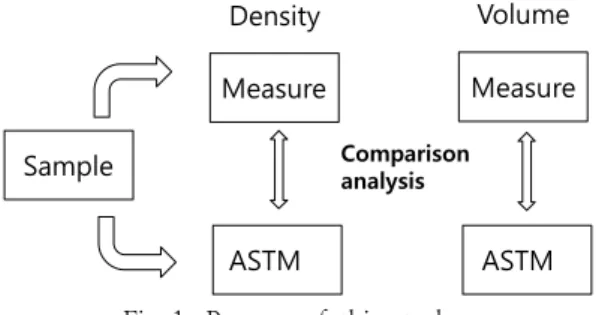
「계량에 관한 법률」에서 규정한 「액체용 계량 기(주유기, LPG미터, 오일미터) 기술기준」의 기 준과도 비교하였다.[11-12] Fig. 1.은 본 연구의 진행과정을 간략히 나타내었다.
Sample
Measure Measure
ASTM ASTM
Density Volume
Comparison analysis
Fig 1. Process of this study.
3. 결과 및 고찰
3.1. 온도변화에 따른 등유 및 자동차용 경유의 실측 밀도 및 부피 변화 추이
Table 1과 Table 2는 등유와 자동차용 경유의 온도변화에 따른 밀도와 부피변화의 실측값을 나 타내었다. 등유의 밀도는 793.10 ∼ 732.19 kg/m3의 범위로 변화하였고, 부피는 1083 ml까
Table 1. Real measurement value of density and volume in kerosene according to the variation of temperature
Temperature(℃) Density(kg/m3) Volume(mL)
Real measurement Deviation Real measurement Deviation
10 793.10 - 1000 -
20 785.66 7.45 1009 9
30 778.15 7.51 1019 10
40 770.61 7.54 1029 10
50 763.03 7.58 1039 10
60 755.41 7.62 1050 11
70 747.73 7.68 1061 11
80 740.01 7.72 1072 11
90 732.19 7.82 1083 11
Table 2. Real measurement value of density and volume in automotive diesel according to the variation of temperature
Temperature(℃) Density(kg/m3) Volume(mL)
Real measurement Deviation Real measurement Deviation
10 832.48 - 1000 -
20 825.36 7.13 1009 9
30 818.25 7.11 1017 8
40 811.13 7.13 1026 9
50 804.00 7.13 1035 9
60 796.85 7.15 1045 10
70 789.61 7.24 1054 9
80 782.37 7.24 1064 10
90 775.13 7.25 1074 10
지 팽창하였다. 등유는 실험온도가 10 ℃부터 90
℃까지 10 ℃의 일정하게 승온함에 따라 밀도값 도 평균 약 7.6 kg/m3 만큼 일정하게 감소하였 다. 온도변화에 따른 등유의 부피는 밀도와 반대 로 평균 약 10 mL씩 팽창하였다.
자동차용 경유는 775.13 ∼ 832.48 kg/m3의 범위로 변화하였고, 부피는 최대 1074 mL까지 팽창하였다. 등유와 마찬가지로, 자동차용 경유의 실측 밀도도 온도변화에 따라 평균 약 7.2 kg/m3 만큼 일정하게 감소하였다. 자동차용 경유의 부피 도 일정한 온도 증가에 따라 평균 약 9 mL 만큼 일정하게 팽창하였다.
주어진 온도에서 등유의 밀도 변화폭은 60.9 kg/m3로 나타났고, 자동차용 경유의 밀도 변화폭 은 57.4 kg/m3로 측정되었으며, 이는 등유 및 자 동차용 경유가 단일성분으로 구성되어 있지 않고 복잡한 탄소화합물로 이루어져 있기 때문에 구성 성분에 따라 온도변화에 따른 부피 변화율이 다 를 수 있고, 밀도가 낮을수록 동일한 온도변화에 따라 부피 변화의 폭은 더 크기 때문이다.
등유 및 자동차용 경유가 일정 온도변화에 따 라 일정하게 밀도가 감소하고 부피는 증가하는 것은 등유와 자동차용 경유의 생산 시 공정제어 를 통한 일정한 품질을 유지하기 때문인 것으로
Temperature(℃) Real measurementDensity(kg/mASTM conversion3) Deviation
10 793.10 789.40 3.70
20 785.66 789.36 3.70
30 778.15 789.25 11.10
40 770.61 789.11 18.50
50 763.03 789.02 26.00
60 755.41 788.89 33.48
70 747.73 788.79 41.06
80 740.01 788.66 48.65
90 732.19 788.47 56.28
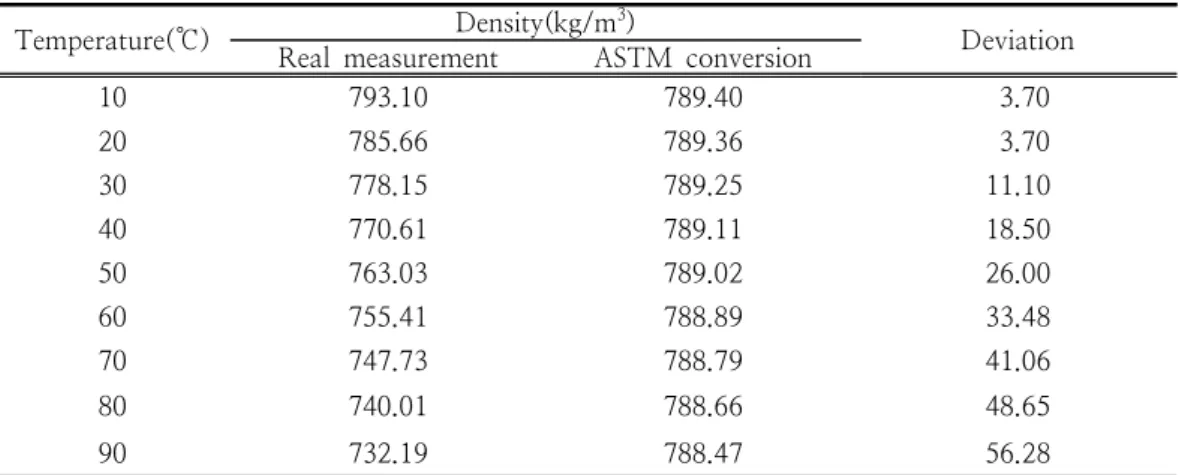
Table 3. Comparison of density between real measurement value and ASTM conversion value in kerosene
Temperature(℃) Real measurementVolume(mL)ASTM conversion Deviation
10 1000 1005 5
20 1010 1005 5
30 1019 1005 14
40 1029 1005 24
50 1039 1004 35
60 1050 1004 46
70 1061 1004 57
80 1072 1004 68
90 1083 1004 79
Table 4. Comparison of volume between real measurement value and ASTM conversion value in kerosene
보인다.
3.2. 온도변화에 따른 등유 및 자동차용 경유 의 밀도와 부피 실측값과 ASTM 환산값과 의 비교 분석
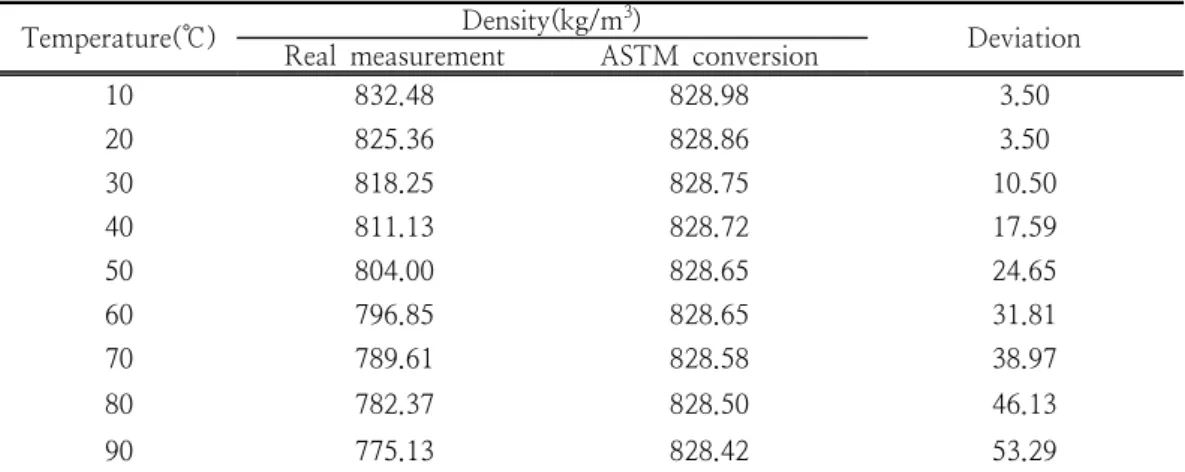
밀도시험기를 이용하여 등유와 자동차용 경유 의 밀도를 온도변화에 따라 실측하고, 항온수조를 이용하여 온도변화에 따른 부피변화를 측정한 값 을 ASTM D1250-08의 Petroleum Measurement Table을 이용하여 15 ℃에서의 밀도와 부피 환산 값을 계산하였다. ASTM 환산값은 다양한 온도 와 압력의 범위에서 탄화수소의 부피변화에 관한 경험적 자료(empirical data)로부터 얻어진 경험 식의 결과물이다.[13] 환산값의 계산방법은 개별
온도에서 측정한 밀도와 부피값을 ASTM Table 에 제시되어 있는 각 온도별 밀도와 부피값을 이 용하여 내삽법(interpolation)과 외삽법 (extrapolation)으로 해당 온도에서의 값을 각각 계산하였다. 이러한 ASTM 환산값은 여러 온도 에서 각각 측정된 석유제품의 밀도와 부피를 동 일한 온도조건(15 ℃)에서 비교할 수 있다. Table 3에서부터 Table 6은 온도변화에 따른 등유와 자 동차용 경유의 밀도와 부피의 실측값과 15 ℃에 서의 ASTM 환산값 및 편차를 나타내었다. 표에 서 보는바와 같이 각 석유제품의 ASTM 환산값 사이에서 온도증가에 따라 큰 편차를 나타내지는 않았다. 다만, 실측값과 환산값사이의 편차는 온 도가 증가함에 따라 크게 나타났으며, 이는 석유
Table 5. Comparison of density between real measurement value and ASTM conversion value in automotive diesel
Temperature(℃) Real measurementDensity(kg/mASTM conversion3) Deviation
10 832.48 828.98 3.50
20 825.36 828.86 3.50
30 818.25 828.75 10.50
40 811.13 828.72 17.59
50 804.00 828.65 24.65
60 796.85 828.65 31.81
70 789.61 828.58 38.97
80 782.37 828.50 46.13
90 775.13 828.42 53.29
Table 6. Comparison of volume between real measurement value and ASTM conversion value in automotive diesel
Temperature(℃) Real measurementVolume(mL)ASTM conversion Deviation
10 1000 1004 4
20 1009 1005 4
30 1017 1004 13
40 1026 1004 22
50 1035 1003 32
60 1045 1004 41
70 1054 1003 51
80 1064 1004 60
90 1074 1003 71
제품의 물성값을 비교할 때 동일한 온도조건에서 의 상호비교가 필요함을 의미한다. 또한, 등유와 자동차용 경유의 밀도는 온도변화에 따라 실제 측정값은 함께 변화하였으며, ASTM 환산값에서 는 온도가 증가함에 따라 함께 감소하는 경향을 나타났다. 그러나 부피의 경우, 실측값은 온도가 증가함에 따라 부피가 팽창하는 것으로 나타났으 나 ASTM 환산값은 반대의 경향을 보였다. 이는 부피환산에 사용된 밀도값이 일정하게 정해진 상 수로 사용한 것이 아니라 각 온도에서의 밀도값 을 사용하였기 때문에 온도변화에 따라 각 석유 제품의 밀도값도 함께 변화되어 밀도의 결과값과 유사하게 감소하는 경향으로 나타난 것으로 보인 다.
국내에서는 여러 정유사에서 자동차용 경유를 생산하고 있으며, 각 회사별 물성이 다를 수가 있으므로 각 정유사별로 자동차용 경유의 온도변 화에 따른 부피 변화를 측정하였다. Fig. 2.와 Fig. 3.은 각 사별로 온도변화에 따른 부피변화의 실측값과 ASTM 환산값을 나타내었다. 그림에서 보는 바와 같이 각 정유사별로 온도변화에 따른 부피변화의 크기는 미미한 수준을 보였으며, 낮은 온도인 10 ℃에서 40 ℃사이는 비교적 큰 부피 변화를 나타내었으나, 그 보다 높은 온도에서는 큰 변화를 보이지 않았다. 이는 각 정유사별로 자동차용 경유를 생산하는데 사용하는 원유의 종 류나 정제과정에서 비교적 가벼운 탄화수소의 구 성비가 다양하게 혼합되는 것으로 보인다. 또한
높은 온도에서 큰 부피변화가 없는 것은 자동차 용 경유의 구성성분이 대개 탄소수 32개 이내로 이루어지기 때문에 높은 비점을 갖는 긴 탄화수 소의 양은 일정하기 때문인 것으로 보인다.
1100 1110 1120 1130 1140 1150 1160 1170 1180 1190
0 10 20 30 40 50 60 70 80 90 100
Volume(mL)
Temperature (℃) Company A Company B Company C Company D
Fig 2. Volume variation of automotive diesel by oil company according to temperature change(real measurement).
1110 1120 1130 1140 1150 1160 1170 1180 1190 1200
0 10 20 30 40 50 60 70 80 90 100
Volume(mL)
Temperature (℃) Company A Company B Company C Company D
Fig 3. Volume variation of automotive diesel by oil company according to temperature change(converted value by ASTM).
Fig. 4.와 Fig. 5.는 각 정유사별로 자동차용 경 유의 온도변화에 따른 부피변화의 실측값과 ASTM 환산값의 편차를 나타내었다. 그림에서 보는 바와 같이 실측값과 ASTM 환산값 모두 각 정유사별로 온도변화에 따라 약 1 %의 편차를 나타내었다. 또한, 50 ℃ 이하의 온도에서는 모든 정유사 제품에서 다소 큰 편차를 보였는데, 이는 자동차용 경유의 구성 탄소수가 대개 C16 ∼ C32
사이로 구성되어 있고, 이중 탄소수가 적은 물질 의 구성비에 따라 초기 부피변화의 정도가 다르 기 때문인 것으로 보인다. 반대로 높은 온도에서 의 일정한 편차를 나타내는 것은 높은 비점을 갖 는 긴 탄화수소 물질의 양은 일정하고 이들의 부 피팽창에 필요한 에너지가 매우 크기 때문에 그 이상의 에너지를 가하기 전에는 큰 부피변화를
나타내기 어려울 것으로 보인다.
0.0 0.2 0.4 0.6 0.8 1.0 1.2 1.4 1.6
0 10 20 30 40 50 60 70 80 90 100
Variation (%)
Temperature (℃)
Company A Company B Company C Company D
Fig 4. Volumetric difference ratio of automotive diesel by refinery according to temperature change(real measurement).
0.0 0.2 0.4 0.6 0.8 1.0 1.2 1.4 1.6
0 10 20 30 40 50 60 70 80 90 100
Variation (%)
Temperature (℃)
Company A Company B Company C Company D
Fig 5. Volumetric difference ratio of automotive diesel by refinery according to temperature change(converted value by ASTM).
3.3. 온도변화에 따른 등유 및 자동차용 경유 의 부피변화 추이와 국내 계량기준과의 비교 분석
국내에서는 「계량에 관한 법률」에서 고시로
「액체용 계량기(주유기, LPG미터, 오일미터) 기 술기준」을 통해 온도변화에 따른 액체 석유제품 의 부피변화에 대해 규정하고 있다.[14-15]
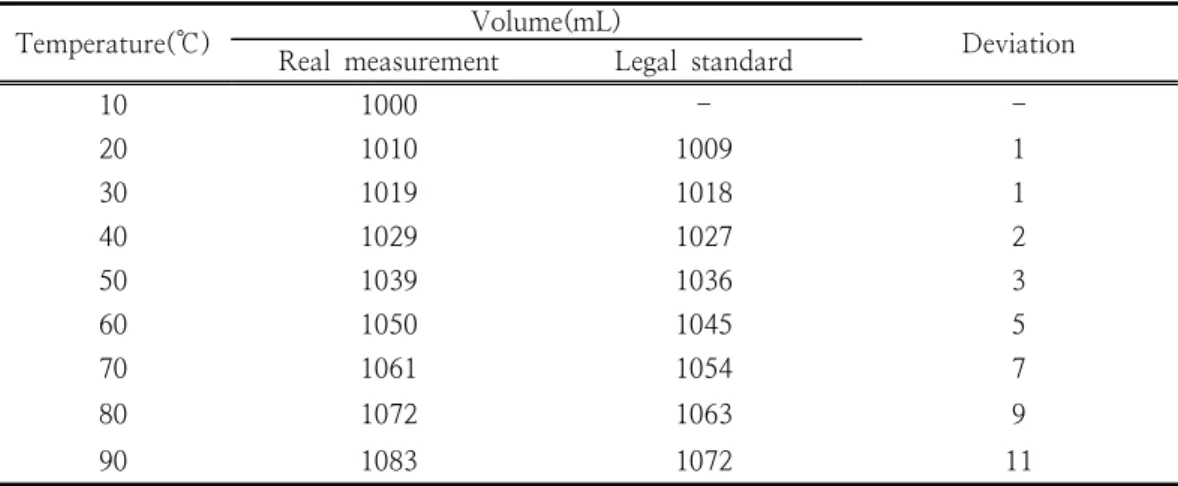
Table 7과 Table 8, 그리고 Fig. 6.과 Fig. 7.은 온도변화에 따른 등유와 자동차용 경유의 부피변 화 실측값과 국내 계량기준과의 비교분석을 실시 하였다. 「액체용 계량기(주유기, LPG미터, 오일 미터) 기술기준」에서는 액체에 대해 온도변화에 따른 체적팽창계수를 등유는 0.09 %/℃, 자동차 용 경유는 0.08 %/℃로 각각 설정하고 있다. 등 유와 자동차용 경유의 체적팽창계수를 이용한 계 산값과 실제 온도변화에 따른 부피변화를 측정한 값과의 비교분석한 결과, 비교적 낮은 온도(약 10 ∼ 30 ℃)에서는 두 값의 편차가 대략 1 ∼
Temperature(℃) Volume(mL)
Deviation Real measurement Legal standard
10 1000 - -
20 1010 1009 1
30 1019 1018 1
40 1029 1027 2
50 1039 1036 3
60 1050 1045 5
70 1061 1054 7
80 1072 1063 9
90 1083 1072 11
Table 7. Comparison of volume between real measurement value and domestic legal standard value in kerosene
Temperature(℃) Volume(mL)
Deviation Real measurement Legal standard
10 1000 - -
20 1009 1008 1
30 1017 1016 1
40 1026 1024 2
50 1035 1032 3
60 1045 1040 5
70 1054 1048 6
80 1064 1056 8
90 1074 1064 10
Table 8. Comparison of volume between real measurement value and domestic legal standard value in automotive diesel
2 정도의 작은 값을 나타내었으나, 높은 온도(약 60 ℃이상)에서는 두 값의 편차가 5 이상의 큰 차이를 나타내었다. 이는 낮은 온도에서는 등유와 자동차용 경유의 분자운동이 크게 활발하지 않으 나, 온도가 상승함에 따라 에너지의 증가에 따른 분자활동이 활발해지기 때문이며, 또한 체적팽창 계수는 고정적인 상수이지만 실제 부피의 팽창은 각 유종의 구성성분에 따라 다양한 부피팽창 정 도를 나타낼 수 있기 때문이다.
940 960 980 1000 1020 1040 1060 1080 1100
10 20 30 40 50 60 70 80 90
Volume (mL)
Temperature (℃) Real measurement Legal standard
Fig 6. Comparison with real measurement value and domestic legal standard value in kerosene according to temperature change.
960 980 1000 1020 1040 1060 1080
10 20 30 40 50 60 70 80 90
Volume (mL)
Temperature (℃)
Real measurement Legal standard
Fig 7. Comparison with real measurement value and domestic legal standard value in automotive diesel according to temperature change.
4. 결 론
본 연구에서는 대표적인 석유제품인 등유와 자 동차용 경유의 온도변화에 따른 밀도와 부피변화 를 실측하고, 국제규격인 ASTM에서 제시하는 온도변화에 따른 밀도와 부피 환산표를 이용한 환산값과의 비교분석을 실시하였다. 또한, 국내
「계량에 관한 법률」에서 규정하고 있는 법적 기준과도 비교분석하였다.
1. 온도변화에 따라 등유와 자동차용 경유의 밀도와 부피는 일정하게 변화하였으며, 변화 의 폭은 등유와 자동차용 경유의 구성성분 에 영향을 받는다.
2. 등유와 자동차용 경유의 온도변화에 따른 밀도와 부피의 실측값과 ASTM에서 제시하 는 환산표를 이용한 환산값과의 비교분석에 서는 실측값과 동일하게 밀도와 부피변화를 나타내었으나, ASTM을 이용한 환산값은 동 일한 온도조건(15 ℃)으로의 변환으로 인해 그 변화의 폭은 크지 않았다.
3. 자동차용 경유에 비해 등유가 온도변화에 따른 밀도와 부피변화의 폭이 크게 나타났 으며, 이는 두 유종을 구성하는 탄화수소화 합물의 구성비율 차이 때문인 것으로 보인 다.
4. 국내의 각 정유사별 자동차용 경유의 온도 변화에 따른 부피변화를 측정하였으며, 각 사별로 큰 편차를 보이지 않고 대부분 1 %
이내의 편차를 나타내었다.
5. 국내 계량기준에서 표시하고 있는 등유와 자동차용 경유의 체적팽창계수를 이용한 부 피변화 계산값과 실제 측정값의 비교에서는 낮은 온도에서는 큰 편차를 보이지 않지만, 온도가 증가함에 따라 실측값과의 다소 큰 편차를 보였다.
References
1. O. Alomair, M. Jumaa, A. Alkoriem, M.
Hamed, "Heavy Oil Viscosity and Density Prediction at Normal and Elevated Temperatures",
J. Petrol. Explor. Prod.
Technol..
Vol.6, pp. 253-263, (2016).2. M. Sattarin, H. Modarresi, M. Bayat, M.
Teymori, "New Viscosity Correlations for Dead Crude Oils",
Pet Coal,
Vol.49, pp.33-39, (2007).
3. F. Ahrabi, S. J. Ashcroft, R. B. Shearn,
"High Pressure Volumetric Phase Composition and Viscosity Data for a North Sea Crude Oil and NGL Mixtures",
Chem. Eng, Res.
Vol.67, pp. 329-334, (1987).4. C. Collins.
Implementing Phytoremediation of Petroleum Hydrocarbon, Methods in Biotechnology,
p.99-108, Humana Press, (2007)5.
Petroleum and Alternative Fuel Business Act,
Ministry of Trade, Industry and Energy, (2017).6. B. A. Grigor’ev, N. A. Ovchinnikovh, "The Density of Petroleum Products in Wide Range of Parameters of State",
High Temperature
, Vol.48, No.1 pp. 47-51, (2010).7. B. A. Grigor’ev, Yu. L. Rastorguev, E. V.
Koval’skii, N. V. Shevchenko,
Plotnost’
(udel’nyi ob”em) zhidꠓkikh neftei i
nefteproduktov. RMR-8, GSSSD metodika
(The Density (Specific Volume) of Liquid Oils and Petroleum Products. RMR-8, Procedures of the State Service of Standardand Reference Data), Moscow, (1982).
8. J. R. Salvatore, Significance of Tests for Petroleum Products, pp. 3-106, ASTM International, (2010)
9. M. R. Riazi, Characterization and Properties of Petroleum Fractions, pp.
87-149, ASTM International, (2005) 10. E. R. Robinson, "Density Prediction and
Mass Meaꠓsurement for High Vapour Pressure Crude Oils",
in Papers Presented to the International Conference on the Use of Micros Fluid Engineering
, pp. 65, (1983)11. L. P. Filippov, Izv. Vyssh. Uchebn. Zaved.
Neft’ Gaz, No.5, pp. 54, (1981).
12. KS M ISO 12185, “Crude Petroleum and Petroleum products – Determination of Density –Oscillating U-tube method”, Korea, (2013),
13. ASTM D 1250-08, “Standard Guide for Use of the Petroleum Measurement Tables”, (2013)
14.
Measures Act,
Ministry of Trade, Industry and Energy, US, (2017).15.