• 검색 결과가 없습니다.

INTRODUCTION Sustained K Outward Currents are Sensitive to Intracellular Hete-ropodatoxin2 in CA1 Neurons of Organotypic Cultured Hippocampi of Rats

N/A
N/A
Protected

Academic year: 2022

Share "INTRODUCTION Sustained K Outward Currents are Sensitive to Intracellular Hete-ropodatoxin2 in CA1 Neurons of Organotypic Cultured Hippocampi of Rats"

Copied!
6
0
0

로드 중.... (전체 텍스트 보기)

전체 글

(1)

343 http://dx.doi.org/10.4196/kjpp.2012.16.5.343

ABBREVIATIONS: Kv, voltage-dependent K

+

channel; I

A

, A-type K

+

current; HpTX, heteropodatoxin; 4-AP, 4-aminopyridine; ACSF, artificial cerebrospinal fluid; CA1, Cornu Ammonis 1.

Received July 19, 2012, Revised October 5, 2012, Accepted October 10, 2012

Corresponding to: Sung-Cherl Jung, Department of Physiology, School of Medicine, Jeju National University, Ara 1-dong, Jeju 690-756, Korea. (Tel) 82-64-754-3834, (Fax) 82-64-725-2593, (E-mail) [email protected]

This is an Open Access article distributed under the terms of the Creative Commons Attribution Non-Commercial License (http://

creativecommons.org/licenses/by-nc/3.0) which permits unrestricted non-commercial use, distribution, and reproduction in any medium, provided the original work is properly cited.

Sustained K Outward Currents are Sensitive to Intracellular Hete- ropodatoxin2 in CA1 Neurons of Organotypic Cultured Hippocampi of Rats

Sung-Cherl Jung, and Su-Yong Eun

Department of Physiology, School of Medicine, Jeju National University, Jeju 690-756, Korea

Blocking or regulating K

+

channels is important for investigating neuronal functions in mammalian brains, because voltage-dependent K

+

channels (Kv channels) play roles to regulate membrane excit- abilities for synaptic and somatic processings in neurons. Although a number of toxins and chemicals are useful to change gating properties of Kv channels, specific effects of each toxin on a particular Kv subunit have not been sufficiently demonstrated in neurons yet. In this study, we tested electro- physiologically if heteropodatoxin2 (HpTX

2

), known as one of Kv4-specific toxins, might be effective on various K

+

outward currents in CA1 neurons of organotypic hippocampal slices of rats. Using a nucleated-patch technique and a pre-pulse protocol in voltage-clamp mode, total K

+

outward currents recorded in the soma of CA1 neurons were separated into two components, transient and sustained currents. The extracellular application of HpTX

2

weakly but significantly reduced transient currents.

However, when HpTX

2

was added to internal solution, the significant reduction of amplitudes were observed in sustained currents but not in transient currents. This indicates the non-specificity of HpTX

2

effects on Kv4 family. Compared with the effect of cytosolic 4-AP to block transient currents, it is possible that cytosolic HpTX

2

is pharmacologically specific to sustained currents in CA1 neurons. These results suggest that distinctive actions of HpTX

2

inside and outside of neurons are very efficient to selectively reduce specific K

+

outward currents.

Key Words: CA1, Heteropodatoxin2, Sustained K

+

current, Transient K

+

current, Voltage-dependent K

+

channel

INTRODUCTION

Voltage-dependent ion channels are major contributors to decide physiological functions and the generation of path- ophysiological conditions in mammalian excitable cells, such as neurons and cardiac myocytes. Therefore, agonists and antagonists of ion channels are widely used for bio- logical and therapeutical approaches in researches and clin- ic applications [1-5]. In nature, a number of toxins acquired from insects, snakes, and fish play roles to block and modu- late the permeability of ion channels expressed in cellular membranes. For example, Na

+

channels are blocked by te- trodotoxin from pufferfish and mu-conotoxin from Conus- striatus, while they are opened by versutoxin from spiders

[6-8]. Because the pharmacological modification of gating properties of ion channels is most simple but powerful for testing their functions in neurons, the discovery of new tox- ins also leads biological researchers to find unknown phys- iological functions of cells that are correlated with specific ion channels in mammalian systems. In addition, most ion channels have several subunits exhibiting distinctive ki- netics and permeability, indicating that the classification of specific toxins for each ion channel subunit is also im- portant to define their delicate functions [9-12].

As they can determine cardiac rhythm and neuronal

transmission, voltage-dependent K

+

channels (Kv channels)

are most critical channels working in both cardiac and

nervous systems [13-16]. In electrophysiological experi-

ments, major K

+

outward currents through Kv channels can

be recorded by using voltage-clamp methods and classified

into two patterns, transient or rapidly inactivating currents

- known as A-type (I

A

) - and sustained or not inactivating

currents [13,16]. In hippocampal CA1 neurons of mamma-

lian brains, Kv4.2 and Kv4.1 subunits of Kv channels are

dominant for transient currents, while Kv2.1 contributes to

sustained currents [13,17]. Previous papers have reported

(2)

Kv1.4 subunits. In particular, HpTX

2

has dose- and volt- age-dependent blockade effects on I

A

via binding the S3-S4 linker region of Kv4.2 channels [19]. These previous results are not sufficient to define and specify the effects of HpTX

2

on I

A

channels, because the blocking effects were tested on- ly on channels expressed experimentally in Xenopus oocytes or cardiac cells. In addition, subunits of voltage-dependent K

+

channels in native mammalian neurons have homologue structures with six membrane spanning portions and share auxiliary subunits, insisting that the effects of HpTX

2

on K

+

currents must be demonstrated in neurons [22]. It is also possible that, because of the hydrophilic property of the toxin and the location of binding sites, HpTX

2

might have effects on other K

+

subunits according to application protocols. In the present study, we attempted to test effects of HpTX

2

on both transient and sustained K

+

outward cur- rents in CA1 neurons of cultured organotypic hippocampal slices. In nucleated-patch experiments, extracellular HpTX

2

only reduced transient currents. However, when HpTX

2

was added to internal pipette solution, sustained but not transient currents showed a significant reduction. Although we did not discover the binding mechanism in this study, these results clearly indicate that HpTX

2

effects to modu- late or block K

+

outward currents may be dependent on the location of binding sites of each subunit.

METHODS Tissue preparation

Organotypic hippocampal slices (350 μm thick) were pre- pared from postnatal day 7∼8 Sprague-Dawley rats. After preparation of hippocampal slices in a cutting solution con- taining (in mM): 10 MgCl

2

, 25 Glucose, 20 Hepes in Gey’s balanced salt solution (Sigma), slices were transferred to an incubator gassed with 95% O

2

and 5% CO

2

at 35

o

C, and cultured for 5∼6 days before performance of electrophy- siological measurements. More detailed protocols for tissue preparation are available in our previous paper [16]. The Animal Care and Use Committee of Jeju National Universi- ty approved all animal protocols.

Electrophysiology

For patch-clamp recordings from organotypic slices, slices were transferred to a submerged recording chamber with continuous flow of ACSF containing (in mM): 125 NaCl, 2.5 KCl, 25 NaHCO

3

, 1.25 NaH

2

PO

4

, 25 Glucose, 2 CaCl

2

, 1 MgCl

2

. 5 μM 2-chloroadenosine, and 5 μM bicuculine were added in some recordings. TTX (1 μM) was added for re- cording voltage-dependent K

+

currents immediately after pulling nucleated-patches. Normal patch electrodes (4∼6 MΩ) were filled with (in mM): 20 KCl, 125 K-gluconate, 10 HEPES, 4 NaCl, 0.5 EGTA, 4 ATP, 0.3 TrisGTP, and 10 Phosphocreatin. In some experiments, patch electrodes

ing PULSE, and IGOR Pro (Wavemetrics) and Excel (Micro- soft) software were used for further data and statistical analysis. Unpaired t-tests were used in performance of stat- istical analysis, and significance was set to p<0.05 or 0.01.

K

+

outward currents recordings

Recording voltage-gated K

+

currents was made in volt- age-clamp mode of nucleated-patches (18.35±0.5 pF, n=37).

HpTX

2

recombinant (Sigma-Aldrich, USA) was added to ei- ther external ACSF or internal pipette solution to test blocking effects on K

+

outward currents, and 4-AP was add- ed to internal pipette solution. In this study, to clarify the effects of drugs added intracellularly, all nucleated-patches were pulled within 2 min after making a whole-cell. Cur- rent ensemble averages were constructed from three in- dividual sweeps. Leakage and capacitive currents were sub- tracted digitally using either a P/6 protocol or null traces.

The transient current was isolated from the sustained cur- rent using 200 ms pre-pulse step to -20 mV for in- activation of transient channels. More detailed protocols for isolation of each pure current can be found in our previous paper [16].

RESULTS

Kv4.2 subunit, a major contributor to transient K

+

out-

flow, is targeted by activity-dependent synaptic modula-

tions and its functions are considerably mediated with the

activities of synaptic glutamate receptors in CA1 neurons

of rat hippocampi [16,23,24]. These previous papers in-

dicate that trafficking properties of Kv4.2 channels are rap-

idly driven by cellular signalings activated by synaptic

activities. Because the rapid internalization of Kv4.2 chan-

nels by synaptic activities or plasticities resulted in the re-

duction of transient currents, the blockade of synaptic ac-

tivities in CA1 neurons during recording was necessary for

testing effects of HpTX

2

on K

+

outward currents. For this,

we used a nucleated-patch technique for isolating soma

membrane of a CA1 neuron (Fig. 1A). This methodological

approach allowed us to test the intracellular or extra-

cellular effects of HpTX

2

without influences of synaptic acti-

vities. In all experiments performed in this study, nucleat-

ed-patches were completely pulled within 2 min after mak-

ing whole-cells, and neurons were rejected in cases of over

2 min. In the previous paper, the extracellular application

of 100∼200 nM HpTX

2

blocked only I

A

currents through

Kv4 subunits in rat ventricular myocytes [18]. Therefore,

we first tested 200 nM HpTX

2

, which was added to external

ACSF, to determine whether it could block transient cur-

rents in CA1 neurons. Total K

+

outward currents were re-

corded at +60 mV holding potential in a voltage-clamp

mode, and sustained and transient currents were isolated

by using a pre-pulse protocol (Fig. 1A). Consistent with pre-

vious reports, the prominent effect of HpTX

2

was observed

(3)

Fig. 1. Extracellular HpTX

2

reduces transient K

+

outward currents in CA1 neurons. (A) The microscopic IR view of a nucleated-patch and a protocol of voltage-clamping to induce K

+

outward currents.

The scale bar inserted in the picture indicates 10 μm. Data acquired from experiments in which nucleated-patches were pulled within 2 min after making whole-cells, were used in this study.

A pre-pulse (dotted line) to activate only sustained currents was applied for isolating transient currents from total outward currents. In all experiments, peaks of transient and sustained currents were generated at +60 mV holding potential. The time scale bar for voltage-clamping is 100 ms. (B) Example traces of transient and sustained currents recorded at +60 mV clamping in CA1 neurons. Currents were recorded at 10 min after pulling a nucleated-patch with (HpTX

2

) or without (control) HpTX

2

in external solution. Scale bars indicate 0.2 nA and 100 ms. (C) All individual (circles) and averaged (square bars) amplitudes of transient (left panel) and sustained (right panel) currents are plotted for each group (control and HpTX

2

). Error bars represent standard error of mean (SEM). *: p<0.05, compared with control.

Fig. 2. Cytosolic HpTX

2

reduces sustained but not transient K

+

outward currents in CA1 neurons. (A) Example traces of both currents recorded immediately (0), 5, 10 and 15 min after pulling nucleated-patches. HpTX

2

(200 nM) was added to internal pipette solution and normal external solution was perfused during recording. Scale bars indicate 0.2 nA and 100 ms. (B) Averaged peak amplitudes of transient (left panel) and sustained currents (right panel) recorded with intracellular 100 (gray circles) or 200 nM (dark circles) HpTX

2

. (C) Averaged current densities of transient and sustained currents measured at 0 min and 15 min after making nucleated-patches. The changes of current densities were acquired from data shown in (B) (100 nM: n=5, 200 nM: n=11).

To calculate current density, the whole cell capacitance of 0 min was checked before recording currents, and that of 15 min was checked again right after completing the recording. Error bars represent SEM. **: p<0.01, compared with 0 min.

only on transient currents [18,19]. CA1 neurons showed a small but significant reduction of transient current ampli- tude in the presence of 200 nM HpTX

2

, compared with neu- rons tested in normal recording solution (Fig. 1B and C, transient, control=1.57±0.45, n=5; HpTX

2

=1.32±0.71 nA, n=

6; p<0.05). However, sustained currents were not affected by extracellular HpTX

2

(Fig. 1B and C, sustained, control=

0.19±0.01; HpTX

2

=0.18±0.01 nA). These results indicate that existence of HpTX

2

in extracellular spaces can modu- late the gating properties of Kv4.2 subunit in CA1 hippo- campal neurons. Extracellular applications in 0.2 to 10 μM of HpTX

2

(Supplementary Fig. 1) were also tested for con- firming the concentration-dependent effects on CA1 neu- rons. All concentration of HpTX

2

significantly reduced tran- sient currents of CA1 neurons, but no differences of reduc- tion rates according to each concentration were observed.

This indicates a restricted modulation of gating kinetics of I

A

channels by HpTX

2

in CA1 neurons. Also, we confirmed

that long exposure to HpTX

2

(2 μM, 24 hours) exhibited the similar rate of currents reduction, compared with short exposure effects. All concentrations of extracellular HpTX

2

showed no effects on sustained currents (Supplemental Fig.

1).

It is possible that blocking or modulating effects of toxins

on gating properties of channels are variable regarding

binding affinities between toxins and channels. In Fig. 2,

the next experiments were performed in order to determine

if intracellular application of HpTX

2

also has effects to block

only transient currents in neurons. Using internal pipette

solution including either 100 or 200 nM HpTX

2

, nucleat-

ed-patches were pulled within 2 min after making a whole-

cell. Unexpectedly, both 100 and 200 nM of HpTX

2

were

effective on sustained but not transient currents. Approxi-

mately 30% of the peak amplitude of sustained currents

was reduced by intracellular HpTX

2

five minutes after mak-

(4)

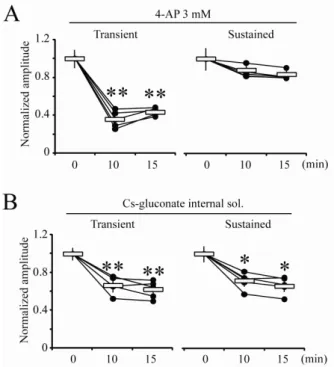
Fig. 3. Blocking effects of cytosolic 4-AP and Cs-gluconate internal solution on K

+

outward currents. (A) Normalized individual and averaged values of peak amplitudes of transient and sustained currents recorded with 4-AP (3 mM) in internal pipette solution.

(B) Normalized individual and averaged values of peak amplitude of transient and sustained currents recorded with Cs-gluconate internal solution. Error bars represent SEM. *: p<0.05 or **: p<

0.01, compared with 0 min.

Fig. 4. Comparison of blocking effects on transient (gray bar) and sustained (open bar) currents induced by cytosolic drugs in hip- pocampal CA1 neurons. The reduction rate was calculated by the ratio of decreased amplitudes at 15 min after pulling nucleated- patches, compared with "0 min" peak amplitudes. Error bars repre- sent SEM. *: p<0.05 or **: p<0.01, compared with "0 min" values shown in Fig. 2 and 3.

dition of HpTX

2

to an internal solution might possibly affect channel conductances without pharmacological actions. For clarifying this issue, we analyzed changes of current den- sity, which was measured by whole-cell patch capacitances (Fig. 2C). All neurons recorded with intracellular HpTX

2

(n=16) did not show significant changes of cell capacitances between 0 min (before recording, 19.8±3.2 pF) and 15 min (after recording, 21.1±2.2 pF) after pulling nucleated-patch- es, so it is clear that the densities of transient and sus- tained currents reflected the changes of peak amplitudes (Fig. 2C, transient: 0 min=81.69±3.79, 15 min= 74.81±4.02, p=0.248; sustained: 0 min=9.62±0.35, 15 min= 6.54±0.29 pA/pF, p<0.01). In addition, we tested other agents known as blockers of K

+

channels to determine if they also have intracellular effects on either transient or sustained currents. 4-AP is widely used for suppressing K

+

outward currents in dendrites and soma, and was previously con- firmed to be effective on transient currents when it was added to internal pipette solution [13,16]. In this study, 3 mM of 4-AP was added to internal solution, and nucleat- ed-patches were then made (Fig. 3A). 4-AP application re-

0.71±0.03, p<0.05, n=5). Therefore, the results shown in Fig. 2 and 3 suggest that blocking effects of agents tested in this study may possibly be variable according to the loca- tion of channel effective sites [18,19]. In Fig. 4, the reduc- tion rates of transient and sustained currents by intra- cellular drug treatments, which were calculated by the ratio between 0 min and 15 min peak after pulling nucleat- ed-patches, were compared. The reduction rate of HpTX

2

in sustained currents was significantly larger than that in transient currents, while 4-AP reduced only transient cur- rents (Fig. 4, HpTX

2

, transient:sustained=6.43±2.55:

27.68±3.22%; 4-AP, transient:sustained=64.15±3.51:18.02

±6.08%). The reduction rates of Cs-gluconate internal sol.

were statistically significant in both transient and sus- tained currents, (Fig. 4, Cs-G. internal, transient:sus- tained=33.03±3.67:33.29±3.59%). These results suggest the possibility that K

+

outward flows in CA1 neurons can be selectively blocked by chemicals or toxins according to their application methods.

DISCUSSION

The opening properties and current flows through K

+

channels are critical factors in regulation of neuronal ex-

citabilities. Therefore, studying agents to block specific sub-

units of K

+

channels is valuable for understanding neuronal

functions. Major findings in this study are that HpTX

2

is

not a specific agent to block or modulate transient currents,

and that the intracellular application of HpTX

2

can reduce

sustained K

+

outward currents in CA1 hippocampal neu-

rons. Although these results are not consistent with pre-

vious reports demonstrating HpTX

2

effects to be specific on

Kv4 families, it should be considered that sustained and

transient currents were sensitive to intracellular and ex-

(5)

tracellular HpTX

2

, respectively. Because testing HpTXs ef- fects has previously and dominantly been performed in Xenopus oocytes or cardiac myocytes, the effective reduction in both sustained and transient currents in CA1 neurons of hippocampal slices indicates that HpTX

2

is also valuable for studying the physiological functions of K

+

channels working in neuronal excitabilities of mammalian CNS.

Transient currents through Kv4.2 channels in CA1 neu- rons play crucial roles in modulation of AP back-prop- agation, dendritic integration of excitatory postsynaptic po- tentials, synaptic composition of glutamate receptors and intrinsic excitabilities [13,16,24,25]. In particular, synaptic activities of hippocampal neurons can directly regulate Kv4.2 trafficking in dendrites and soma [23]. Therefore, most studies investigating modulatory functions of K

+

chan- nels in neuronal excitability, primarily focus on either Kv4.2 or Kv1.4 subunit. However, pharmacological appro- aches to block Kv4 and Kv1 families have difficulties in the absence of specific chemical agents, even though some chemicals were useful for blocking the various K

+

outward currents in cardiac and neuronal cells [13,26,27]. In the last decade, pharmacological studies of some toxins from insects and snakes have suggested a possibility for the manipu- lation of specific Kv subunits, and provided credible results that HpTXs and hanatoxins are valuable to determine neu- ronal functions of Kv channels [12,18-20]. Of them, HpTX

2

is known as a gating regulator specific to Kv4 subunits via binding to the S3-S4 linker region of Kv4.2 [19]. However, because of insufficient evidence in mammalian CNS, it is not suitable for determining pharmacological effects of HpTX

2

on native channels in neurons. In addition, rapid changes in trafficking and gating properties of Kv4 sub- units are induced by synaptic activities [16,23]. In this study, extracellular application of 200 nM HpTX

2

resulted in a small but significant reduction of transient but not sus- tained K

+

outward currents in nucleated-patched CA1 neurons. This indicates that HpTX

2

can act as a gating modulator of Kv4.2 subunit natively expressed in CA1 neu- rons, consistent with effects on channels expressed experi- mentally in Xenopus oocytes [18,19]. However, intracellular HpTX

2

significantly reduced sustained currents, showing no changes in transient currents. Compared with intra- cellular 4AP that reduced only transient currents, it is pos- sible that the blocking effect of cytosolic HpTX

2

on sus- tained currents may be due to pharmacological interactions with Kv2.1 subunit showing homologue structures with oth- er Kv families [22]. Because hydrophilic or hydrophobic property of chemicals is correlated with their membrane permeability, different actions between intracellular and extracellular HpTX

2

can be explained by a hypothesis that hydrophilic HpTX

2

and the location of effective sites in cha- nnels may determine the toxin effects on Kv channels [19].

Kv2.1 channels, as well as Kv4 families, are major deter- minants of neuronal excitabilities, so they can regulate neu- ronal responses based on synaptic inputs and dendritic integrations. In addition, several reports have provided evi- dence that sustained K

+

currents can continuously compen- sate for activity-dependent changes of transient currents and membrane excitabilities via regulating intracellular K

+

concentrations [28-31]. Therefore, distinctive actions of HpTX

2

inside and outside of neurons are very effective for the selective reduction of specific K

+

outward currents, com- pared with effects of Cs-gluconate internal solution acting in both transient and sustained currents. In the present study, we did not confirm the interaction mechanism be-

tween intracellular HpTX

2

and channels contributing to sustained currents. The precise actions of cytosolic HpTX

2

to correlate with Kv subunits should be addressed in a fu- ture study.

SUPPLEMENTARY MATERIALS

Supplementary data including one figure can be found with this article online at http://pdf.medrang.co.kr/paper/

pdf/Kjpp/Kjpp016-05-09-s001.pdf.

ACKNOWLEDGEMENTS

This work was supported by the research grant of Jeju National University in 2010.

REFERENCES

1. Bankar GR, Nampurath GK, Nayak PG, Bhattacharya S. A possible correlation between the correction of endothelial dysfunction and normalization of high blood pressure levels by 1,3,4-oxadiazole derivative, an L-type Ca

2+

channel blocker in deoxycorticosterone acetate and N(G)-nitro-l-arginine hyper- tensive rats. Chem Biol Interact. 2010;183:327-331.

2. Cai BX, Li XY, Chen JH, Tang YB, Wang GL, Zhou JG, Qui QY, Guan YY. Ginsenoside-Rd, a new voltage-independent Ca

2+

entry blocker, reverses basilar hypertrophic remodeling in stroke-prone renovascular hypertensive rats. Eur J Pharmacol.

2009;606:142-149.

3. Das A, McDowell M, O'Dell CM, Busch ME, Smith JA, Ray SK, Banik NL. Post-treatment with voltage-gated Na(+) channel blocker attenuates kainic acid-induced apoptosis in rat primary hippocampal neurons. Neurochem Res. 2010;35:2175- 2183.

4. Dzhala VI, Kuchibhotla KV, Glykys JC, Kahle KT, Swiercz WB, Feng G, Kuner T, Augustine GJ, Bacskai BJ, Staley KJ.

Progressive NKCC1-dependent neuronal chloride accumulation during neonatal seizures. J Neurosci. 2010;30:11745-11761.

5. Kobayashi T, Hirai H, Iino M, Fuse I, Mitsumura K, Washiyama K, Kasai S, Ikeda K. Inhibitory effects of the antiepileptic drug ethosuximide on G protein-activated inwardly rectifying K

+

channels. Neuropharmacology. 2009;56:499-506.

6. Nakajima S, Iwasaki S, Obata K. Delayed rectification and anomalous rectification in frog's skeletal muscle membrane. J Gen Physiol. 1962;46:97-115.

7. Nicholson GM, Little MJ, Tyler M, Narahashi T. Selective alteration of sodium channel gating by Australian funnel-web spider toxins. Toxicon. 1996;34:1443-1453.

8. Yao S, Zhang MM, Yoshikami D, Azam L, Olivera BM, Bulaj G, Norton RS. Structure, dynamics, and selectivity of the sodium channel blocker mu-conotoxin SIIIA. Biochemistry.

2008;47:10940-10949.

9. Gandolfo G, Gottesmann C, Bidard JN, Lazdunski M. Subtypes of K

+

channels differentiated by the effect of K

+

channel openers upon K

+

channel blocker-induced seizures. Brain Res.

1989;495:189-192.

10. Andersson KE. Pharmacodynamic profiles of different calcium channel blockers. Acta Pharmacol Toxicol (Copenh). 1986;58 Suppl 2:31-42.

11. Cognard C, Lazdunski M, Romey G. Different types of Ca

2+

channels in mammalian skeletal muscle cells in culture. Proc Natl Acad Sci USA. 1986;83:517-521.

12. Strong PN. Potassium channel toxins. Pharmacol Ther. 1990;

46:137-162.

13. Hoffman DA, Magee JC, Colbert CM, Johnston D. K

+

channel

regulation of signal propagation in dendrites of hippocampal

pyramidal neurons. Nature. 1997;387:869-875.

(6)

Physiol. 2000;522 Pt 1:19-31.

18. Sanguinetti MC, Johnson JH, Hammerland LG, Kelbaugh PR, Volkmann RA, Saccomano NA, Mueller AL. Heteropodatoxins:

peptides isolated from spider venom that block Kv4.2 potas- sium channels. Mol Pharmacol. 1997;51:491-498.

19. Zarayskiy VV, Balasubramanian G, Bondarenko VE, Morales MJ. Heteropoda toxin 2 is a gating modifier toxin specific for voltage-gated K

+

channels of the Kv4 family. Toxicon. 2005;

45:431-442.

20. Swartz KJ. Tarantula toxins interacting with voltage sensors in potassium channels. Toxicon. 2007;49:213-230.

21. Li Y, Hu GY. Huperzine A inhibits the sustained potassium current in rat dissociated hippocampal neurons. Neurosci Lett.

2002;329:153-156.

22. Gu C, Barry J. Function and mechanism of axonal targeting of voltage-sensitive potassium channels. Prog Neurobiol. 2011;

94:115-132.

23. Kim J, Jung SC, Clemens AM, Petralia RS, Hoffman DA.

Regulation of dendritic excitability by activity-dependent traffi- cking of the A-type K

+

channel subunit Kv4.2 in hippocampal

zation in insulin secretion: metabolism-dependent dissociation between action potential increase and secretion increase by TEA. Biochem Pharmacol. 2010;80:104-112.

27. Choi JS, Hahn SJ. Duloxetine blocks cloned Kv4.3 potassium channels. Brain Res. 2012;1466:15-23.

28. Antonucci DE, Lim ST, Vassanelli S, Trimmer JS. Dynamic localization and clustering of dendritic Kv2.1 voltage-dependent potassium channels in developing hippocampal neurons.

Neuroscience. 2001;108:69-81.

29. Misonou H, Thompson SM, Cai X. Dynamic regulation of the Kv2.1 voltage-gated potassium channel during brain ischemia through neuroglial interaction. J Neurosci. 2008;28:8529-8538.

30. Mohapatra DP, Misonou H, Pan SJ, Held JE, Surmeier DJ, Trimmer JS. Regulation of intrinsic excitability in hippocampal neurons by activity-dependent modulation of the KV2.1 potassium channel. Channels (Austin). 2009;3:46-56.

31. Nerbonne JM, Gerber BR, Norris A, Burkhalter A. Electrical remodelling maintains firing properties in cortical pyramidal neurons lacking KCND2-encoded A-type K

+

currents. J Physiol.

2008;586:1565-1579.

수치

Fig. 2. Cytosolic HpTX 2  reduces sustained but not transient K + outward currents in CA1 neurons
Fig. 3. Blocking effects of cytosolic 4-AP and Cs-gluconate internal  solution on K +  outward currents

참조

관련 문서

Currents in the Cheju Strait have the eastward barotrophic component of about 5cm/sec through the year and become stronger in summer by the addition

In this study, it is shows that the stream of CO 2 is more effective in the reduction of unreacted TEGDMA and the increase of surface microhardness than that of N 2

Various studies have been performed to improve properties of material, electrical and mechanical properties of railway train according to the increase of the speed in the

In this study very sensitive detection of TNT (2,4,6-trinitrotoluene), DNT (2,4-dinitrotoluene), NB (nitrobenzene), and PA (picric acid) has been achieved in

~ In steady flow, Lagrangian path lines are the same as the Eulerian streamlines, and both are the same as the streak lines, because the streamlines are then fixed in space

~ In steady flow, Lagrangian path lines are the same as the Eulerian streamlines, and both are the same as the streak lines, because the streamlines are then fixed in space

Typical trace of pacemaker potentials in current clamping mode (A) and spontaneous inward pacemaker currents in voltage clamping mode at a holding potential of -70 mV

to be damaged by large deflections occurring after attachment of the nonstructural elements (sum of the long-time deflection due to all sustained loads and the immediate