Korean J Gastroenterol Vol. 77 No. 2, 88-91 https://doi.org/10.4166/kjg.2020.145 pISSN 1598-9992 eISSN 2233-6869
CASE REPORT
Korean J Gastroenterol, Vol. 77 No. 2, February 2021 www.kjg.or.kr
Daclatasvir와 Asunapreiver 요법에 실패한 만성 C형간염의 다른 직접작용 항바이러스제 재치료
이동훈, 류수형, 명희준, 신윤재, 이시형, 박태영, 문정섭
인제대학교 의과대학 서울백병원 내과
Retreatment of Chronic Hepatitis C Failed to Daclatasvir Plus Asunaprevir by Other Direct-acting Antivirals
Dong Hoon Lee, Soo Hyung Ryu, Hee jun Myung, Yun Jae Shin, Si Hyeong Lee, Tae Young Park and Jeong Seop Moon Department of Internal Medicine, Seoul Paik Hospital, Inje University College of Medicine, Seoul, Korea
The pegylated interferon plus ribavirin combination therapy has been used as the primary treatment for chronic hepatitis C (CHC) but fails to produce a sustained viral response (SVR) in many patients. In recent years, the treatment of CHC has been rapidly changing because of the introduction of direct-acting antivirals (DAAs), which have a high cure rate. However, retreatment of patients after failure of the first DAA therapy is difficult. We report two rare cases of CHC that showed acquired SVR with other DAA combinations after failure to daclatasvir and asunaprevir. (Korean J Gastroenterol 2021;77:88-91)
Key Words: Hepatitis C, chronic; Antiviral agents; Daclatasvir; Asunaprevir
Received October 11, 2020. Revised December 22, 2020. Accepted December 22, 2020.
CC This is an open access article distributed under the terms of the Creative Commons Attribution Non-Commercial License (http://creativecommons.org/licenses/
by-nc/4.0) which permits unrestricted non-commercial use, distribution, and reproduction in any medium, provided the original work is properly cited.
Copyright © 2021. Korean Society of Gastroenterology.
교신저자: 류수형, 04551, 서울시 중구 마른내로 9, 인제대학교 의과대학 서울백병원 내과
Correspondence to: Soo Hyung Ryu, Department of Internal Medicine, Seoul Paik Hospital, Inje University College of Medicine, 9 Mareunnae-ro, Jung-gu, Seoul 04551, Korea. Tel: +82-2-2270-0012, Fax: +82-2-2279-4021, E-mail: [email protected], ORCID: https://orcid.org/0000-0002-1654-7057
Financial support: None. Conflict of interest: None.
INTRODUCTION
Chronic hepatitis C (CHC) is the most common chronic liver disease in the western world and a major risk factor for liver cirrhosis, portal hypertension, and hepatocellular carcinoma.1 The pegylated interferon and ribavirin combination therapy has long been used as a primary treatment for CHC.2 The genotype 1 HCV infection has been difficult to cure with inter- feron and ribavirin combination therapy, with cure rates of approximately 50%.3
Treatment regimens of CHC are rapidly changing because of the introduction of direct-acting antivirals (DAAs), which are extremely potent, well tolerated, and have fewer adverse re-
actions compared to the pegylated interferon and ribavirin combination therapy. Currently, there are several DAAs ap- proved to treat CHC, depending on the HCV genotype.4
Ombitasvir/paritaprevir/ritonavir in combination with dasa- buvir (OPrD) is a fixed-dose combination of three DAAs, ritona- vir-boosted paritaprevir, ombitasvir, and dasabuvir. A 12-week regimen with or without ribavirin to treat the genotype 1 HCV infection was approved by the US Food and Drug Administration in 2014 and showed cure rates >95% in clinical trials.5,6 Therefore, OPrD has been recommended to treat the geno- type 1 HCV infection by both American and European societies of the study of liver diseases.7,8
Glecaprevir/pibrentasvir (GP) is a fixed-dose combination
Lee DH, et al. Treatment of CHC Refractory to DCV Plus ASV Therapy 89
Vol. 77 No. 2, February 2021 Fig. 1. Clinical course of the patient (Case 1). HCV, hepatitis C virus;
RNA, ribonucleic acid; ALT, alanine aminotransferase.
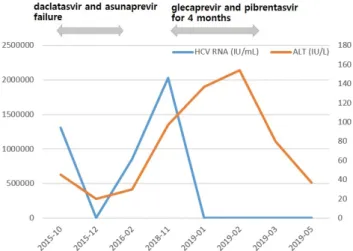
Fig. 2. Clinical course of the patient (Case 2). HCV, hepatitis C virus;
RNA, ribonucleic acid; ALT, alanine aminotransferase.
of two pan-genotypic DAAs. It is indicated for adult patients with chronic genotype 1, 2, 3, 4, 5, or 6 HCV infection with or without compensatory cirrhosis. This includes patients with genotype 1 HCV infection who were previously treated with a regimen of NS5A inhibitor or an NS3/4A protease inhibitor but not with both. The recommended duration was 8, 12, or 16 weeks, depending on the patient's prior treatment expe- rience, genotype, and cirrhosis status.9,10
Retreatment of patients after failure of the first DAA ther- apy remains challenging. However, a recent study showed that retreatment of patients after failure of the first NS5A-based regimen is effective.11 In addition, the present cases show that retreatment of a patient after failure of the first NS5A-based regimen is effective. Therefore, we report two cases of 53- and 58-year-old women who were successfully retreated with OPrD and GP after failure to achieve SVR with daclatasvir and asunaprevir.
CASE REPORT
1. Case 1
The patient was a 53-year-old woman with liver cirrhosis who showed a null response to prior pegylated interferon and ribavirin combination therapy. She visited the hospital for ele- vated liver enzyme levels. Blood tests showed a white blood cell count of 3,840/mm3, hemoglobin level of 10.9 g/dL, pla- telet count of 79,000/mm3, AST of 141 U/L, ALT of 134 U/L, total protein of 7.3 g/dL, total albumin of 3.7 g/dL, PT of 14.6 sec, and total bilirubin of 1.3 mg/dL. Abdominal ultra-
sonography revealed liver cirrhosis without ascites. She was positive for anti-HCV, HCV RNA level of 122,000 IU/mL, geno- type 1b, no baseline NS5A or NS3 resistance-associated var- iants (RAVs) and showed 100% compliance with daclatasvir and asunaprevir treatment.
During treatment with daclatasvir 60 mg once daily and asunaprevir 100 mg twice daily, the patient experienced rapid viral decline and achieved undetectable levels of HCV RNA in week 4. Treatment with daclatasvir and asunaprevir lasted up to 24 weeks and levels of HCV RNA had been undetectable.
But HCV RNA in post-treatment week 4 was 597,000 IU/mL and it was determined that relapse occurred. Treatment with daclatasvir and asunaprevir for 24 weeks failed because of the appearance of mutations in the NS5A region of the HCV genome. Both L31M and Y93H mutants were detected.
The patient was retreated with ombitasvir 25 mg/par- itaprevir 150 mg/ritonavir 100 mg once daily administered in combination with dasabuvir 250 mg twice daily ad- ministered orally for 16 weeks. After 4 weeks of therapy, the level of HCV RNA decreased rapidly to 20 IU/mL, and levels of AST and ALT were normalized. Retreatment with OPrD ach- ieved undetectable levels of HCV RNA in week 8. HCV RNA was not detected, and serum AST and ALT levels remained within normal limits throughout the treatment and follow-up periods. The patient achieved SVR in both post-retreatment weeks 8 and 24 (Fig. 1).
2. Case 2
A 58-year-old woman with fatty liver disease visited the hos-
90 이동훈 등. 병합요법에 불응하는 C형간염의 치료 증례
The Korean Journal of Gastroenterology
pital because of elevated liver enzyme levels. Blood tests showed a white blood cell count of 4,550/mm³, hemoglobin level of 13.1 g/dL, platelet count of 172,000/mm3, AST of 217 U/L, ALT of 97 U/L, total protein of 8.4 g/dL, total albumin of 3.9 g/dL, PT of 14.3 s, and total bilirubin of 1.0 mg/dL.
Abdominal ultrasonography revealed a mild fatty liver. She had positive anti-HCV, HCV RNA levels of 2,030,000 IU/mL, and genotype 1b. She had a previous medical history of treat- ment failure with pegylated interferon and subsequent DAAs with daclatasvir and asunaprevir for 6 months at another hospital. The mutations in the NS5A region of the HCV ge- nome were L31 negative and Y93 positive.
The patient was retreated with glecaprevir (300 mg) and pibrentasvir (120 mg) once daily administered orally for 16 weeks. After 7 weeks of therapy, HCV RNA was not detected;
however, serum levels of AST and ALT were not normalized.
At the 1-month follow-up after a total of 4 months of treat- ment, HCV RNA was still undetected, and liver enzymes were decreased. The patient achieved SVR in both retreatment weeks 12 and 24 (Fig. 2).
DISCUSSION
Since 2015, treatment with daclatasvir and asunaprevir achieved high rates of SVR (82-91%) in HCV genotype 1b-in- fected patients without NS5A RAVs and with or without NS3 RAVs at baseline.12 These cases demonstrated that SVR 24 can be achieved with OPrD or GP in cases of treatment failure with previous antiviral therapy with daclatasvir and asunapre- vir, even when the retreatment with NS5A containing regimen.
Current recommendation for retreatment for a DAA failure mentioned that clinician should consider several predictive factors such as type of previous drug, HCV genotype, presence of cirrhosis, and RAS before selection of the adequate regimen. It is recommended that patients with NS5A RAVs but without NS3 RAVs receive a sofosbuvir-based regimen with another DAAS, ideally with no cross-resistance with the drug already administerd.7,8 According to the guidelines of Korean Association for the Study of the Liver, several combina- tion therapies for genotype 1 HCV are recommended if DAA treatment including NS5A inhibitor fails. Then, sofosbu- vir/velpatasvir/voxilaprevir, sofosbuvir plus elbasvir/grazopre- vir plus ribavirin, sofosbuvir plus OPrD, GP are mentioned to use.13 Current American Association for the Study of Liver
Disease guidance mentioned that in NS5A inhibitor DAA-expe- rienced genotype 1 patients, sofosbuvir/velpatasvir/vox- ilaprevir, or GP could be used.14 However, these clinical guide- line/guidance also mentioned that GP is not indicated to the patient exposed to both NS3/4 protease inhibitor and NS5A inhibitor. Also, sofosbuvir/velpatasvir/voxilaprevir is not ap- proved in Korea yet, therefore, it is difficult to select the opti- mal option for retreatment of the patients who experienced daclatasvir (NS5A inhibitor) and asunaprevir (NS3/4 protease inhibitor) right now.
A study from Japan reported that retreatment of ledi- pasvir/sofosbuvir for 12 weeks in the HCV genotype 1b pa- tients who failed in daclatasvir and asunaprevir showed SVR rate 70%, which is suboptimal result.15 In SAPPHIRE-II trial, retreatment of OPrD plus ribavirin in the patients with HCV genotype 1b who had failed with pegylated interferon and ribavirin showed the SVR rate as high as 97%. One of the two patients among failures had RAV present at time of re- lapse had Y56H and D168A in NS3, Y93H in NS5A, and C316N and S556G in NS5B.16 An analysis of HCV genotype 1b RAVs in Japanese patients who treated with OPrD pre- sented that among patients with Y93H comprising <1%, 1 to 40%, or >40% of their preexisting viral population, SVR rate were >99%, 93%, and 76%, respectively.17 Therefore, al- though we experienced the success in the retreatment by OPrD in the patient who failed in daclatasvir and asunaprevir and acquired emergent Y93H RAV in Case 1, it is prudent to explain sufficiently the possibility of failure in case that Y93H is dominant in the viral population in the host before treatment decision.
There are some reports dealing with retreatment of GP in HCV-infected patients with prior DAA-experience. According to Tojima et al.,18 all 21 patients who experienced treatment failure by daclatasvir and asunaprevir had SVR by GP as 2nd, 3rd, or 4th line treatment. On the other hand, Kumada et al.19 presented that two of 30 (6.7%) genotype 1b-infected patients had previously received daclatasvir and asunaprevir had P32 deletion in NS5A at baseline, and both of these patients experienced virologic failure. P32 deletion in NS5A confers >1,000-fold resistance to pibrentasvir. Therefore, there is possibility that P32 deletion in NS5A may be related to retreatment failure by GP among the patients experienced daclatasvir and asunaprevir. So, it is relevant to inform the patients who are going to have retreatment with GP of the
Lee DH, et al. Treatment of CHC Refractory to DCV Plus ASV Therapy 91
Vol. 77 No. 2, February 2021
possibility of failure due to RAV.
If only considering the antiviral efficacy in retreatment in the patients who failed in daclatasvir and asunaprevir, it is best option to wait and see the patients without treatment until sofosbuvir/velpatasvir/voxilaprevir is introduced in clin- ical practice. Meanwhile, the patients with advanced liver fib- rosis and persistent necroinflammation related to progression of liver disease may be treated by other NS5A inhibitor con- taining regimens such as OPrD or GP after discussion of risk and benefit with the patients.
This report showed that the patients with HCV genotype 1b who failed in daclatasvir and asunaprevir may get help with OPrD or GP as 2nd line treatment. However, physician also should be careful at the patient selection for urgent treatment.
REFERENCES
1. Polaris Observatory HCV Collaborators. Global prevalence and genotype distribution of hepatitis C virus infection in 2015: a modelling study. Lancet Gastroenterol Hepatol 2017;2:161-176.
2. Feld JJ, Hoofnagle JH. Mechanism of action of interferon and rib- avirin in treatment of hepatitis C. Nature 2005;436:967-972.
3. Manns MP, McHutchison JG, Gordon SC, et al. Peginterferon al- fa-2b plus ribavirin compared with interferon alfa-2b plus ribavir- in for initial treatment of chronic hepatitis C: a randomised trial.
Lancet 2001;358:958-965.
4. Feld JJ, Foster GR. Second generation direct-acting antivirals - do we expect major improvements?. J Hepatol 2016;65 Suppl 1:S130-S142.
5. Feld JJ, Kowdley KV, Coakley E, et al. Treatment of HCV with ABT-450/r-ombitasvir and dasabuvir with ribavirin. N Engl J Med 2014;370:1594-1603.
6. Poordad F, Hezode C, Trinh R, et al. ABT-450/r-ombitasvir and da- sabuvir with ribavirin for hepatitis C with cirrhosis. N Engl J Med 2014;370:1973-1982.
7. AASLD/IDSA HCV Guidance Panel. Hepatitis C guidance:
AASLD-IDSA recommendations for testing, managing, and treat- ing adults infected with hepatitis C virus. Hepatology 2015;62:
932-954.
8. European Association for the Study of the Liver. EASL recom- mendations on treatment of hepatitis C 2018. J Hepatol 2018;69:461-511.
9. Forns X, Lee SS, Valdes J, et al. Glecaprevir plus pibrentasvir for chronic hepatitis C virus genotype 1, 2, 4, 5, or 6 infection in adults with compensated cirrhosis (EXPEDITION-1): a sin- gle-arm, open-label, multicentre phase 3 trial. Lancet Infect Dis 2017;17:1062-1068.
10. Zeuzem S, Foster GR, Wang S, et al. Glecaprevir-pibrentasvir for 8 or 12 weeks in HCV genotype 1 or 3 infection. N Engl J Med 2018;378:354-369.
11. Halfon P, Scholtès C, Izopet J, et al. Retreatment with direct-act- ing antivirals of genotypes 1-3-4 hepatitis C patients who failed an anti-NS5A regimen in real world. J Hepatol 2018;68:595-597.
12. Manns M, Pol S, Jacobson IM, et al. All-oral daclatasvir plus asu- naprevir for hepatitis C virus genotype 1b: a multinational, phase 3, multicohort study. Lancet 2014;384:1597-1605.
13. Korean Association for the Study of the Liver (KASL). 2017 KASL clinical practice guidelines management of hepatitis C: treat- ment of chronic hepatitis C. Clin Mol Hepatol 2018;24:169-229.
14. NS5A inhibitor DAA-experienced, genotype 1 patients. [Internet].
Alexandria (VA): American Associations for the Study of Liver Diseases (AASLD); 2021 Jan 21 [cited 2021 Jan 28]. Available from https://www.hcvguidelines.org/treatment-experienced/
multiple-daa-failure
15. Akuta N, Sezaki H, Suzuki F, et al. Ledipasvir plus sofosbuvir as salvage therapy for HCV genotype 1 failures to prior NS5A in- hibitors regimens. J Med Virol 2017;89:1248-1254.
16. Zeuzem S, Jacobson IM, Baykal T, et al. Retreatment of HCV with ABT-450/r-ombitasvir and dasabuvir with ribavirin. N Engl J Med 2014;370:1604-1614.
17. Krishnan P, Schnell G, Tripathi R, et al. Analysis of hepatitis C virus genotype 1b resistance variants in Japanese patients treated with paritaprevir-ritonavir and ombitasvir. Antimicrob Agents Chemother 2015;60:1106-1113.
18. Tojima H, Kakizaki S, Takakusagi S, et al. Favorable outcome of retreatment by direct-acting antivirals for hepatitis C patients with daclatasvir plus asunaprevir combination therapy failure.
Hepatol Res 2020;50:303-312.
19. Kumada H, Watanabe T, Suzuki F, et al. Efficacy and safety of gle- caprevir/pibrentasvir in HCV-infected Japanese patients with prior DAA experience, severe renal impairment, or genotype 3 infection. J Gastroenterol 2018;53:566-575.