Development and Long Term Evaluation of a Critical Pathway for the Management of Microvascular Decompression
Lee, Jeong A1 · Kim, Jung Sook2 · Park, Kwan3 · Kong, Doo-Sik3
1Department of Nursing, Samsung Medical Center
2Department of Nursing, Korean Bible University
3Department of Neurosurgery, Samsung Medical Center ․ School of Medicine, Sungkyunkwan University
Purpose: In order to provide a systematic and standardized treatment course for MVD patients, a critical pathway (CP) program was developed and the results of its long term application were analyzed. Methods: This was a meth- odological study. The CP was established and applied to 75 (step I) and 1,216 (step II). Another group of 56 with similar features was used as a control group. Results: The application of CP turned out to be useful in many regards:
the rate of hearing loss was reduced from 1.8% to 0% (step I) and 0.5% (step II), and low cranial nerve palsy was reduced from 1.8% to 1.3% and 0.7%, respectively. The length of hospitalization decreased by 2.56 days (25.2%) for step I and 3.05 days (30.0%) for step II. Days of ICU stay were reduced by 7.9% and 1.8%. The total cost per patient was reduced by 14.8% (step I). The cost per day was increased by 13.7% and 52.4%. An increase in the patient satisfaction index was noted, as shown in the ICU information guide (p=.002). Conclusion: The development and application of CP was found to improve the quality of medical treatment and the efficacy of hospital management in MVD patients. Well organized and efficient system and multidisciplinary teamwork are the key component of the successful application of CP.
Key Words: Critical pathway, Microvascular decompression surgery, Quality control, Cost-benefit effectiveness.
Corresponding author: Kim, Jung Sook
Department of Nursing, Korean Bible University, 32 Dongil-ro 214-gil, Nowon-gu, Seoul 139-791, Korea.
Tel: +82-2-950-5528, Fax: +82-2-950-5528, E-mail: [email protected] 투고일: 2013년 11월 16일 / 수정일: 2014년 1월 4일 / 게재확정일: 2014년 1월 5일
This is an open access article distributed under the terms of the Creative Commons Attribution Non-Commercial License (http://creativecommons.org/licenses/
by-nc/3.0), which permits unrestricted non-commercial use, distribution, and reproduction in any medium, provided the original work is properly cited.
INTRODUCTION
Microvascular decompression (MVD) is the standard treatment for hyper-functioning disorders of the cranial nerve roots such as hemifacial spasm (HFS) and trigemi- nal neuralgia (TN) (Li et al., 2004; Mauriello et al., 1996;
McLaughlin et al., 1999; Mustafa, Weerden, & Mooij, 2003;
Wang & Jankovic, 1998). HFS is an involuntary move- ment disorder in which spasms occur on one half of the face. Although this disease begins in the region around the eye, involuntary muscle spasms usually progress to involve the whole face, particularly around the eye, mouth, and even the neck (Wang & Jankovic, 1998). By way of contrast, TN creates intense pain along the bran- ches of the trigeminal nerve that control facial senses.
For the accurate diagnosis and effective treatment of these conditions, great efforts have been made by medi- cal personnel and various diagnostic tools such as 3D
spin echo magnetic resonance imaging (MRI) and elec- tromyography (EMG) have been employed in attempts to achieve a successful treatment regimen.
Prior to the implementation of the critical pathway (CP), no standard guidelines had been established and public education was insufficient. In addition, the fol- lowing problems existed. When patients visited the hos- pital for the first time, they were often subjected to great inconveniences; for example, some patients had to wait for very long times to receive examinations or treatment, and also frequently had to visit the clinic many times.
Additionally, patients occasionally lacked information regarding the treatment process and the relevant oper- ative risks. On the other hand, discomfort levels remain- ed high until all spasms had completely disappeared after surgery (Goto, Matsushima, Natori, Inamura, & Tobima- tsu, 2002; Ishikawa, Nakanishi, Takamiya, & Namiki, 2001; Samii et al., 2002). In such cases, finding a solu-
tion and preventing the commonly-encountered dis- comforts might prove helpful in reducing hospitaliz- ation periods, in addition to elevating patient satisfac- tion levels (Isla-Guerrero et al., 2001). Some studies have reported that a post-endoscopy checklist reduced the length of stay for non-variceal upper gastrointestinal bleeding (Romagnuolo et al., 2005), and that stand- ardized patient care using a CP reduced length of stay and complication rates following bariatric surgery (Kim, 2010a; Yeats, Wedergren, Fox, & Thompson, 2005; Van Vliet et al., 2011; Zhang & Liu, 2011).
Therefore, the principal objective of this study was to enhance management efficiency during hospitalization and patient satisfaction via the use of a standard medical treatment guide for MVD. We also evaluated the treat- ment steps via the continuous application of these guide- lines. In particular, the long-term investigation conduc- ted to validate the usefulness and efficacy of MVD CP.
METHODS
1. Study Design
This study was conducted to provide an effective ma- nagement protocol for MVD patients. This was a meth- odological study (quasi-experimental study and long term survey). We compared 56 patients treated in the period prior to CP commencement from January 2001 to December 2001, 75 patients applied during the period from July 2002 to December 2002 (step I), and 1,216 pa- tients were treated during the period spanning January 2003 to December 2009 (step II). The samples used in this study were selected as the total number of patients that received MVD for HFS or TN during the study period.
This study was conducted at a single institute in Korea. The setting for this study was a neurosurgical unit which included an outpatient unit, general wards, and an intensive care unit (ICU). To assess the mean dif- ferences among the three groups with regard to compli- cations (step I: 1, step II: 5, SD: 1.0) and hospital dura- tion (step I: 2.5, step II: 3, SD: 2), the sample size of each group was required to achieve a significance level of 0.05, with a power of 90%. The quality of treatment was evaluated in terms of the frequency of complications. The efficacy of hospital management was evaluated by the length of stay in hospital, the length of stay at the ICU, the total cost per patient, and the cost per day. CP appli- cation was evaluated via variation analysis (step I and the year 2003) and measurements of patient satisfaction.
1) Stage I: Development of critical pathway
In January 2002, with the objectives of establishing medical treatment flow and efficacy improvement, a team unit was comprised of 14 members (neurosurgeon 2, professor of nursing school 1, nurse managers 2, reg- istered nurses 4 [neurosurgical ICU 1, general wards 2, and outpatient unit 1], clinical nurse specialist [CNS] 1, laboratory technicians 3, and hospital administrator 1).
This team established a plan and studied the task by at- tending lectures and via a literature review.
After careful study, we established a standard treat- ment guide for MVD. The team then evaluated treatment progress by reviewing the relevant documents and charts.
The medical records of 15 patients with MVD during the January-December 2000 period who fulfilled the selec- tion criteria were reviewed. Medical record analysis con- sisted of 73 items (8 items on measures/observations, 3 items on activity/rest, 4 items on diet/nutrition, 23 items on medication, 14 items on laboratory test, 12 items on treatment, 2 items on interdepartmental consult and 7 items on patient education). A pilot CP was composed from the literature review, modification of preexisting CP for other diseases, and the opinion of the medical team. The x-axis of the pilot CP represented the time- frame, whereas the y-axis interpolated the treatment and nursing items. The devised CP was a systematically or- ganized schedule that runs from the time of initial visit to the clinic to the time of discharge, and was designed to assist in decisions made concerning observation and measurement, activity, diet, medication, lab & tests, treat- ments & procedures, consultation, and education. That table was completed by placing the dates in rows and eight items in a column. All data were registered in the database, and the practitioners were able to easily use the package.
Each item was finalized after evaluation by staff nurses and neurosurgeon, validation by professionals group (neurosurgeon 2, professor of nursing school 1, nurse managers 2, registered nurses 4, CNS 1), and the approval of the CP development team. Five neurosur- geons and 62 nurses were recruited and educated re- garding the objective of the study, the concept of CP, the development and application of CP, patient/family educating methods, and variations. In order to analyze its clinical adaptability, the pilot CP went through 17 ex- perimental cases before its completion into a final MVD CP. To analyze the variations occurring during the appli- cation of CP, a clarification of the modified variation re- cord was used (Beyea, 1996). The CP for patients was developed such that it could be readily understood by
patients using simple words and pictures.
Additionally, we planned an intra-operative monitor- ing system (facial evoked EMG and brainstem auditory evoked potential [BAEP]) that was used to assess the in- tra-operative status of muscles and nerves.
A website was developed by the CP team to provide information. The associated educational information sys- tem was composed of an educational brochure that in- cluded a CP for patients and a website (http://facial spasm.samsunghospital.,com). Education regarding dis- ease and treatment was provided to patients at the out- patient clinic throughout the hospitalization period us- ing an educational brochure and a website.
2) Stage II: Application of critical pathway and measurement of the results
We analyzed independent variables affecting treat- ment and economic outcome, which included the in- cidence of complications, length of hospitalization, in- dividual medical costs, the number of operations, CP variations, and patient satisfaction prior to and after CP initiation. Postoperative complications were monitored continuously by the neurosurgeon and the nurse. The hearing loss was confirmed by audiometry on the third day after surgery. Additionally, the low cranial nerve pal- sy was examined by ear, nose, and throat (ENT) doctors.
The number of operations was defined as the total num- ber of patients that received MVD for HFS or TN. Length of hospitalization was defined as the total number of days spent in hospital., including the ICU and excepting outpatient department (OPD) visits. ICU stay was com- puted from entry into the unit until transfer to the gen- eral ward. Medical costs per person were defined as the total charges incurred during the hospital stay. The daily treatment cost was defined as the cost per patient per day, and was calculated by dividing the total treatment cost by the days of stay.
Step I variation analysis was categorized into three groups: ‘type’, ‘detailed fact’, and ‘grade’. The type of variation was classified into patient/family, medical at- tendance, and hospital. The detailed fact was classified into assessment, test, treatment, medication, diet, activ- ity, interdepartmental cooperative treatment, nurs- ing/education, discharge plan, record, treatment sched- ule, and communication. The grade category was div- ided into three degrees: grade 1, a slight change oc- curred, but was still correspondent to CP; grade 2, a slight change not correspondent to CP, but the CP still could be used; grade 3, the proper application of CP was impossible (Kim, 2010a). Step II variation analysis
was recorded in terms of change content by CNS.
A patient satisfaction questionnaire was developed to evaluate the quality of care provided in the hospital.
Patient satisfaction with the care provided by various health care professionals was measured with five-point questions. A score of 5 was very satisfactory and a score of 1 was not satisfactory. The tool consisted of 12 items, and the reliability as measured by Cronbach's ⍺ value was .912.
We applied and evaluated the guidelines for step I and step II. Compared with the period of step I, improve- ments were noted in the period of step II, such as a re- vision of CP, modification of contents in the educational material and website, increased research work, and st- rengthened teamwork. Difficulties in communicating en- sued upon changes in team members. We communicated continuously about variances between team members, and CNS provided information about new members.
2. Ethical Considerations
The study was conducted after obtaining approval from the ethical committee of our hospital. In addition, permission to conduct this study was obtained from the board of directors of the nursing department.
3. Data Analysis
The statistical analysis system version 19.0 (SPSS Inc., Chicago, IL, USA) was used for analysis. Based on these data, we carried out statistical analysis using x2 with Fisher’s exact tests and one-way ANOVA with Bonferro- ni’s correction. Variation was analyzed by frequency and percentage. Patient satisfaction was analyzed via ANOVA. Reliability was analyzed by Cronbach's ⍺.
RESULTS
1. Stage I. Development of Critical Pathway
A barometer for the evaluation of the effects of the CP model application was designated. The x-axis repre- sents the chronological process of 8 days of hospital stay, with details on daily treatment and nursing. The y-axis of the final CP consists of observation and meas- urement, activity, diet, medication, lab & tests, treat- ment/procedures, consultation, and education. Devel- opment and implementation took place over a total of 7 years (Figure 1).
ClassificationCategoriesOPD (1st, 2nd)HD #1~2HD #3(OP day)HD #4(Post-op #1) HD #5~7HD #8 AdmissionPre-opPost-opICUGWDischarge Observation/ measurementHistory takingInterviewInterview Vital sign(EKG, SpO2)Onceq8 hrsq8 hrsPer 15m×4, 30m×4→ hrq1 hrq6 hrsq8 hrsq8 hrs GCS, L/M, P/S & L/Rq8 hrsq8 hrsPer 15m×4, 30m×4→ hrq1 hrq6 hrsq8 hrsq8 hrs Check body weightOnce(+ height)Once Intake/outputq6 hrsq6 hrsq8 hrsq8 hrs Check spasm(pain), hearing & facial weaknessOnceOnceq1 hrq1 hrq8 hrsq8 hrsq8 hrs Check headache, nausea, dizziness & shiveringq1 hrq1 hrq8 hrsq8 hrsq8 hrs Check op woundq1 hrq1 hrq8 hrsq8 hrsq8 hrs ActivityWard ambulationBed rest č head elevation 30°Ward ambulation DietNormal regular dietNPO from 12amNPO till gas out → SOWSoft blend dietTolerable diet MedicationsN/S 1L iv č 20gttStart at 10pm Dextrose 5%/N/S 1L + Potassium chloride 10 cc mivč 20gtt/mč 20gtt/mč 10gtt/m Cefminox sodium 2g iv(AST)Onceq12 hrsq12 hrsq12 hrsq12 hrs(~#6) Cefditoren 1ⓣoTid(#7)Tid Mannitol 100㏄ iv→N/S 150 cc replacementq6 hrs,q6 hrs,q6 hrs,q8 hrs(#5)→ D/C(#6) Methylprednisolone 250mg ivq6 hrsq6 hrsq6 hrs,q8 hrs(#5)→ 12 hrs(#6)→ 24 hrs(#7) Famotidine 1ⓐvq12 hrsq12 hrsq12 hrsq12 hrs(~#6) Acetylcysteine 1ⓐvq8 hrs P-aminomethyl benzoic acid 1ⓐ + N/S 50cc mivq8 hrs Acetaminophen 650mg poTidTidTidTid Magnesium hydroxide 1ⓣoTidTidTidTid Sucralfate 1ⓟoqidqidqidqid Dimenhydrinate 1ⓣo tTidTidTidTid Labetalol HCl(Hydralazine HCl) 10mg ivIf SBP>()mmHgIf SBP( )mmHg →Nifedipine 10mg po Acetaminophen 1g + N/S 100㏄ mivIf BT>37.8℃ PethidineHCl 25mg + N/S 50㏄ mivIf shivering Metoclopramide HCl 10 mg + N/S 50cc mivIf nausea N/SreplacementIf I/O negative,(-) × 2/3 Ketoprofen 1/2ⓐmIf severe headache InsulinRI scIf BST>250 →RI 5u, BST>300 →RI 10u, BST>350 →RI 15u Bisacodyl 2ea prIf no defecation for 3days Discharge medicationCefditoren 1ⓣotid 3days, Acetaminophen 650㎎potid 14days, Dimenhydrinate 1ⓣotid 14days Figure 1. Critical pathway of microvascular decompression.
ClassificationCategoriesOPD (1st, 2nd)HD #1~2HD #3(OP day)HD #4(Post-op #1) HD #5~7HD #8 AdmissionPre-opPost-opICUGWDischarge Lab & testHBsAg/Ab, Anti-HCV, Anti-HIV, VDRL, ABO/Rh, X-matching, PT/aPTT, Chemistryⓟ UA c ⓜ EKG
OncePT/aPTT ABGA, CBC c diff countCBCOnceq24 hrsq24 hrs Blink reflex, Head NCS & EMGOnce PTA/SAPTA/SAPTA/SA(#6) Radiological studyIAC MRITemporal bone CT, chest PA, skull AP/lat, town's view, C-spine AP/lat
Chest AP (portable)Brain noncontrast CT, Chest AP(P) Serum, Urine electrolyte & OsmolSerum electrolyteOnceq24 hrsq24 hrsq24 hrs(#5) BST(If abnormal→6 hrs)q12 hrsq24 hrsq24 hrsq24 hrs(#5) Treatment & procedurePre-op preparationPovidone iodine shampoo(#2) Blood reservation(#2) OP woundDressingDressing(#6)Dressing J-P management(amount & color)q8 hrsRemoval Foley catheter managementCheck hourly urineRemoval Respiratory careExtubation & O2inhalationA/C & D/BA/C & D/B Position change & back massageq2 hrsq2 hrsPhysical activity in bed Anti-embolic stocking applyStartContinuously(~#5) Oral care(chlorhexidine gargle)q8 hrsq8 hrsq8 hrsq8 hrsq8 hrs Eye care(if facial weakness)q8 hrsq8 hrsq8 hrsq8 hrsq8 hrs Prevention of fallsRisk check(q2 hrs) & notice Get the permission & checklistPermission for operation(#2) Pre-op check-list(#2) TransferGW(admission)ORICUGWDischarge ConsultENT for PTA/SA1st2nd(#5) Home care for stitch out#6 EducationDisease surgeryAdmission & treatment flow Pre & post-op care
ICU guide Operation findingGW careI/O checkDischarge planMedication ABGA=Arterial blood gas analysis; A/C & D/B=Active cough & deep breathing; BST=Blood sugar test; CBC=Complete blood count; CT=Computed tomography; D/C=Discontinue; EKG=Electrocardiography; EMG=Electromyography; ENT=Ear, nose and throat; GCS=Glasgow coma scale; GW=General ward; HD=Hospital day; IAC MRI=Internal auditory canal MRI; ICU=Intensive care unit; I/O=Intake/output; iv=Intravenous; L/M=Limb movement; NCS=Nerve conduction study; NPO=Nil per os; N/S=Normal saline(Sodium chloride 0.9%); Op=Operation; opd=Outpatient department; P/S & L/R=Pupil size & Light reflex; PTA/SA=Pure tone audiometry/speech audiometry; SBP=Systolic blood pressure; SOW=Sips of water; SpO2=Pulse oximetry. Figure 1. Critical pathway of microvascular decompression(continued).
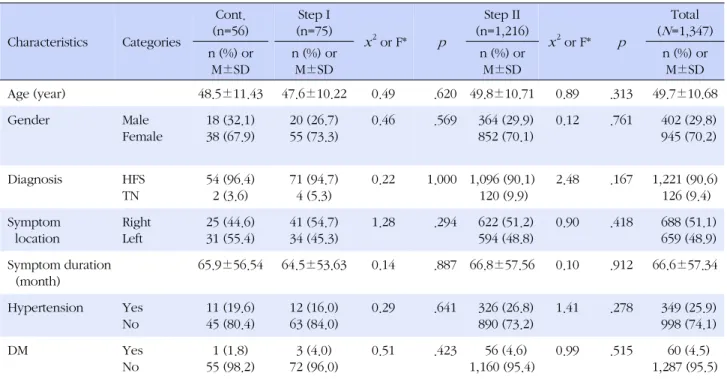
Table 1. General Characteristics of the Patients (N=1,347)
Characteristics Categories
Cont.
(n=56)
Step I (n=75)
x2 or F* p
Step II (n=1,216)
x2 or F* p
Total (N=1,347) n (%) or
M±SD
n (%) or M±SD
n (%) or M±SD
n (%) or M±SD
Age (year) 48.5±11.43 47.6±10.22 0.49 .620 49.8±10.71 0.89 .313 49.7±10.68
Gender Male
Female
18 (32.1) 38 (67.9)
20 (26.7) 55 (73.3)
0.46 .569 364 (29.9) 852 (70.1)
0.12 .761 402 (29.8) 945 (70.2)
Diagnosis HFS
TN
54 (96.4) 2 (3.6)
71 (94.7) 4 (5.3)
0.22 1.000 1,096 (90.1) 120 (9.9)
2.48 .167 1,221 (90.6) 126 (9.4) Symptom
location
Right Left
25 (44.6) 31 (55.4)
41 (54.7) 34 (45.3)
1.28 .294 622 (51.2) 594 (48.8)
0.90 .418 688 (51.1) 659 (48.9) Symptom duration
(month)
65.9±56.54 64.5±53.63 0.14 .887 66.8±57.56 0.10 .912 66.6±57.34
Hypertension Yes No
11 (19.6) 45 (80.4)
12 (16.0) 63 (84.0)
0.29 .641 326 (26.8) 890 (73.2)
1.41 .278 349 (25.9) 998 (74.1)
DM Yes
No
1 (1.8) 55 (98.2)
3 (4.0) 72 (96.0)
0.51 .423 56 (4.6)
1,160 (95.4)
0.99 .515 60 (4.5)
1,287 (95.5) Cont.=Control group; DM=Diabetes mellitus; HFS=Hemifacial spasm; TN=Trigeminal neuralgia.
*Dunnett t.
Table 2. Comparison on the Frequency of Complications (N=1,347)
Characteristics Categories
Cont.
(n=56)
Step I
(n=75) x2 p
Step II
(n=1,216) x2 p
Total (n=1,347)
n (%) n (%) n (%) n (%)
Hearing loss Yes
No
1 (1.8) 55 (98.2)
0 (0.0) 75 (100.0)
1.35 .421 6 (0.5) 1,210 (99.5)
1.63 .272 7 (0.5)
1,340 (99.5) Low cranial
nerve palsy
Yes No
1 (1.8) 55 (98.2)
1 (1.3) 74 (98.7)
0.44 1.000 8 (0.7) 1,208 (99.3)
0.96 .331 10 (0.7)
1,337 (99.3) Delayed facial palsy
(transient)
Yes No
2 (3.6) 54 (96.4)
3 (4.0) 72 (96.0)
0.13 1.000 103 (8.5) 1,113 (91.5)
1.69 .312 108 (8.0) 1,239 (92.0) Cont.=Control group.
2. Stage II. The Effect of Application of Critical Pathway 1) Characteristics of the patients
The 56 patients before the application of CP, the 75 patients during step I, and the 1,216 patients during step II comprised the study cohort, which consisted of 402 (29.8%) men and 945 (70.2%) women, with a mean age of 49.7 years (age range 19 to 79 years). No significant differences were noted between groups in terms of (step I, step II); age (p =.620, p =.313), gender (p =.569, p = .761), diagnosis (p =1.000, p =.167), symptom location (p =.294, p =.418), symptom duration (p =.887, p =.912), hypertension history (p =.641, p =.278) and diabetes
mellitus (p =.423, p =.515) (Table 1).
2) Incidence of complications
We found that the incidence of hearing loss was re- duced from 1 (1.8%) in the control group to 0 (0.0%) for step I and to 6 (0.5%) for step II. However, these differ- ences were not found to be significant (p=.421, p=.272).
The incidence of lower cranial nerve palsy was reduced from 1 (1.8%) in the control group to 1 (1.3%) for step I and to 8 (0.7%) for step II; these differences were not significant (p =1.000, p =.331). No decrease in delayed facial palsy (transient) was noted (p =1.000, p =.312) (Table 2).
3) Cost effectiveness: Length of hospitalization and medical costs
The number of operations was 4.6 (per month) in the control group, and increased to 12.5 for step I and to 14.3 for step II. The mean number of operations for step II increased by 9.7 (210.0%) compared to 2001, averag- ing 173.7 patients a year. The total days of hospital stay was shortened by 2.56 days (25.2%) for step I (p <.001) and 3.05 days (30.0%) for step II (p <.001). Days of ICU stay in the control group were 1.14 days, step I was 1.05 days (p =.261), and step II was 1.12 days (p =.721). The ICU stay for step II was reduced by 0.02 days (1.8 %).
The total cost per patient in step I was reduced by $738 (14.8%) (p <.001) and 2003~2005 years, step II marked an average annual increase of $310 (6.2%) (p =.022).
The cost per day was increased by $69 (13.7 %) for step I (p <.001) and by $264 (52.4%) for step II (p <.001) (Table 3).
4) Analysis of variations
In the application of CP in 197 patients in step I (75) and step II (122, only 2003 year), variations were ob- served in step I 1,425, step II 1,465 incidents. Details were as follows: step I incidents 150 (10.5%) and step II incidents 696 (47.5%) involved the patient or family due to patient’s condition. step I incidents 1,275 (89.5%) and step II incidents 769 (52.5%) with the medical attend- ance as the result of a doctor’s prescription. Classifying the variations by degree, step I incidents 1,425 (100%), step II incidents 1,464 (99.9%) fell into the grade 1 cat- egory, in which the application was slightly modified al- though the main content of CP remained, and 1 (0.1%) incident were classified as grade 3, in which CP applica- tion was not possible. Meanwhile, variations during the 2003~2009 period were observed in 12 items: observa- tion/measurement 1, medication 8 and lab & test 3. To- wn's view was added. The medications changed were pre-operative main fluid, antacid, and coagulant. The schedule shortened was intake/output, post-operative main fluid, antibiotics, osmotic diuretics, steroid, dis- charge medication, and blood tests (ABGA, CBC and Serum & Urine electrolyte/Osmol.). Temporal bone CT schedule was changed (Table 4).
5) Patient satisfaction
The average satisfaction rates for step I and step II (the year 2003) versus the control group increased slight- ly in all items, but not significantly so. One item from the questionnaire that did differ significantly was increased satisfaction with the guidance and information provided Tab
le 3. Comparison with Length of Hospital Stay and Costs by Year(N=1,347) CharacteristicsCont.(n=56)Step I(n=75) F† (p)Step II(n=1,216) F† (p)n(%) or M±SDn(%*) or M±SDn(%*) or M±SD Year200120022003200420052006200720082009Total Number of operations (per month)4.612.5-10.010.69.59.915.921.520.614.3- Total days of hospital stay10.14±2.387.58±1.647.46 (<.001)7.42±1.417.41±1.446.92±1.087.30±1.767.51±1.846.81±1.736.71±2.727.09±1.9011.38 (<.001) Days of ICU stay1.14±0.161.05±0.281.11 (.261)1.10±0.431.19±0.511.21±0.631.22±0.491.38±0.861.00±0.270.94±0.381.12±0.540.34 (721) Total cost per patient($)4,989 (1,348.8)4,251 (1,128.9)3.40 (<.001)4,195 (700.3)4,641 (857.8)4,960 (618.7)5,387 (813.3)5,579 (1,138.5)5,640 (666.1)5,670 (886.9)5,299 (970.7)-2.29 (.022) Cost per day($)503 (134.0)572 (155.1)-2.46 (<.001)571 (100.2)637 (135.8)722 (90.2)750 (135.9)759 (142.5)843 (131.2)876 (132.2)767 (161.5)7.81 (<.001) *Sensitization(%): contrast from 2001; † Dunnett t.
Table 4. Variation of Clinical Pathway of Microvascular Decompression (N=197) Class DegreePatient/Family, n(%)Medical attendance, n(%)Total n(%)ABC 1st degreeStep I(2002 y) Step II(only 2003 y)150(10.5) 672(45.9) 0(0.0) 24(1.6)1,275(89.5) 768(52.5)1,425 1,464 2nd degreeStep I(2002 y) Step II(only 2003 y) 0(0.0) 0(0.0) 0(0.0) 0(0.0) 0(0.0) 0(0.0) 0 0 3rd degreeStep I(2002 y) Step II(only 2003 y) 0(0.0) 0(0.0) 0(0.0) 0(0.0) 0(0.0) 1(100.0) 0 1 Sub-totalStep I(2002 y) Step II(only 2003 y)150(10.5) 672(45.9) 0(0.0) 24(1.6)1,275(89.5) 769(52.5)- - TotalStep I(2002 y) Step II(only 2003 y)150(10.5) 696(47.5)1,275(89.5) 769(52.5)1,425 1,465 ClassificationStep I(2002 y)Step II(2003~2009 Advancement) ObservationIntake/output q6hrs → q8hrs#5#4 MedicationPre operation fluidHartmann's solutionSodium chloride 0.9% Dextrose 5%/ N/S 1L+Potassium chloride 10㏄ miv 20gtt/m →10gtt/m#6#4 Cefminox sodium 2g iv q12hrs→efditoren 1ⓣpo tid#8#7 Mannitol 100㏄ iv→N/S 150㏄ replacement q6hrs→q8hrs #6,7#5 Methylprednisolone 250mg iv q6hrs→8hrs→12hrs #6 #7,8#5 #6→7(q24hrs) Astromicin sulfate 200mg + N/S 100cc miv q12hrsDelete Hemocoagulase 1ⓐ iv q6hrsP-aminomethyl benzoic acid 1ⓐ+ N/S 50㏄ iv q8hrs Discharge medication Cefditoren 1ⓣpo tidfor 5daysfor 3days Laboratory & testTemporal bone CTat OPDafter admission Town's viewnoneadd ABGA, S/Uelectro & Osm, CBC c differential count, q12hrs→24hrs#4#3 A=Patient's condition; B=Decision of patient/family; C=doctor's prescription; #=Hospital day; ⓐ=Ampule; ABGA=Arterial blood gas analysis; CBC=Complete blood count; CT=Computed tomography; iv=Intravenous; KVO=Keep vein openm=minute; N/S=Normal saline(Sodium chloride 0.9%); OPD=Outpatient department; po=Per os; S/U electro & Osm=Serum/Urine electrolyte & Osmol; ⓣ=tablet.
when patients were hospitalized in the ICU (p =.002).
This increased satisfaction implies a reduction in patient anxiety and illustrates the importance of providing ad- equate information beforehand.
DISCUSSION
CPs have been defined as “systematically developed statements that assist practitioner and patient decision- making about appropriate health care in specific clinical circumstances”. Some pressure is currently being ex- erted to develop guidelines by which the management of many medical and surgical conditions can be im- proved (Cheah, 2000; Mitchell et al., 2005; Park & Ro, 2000). We developed a CP for patients with HFS and TN who underwent MVD. The devised CP could alter clin- ical practices and improve patients’ outcomes for this condition. Moreover, this application of CP reduced the incidence of complications, hospitalization duration, and patients’ medical costs, and also improved patient satisfaction.
The principal complications were hearing loss and cranial nerve palsy. Previous reports demonstrated that hearing loss occurred in 0.3~4.8% of patients and that low cranial palsy occurred in 4% of patients (Acevedo, Sin- dou, Fischer, & Vial., 1997; Chung, Chang, Choi, Chang,
& Park, 2001; Wang & Jankovic, 1998). The rate of hear- ing loss incidence was 1.8% in the control group. On the other hand, this rate was reduced in the application group (step I: 0%, step II: 0.5%). Similarly, the rate of low cranial nerve palsy occurrence decreased (control group: 1.8%, step I: 1.3%, step II: 0.7%). This decrease was attributed to the prompt response and continuous clinical intervention mandated by the systematic treat- ment plan at each stage, which was targeted toward the prevention of complications. The results of this study were consistent with a previous study (Ball & Peruzzi, 1997; Müller et al., 2009; Rotter et al., 2010).
In the CP application group, the hospital stay prior to surgery was reduced by step I 2.56 days, and step II 3.05 days. The total cost per patient in step I was reduced by 14.8%. The total cost per patient for step II marked an average annual increase of 6.2%. This was attributed to rising medical costs per person in Korea (9.3%) between the year 2000 and 2009 (Ministry of Health and Welfare, 2013). This suggested an increased profit rate of the hos- pital and confirmed the 1999 proposal of Rohrbach. The cost per day was increased by 13.7% (step I) and by 52.4% (step II). These results of this study were con- sistent with the results of a previous study (Rotter et al.,
2010; Van Vliet et al., 2011; Oreja-Guevara et al., 2010;
Panella, Marchisio, & Di Stanislao, 2003).
The number of operations per month was increased by 9.7 (210.0%) as compared to the year 2001, averaging 173.7 patients a year. This was attributed to the effects of education and public information including web and telephone counseling and the implementation of an ef- fective management schedule. Moreover, it is antici- pated that the performance of preliminary examinations and the management of hospitalization periods will in- crease the number of surgeries and improve bed-occu- pancy (Oreja-Guevara et al., 2010; Owen et al., 2006).
Patients that undergo MVD have usually received other alternative treatment modalities including perennial treatment with Chinese medicine and ineffective phys- ical therapy; often, these patients were originally in- correctly diagnosed or misadvised about their condition or the appropriate treatment method. Therefore, an ac- curate diagnosis and an active information system for this malady will be necessary. Thus, the maintenance of a website and the mailing of educational books will un- doubtedly prove helpful in the creation of an in- formation system for affiliated hospitals. Moreover, oth- er ideas concerning information systems should also be taken into consideration (Van Vliet et al., 2011).
A total of 1,425 incidents of variations were observed among 75 patients. The severity and number of varia- tions were insignificant relative to other proposals (Kim, 2010a, 2010b). Although an attempt was made to modify the CP based on the results of analysis of the variations, no items were modified. This was because the incidents (100.0%) were all first-degree variations, which did not affect the application of the CP. Meanwhile, variations during the period of 2003 to 2009 were observed in 12 items: observation/measurement 1, medication 8, and lab & test 3. This is a very important reason to develop CP (Cheah, 2000; Panella et al., 2003).
The value of the devised CP lies in the construction of a system based on teamwork by many health care pro- fessionals (Barbieri et al., 2009). By improving patients’
education programs throughout stages of hospitaliza- tion (Owen et al., 2006; Van Vliet et al., 2011), nursing in the ICU and in general wards, and the management fol- lowing discharge, the devised CP enhanced the cost- effectiveness of patient care (Kim, 2010b). The key fac- tor underlying the success of this system was the collab- orative relationship among health care professionals.
However, it is by no means clear that all the positive re- sults were attributable to the implementation of the pathway (Van Vliet et al., 2011). In fact, these results