Analgesic Effect of Grape Seed Proanthocyanidin Extract in Fibromyalgia Animal Model
Hyunil Mun, Seong-Ho Kim
1*, Tae Jung Jang
2and Il Soo Moon
3Department of Internal Medicine, Dongguk University College of Medicine, Gyeongju, Korea
1
Department of Internal Medicine, Inje University College of Medicine, Busan, 612-862 Korea
2
Department of Pathology, Dongguk University College of Medicine, Gyeongju, Korea
3
Department of Anatomy, Dongguk University College of Medicine, Gyeongju, Korea Received February 8, 2010 /Accepted March 9, 2010
The acidic saline animal model of pain has been suggested to mimic fibromyalgia (FM). Oligomeric proanthocyanidin complexes (OPC) from grape seeds are known to act as an antioxidant. We studied the effects of OPC on the pain threshold in the acidic saline animal model of pain. The left gastro- cnemius muscle was injected with 100 μl of saline at pH 4.0 under brief isoflurane anesthesia on days 0 and 5. Control rats (n=5) received identical injections of physiological saline (pH 7.2) on the same schedule. Rats (n=10) with acidic saline injection were separated into two study subgroups. After measurement of pre-drug pain thresholds, rats were injected intraperitoneally with either saline or OPC 300 mg/kg. Paw withdrawal thresholds to pressure were again measured 60 min after intra- peritoneal injection. Nociceptive thresholds were measured with a Dynamic Plantar Aesthesiometer by applying an increasing pressure to right or left hind paw until the rat withdrew the paw. Compared to baseline (day 0), acid injections produced mechanical hyper-responsiveness on day 7 (pre-drug) in these rats [p<0.05]. A potent antihyperalgesic effect was observed when rats were injected intra- peritoneally with OPC 300 mg/kg [injected paw, p=0.001; contralateral paw, p=0.002]. OPC treatment decreased the expression of acid sensing ion channel 3 in the brain motor cortex area on im- munohistochemical staining when OPC 300 mg/kg was administered intraperitoneally in the animal model of FM pain [p<0.05]. Further research is required to determine the efficacy of OPC treatments in FM pain in humans.
Key words : Fibromyalgia, animal model, oligomeric proanthocyanidin complexes (OPC), acid sensing ion channel
*Corresponding author
*Tel:+82-10-9100-3092, Fax:+82-51-703-0434
*E-mail : [email protected]
Introduction
Fibromyalgia (FM) is a chronic pain disorder charac- terized by widespread muscular pain, tenderness, fatigue, unrefreshing sleep, and many other associated symptoms [42]. The precise pathogenesis of FM is not known, but re- cent research suggests that dysregulated central nervous sys- tem (CNS) pain processing appears to play an important role in FM [23]. Spinal dorsal horn neurons undergo central sen- sitization during tonic input from C-fiber nociceptor affer- ents, and this phenomenon is, in turn, closely related to a slow temporal summation of activity termed “windup” [9].
This temporal summation or windup is dependent on N-methyl-D-aspartate (NMDA) receptors and substance P synaptic mechanisms within the dorsal horn of the spinal cord [43]. Abnormal sensitization and temporal summation
of second pain (windup) have been described in patients with FM [35]. Oxidative stress and nitric oxide may play an important role in FM pathophysiology, however it is still not clear whether oxidative stress abnormalities documented in FM are the cause or the effect [1,7,24,25].
The acidic saline animal model of pain has been suggested to mimic human chronic pain syndromes such as FM. In this model, repeated intramuscular (IM) injections of acidic saline produce a widespread hyperalgesia that persists with- out evidence of significant peripheral tissue damage or in- flammation, and is believed to be centrally maintained [33].
IM acid injections alter the basal pattern of brain activation in rats [15]. The overwhelming reduction of regional cerebral blood flow (rCBF) in multiple brain structures following acid injections is consistent with reports of decreased rCBF in un- stimulated patients with FM [18,21].
Grape seed extract is a natural plant constituent and con- tains lipids, proteins, carbohydrates, and polyphenols.
Proanthocyanidins are the most abundant phenolic com-
pounds in grape seeds, and are high-molecular-weight poly- mers comprised of dimmers or trimers of (+)-catechin and (−)-epicatechin [12]. Oligomeric proanthocyanidin com- plexes (OPC) from grape seeds has more powerful anti- oxidative activity than other well-known antioxidants, in- cluding vitamin C, vitamin E, and gallic acid [2]. OPC has various biological functions such as antibacterial, antiviral, anti-inflammatory, antiallergic, and vasodilatory actions [3].
It has been suggested that OPC is an effective therapy for oxidation-related diseases in animal models, including tumors, atherosclerosis, gastric ulcer, cataract, and diabetic retinopathy [32]. The beneficial effects of OPC in reducing oxidized low-density lipoproteins and postprandial oxida- tive stress and improving chloasma have been demonstrated in human clinical trials [22,31,45]. However, little is known about the effects of OPC on pain model and FM. To examine whether OPC has therapeutic potentials in the treatment of FM, we examined the effects of OPC on the pain threshold in acidic saline animal model of pain.
Materials and Methods
All experiments were approved by the Animal Care and Use Committee and were in accordance with the guidelines of the International Association for the Study of Pain policies on the use of laboratory animals.
Fifteen male Sprague-Dawley rats, weighing 250 to 320 g, kept at 12-hour dark-light cycle with free access to stand- ard rat chow and water, were used for the experiments.
Animals were brought to the behavioral testing room an hour before the testing to acclimatize them to the testing environment. Behavioral tests were usually done between 10 AM and 3 PM. Left gastrocnemius muscle was injected with 100 μl of saline at pH 4.0 under brief isoflurane (2%) anesthesia on day 0 and 5. Control rats (n=5, group 1) re- ceived identical injections of physiological saline (pH 7.2) on the same schedule.
Rats (n=10) with acidic saline injection were separated in- to two study subgroups. After measurement of pre-drug pain thresholds, the rats were injected intraperitoneally with either saline (n=5, group 2) or OPC 300 mg/kg (n=5, group 3) on day 7. OPC, dissolved in saline, was given intra- peritoneally to rats. Paw withdrawal thresholds to pressure were again measured 60 min after intraperitoneal injection in the rats. OPC was kindly provided by Hanlim Pharmaceutical Company (Seoul, Korea).
Ipsilateral and contralateral paw withdrawal responses were measured in response to mechanical stimuli at day 0 (baseline), day 7 (pre-drug), and day 7-1 hour (post-drug).
The tests were performed by an experimenter blinded to the treatments. Nociceptive thresholds, expressed in grams (g), were measured with a Dynamic Plantar Aesthesiometer (Ugo Basile, Italy) by applying an increasing pressure to right or left hind paw until the rat withdrawed the paw.
A maximal cut-off value of 50 g was used to prevent tissue damage.
After behavioral testing was completed on day 7, acid in- jected animals were anesthetized with sodium pentobarbital and perfused with saline solution followed by 4% paraf- ormaldehyde in phosphate buffer. Brains were postfixed for 12h and immersed in 30% buffered sucrose for 5 days. Serial transveres sections of the brain were cut at 30㎛ in a cryostat.
The sections were subjected to an immunostaining assay us- ing substance P (SP) (1:3,000, Immunostar USA), anti-acid sensing ion channel 3 (ASIC3) (1:500, Chemicon USA) and mu opioid receptor (MOR) (1:5,000; rabbit polyclonal Chemicon, Millipore USA) etc. Immunostaining was per- formed by the LSAB 2 system-HRP kit (Dako, USA). Sections were developed in a substrate solution of 0.05% 3, 3‘-diamin- obenzidine tetrachloride (Sigma, USA) and several regions of interest (caudate-putamen (CPu), primary and secondary motor cortex (M1 and M2), ventrolateral thalamic nucleus (VL), cingulate cortex, etc.) were examined for changes of pain-related molecules. Immunoreactivity was evaluated by assessing staining intensity visually and grading it as no staining (0), mild (1), moderate (2), or strong (3). The re- viewers were blinded. Paired t-tests compared mean differ- ences between two groups.
The threshold was tested five times for each time point and the mean was used as the final data. For determining the effect of the drugs on pain threshold, the pressure to paw withdrawal was expressed as g. One-way analysis of variance followed by posthoc analysis for multiple compar- isons was used to evaluate the differences between groups for each time point. t-test was used to compare the data of day 7-1 hour between group 2 and group 3. Differences were considered statistically significant at p<0.05.
Results and Discussion
Compared to baseline (day 0), acid injections produced
mechanical hyper-responsiveness on day 7 (pre-drug) in
these rats [p<0.05] (Fig. 1 and 2). A potent antihyperalgesic effect was observed when rats were injected intra- peritoneally with OPC 300 mg/kg [injected paw, p=0.001]
(Fig. 1) and [contralateral paw, p=0.002] (Fig. 2). This finding was observed at 60 min of the treatment (Fig. 1 and 2).
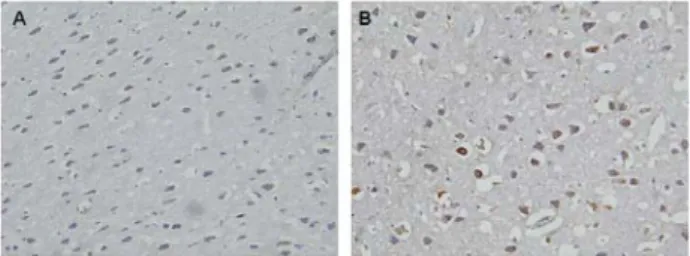
Compared to intraperitoneal sterile saline group, OPC group showed that a decrease of expression of ASIC3 in brain M1 and M2 area was observed on immunohistochemical
Fig. 1. Effect of OPC on the pain threshold in the acid injected paw of the rats (n=15). Compared to baseline (day 0), acid injections produced mechanical hyper-responsive- ness on day 7-PD (p<0.05). A potent antihyperalgesic ef- fect was observed when OPC was injected intra- peritoneally [day 7-1 hr] (p=0.001). PD, pre-drug; gp, group; hr, hour; Group1, pH 7.2 saline IM only; Group2, pH 4 saline IM + intraperitoneal OPC 300 mg/kg;
Group3, pH 4 saline IM + intraperitoneal sterile saline (vehicle control). * p<0.05, ** p=0.001
Fig. 2. Effect of OPC on the pain threshold in the contralateral paw of the rats (n=15). Compared to baseline (day 0), acid injections produced mechanical hyper-responsive- ness on day 7-PD (p<0.05). A potent antihyperalgesic ef- fect was observed when OPC was injected intra- peritoneally [day 7-1 hr] (p=0.002). PD, pre-drug; gp, group; hr, hour; Group1, pH 7.2 saline IM only; Group2, pH 4 saline IM + intraperitoneal OPC 300 mg/kg;
Group3, pH 4 saline IM + intraperitoneal sterile saline (vehicle control). * p<0.05, ** p=0.002
staining when OPC 300 mg/kg was administered intra- peritoneally in animal model of FM pain [p<0.05] (Fig. 3).
There was no difference in the expression of ASIC3 on an- other areas of interest (CPu, VL, cingulate cortex, etc.). There was also no difference in the expression of SP and MOR on regions of interest (M1, M2, CPu, VL, cingulate cortex, etc.).
In this study, unilateral IM injections of acidic saline pro- duced bilateral mechanical hyper-responsiveness in Sprague- Dawley rats. In this model, a potent antihyperalgesic effect was observed when rats were injected intraperitoneally with OPC 300 mg/kg. A increase of pain threshold was observed not only in the injected side paws but also in the non-in- jected side paws of rats with hyperalgesia in the current study. OPC treatment decreased the expression of ASIC3 in brain M1 and M2 area on immunohistochemical staining when 300 mg/kg was administered intraperitoneally in ani- mal model of FM pain.
There has been no established experimental animal model for FM, but the acidic saline animal model of pain has been suggested to mimic FM [33]. Sluka et al showed that the activation of ASIC3 on muscle afferents was required for development of mechanical hyperalgesia and central sensiti- zation that normally occurred in response to repeated IM acid [34]. Russell et al demonstrated that SP was elevated in the cerebrospinal fluid of patients with FM [28]. This find- ing was replicated in other neuropeptide studies [29].
Abnormal sensitization and temporal summation of second pain have been described in patients with FM [35]. This tem- poral summation is dependent on SP synaptic mechanisms within the dorsal horn of the spinal cord [43]. Therefore, we chose SP, ASIC3, and MOR [29] for the examination of pain-related molecules.
Fig. 3. Immunohistochemical staining showing the expression of ASIC3. Compared to sterile saline treatment (B), OPC treatment (A) decreased the expression of ASIC3 in brain M1 and M2 area when 300 mg/kg was administered in- traperitoneally in animal model of FM pain (p<0.05).
(×400)
Acid-sensing ion channels (ASIC) are proton-gated cation channels highly expressed in peripheral sensory and central neurons [17,38]. These channels are thought to serve im- portant roles in a number of different physiological and pathological processes. In sensory neurons, ASIC are im- plicated in nociception [6,37], mechanosensation [26,27]. In central neurons, ASIC are involved in synaptic plasticity, learning-memory, and fear conditioning [39-41]. In addition, these channels play central roles in neuronal hyper- excitability and hyperalgesia [19,34]. While ASIC1a, 2a, 2b, and 4 are widely expressed in both central and peripheral sensory neurons, ASIC1b and 3 are found primarily in sen- sory neurons [17,38].
Hyperalgesia is considered as integration of changes oc- curring in multiple regions of CNS, a massive integrated neural network [5,30]. Thus, CNS should be investigated more widely. Although electrophysiological techniques are useful for investigation of the pain modulation system, it is still difficult to surveil molecules functioning in the system. From these viewpoints, Kim et al. reported that com- pared to controls, acid injected rats demonstrated increased expression of several pain-associated molecules in specific structures [16]. Unilateral IM injections of acidic saline al- tered the basal pattern of activation in multiple CNS struc- tures [15]. These data support the validity of the acidic saline assay as a model of FM, and provide a foundation for future analysis of the contribution of specific brain structures and cellular mechanisms to the development and maintenance of central pain syndromes.
In a recent study, statistical comparison of the patient and control groups receiving similar stimulus pressures revealed 13 regions of greater activation in the patient group [13].
In a comparison of the effects of similar stimulus pressures, patients showed significant activations that were sig- nificantly different from the activation in the healthy con- trols in the primary somatosensory cortex, inferior parietal lobule, insula, cingulate cortex, secondary somatosensory cortex, superior temporal gyrus, and cerebellum. Therefore, we chose several regions of interest (cingulate cortex, puta- men, motor cortex etc.) for the examination of pain-related molecules.
The motor cortex (M1 and M2) is involved in pain modu- lation [44]. The distribution of SP in mid- and fore-brain areas of the rat was studied using a radioimmunocytochemical method [20]. An extensive distribution of SP was seen in frontal, cingulate, retrosplenial, and entorhinal cortices.
There is no report of ASIC3 in M1 and M2 of human and animal till now.
Pregabalin has been shown to be efficacious in other pain conditions including postoperative pain and FM. Specifically, in people with FM, pregabalin (450 mg/d) reduced pain, improved sleep, and increased quality of life [8]. More re- cently, it is reported that pregabalin reduced muscle and cu- taneous hyperalgesia in acid saline model of rats [46]. There is no study of antioxidant treatment in acid saline model till now. We chose 300 mg/kg of OPC as intraperitoneal in- jection dose because there were no differences at 50 and 100 mg/kg in preliminary study. There was no study of using over 300 mg/kg of OPC in rats as we reviewed all available literatures about this.
Reactive oxygen species (ROS) such as the superoxide anion (O
2-), hydrogen peroxide (H
2O
2), and the hydroxyl radical, are continuously generated during normal cell metabolism. ROS can act as a physiological defense system against microbial infection and are involved in maintaining normal cellular functions, including proliferation, apoptosis, and intracellular signal transduction [11]. However, ex- cessive amounts of ROS can damage lipids, proteins, DNA, and the extracellular matrix [10]. Therefore, ROS must be scavenged by antioxidants. Enzymatic antioxidants include superoxide dismutase, glutathione peroxidase, catalase, and thioredoxin reductase. Nonenzymatic antioxidants include glutathione, vitamin A, vitamin C, and vitamin E [36].
Oxidative stress refers to the cellular state in which the pro- duction of ROS is elevated and/or the levels of antioxidants reduced. Oxidative stress is considered to be involved in the pathogenesis of atherosclerosis, cancer, neurodegenerative disorders, diabetes, ageing, and autoimmune rheumato- logical diseases [36]. The polyphenols in OPC have shown beneficial antioxidant effects on oxidative-stress-associated diseases. It has been suggested that oxidative stress plays an important role in the pathobiology of FM [1,7,24,25].
Nitric oxide (NO) is an important cell–cell signaling mol-
ecule and a free radical [7]. NO plays an important role in
many biochemical processes such as regulation of blood ves-
sel dilatation and immune response, and functions as a neu-
rotransmitter [7]. NO can interact with superoxide to form
peroxynitrite, a highly toxic compound that can nitrosylate
proteins and alter their function [4]. Temporal summation
of second pain or wind-up is mediated via NMDA receptors
and may be involved the production of NO [14]. Wind-up
depends on input from unmyelinated C fiber afferents that
can activate central NMDA receptor systems associated with enhancement of pain. In this FM model, repeated IM in- jections of acidic saline produce a widespread hyperalgesia which might be centrally maintained [33]. As central sensiti- zation play a pivotal role in clinical pain for FM and NMDA receptors are involved in NO production [7], we suggest that antioxidant effect of OPC might be helpful for relieving a widespread hyperalgesia.
The mechanism of this stress-induced modulations of ASIC3 expression remains unknown. In our study, the role of OPC about decreased ASIC3 expression in M1 and M2 of hyperalgesic rats also remains to be determined. It would also be interesting to know, whether the alterations in ASIC3 mRNA expression are long-lasting or transient, or whether repeated stress exposure can lead to progressive changes in the expression of this gene in the future study.
We provide here, first evidence that IM acid injections altered the expression pattern of ASIC3 in M1 and M2 of rats. The change in expression of ASIC3 that was observed in specific brain structure following acid injections looks like associated with reports of changed pain-associated mole- cules in patients with FM [29]. Therefore, interfering with ASIC3 might be of benefit in treatment or prevention of chronic hyperalgesia. These data support the validity of acidic saline treatment as a model of FM, and provide a foundation for future analyses of specific brain regions and molecules that contribute to this syndrome. In conclusion, we have demonstrated that a potentiation in the anti- hyperalgesic effect is observed when OPC were administered in animal model of FM pain. This should encourage further researches evaluating the potential role of oxidative stress in the pathophysiology of FM and the efficacy of antioxidant treatments in double blind and placebo controlled trials.
These future researches will enhance our understanding of the complex pathophysiology of this disorder.
Acknowledgment
This research was supported by Basic Science Research Program through the National Research Foundation of Korea (NRF) funded by the Ministry of Education, Science and Technology (2009-0072744).
References
1. Altindag, O. and H. Celik. 2006. Total antioxidant capacity and the severity of the pain in patients with fibromyalgia.
Redox. Rep. 11, 131-135.
2. Ariga, T. 2004. The antioxidative function, preventive action on disease and utilization of proanthocyanidins. Biofactors 21, 197-201.
3. Bagchi, D., M. Bagchi, S. J. Stohs, D. K. Das, S. D. Ray, C. A. Kuszynski, S. S. Joshi, and H. G. Pruess. 2000. Free radicals and grape seed proanthocyanidin extract: im- portance in human health and disease prevention.
Toxicology 148, 187-197.
4. Bagıs, S., L. Tamer, G. Sahin, R. Bilgin, H. Guler, B. Ercan, and C. Erdogan. 2005. Free radicals and antioxidants in pri- mary fibromyalgia: An oxidative stress disorders. Rheumatol.
Int. 25, 188-190.
5. Borsook, D., R. Burstein, and L. Becerra. 2004. Functional imaging of the human trigeminal system: opportunities for new insights into pain processing in health and disease. J.
Neurobiol. 61, 107-125.
6. Chen, C. C., A. Zimmer, W. H. Sun, J. Hall, M. J.
Brownstein, and A. Zimmer. 2002. A role for ASIC3 in the modulation of high-intensity pain stimuli. Proc. Natl. Acad.
Sci. USA. 99, 8992–8997.
7. Cimen, O. B., M. Y. Cimen, Y. Yapici, and H. Camdeviren.
2009. Arginase, NOS activities, and clinical features in fi- bromyalgia patients. Pain. Med. 10, 813-817.
8. Crofford, L. J., M. C. Rowbotham, P. J. Mease, I. J. Russell, R. H. Dworkin, A. E. Corbin, J. P. Young Jr, L. K.
LaMoreaux, S. A. Martin, and U. Sharma. 2005. Pregabalin for the treatment of fibromyalgia syndrome: results of a randomized, double-blind, placebo-controlled trial.
Arthritis. Rheum. 52, 1264-1273.
9. Dickenson, A. H. and A. F. Sullivan. 1987. Evidence for a role of the NMDA receptor in the frequency dependent po- tentiation of deep rat dorsal horn nociceptive neurones fol- lowing C fibre stimulation. Neuropharmacology 26, 1235-1238.
10. Droge, W. 2002. Free radicals in the physiological control of cell function. Physiol. Rev. 82, 47-95.
11. Filippin, L. I., R. Vercelino, N. P. Marroni, and R. M. Xavier.
2008. Redox signalling and the inflammatory response in rheumatoid arthritis. Clin. Exp. Immunol. 152, 415-422.
12. Fine, A. M. 2000. Oligomeric proanthocyanidin complexes:
history, structure, and phytopharmaceutical applications.
Altern. Med. Rev. 5, 144-151.
13. Gracely, R. H., F. Petzke, J. M. Wolf, and D. J. Clauw. 2002.
Functional magnetic resonance imaging evidence of aug- mented pain processing in fibromyalgia. Arthritis. Rheum.
46, 1333-1343.
14. Granges, G. and G. Littlejohn. 1993. Pressure pain threshold in pain-free subjects, in patients with chronic regional pain syndromes, and in patients with fibromyalgia syndrome.
Arthritis. Rheum. 36, 642-646.
15. Harte, S. E., S. -H. Kim, D. J. Clauw, and T. J. Morrow.
2007. Altered regional cerebral blood flow at rest in an ani- mal model of fibromyalgia. Arthritis. Rheum. 56, S9.
16. Kim, S. H. and J. Lee. 2008. Altered pain-associated mole-
cules in the brain of an animal model of fibromyalgia –
preliminary data. Ann. Rheum. Dis. 67, 254.
17. Krishtal, O. 2003. The ASICs: Signaling molecules?
Modulators? Trends. Neurosci. 26, 477-483.
18. Kwiatek, R., L. Barnden, R. Tedman, R. Jarrett, J. Chew, C. Rowe, and K. Pile. 2000. Regional cerebral blood flow in fibromyalgia: single-photon-emission computed tomog- raphy evidence of reduction in the pontine tegmentum and thalami. Arthritis. Rheum. 43, 2823-2833.
19. Mamet, J., M. Lazdunski, and N. Voilley. 2003. How nerve growth factor drives physiological and inflammatory ex- pressions of acid-sensing ion channel 3 in sensory neurons.
J. Biol. Chem. 278, 48907-48913.
20. McLean, S., L. R. Skirboll, and C. B. Pert. 1985. Comparison of substance P and enkephalin distribution in rat brain: an overview using radioimmunocytochemistry. Neuroscience 14, 837-852.
21. Mountz, J. M., L. A. Bradley, J. G. Modell, R. W. Alexander, M. Triana-Alexander, L. A. Aaron, K. E. Stewart, G. S.
Alarcón, and J. D. Mountz. 1995. Fibromyalgia in women.
Abnormalities of regional cerebral blood flow in the thala- mus and the caudate nucleus are associated with low pain threshold levels. Arthritis. Rheum. 38, 926-938.
22. Natella, F., F. Belelli, V. Gentili, F. Ursini, and C. Scaccini.
2002. Grape seed proanthocyanidins prevent plasma post- prandial oxidative stress in humans. J. Agric. Food Chem.
50, 7720-7725.
23. Okifuji, A., D. C. Turk, and D. A. Marcus. 1999. Comparison of generalized and localized hyperalgesia in patients with recurrent headache and fibromyalgia. Psychosom. Med. 61, 771-780.
24. Ozgocmen, S., H. Ozyurt, S. Sogut, and O. Akyol. 2006.
Current concepts in the pathophysiology of fibromyalgia:
the potential role of oxidative stress and nitric oxide.
Rheumatol. Int. 26, 585-597.
25. Pieczenik, S. R. and J. Neustadt. 2007. Mitochondrial dys- function and molecular pathways of disease. Exp. Mol.
Pathol. 83, 84-92.
26. Price, M. P., G. R. Lewin, S. L. McIlwrath, C. Cheng, J. Xie, P. A. Heppenstall, and C. L. Stucky. 2000. The mammalian sodium channel BNC1 is required for normal touch sensation. Nature 407, 1007-1011.
27. Price, M. P., S. L. McIlwrath, J. Xie, C. Cheng, J. Qiao, D.
E. Tarr, and K. A. Sluka. 2001. The DRASIC cation channel contributes to the detection of cutaneous touch and acid stimuli in mice. Neuron 32, 1071-1083.
28. Russell, I. J., M. D. Orr, B. Littman, G. A. Vipraio, D.
Alboukrek, J. E. Michalek, Y. Lopez, and F. MacKillip. 1994.
Elevated cerebrospinal fluid levels of substance P in patients with the fibromyalgia syndrome. Arthritis. Rheum. 37, 1593-1601.
29. Russell, I. J. 2005. Neurotransmitters, cytokines, hormones, and the immune system in chronic nonneuropathic pain.
In Wallace, D. J. and D. J. Clauw. Fibromyalgia & other central pain syndromes, pp. 63-79, Philadelphia, PA: Lippincott Williams & Wilkins.
30. Rustioni, A. 2005. Modulation of sensory input to the spinal cord by presynaptic ionotropic glutamate receptors. Arch.
Ital. Biol. 143, 103-112.
31. Sano, A., R. Uchida, M. Saito, N. Shioya, Y. Komori, Y. Tho, and N. Hashizume. 2007. Beneficial effects of grape seed extract on malondialdehyde-modified LDL. J. Nutr. Sci.
Vitaminol. (Tokyo) 53, 174-182.
32. Shi, J., J. Yu, J. E. Pohorly, and Y. Kakuda. 2003.
Polyphenolics in grape seeds-biochemistry and functionality.
J. Med. Food 6, 291-299.
33. Sluka, K. A., A. Kalra, and S. A. Moore. 2001. Unilateral intramuscular injections of acidic saline produce a bilateral, long-lasting hyperalgesia. Muscle. Nerve. 24, 37-46.
34. Sluka, K. A., M. P. Price, N. M. Breese, C. L. Stucky, J. A.
Wemmie, and M. J. Welsh. 2003. Chronic hyperalgesia in- duced by repeated acid injections in muscle is abolished by the loss of ASIC3, but not ASIC1. Pain 106, 229-239.
35. Staud, R., C. J. Vierck, R. L. Cannon, A. P. Mauderli, and D. D. Price. 2001. Abnormal sensitization and temporal summation of second pain (wind-up) in patients with fi- bromyalgia syndrome. Pain 91, 165-175.
36. Valko, M., D. Leibfritz, J. Moncol, M. T. Cronin, M. Mazur, and J. Telser. 2007. Free radicals and antioxidants in normal physiological functions and human disease. Int. J. Biochem.
Cell Biol. 39, 44-84.
37. Voilley, N., J. de Weille, J. Mamet, and M. Lazdunski. 2001.
Nonsteroid anti-inflammatory drugs inhibit both the activ- ity and the inflammation-induced expression of acid sens- ing ion channels in nociceptors. J. Neurosci. 21, 8026-8033.
38. Waldmann, R., G. Champigny, E. Lingueglia, J. R. de Weille, C. Heurteaux, and M. Lazdunski. 1999. H
+-gated cation channels. Ann. N. Y. Acad. Sci. 868, 67-76.
39. Wemmie, J. A., C. C. Askwith, E. Lamani, M. D. Cassell, J. H. Freeman Jr, and M. J. Welsh. 2003. Acid-sensing ion channel 1 is localized in brain regions with high synaptic density and contributes to fear conditioning. J. Neurosci. 23, 5496-5502.
40. Wemmie, J. A., J. Chen, C. C. Askwith, A. M.
Hruska-Hageman, M. P. Price, B. C. Nolan, and P. G. Yoder.
2002. The acidactivated ion channel ASIC contributes to synaptic plasticity, learning, and memory. Neuron 34, 463-477.
41. Wemmie, J. A., M. W. Coryell, C. C. Askwith, E. Lamani, A. S. Leonard, and C. D. Sigmund. 2004. Overexpression of acid-sensing ion channel 1a in transgenic mice increases acquired fear-related behavior. Proc. Natl. Acad. Sci. USA 101, 3621-3626.
42. Wolfe, F. 1989. Fibromyalgia: the clinical syndrome. Rheum.
Dis. Clin. North. Am. 15, 1-18.
43. Woolf, C. J. and S. W. Thompson. 1991. The induction and maintenance of central sensitization is dependent on N-methyl-D-aspartic acid receptor activation; implications for the treatment of post-injury pain hypersensitivity states.
Pain 44, 293-299.
44. Xie, Y. F., F. Q. Huo, and J. S. Tang. 2009. Cerebral cortex modulation of pain. Acta. Pharmacol. Sin. 30, 31-41.
45. Yamakoshi, J., A. Sano, S. Tokutake, M. Saito, M. Kikuchi,
Y. Kubota, Y. Kawachi, and F. Otsuka. 2004. Oral intake
of proanthocyanidin-rich extract from grape seeds improves chloasma. Phytother. Res. 18, 895-899.
46. Yokoyama, T., Y. Maeda, K. M. Audette, and K. A. Sluka.
초록:섬유근통 동물 모델에서 포도씨 추출 proanthocyanidin의 진통 효과 문현일․김성호
1*․장태정
2․문일수
3(동국대학교 의과대학 내과학교실,
1인제대학교 의과대학 내과학교실,
2동국대학교 의과대학 병리학교실,
3