Kor. J. Hort. Sci. Technol. 30(2):123-128, 2012 DOI http://dx.doi.org/10.7235/hort.2012.11086
Evaluation of Composted Pig Manure and Organic Fertilizer for Organic Onion Production in Paddy Soil
Jongtae Lee*, Heedae Kim, Sangdae Lee, and Chiwoong Ro
Onion Research Institute, Gyeongsangnam-do Agricultural Research & Extension Services, Changnyeong 635-821, Korea
Abstract. A two year study was conducted on the effects of composted pig manure applications on organically managed intermediate-day onion (Allium cepa L.) with mid-season production. The manure application rates were 0, 4.0, 6.0, and 8.0 ton・ha-1, and accompanied by organic fertilizer with 240 kg・ha-1 nitrogen for all treatments. There was a positive linear effect on the marketable bulb yield with increasing applications of pig manure. However, pig manure rates of 6.0 or 8.0 ton・ha-1 did not affect the marketable yields or bulb weights at harvest. There was no significant difference between pig manure application rates and mineral concentration or nutrient uptake in onion bulbs. Soil pH and electric conductivity (EC) were lower at harvest compared to preplant soil, while exchangeable potassium and calcium contents increased at harvest. However, there were no significant effects on soil pH, EC, and organic matter or exchangeable cations caused by different pig manure application rates. Mineralized NO3-N content was not affected by pig manure application rates except at transplanting and 129 day after transplanting. Based on the results of this study, when organic fertilizer is applied at a rate of 240 kg・ha-1 N, 6.0 ton・ha-1 composted pig manure should be adequate for producing onions using an organic production system.
Additional key words: Allium cepa, nutrient uptake, organic production system, soil properties
*Corresponding author: [email protected]
※ Received 15 August 2011; Revised 6 February 2012; Accepted 8 February 2012. The author would like to thank Prof. George Boyhan at University of Georgia for constructive comments and suggestions to improve this manuscript. The research was financed by Locally Specialized Agricultural Techniques from Korean Rural Development Administration (RDA), Republic of Korea.
Introduction
Onion (Allium cepa L.) is one of the most important vegetable crops grown in Korea with 22,113 ha of production and producing 1.4 million ton (Korean Statistical Information Service, 2010), and consumption has been increasing due to awareness of the onion’s health benefits. Onions with short-day or intermediate-day cultivars were produced from 110 ha on organically certified farms during 2009-2010 (NAQS, 2010). Although only 0.50% of total onion production acreage was organic, organic onion production has been steadily increasing over the past decade since law governing environmental friendly agriculture were legislated in 1997.
Many researchers have evaluated the organic production of onions. Beek (2005) has presented perspectives on organic onion production related to farming systems and marketing.
Production costs were also a concern for organic onion farms (Conner and Rangarajan, 2009). However, most studies have been conducted to evaluate soil fertility (Boyhan and Hill, 2008; Boyhan et al., 2010; Lee, 2010; Mogren et al, 2008;
Sankar et al, 2009; Schonbeck, 2006). Onions have a shallow, sparsely branched root system with most roots in the top 30 cm of the soil. The shallow onion root system is less effective than the root systems of other crops at extracting soil nutrients (Brewster, 2008). Moreover, fertilizer requirements were higher when using organic fertilizer sources compared with conventional fertilizers, presumably because nutrients were less available in organic fertilizers due to slow mineralization rates (Boyhan and Hill, 2008). Boyhan et al. (2010) found that jumbo (≥ 7.62 cm diameter) onion yield did not differ with increasing poultry litter application rates, while medium (≥ 5.05 and < 7.62 cm diameter) yields decreased with increasing applications of poultry litter in organic short-day onions.
The sources of organic fertilizers include crop residues such as rice bran, a variety of oil seed cakes, and animal by-products including blood meal, meat bone meal, and fish meal, which are sometimes distinguished from composted animal manure. They contain high levels of specific nutrients, e.g. nitrogen (N) in blood meal and oilseed cake, or phosphorus
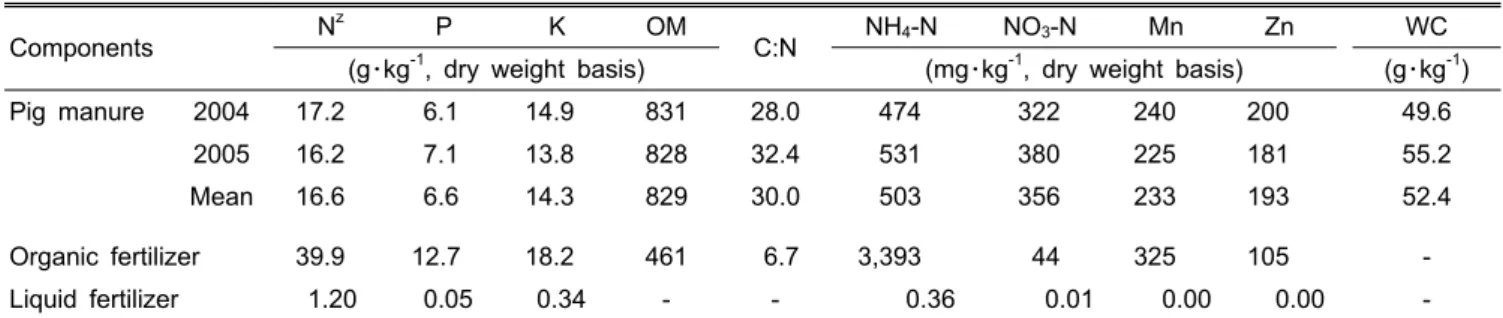
Table 1. Nutrient contents of composted pig manure and organic fertilizer used for onion production.
Components Nz P K OM
C:N NH4-N NO3-N Mn Zn WC
(g・kg-1, dry weight basis) (mg・kg-1, dry weight basis) (g・kg-1)
Pig manure 2004 17.2 6.1 14.9 831 28.0 474 322 240 200 49.6
2005 16.2 7.1 13.8 828 32.4 531 380 225 181 55.2
Mean 16.6 6.6 14.3 829 30.0 503 356 233 193 52.4
Organic fertilizer 39.9 12.7 18.2 461 6.7 3,393 44 325 105 -
Liquid fertilizer 1.20 0.05 0.34 - - 0.36 0.01 0.00 0.00 -
zN, nitrogen; P, phosphorus; K, potassium; OM, organic matter; C:N, carbon:nitrogen; WC, water content; NH4-N, ammonium nitrogen;
NO3-N, nitrate nitrogen; Mn, manganese; Zn, zinc.
(P) in meal bone meal, and high amounts of organic matter (OM) and various micronutrients as well (Blatt, 1991; Cayuela et al., 2008; Lee et al., 2004). Also, the low C:N ratio of organic fertilizer compared with compost or animal manure accelerates N mineralization of organic compounds (Lee et al., 2004). Thus, organic fertilizers have been widely used as alternative fertilizers for organically grown crops.
The current recommendations from the Rural Development Administration (RDA) in Korea (RDA, 2006) for N, P, and potassium (K) for onion production are 240, 77, and 154 kg・ha-1, respectively. The compost recommendation is to use 20 ton・ha-1 as farmyard manure or cattle manure-sawdust compost, 4.4 ton・ha-1 as pig manure-sawdust compost, or 3.4 ton・ha-1 as poultry manure-sawdust compost. Mineral fertilizer is not allowed for certified organic onion production, and organic farmers typically apply a variety of organic fertilizers and greater amounts of animal manure or compost than recommended for improved bulb yield. Nevertheless, the productivity of organic onions remains 33% lower than conventional onion bulb yield (NAQS, 2010).
The objective of the present study was to evaluate the effects of different application rates of composted pig manure on onion growth, bulb yield, nutrient uptake, and soil properties for organic production of intermediate-day onions in paddy soil with applied organic fertilizer.
Materials and Methods Location of Field Study
The present study was conducted twice in different areas of the same field during 2004-2006 growing seasons at the farm in the Onion Research Institute, Changnyeong District, Korea (35°55′N latitude and 128°47′E longitude). The experimental field had been under continuous cultivation by the double cropping system of rice followed by onions.
Fertilizer Treatment and Experimental Design
Onion seeds cv. Superball (an F1 hybrid cultivar for fall
transplanting) were sown in drills on beds of 1.2 m between centers with a spacing of 10 cm per row on 8 Sept. 2004 and 9 Sept. 2005. Composted pig manure and organic fertilizer were evenly applied each year over the bed after final bed shaping, and then raked into the soil by hand rake. Onion seedlings were transplanted into beds mulched with transparent polyethylene film on 6 Nov. 2004 and 8 Nov. 2005. Beds for experiments were formed on 140 cm between centers with a bed width of 120 cm and a height of 15 cm. Seven rows of onions were transplanted with 15 cm between rows and a 15 cm in-row spacing. The experimental unit was a 12 m long section of planted bed, accommodating 550 plants.
The experimental designs each year consisted of randomized complete blocks with 3 replications.
Composted pig manure was applied at rates of 0, 4.0, 6.0, and 8.0 ton・ha-1. The commercial pig compost was composted during 6 months using pig manure and sawdust.
Results from pig manure sample analysis averaged over 2 years are shown in Table 1. Organic fertilizer was equally applied to all treatments as a basal organic fertilizer at a rate of 2.0 ton・ha-1, and was applied at the same time when the pig manure was applied. The organic fertilizer was made of organic materials including sesame oil cake, rice bran and molasses and minerals such as illite as well as mountainous soil by a fermenting process during two months according to a report of Lee et al. (2004). Two ton・ha-1 organic fertilizer for basal fertilization contained 80 kg N, 25 kg P, 36 kg, and 922 kg OM. Liquid organic fertilizer was combined with organic fertilizer and a 10-fold volume of water for 10 days.
The liquid fertilizer was supplied over the plastic film at the rate of 133 ton・ha-1 for topdressing, in which was 160 kg N, 7 kg P, and 45 kg K. The volume of liquid fertilizer was divided into 6 applications and applied every 10 days from February through March. The nutrient contents provided by the organic fertilizer and the liquid organic fertilizer applied to onions during a season, included 240 kg・ha-1 N, 32 kg・ha-1 P, and 81 kg・ha-1 K, and were based on the standard N rate for onion production in Korea (RDA, 2006).
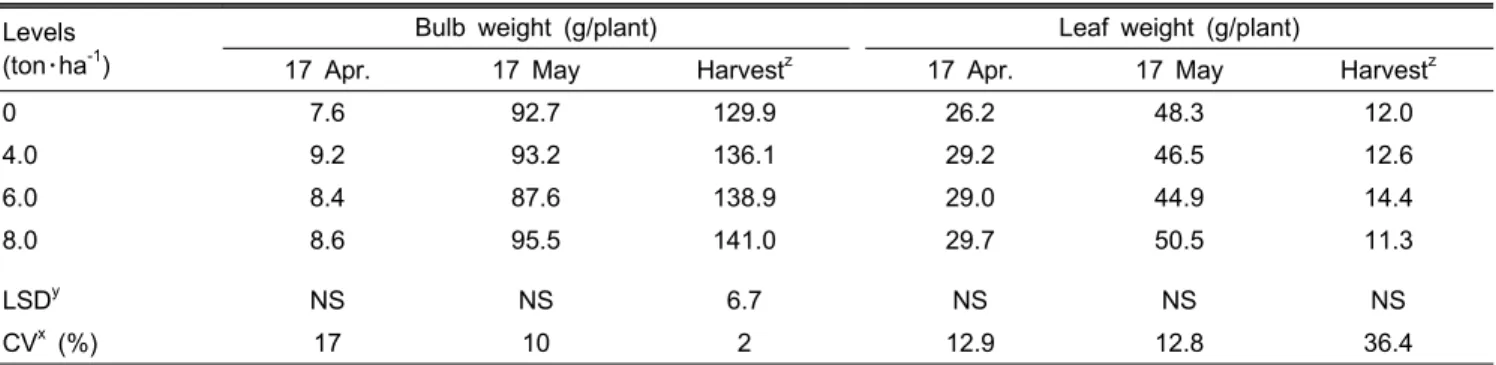
Table 2. Changes in average onion bulb and leaf weights of onion plants as affected by pig manure levels for 2 years (average of 2005 and 2006 data).
Levels (ton・ha-1)
Bulb weight (g/plant) Leaf weight (g/plant)
17 Apr. 17 May Harvestz 17 Apr. 17 May Harvestz
0 7.6 92.7 129.9 26.2 48.3 12.0
4.0 9.2 93.2 136.1 29.2 46.5 12.6
6.0 8.4 87.6 138.9 29.0 44.9 14.4
8.0 8.6 95.5 141.0 29.7 50.5 11.3
LSDy NS NS 6.7 NS NS NS
CVx (%) 17 10 2 12.9 12.8 36.4
zOn 8 June 2005 and 2 June 2006.
yFisher’s protected least significant difference (P ≤ 0.05).
xCoefficient of variation.
Irrigation, hand weeding, and other cultural practices were completed according to RDA recommendations (Suh et al., 2000). No pesticides or herbicides were sprayed for disease or weed control, in compliance with the NAQS guide (2010) for being certified as organic.
Plant, Soil Sampling, and Measurement
Five onion plants per plot were removed for measuring the bulb and leaf weights on 17 April and 17 May in 2005 and 2006, respectively. Harvesting was conducted after 80%
of the tops had fallen down on 8 June 2005 and 2 June 2006.
Onions were pulled from an area of 3.2 m2 per experimental unit and laid on top of the ground for 2 days before having their tops removed. They were then individually weighed to determine bulb weight, with damaged, diseased, bolted, and doubled onions sorted out. Five representative onion bulbs were selected for analyzing inorganic contents. The samples were sliced and dried to a constant weight at 70°C.
The dried samples were ground, weighed and dissolved in H2SO4 and H2O2. N was measured by the Kjeldahl method.
P was measured colorimetrically with the ammonium-vanadate- molybdate method (Gericke and Kurmies, 1952). Atomic absorption spectrophotometry was used to determine K, Ca, and Mg contents (Slavin, 1968).
The soil samples were collected for chemical analysis from the surface layer (0-15 cm) at harvest and prior to basal fertilization in 2006. Air-dried soil samples were analyzed for pH, electric conductivity (EC), OM, available P and exchangeable cations. OM was determined by the Tyurin method (Schollenberger, 1927). The Lancaster method was used to determine the available P (RDA, 2002). The method involves using 5 g soil, which is extracted with 20 mL of 0.33 M acetic acid, 0.15 M lactic acid, 0.03 M NH4F, 0.05 M (NH4)2SO4 and 0.2 M NaOH at pH 4.25. An atomic absorption spectrophotometer was used to measure extractable
cations (Slavin, 1968). Soil pH and EC were measured by pH meter and conductivity meter. Soil used for analyzing inorganic nitrogen content was sampled at 17 day before transplanting and 1 day after transplanting (DAT), 101, 115, 129, 150, 164, 180, 192, 218 DAT, and contents were determined by reflectometry (RQ plus, Merck, Germany).
Statistical Analysis
All data were averaged over the two successive growing seasons because there was no significance in treatments by growing season interactions, and analyzed with SAS Enterprise Guide 4.2 (SAS Institute Inc., Cary, NC, USA). Fisher’s protected least significant difference (LSD) for comparing treatment means was calculated at P ≤ 0.05. Simple linear regression analysis by the REG procedure was performed to compare bulb yields, mineral concentrations and nutrient uptakes as influenced by pig manure rates.
Results and Discussion Plant Growth and Yield
Bulb and leaf weights were not significantly different among pig manure application rates throughout the growing season, except for bulb weight at harvest on 4 June (Table 2). Onion marketable bulb yield was the highest at 8.0 ton・ha-1, which was not significantly different from 4.0 or 6.0 ton・ha-1 (Table 3). N, and K concentrations and uptakes in onion bulbs were the highest at 0 ton・ha-1, but showed no significant difference from others.
There were contradictory results concerning the effect of animal manure or compost on onion yield. Abdelrazzag (2002) found that there was no significant difference in onion yields among chicken manure application rates of 20, 40, and 80 ton・ha-1. On the contrary, in an organic system trial using five rates of organic compost (0-60 ton・ha-1), the calculated
Table 3. Comparison of pig manure effects on yield, mineral concentration, and nutrient uptake by bulbs in intermediate-day onions for 2 years (average of 2005 and 2006 data).
Levels (ton・ha-1)
Yield (ton・ha-1) Mineral concentration (g・kg-1) Nutrient uptake (kg・ha-1)
Marketable Unmarketable N P K Ca Mg N P K Ca Mg
0 39.1 1.1 14.2 1.5 23.1 4.4 1.9 49.2 5.0 78.1 14.9 6.3
4.0 40.6 1.2 13.1 1.3 20.3 4.4 1.8 46.5 4.8 71.6 15.3 6.2
6.0 42.7 1.1 13.3 1.5 20.0 5.2 1.7 48.0 5.5 72.1 18.5 6.2
8.0 43.9 1.4 12.7 1.3 19.8 4.2 1.6 48.2 5.0 75.6 15.8 6.2
LSDz 2.0 NS NS NS NS NS NS NS NS NS NS NS
Ry R2 0.78 0.03 0.08 0.05 0.30 0.00 0.34 0.00 0.00 0.03 0.08 0.01
Px 0.00 0.59 0.36 0.50 0.07 0.92 0.05 0.86 0.79 0.58 0.38 0.82
zFisher’s protected least significant difference (P ≤ 0.05).
yLinear simple regression analysis.
xProbability.
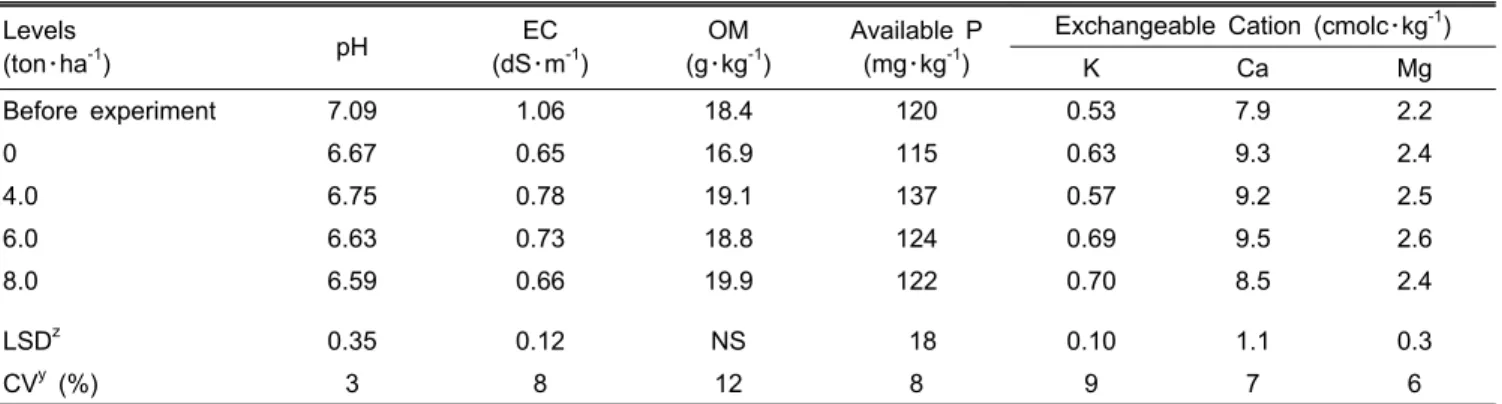
Table 4. Effect of pig manure rates on soil pH, OM, and major nutrients before fertilization and at harvest for 2 years (average of 2005 and 2006 data).
Levels
(ton・ha-1) pH EC
(dS・m-1)
OM (g・kg-1)
Available P (mg・kg-1)
Exchangeable Cation (cmolc・kg-1)
K Ca Mg
Before experiment 7.09 1.06 18.4 120 0.53 7.9 2.2
0 6.67 0.65 16.9 115 0.63 9.3 2.4
4.0 6.75 0.78 19.1 137 0.57 9.2 2.5
6.0 6.63 0.73 18.8 124 0.69 9.5 2.6
8.0 6.59 0.66 19.9 122 0.70 8.5 2.4
LSDz 0.35 0.12 NS 18 0.10 1.1 0.3
CVy (%) 3 8 12 8 9 7 6
zFisher’s protected least significant difference (P ≤ 0.05).
yCoefficient of variation.
maximum onion yield was obtained with 43.3 ton・ha-1 of pig manure (Vidigal et al., 2010). Boyhan et al. (2010) have reported that there was a significant linear effect on total onion yield with increasing poultry litter applications from 0 to 25 ton・ha-1, with an R2 of 0.719 for organic short-day onions. Although both compost and animal manure were effective in improving soil OM content and soil fertility, especially with long-term application (Haynes and Naidu, 1998; Prasad, 2009), the response of onions depends on N availability, which varies with manure source and depends on the type and amount of bedding, age and manure storage conditions (Bary et al., 2000; Hartz et al., 2000).
The N application rate of organic fertilizer applied to onion plants was 240 kg・ha-1, while the N application rates of 4.0, 6.0 and 8.0 ton・ha-1 pig manure ranged from 31.8, 47.6 and 63.5 kg・ha-1, respectively. Furthermore, because the manure had a high C:N ratio of 30:1 as well as a low N content of 16.6 g・kg-1, N availability from the manure could be non- existent or very low as Wallace (2006) previously stated.
Thus, the effect of yield enhancement by increased manure
rates in our trial might be due to higher OM, available P, or exchangeable K in the manure treated plots compared to untreated plots.
Soil Chemical Properties
Prior to onion planting, the top soil texture was silt loam with an OM content of 18.4 g・kg-1, and pH 7.1, residual NO3-N, available P and exchangeable K amounts were 5.3 mg・kg-1, 120 mg・kg-1, and 0.53 cmolc・kg-1, respectively.
Soil pH and EC were lower at harvest compared to preplant soil, while exchangeable K and Ca contents increased at harvest (Table 4). Treatments including pig manure resulted in higher EC, OM, and available P compared to 0 kg・ha-1. There were no significant effects on soil pH, EC, OM, or exchangeable cations among pig manure application rates.
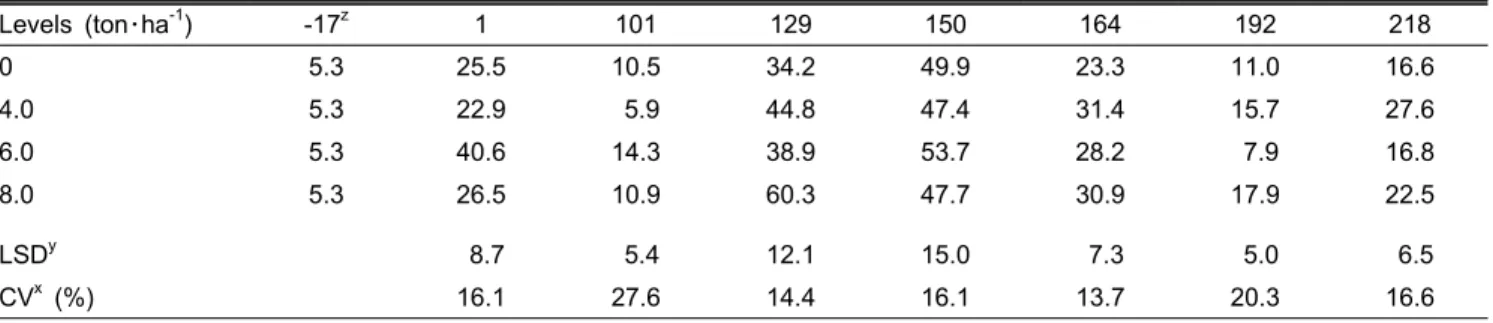
Nitrate N contents in soil ranged from 5.3 to 60.3 mg・kg-1 throughout the entire growing season, and peaked at 129 or 150 DAT (Table 5). Nitrate N content was temporarily higher at the 8.0 ton・ha-1 rate than other rates at 129 DAT, but the difference disappeared thereafter.
Table 5. Changes in soil NO3-N contents as affected by pig manure application rates on the during the growing season in 2006.
Levels (ton・ha-1) -17z 1 101 129 150 164 192 218
0 5.3 25.5 10.5 34.2 49.9 23.3 11.0 16.6
4.0 5.3 22.9 5.9 44.8 47.4 31.4 15.7 27.6
6.0 5.3 40.6 14.3 38.9 53.7 28.2 7.9 16.8
8.0 5.3 26.5 10.9 60.3 47.7 30.9 17.9 22.5
LSDy 8.7 5.4 12.1 15.0 7.3 5.0 6.5
CVx (%) 16.1 27.6 14.4 16.1 13.7 20.3 16.6
zDays after transplanting.
yFisher’s protected least significant difference (P ≤ 0.05).
xCoefficient of variation.
Changes in soil chemical properties between preplant and at harvest, and NO3-N fluctuation over the growing season could be due to organic fertilizer rather than pig manure.
Especially, N supply consisted of 63 kg・ha-1 from pig manure and 240 kg・ha-1 from organic fertilizer. Furthermore, the N from pig manure had a very high C:N ratio of 30:1, The guidelines developed by Wallace (2006) of using the C:N ratio of compost to determine N availability indicated that when the compost C:N ratio is > 20:1, the percentage of total N estimated to be mineralized after application is 0.0%.
Therefore, bulb yield improvement found with application rates of 6.0 or 8.0 ton・ha-1 rates may be attributed not to N supplied by the manure, but to other nutrients as well as soil physical enhancements such as porosity or water retention capacity or biological activation (Amlinger et al., 2007; Weon et al., 2004).
In conclusion, when organic fertilizer is applied to preplant soil at a rate of 240 kg・ha-1 N, additional pig manure application at the current rates was not effective for increasing bulb yield, and increased farmers’ management costs. Considering sustainable productivity and soil fertility, pig manure application rates of 6.0 ton・ha-1 should be sufficient for producing onions under conditions of organic production.
Literature Cited
Abdelrazzag, A. 2002. Effect of chicken manure, sheep manure and inorganic fertilizer on yield and nutrients uptake by onion.
Pak. J. Biol. Sci. 5:266-268.
Amlinger, F., S. Peyr, J. Geszti, P. Dreher, K.Weinfurtner, and S. Nortcliff. 2007. Beneficial effects of compost application on fertility and productivity of soils. Literature Study. Federal Ministry for Agriculture and Forest, Environment and Water Management, Perchtoldsdorf, Austria.
Bary, A.I., C.G. Cogger, and D.M. Sullivan. 2000. Fertilizing with manure. A pacific Northwest Extension Publication 533.
Washington State University Cooperative Extension, Washing- ton, USA.
Beek, M.A. 2005. Perspectives of organic onion production: The Dutch experience as an example for an emerging market economy as China. Acta Hort. 688:339-346.
Blatt, C.R. 1991. Comparison of several organic amendments with a chemical fertilizer for vegetable production. Scientia Hortic.
47:177-191.
Boyhan, G.E. and C.R. Hill. 2008. Organic fertility sources for the production of short-day organic onion transplants. HortTechnology 18:227-231.
Boyhan, G.E., R.J. Hicks, R.L. Torrance, C.M. Riner, and R.
Hill. 2010. Evaluation of poultry litter and organic fertilizer rate and source for production of organic short-day onions.
HortTechnology 20:304-307.
Brewster, J.L. 2008. Onions and other vegetable alliums. 2nd ed.
CABI, Oxfordshire, UK.
Cayuela, M.L., T. Sinicco, and C. Mondini. 2008. Mineralization dynamics and biochemical properties during initial decomposition of plant and animal residues in soil. Appl. Soil Ecol. 41:118-127.
Conner, D. and A. Rangarajan. 2009. Production costs of organic vegetable farms: Two case studies from Pennsylvania.
HortTechnology 19:193-199.
Gericke, S. and B. Kurmies. 1952. The colorimetric phosphorus analysis with ammonium-vandate-molybdate and its application in plant analysis. Plant Fert. Soil 59:235-247.
Hartz, T.K., J.P. Mitchell, and C. Giannini. 2000. Nitrogen and carbon mineralization dynamics of manures and composts.
HortScience 35:209-212.
Haynes, R.J. and R. Naidu. 1998. Influence of lime, fertilizer and manure applications on soil OM content and soil physical condition: A review. Nutrient cycling Agroecosystems 51:
123-137.
Korean Statistical Information Service (KOSIS). 2010. Korean statistical information service. (http://kosis.kr/index/index.jsp) Lee, J. 2010. Effect of application methods of organic fertilizer
on growth, soil chemical properties and microbial densities in organic bulb onion production. Scientia Hortic.124:299-305.
Lee, J.T., C.J. Lee, and H.D. Kim. 2004. Changes in physicochemical properties and microbial population during fermenting process of organic fertilizer. Kor. J. Soil Sci. Fert. 37:116-123.
Mogren, L.M., S. Caspersen, M.E. Olsson, and U.E. Gertsson.
2008. Organically fertilized onion (Allium cepa L.): Effects of the fertilizer placement method on quercetin content and
soil nitrogen dynamics. J. Agric. Food Chem. 56:361-367.
National Agricultural Products Quality Management Service (NAQS). 2010. Environement friendly agricultural products information. (http://www.enviagro.go.kr/portal/info/info_certifi_ok.jsp) Prasad, M. 2009. A literature review on the availability of
nitrogen from compost in relation to the nitrate regulations SI 378 of 2006. EPA STRIVE Programme 2007-2013. Small Scale Study Rept. Environmental Protection Agency, Co Wexford, Ireland.
Rural Development Administration (RDA). 2002. Methods of soil and plant analysis. RDA, Suwon, Korea.
Rural Development Administration (RDA). 2006. The standard of fertilizer application on crop species, RDA, Suwon, Korea.
Sankar, V., M. Veeraragavathatham, and M. Kannan. 2009. Effect of organic farming practices on post harvest storage life and organoleptic quality of yellow onion (Allium cepa). Indian J.
Agric. Sci. 79:608-614.
Schollenberger, C.J. 1927. A rapid approximate method for determining soil organic matter. Soil Sci. 24:65-68.
Schonbeck, M. 2006. Evaluation of frost-killed cover crop
mulches for organic no-till production of spring vegetables on small farms. Organic Farming Res. Foundation Project Rept. Organic Farming Research Foundation, California, USA.
Slavin, W. 1968. Atomic absorption spectroscopy. Chem. Anal.
25:87-90.
Suh, J.K., Y.S. Kwon, and C.K. Choi. 2000. Onion cultivation.
Crop production guide-96. RDA, Suwon, Korea.
Vidigal, S.M., M.A.N. Sediyama, M.W. Pedrosa, and M.R.
Santos. 2010. Onion yield in organic system using compost of swine manure. Horticultura Brasileira 28:168-173.
Wallace, P. 2006. Production of guidelines for using compost in crop production - A brief literature review, Project Code ORG 0036. WRAP, Waste & Resources Action Programme, Oxon, UK p. 21.
Weon, H.Y., J.S. Kwon, Y.K. Shin, S.H. Kim, J.S. Suh, and W.Y. Choi. 2004. Effects of composted pig manure application on enzyme activities and microbial biomass of soil under Chinese cabbage cultivation. Kor. J. Soil Sci. Fert. 37:109-115.