• 검색 결과가 없습니다.

Responses of nutrient uptake, carbohydrates and antioxidants against low temperature in plants

N/A
N/A
Protected

Academic year: 2021

Share "Responses of nutrient uptake, carbohydrates and antioxidants against low temperature in plants"

Copied!
9
0
0

로드 중.... (전체 텍스트 보기)

전체 글

(1)

저온에 대한 식물의 양분흡수, 탄수화물 및 항산화 반응 특성

이수연

1

ㆍ정정아

1

ㆍ성좌경

1

*ㆍ하상건

1

ㆍ이덕배

1

ㆍ김태완

2

ㆍ송범헌

3

1국립농업과학원, 2한경대학교 식물생명환경과학과, 3충북대학교 식물자원학과

Responses of nutrient uptake, carbohydrates and antioxidants against low temperature in plants

Suyeon Lee

1

, Jungah Jung

1

, Jwakyung Sung

1

*, Sangkeun Ha

1

, Deogbae Lee

1

, Taewan Kim

2

, Beomheon Song

3

1

National Academy of Agricultural Science and Technology, RDA, Suwon, Korea

2

Department of Plant Life and Environmental Science, Hankyong National University, Anseong, Korea

3

Department of Crop Science, Chungbuk National University, Cheongju, Korea

Received on 23 June 2014, revised on 24 June 2014, accepted on 27 June 2014

Abstract : Recently, a quick drop of air temperature in plastic film houses by adverse weather conditions leads to the occurrence of low temperature damages to growing crops. Chilling injury, defined as a variety of growth restriction occurring below the optimal temperature, is one of environmental factors strongly affecting crop growth and yield. Low temperature causes the restricted evapotranspiration, reduced mineral uptake (P > K > NO

3-

), and an increase in electrolyte leakage such as K. Despite being different with plant species, an accumulation of soluble carbohydrates such as glucose, fructose, sucrose and starch under chilling condition is well known. A variety of environmental stresses are known to cause oxidative damage to plants either directly or indirectly by triggering an increased level of production of reactive oxygen species (ROS), and, to combat the oxidative damage, plants have the antioxidant defense systems comprising of enzymes, SOD, POD, CAT, GPX and APX, and non-enzymes, ascorbate, gluthathione, α-tocopherol, phenolic compounds, carotenoid and flavonoids. The aim of this review is to provide basic information to build chilling-indicators and optimal nutrition management under adverse temperature conditions as broadly considering mineral uptake, carbohydrate metabolism and antioxidative defense system.

Key words : Antioxidants, Carbohydrate metabolism, Low temperatures, Nutrient uptake

*Corresponding author: Tel: +82-31-290-0318 E-mail address: [email protected]

I. 서 론

이상기온, 집중호우, 황사, 폭설, 가뭄, 건조 등의 기상 재해로 인한 피해는 증가하고 있다(Menzel, 2000; Tao et al., 2006). 이런 기후변화는 작물의 개화, 출수시기 변화 등 생리적 변화를 일으키는데 영향을 미친다(FAO, 2001, 2004).

다양한 환경요인 중 저온은 식물생장과 생산성에 큰 영 향을 미치는 환경요인 중 하나이다. 저온장해(chilling injury)란 작물이 적온 이하 빙점 이상의 온도 범위에서 자 랄 경우에 발생하는 생장정지 등 각종 생육장해를 총칭한

다(Mckersie and Leshem, 1994). 저온피해 양상은 저온 장해 유발온도와 지속시간, 작물 생육시기, 작물 종 및 재 배품종의 유형, 재배지의 지형과 토양특성에 따라 다양하 게 나타난다(Choi and Lee, 1976). 식물이 저온에 노출되 었을 때 세포의 생리생화학적 기능이상에 따른 황백화 또 는 괴사 등의 형태적 변화(Ruelland and Zachowski, 2010), 세포막 구조변화(Uemura and Steponkus, 1999;

Matteucci et al., 2011), 세포의 전해질 유출, 아미노산 대

사이상 및 전자흐름의 대체경로 전환(Seo et al, 2010), 원

형질 유동변화와 세포질 내 칼슘이온의 농도변화(Knight

et al., 1998) 등을 야기한다. 또한 저온장해를 입은 식물에

서는 효소활성의 변화(Ruelland and Zachowski, 2010),

세포 내 소기관의 구조적 변화도 관찰된다(Zhang et al.,

(2)

Fig. 1. A model to explain symptoms of chilling injury in chilling-sensitive plants. Membranes are the primary site of cold-induced injury, leading to a cascade of cellular processes with adverse effects on the plant. When exposure to low temperature is brief, the effects may be transitory and plants survive. However, the plant will exhibit necrosis or die if exposure is maintained. (Lyons 1973;

Raison and Lyons 1986)

Fig. 2. A Conceptual diagram depicting relationships between plant and soil factors that control the availability and uptake of mineral nutrients. Soil temperature affects nutrient uptake directly by altering root growth, morphology, and uptake kinetics. indirect effects include altered rates of decomposition and nutrient mineralization, mineral weathering, and nutrient transport processes (mass flow and diffusion). (Bassiri-Rid, 2000).

2011). 또한 저온에 따른 지온의 감소는 뿌리 생리대사 및 근활력의 감소를 야기하여 양분흡수능을 저해하는 것으로 알려져 있다(Udagawa et al., 1989). 벼 유묘기에 저온장 해를 받으면 뿌리의 수분흡수는 방해되지만 지상부의 증산 작용은 계속되어 증산과잉으로 수분 불균형이 초래되고, 양분의 흡수가 저해되어 생리기능이 저하되며, 결국 괴사 가 일어난다(Sohn et al., 2006).

식물이 저온 또는 삼투스트레스를 받으면 cerebrosides,

free sterols, sterol glucosids와 acylatedsterols, glucosides,

raffinose, arbinoxylans 및 수용성 당을 축적하며(Hekneby

et al., 2006; Patton et al., 2007; Ruelland and Zachowski,

2010), 또한 글루타민산과 아미노산(알라닌, 글리신, 프롤

린, 세린), 폴리아민, 베타인 등의 삼투물질을 축적하는 현

상이 많은 식물에서 보고되었는데 삼투물질의 축적이 식물

(3)

체의 저온 저항성과 밀접한 관련이 있는 것으로 알려져 있 다(Kishitani et al., 1994; Wanner and Juntila, 1999).

최근 기상이변으로 인한 급격한 온도저하에 따른 시설재 배작물의 저온장해 발생빈도가 지속적으로 증가하여, 작물 의 정상생육과 목표 수확량 확보가 어려운 실정이다. 본 논문은 식물의 양분흡수능, 탄수화물 대사 및 방어기작 등 을 고찰함으로써, 저온장해 발생 시 작물생육과 수량 확보 를 위한 최적 양분관리 방안을 수립하기 위한 기초적인 정 보를 제공하기 위함이다.

1. 저온장해와 작물의 양분흡수·이용

저온에 따른 작물의 생육감소는 기온보다 지온의 영향을 많이 받으며, 지온의 영향은 작물 종에 따라 다르다(Hori et al., 1970). 지온이 낮을수록 뿌리의 수분흡수가 억제되 어 증산속도가 저하되는 것과 밀접한 관련이 있는 것으로 보이는데, 이는 온도저하에 따라 세포조직의 흡수저항이 증가하는 것과 동시에 물의 점도도 증가하기 때문인 것으 로 알려져 있다(Kramer, 1983).

일반적으로 저온 하에서 무기양분 흡수 저해율은 인산이 가장 크고 다음으로 칼륨, 질산태 질소의 순으로 나타난다 (Mackay and Barber, 1984). 총인산은 토양 중에 많이 있 음에도 불구하고 무기인산(Pi) 유효성이 제한되며, 토양의 유기화합물 전환과 다른 양이온의 침전으로 Pi형태로 흡수 된 후 식물체 내에서 이동이 잘 된다(Marschner, 1995;

Raghothama, 1999; Poirier and Bucher, 2002). 그러나 저온으로 식물체 내 인산화중화제 축적, ATP/ADP율과 Triose-P/PGA(3-phophoglycerate)울 감소로 CF1-ATPase 활성 재생이 제한되어 인산 흡수가 감소된다(Sharkey et al., 1986; Leegood and Furbank, 1986; Furbank et al., 1987; Labate and Leegood, 1988; Pammenter et al., 1993).

저온은 작물의 생장을 억제하고 뿌리 내 질소의 축적을 야기한다. 작물의 지상부와 지하부는 신호전달을 통해 저 장물질의 분해와 동화물질의 전류가 이루어지는데(Clarkson et al., 1986), 저온에 의한 뿌리 내 질소축적현상은 지상부 의 생장억제, 물관부의 양분전류 감소 및 체관부에서 저장 조직으로 동화산물의 전류증가를 초래 한다(Cooper and Clarkson, 1989). 상추와 미나리에서 지온의 상승은 질산 태 질소의 흡수량을 증가시키며 흡수된 질산태 질소는 빠

르게 지상부로 이동하지만, 지온이 낮아지면 질산태 질소 의 지상부 이동 감소되어 뿌리에 축적 된다(Ruth and Kafkafi, 1980; Lee et al., 1998).

대기온도의 급격한 저하는 식물세포막을 파괴하여 이온 의 유출을 초래하는데 세포로부터 빠져 나오는 주된 이온 이 칼륨이온이다(Lyons et al., 1973). 세포막 칼륨이온의 투과성 변화는 동해의 중요한 증상 중 하나이며, 세포 내에 칼슘이온이 충분할 경우 칼륨이온의 유출이 현저하게 감소 한다고 하였다. 이는 칼슘이온이 칼륨이온의 유출로 인해 발생되는 저온피해를 경감할 수 있다는 것을 의미한다 (Nam et al., 2001). 칼슘은 환경스트레스에 대한 식물체 내 신호전달물질의 역할을 하며(Sanders et al., 2002; Du and Poovaiah, 2005), 저온장해로부터 발생할 수 있는 세 포구조의 파괴를 방지하기 위한 식물의 적응과정에 관여한 다고 알려져 있다(Sangwan et al., 2001; Catala et al., 2003).

2. 저온장해와 탄수화물 대사

광합성은 식물세포의 중요한 대사과정 중 하나로 환경요 인에 매우 민감하게 반응하며(Hetherington et al., 1989), 저온은 광합성 감소, 단백질 합성과 엽록소 합성 저하, 광산 화에 의한 색소 표백화, 틸라코이드막 및 단백질 조성 변화 등에 영향을 미치는 것으로 알려져 있다(Powles, 1984).

저온 조건하에서 식물은 탄수화물 분해촉진에 따른 수용성 당 및 ATP 함량의 증가(Green and Ratzlaff, 1975; Perras and Sarhan, 1984)와 같은 탄수화물 대사의 급격한 변화를 일으킨다(Fernandez et al, 2012). 수용성 당의 증가는 저 온에 취약한 세포막을 보호하고 세포의 삼투포텐셜을 효과 적으로 조절하여 저온 저항성을 갖게 하는 것으로 알려져 있다(Ackerson, 1981; Linebergar and Steponkus, 1980;

Welling and Palva, 2006). 또한 수용성 당은 활성산소종 (Reactive Oxygen Species, ROS)에 대응한 세포막의 안정 화와(Bohnert and Sheveleva, 1998), 호르몬 대사에 관여 한다(Zeng et al., 2011).

저온장해 발생 시, 식물체 내 생리적 대사반응에 대응한

수용성 당은 식물 종에 따라 다르게 나타나는데, 벼는 과당

(Fructose)과 포도당(Glucose)이 증가하고, 목화는 자당

(Sucrose)의 불규칙적인 변동, 토마토는 자당(Sucrose)과

전분(Starch)의 증가가 나타난다(King et al., 1988; Couee

(4)

Fig. 3. Schematic overview of starch, fructan, sugar, and polyol metabolism. Plants with enhanced or reduced activity of the indicated enzymes show altered tolerance to abiotic stress. SEX1, α-glucan water dikinase (EC 2.7.9.4.); St. phos, starch phosphorylase (EC 2.4.1.1.); BMY, β-amylase (EC 3.2.1.2); DPE2, glucanotransferase (EC 2.4.1.25); 1-SST, sucrose:sucrose 1-fructosyltransferase (EC 2.4.1.99); 6-SFT, sucrose:fructan 6-fructosyltransferase (EC 2.4.1.10); FBF, Fructan β-fructosidase (EC 3.2.1.80); mtID, mannitol-1-phosphate dehydrogenase (EC 1.1.1.17); S6PDH, sorbito-6-phosphate dehydrogenase (EC 1.1.1.200); SDH, sorbitol dehydrogenase (EC 1.1.1.14); Pase, unspecific phosphatase; MIPS, inositol-1-phosphate synthase (EC 5.5.1.4); IMP, inositol-1-phosphate phosphatase (EC 3.1.3.25); IMT, inositol methyltransferase (EC 2.1.1.40); GoIS, galactinol synthase (EC 2.4.1.123); RS, raffinose synthase (EC 2.4.1.82); StS, stachyose synthase (EC 2.4.1.67); TPS, trehalose-6-phosphate synthase (EC 2.4.1.15); TPP, trehalose-6-phosphate phosphatase (EC 3.1.3.12) (Julia and Claudia, 2012).

et al., 2006). 일반적으로 내냉성 식물은 자당을 다량 축적 하는 것으로 알려져 있으며, 저온 노출 시 자당의 농도는 급격히 증가되는 것을 알 수 있다(Bohnert and Sheveleva, 1998; Tabaei-Aghdaei et al., 2003). 또한 올리고당인 라피노오스(Raffinose)와 스타키오스(Stachyose)는 휴면, 저온 및 내한성과 밀접한 관련이 있는 것으로 알려져 있다 (Ait Barka and Audran, 1996; Couee et al., 2006). 자당 의 합성과 분해에는 탄수화물 대사에 관여하는 효소 중 sucrose phosphate synthase(SPS, EC.2.4.1.14), sucrose synthase(SS, EC.2.4.1.13), 및 invertase(EC.3.2.1.26) 의 3가지 효소가 관여하는 것으로 알려져 있다(Schaffer et al., 1987a; Lowell et al., 1989; Tomlinson et al., 1991). Sucrose phosphate synthase는 UDPG와 fructose- 6-p를 전구물질로 사용하여 자당을 합성한다(Lester and Dunlap, 1985; Schaffer et al., 1987b; Hubbard, 1989;

Ranwala, 1991). Sucrose synthase는 전구물질인 과당과 uridine diphosphoglucose(UDPG)를 사용하여 자당과 uridine diphoshate(UDP)를 생성한다. Invertase는 acid invertase와 neutral invertase의 두 종류가 있으며, 자당

은 acid invertase에 의해 포도당과 과당으로 분해된다 (Greiner et al., 1999).

3. 저온장해와 식물방어

식물은 환경스트레스를 받으면 세포 내 활성산소종의 생 성이 증가한다(Anderson et al., 1995). 저온에 의해 생성 되는 활성산소종은 세포막 지질의 불포화 지방산과 결합하 여 산화량이 증가하고 이로 인한 세포막 지질의 구조변화 와 손상, 투과성 상실로 전해질 유출량을 증가시키게 된다 (Patterson et al., 1976; Bailly et al, 1996). 또한, malondialdehyde(MDA)나 jasmonic acid 등 과산화작용의 부산물들이 세포질 내에 축적되고, 이들의 축적량과 전해 질 유출량 등은 식물의 저온 저항성에 대한 지표로 이용되 고 있다(Lojkowska and Holubowska, 1989; Shen et al., 1999).

활성산소종은 정상적인 식물의 생장과 발육 과정에서도

생성되는데, 각종 스트레스 반응에 대한 매개체로서 스트

레스에 대한 내성을 증진시키는 역할을 한다(Salin, 1991).

(5)

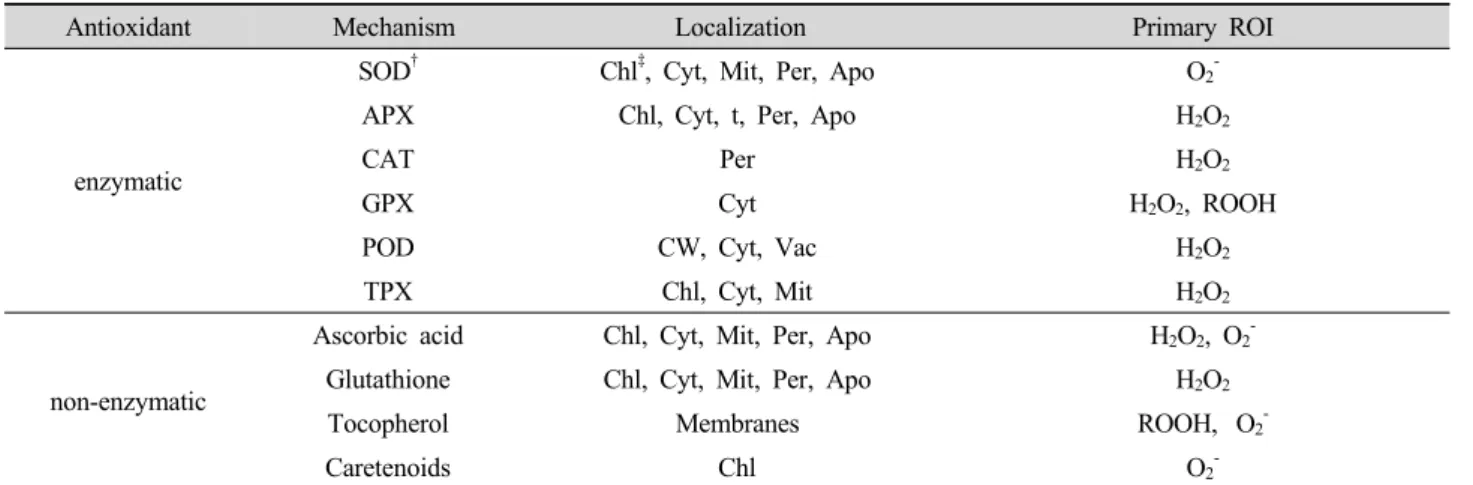
Table 1. Enzymatic- and non-enzymatic-antioxidants found in plants.

Antioxidant Mechanism Localization Primary ROI

enzymatic

SOD

Chl

, Cyt, Mit, Per, Apo O

2-

APX Chl, Cyt, t, Per, Apo H

2

O

2

CAT Per H

2

O

2

GPX Cyt H

2

O

2

, ROOH

POD CW, Cyt, Vac H

2

O

2

TPX Chl, Cyt, Mit H

2

O

2

non-enzymatic

Ascorbic acid Chl, Cyt, Mit, Per, Apo H

2

O

2

, O

2-

Glutathione Chl, Cyt, Mit, Per, Apo H

2

O

2

Tocopherol Membranes ROOH, O

2-

Caretenoids Chl O

2-

SOD (superoxide dismutase), APX (ascorbate peroxidase), CAT (catalase), GPX (glutathione peroxidase), POD (peroxidases), TPX (thioredoxin peroxidase)

Chl (chloroplast), Cyt (cytosol), Mit (mitochondria), Per (peroxisome), Apo (apoplast), CW (cell wall), Vac (vacuole)

저온과 같은 환경 스트레스 하에서 활성산소종이 과다하게 생성될 때 광화학계 I과 II가 손상되는데, 이때 발생한 여기 에너지는 산소분자에 전달되어 H

2

O

2

, O

2-

및 OH

-

등과 같 은 유해 활성산소종이 생성된다(Prasad, 1994; Rivero, 2003; Mittler et al., 2004). 식물은 활성산소종에 대하여 효소적 및 비효소적 항산화체계를 갖고 있는데 항산화 효 소로 superoxide dismutase(SOD, EC.1.15.1.1), peroxidase (POD, EC.1.11.1.7), catalase(CAT, EC.1.11.1.6), glutathione peroxidase(GPX, EC.1.11.1.12), ascorbate peroxidase (APX, EC.1.11.1.11) 및 glutathion reductase(GR, EC.1.6.4.2) 있으며, 비효소적 항산화 대사물질로 아스코르브산, 글루 타티온, 페놀화합물, α-토코페놀, 카로티노이드, 플라본 등이 있다(Anderson. 1994; Davies, 1995; Noctor and Foyer, 1998).

(1) Superoxide dismutase(SOD, EC.1.15.1.1) SOD는 산소분자로부터 한 개의 전자가 환원되어 생성되 는 superoxide anion radical(O

2-

)을 제거시키는 작용 (2O

2-

+ 2H

+

→ H

2

O

2

+ O

2

)을 하는 효소로서 활성산소종에 대한 방어작용을 하는 대표적인 활성산소 저해제이다 (Bannister et al., 1987). 금속이온과의 결합형태에 따라 Fe-SOD, Mn-SOD 및 Cu/Zn-SOD가 존재하며(Bowler et al., 1992), 식물에서 주로 Cu/Zn-SOD와 Mn-SOD가 존재하는데, Cu/Zn-SOD는 세포질, 엽록체, 미토콘드리 아, 퍼록시좀 및 글라이옥시좀 등에 존재하며(Bowler et al., 1992; Longa et al., 1994; Alscher, 2002), Mn-SOD

는 미토콘드리아 막에 존재하고(Bowler et al., 1994), Fe-SOD는 매우 드물다(Duke and salin, 1985; Bannister et al., 1987). 저온과 건조 등의 다양한 환경에 대한 식물 의 SOD 활성증가는 많은 작물에서 보고되었으며(Walker and Mckersie, 1993; Wang, 1996; Shen et al., 1999;

Kang et al, 2007), 특히 유전자 조작을 통해 SOD의 높은 활성산소 제거능 등 각종 생리장해에 대한 식물내성의 생 리적 토대를 제공하고 있음이 입증되었다(McKersie, 1993;

Bowler et al., 1994).

(2) Peroxidase(POD, EC.1.11.1.7)

식물체내 POD의 주된 역할은 저온 등의 환경 조건에 의 해 활성이 증가된 SOD에 의해서 생성되는 과산화수소를 물분자와 산소분자로(2H

2

O

2

→ O

2

+ 2H

2

O) 분해함으로써 과다한 활성산소종에 의한 피해를 감소시키는 것으로 알려 져 있다(Graham and Patterson, 1982; Salin, 1991;

Anderson et al., 1995; Kang et al., 1998; Lee and Lee,

2000). POD는 주로 세포질, 액포 및 세포벽에 위치하며,

전자 공여체로 과이어콜(guaiacol)을 사용하여 세포 내에

서 조직의 리그린화, indole-3-acetic acid(IAA)의 분해,

에틸렌 생합성 및 병에 대한 방어 등과 같은 생리적 역할을

수행하는 경우가 있으며, 엽록체와 세포질에서 전자 공여

체로 아스코르브산염이나 시토크롬-C 등을 이용하여 세포

내에서 과산화수소의 분해에 관여한다(Chen and Asada,

1989; Asada, 1992; Kang et al., 2007).

(6)

(3) Catalase(CAT, EC.1.11.1.6)

CAT는 과산화수소의 분해반응(2H

2

O

2

→ O

2

+ 2H

2

O)을 촉매하는 효소로서 동물, 식물, 미생물 등 거의 모든 호기 성 세포에 존재한다(Jang et al, 1996). 식물에서 광호흡과 지방산의 산화과정에서 생성되는 H

2

O

2

를 포획/분해함으로 써 내재적·외재적 요인에 의해 발생하는 생리적 산화스트 레스에 대한 중요한 방어기능을 수행하고 있다. 또한 CAT 는 저온이나 고온 같은 제한된 환경에서 CAT활성의 영향은 중요한 요인 중 하나이며(Volk and Feirabend, 1989; Willekens et al., 1997; Matsumura et al., 2002; Sairam et al., 2002), 스트레스에 대한 지표 유전자로 알려져 있다(Zhao et al., 2006).

(4) Glutathion reductase(GR, EC.1.6.4.2) GR은 엽록체, 미토콘드리아, 세포질에 존재하며(Jimenez et al., 1998) 광합성작용의 명반응에서 생성된 NADPH의 존재 하에서 산화형의 glutathione(GSSG)를 glutathione(GSH) 으로의 환원시키는 효소이고(Asada, 1984), 아스코르브산 의 생성을 촉진하는 효소로서 글루타티온과 아스코르브산 대사작용에 중요한 역할을 하는 ascorbate peroxidase(APX) 의 활성을 촉진시킨다(Foyer et al., 1997). 또한 각종 스트 레스에 대한 방어기작 중polyphenol oxidase(PPO, EC1.

14.18.1)은 tyrosinase, cresolase, catecholase, catechol oxidase 등으로 불러지며(Macheix et at., 1991), 페놀화 합물을 산화시켜 항균물질인 퀴논을 생성하데 관여하고 (Nicolas et al., 1994), 리그닌화에 관여하여 세포벽을 단 단하게 만들어 저온의 내성을 증진시킨다(Sommer et al., 1994). 결국 식물체 내 항산화물질의 증가는 저온에 의해 생성된 활성산소종을 중화 또는 불활성화하여 저온에 대한 피해를 감소시킨다(Prasad, 1997; Walker and Mckersie, 1993).

II. 결 론

최근 잦은 기상이변으로 인해 영농현장의 저온장해 발생 빈도가 증가는 작물의 동화물질 합성감소와 양분흡수를 억 제하여 결국 작물생육과 수량을 현저하게 감소시키고 있는 실정이다. 단기간의 저온장해는 수용성 당의 축적과 같은 탄수화물 대사이상, 뿌리 내 질소축적과 증산감소에 따른 양분흡수 및 활성산소종의 급격한 증가에 따른 활성산소

제거를 위한 항산화 대사기능의 현저한 증가 등이 일어나 작물의 저온장해에 대한 저항성을 유도하지만, 장기간의 저온장해는 작물 전체적인 생리대사의 교란을 유발하여 생 육감소를 동반한 세포의 괴사와 작물고사를 초래한다. 본 논문에서는 식물이 저온장해에 노출되었을 때 일어나는 양 분흡수, 탄수화물 대사 및 방어물질 변화를 고찰함으로써, 이를 바탕으로 영농현장에서 활용할 수 있는 저온장해 지 표물질의 선발과 저온장해 발생 시 최적 양분관리방안을 모색하기 위한 기초자료를 제공한다.

감사의 글

본 논문은 농촌진흥청 국립농업과학원 시험연구사업 “온 도변화에 따른 작물영양관리 기술개발”시험과제(과제번 호: PJ008596)에 의해 이루어진 것임.

참 고 문 헌

Ackerson RC. 1981. Osmoregulation in cotton in response to water stress Ⅱ. Leaf carbohydrate status in relation to osmotic adjustment. Plant Physiol. 67:479-483.

Ait Barka E. Audran JC. 1996. Reponse des vignes champeroixes aux temperatures negatives: effet d’un refroidissement controle sur les reserves glucidiques du complexe gemmaire avant et au cours du de bourrement. Can. J. Bot. 74:

492-505.

Alscher RG. Erturk N. Heath LS. 2002. Role of superoxide dismutases (SODs) in controlling oxidative stress in plants.

J. Exp. Bot. 53(372):1331-1341.

Anderson MD, Prasad TK. Stewart CR. 1995. Changes in isozyme profiles of catalase, peroxidase, and glutathione reductase during acclimation to chilling in mesocotyls of maize seedlings. Plant Physiol. 109:1247-1257.

Anderson MD. Prasad TK. Martin DA. Stewart CR. 1994.

Differential gene expression in chilling acclimated maize seedlings and evidence for the involvement of abscisic acid in chilling tolerance. Plant Physiol. 105:331-339.

Asada K. 1984. Chloroplast : formation of active oxygen and its scavenging. Methods in Enzymol. 105:422-429.

Asada K. 1992. Ascorbate peroxidase : A hydrogne peroxide- scavenging enzyme in plants. Plant Physiol. 85:235-241.

Bailly C, Benamar A. Corbineau F. Dome D. 1996. Changes in malondialdehyde content and in superoxide dismutase, catalase and glutathione reductase activities in sunflower seed as related to deterioration during accelerated aging.

Physio. Plant 97:104-110.

Bannister JV. Bannister WH. Rotilio G. 1987. Aspects of the

structure, function, and applications of superoxide dismutase.

(7)

CRC Crit. Rev. Biochem. 22:111-180.

Bassiri-Rad H. 2000. Kinetics of nutrient uptake by roots:

responses to global change. New Phytol. 147:155-169.

Bohnert HJ. Sheveleva E. 1998. Plant stress adaptations- making metabolism move. Curr. Opin. Plant Biol. 1:267-274.

Bowler C, Van Montagu M. Inze D. 1992. Superoxide dismutases and stress tolerance. Annu. Rev. Plant Physiol.

Plant Mol. Biol. 43:83-116.

Bowler C, an Camp W, van Montagu M. Inze D. 1994.

Superoxide dismutase in plant. CRC Crit. Rev. Plant Sci.

12:199-218.

Catala R. Santos E. Alonso JM. Ecker JR. Martinez- Zapater JM. Salinas J. 2003. Mutations in the Ca

2+

/H

+

transporter CAX1 increase CBF/DREB1 expression and the cold-acclimation response in Arabidopsis. Plant Cell. 15:

2940-2951.

Chen GX. Asada K. 1989. Ascorbate peroxidase in tea leaves:

Occurrence of two isozymes and the differences in their enzymatic and molecular properties. Plant Cell Physiol.

30:987-998.

Choi HO. Lee JH. 1976. Studies on low temperature injury at each growth stage in rice plant. J. Korean Soc. Crop Sci.

21:203-210.

Clarkson DT. 1986. Root structure and sites on ion uptake. In Waisel (ed.). Plant roots: the hidden half. Dekker, New York. 417-453.

Copper D. Clarkson DT. 1989. Cycling of amino-nitrogen and other nutritients between shoot nd roots in cereals. J. Exp.

Bot. 40:753-762.

Couee I. Sulmon C. Gouesbet G. Amrani AE. 2006.

Involvement of soluble sugars in reactive oxygen species balance and responses to oxidative stress in plants. J Exp.

Bot. 57:449-459.

Davies K. 1995. Oxidative stress : The paradox of aerobic life, pp1-32. in : C.Rice-Evans, B. Halliwell, and G.G. Lunt (eds.).

Free radicals and oxidative stress : Environment, drugs and food additives. Biochem. Soc. Symp. 61, Portlant Press, London, UK.

Du L. Poovaiah W. 2005. Ca

2+

/calmodulin is critical for brassinosteroid biosynthesis and plant growth. Nature.

437:741-745.

Duke MV. Salin ML. 1985. Purification and characterization of aniron-containing superoxide dismutase froma eukaryote, Ginko biloba. Arch Biochem Biophys. 243:305-314.

FAO. 2001. Climat variability and change; Achallenge for sustainable agricultural production. Committee on Agriculture, Sixteenth Session Report, 26-30 March, Rome, Italy.

FAO. 2004. Impact of climate change on agriculture in Asia and the Pacific. Twenty-seventh FAO Regional Conference for Asia and the Pacific. Beijing, china, 17-21 May.

Fernandez O. Theocharis A. Bordiec S. Feil R. Jacquens L.

Clement C. Fontaine F. Ait Barka E. 2012. Burkholderia phytofirmans strain PsJN acclimates grapevine to cold by modulating carbohydrates metabolism. Mol Plant Microbe

Interact 25:496-504.

Foyer CH. Lopez-Delgado H. Dat J.F. Scott I.M. 1997.

Hydrogen peroxide and glutathione associated mechanism of acclimatory stress tolerance and signalling. Physiol Plant.

100:241-254.

Furbank RT Foyer CH. Walker DA. 1987. Regulation of photosynthesis in isolated spinach chloroplasts during orthophosphate limitation. Biochim. biophys. Acta. 894:552-561.

Graham D. Patterson BD. 1982. Responses of plants to low non-freezing temperatures: Proteins metabolism, and acclimation. Annu. Rev. Plant Physiol. 33:347-372.

Green DG. Ratzlaff CD. 1975. An apparent relationship of soluble sugars with hardiness in Winter wheat varieties.

Can. J. Bot. 53:2198-2201.

Greiner S, Rausch T. Sonnewald U. Herbers K. 1999. Ectopic expression of a tobacco invertase inhibitor homolog prevents cold induced sweetening of potato tubers. Nature biotechnol. 17:708-711.

Hekneby M. Antolin MC. Sanchez-Diaz M. 2006. Frost resistance and biochemical changes during cold acclimation in different annual legumes. Environ Exp. Bot. 55:305-314.

Hetherington SE. He J. smillie RM. 1989. Photoinibition at low temperature in chilling-sensitive and resistant plant.

Plant Physiol. 90:1609-1615.

Hori Y. Arai K. Toki T. 1970. Studies on the effects of root temperature and its combination with air temperature on the growth and nutrition of vegetable crops. II. Carrot, celery, pepper, grafted cucumber, and cucurbit usd as stocks for cucumber. Bull. Hort. Res. Sta. Japan. Ser. A. 9: 189-219.

Hubbard NL. Huber SC. Pharr DM. 1989. Sucrose phosphate synthase and acid invertase as determinants of sucrose con- centration in developing muskmelon (Cucumis melo L.) fruits.

Plant Physiol. 91:1527-1534.

Jang CP. Gyung HH. Kim S.W. Park IH. Liu JR. Kwak SS.

1996. Comparison of catalase and other antioxidant enzyme activities in various plant cell lines. Kor J. Plant Tissue Culture 23(3):157-160.

Jimenez A. Hernandez JA. Pastori G. del Rio LA. Sevilla F.

1998. Role of the ascorbate-glutathione cycle of mitochondria and peroxisomes in the senescence of pea leaves. Plant Physiol. 118:1327-1335.

Kang KS. Lim CJ. Han TJ. Kim JC. Jin CD. 1998. Activation of ascorbate-glutathione cycle in Arabidopsis leaves in responses to aminotriazol. J. Plant Biol. 41:155-161.

Kang NJ. Cho MW. Rhee HC. Choi YH. Um YC. 2007.

Differential Responses of antioxidant enzymes on chilling and drought stress in tomato seedlings (Lycopersicon esculentum L.). J. Bio-Environment Control 16(2):121-129.

King AI. Joyce DC. Reid MS. 1988. Role of carbohydrates in diurnal chilling sensitivity of tomato seedlings. Plant Physiol.

86:764-768.

Kishitani S. Watanabe K. Yasuda S. Arakawa K. Takabe T. 1994.

Accumulation of glycinebetanine during cold accumulation

and freezing tolerance in leaves of winter and spring barley

(8)

plants. Plant Cell Environ. 17:89-95.

Knight H. Brandt S. Knight MR. 1998. A history of stress alters drought calcium signalling pathways in Arabidopsis. Plant J. 16:681-687.

Kramer PJ. 1983. Water relations of plants. Academic Press, New York.

Krasensky J. Jonak C.. 2012. Drought, salt, and temperature stress induced metabolic rearrangements and regulatory networks. J. Exp. Bot. 63(4):1593-1608.

Labate CA. Leegood RC. 1988. Limitation of photosynthesis by changes in temperature. Factors affecting the response of carbon dioxide assimilation to temperature in barley leaves. Planta. 173:519-527.

Lee DH. Lee CB. 2000. Chilling stress-induced changes of antioxidant enzymes in the leaves of cucumber: In gel enzyme activity assays. Plant Sci. 159:75-85.

Lee EH. Kim BY. Lee KD. Lee JW. Kwon YS. 1998. Nitrate content and activities of nitrate redctase and glutamine synthetase as affected by temperatue and pH of nutrient solution in leaf lettuce and water dropwort. Kor J. Soc.

Hort. Sci. 39:157-160.

Leegood RC. Furbank RT. 1986. Stimulation of photosynthesis by 2% oxygen at low temperatures is restored by phosphate. Planta. 168:84-93.

Lester GE. Dunlap JR. 1985. Physiological changes during development and ripening of ‘Perlita’ muskmelon fruits.

Scientia Hort. 26:323-331.

Lineberger RD. Steponkus PL. 1980. Cryoprotection by glucose and raffinose to chloroplast thylakoids. Plant Physiol.

65:298-304.

Lojkowska E. Holubowska M. 1989. changes of the lipid catabolism in potato tubers from cultivars differing in susceptibility to autolysis during the storage. Potato Res.

32:463-470.

Longa AA. Del Rio LA. Palma JM. 1994. superoxide dismutase of chestnut leaves, Castanea sativa: Characterization and study of their involvement in natural leaf senescence. Plant Physiol. 92:227-232.

Lowell CA. Tomlinson PT. Koch KE. 1989. Sucrose metabolizing enzymes on transport tissues and adjacent sink structures in developing citrus fruit. Plnat Physiol. 90: 1394-1402.

Lyons JM. 1973. Chilling injury in plants. Annu Rev Plant Physiol. Plant Mol. Biol. 24:445-466.

Macheix JJ. Sapis JC. Fleuriet A. 1991. Phenolic compounds and polyphnenoloxidase in relation to browning in grapes and wines. Crit. Rev. Food Sci. Nutr. 30:441-486.

Mackay AD. Barber SA. 1984. Soil temperature effects on root growth and phosphorous uptake by com. Soil Sci. Soc.

Amer. J. 48:818-823.

Marschner H. 1995. Mineral nutrition of higher plants. London:

Academic Press.

Matsumura T. Tabayashi N. Kamagata Y. Souma C. Saruyama H. 2002. Wheat catalase expressed in transgenic rice can improve tolerance against low temperatures stress. Physiol.

Plant 116:317-327.

Matteucci MD. Angeli S. Errico S. LamannaR R. Perrotta G.

Altamura MM. 2011. Cold affects the transcription of fatty acid desaturases and oil quality in the fruit of Olea europaea L. genotypes with different cold hardiness. J.

Exp. Bot. 62:3403-3420.

McKersie, BD. Leshem YY. 1994. Stress and stress coping in cultivated plants. Kluwer Academic Publishers. Netherlands.

79-103.

McKersie BD. Chen YR. De Beus M. Bowler SR. Inze D.

Halluin K. Botterman J. 1993. Superoxide dismutase enhances tolerance of freezing stress in transgenic alfalfa (Medicagol sativa L). Plant Physiol. 103:1155-1163.

Menzel A. 2000. Trends in phenological phases in Europe between 1951 and 1996, International Joumal of Biome- teorology. 44:76-81.

Mittler R. Vanderauwera S. Gollery M. Breusegem FV. 2004.

Reactive oxygen gene network of plants. Tre. Plant Sci.

9:490-498.

Nam, JH. Kang WH. Kim IS. 2001. Effect of CaCl

2

and sucrose treatments on freezing tolerance of chinese cabbage. J. Kor. Soc. Hort. Sci. 42(6):695-698.

Nicolas JJ. Richard F. Goupy P. Amiot MJ. Auber SY. 1994.

Enzymatic browning reactions in apple and apple products.

Crit. Rev. Food SCi. Nutr. 34:109-157.

Noctor G. Foyer CH. 1998. Ascorbate and glutathione: Keeping active oxygen under control. Annu. Rev. Plant Physiol.

Plant Mol. Biol. 49:249-279.

Pammenter NW. Loreto F. Sharkey TD. 1993. End product feedback effects on photosynthetic electron transport.

Photosynth. Res. 35:5-14.

Patterson BD. Murate T. Graham D. 1976. Electrolyte leakage induced by chilling in Passiflora species tolerant to different climates. Austral. J. Plant Physiol. 3:435-438.

Patton AJ. Cunningham SM. Volenec JJ. Reicher ZJ. 2007.

Differences in freeze tolerance of zoysiagrasses: II. Carbo- hydrates and proline accumulation. Crop Science Society of America, Madison.

Perras M. Sarhan F. 1984. Energy state of spring and winter wheat during cold hardening. Soluble sugars and adenine nucleotides. Plant Physiol. 60:129-132.

Poirier Y. Bucher M. 2002. Phosphate transport and homeostasis in Arabidopsis. In: Somerville CR, Meyerowitz EM, eds.

The Arabidopsis book. Rockville, MD: The American Society of Plant Biologists, 1-35.

Powles SB. 1984. Photoinhibition of photosynthesis induced by visible light. Annu. Rev. Plant Physiol. 35:15-44.

Prasad TK. 1997. Role of catalase in inducing chilling tolerance in pre-emergent maize seedlings. Plant Physiol. 114:1369- 1376.

Prasad TK. Anderson MD. Stewart CR. 1994. Acclimation, hydrogen peroxide, and abscisic acid protect mitochondria against irreversible chilling injury in maize seedlings. Plant Physiol.

105:619-627.

(9)

Raghothama KG. 1999. Phosphate acquisition. Annual Review of Plant Physiol. Plant Mol. Biol. 50:665-693.

Raison JK. Lyons JM. 1986. Chilling injury a plea for uniform terminology. Plant Cell Environ 9:685-686.

Ranwala AP. Iwanami SS. Masuda H. 1991. Acid and neutral invertase in the mesocarp of developing muskmelon (Cucumis melo L. cv. Prince) fruit. Plant Physiol. 96:881-886.

Rivero RM. Ruiz JM. Sanchez E. Romero L. 2003. Does provide tomato plants and advantage against H

2

O

2

production under conditions of thermal shock. Plant Physiol. 117:44-50.

Ruelland E. Zachowski A. 2010. How plants sense temperature.

Environ Exp. Bot. 69:225-232.

Ruth GN., and U. Kafkafi. 1980. Root temperature and per- centage NO

3

/NH

4+

effect on tomato development. Nutrients composition of tomato plants. Agron. J. 72:762-766.

Sairam KR., K. Veerabhadra Rao, and GC. Srivastava. 2002.

Differential response of wheat genotypes to long term salinity stress in relation to oxidative stress, antioxidant activity and osmolyte concentration. Plant Sci. 163: 1037-1045.

Salin ML. 1991. Chloroplast and mitochondrial mechanism for protection against oxygen toxicity. Free Radic. Res.

Commun. 12:851-858.

Sanders D. Pelloux J. Brownlee C. Harper JF. 2002. Calcium at the crossroads of signaling. Plant Cell 14 (Suppl):

S401-S417.

Sangwan V. Foulds I. Singh J. Dhindsa RS. 2001. Cold-activation of Brassica napus BN115 promoter is mediated by structural changes in membranes and cytoskeleton, and requires Ca

2+

influx. Plant J. 27:1-12.

Schaffer AA. Aloni B. Fogelman E. 1987b. Sucrose me- tabolism and accumulation in developing fruit of Cucumis.

Phytochemistry. 26:883-1887.

Schaffer AA. Sagee O. Goldschmidt EE. Goren R. 1987a.

Invertase and sucrose synthase activity, carbohydrate status and endogenous IAA levels during citrus leaf devel- opment. Plant Physiol. 69:151-155.

Seo PJ. Kim MJ. Park JY. Kim SY. Jeon J. Lee YH. Kim J.

Park CM. 2010. Cold activation of a plasma membrane tethered NAC transcription factor induces a pathogen resistance response in Arabidopsis. Plant J. 61: 661-671.

Sharkey TD. Stitt M. Heineke D. Gerhardt R. Raschke K. Heldt HW. 1986. Limitation of photosynthesis by carbon metabolism. Ⅱ. O

2

-insensitive CO

2

uptake results from limitations of triose phosphate utilization. Plant physiol.

81:1123-1129.

Shen W. Nada K. Tachibana S. 1999. Effect of cold treatment on enzymic and nonenzymic antioxidant activities in leaves of chilling tolerant and chilling sensitive cucumber cultivars.

Japan. J. Soc. Hort. Sci. 68:967-973.

Sohn YG. Lee YH. Jung JK. Nam JS. Lee JJ. 2006. Alteration of antioxidativ system to chilling stress in tow weedy rice(Oryza stiva L.) germplasms contrasting in sensitivity.

Kor. J. Weed Sci. 26(4):397-406.

Sommer A. Neeman F. Steffens JC. Mayer AM. Harel E. 1994.

Import, targeting and processing of a plant polyphenol oxidase. Plant Physiol. 105:1301-1311.

Tabaei-Aghdaei SR. Pearce RS. Harrison P. 2003. Sugars regulate cold-induced gene expression and freezing-tolerance in barley cell cultures. J. Exp. Bot. 54:1565-1575.

Tao F. Yokozawa M. Xu Y. Hayashi Y. Zhang Z. 2006. Climat changes and trends in phenology and yields of field crops in China, 1981-2000. Agricultural and Forest Meteorology 138:82-92.

Tomlinson PT. Duke ER. Nolte KD. Koch KE. 1991. Sucrose synthase and invertase in isolated vascular bundles. Plant Physiol. 97:1249-1252.

Udagawa Y. Ito T. Gomi K. 1989. Effercts of root temperature on some physiological and ecological characteristics of straqberry plants ‘Reiko, grown in nutrient solution. Japan. J.

Soc. Hort. Soc. 58:627-663.

Uemura M. Steponkus PL. 1999. Cold acclimation in plants:

relationship between the lipid composition and the cryostability of the plasma membrane. J. Plant Res. 112:

245-254.

Volk S. Feirabend J. 1989. Photoinactivation of catalase at low temperature and its relevance to photosynthetic and peroxide metabolism in leaves. Plant Cell. Env. 12:701-712.

Walker MA. Mckersie BD. 1993. Role of ascorbate-glutathion antioxidant system in chilling resistance of tomato. J. Plant Physiol. 141:234-239.

Wang CY. 1996. Temperature preconditioning affetcts ascorbate antioxidant system in chilled zucchini squash. Postharvest Biol. Technol. 8:29-36.

Wanner LA., and Junttila. 1999. Cold induced freezing tolerance in Arabidopsis. Plant Physiol. 120:391-400.

Welling A. Palva ET. 2006. Molecular control of cold accli- mation in trees. Physiol. Plant. 127:167-181.

Willekens H. Chamnogpol S. Davey M. Schravdner M.

Langebartels C. Van Montagu C. Inze D. Van Camp W.

1997. Catalase is a sink for H2O2 and is indispensable for stress in C3 plants. EMBO J. 16:4806-4816.

Zeng Y. Yu J. Cang J. Liu L. Mu Y. Wang J. Zhang D. 2011.

Detection of sugar accumulation and expression levels of correlative key enzymes in winter wheat (Triticum aestivum) at low temperatures. Biosci. Biotechnol. Biochem.

75:681-687.

Zhang S. Jiang H. Peng S. Korpelainen H. Li C. 2011.

Sex-related differences in morphological, physiological, and ultrastructural responses of populus cathayana to chilling. J.

Exp. Box. 62:675-686.

Zhao FY. Wang XY. Zhao YX Zhang H. 2006. Transferring the

suaeda salsa glutathione S-transferase and catalase gene

enhances low temperature stress resistance in transgenic

rice seedlings. J. Plant Physiol. Mol. Biol. 32:231-238.

수치

Fig. 2. A Conceptual diagram depicting relationships between plant and soil factors that control the availability and uptake of mineral  nutrients
Fig. 3. Schematic overview of starch, fructan, sugar, and polyol metabolism. Plants with enhanced or reduced activity of the indicated  enzymes show altered tolerance to abiotic stress
Table 1. Enzymatic- and non-enzymatic-antioxidants found in plants.

참조

관련 문서

It considers the energy use of the different components that are involved in the distribution and viewing of video content: data centres and content delivery networks

After first field tests, we expect electric passenger drones or eVTOL aircraft (short for electric vertical take-off and landing) to start providing commercial mobility

1 John Owen, Justification by Faith Alone, in The Works of John Owen, ed. John Bolt, trans. Scott Clark, "Do This and Live: Christ's Active Obedience as the

Mindfulness-based stress reduction in relation to quality of life, mood, symptoms of stress and levels of cortisol, dehydroepiandrosterone sulfate (DHEAS)

This study investigated the differences of dance students' emotion regulation strategies and emotional responses according to dance genre and dance careers in

In this review, an overview is given on the last development of catalytic methods for the preparation of substituted furans from carbohydrates and ensuing polymers.. The

O.(2011) The Effects of Aroma Self-Foot Reflex Massage on Stress and Immune Responses and Fatingue on Middle-Aged Women in Rural Areas Department of Nursing, Graduate School

According to the result of comparative study on nutrient components and antioxidant activity in Abelmoschus esculentus depending on drying methods amino