ABSTRACT
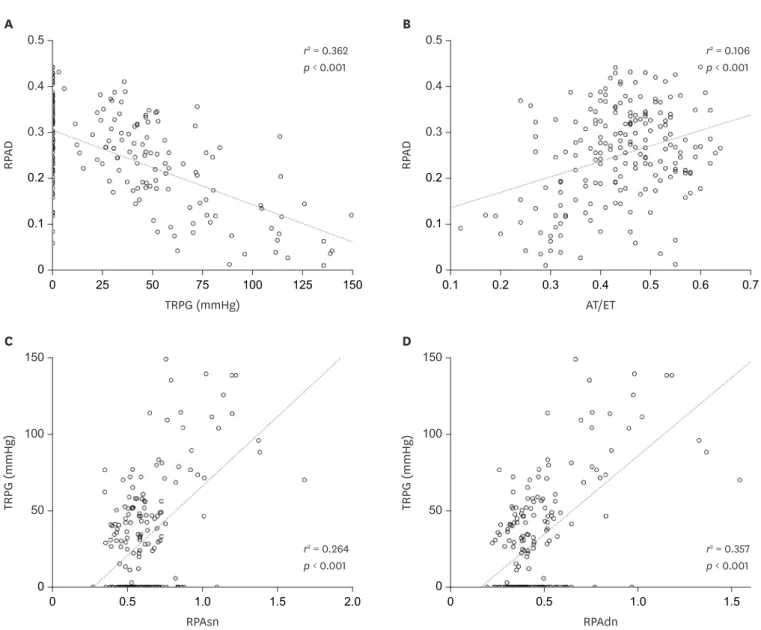
The right pulmonary artery distensibility (RPAD) index has been used in dogs with pulmonary hypertension (PH) caused by heartworm infection, myxomatous mitral valve disease, or patent ductus arteriosus. We hypothesized that this index correlates with the tricuspid regurgitation pressure gradient (TRPG) assessed by echocardiography and could predict survival in dogs with PH secondary to various causes. To assess this hypothesis, the medical records of 200 client-owned dogs at a referral institution were retrospectively reviewed. The RPAD index and the ratios of acceleration time to peak pulmonary artery flow (AT) and to the ejection time of pulmonary artery flow (ET) were recorded for each dog. The owners were contacted for follow-up assessments. The findings indicated that the RPAD index was correlated with the TRPG (R
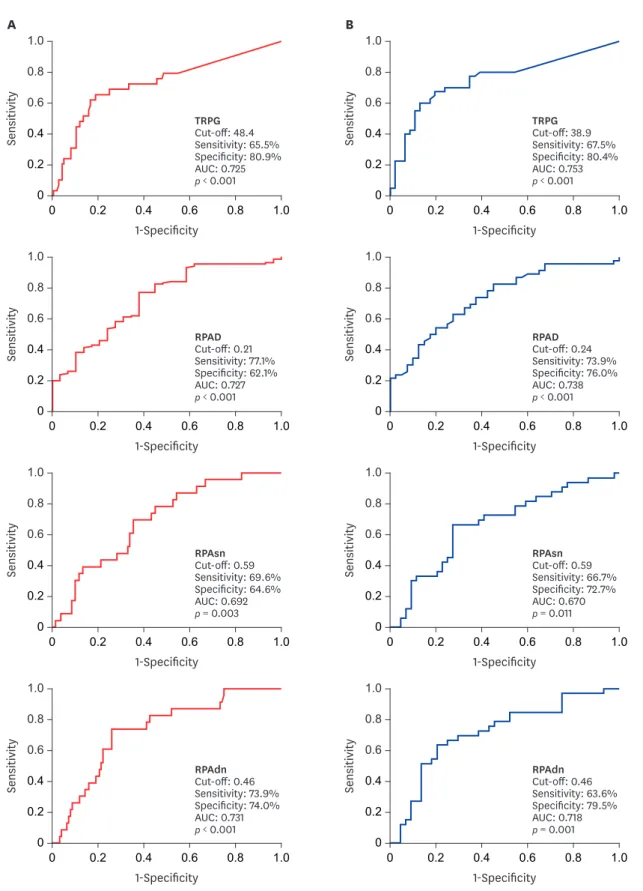
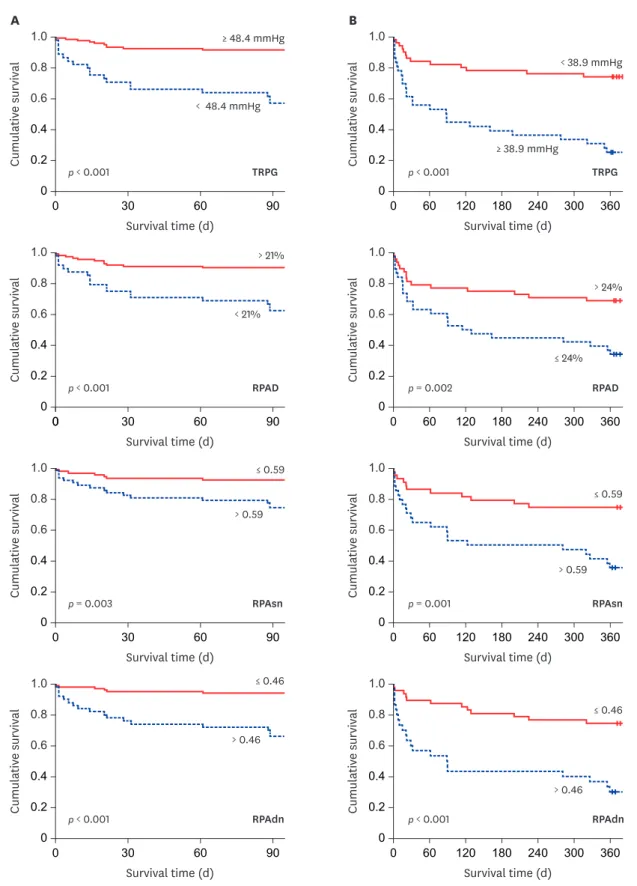
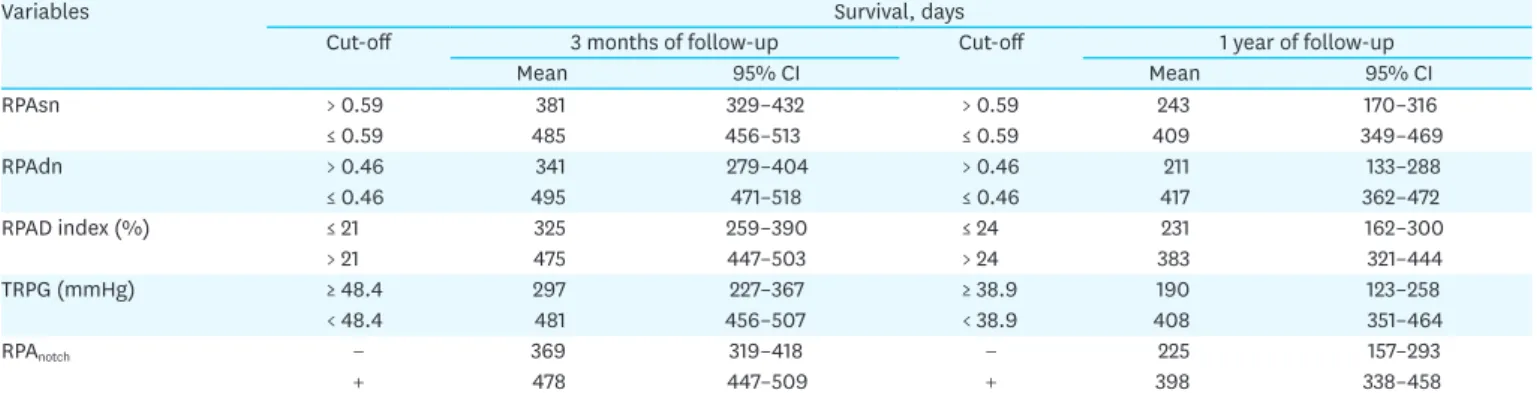
2= 0. 362, p < 0.001). The survival time was significantly shorter in dogs with an RPAD index ≤ 21% that were followed up for 3 months and in dogs with an RPAD index ≤ 24% that were followed up for 1 year. Thus, the RPAD index was correlated with the TRPG and could predict the clinical outcome in dogs with PH caused by various diseases. This index could be used to evaluate the severity of PH in dogs without tricuspid regurgitation.
Keywords: Dogs; pulmonary artery; echocardiography; outcome assessment
INTRODUCTION
Pulmonary hypertension (PH) is defined as increased pulmonary blood pressure [1]. The gold standard for pulmonary artery pressure measurement is right heart catheterization. However, this technique is invasive and requires general anesthesia, which is unacceptable for most owners and compromised patients [2]. Therefore, the diagnosis of PH in a veterinary clinic relies mainly on Doppler echocardiographic estimated pulmonary arterial systolic and diastolic pressure derived from the tricuspid regurgitation (TR) pressure gradient (TRPG) and pulmonary regurgitation (PR) pressure gradient, respectively [3]. A TRPG ≥ 36 mmHg is indicative of PH. In dogs with myxomatous mitral valve degeneration (MMVD), a TRPG ≥ 50 mmHg predicts a poor outcome [4]. When TR and PR are absent or unavailable, diagnosis of PH relies on echocardiographic findings, thoracic radiography, and clinical signs [5].
Original Article
Received: Feb 16, 2019 Revised: Apr 19, 2019 Accepted: May 20, 2019
*Corresponding author:
Shiun-Long Lin
Veterinary Medical Teaching Hospital, College of Veterinary Medicine, National Chung Hsing University, 250-1 Kuo Kuang Road, Taichung 40227, Taiwan.
E-mail: [email protected]
© 2019 The Korean Society of Veterinary Science
This is an Open Access article distributed under the terms of the Creative Commons Attribution Non-Commercial License (https://
creativecommons.org/licenses/by-nc/4.0) which permits unrestricted non-commercial use, distribution, and reproduction in any medium, provided the original work is properly cited.
ORCID iDs I-Ping Chan
https://orcid.org/0000-0002-2407-5088 Tung Hsueh
https://orcid.org/0000-0002-1664-6266 Shiun-Long Lin
https://orcid.org/0000-0003-1763-8767 Presentation
The study was presented as an ePoster at the 2018 American College of Veterinary Internal Medicine Forum, Seattle, WA, USA.
Conflict of Interest
The authors declare no conflicts of interest.
I-Ping Chan
1,2, Min-Chieh Weng
2, Tung Hsueh
1,2, Yun-Chang Lin
2, Shiun-Long Lin
1,2,*1
Veterinary Medical Teaching Hospital, National Chung Hsing University, Taichung 40227, Taiwan
2