48
대장균에 의한 요로감염과 숙주의 반응
단국대학교 의과대학 비뇨기과학교실 이 길 호
[Abstract]
Uropathogenic Escherichia coli Infection and Host Response
Gilho Lee
From the Department of Urology, College of Medicine, Dankook University, Cheonan, Korea
Urinary tract infections are a result of interactions between the uropathogen and the host. Successful infection of the urinary tract is determined in part by the virulence factors of the bacteria such as type 1 fimbriae and/or P fimbriae, the inoculum size, and the inadequacy of host defense mechanisms. Detection of microorganisms through microbe-associated molecular patterns by Toll-like receptors is crucial to trigger protective innate immunity. A rapid cytokine response was observed when Escherichia coli bacteria infected the epithelial cells with production of interleukin-1ß (IL-1ß), IL-6, and IL-8. These factors play a role in determining the damage to the urinary tract. (Korean J UTII 2007;2:48-52)
Key Words: Urinary tract infection, Host, E. coli
•교신저자:이길호, 단국대학교 의과대학 비뇨기과학교실 충남 천안시 안서동 산 29
Tel: 041-550-6630, Fax: 041-556-5024 E-mail: [email protected]
서 론
요로감염은 인간에 있어서 가장 흔한 질병 중 하나로 여성의 약 50%는 일생 동안 1회 이상 요로감염으로 치 료 받기도 한다. 또한 요로감염과 관련이 있다고 추정 되는 질환과 만성염증을 포함한다면 요로감염의 빈도는 기하 급수적으로 증가할 것으로 생각된다.
과거에는 주로 감염 균에 집중된 연구를 하였고, 특 히 균의 표현형 (phenotype)에 관하여 많은 연구가 이 루어졌다. 한 예를 들면 대장균의 경우 bacterial adhe- sion 연구로 P fimbriae, type 1 fimbriae, 운동성을 짐
작하는 flagella, 표피막 등의 연구가 많이 이루어져 균 의 표현형을 lipopolysaccharide (LPS:O), capsular (K), flagella (H) antigen (O:K:H serotype)으로 표기하였다.
또한 다양한 배지가 개발되어 필요한 성장 영양분에 따 라 균을 분류하기도 하였다.
하지만 지난 20년은 생물학 발전의 격변기였으며, 과 학자들은 많은 미생물의 유전자 염기서열을 해독하여 그 정보를 서버에 저장하고, 정보를 원하는 누구나 인 터넷을 이용하여 쉽게 접근하여 자신의 연구에 이용할 수가 있었다. 그 후 염기서열에 따른 유전자 표현형 연 구, mutagenesis에 의한 기능연구로 과학자들은 균 자 체를 연구하기 시작하였다.
하지만 같은 균일지라도 어떠한 종 (species)을 감염
시키는가에 따라 다양한 결과가 관찰되며, 같은 종이라
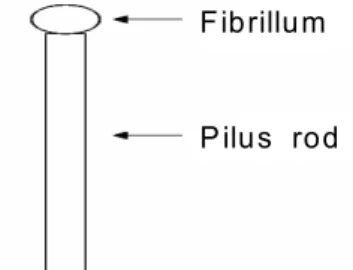
Fig. 1. High resolution quick freeze deep etch electron microscopic analysis of P fimbriae structure. Purified P pili demonstrate the P pilus fibrillar structure. From Proc Natl Natl Acas Sci USA 1995;92:2081-5.
할지라도 같은 균 감염에 대한 숙주의 반응은 모두 같 지 않음을 우리 모두 잘 알고 있는 사실이다. 즉 균 연 구만으로 전체적인 병인을 파악할 수가 없으며 감염 후 인간에게 관찰되는 현상을 설명하려면 감염 후 인간 자 체의 변화를 관찰할 수 있어야만 한다. 모든 자극 (insult) 후 인간 표현형의 변화는 일정한 법칙에 의해 발생하는데 그 법칙의 한가운데에 분자생물학의 기본적 인 법칙인 central dogma가 자리잡고 있다. 최근 들어 균에 대한 연구는 감염 후 인간의 다양한 반응 즉 분자 생물학적 입장에서 본 균-숙주 상호작용이 주된 연구로 자리잡고 있으며, 감염 균 특히 대장균과 방광 점막과 의 관계 연구가 많이 이루어지고 있다.
저자는 최근 많이 연구되고 있는 Uropathogenic E-coli (UPEC)에 의한 숙주 상호작용에 대해 기술하고 자 한다.
본 론
대장균이 어떠한 이유로 방광 내에 들어오면 숙주의 선천면역 (innate immunity)에 의해 혹독한 시련을 맞이 하게 된다. 균이 요로 점막에 부착하기 전에 수세 (washout)의 기전에 의해 희석 및 제거되기도 하고, 요 의 높은 삼투압, 체내의 defensin 등의 단백질 등에 의 해 사멸된다.
1대부분 실험동물에 균을 방광에 접종시키 면 감염 2시간 내 많은 균들은 수세 등의 기전을 통해 소변으로 방출되며 그 후 24시간 동안 점차적으로, 감 염 후 2-7일이 지나면 거의 모든 균이 체내에서 제거된 다. 하지만 균이 방광점막에 성공적으로 부착되면 균-숙 주 상호작용이 발생하며, 균의 종류에 따라 혹은 사람 에 따라 국소적인 염증반응과 감염된 세포의 탈락 및 사멸과정을 통해 세균이 성공적으로 제거되지만 일부에 서는 세균이 세포 안으로 성공적인 침투가 이루어지며, 세포 안에서 급격한 증식이나 전신적인 균 전파에 의한 전신적인 감염 증상을 표현하기도 한다. 또한 일부에 있어서는 제한적인 균의 증식으로 만성염증으로 진행되 기도 한다.
2,31. P fimbriae와 type 1 fimbriae
대장균은 P fimbriae와 type 1 fimbriae에 의해 숙주
의 수용기와 결합한다. P-fimbriae는 UPEC의 pap (pyelo- nephritis associated pili) 유전자의 산물로 Pap A, H, K, E, F, G 등 6개가 있다. 전자현미경 관찰에 의하면 끝 부위는 작은 fibrillum으로 구성되어 있으며, 아래 지 지대는 pilus rod로 구성되어 대장균 본체와 연결되어 있다 (Fig. 1).
4,5P-fimbriae의 끝 부위 즉 fibrillum은 숙주 점막의 Gal α1-4Galβ oligosaccharide receptor epitope에 결합한 다. P-fimbriae의 발현은 같은 UPEC라도 상변이 (phase variation)가 있으며 활성기 (On)/비활성기 (Off)를 거친 다.
6이런 반응은 deoxyadenosine methylase (Dam)과 leucine-responsive regulatory protein (Lrp) 등에 의해 조절을 받는다. 즉 어떤 환경에서 P-fimbriae가 발현이 되는가는 병원균-점막과의 상관관계에 매우 중요한 역 할을 한다. P-fimbria는 장과 요로에 생존하는 대장균에 서 모두 발현되는데 요로 상피세포에는 결합 배위자, 즉 TLR 4 (toll like receptor 4) 등이 있어 숙주의 반 응을 초래하지만 장의 경우 상기 수용기가 없고, 능 동적으로 장 상피세포의 NF-κB-dependent transcrip- tion mechanisms을 억제하여 P-fimbria에 의한 숙주반 응이 발현되지 않는다. 정리하면 균의 P-fimbria는 단순 히 존재하지만 장 상피세포에서 그 수용기가 없어 요로 감염의 특징적인 소견은 관찰되지 않는다.
Type 1 fimbriae는 병원성이 아닌 균 (commensal) 혹은 병원균 (UPEC) 모두에서 발현되며, fim 유전자에 서 만들어진다. 5개의 유전자 즉 Fim A, I, F, G, H가 알려지고 있으며, 방광점막과 결합은 주로 FimH가 이 행상피세포의 표피구조인 uroplakin Ia, Ib와 결합함으 로써 이루어진다.
7그 외 알려진 결합부위로는 Tamm-
Fibrillum
P ilus rod
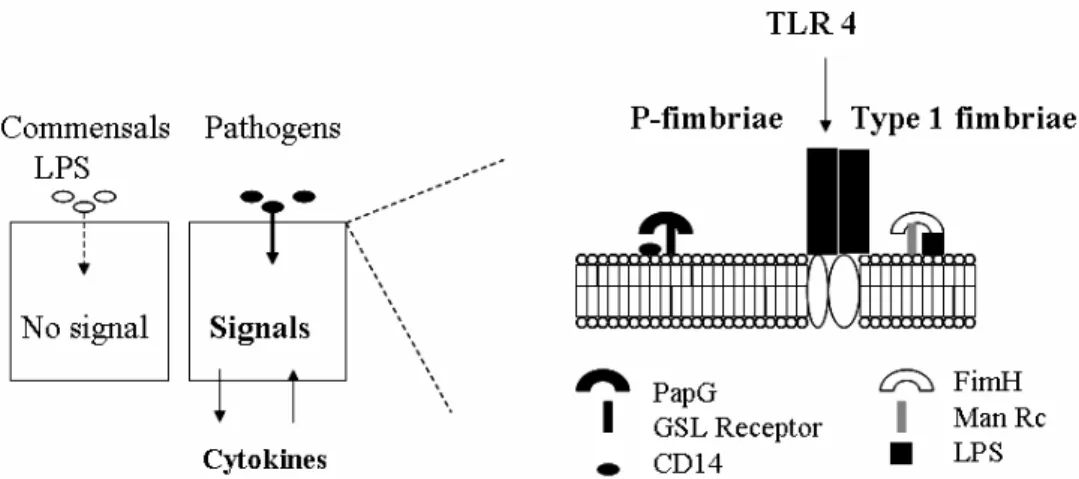
Fig. 2. Model for mucosal inflammation by pathogenic E. coli. (A) Pathogenic E. coli activate CD14-negative epithelial cells, whereas commensals do not. P fimbriated E. coli utilise glycosphingolipid recognition receptors and type 1 fimbriae bind to mannosylated glycoproteins. Both receptors are required to trigger TLR4-mediated signals and mucosal inflammation. From Eur J Immunol 2006;36:267-7. Fig. 1. High resolution quick freeze deep etch electron microscopic analysis of P fimbriae structure.
Purified P pili demonstrate the P pilus fibrillar structure. From Proc Natl Natl Acas Sci USA 1995;92:2081-5.
Horsfall protein, secretory IgA, CD48, laminin, colla- gen, macrophage 등이 있다. 여러 가지 환경이나 자극, 그리고 histone-like non-structural protein 등에 의해 on/off 조절을 받는다.
32. 병원균 인식 및 숙주반응 유도
P-fimbriae와 type 1 fimbriae는 서로 다른 세포 막 수용기와 다른 TLR 4 신호전달체계를 가진다 (Fig. 2).
P fimbriae는 glycosphingolipids (GSL)의 구성성분인 globoseries의 Gala1-4Galb receptor epitope와 결합하여 lipopolysaccharide (LPS)와 직접적인 영향 없이도 TLR 4와 결합하고 세포질 안으로 신호전달을 하는데 이 과 정에 Ser/Thr protein kinase 및 ceramide가 중요한 역 할을 한다. 하지만 type 1 fimbriae는 glycoprotein의 mannose residues와 결합하고 tyrosine protein kinase와 LPS 경로를 거쳐 TRL 4와 결합한다. P-fimbriae는 무 증상 방광염 환자의 20%에서 발견되지만 신우신염 환 자의 90% 이상에서 발견되어 대표적인 pathogenecity island 이지만 type 1 fimbriae의 경우 commensal 균이 나 UPEC에서 90% 이상 발현된다.
신우신염을 야기하는 UPEC의 80%는 P-fimbriae를 가지고 있으며 인간의 요로 상피세포에 많이 발현되어 있는 GSL의 Galα1-4Galβ oligosaccharide receptor
epitope에 결합한다. 점막의 주요 구성성분인 GSL 혹은 mannosylated glycoprotein에 P-fimbriae 혹은 type 1-fimbriae가 결합되면 세균들이 공통으로 가지고 있는 분자생물학적 구조 (conserved microbial pattern: PAMPs 혹은 microbe associated molecular pattern: mamp 예를 들면 LPS 등)를 통해 같은 점막세포의 TLR 4의 수용 기의 leucine-rich repeat domain에 결합한다. 하지만 결 합 후 연속적으로 일어나는 반응은 세포의 종류에 따라 약간씩 틀린다. 예를 들면 macrophage나 myeloid cell 의 경우 세포 밖에서 LPS의 결합이 되면 CD14, MD2 가 결합되고, 이것에 의해 세포 면역에 중요한 TLR 4 의 dimerization 만들어진다. 이어서 세포 내에서는 MyD88과 TIR domain contraining adaptor protein (TIRAP), TRIF, TRAM와 결합한 후 IL-1R associated serine kinase 4 (IRAK-4)의 신호전달이 발생된다. 즉 이러한 과정에 한 부분의 결손이 있다면 상기 cascade 가 진행되지 못한다. 최근 연구에 의하면 CD14, MD-2 유전자가 발현되지 않는 human embryonic kidney cell 에 ceramide를 투여하면 TLR4-dependent cytokine이 분비되는데, 정확한 기전은 아래의 요로상피세포에서 자세히 기술하겠다.
요로상피점막에는 CD14가 없어 macrophage나 mye-
loid cell에서 관찰되는 LPS에 의한 반응은 잘 일어나지
않는다. 정확한 기전은 아직 알려지지 않지만 아마도
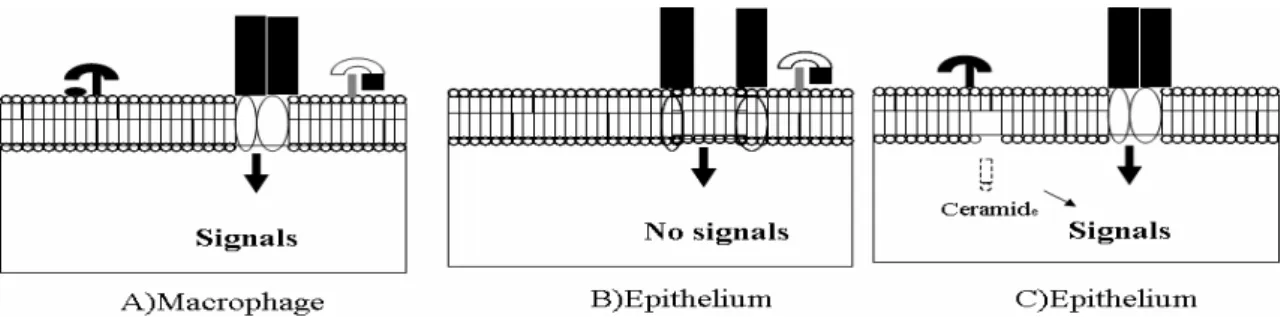
Fig. 3. TLR4 activation in macrophages and epithelial cells may involve different primary receptors. (A) LPS from gram-negative bacteria like the uropathogens activates macrophages via the CD14 receptor. LPS bound to LPS-binding protein (LPB) is catalytically transferred to CD14, and subsequently TLR4 is recruited as a coreceptor for signal transduction. (B) The human urothelium is CD14 negative, and uroepithelial cells respond poorly to soluble LPS. Still, chemokine responses are triggered by uropathogenic bacteria, and this process is enhanced by the fimbriae. Nonfimbriated bacteria are less virulent and fail to deliver an activating signal to the cells. (C) P fimbriae first bind their GSL receptor and then recruit TLR4 for transmembrane signaling and cell activation. In this way they overcome the LPS refractoriness of the uroepithelial cells, and activate a chemokine response.
From J Leukocyte Biol 2001;69:899-96Fig. 2. Model for mucosal inflammation by pathogenic E. coli. (A) Pathogenic E. coli activate CD14-negative epithelial cells, whereas commensals do not. P fimbriated E. coli utilise glycosphingolipid recognition receptors and type 1 fimbriae bind to mannosylated glycoproteins. Both receptors are required to trigger TLR4-mediated signals and mucosal inflammation. From Eur J Immunol 2006;36:267-7. Fig. 1. High resolution quick freeze deep etch electron microscopic analysis of P fimbriae structure. Purified P pili demonstrate the P pilus fibrillar structure. From Proc Natl Natl Acas Sci USA 1995;92:2081-5.
P-fimbriae가 세포막의 GSL 수용기와 결합하면 지질 세포막의 외부막을 구성하는 ceramide 같은 물질을 방 출한다. 이러한 ceramide에 의해 TLR 4를 dimerization 및 활성화되는 것으로 추정된다. 다시 부연하면 요로상 피세포에서는 CD14에 무관한 cascade가 존재한다. 즉 CD14, MD-2 등의 co-adaptor가 없어도 감염이 되면 일시적인 세포막의 변화와 이어지는 ceramide의 분비로 감염에 대응한다 (Fig. 3).
3,8-153. Cytokine 분비 및 살균
방광염이 생기면 오줌에 백혈구 수의 증가를 관찰할 수 있다. 즉 감염이 성공하면 우리 몸에서는 TLR 4 수 용기 등을 통하여 인체 내로 여러 신호를 보내는데 그 결과로 IL-6와 CXCL8 등의 cytokine이 분비된다. 그 중 상피세포에서 분비된 CXCL8이 백혈구를 모으는 중 요한 역할을 한다. 또한 CXCL8은 CXCR1, 2와 결합하 고 (murine에서는 MIP-2: macrophage inflammatory pro- tein2가 같은 역할) 결합된 CXCR1, CXCR2에 의해 세 포 간질에 유리된 백혈구가 세포 내로 이동되어 감염 균의 살균을 시행한다.
16,171) TLR4 발현 및 신호전달
TLR 4의 cascade가 일어나지 않는 C3H/HeJ-/- 쥐 나 Tlr4-/-의 쥐에 요로감염을 시키면 쥐들에서 요로 감염 증상이 없으며, 이때 요 중에 많은 수의 세균이 관찰된다. TLR 4는 염색체 9번 (9q32-33)에 위치해 있 으며, 세포 밖 수용체에는 bacterial common pattern을 인식할 수 있고, 세포 내의 구조는 다른 여러 adaptor들 이 접합할 수 있는 Toll/IL-1 수용체 (TIR) domain 구 조를 가진다.
18,19결 론
요로감염은 우리가 기존에 알고 있었던 것 보다 더
많이 연구되고 있으며, 특히 감염균뿐만 아니라 감염의
개체인 인간의 특이성 및 감염되고 난 후 요로 상피세
포의 변화, 반응 등이 집중적으로 연구되고 있다. 향 후
분자생물학적인 접근과 면역학적인 접근, 균 유전체 접
근을 통해 요로감염과 인체의 반응 및 감염세포와 살균
세포에 의한 자가 손상 기전이 증명되고 이를 응용한
치료가 개발될 것으로 생각된다.
REFERENCES
1. Janeway CA Jr, Travers P. Infection and innate immu- nity. In: Janeway CA Jr, Travers P, editors. Immuno- biology. The immune system in health and disease.
2nd ed. New York: Current Biology; 1996;9:1-25 2. 김건석, 김경도, 김민의, 김영곤, 김철성, 박종윤,
등. 요로감염의 병인론 (방어기전). In: 이길호, editor. 요로감염 II. 상부 요로감염 및 병원성요로 감염. 초판. 서울: 국진기획 2005;33-43
3. Bergsten G, Wullt B, Svanborg C. Escherichia coli, fimbriae, bacterial persistence and host response in- duction in the human urinary tract. Int J Med Micro- biol 2005;295:487-502
4. Jones CH, Pinkner JS, Roth R, Heuser J, Nicholes AV, Abraham SN, et al. FimH adhesin of type 1 pili is assembled into a fibrillar tip structure in the Ente- robacteriaceae. Proc Natl Acad Sci U S A 1995;92:
2081-5
5. Hull, RA, Gil RE, Hsu P, Minshew BH, Falkow S.
Construction and expression of recombinant plasmids encoding type 1 or D-mannose-resistant pili from a urinary tract infection Escherichia coli isolate. Infect Immun 1981;33:933-8
6. Hultgren SJ, Porter TN, Schaeffer AJ, Duncan JL.
Role of type 1 pili and effects of phase variation on lower urinary tract infections produced by Escherichia coli. Infect Immun 1985;50:370-7
7. Jones CH, Dodson K, Hultgren SJ. Structure, function, and assembly of adhesive P pili. In: Mobley LTH, Warren JW editors. Urinary tract infections. Molecular pathogenesis and clinical management. Washington DC: ASM Press 1996:175-219
8. Leffler H, Svanborg-Ede'n C. Chemical identification of a glycosphingolipid receptor for Escherichia coli at- taching to human urinary tract epithelial cells and ag- glutinating human erythrocytes. FEMS Microbiol Lett 1980;8:127-34
9. Hedlund M, Svensson M, Nilsson Å, Duan R, Svan- borg C. Role of the ceramide signalling pathway in cytokine responses to P fimbriated Escherichia coli. J Exp Med 1996;183:1-8
10. Frendeus B, Wachtler C, Hedlund M, Fischer H, Samuelsson P, Svensson M, et al. Escherichia coli P fimbriae utilize the Toll-like receptor 4 pathway for cell activation. Mol Microbiol 2001;40:37-51
11. Hedlund M, Frendeus B, Wachtler C, Hang L, Fischer H, Svanborg C. Type 1 fimbriae deliver an LPS- and TLR4-dependent activation signal to CD14-negative cells. Mol Microbiol 2001;39:542-52
12. Fischer H, Yamamoto M, Akira S, Beutler B, Svan- borg C. Mechanism of pathogen-specific TLR4 activa- tion in the mucosa: fimbriae, recognition receptors and adaptor protein selection. Eur J Immunol 2006;36:
267-77
13. Schilling JD, Martin SM, Hung CS, Lorenz RG, Hult- gren SJ. Toll-like receptor 4 on stromal and hema- topoietic cells mediates innate resistance to uropatho- genic Escherichia coli. Proc Natl Acad Sci USA 2003;
100:4203-8
14. Svanborg C, Bergsten G, Fischer H, Godaly G, Gus- tafsson M, Karpman D, et al. Uropathogenic Escheri- chia coli as a model of host-parasite interaction. Curr Opin Microbiol 2006;9:33-9
15. Samuelsson P, Hang L, Wullt B, Irjala H, Svanborg C. Toll-like receptor 4 expression and cytokine re- sponses in the human urinary tract mucosa. Infect Immun 2004;72:3179-86
16. Hang L, Haraoka M, Agace WW, Leffler H, Burdick M, Strieter R, et al. Macrophage inflammatory pro- tein-2 is required for neutrophil passage across the ep- ithelial barrier of the infected urinary tract. J Immunol 1999;162:3037-44
17. Otto G, Burdick M, Strieter R, Godaly G. Chemokine response to febrile urinary tract infection. Kidney Int 2005;68:62-70
18. Medzhitov R, Preston-Hurlburt P, Janeway CA Jr. A human homologue of the Drosophila Toll protein sig- nals activation of adaptive immunity. Nature 1997;
388:394-7
19. Poltorak A, He X, Smirnova I, Liu MY, Van Huffel C, Du X, et al. Defective LPS signaling in C3H/HeJ and C57BL/10ScCr mice: mutations in Tlr4 gene.
Science 1998;282:2085-8