• 검색 결과가 없습니다.

Rupture of Giant Superficial Femoral Artery Aneurysm in a Leukemic Patient Submitted to Chemotherapy

N/A
N/A
Protected

Academic year: 2021

Share "Rupture of Giant Superficial Femoral Artery Aneurysm in a Leukemic Patient Submitted to Chemotherapy"

Copied!
3
0
0

로드 중.... (전체 텍스트 보기)

전체 글

(1)

Korean J Thorac Cardiovasc Surg 2014;47:413-415 □ Case Report □ http://dx.doi.org/10.5090/kjtcs.2014.47.4.413 ISSN: 2233-601X (Print) ISSN: 2093-6516 (Online)

− 413 − Division of Vascular Surgery, University of Turin

Received: November 22, 2013, Revised: December 28, 2013, Accepted: December 31, 2013, Published online: August 5, 2014

Corresponding author: Pietro Rispoli, Division of Vascular Surgery, Molinette Hospital, University of Turin, Corso Bramante 88, Torino, Italy (Tel) 39-011-6335297 (Fax) 39-011-6335102 (E-mail) [email protected]

C

The Korean Society for Thoracic and Cardiovascular Surgery. 2014. All right reserved.

CC
This is an open access article distributed under the terms of the Creative Commons Attribution Non-Commercial License (http://creative- commons.org/licenses/by-nc/3.0) which permits unrestricted non-commercial use, distribution, and reproduction in any medium, provided the original work is properly cited.

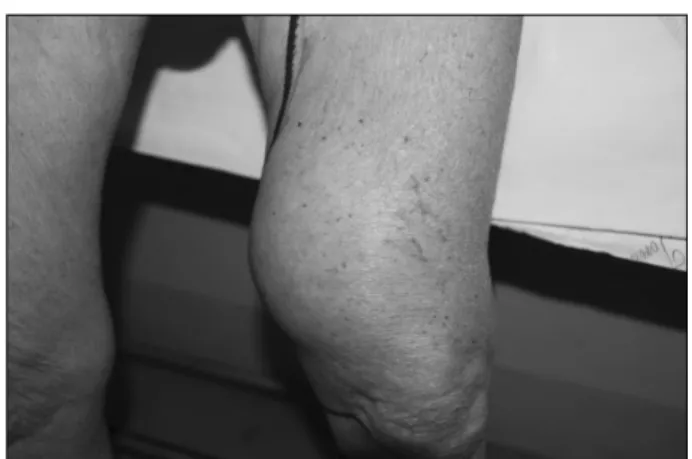
Fig. 1. Voluminous pulsating mass in distal portion of left thigh.

Rupture of Giant Superficial Femoral Artery Aneurysm in a Leukemic Patient Submitted to Chemotherapy

Gianfranco Varetto, M.D., Claudio Castagno, M.D., Matteo Ripepi, M.D., Paolo Garneri, M.D., Simone Quaglino, M.D., Pietro Rispoli, M.D., Ph.D.

The superficial femoral artery (SFA) is a relatively rare location for lower limb aneurysmatic disease. In the liter- ature, this disease is described an association between a relatively high growth rate and/or the rupture of aneur- ysms and chemotherapeutic agents. We report a case of the rupture of a giant SFA aneurysm in a patient during chemotherapy for acute lymphatic leukemia.

Key words: 1. Femoral 2. Arteries 3. Aneurysm 4. Leukemia 5. Chemotherapy

CASE REPORT

An 80-year-old male was admitted to Molinette Hospital due to an acute painful pulsatile mass located in the distal portion of his left thigh (Fig. 1), referred by the patient and relatives to be in progressive enlargement in the last few months. The patient was affected by refractory anemia with excess blasts in transformation, associated with acute lym- phatic leukemia. His past medical history included arterial hy- pertension and type-2 diabetes mellitus treated with oral hy- poglycemic agents; no history of smoking was present.

Preliminary blood tests showed severe thrombocytopenia (17,000 platelets/L) and anemia (hemoglobin blood level, 7.6 g/dL). The patient’s blood pressure was 120/80 mmHg, and his heart rate was 100 bpm. Distal pulses were present, and there were no signs of lower limb ischemia. Echo color Doppler ultrasonography showed the presence of a volumi-

nous aneurysm of the superficial femoral artery with the sus-

picion of rupture. An urgent computed tomography angiog-

raphy (CTA) was then performed, which confirmed the pres-

ence of a giant ruptured aneurysm of the distal portion of the

(2)

Gianfranco Varetto, et al

− 414 −

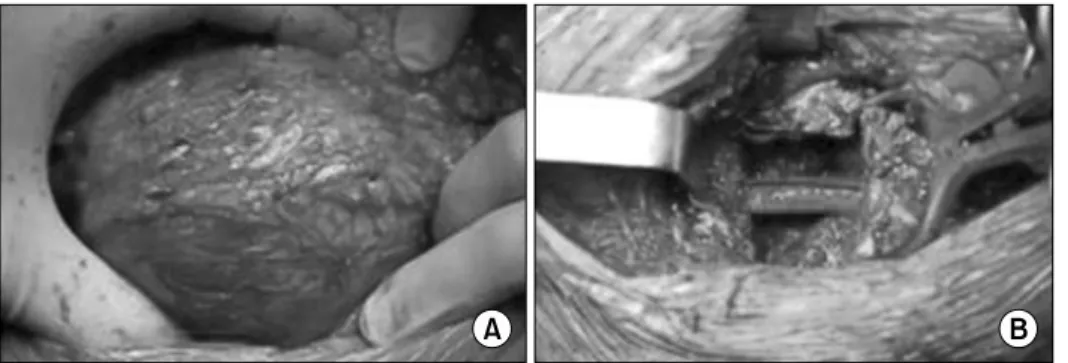
Fig. 3. (A) Intraoperative image showing the isolated aneurysm. (B) Femoral artery reconstructed with polyester graft.

Fig. 2. Preoperative computed tomography scan.

left superficial femoral artery, having a maximum diameter of 75 mm and extending longitudinally for 115 mm, with a vol- uminous hematoma infiltrating the vastus medialis muscle (Fig. 2). The popliteal and tibial arteries were patent. As a collateral finding, an infrarenal abdominal aortic aneurysm measuring 31 mm was detected. At first, the patient under- went a transfusion of four units of platelets and two of red blood cells. Soon after, under general anesthesia, we accessed the distal superficial femoral artery at the adductor canal through a 15-cm longitudinal incision. The mass was isolated (Fig. 3A), and the hematoma was evacuated. The proximal and distal neck of the aneurysm were isolated and digitally controlled, the aneurysm was longitudinally opened, the intra- luminal wall thrombus was removed, and, instead of clamp- ing, two 6-French Fogarty catheters were positioned upstream and downstream. A 7-mm knitted polyester graft (JOTEC GmbH, Hechingen, Germany) was sutured proximally and distally in an end-to-end fashion with a Prolene 5/0 monofila- ment (Fig. 3B). There were no adverse events during

hospitalization. The patient was discharged on the 7th post- operative day upon the recovery of walking. In agreement with the hematologist, due to the high hemorragic risk, no antiplatelet therapy was prescribed, as bleeding diathesis is a contraindication of antithrombotic agents. Echo color Doppler ultrasonography at 1, 6, and 9 months showed the patency of the prosthetic repair without any sign of anastomotic pseudoaneurysm. The patient died about one year after sur- gery due to complications linked to the hematologic disease.

DISCUSSION

The normal diameter of the superficial femoral artery (SFA) is reported to range from 0.78 to 1.12 cm in men and 0.78 to 0.85 cm in women [1]. Isolated aneurysm of the SFA is a rare condition. In the thigh, the distribution of aneurysms is calculated as follows: 80% common femoral, 15% super- ficial femoral, and 5% profunda femoris artery [2]. Aetiologic factors include atherosclerosis, infections, arteritis, connective tissue disorders, human immunodeficiency virus, and trauma.

Some authors demonstrated a correlation with abdominal aort- ic aneurysms in 60% of the cases; 36% were bilateral [2].

The median age of presentation of SFA aneurysms is 75.7 years; men are most often affected (87%). Patients usually come to medical attention for pain associated with a pulsatile mass. Frequently (52%), the clinical presentation is a rupture.

Limb loss is the most severe complication. Furthermore, it is

not possible to correlate the size of the aneurysm with the

onset of adverse events [2]. The diagnosis is easily made

with an ultrasound, but a CTA is mandatory to define the

rupture, size, surrounding structures, patency of the distal ves-

sels, and extension. Surgery can avoid limb loss in a majority

(3)

Rupture Femoral Artery Aneurysm Probably Induced by Chemotherapy Treated Surgically

− 415 − of the cases (94%), and major amputations are frequently per- formed when severe irreversible ischemia is the predominant symptom [3]. Several procedures are described in the liter- ature, such as excision, ligation, and bypass grafting with an autologous vein or prosthetic material. Nowadays, endovas- cular repair is also feasible and safe [4], but we ruled it out mainly due to the extension of the hematoma that had to be evacuated and the size of the aneurysm. Thrombocytopenia is a common side effect of azacitidine; our patient’s pre- operative platelet count was 17,000 platelets/L. Antiplatelet therapy is mandatory after every arterial reconstruction, but we avoided it due to his iatrogenic thrombocytopenia, as bleeding diathesis is a contraindication of antithrombotic agents. A recent study found that chemotherapy in the last 30 days is associated with a higher probability of treating pa- tients affected by abdominal aortic aneurysms in emergency situations [5]. Other researchers have found a correlation be- tween chemotherapy and rapid enlargement and rupture of aortic aneurysms [6-8]. Our patient has been treated for the last five months with cycles of azacitidine 75 mg/m

2

month- ly; he complained of acute left thigh pain during the fifth cy- cle of treatment. We can suppose that this chemotherapeutic agent may have played a role in the rapid expansion of the aneurysm until its rupture. A possible explanation has been suggested by Zanow et al. [6]: Chemotherapy may induce a downregulation of the synthesis of collagen, elastin, and smooth muscular cells, and a stimulation of metalloproteases, and these combined effects could cause a rapid aneurysm enlargement. To the best of our knowledge, this is the first case of femoral artery aneurysm rupture likely to be asso- ciated with chemotherapy.

CONFLICT OF INTEREST

No potential conflict of interest relevant to this article was reported.

REFERENCES

1. Sandgren T, Sonesson B, Ryden-Ahlgren, Lanne T. Arterial dimensions in the lower extremities of patients with abdomi- nal aortic aneurysms: no indications of a generalized dilat- ing diathesis. J Vasc Surg 2001;34:1079-84.

2. Piffaretti G, Mariscalco G, Tozzi M, Rivolta N, Annoni M, Castelli P. Twenty-year experience of femoral artery aneurysms. J Vasc Surg 2011;53:1230-6.

3. Lee S, Kang SK, Oh HK, et al. An isolated true aneurysm of the superficial femoral artery in a young woman: a case report. Korean J Thorac Cardiovasc Surg 2011;44:361-3.

4. Trinidad-Hernandez M, Ricotta JJ 2nd, Gloviczki P, et al.

Results of elective and emergency endovascular repairs of popliteal artery aneurysms. J Vasc Surg 2013;57:1299-305.

5. Tsilimparis N, Ricotta JJ, Dayama A, Reeves JG, Perez S, Sweeney JF. The effect of recent chemotherapy in aorto-iliac aneurysm repair. Vascular 2014;22:98-104.

6. Zanow J, Leistner Y, Ludewig S, Rauchfuss F, Settmacher U. Unusual course of an abdominal aortic aneurysm in a patient treated with chemotherapy for gastric cancer. J Vasc Surg 2012;55:841-3.

7. Palm SJ, Russwurm GP, Chang D, Rozenblit AM, Ohki T, Veith FJ. Acute enlargement and subsequent rupture of an abdominal aortic aneurysm in a patient receiving chemo- therapy for pancreatic carcinoma. J Vasc Surg 2000;32:

197-200.

8. Conforti M, Barile G, Dama E, et al. Influence of chemo-

therapy on the expansion of abdominal aortic aneurysms in

patients with neoplastic disease. Gazz Med Ital Arch Sci

Med 2005;164:155-62.

수치

Fig. 1. Voluminous pulsating mass in distal portion of left thigh.
Fig. 2. Preoperative computed tomography scan.

참조

관련 문서

Case report: We report a case of 48-year-old male pa- tient, who visited a medical center due to his leg pain at first, and later diagnosed as giant coronary artery aneurysm

Case Analysis of Persistent Vasospasm after Cerebral Artery Aneurysm Rupture by Using Transcranial Color Coded Doppler Ultrasonography.. Myeong-Hoon Ji・Youl-Hun

Won Ro Park et al.: Injury of the Superficial Femoral Artery Secondary to an Unstable Intertrochanteric Fracture - A Case Report -.. 는 소견을 보였으며 활동성 출혈의

A giant serpentine aneurysm (GSA) in the anterior cerebral artery (ACA) poses a technical challenge in treatment given its large size, unique neck, and dependent distal vessels.

Second brain CT scan before the onset of mechanical thrombectomy showing a hyperdense middle cerebral artery sign (yellow arrow, Panel A) and a giant aneurysm of the left

Spontaneous Hemothorax Caused by Rupture of an Intercostal Artery Aneurysm in Neurofibromatosis Type II: A Case Report 1.. Chang Min Shim, M.D., Jae Boem Na, M.D., Jin Jong You,

This paper presents a case of retroperitoneal and intraperitoneal bleeding caused by spontaneous rupture of a right ovar- ian artery aneurysm in a 56-year-old postmenopausal

We de- scribe a case of spontaneous rupture of a pulmonary artery aneurysm that, due to the inadequacy of medical therapy and the disadvantages of surgery, became the ideal