Psychological Status and Associated Factors among Korean
Cancer Survivors: A Cross-Sectional Analysis of the Fourth & Fifth Korea National Health and Nutrition Examination Surveys
It is important to assess psychological distress after a diagnosis for cancer survivors, a population with a high risk for psychological distress. The aim of this study is to assess psychological distress among cancer survivors and to clarify the associated factors. In this cross-sectional analysis, data were obtained from standardized questionnaires administered to 1,163 cancer survivors and 49,243 non-cancer survivors who participated in the Fourth and Fifth Korea National Health and Nutrition Examination Survey (2007-2012). We identified the adjusted rates for psychological distress and assessed factors associated with this kind of distress using multivariate logistic regression. Cancer survivors tended to have a higher adjusted rate of psychological distress than the general population. The current depressive symptom rate for cancer survivors was 16.69%, and the adjusted rate for history of depression in cancer survivors was 15.61%. The adjusted rate for higher level of stress was 25.51% in cancer survivors. Among the cancer survivors, younger subjects, female subjects, and those with limited social support were more prone to psychological distress. In addition, current smokers or risky drinkers, those with chronic diseases, and those with a poor self-perception of their health status were also identified as a high-risk group for psychological distress. As the number of cancer survivors has increased, the importance of assessing psychological distress after a cancer diagnosis should be emphasized among all cancer survivors. Further, psychological supportive care
interventions for cancer survivors are needed to improve the survival rate and improve their quality of life.
Keywords: Psychological Status; Cancer Survivors; Distress; Risk Factors; Korean Kyung-Hyun Choi1 and Sang Min Park2
1Center for Health Promotion & Cancer Prevention, Dongnam Institute of Radiological & Medical Sciences, Busan, Korea; 2Department of Biomedical Sciences & Family Medicine, Seoul National University Hospital, Seoul National University College of Medicine, Seoul, Korea
Received: 11 December 2015 Accepted: 4 April 2016 Address for Correspondence:
Sang Min Park, MD
Department of Biomedical Sciences & Family Medicine, Seoul National University Hospital, Seoul National University College of Medicine, 101 Daehak-ro, Jongno-gu, Seoul 03080, Korea E-mail: [email protected]
http://dx.doi.org/10.3346/jkms.2016.31.7.1105 • J Korean Med Sci 2016; 31: 1105-1113
INTRODUCTION
The number of cancer survivors has progressively increased and is expected to further increase with improved cancer screening, more effective cancer treatment, and steady aging of the popu- lation. Currently more than two-thirds of persons diagnosed with cancer are expected to live 5 years or more after diagnosis (1). In Korea, cancer incidence has increased, while overall can- cer mortality rates have declined since 2002. The number of can- cer survivors in Korea was 1.23 million in 2012 (2). As more adults survive with cancer, it is important to understand how cancer and cancer treatment affects quality of life.
For cancer patients, the diagnosis and treatment of cancer can be considered a multifold stress (3). Many previous reports have given attention to the psychological sequelae of the post cancer experience. Although many long-term cancer survivors can successfully adapt to life after cancer, some cancer survi- vors experience significant and lasting psychological distress, unfortunately. Fear of recurrence, worries about health, physi-
cal change, social isolation, and/or economic problems can de- velop causing psychological distress in many cancer survivors (1,4). Because psychological distress has been identified as a significant problem for cancer survivors, guidelines provided by the National Comprehensive Cancer Network (NCCN) have emphasized assessment of psychological distress after receiv- ing a cancer diagnosis (5).
The prevalence of psychological distress in cancer survivors ranges from 10% to 40% (6,7). However, cancer survivors’ psy- chological distress is not often estimated by medical staff, and utilization of psychological health services has been low among cancer survivors (8,9). Untreated psychological distress may have long-term harmful consequences on cancer survivors’
compliance with treatment, survival rate, and their quality of survivorship (10,11). It is important to evaluate the psychologi- cal distress of cancer survivors because such distress is likely to be treatable, and early intervention may improve the overall physical or mental health of cancer survivors. Because of the given challenges related to survivors’ psychological distress,
many previous studies mainly explored significant variables in- fluencing depression and distress among cancer survivors.
The aim of the present study was to assess psychological dis- tress (current depressive symptoms, history of depression, and the level of stress) among cancer survivors and to clarify the as- sociated factors (sociodemographics, behavioral factors, and clinical variables) in a nationwide sample of cancer survivors.
We hypothesized that patient sociodemographic characteris- tics, such as being a woman, being younger, and having a lower income level, have an influence on psychological distress. These sociodemographic factors have been shown to influence psy- chological distress in the general population. We also hypothe- sized that behavioral factors, such as smoking or drinking, would influence this desire as psychological difficulties. Finally, we hypothesized that patient clinical factors, such as comorbidity, cancer type, and time since cancer diagnosis, would influence psychological distress.
MATERIALS AND METHODS Participants
The Korean National Health and Nutrition Examination Survey (KNHANES) IV (2007-2009) and KNHANES V (2010-2012) were used as data of this study. These represent the general Korean population as nationwide surveys and include comprehensive information on sociodemographics, health status, and health behavior (12). A stratified multistage probability sampling de- sign was used, and face-to-face interviews were conducted at candidates’ homes by trained interviewers to gather health in- formation (12). Each participant gave informed consent prior to inclusion in the study.
The initial data for the present study comprised 50,405 can- didates who participated in both the health interview and health examination surveys. Of these, 1,163 cancer survivors were se- lected as the study group, and 49,242 non-cancer survivors were selected as the controls. Cancer survivors in this study were de- fined as patients from the time of cancer diagnosis through the remaining years of life, as defined by the National Coalition for Cancer Survivorship (NCCS). Participants were reported by self-report on questionnaire. In the questionnaire about their health history, people were asked whether they ever had a di- agnosis of cancer such as stomach, liver, colon, breast, cervix, lung, thyroid and others cancer. Participants who answered
“yes” were defined as cancer survivors. This study did not re- quire the ethical approval of our Institutional Review Board be- cause the survey data that we analyzed are publicly available.
Associated factors and definition of psychological status We collected various factors potentially associated with psycho- logical status. These risk factors were divided into three groups:
sociodemographic, behavioral, and clinical factors. The sociode-
mographic factors were age (< 65 years or ≥ 65 years), sex, edu- cation level (college education or more, middle/high school education, less than elementary education), household month- ly income (< 3,000,000 KRW [approximately 2,557 USD], or ≥ 3,000,000 KRW), area of residence (urban or rural), spouse sta- tus (yes or no), and health insurance type (medical assistance or none, government health insurance without private health insurance, government health insurance with private health in- surance).
The behavioral risk factors included smoking status (non- smoker or past smoker, current smoker), alcohol consumption (nondrinker or non-risky drinker, risky drinker), physical activity (active, inactive/inadequately active), and self-perceived health status. Risky drinking was defined as alcohol consumption ex- ceeding 3 standard drinks per day (13). Physical activity was clas- sified as follows: active (moderate physical activity for at least 150 minutes per week or vigorous physical activity for at least 75 minutes per week) and inactive/inadequately active (exercised regularly but at levels that were less than sufficient) (14). Self- perceived health status was classified into two levels according to responses to the question “How do you assess your own health status?”: “very good,” “good,” “fair,” and “poor,” “very poor.”
The clinical factors included comorbidities, cancer types (gas- tric, hepatic, colon cancer, breast, cervical, lung, thyroid, and other cancers), and time since cancer diagnosis (≤ 1 year, 2-4 years, and ≥ 5 years). The comorbidities included hyperten- sion, diabetes, chronic renal disease, coronary artery disease, and lung diseases such as asthma, tuberculosis, and chronic obstructive pulmonary disease (12).
For evaluation of psychological distress, participants were asked to report on current depressive symptoms, history of de- pression, and the level of stress. Current depressive symptoms were evaluated by one question: “Have you felt constantly sad or hopeless for over 2 weeks in the past one year?” Respondents answered the current depressive symptoms as yes or no. In ad- dition, people were asked whether they ever had a diagnosis of depression. Respondents answered the history of depression as yes or no (15). The level of stress was asked as follows: “How much do you feel stress in your usual life?” The level of stress was reported as none, small, some or extreme. We redichoto- mized into none/small or some/extreme.
Analysis
We used a weighted population sample to reflect the sampling method and response rate. We calculated the estimated propor- tions and standard errors for baseline characteristics related to psychological status. The statistical significance was assessed as P value to show differences between groups according to can- cer status using logistic regression. We calculated the adjusted rate of current depressive symptom, history of depression, and higher level of stress in non-cancer survivors versus cancer sur-
Table 1. Characteristics of non-cancer controls (n = 49,243) vs. cancer survivors (n = 1,163)
Variables Estimated proportion % (SE)
P value Total population Non-cancer controls Cancer survivors
Age, yr < 65
≥ 65 88.98 (0.24)
11.02 (0.24) 89.48 (0.23)
10.52 (0.23) 63.33 (1.77)
36.67 (1.77)
< 0.001
Sex Male
Female 50.16 (0.23)
48.84 (0.23) 50.44 (0.24)
49.56 (0.24) 35.82 (1.77)
64.18 (1.77)
< 0.001
Education ≥ College Middle/high school ≤ Elementary school
24.29 (0.39) 43.91 (0.38) 31.80 (0.33)
24.41 (0.39) 43.91 (0.38) 31.68 (0.33)
18.45 (1.57) 43.95 (1.82) 37.60 (1.67)
< 0.001
Monthly income, thousand KRW ≥ 3,000
< 3,000 42.86 (0.67)
57.14 (0.67) 43.03 (0.67)
56.97 (0.67) 34.18 (1.90)
65.82 (1.90)
< 0.001
Area of residence Urban
Rural 81.28 (1.16)
18.72 (1.16) 81.37 (1.16)
18.63 (1.16) 76.94 (1.82)
23.06 (1.82)
< 0.001
Spouse status Yes
No 90.10 (0.22)
9.90 (0.22) 90.30 (0.21)
9.70 (0.21) 81.07 (1.42)
18.93 (1.42)
< 0.001
Health insurance (HI) type Medical assistance or none Government HI without private HI Government HI with private HI
3.47 (0.19) 23.81 (0.38) 72.72 (0.41)
3.43 (0.19) 23.45 (0.37) 73.12 (0.41)
5.82 (0.93) 41.95 (1.91) 52.22 (1.95)
< 0.001
Smoking
Non or past smoker
Current smoker 70.19 (0.32)
29.81 (0.32) 66.98 (0.33)
30.02 (0.33) 79.95 (1.42)
20.05 (1.42)
< 0.001
Alcohol Non risky
Risky drinking* 55.03 (0.35)
44.97 (0.35) 54.56 (0.36)
45.44 (0.36) 77.49 (1.64)
22.51 (1.64)
< 0.001
Physical activity† Active
Inactive/inadequately active 14.30 (0.27)
85.70 (0.27) 14.44 (0.27)
85.56 (0.27) 8.01 (1.03)
91.99 (1.03)
-
Self-perceived health status Very good/good/fair
Poor/very poor 84.03 (0.26)
15.97 (0.26) 84.52 (0.26)
15.48 (0.26) 59.29 (1.74)
40.71 (1.74)
< 0.001
Chronic disease‡ No
Yes 82.82 (0.27)
17.18 (0.27) 83.06 (0.27)
16.94 (0.27) 70.42 (1.55)
29.58 (1.55)
< 0.001
Cancer type Others Gastric Hepatic Colon Breast Cervical Lung Thyroid
31.72 (1.70) 16.95 (1.34) 3.57 (0.72) 9.43 (1.05) 12.56 (1.19) 12.85 (1.21) 2.19 (0.42) 10.73 (1.24)
-
Time since cancer diagnosis ≤ 1 year
2-4 years ≥ 5 years
19.51 (1.61) 28.79 (1.74) 51.70 (1.88)
-
Current depressive symptoms No
Yes 87.78 (0.21)
12.22 (0.21) 87.94 (0.21)
12.06 (0.21) 79.93 (1.45)
20.07 (1.45)
< 0.001
History of depression No
Yes 89.41 (0.20)
10.59 (0.20) 89.63 (0.20)
10.37 (0.20) 79.15 (1.47)
20.85 (1.47)
< 0.001
Level of stress None/small
Some/extreme 74.06 (0.27)
25.93 (0.27) 74.08 (0.27)
25.92 (0.27) 72.89 (1.63)
27.11 (1.63)
< 0.001
*Risk drinking is defined as consuming more than 3 standard drinks per day on occasion; †Physical activity was classified as no physical activity/inadequately active group, ac- tive group (moderate physical activity for at least 150 minutes per week or vigorous physical activity for at least 75 minutes per week); ‡Chronic diseases were hypertension, diabetes, chronic renal disease, coronary artery disease, and lung disease such as asthma, tuberculosis, chronic obstructive pulmonary disease.
vivors in younger individuals (< 65 years old) and elderly indi- viduals (≥ 65 years old). In addition, we calculated adjusted odds ratio (aOR) using multivariate logistic regression for the risk of all psychological distress. Current model 1 was adjusted for so- ciodemographic factors. Current model 2 was adjusted for be- havioral factors in addition to all variables in current model 1.
Further, we performed subgroup analysis among the participants into two categories of younger and elderly cancer survivors to evaluate the effect of cancer type using above multivariate logis- tic regression. The level of significance was set at P < 0.05. All es- timates in the analysis were properly weighted to represent the general Korean population using a complex, multistage, proba- bility sampling design (12). All statistical analyses were performed using STATA 10.0 (StataCorp., College Station, TX, USA).
RESULTS Participants
Table 1 shows the baseline characteristics of the study popula- tion by cancer status. There were significant differences between the non-cancer controls and cancer survivors for all character- istics except health insurance type. In total, 63.33% of the cancer survivors were less than 65 years old and 64.18% were female.
The most common cancer type among all patients was gastric cancer (16.95%). The most prevalent cancer types in men were gastric cancer (29.24%), colon cancer (16.58%), and liver cancer (7.99%), whereas for women they were cervical cancer (20.02%), breast cancer (19.57%), and thyroid cancer (13.84%). Among the cancer survivors, 19.51% was diagnosed as having the dis- ease less than 1 year ago, 28.79% were diagnosed between 2 to 4 years ago, and 51.79% were diagnosed more than 5 years ago.
Adjusted rates for psychological distress in non-cancer survi- vors versus cancer survivors, in younger individuals, and in el- derly individuals.
After adjusting for sociodemographic factors (age, sex, edu- cational level, monthly income, spouse status, residential area, and health insurance types), current depressive symptoms rates for non-cancer survivors and cancer survivors were 12.39% and 16.69%, respectively (P < 0.05); and those for younger non-can- cer survivors and cancer survivors were 12.45% and 17.29%, re- spectively (P < 0.05) (Fig. 1). The adjusted rate for history of de- pression showed cancer survivors’ history was significantly high- er than non-cancer survivors (10.57% in non-cancer survivors, 15.61% in cancer survivors). It was consistent in younger popu- lation, not older population (Fig. 2). There was not significant differences of the adjusted rate for higher level of stress between non-cancer survivors and cancer survivors (P = 0.95). However, there was significant difference in elderly population. The rates were 16.25% in non cancer survivors and 21.35% in cancer sur- vivors, respectively (P < 0.05) (Fig. 3).
Fig. 1. Adjusted rate for current depressive symptoms in non-cancer survivors vs.
cancer survivors.
Adjusted for patient characteristics (age, sex, educational level, monthly income, spouse status, residential area, and health insurance types).
*P value < 0.05.
All population Younger (< 65 years old) Elderly (≥ 65 years old) 20
15
10
5
0
12.39 16.69
12.45 17.29
12.5 15.34
* *
Non-cancer survivors Cancer survivors
Fig. 2. Adjusted rate for history of depression in non-cancer survivors vs. cancer sur- vivors.
Adjusted for patient characteristics (age, sex, educational level, monthly income, spouse status, residential area, and health insurance types).
*P value < 0.05.
All population Younger (< 65 years old) Elderly (≥ 65 years old) 20
15
10
5
0
10.57 15.61
10.44 17.39
12.84 14.41
*
*
Non-cancer survivors Cancer survivors
Fig. 3. Adjusted rate higher level of stress in non-cancer survivors vs. cancer survi- vors.
Adjusted for patient characteristics (age, sex, educational level, monthly income, spouse status, residential area, and health insurance types).
*P value < 0.05.
All population Younger (< 65 years old) Elderly (≥ 65 years old) 30
25
20
15
10
25.4 25.51 25.64
23.87
16.25 21.35
* Non-cancer survivors Cancer survivors
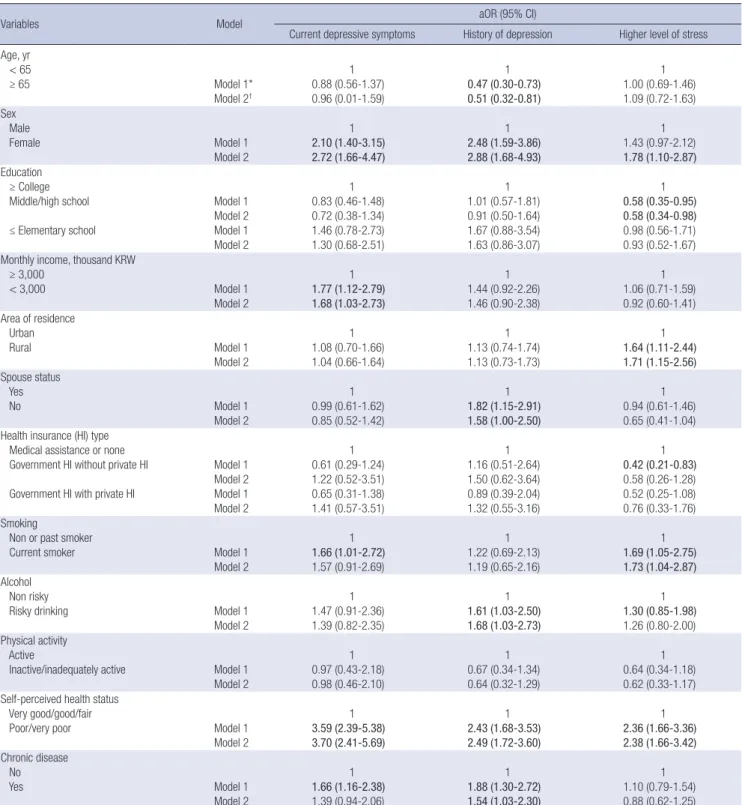
Table 2. Factors associated with current depressive symptoms, history of depression and level of stress among cancer survivors (n = 1,163) using multivariate logistic regres- sion analysis
Variables Model aOR (95% CI)
Current depressive symptoms History of depression Higher level of stress Age, yr
< 65
≥ 65 Model 1*
Model 2†
1 0.88 (0.56-1.37) 0.96 (0.01-1.59)
1 0.47 (0.30-0.73) 0.51 (0.32-0.81)
1 1.00 (0.69-1.46) 1.09 (0.72-1.63) Sex
Male
Female Model 1
Model 2
1 2.10 (1.40-3.15) 2.72 (1.66-4.47)
1 2.48 (1.59-3.86) 2.88 (1.68-4.93)
1 1.43 (0.97-2.12) 1.78 (1.10-2.87) Education
≥ College Middle/high school
≤ Elementary school
Model 1 Model 2 Model 1 Model 2
1 0.83 (0.46-1.48) 0.72 (0.38-1.34) 1.46 (0.78-2.73) 1.30 (0.68-2.51)
1 1.01 (0.57-1.81) 0.91 (0.50-1.64) 1.67 (0.88-3.54) 1.63 (0.86-3.07)
1 0.58 (0.35-0.95) 0.58 (0.34-0.98) 0.98 (0.56-1.71) 0.93 (0.52-1.67) Monthly income, thousand KRW
≥ 3,000
< 3,000 Model 1
Model 2
1 1.77 (1.12-2.79) 1.68 (1.03-2.73)
1 1.44 (0.92-2.26) 1.46 (0.90-2.38)
1 1.06 (0.71-1.59) 0.92 (0.60-1.41) Area of residence
Urban
Rural Model 1
Model 2
1 1.08 (0.70-1.66) 1.04 (0.66-1.64)
1 1.13 (0.74-1.74) 1.13 (0.73-1.73)
1 1.64 (1.11-2.44) 1.71 (1.15-2.56) Spouse status
Yes
No Model 1
Model 2
1 0.99 (0.61-1.62) 0.85 (0.52-1.42)
1 1.82 (1.15-2.91) 1.58 (1.00-2.50)
1 0.94 (0.61-1.46) 0.65 (0.41-1.04) Health insurance (HI) type
Medical assistance or none Government HI without private HI Government HI with private HI
Model 1 Model 2 Model 1 Model 2
1 0.61 (0.29-1.24) 1.22 (0.52-3.51) 0.65 (0.31-1.38) 1.41 (0.57-3.51)
1 1.16 (0.51-2.64) 1.50 (0.62-3.64) 0.89 (0.39-2.04) 1.32 (0.55-3.16)
1 0.42 (0.21-0.83) 0.58 (0.26-1.28) 0.52 (0.25-1.08) 0.76 (0.33-1.76) Smoking
Non or past smoker
Current smoker Model 1
Model 2
1 1.66 (1.01-2.72) 1.57 (0.91-2.69)
1 1.22 (0.69-2.13) 1.19 (0.65-2.16)
1 1.69 (1.05-2.75) 1.73 (1.04-2.87) Alcohol
Non risky
Risky drinking Model 1
Model 2
1 1.47 (0.91-2.36) 1.39 (0.82-2.35)
1 1.61 (1.03-2.50) 1.68 (1.03-2.73)
1 1.30 (0.85-1.98) 1.26 (0.80-2.00) Physical activity
Active
Inactive/inadequately active Model 1 Model 2
1 0.97 (0.43-2.18) 0.98 (0.46-2.10)
1 0.67 (0.34-1.34) 0.64 (0.32-1.29)
1 0.64 (0.34-1.18) 0.62 (0.33-1.17) Self-perceived health status
Very good/good/fair
Poor/very poor Model 1
Model 2
1 3.59 (2.39-5.38) 3.70 (2.41-5.69)
1 2.43 (1.68-3.53) 2.49 (1.72-3.60)
1 2.36 (1.66-3.36) 2.38 (1.66-3.42) Chronic disease
No
Yes Model 1
Model 2
1 1.66 (1.16-2.38) 1.39 (0.94-2.06)
1 1.88 (1.30-2.72) 1.54 (1.03-2.30)
1 1.10 (0.79-1.54) 0.88 (0.62-1.25) (Continued to the next page) Factors associated with current depressive symptoms,
history of depression, and of higher level of stress in cancer survivors
Table 2 shows the multivariate logistic regression analysis, ad- justed for only sociodemographic variables (Current model 1), and including behavioral factors (Current model 2). In current
model 1, current depressive symptoms among all cancer survi- vors was significantly higher for the following characteristics:
female gender (adjusted odds ratio [aOR], 2.10; 95% confidence interval [CI], 1.40-3.15), low monthly income (aOR, 1.77; 95%
CI, 1.12-2.79), current smoker (aOR, 1.66; 95% CI, 1.01-2.72), poor self-perceived health status (aOR, 3.59; 95% CI, 2.39-5.38),
and the presence of a chronic disease (aOR, 1.66; 95% CI, 1.66- 2.38). History of depression was lower in cancer survivors aged 65 or older (aOR, 0.47; 95% CI, 0.30-0.73). However, history of depression was found to be higher for the following character- istics: female gender (aOR, 2.48; 95% CI, 1.59-3.86), unmarried (aOR, 1.82; 95% CI, 1.15-2.91), risky drinker (aOR, 1.61; 95% CI, 1.03-2.50), poor self-perceived health status (aOR, 2.43; 95% CI, 1.68-3.53), and the presence of a chronic disease (aOR, 1.88;
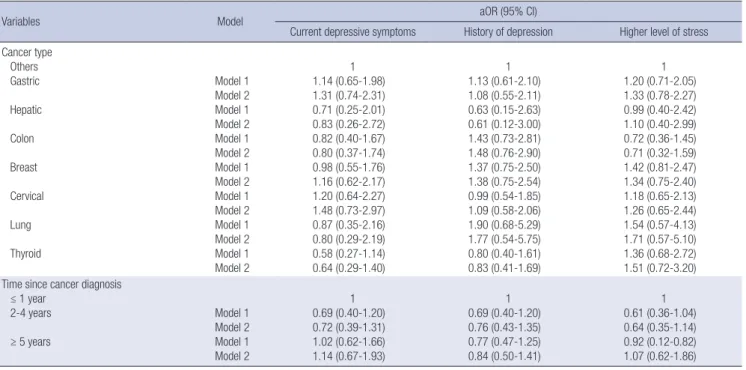
95% CI, 1.30-2.72). Stress was higher in current smoker (aOR, 1.69; 95% CI, 1.05-2.75), and was also higher for group with re- ported poor self-perceived health status (aOR, 2.36; 95% CI, 1.16- 3.36). In subgroup analysis of elderly cancer survivors, current depressive symptoms and history of depression were lower in thyroid cancer survivors (aOR, 0.054; 95% CI 0.01-0.49, aOR, 0.17;
95% CI, 0.03-0.94). The analysis of current model 2 showed the similarity of results compared with current model 1.
DISCUSSION
The aim of this study was to investigate cancer patients’ psycho- logical distress and to identify sociodemographic, behavioral, clinical, and psychological correlates. Our results from a large, population-based sample of Korean adults showed that cancer survivors were more vulnerable to psychological illness in com- parison with adults with no cancer history. Previous studies have also suggested that more than 10% of cancer patients have ex- perienced depression (16), and a larger proportion of cancer survivors have experienced depressive symptoms (17) and dis-
tress. In general, mental distress can disturb quality of life, and incur economic costs related to an increased medical burden (1). The negative effects of persistent psychological distress can result in cancer patients’ lower compliance to treatment, screen- ing programs, and recommendations for lifestyle modification (18). Therefore, it is important to preferentially assess and man- age this high-risk group vulnerable to psychological distress.
First, in this study the influence of various sociodemographic factors on psychological distress were explored in specific can- cer survivors, as has been done in research on the general pop- ulation. It is important to note age and sex differences regarding psychological distress. Persons aged 65 years and older were less likely to have a history of depression. The various results of relationship between age and depression were shown in previ- ous studies. Fear of recurrences loss of interpersonal relation- ships, or disconnection of social career may be more likely to affect the younger population than the elderly population (20).
However, it is also less likely to have opportunities to be diag- nosed as depression in elderly group compared with younger group due to lower health service accessibility. So, the need for effective screening for depression among elderly cancer survi- vors should be considered. On the one hand, women were more likely than men to experience depression. Regarding gender differences, most epidemiological studies of depression have demonstrated higher incidence rates among females. A possi- ble explanation for this finding could be in female subjects in paid employment, on the other hand, men were more easily in paid employment than female subjects, relatively (21). Howev-
Variables Model aOR (95% CI)
Current depressive symptoms History of depression Higher level of stress Cancer type
Others Gastric Hepatic Colon Breast Cervical Lung Thyroid
Model 1 Model 2 Model 1 Model 2 Model 1 Model 2 Model 1 Model 2 Model 1 Model 2 Model 1 Model 2 Model 1 Model 2
1 1.14 (0.65-1.98) 1.31 (0.74-2.31) 0.71 (0.25-2.01) 0.83 (0.26-2.72) 0.82 (0.40-1.67) 0.80 (0.37-1.74) 0.98 (0.55-1.76) 1.16 (0.62-2.17) 1.20 (0.64-2.27) 1.48 (0.73-2.97) 0.87 (0.35-2.16) 0.80 (0.29-2.19) 0.58 (0.27-1.14) 0.64 (0.29-1.40)
1 1.13 (0.61-2.10) 1.08 (0.55-2.11) 0.63 (0.15-2.63) 0.61 (0.12-3.00) 1.43 (0.73-2.81) 1.48 (0.76-2.90) 1.37 (0.75-2.50) 1.38 (0.75-2.54) 0.99 (0.54-1.85) 1.09 (0.58-2.06) 1.90 (0.68-5.29) 1.77 (0.54-5.75) 0.80 (0.40-1.61) 0.83 (0.41-1.69)
1 1.20 (0.71-2.05) 1.33 (0.78-2.27) 0.99 (0.40-2.42) 1.10 (0.40-2.99) 0.72 (0.36-1.45) 0.71 (0.32-1.59) 1.42 (0.81-2.47) 1.34 (0.75-2.40) 1.18 (0.65-2.13) 1.26 (0.65-2.44) 1.54 (0.57-4.13) 1.71 (0.57-5.10) 1.36 (0.68-2.72) 1.51 (0.72-3.20) Time since cancer diagnosis
≤ 1 year 2-4 years ≥ 5 years
Model 1 Model 2 Model 1 Model 2
1 0.69 (0.40-1.20) 0.72 (0.39-1.31) 1.02 (0.62-1.66) 1.14 (0.67-1.93)
1 0.69 (0.40-1.20) 0.76 (0.43-1.35) 0.77 (0.47-1.25) 0.84 (0.50-1.41)
1 0.61 (0.36-1.04) 0.64 (0.35-1.14) 0.92 (0.12-0.82) 1.07 (0.62-1.86) Statistically significant results were written in bold.
aOR, adjusted odds ratio; CI, confidence interval.
*Current model 1 was adjusted for sociodemographic factors; †Current model 2 was adjusted for behavioral factors in addition to all variables in current model 1.
Table 2. Continued
er, it should be more comprehensively understood in terms of social role or circumstance. Lower social support such as lower income level or not having a spouse resulted in high depressive symptoms and/or history of depression. Additionally, our find- ings provide support to the contention that socio-ecological functions, including economic and family problems, impact survivors’ psychological distress. It is important to develop ac- cessible and reasonable support systems for cancer survivors and provide proper psychological care. In previous studies, low- er social support predicted larger increases in depressive symp- toms (22-24). These findings emphasized evidence supporting the routine screening of depression, especially for low-income cancer survivors. Further, active screening for depression in high-risk groups, such as low-income and medically under- served populations, should be conducted as an appropriate healthcare service (19,25,26).
Among the behavioral factors, current smoker, risky drinker, and self-perceived poor health status were significantly associ- ated with poor psychological status. Comorbidity was also as- sociated with poor psychological status. Previous studies sug- gest that modifiable health behaviors, such as smoking and drink- ing, are strong indicators of psychological distress within cancer survivors (27-29). These findings cannot be notable causality from this cross-sectional data, while life behaviors intervention efforts have considerable. For example, interventions targeting smoking cessation have been shown to decrease psychological distress, as well as risk of cancer related outcomes, such as re- currence and treatment complications (30,31). Further, although there are no current guidelines to classify cancer survivors’ drink- ing levels, the results of the current study suggest avoiding ex- cessive alcohol consumption. We recommend that further stud- ies explore the association between health behaviors and psy- chological distress among cancer survivors. There is scarce data on psychological distress and the self-perceived health status of cancer survivors. However, self-perceived health status has been considered an independent factor related to life style modifica- tion (32) or management of one’s chronic disease (33). Perceiv- ing one’s health status as poor can potentially result in psycho- logical distress. Psychological distress would inversely influence poor self-perceived health status of cancer survivors, because the subjective health status could be affected by psychological factors as well as physical factors. Previous studies have docu- mented the relationship between comorbidities and quality of life or depression (1,34,35). They found that cancer survivors with more comorbid conditions had difficulty with psychologi- cal adjustment. The results of the present study are consistent with these previous studies.
Thyroid cancer patients in the subgroup analysis were less likely to have current depressive symptoms and a history of de- pression than other cancer type patients. Few previous studies have examined depression in thyroid cancer patients compar-
ing other cancer types. Poor prognosis was identified as a pre- dictor of depression (36), and thyroid cancer is considered as having a relatively good prognosis with a high 5-year survival rate. Some data reported depression was not much higher in thyroid cancer patients than in the general population (37). How- ever, these results cannot explain all the causal relationship be- tween thyroid cancer and depression, there is a need for more analysis including a large number of cancer survivors with vari- ous cancer types.
This study has several limitations that should be considered.
First, given the cross-sectional nature of the surveys, causal re- lationships between psychological distress and other indepen- dent variables cannot be determined. Future studies should ex- pand a prospective design to evaluate the risks of psychological distress among cancer survivors. Second, because much infor- mation was collected from self-reported questionnaires, report- ing bias cannot be excluded. There was the possibility of recall bias in the question about the history depression. The hard ex- perience such cancer diagnosis and treatment could affect to the answer. So, the group without diagnosis of depression could be included to depression group among cancer survivors. Third, we could not collect the information on more specific cancer types and the type of cancer treatment. We could not assess the types of other cancer due to limitation of data. So, there might be the inappropriateness as reference of other cancers because other cancers showed various prognosis with poor to good lev- el. And, some patients may not receive surgery or chemothera- py depending on cancer type or clinical situation. Future rese- arch will be required to more specifically investigate the mech- anism that creates psychological distress in cancer survivors according to cancer treatments. Additionally, research at the individual level is needed to clarify the clinical etiologies or out- comes of this increased distress. Fourth, distribution of cancer type in this study is slightly different from the data of the Korea Central Cancer Registry. According to national statistics, the most prevalent cancer among all individuals in Korea is thyroid cancer. The most common cancers among male patients are gastric and colon cancers, whereas the most prevalent cancers among female patients are thyroid and breast cancers (2).
Despite these potential limitations, the present study is one of the few to evaluate in detail psychological distress among Korean cancer survivors using a nationally representative data set. This study showed that psychological distress is more com- mon in cancer survivors than non-cancer survivors after ad- justing for certain sociodemographic factors. This study identi- fied that cancer survivors, like non-cancer survivors, shared psychological distress risk factors, such as younger age, female gender, lower socioeconomic status, and certain behavioral factors and comorbidities. The American Society of Clinical Oncology (ASCO) has emphasized screening, assessment, and care of psychosocial distress in all cancer survivors. Psychoso-
cial supportive care interventions have been defined for patients experiencing symptoms of depression and/or anxiety, based on optimal screening and assessment (38). Prompt diagnosis and early, efficacious management of those manifesting signifi- cant psychological symptoms have proven useful to help can- cer survivors and their families, overcoming psychological dis- tress, and improve mood or quality of life. A strong rapport be- tween patient and physician will also help to assess psychologi- cal distress and determine the appropriate treatment strategy (16). In addition, it is important for physicians to regularly reas- sess the patient’s psychological status to determine whether a treatment modality is effective or not. Due to increased survi- vorship, understanding cancer survivors’ psychological distress and problems with mental health is important to advance the quality of survivorship. Our results provide timely appropriate information about psychological status among cancer survivors with various characteristics. Health care providers need to pay more attention to psychological distress during treatment and after treatment. Targeting cancer survivors who have elevated risk factors for psychological distress as identified in this study is essential for providing clinical care and efficient interventions to improve survivors’ psychological wellbeing.
ACKNOWLEDGMENT
This study was based on Korea National Health and Nutritional Examination Survey, Ministry of Health and Welfare, Republic of Korea. We gratefully acknowledge the numerous investigators involved in the collection and management of data.
DISCLOSURE
The authors have no potential conflicts of interest to disclose.
AUTHOR CONTRIBUTION
Research conception & design: Choi KH, Park SM. Data analy- sis and interpretation: Choi KH. Statistical analysis: Choi KH, Park SM. Critical revision of the manuscript: Choi KH, Park SM.
Approval of final manuscript: all authors.
ORCID
Kyung-Hyun Choi http://orcid.org/0000-0002-0097-4361 Sang Min Park http://orcid.org/0000-0002-7498-4829 REFERENCES
1. Hoffman KE, McCarthy EP, Recklitis CJ, Ng AK. Psychological distress in long-term survivors of adult-onset cancer: results from a national survey.
Arch Intern Med 2009; 169: 1274-81.
2. Jung KW, Won YJ, Kong HJ, Oh CM, Cho H, Lee DH, Lee KH. Cancer sta- tistics in Korea: incidence, mortality, survival, and prevalence in 2012. Can- cer Res Treat 2015; 47: 127-41.
3. Mitchell AJ, Chan M, Bhatti H, Halton M, Grassi L, Johansen C, Meader N.
Prevalence of depression, anxiety, and adjustment disorder in oncologi- cal, haematological, and palliative-care settings: a meta-analysis of 94 in- terview-based studies. Lancet Oncol 2011; 12: 160-74.
4. Harrison SE, Watson EK, Ward AM, Khan NF, Turner D, Adams E, For- man D, Roche MF, Rose PW. Primary health and supportive care needs of long-term cancer survivors: a questionnaire survey. J Clin Oncol 2011;
29: 2091-8.
5. Donovan KA, Jacobsen PB. Progress in the implementation of NCCN gui- delines for distress management by member institutions. J Natl Compr Canc Netw 2013; 11: 223-6.
6. Zabora J, BrintzenhofeSzoc K, Curbow B, Hooker C, Piantadosi S. The prevalence of psychological distress by cancer site. Psychooncology 2001;
10: 19-28.
7. Chochinov HM, Wilson KG, Enns M, Lander S. Prevalence of depression in the terminally ill: effects of diagnostic criteria and symptom threshold judgments. Am J Psychiatry 1994; 151: 537-40.
8. Fallowfield L, Ratcliffe D, Jenkins V, Saul J. Psychiatric morbidity and its recognition by doctors in patients with cancer. Br J Cancer 2001; 84: 1011-5.
9. Passik SD, Dugan W, McDonald MV, Rosenfeld B, Theobald DE, Edger- ton S. Oncologists’ recognition of depression in their patients with cancer.
J Clin Oncol 1998; 16: 1594-600.
10. Valdimarsdóttir U, Helgason AR, Fürst CJ, Adolfsson J, Steineck G. The unrecognised cost of cancer patients’ unrelieved symptoms:a nationwide follow-up of their surviving partners. Br J Cancer 2002; 86: 1540-5.
11. Kurtz ME, Kurtz JC, Given CW, Given B. Relationship of caregiver reac- tions and depression to cancer patients’ symptoms, functional states and depression--a longitudinal view. Soc Sci Med 1995; 40: 837-46.
12. Choi KH, Park SM, Lee K, Lee JH, Park JS. Influenza vaccination and as- sociated factors among Korean cancer survivors: a cross-sectional analy- sis of the Fourth & Fifth Korea National Health and Nutrition Examination Surveys. J Korean Med Sci 2014; 29: 1061-8.
13. Ganry O, Baudoin C, Fardellone P. Effect of alcohol intake on bone min- eral density in elderly women: the EPIDOS Study. Epidémiologie de l’Os- téoporose. Am J Epidemiol 2000; 151: 773-80.
14. Denlinger CS, Ligibel JA, Are M, Baker KS, Demark-Wahnefried W, Dizon D, Friedman DL, Goldman M, Jones L, King A, et al. Survivorship: healthy lifestyles, version 2.2014. J Natl Compr Canc Netw 2014; 12: 1222-37.
15. Lim SM, Kim HC, Lee S. Psychosocial impact of cancer patients on their family members. Cancer Res Treat 2013; 45: 226-33.
16. Zhao G, Okoro CA, Li J, White A, Dhingra S, Li C. Current depression among adult cancer survivors: findings from the 2010 Behavioral Risk Factor Sur- veillance System. Cancer Epidemiol 2014; 38: 757-64.
17. Cho J, Choi EK, Kim SY, Shin DW, Cho BL, Kim CH, Koh DH, Guallar E, Bardwell WA, Park JH. Association between cancer stigma and depres- sion among cancer survivors: a nationwide survey in Korea. Psychooncol- ogy 2013; 22: 2372-8.
18. Arrieta O, Angulo LP, Núñez-Valencia C, Dorantes-Gallareta Y, Macedo EO, Martínez-López D, Alvarado S, Corona-Cruz JF, Oñate-Ocaña LF. As- sociation of depression and anxiety on quality of life, treatment adherence, and prognosis in patients with advanced non-small cell lung cancer. Ann Surg Oncol 2013; 20: 1941-8.
19. Ell K, Sanchez K, Vourlekis B, Lee PJ, Dwight-Johnson M, Lagomasino I, Muderspach L, Russell C. Depression, correlates of depression, and re- ceipt of depression care among low-income women with breast or gyne- cologic cancer. J Clin Oncol 2005; 23: 3052-60.
20. Momino K, Akechi T, Yamashita T, Fujita T, Hayahi H, Tsunoda N, Miyas- hita M, Iwata H. Psychometric properties of the Japanese version of the concerns about recurrence scale (CARS-J). Jpn J Clin Oncol 2014; 44: 456- 62.
21. Weissman MM, Bland RC, Canino GJ, Faravelli C, Greenwald S, Hwu HG, Joyce PR, Karam EG, Lee CK, Lellouch J, et al. Cross-national epidemiol- ogy of major depression and bipolar disorder. JAMA 1996; 276: 293-9.
22. Hughes S, Jaremka LM, Alfano CM, Glaser R, Povoski SP, Lipari AM, Agnese DM, Farrar WB, Yee LD, Carson WE 3rd, et al. Social support predicts in- flammation, pain, and depressive symptoms: longitudinal relationships among breast cancer survivors. Psychoneuroendocrinology 2014; 42: 38- 44.
23. Huang CY, Hsu MC. Social support as a moderator between depressive symptoms and quality of life outcomes of breast cancer survivors. Eur J Oncol Nurs 2013; 17: 767-74.
24. Han KH, Hwang IC, Kim S, Bae JM, Kim YW, Ryu KW, Lee JH, Noh JH, Sohn TS, Shin DW, et al. Factors associated with depression in disease- free stomach cancer survivors. J Pain Symptom Manage 2013; 46: 511- 22.
25. Carlson LE, Bultz BD. Cancer distress screening. Needs, models, and meth- ods. J Psychosom Res 2003; 55: 403-9.
26. Trask PC. Assessment of depression in cancer patients. J Natl Cancer Inst Monogr 2004; 2004: 80-92.
27. Boyes AW, Girgis A, D’Este C, Zucca AC. Flourishing or floundering? Prev- alence and correlates of anxiety and depression among a population-bas- ed sample of adult cancer survivors 6 months after diagnosis. J Affect Dis- ord 2011; 135: 184-92.
28. Shinn EH, Basen-Engquist K, Thornton B, Spiess PE, Pisters L. Health be- haviors and depressive symptoms in testicular cancer survivors. Urology 2007; 69: 748-53.
29. Duffy SA, Ronis DL, Valenstein M, Fowler KE, Lambert MT, Bishop C, Ter-
rell JE. Depressive symptoms, smoking, drinking, and quality of life among head and neck cancer patients. Psychosomatics 2007; 48: 142-8.
30. Browman GP, Wong G, Hodson I, Sathya J, Russell R, McAlpine L, Sking- ley P, Levine MN. Influence of cigarette smoking on the efficacy of radia- tion therapy in head and neck cancer. N Engl J Med 1993; 328: 159-63.
31. Chelghoum Y, Danaïla C, Belhabri A, Charrin C, Le QH, Michallet M, Fiere D, Thomas X. Influence of cigarette smoking on the presentation and course of acute myeloid leukemia. Ann Oncol 2002; 13: 1621-7.
32. Park JJ, Park HA. Prevalence of cigarette smoking among adult cancer survivors in Korea. Yonsei Med J 2015; 56: 556-62.
33. Choi KH, Park SM, Lee K, Kim KH, Park JS, Han SH. Prevalence, aware- ness, control, and treatment of hypertension and diabetes in Korean can- cer survivors: a cross-sectional analysis of the Fourth and Fifth Korea Na- tional Health and Nutrition Examination Surveys. Asian Pac J Cancer Prev 2013; 14: 7685-92.
34. Kim SH, Son BH, Hwang SY, Han W, Yang JH, Lee S, Yun YH. Fatigue and depression in disease-free breast cancer survivors: prevalence, correlates, and association with quality of life. J Pain Symptom Manage 2008; 35:
644-55.
35. Vissers PA, Thong MS, Pouwer F, Zanders MM, Coebergh JW, van de Poll- Franse LV. The impact of comorbidity on health-related quality of life among cancer survivors: analyses of data from the PROFILES registry. J Cancer Surviv 2013; 7: 602-13.
36. Moubayed SP, Sampalis JS, Ayad T, Guertin L, Bissada E, Gologan OE, Soulières D, Lambert L, Filion E, Nguyen-Tan PF, et al. Predicting depres- sion and quality of life among long-term head and neck cancer survivors.
Otolaryngol Head Neck Surg 2015; 152: 91-7.
37. Tagay S, Herpertz S, Langkafel M, Erim Y, Bockisch A, Senf W, Görges R.
Health-related quality of life, depression and anxiety in thyroid cancer patients. Qual Life Res 2006; 15: 695-703.
38. Andersen BL, DeRubeis RJ, Berman BS, Gruman J, Champion VL, Massie MJ, Holland JC, Partridge AH, Bak K, Somerfield MR, et al. Screening, as- sessment, and care of anxiety and depressive symptoms in adults with cancer: an American Society of Clinical Oncology guideline adaptation. J Clin Oncol 2014; 32: 1605-19.