Received October 12, 2008; Accepted December 6, 2008 Corresponding author: Dong-Ki Ryu
Tel: (82) 63-469-1837 e-mail: [email protected] 1225-3480/24302
큰구슬우렁이,
Glossaulax didyma didyma
(Gastropoda: Naticidae)의 수온과 염분 및 먹이에 따른 생존율과 성장
황규, 류동기 군산대학교 해양생명과학부
Effect of Water Temperature, Salinity and Food on Survival Rate and Growth of the Bladder Moon, Glossaulax didyma didyma
(Gastropoda: Naticidae)
Kyu Hwang and Dong-Ki Ryu
Department of Marine Life Development, Kunsan National University, Gunsan 573-701, Korea
ABSTRACT
The survival and growth of Glossaulax didyma didyma (Röding) were measured in the laboratory under controlled conditions, such as water temperature, salinity and diet. The effect of temperature on G. didyma didyma was examined at four different levels (15, 20, 25 and 30℃) with 30 psu for 30 days. The results show that the growth and survival rates of G. didyma didyma were significantly higher at 15℃ and 20℃ than at other temperatures. The effect of salinity on G. didyma didyma was also examined at six different levels (10, 15, 20, 25, 30 and 35 psu) in 20℃ for 40 days. The results showed that the growth and survival rates of G. didyma didyma were significantly higher at 30 psu and 35 psu than at other salinities. Finally, the effect of diets on G. didyma didyma was examined with three single-component diets (prawn, shellfish and fish) at 20℃ and 30 psu for 60 days. The results showed that the growth and survival rates of G. didyma didyma fed on shellfish were significantly higher than those fed on prawn and fish.
Key words: Glossaulax didyma didyma, survival rate, growth, temperature, salinity, diet.
서 론
큰구슬우렁이(Glossaulax didyma didyma)는 복족 강 (Gastropoda), 이족 목(Heteropoda), 구슬우렁이 과 (Naticidae)에 속하고 우리나라 전역에서 채집되며(Choe et al., 1999; Min et al., 2004), 조간대에서 수심 50 m까지의 진흙모래 바닥에서 비교적 흔히 발견되는 패각 직경 7 cm 전 후의 육식성 중형 고둥류이다(Yoo, 1976, Choe et al., 1999).
백합이나 바지락, 전복, 소라 등을 포식하여 패류양식장을 위협하는 해적생물로 더 잘 알려진 큰구슬우렁이는 주로 생활
할 때 패각 전체를 외투로 감싸고 있으며 저질 바닥을 얕게 잠 입해서 움직이면서 만나는 이매패류들이나 다른 고둥류를 발 로 감싼 상태에서 산액을 분비하여 패류의 껍질에 구멍을 뚫어 잡아 먹는다고 알려진 육식성 포식동물이다(Yoo, 1976; Min et al., 2004)
최근 들어 우리나라 전 연안의 수산자원 어획량이 급격하게 줄어들고 있으며 큰구슬우렁이와 같은 선호성이 높은 수염고 둥, 물레고둥, 수랑, 피뿔고둥 등도 어획량이 줄어들고 있다.
그러나, 서해안의 경우 새만금방조제 건설 등으로 인한 해양환 경의 급변으로 인하여 저서생태계의 교란으로 인한 저서생물 의 폐사와 재정착 등으로 인하여 큰구슬우렁이의 먹이가 증가 한 관계로 최근 들어 생산량이 급격히 증가하고 있다. 따라서, 급격한 해양환경의 변동에 따른 생태계 변동의 변동양상이나 추후 새롭게 형성될 해양생태계에서 큰구슬우렁이의 역할은 중요할 것으로 예상된다. 또한 큰구슬우렁이가 지금까지는 주 로 해적생물로 인식되어 왔으나 해양생물의 사체를 일차적으
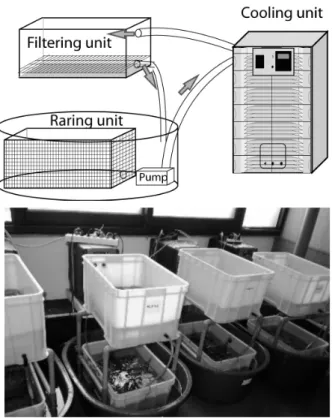
Fig. 1. Diagram (above) and photograph (below) showing the experimental system.
로 처리하는 사해식자로서의 역할도 새롭게 인식되고 있어 큰 구슬우렁이의 해양생태계에서 역할이나 기능 등에 관한 연구 가 시급히 필요하다. 지금까지 우리에게 알려져 있는 큰구슬 우렁이에 관한 연구나 보고로는 Amio(1963)의 생태학적 연 구와 Chung et al. (2001)의 생식주기 등의 보고가 있으나, 급격한 환경변동에 따른 적정온도와 염분, 먹이 등에 관한 연 구는 없는 실정이다. 본 연구는 큰구슬우렁이를 실험실에서 사 육하여 수온과 염분 및 먹이에 따른 성장과 생존에 대한 결과 이다.
재료 및 방법 1. 재료
본 연구에 사용된 큰구슬우렁이는 전라북도 군산시 해망동 수산물시장과 하제에서 2006년 12월부터 2007년 7월까지 필 요시에 구입하였으며, 살아 있는 상태로 군산대학교 자원생태 학실험실로 옮겨와 실험에 사용하였다. 운반한 큰구슬우렁이 는 10 일 정도 해수가 들어있는 수조에서 안정을 시킨 후 실 험용으로 사용하였다.
2. 사육수조
사육수조는 150 L의 원형수조안에 50 L의 사육수조와 여과
조를 설치했으며 수중펌프를 설치하여 순환여과방식을 사용했 다(Fig. 1). 각 수조는 온도조절기를 부착한 순환여과식 냉각 기를 이용하여 온도를 조절하였으며, 염분은 염분계(YSI Model 33)를 이용하여 매일 염분을 계측하고 해수와 담수를 보충하여 염분을 조절하였다.
3. 사육조건별 실험설계 1) 수온에 따른 생존율과 성장
큰구슬우렁이의 수온에 따른 생존과 성장을 알기위하여 2007년 1월 6일부터 2월 4일까지 30일 동안 큰구슬우렁이를 염분 30 psu인 여과 해수에 15℃, 20℃, 25℃, 30℃로 수온 을 설정하고 각각의 수조에 큰구슬우렁이 10 개체씩 넣어 실 험하였으며, 매 5일마다 각고와 전중량을 계측하였다. 먹이는 바지락을 5 일에 1 번씩 급이하였다.
2) 염분에 따른 생존율과 성장
큰구슬우렁이의 염분에 따른 생존과 성장을 알기위하여 2007년 2월 10일부터 3월 11일까지와 2007년 3월 14일부터 4월 12일까지 각각 30 일 동안 큰구슬우렁이를 수온 20℃인 여과 해수에 10 psu, 15 psu, 20 psu, 25 psu, 30 psu, 35 psu로 염분을 설정하고 각각의 수조에 큰구슬우렁이 10 개체 씩 넣어 실험하였으며, 매 5일마다 각고와 전중량을 계측하였 다. 먹이는 바지락을 5일에 1 번씩 급이 하였다.
3) 먹이에 따른 생존율과 성장
큰구슬우렁이의 먹이에 따른 생존과 성장을 알기 위하여 2007년 7월 13일에서 2007년 9월 10일까지 60일 동안 실험 하였다. 사육수조의 수온은 20℃, 염분은 30 psu였으며, 각각 의 수조에는 큰구슬우렁이 8 개체씩 수용하였고, 먹이는 바지 락(Ruditapes philippinarum), 자주새우(Crangon affinis), 갈치(Trichiurus lepturus)를 급이 하였으며, 매 5 일마다 각 고와 전중량을 계측하였다.
4. 계측과 분석
실험에서 측정을 하는 큰구슬우렁이는 실험 전에 각 개체마 다 각고, 각폭을 Vernier caliper로 측정하였고, 중량은 전자 저울을 사용하여 소수점 둘째 자리까지 측정하였다. 또한 사망 개체 수는 먹이 급이마다 패각을 회수하여 계수하였다. 성장 량, 증중량, 성장률(growth rate, %), 증중율(%), 일간 성장 률(daily growth rate, %), 일간 증중율(%) 등을 구하기 위 해 아래의 식으로 구하였다.
Growth rate
×
Daily growth rate(%) = growth rate/D
D: rearing days; W1: Initial shell width, shell height
Temperature (℃)
Mean total weight (g)1 Increment (g)
GR2 (%)
SGR3 (%/d)
Initial Final
15 29.90 ± 1.17 32.03 ± 1.58 2.13 6.88 0.229
20 29.17 ± 0.76 32.96 ± 1.01 3.79 12.20 0.407
25 30.00 ± 0.38 - - - -
30 29.83 ± 0.25 - - - -
1Mean ± standard error.
2GR (growth rate, %) = (LnWf - LnWi) × 100, where Wf = final total weight and Wi = initial total weight
3SGR (specific growth rate, % per day) = GR / T, where T is the rearing period in days.
Table 1. Growth performance of Glossaulax didyma didyma reared at different water temperatures for 30 days.
Fig. 2. Cumulative survival rate (%) of Glossaulax didyma didyma reared at different water temperatures for 30 days.
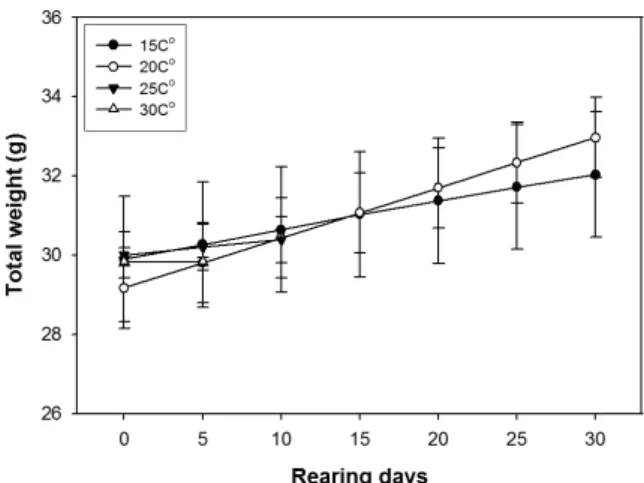
Fig. 3. Changes in total weight of Glossaulax didyma didyma reared at different water temperatures for 30 days. Vertical bars represent standard error.
and total weight; W2: Initial shell width, shell height and total weight.
실험 결과의 분석은 SPSS(window release 12)를 이용하여 one-way ANOVA 및 Duncan's multiple rage test에 의하 여 분석하였다.
결 과 1. 수온에 따른 생존율과 성장
수온에 따른 큰구슬우렁이의 생존율은 Fig. 2와 같다. 수온 별 생존율은 20℃의 전후에서 많은 차이를 보이는데 15℃와 20℃의 수조에서는 25℃와 30℃ 수조보다 높은 생존율을 보 였다. 특히 25℃와 30℃는 낮은 생존을 보이고 30℃의 경우 실험 4일째 되는 날에 모두 사망하였고, 25℃의 경우에는 실 험 15일까지 모두 사망하였다. 이에 반하여 15℃와 20℃의 경
우에는 실험 종료 시에 각각 50%와 60%의 생존율을 보였다.
이와 같은 결과는 큰구슬우렁이의 생존율에 수온이 큰 영향을 주고 있다는 것을 알 수 있다.
총중량으로 산정한 실험기간동안의 총증중량은 20℃에서 3.79 g, 15℃, 3.13 g, 25℃와 30℃에서는 모두 폐사하였다.
증중률은 20℃에서 12.20%, 15℃에서 9.95%였으며, 일간 증 중율은 20℃에서 0.407%, 15℃에서 0.332%였다(Table 1).
15℃보다 20℃에서 성장률이 좋았으며, 30℃에서는 실험 초 기부터 오히려 감소하였으며, 25℃에서도 거의 성장이 없다가 중도에 모두 폐사하였다(Fig. 3). 패각에 의한 각고와 각폭의 성장 조사 결과도 중량과 동일하게 나타났다(Fig. 4).
2. 염분에 따른 생존율과 성장
염분에 따른 큰구슬우렁이의 생존율은 Fig. 5와 같다. 염분 별 생존율은 25 psu의 전후에서 많은 차이를 보이는데 30 psu와 35 psu에서 높은 생존율을 보였다. 특히 10 psu와 15
Salinity (psu)
Mean total weight (g)1 Increment (g)
GR2 (%)
SGR3 (%/d)
Initial Final
10 32.38 ± 0.30 - - - -
15 33.09 ± 0.36 - - - -
20 32.74 32.86 0.12 0.366 0.012
25 32.37 ± 0.40 32.56 ± 0.14 0.19 0.585 0.020
30 32.16 ± 0.29 32.93 ± 0.21 0.77 2.366 0.079
35 32.42 ± 0.20 33.23 ± 1.23 0.81 2.468 0.082
1Mean ± standard error.
2GR (growth rate, %) = (LnWf - LnWi) × 100, where Wf = final total weight and Wi = initial total weight
3SGR (specific growth rate, % per day) = GR / T, where T is the rearing period in days.
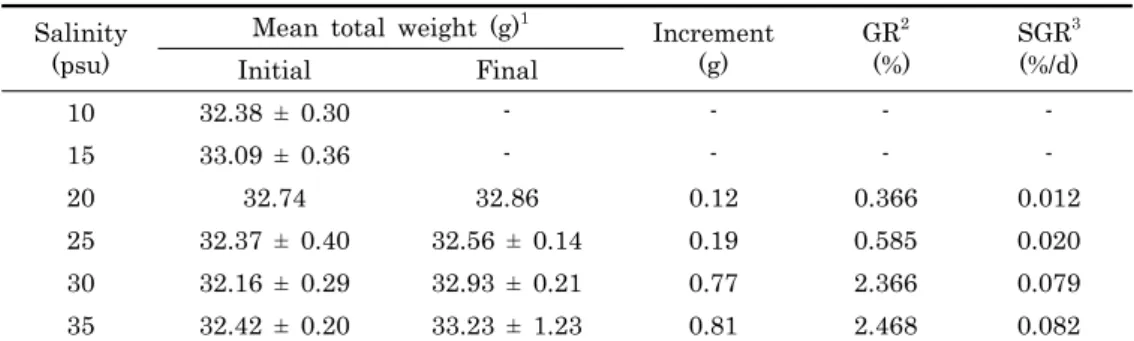
Table 2. Growth performance of Glossaulax didyma didyma reared at different salinity for 30 days.
Fig. 4. Changes in shell height of Glossaulax didyma didyma reared at different water temperatures for 30 days. Vertical bars represent standard error.
Fig. 5. Cumulative survival rate (%) of Glossaulax didyma didyma reared at different salinity for 30 days.
psu에서는 실험시작 10일 이내에 모두 폐사하였으며, 염분이 높을수록 폐사율이 낮아지는 경향을 보였다.
총중량으로 산정한 실험기간동안의 총증중량은 각각 35 psu에서 3.77 g, 30 psu에서 3.19 g, 25 psu에서 0.359 g, 20 psu에서 0.224 g이었고, 15 psu와 10 psu에서는 모두 중도에 폐사하였다. 증중률은 각각 35 psu에서 11.641%, 30 psu에서 9.766%, 25 psu에서 1.437%, 20 psu에서 0.896%
였으며, 일간 증중율은 각각 35 psu에서 0.388%, 30 psu에 서 0.326%, 25 psu에서 0.048%, 20 psu에서 0.030%로 끝 까지 생존한 실험구인 30 psu와 35 psu 실험구 사이의 증중 율에 대한 유의한 차이가 없었으며, 20 psu와 25 psu 실험구 도서로 비슷한 성장을 보였다(Table 2, Fig. 6). 염분에 대한 실험에서는 30 psu 이하에서는 염분이 낮을수록 폐사율이 높 아지고 성장률은 낮아지는 경향을 보였다. 패각에 의한 각고와
각폭의 조사 결과도 중량과 동일하게 나타났다(Fig. 7).
3. 먹이에 따른 생존율과 성장
총 60일간 사육한 먹이에 따른 큰구슬우렁이의 생존율은 Fig. 8과 같다. 새우류를 먹인 실험구가 62.5%, 패류를 먹인 실험구가 87.5%, 어류를 먹인 실험구가 75.0%로 패류를 먹인 실험구가 비교적 높은 값을 보였다.
총중량으로 산정한 실험기간 동안의 총증중량은 조개류 굽이 군에서 6.63 g, 어류 급이군에서 1.68 g, 새우류 급이군에서 1.50 g으로 나타났으며, 성장률은 조개류 급이군에서 15.001%, 어류 급이군에서 3.934%, 새우류 급이군에서 3.567%를 각각 나타내었다. 일간 성장율은 조개류 급이군에 서 0.250%, 어류 급이군에서 0.066%, 새우류 급이군에서 0.059% 순으로 나타나, 조개류 급이군의 성장이 가장 좋았고
Diet Mean total weight (g)1 Increment (g)
GR2 (%)
SGR3 (%/d)
Initial Final
Prawn 33.73 ± 0.32 34.83 ± 0.29a 1.10 3.198a 0.053a
Shellfish 33.54 ± 0.54 36.32 ± 0.47b 2.78 7.958b 0.133b
Fish 34.39 ± 0.40 35.12 ± 0.30a 0.81 2.339a 0.039a
1Mean ± standard error.
2GR (growth rate, %) = (LnWf - LnWi) × 100, where Wf = final total weight and Wi = initial total weight
3SGR (specific growth rate, % per day) = GR / T, where T is the rearing period in days.
Value in the same column with different superscripts are significantly different (p < 0.05).
Table 3. Growth performance of Glossaulax didyma didyma reared at different diets for 60 days.
Fig. 6. Changes in total weight of Glossaulax didyma didyma reared at different salinity for 30 days. Vertical bars represent standard error.
Fig. 7. Changes in shell height of Glossaulax didyma didyma reared at different salinity for 30 days. Vertical bars represent standard error.
Fig. 8. Cumulative survival rate (%) of Glossaulax didyma didyma fed at different diets for 60 days.
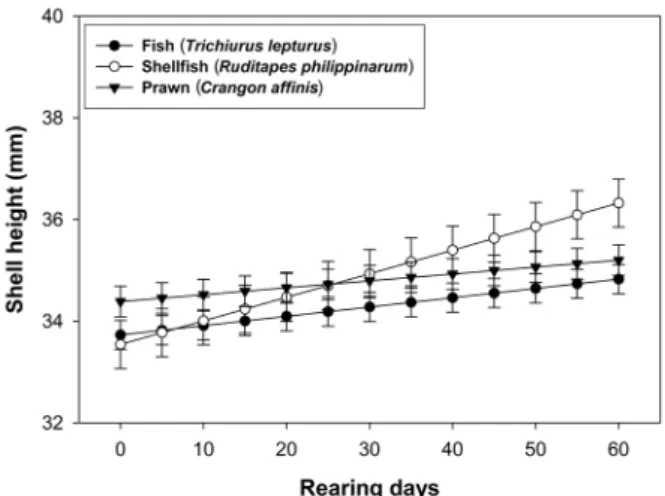
어류와 새우류 급이군은 유의적인 차이를 보이지 않았으며, 패 각에 의한 각고와 각폭의 조사 결과도 중량과 비슷한 경향을 보였다(Fig. 10).
고 찰
저서동물의 성장과 생존에 영향을 미치는 환경요인으로 수 온과 염분, 수심과 용존산소, 먹이 생물량 등이 있으며, 그중 수온은 대사작용과 활력 및 에너지 수지 등에 직접적인 영향을 미치며(Newell and Kofoed, 1977), 염분은 삼투압조절능력 에 의하여 해양생물의 분포와 생리적인 대사 기능에 밀접한 영 향을 주는 요인이다(Kinne, 1966). 또한 수온의 변화는 다양 한 생물학적 과정에 영향을 주며, 이러한 영향은 특히 성장과 생식주기 등에 큰 영향을 주어 대사율의 변화를 일으킨다고 하 였다(Kinne, 1970). 또한 Kim and Chin(2002)은 일반적으 로 해산패류의 경우 온도가 높을수록 대사율이 급격히 높아져 성장이 빠르지만 여름철 고수온기에는 고온에 대한 스트레스
Fig. 9. Changes in total weight of Glossaulax didyma didyma fed at different diets for 60 days. Vertical bars represent standard error.
Fig. 10. Changes in shell height of Glossaulax didyma didyma fed at different diets for 60 days. Vertical bars represent standard error.
를 겨울철의 저수온에 대한 스트레스 보다 더욱더 많이 받는다 고 보고한바 있다.
이러한 현상은 본 조사에서도 나타났는데 큰구슬우렁이는 20℃ 이하에서는 생존율이 60% 이상으로 비교적 높았으나 25℃ 이상의 수온에서는 수온이 높을수록 생존율이 급격히 감 소하였고 폐사일수가 짧았다. 또한 20℃ 이하에서의 온도가 높을수록 성장률이 높게 나타나 다른 해양생물들과 비슷한 경 향을 보였으며(Tsuchiya, 1983; Kim, 1999, 2006; Kim and Chin, 2002), Seon et al.(2005)은 나팔고둥(Charonia lampas sauliae)의 치패에 대한 수온별 생존율을 조사한 결 과 30℃에서는 10 일 만에 전량 페사하였다고 보고하여 본 조 사와 비슷한 결과를 보였다. 따라서, 연체동물을 비롯한 온대 해역의 해양생물들은 저수온에서는 대사율을 낮추어 비교적 오래 견딜 수 있지만 고수온에서는 대사율의 증가로 인하여 급 격히 폐사가 늘어나는 것으로 보인다.
염분별 큰구슬우렁이의 생존율은 염분이 비교적 높은 수조 에서 높은 생존율을 보였으며(30 psu: 70%; 35 psu: 70%), 30 psu 이하에서는 급격히 폐사율이 높아지는 것을 알 수 있 었다. Lee(2003)는 참전복(Haliotis discus hannai)의 환경 내성과 환경요인에 따른 에너지 수지에서 참전복 치패의 염분 내성은 19.5 psu로 나타났는데, 23.2 psu 이하에서는 성장이 크게 떨어졌고, 19.9 psu에서는 생존율에 있어서도 크게 영향 을 받았으며, 수온과 염분의 복합영향 하에서 크게 영향을 받 는다고 하였다.
마지막으로 먹이에 대한 성장에서는 자주새우(Crangon affinis), 바지락(Ruditapes philippinarum), 갈치(Tri- chiurus lepturus)를 급이한 수조 중에서 조개류를 급이한 수 조가 가장 좋은 성장과 생존율을 보였으며(p < 0.05), 새우류 와 어류를 급이한 실험구간의 차이는 없었다. 이러한 결과가
일반적으로 큰구슬우렁이의 주 먹이가 패류와 복족류로 알려 져 있는 결과(Yoo, 1976; Min et al., 2004)와 유사하게 나타 났지만, 이들이 어류나 새우류 등 기타 해양동물들의 사체를 어느 정도 먹는지는 알 수 없었다. 하지만 큰구슬우렁이의 대 부분의 먹이생물은 저서성 패류인 것만은 확실하다고 할 수 있 다.
요 약
본 논문은 수온과 염분 및 먹이에 따른 큰구슬우렁이의 생 존율과 성장을 실내 수조에서 실험한 결과이다. 30일동안 사 육한 수온별 생존율은 15℃(50%)와 20℃(60%)의 수조에서 25℃(50%)와 30℃(0%) 수조보다 높은 생존율을 보였다. 실 험기간동안의 총증중량은 20℃에서 3.79 g, 15℃에서 3.13 g, 25℃와 30℃에서는 모두 폐사하였다. 증중률은 20℃에서 12.20%, 15℃에서 9.95%였으며, 일간 증중율은 20℃에서 0.407%, 15℃에서 0.332%였다. 염분별 생존율은 30 psu(70%)와 35 psu(70%)에서 높은 생존율을 보였고, 20 psu에서는 10%로 낮게 나타났으며, 10 psu와 15 psu에서는 실험시작 10일 이내에 모두 폐사하였다. 총중량으로 산정한 실험기간 동안의 증중률은 35 psu에서 11.641%, 30 psu에 서 9.766%, 25 psu에서 1.437%, 20 psu에서 0.896%였으 며, 일간증중율은 35 psu에서 0.388%, 30 psu에서 0.326%, 25 psu에서 0.048%, 20 psu에서 0.030%였다. 총 60일간 사육한 먹이에 따른 큰구슬우렁이의 생존율은 새우류를 먹인 실험구가 62.5%, 패류를 먹인 실험구가 87.5%, 어류를 먹인 실험구가 75.0%로 패류를 먹인 실험구가 비교적 높은 값을 보였다. 총중량으로 산정한 실험기간동안의 총증중량은 조개 류 급이군에서 6.63 g, 어류 급이군에서 1.68 g, 새우류 급이
군에서 1.50 g의 순이었으며, 성장률은 조개류 급이군에서 15.001%, 어류 급이군에서 3.934%, 새우류 급이군에서 3.567%를 나타내었으며, 일간성장율도 조개류 급이군에서 0.250%, 어류 급이군에서 0.066%, 새우류 급이군에서 0.059% 순으로, 조개류 급이군에서의 성장이 가장 좋았으나, 어류와 새우류 급이군에서는 유의적인 차이를 보이지 않았다.
사 사
본 논문은 2007년도 군산대학교 수산과학연구소의 학술연 구보조비에 의하여 연구되었으며, 이에 감사를 드립니다.
REFERENCES
Amio, M. (1963) A comparative embryology of marine gastopods, with ecological considerations. Shimono- seki University of Fisheries, 12(2,3): 229-358.
Choe, B.L., Park, M.S., Jeon, L.G., Park, S.R. and Kim, H.T. (1999) Commercial Molluscs from the Freshwater and Continental Shelf in Korea.
National Fisheries Research and Development Institute Publish. 197 pp. [in Korean]
Chung, E.Y., An, C.M. and Kim, J.Y. (2001) Gonadal development and the reproductive cycle of the bladder moon, Glossaulac didyma (Mesogastropoda:
Naticidae), on the West Coast of Korea. The Yellow Sea, 7: 75-83.
Kim, D.G., Chung, E.Y., Shin, M.S. and Hwang, K.
(2007) Reproductive ecology of the bladder moon, Glossaulax didyma (Gastropoda: Naticidae) in Western Korea. Korean Journal of Malacology, 23(2):
189-198. [in Korean]
Kim, K.S and Chin, P. (2002) Influence of increased temperature on the standard metabolism in the marine bibalves acclimated to seasonal water temperature. 1. effects of acclimation temperature.
Journal of Korean Fisheries Society, 35(5): 463-468.
Kim, S.H. (2006) Molting and Growth of the Larval Swimming Crab, Portunus trituberculatus (Miers, 1876), at Different Water Temperature. M.S. Thesis, Kunsan National University, Gunsan, pp. 12-20. [in Korean]
Kim, S. K. (1999) Growth of the Juvenile Top Shell, Batillus cornutus in Food and Water Temperature.
M.S. Thesis, Cheju National University, Jeju, pp.
22-32. [in Korean]
Kinne, O. (1970) Temperature. In: Marine Ecology, Vol.
1. Environmental Factors, Part 1. (ed. by Kinne, O.) pp. 407-486. Wiley-Interscience. New York.
Kinne, O. (1996) Physiological aspects of animal life in estuaries with special reference to salinity.
Netherlands Journal of Sea Research, 3: 222-244.
Lee, J.A. (2003) The Energy Budgets in Various Environments and Environmental Tolerance of Ezo Abalone, Haliotis discus hannai. Ph.D. Thesis, Pukyong National University, Busan, 26 pp. [in
Korean]
Min, D.K., Lee, J.S., Koh, D.B. and Je, J.G. (2004) Mollusks in Korea. (revised supplementary edition).
566 pp. Hanguel Graphic, Busan.
Newell, R.C. and Kofoed, L.H. (1977) Adjustment of the components of energy balance in the gastropod Crepidula fornicata in response to thermal acclimation. Marine Biology, 44: 275-286.
Seon, S.C., Kim, J.M., Jung, C.G., Yun, S.J. and Kang, K.H. (2005) Influence of water temperature on spawning induction, larval and spat rearing of trumpet shell, Charonia lampas sauliae. Korean Journal of Malacology, 21(2): 107-111. [in Korean]
Tsuchiya, M. (1983) Mass mortality in a population of the mussel Mytilus edulis L. caused by high temperature on rocky shores. Journal of Experimental Marine Biology and Ecology, 66:
101-111.
Yoo, J.S. (1976) Korean Shells in Colour. 196 pp. Iljisa, Seoul. [in Korean]