• 검색 결과가 없습니다.

Effect of the Mg Ion Containing Oxide Films on the Biocompatibility of Plasma Electrolytic Oxidized Ti-6Al-4V

N/A
N/A
Protected

Academic year: 2021

Share "Effect of the Mg Ion Containing Oxide Films on the Biocompatibility of Plasma Electrolytic Oxidized Ti-6Al-4V"

Copied!
6
0
0

로드 중.... (전체 텍스트 보기)

전체 글

(1)

한국표면공학회지 J. Korean Inst. Surf. Eng.

Vol. 49, No. 2, 2016.

http://dx.doi.org/10.5695/JKISE.2016.49.2.135

<연구논문>

ISSN 1225-8024(Print) ISSN 2288-8403(Online)

Effect of the Mg Ion Containing Oxide Films on the Biocompatibility of Plasma Electrolytic Oxidized Ti-6Al-4V

Kang Lee, Han-Cheol Choe

*

Department of Dental Materials & Research Center of Nano-Interface Activation for Biomaterials &

Research Center for Oral Disease Regulation of the Aged, School of Dentistry, Chosun University, Gwangju 61452, Korea

(Received February 25 , 2016 ; revised March 19, 2016 ; accepted April 26, 2016)

Abstract

In this study, we prepared magnesium ion containing oxide films formed on the Ti-6Al-4V using plasma electrolytic oxidation (PEO) treatment. Ti–6Al–4V surface was treated using PEO in Mg containing electrolytes at 270V for 5 min. The phase, composition and morphology of the Mg ion containing oxide films were evaluated with X-ray diffraction (XRD), Attenuated total reflectance Fourier transform infrared (ATR-FTIR) and filed-emission scanning electron microscopy (FE-SEM) with energy dispersive X-ray spectrometer (EDS).

The biocompatibility of Mg ion containing oxide films was evaluated by immersing in simulated body fluid (SBF). According to surface properties of PEO films, the optimum condition was formed when the applied was 270 V. The PEO films formed in the condition contained the properties of porosity, anatase phase, and near 1.7 Ca(Mg)/P ratio in the oxide film. Our experimental results demonstrate that Mg ion containing oxide promotes bone like apatite nucleation and growth from SBF. The phase and morphologies of bone like apatite were influenced by the Mg ion concentration.

Keywords : Biocompatibility, Plasma electrolytic oxidation; Magnesium, Bone like apatite

1. Introduction

Titanium (Ti) and Ti-6Al-4V ELI (extra low inters- titial) are the most extensively used orthopedic and dental implant materials that are currently on the market. They have good biocompatibility, corrosion resistance and mechanical properties [1, 2]. However, being bio-inert metallic implants, they cannot bond to living bone directly after implantation into a host body [3, 4]. Therefore, various surface modifications have been attempted to improve the bioactive bone- bonding ability of Ti implant [5-7].

The plasma electrolytic oxidation (PEO) produces

thick, hard and strong oxide coatings on valve metal (Ti, Mg, Al, Zr and their alloys) by electrochemical oxidation process [8, 9]. The PEO technique is also called as micro arc oxidation (MAO), anodic spark oxidation or micro plasma oxidation. The PEO forms anodic oxidation of light metals and alloys in aqueous electrolyte solutions under a condition of plasma discharge at exceeding the critical values of the polarization potential [10, 11]. PEO process shows the possibility of incorporating Ca and P ions on the Ti surface by controlling the coating para- meters such as composition of the electrolyte, applied voltage, current density and treatment times [12, 13].

The Ca

2+

and PO

43-

ions, which occur at high temperatures in micro discharge channels during PEO process, react with each other to form the hydroxyapatite (HAp) phase in the coating [7, 14, 15]. In addition, the PEO flims which are uniformly coated on complex shaped metal surfaces are thick and porous [16].

* Corresponding Author: Han-Cheol Choe

Department of Dental Materials & Research Center of Nano- Interface Activation for Biomaterials & Research Center for Oral Disease Regulation of the Aged, School of Dentistry, Chosun University

Tel: +82-62-230-6896 ; Fax: +82-62-230-6896

E-mail: hcchoe@chosu n.ac.kr

(2)

136 Kang Lee 외/한국표면공학회 49 (2016) 135-140

Mg ion plays a key role in bone metabolism, since it influences osteoblast and osteoclast activity. From previous studies, it has been found that Mg ions improve the bone formation on Ti alloys [17].

Therefore, in this study, a series of Mg ion containing porous oxide layer are produced on Ti- 6Al-4V using PEO treatment, with the substitution degree at 5, 10, and 20%, respectively. This study evaluated the morphologies and bone formation properties on Mg ion containing porous oxide layers.

2. Experimental procedures 2.1. PEO treatment

Ti-6Al-4V ELI disk (grade 5, Timet Co., USA;

diameter, 10 mm, thickness, 3 mm) were used as substrates for PEO treatment. The substrate surface was polished with a series of SiC abrasive papers. The polished disk were washed thoroughly with distilled water and ultrasonicated for 10 min in ethyl alcohol and used as control group. Samples were used as anodes and Pt rod was used as cathode in different electrolytic bathes which are shown in Table 1. A pulsed DC power supply was employed. The optimum applied voltage and PEO treated time were conducted to at 270 V (180 ~ 400 V) and 5 min respectively. The temperature of the electrolyte was kept below 25°C by a cooling system. The PEO films formed on samples were flushed with water after the treatment and dried in warm air.

2.2. Bone like apatite formation in simulated body fluid (SBF)

To examine the bioactivity, the PEO films formed on samples and untreated Ti-6Al-4V samples (control) were immersed in SBF for 7 days. The SBF was prepared by dissolving the ion concentrations such as Na

+

142.0, K

+

5.0, Ca

2+

2.5, Mg

2+

1.5, CI

147.8, HCO

3

4.2, HPO

42−

1.0, and SO

42−

0.5 mM nearly equal to those in human blood plasma. The pH and temperature of SBF were adjusted at 7.4 and 36.5°C with tris- hydroxymethyl-aminomethane ((CH

2

OH)

3

CNH

3

) and hydrochloric acid.

2.3. Surface characterization

The PEO films formed on the Ti-6Al-4V surfaces were characterized by a thin film X-ray diffractometer (TF-XRD, X'pert Philips, Netherlands). The surfaces of the SBF-immersed Ti-6Al-4V samples were observed by a field emission scanning electron microscopy (FE-SEM, S-4800 Hitachi, Japan). Energy dispersive X-ray spectroscopy (Inca program, Oxford, UK) was used to analyze the Mg, Ca and P spectra after process of Mg ion containing PEO films surfaces and process of bone like apatite formation in the SBF for 7 days. Attenuated total reflectance Fourier transform infrared (ATR-FTIR, IFS66V/S & HYPERION 3000, Bruker Optiks, Germany) was used to test the possible bonding before and after immersing in SBF.

The spectra were recorded form 4000 to 750 cm

-1

, with a resolution of 8 cm

-1

and ATR attachment was used to single reflection diamond crystal.

3. Results and Discussion

TF-XRD analysis demonstrated the presence of TiO

2

(anatase and rutile) using PEO films formed on Ti-6Al-4V at 180 ~ 400 V in 0.15 M calcium acetate monohydrate and 0.02 M calcium glycerophosphate solution. The results were shown in Fig. 1. At the below 260 V, PEO films formed on Ti-6Al-4V surface showed the strong peak of the anatase phase (ICDD file no. 84–1286), whereas the intensity of α (Ti-6Al-4V) peaks decreased. When the above 260 V, rutile phase (ICDD file no. 88-1175) began to appeared. After further increasing the voltage, the

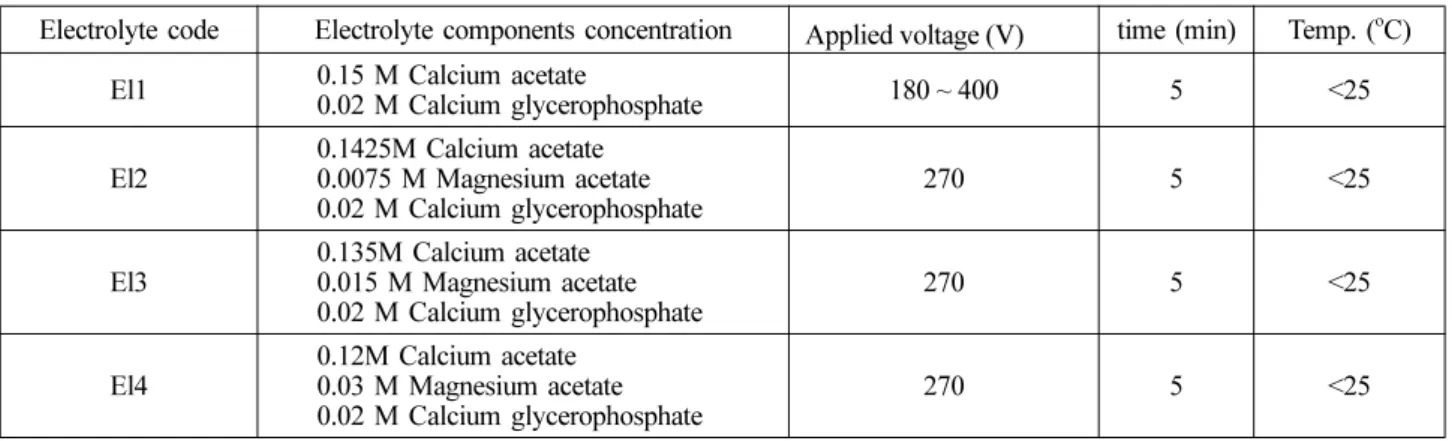
Table 1. The electrolyte compositions used for PEO treatment of Ti-6Al-4V.

Electrolyte code Electrolyte components concentration Applied voltage (V) time (min) Temp. (

o

C) El1 0.15 M Calcium acetate

0.02 M Calcium glycerophosphate 180 ~ 400 5 <25

El2

0.1425M Calcium acetate 0.0075 M Magnesium acetate 0.02 M Calcium glycerophosphate

270 5 <25

El3

0.135M Calcium acetate 0.015 M Magnesium acetate 0.02 M Calcium glycerophosphate

270 5 <25

El4

0.12M Calcium acetate 0.03 M Magnesium acetate 0.02 M Calcium glycerophosphate

270 5 <25

(3)

intensity of rutile phase increased, while that of anatase decreased steadily.

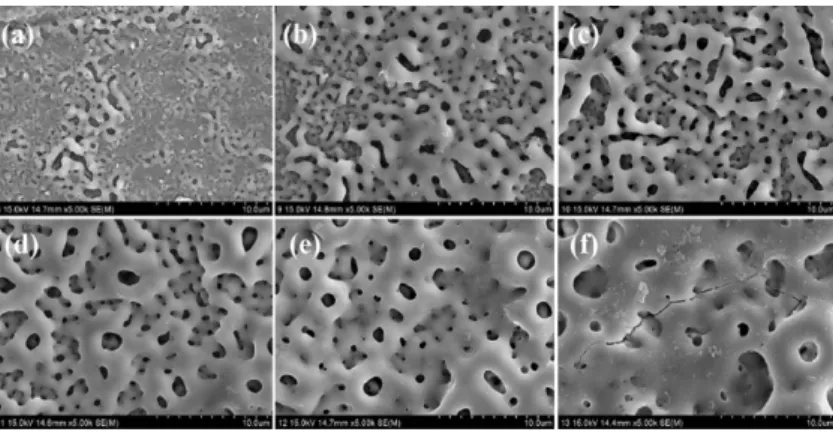
Figure 2 shows FE-SEM image of PEO films formed on Ti-6Al-4V at 180~400 V. Pore shape and numbers depend on the applied voltage. The PEO films formed on Ti-6Al-4V which have porous structure were very rough due to existence of the micro discharge channels during process. Many visible sparks are seen on the coating surface when the applied voltage exceeds the critical value necessary for breaking of barrier layer. A hole structure like a crater occurs on the surface with spraying of molten materials after a spark is extinguished during PEO process. At the above 260 V, the size of pore increased, and crack occurred around the pore, whereas pore numbers decreased.

The cracks occur on the PEO films with the effect of thermal stresses in the plasma discharge channels because the molten oxide is rapidly solidified by

electrolyte [18]. Also, the concentrations of Ca/P molar ratio increased with increasing applied voltage.

At applied 270 V, the coated surface and layer showed the uniform pore formation and showed Ca/P ratio of near 1.7 from energy dispersive X-ray spectroscopy analysis, respectively at Fig. 3.

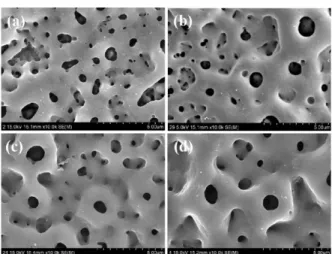
Figure 4 shows the surface morphologies of PEO films formed on Ti-6Al-4V at 270 V in various electrolytes. Mg ion containing PEO films showed the uniformly porous surface. No microcrack was observed in all the PEO films. EDS results showed that condition of El1, El2, El2, El3, and El4 exhibits a molar Ca(Mg)/P ration of 1.7, 1.68(0.032), 1.62 (0.073)and 1.53(0.16), respectably (not shown).

Figure 5 shows the FE-SEM images of the bone like apatite obtained after 7 days immersion in SBF solution on the PEO-treated surfaces of Ti-6Al-4V in various electrolytes. Fig. 5(a) shows that deposits are rarely present on the El1 surface. For the Mg ion

Fig. 2. FE-SEM images of PEO films formed on Ti-6Al-4V at various voltages in El1: (a)180 V, (b) 220 V, (c) 260 V, (d) 300 V , (e) 350 V, and (f) 400 V.

Fig. 3. Variation of Ca/P ratio in PEO films formed on Ti-6Al-4V at various voltages in El1.

Fig. 1. XRD patterns of PEO films formed on Ti-6Al-

4V at various voltages in El1.

(4)

138 Kang Lee 외/한국표면공학회 49 (2016) 135-140

containing PEO films samples, Mg ions play a role in formation and growth of bone-like apatite, so thick film like precipitates are observed compared to El1 sample (Fig. 5(b), (c) and (d)). In addition, presence of Mg ions is thought to increase the concentration of Mg ions in the SBF solution adjacent to the surfaces of specimens, which, in turn, results in elevated Ca

2+

concentration [19], namely improved super-saturation level. The enhancement of super- saturation level leads the improvement of Ca-P precipitation on the surfaces of Mg ion containing PEO films. This mechanism has also been reported by Pham et al. [20]. Furthermore, the promotion of the ability to form bone like apatite as a result of Mg ion containing PEO films can be explained as follows: As mentioned above, Mg(OH)

2

is formed on surface of the Mg ion containing PEO films.

Mg(OH)

2

is slightly dissolved in SBF where Cl

-

ion are present, forming highly soluble MgCl

2

and hydrogen gas [21]. Formation of hydrogen gas increases the pH in SBF and promotes the bone like apatite nucleation by the ionic activity of apatite [22].

Figure 6 shows XRD patterns of the bone like apatite obtained after 7 days immersion in SBF solution on the PEO-treated surfaces of Ti-6Al-4V in various electrolytes. The diffraction peaks of HAp were observed in the all samples. The peaks are clearly indicative of HA throughout the pattern with 2 θ values that correspond closely to those observed in the ICDD file #09-0432 for HAp. The charac- teristic peaks of HAp crystals suggested that HAp crystals are formed on the PEO-treated surface.

Figure 7 shows the ionic interface between PEO film formed Ti-6Al-4V and bone-like apatite formed PEO films containing Mg ion was estimated from ATR-FTIR measurement of the immersed in SBF for 7 days. The spectrum of PEO film formed Ti-6Al-4V showed a major peak at 1135 cm

-1

stretching vibration of the P-O-H groups in the main chain. In spectrum of the immersed in SBF 7 days on El1, El2, El3 and El4 samples, a broad peak appeared at around 1035 cm

-1

vibration of ionized Ca and Mg ions interacting with phosphate ions on the surface in SBF solution.

A broad absorption band at 3450 cm

-1

is attributable to the stretching mode apatite OH groups. ATR-FTIR results further confirm that bone like apatite are grown on the PEO films containing Mg ion.

Fig. 6. XRD patterns of the bone like apatite obtained after 7 days immersion in SBF solution on the PEO- treated surfaces of Ti-6Al-4V in various electrolytes of (a) El1, (b) El, (c) El3, and (d) El4.

Fig. 4. FE-SEM images of PEO films formed on Ti- 6Al-4V at 270V in various electrolytes of (a) El1, (b) El2, (c) El3, and (d) El4.

Fig. 5. FE-SEM images of the bone like apatite

obtained after 7 days immersion in SBF solution on

the PEO-treated surfaces of Ti-6Al-4V in various

electrolytes of (a) El1, (b) El2, (c) El3, and (d) El4.

(5)

4. Conclusion

This study demonstrated that PEO films containing Mg ion on Ti-6Al-4V was prepared by PEO treatment in various electrolytes. In case of PEO treated Ti-6Al-4V at applied 270 V, porous TiO

2

layers mainly consisted of anatase phase, without microcrack, produced on the surface of Ti-6Al-4V.

The EDS results showed (Ca+Mg)/P ratio of 1.7, regardless of Mg ion concentrations.

Depending on the Mg concentration, bone like apatite formed nano plate-like precipitate on PEO films containing Mg ion, uniform and thinner coating layers were formed on inner pore surfaces. The phase and morphologies of bone like apatite deposits were influenced by the Mg ion concentration. The promising results successfully demonstrate the immense potential of PEO films containing Mg ion for dental and biomaterials applications.

Acknowledgement

This work was supported by NRF: 2015H1C1A 1035241.

References

[1] T. Albrektsson, P. I. Brånemark, H. A. Hansson, J. Lindstrom, Osseointegrated titanium implants.

Requirements for ensuring a long-lasting, direct

bone-to-implant anchorage in man, Acta Orthop.

Scand, 52 (1981) 155-170.

[2] C. Yao, T. J. Webster, Anodization: a promising nano-modification technique of titanium implants for orthopedic applications, J. Nanosci. Nanotechnol, 6 (2006) 2682-2692.

[3] B. D. Ratner, Titanium in medicine: material science, surface science, engineering, biological responses and medical application, Springer, Berlin, (2001) 10.

[4] M. P. Thomsen, A. S. Eriksson, R. Olsson, L. M.

Bjursten, P. I. Brånemark, L. E. Ericson, Mor- phological studies on titanium implant inserted in rabbit knee-joint, Adv. Biomater, 7 (1987) 87-92.

[5] K. D. Groot, R. G. T. Geesink, C. P. A. T. Klein, P. Serekian, Plasma sprayed coatings of hydroxy- apatite, J. Biomed. Mater. Res, (1987) 7, 1375- 1381.

[6] Y. H. Jeong, W. G. Kim, H. C. Choe, Electrochemical behavior of nano and femtosecond laser textured titanium alloy for implant surface modification, J.

Nanosci. Nanotechnol, 11 (2011) 1581-1584.

[7] K. Lee, B. H. Moon, Y. G. Ko, H. C. Choe, Transmission elecrtron microscopy application for the phenomena of hydroxyapatite precipitation in micropore-structured Ti alloy, Surf. Interface Anal, 44 (2012) 1492-1496.

[8] S. Stojadinovic, R. Vasilic, M. Petkovic, B. Kasalica, I. Belca, A. Zekic, L. J. Zekovic, Characterization of the plasma electrolytic oxidation of titanium in sodium metasilicate, Appl. Surf. Sci, 265 (2013) 226-233.

[9] S. Durdu, S. Bayramoglu, A. Demirtas, M. Usta, A.H. Ucisik, Characterization of AZ31 Mg Alloy coated by plasma electrolytic oxidation, Vacuum, 88 (2013) 130-133.

[10] A. Polat, M. Makaraci, M. Usta, Influence of sodium silicate concentration on structural and tribological properties of micro arc oxidation coatings on 2017A aluminum alloy substrate, J.

Alloys Compd, 504 (2010) 519-526.

[11] A. L. Yerokhin, X. Nie, A. Leyland, A. Matthews, Charaterisation of oxide films produced by plasma electrolytic oxidation of a Ti-6Al-4V alloy, Surf.

Coat. Tech, 130 (2000) 195-206.

[12] K. H. Nan, T. Wu, J.H. Chen, S. Jiang, Y. Huang, G.X. Pei, Strontium doped hydroxyapatite film formed by micro-arc oxidation, Mater. Sci. Eng.

C, 29 (2009) 1554-1558.

[13] W. H. Song, Y. K. Jun, Y. Han, S. H. Hong, Biomimetic apatite coatings on micro-arc oxidized titania, Biomaterials, 25 (2004) 3341-3349.

[14] S. Durdu, O. F. Deniz, I. Kutbay, M. Usta, Fig. 7. ATR-FTIR spectra of (a) PEO film formed on

Ti-6Al-4V in El1, the bone like apatite obtained after 7

days immersion in SBF solution on the PEO-treated

surfaces of Ti-6Al-4V in various electrolytes of (b) El1,

(c) El2, (d) El3, and (e) El4.

(6)

140 Kang Lee 외/한국표면공학회 49 (2016) 135-140

Characterization and formation of hydroxyapatite on Ti-6Al-4V coated by plasma electrolytic oxidation, J. Alloys Compd, 551 (2013) 422-429.

[15] M. S. Kim, J. J. Ryu, Y. M. Sung, One-step approach for nano-crystalline hydroxyapatite coating on titanium via micro-arc oxidation, Electrochem.

Commun, 9 (2007) 1886-1891.

[16] T. Hanawa, Biofunctionalization of titanium for dental implant, Jpn. Dent. Sci. Rev, 46 (2010) 93-101.

[17] Y. M. Ko, K. Lee, B. H. Kim, Effect of Mg ion on formation of bone-like apatite on the plasma modified titanium surface, Surf. Coat. Tech, 228 (2013) S404-S407.

[18] R. C. Barik, J. A. Wharton, R. J. K. Wood, K.

R. Stokes, R. L. Jones, Corrosion, erosion and erosion-corrosion performance of plasma electrolytic oxidation (PEO) deposited Al

2

O

3

coatings, Surf.

Coat. Tech, 199 (2005) 158-167.

[19] K. S. TenHuisen, P. W. Brown, Effects of magnesium on the formation of calcium-deficient hydroxyapatite form CaHPO

4

·2H

2

O and Ca

4

(PO

4

)

2

O, J. Biomed. Mater. Res, 36 (1997) 306-314.

[20] M. T. Pham, M. F. Maitz, W. Matz, H. Reuther, E. Richter, G. Steiner, Promoted hydroxyapatite nucleation on titanium ion-implanted with sodium, Thin Solid Films, 379 (2000) 50-56.

[21] M. P. Staiger, A. M. Pietak, J. Huadmai, G. Dias, Magnesium and its alloys as orthopedic biomaterials:

A review, Biomaterials, 27, (2006) 1728-1734.

[22] P. N. De Aza, F. Gutian, A. Merlos, E. Lora-

Tamayo, S. De Aza, Bioceramic-simulated body

fluid interfaces: pH and its influence of hydroxy-

apatite formation, J. Mater. Sci., Mater. Med, 7

(1996) 399-402.

수치

Table 1. The electrolyte compositions used for PEO treatment of Ti-6Al-4V.
Figure 5 shows the FE-SEM images of the bone like apatite obtained after 7 days immersion in SBF solution on the PEO-treated surfaces of Ti-6Al-4V in various electrolytes
Figure 7 shows the ionic interface between PEO film formed Ti-6Al-4V and bone-like apatite formed PEO films containing Mg ion was estimated from ATR-FTIR measurement of the immersed in SBF for 7 days

참조

관련 문서

In this study, surface characterization of Mg-doped hydroxyapatite coatings on Ti-25Ta-xHf alloys after plasma electrolytic oxidation(PEO) for dental implants

In this study, in order to increase corrosion resistance and biocompatibility of Cp-Ti and Ti-6Al-4V alloy that surface of manufactured alloy was coated with TiN

The surface of untreated Ti, SLA treated Ti, and AA plasma polymerized SLA/Ti were also examined for their proliferation and differentiation of

웹 표준을 지원하는 플랫폼에서 큰 수정없이 실행 가능함 패키징을 통해 다양한 기기를 위한 앱을 작성할 수 있음 네이티브 앱과

_____ culture appears to be attractive (도시의) to the

【판결요지】[1] [다수의견] 동일인의 소유에 속하는 토지 및 그 지상 건물에 관하여 공동저 당권이 설정된 후 그 지상 건물이 철거되고 새로 건물이 신축된 경우에는

The index is calculated with the latest 5-year auction data of 400 selected Classic, Modern, and Contemporary Chinese painting artists from major auction houses..

1 John Owen, Justification by Faith Alone, in The Works of John Owen, ed. John Bolt, trans. Scott Clark, &#34;Do This and Live: Christ's Active Obedience as the