ISSN: 1738-7167
DOI: http://dx.doi.org/10.7731/KIFSE.2016.30.4.006
성능위주 연기제어 설계지침 분석
김정엽
한국건설기술연구원 화재안전연구소
Analysis of Performance-based Design Guides of Smoke Control System
Jung-Yup Kim
Fire Research Institute, Korea Institute of Civil Engineering and Building Technology (Received May 18, 2016; Revised July 18, 2016; Accepted August 12, 2016)
요 약
건축물에서의 연기제어 시스템과 관련하여 국내에서는 거실에 대한 배연기준과 피난계단 및 부속실에 대한 제연기준 이 제시되고 있으나, 대형화 · 고층화 · 복합화 되어가는 첨단 건축물에 대한 적용성을 검토하면 국내 설계기준에 따른 연기제어 시스템은 화재시 연기안전을 확보하기 곤란할 수 있다. 따라서 대형 · 고층 · 복합의 첨단 건축물에 대한 화 재시 연기안전성을 높이고 화재와 건축물 특성에 따른 상호 연기제어 연계성 확보와 통합적 설계가 가능한 성능위주 연 기제어의 적용이 요구된다. 본 논문에서는 국내 연기제어 기준을 분석하고 개선이 필요한 부분을 제시하였으며, 선진외 국에서의 성능위주 설계 수행에 대한 법체계와 성능위주 연기제어 설계의 지침을 조사하고 분석하였다.
ABSTRACT
With regard to smoke control system, the design guidelines of smoke exhaust for accommodation and smoke control for evacuation stairs and vestibule has been proposed domestically, but after reviewing the applicability to modern build- ings that tend to be larger, higher and complex, a smoke control system according to domestic design guidelines might have difficulty in securing the safety from smoke in a fire. Therefore, it is necessary to adopt the performance-based design of a smoke control system that can enhance the safety and integrate the smoke control functions and design depending on the characteristics of fire and building structure in the case of fire in a large, high-rise, and complex build- ing. This study analyzed the domestic design guidelines of a smoke control system and this paper proposes the part requir- ing improvement, and examines the legal system and guidelines on performance-based design of smoke control system in foreign countries.
Keywords : Performance-based design, Smoke control, Design guideline, Building regulation, Building code
1. 서 론
국내의 현행 시방위주 연기제어 설계기준은 공간중심의
“건축법”과 시설중심의 “화재예방, 소방시설 설치 · 유지 및 안전관리에 관한 법률”에 제시되고 있으며, 세부 설계 방안으로 “건축법”에서는 자연배연 방식을, “화재예방, 소 방시설 설치 · 유지 및 안전관리에 관한 법률”에서는 기계 배연과 급기가압 방식을 규정하고 있다. 이러한 시방위주 설계기준은 고층화와 대형화되는 첨단 건축물에서 재실자 의 연기안전 확보와 소화활동지원을 효율적으로 달성하기 곤란할 수 있기 때문에, 이에 대한 보완방안으로서 건축물 과 화재 특성을 반영하고 화재공학적 타당성을 기반으로
연기 안전성을 확보할 수 있는 성능위주 연기제어 설계기 준이 개발되어 적용될 필요가 있다.
성능위주 연기제어 설계기준의 필요성과 이에 대한 적 용사례를 살펴보면 다음과 같다. Park et al. (2009)은 특수 한 아트리움이 포함된 건축물을 추진하는 과정에서 설계 안이 시방에 따른 방화구획을 만족할 수 없게 되었고 이에 대한 안전성을 검토하기 위해서 영국의 성능위주 설계기 준을 기반으로 시나리오를 작성하였다(1). 이러한 시나리오 에 따라 피난과 연기확산 수치해석을 수행하였고 연기 안 전성을 확보한 설계를 제시하였다. Choi et al. (2011)은 대규모 인원이 운집하는 실내경기장에 대해서 현재 배연 설비의 설치기준이 부재한 것은 인명안전 측면에서 문제
E-Mail: [email protected]
TEL: +82-31-369-0506, FAX: +82-31-369-0540
가 있는 것으로 판단하고 있으며, 성능위주 설계기법을 바 탕으로 피난과 연기유동의 수치해석을 수행하고 실내경기 장의 연기 안전성을 검토하였다(2). 한편 성능위주의 설계 과정이 객관성을 갖기 위해서는 국가적으로 상세한 설계 기법이 제시되어야 함을 강조하고 있다. Soo (2011)는 초 고층 건축물의 경우 바람의 영향으로 배연창의 설치가 곤 란하고 또한 기계배연을 적용하면 층고가 높아지는 문제 점이 발생하므로, 현행 연기제어 기준 이외의 연기안전 확 보방안이 적용될 수 있도록 성능위주 연기제어 설계기법 의 도입 필요성을 언급하고 있다(3).
앞의 분석내용과 같이 아트리움이나 실내경기장과 같은 대공간 및 초고층 건축물 등의 특수 건축물에 있어서는 성 능위주 연기제어 방안에 따른 연기안전 설비의 적용이 효 과적으로 수행되어야 하며, 이를 위해서는 타당성과 객관 성이 인정되는 성능위주 연기제어 설계기준의 정립이 선 행되어야 한다.
선진외국에서는 수많은 화재공학적 연구결과를 바탕으 로 연기제어를 포함하는 성능위주의 화재안전 설계방안을
제시하고 있으며, 이를 뒷받침하도록 국가 법체계와 상세 설계지침을 구축하고 있다. 즉 시공위주 설계방안과 성능 위주 설계방안이 실제 건축물의 시공과 유지관리에서 제반 조건에 따라 효과적으로 적용될 수 있도록 건축과 소방분 야 법체계가 구성되어 있으며, 성능위주 설계방안 채택시 이를 객관적으로 진행할 수 있도록 국가차원의 설계지침이 제공되고 있다. 국내에서도 2011년부터 소방시설의 성능위 주 설계가 본격적으로 도입되어 일정 규모 이상의 건축물 에 대해서 의무화가 되었으나, 현재 소방시설 자체의 성능 위주 설계 보다는 화재발달과 피난시간 중심의 수치해석 에 따른 피난 안전성의 평가 위주로 수행되고 있다(4).
이상과 같이 특수 건축물에 있어서는 안전성과 경제성 측면에서 성능위주 연기제어의 설계방안의 정립과 적용이 매우 필요하며, 본 연구에서는 그 일환으로서 국내 연기제 어 기준을 분석하고 성능위주 연기제어 시스템 도입의 필 요성을 분석하였으며, 선진외국의 성능위주 설계의 법체계 를 조사 · 분석하였다. 또한 BS 7974, International Fire Engineering Guidelines, Engineering Guide to Performance-
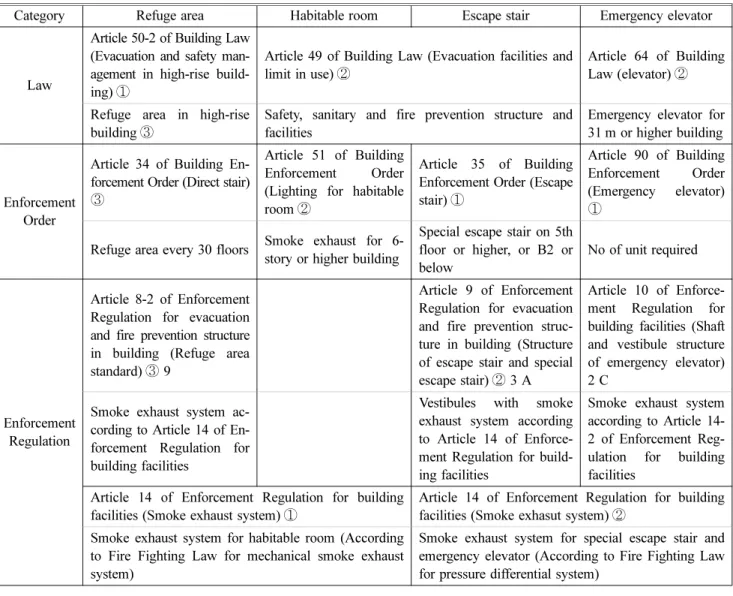
Table 1. Provisions of Smoke Control System in Building Law
Category Refuge area Habitable room Escape stair Emergency elevator
Law
Article 50-2 of Building Law (Evacuation and safety man- agement in high-rise build- ing) ①
Article 49 of Building Law (Evacuation facilities and limit in use) ②
Article 64 of Building Law (elevator) ②
Refuge area in high-rise building ③
Safety, sanitary and fire prevention structure and facilities
Emergency elevator for 31 m or higher building
Enforcement Order
Article 34 of Building En- forcement Order (Direct stair)
③
Article 51 of Building Enforcement Order (Lighting for habitable room ②
Article 35 of Building Enforcement Order (Escape stair) ①
Article 90 of Building Enforcement Order (Emergency elevator)
①
Refuge area every 30 floors Smoke exhaust for 6- story or higher building
Special escape stair on 5th floor or higher, or B2 or below
No of unit required
Enforcement Regulation
Article 8-2 of Enforcement Regulation for evacuation and fire prevention structure in building (Refuge area standard) ③ 9
Article 9 of Enforcement Regulation for evacuation and fire prevention struc- ture in building (Structure of escape stair and special escape stair) ② 3 A
Article 10 of Enforce- ment Regulation for building facilities (Shaft and vestibule structure of emergency elevator) 2 C
Smoke exhaust system ac- cording to Article 14 of En- forcement Regulation for building facilities
Vestibules with smoke exhaust system according to Article 14 of Enforce- ment Regulation for build- ing facilities
Smoke exhaust system according to Article 14- 2 of Enforcement Reg- ulation for building facilities
Article 14 of Enforcement Regulation for building facilities (Smoke exhaust system) ①
Article 14 of Enforcement Regulation for building facilities (Smoke exhasut system) ②
Smoke exhaust system for habitable room (According to Fire Fighting Law for mechanical smoke exhaust system)
Smoke exhaust system for special escape stair and emergency elevator (According to Fire Fighting Law for pressure differential system)
based Fire Protection, Code of Practice for Fire Safety in Building 등의 주요 성능위주 설계지침에 대해 분석을 수
행하였다(5-8).
2. 국내 연기제어 기준 분석
국내의 건축물 연기제어 설계기준은 Table 1 및 Table 2 와 같이 “건축법”과 “화재예방, 소방시설 설치 · 유지 및 안전관리에 관한 법률”에 혼재되어 있으며, 건축물 전체 구조와 연기유동을 고려한 적용이 곤란하다. 이로 인해서 연기안전을 위한 종합적이고 체계적인 설계와 운영 및 유 지관리가 힘든 것으로 판단된다. 국내 연기제어 설계 기준
Table 2. Provisions of Smoke Control System in Law for Fire Prevention, Installation And Maintenance of Fire Fighting Facili- ties and Safety Management
Category Relevant provisions
Law
Article 2 of Law for fire prevention, installation and maintenance of fire fighting facilities and safety man- agement (Definition) ① 1
Article 9 of Law for fire prevention, installation and maintenance of fire fighting facilities and safety man- agement (Maintenance of fire fighting facilities installed for specific object) ①
Fire fighting facilities include fire extinguishing, alarm, evacuation, fire water and fire fighting devices
Fire fighting facilities for specific object according to Public Notification
Enforcement Order
Article 2 of Enforcement Order for fire prevention, installation and maintenance of fire fighting facilities and safety management (Fire fighting facilities)
Article 5 of Enforcement Order for fire prevention, installation and maintenance of fire fighting facilities and safety management (Specific object)
- Fire fighting facilities are categorized into Table 1 - Fire-fighting facilities-smoke control system
Specific objects for fire fighting facilities are in Table 2
Article 15 of Enforcement Order for fire prevention, installation and maintenance of fire fighting facilities and safety management (Fire fighting facilities depend- ing on scale of the object)
Article 16 of Enforcement Order for fire prevention, installation and maintenance of fire fighting facilities and safety management (Exemption of similar fire fighting system)
Specific objects requiring fire fighting facilities are in Table 5
Exemption standard is Table 6 (Smoke control sys- tem is exempted while air inlet and vent are installed) Public
Notification
Fire safety standard for smoke control system (NFSC501)
Fire safety standard of smoke control system for spe- cial escape stair and vestibule (NFSC501A)
Table 3. Overview of Domestic Guidelines for Smoke Control Design
Category Smoke control system for habitable room Smoke control system for escape stair and vestibule Method Natural exhaust Mechanical exhaust Pressure difference Design mean Vent Exhaust facilities Pressure differential system
Related law Enforcement Regulation for building facilities
Fire safety standard of smoke control system
(NFSC 501)
Fire safety standard of smoke control system for special escape stair and vestibule (NFSC 501A)
Applicability to large, high-rise and
complex building
- Less reliable due to high wind pressure
- Increase in building height by smoke exhaust duct
- Excessive pressure difference between compartments
- Pressure field disturbed by stack effect - Difficult in maintaining pressure differ-
ence when door is opened
의 총괄적 측면을 보면 “건축법”은 건축물의 공간 중심으 로 이루어져 있고, “화재예방, 소방시설 설치 · 유지 및 안 전관리에 관한 법률”은 각 시설에 대한 적용을 중심으로 이루어져 있다. 화재 발생시 건축물에서의 안전피난에 대 한 총괄적 계획 측면을 고려한다면 건축법에서 연기제어 에 대한 체계적인 접근이 필요하다고 판단된다.
또한 대상 범위가 Table 3와 같이 거실형태의 자연배연 과 기계배연 및 부속실 형태의 자연배연과 급기가압으로 협소한 것으로 판단된다. 이러한 상황으로는 신개념의 연 기제어 신기술 개발과 활용에 걸림돌로 작용할 수 있으며, 근래 급속하게 증가하고 있는 대형 · 고층 · 복합의 첨단 건축물에 대해서는 Table 3에서 언급한 바와 같이 여러 가
지 성능저하와 경제성 문제 등의 개선사항이 대두되고 있 다. 즉 배연창의 경우 고층의 강한 풍압으로 배연효과에 대한 신뢰성에 의문이 발생하고 있으며(9), 기계배연은 배 연덕트 설치로 인한 층고 증가의 문제가 있다(3). 한편 급 기가압 설비는 구획실간 과압이 발생하거나 피난문 개방 시 적정차압 유지가 곤란할 수 있다(10,11).
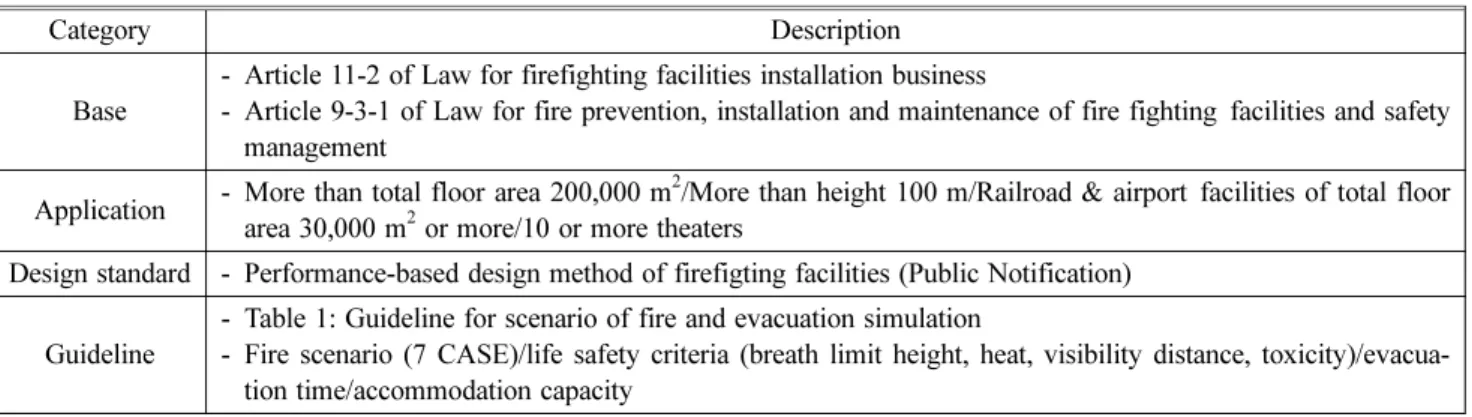
국내의 성능위주 소방시설 설계는 Table 4과 같이 대형 · 고층 · 복합 건축물 위주로 적용이 의무화되어 있는데, 시 행내용을 검토해 보면 현행 시행되고 있는 국내의 성능위 주 소방시설 설계 과정은 구체적인 세부 규정의 제시와 신 뢰성 있는 평가 과정이 미흡하고, 건축과 소방 분야의 통 합적인 접근이 미미한 실정이다(4,12). 즉, 성능위주 소방시 설의 설계를 위한 관련 고시의 구체적인 설계기준 내용이 미흡하고, 소방시설 설계 보다는 화재발달과 피난시간 중 심의 수치해석 위주로 수행되고 있다. 한편 지자제의 심의 가이드라인에서는 Table 5에서 제시한 바와 같이 시방적 설계기준의 보강 및 보충 위주로 세부내용이 제시되어 있 다. 따라서 성능위주 설계 절차와 상세기준 및 관련자료의 정립이 필요하다.
3. 국외의 성능위주 설계 법체계 분석
선진외국에서는 Table 6과 같이 각 국가의 건축법령 체 계에서 성능위주 설계에 대한 근거를 제시하고 있다. 즉, 호주 · 홍콩과 같이 시방위주 설계와 성능위주 설계의 두
가지 해법을 구분하여 규정하거나 영국 · 미국과 같이 시 방위주 설계의 대안적 방안으로 제시하고 있다.
영국에서는 건축분야 최상위 법령인 “건축법 1984 (Building Act 1984)”에서 건축물과 관련된 환경, 안전, 후 생, 편의 등을 확보하기 위하여 건축물의 설계와 시공 및 설비제공 등을 관리하는 “건축규정(Building Regulation)”
을 제정하도록 하고 있으며(13), 건축규정에서 제시하는 항 목에 대해서 실용적인 가이드라인(Practical Guidance)을 제공하기 위해서 “공인문서(Approved Documents)”를 제 정하도록 하고 있다. 영국의 “건축규정 2010 (Building Regulations 2010)”에서는 “4항-건축공사와 관련된 조항 (Requirements relating to building work)”와 “6항-건축재 료 변경과 관련된 조항(Requirements relating to material change of use)”에서 “스케줄 1(Schedule 1)”의 항목이 준 수되어야 함을 규정하고 있다(14). 스케줄 1에는 B부분-화 재안전(PartB-Fire Safety)을 포함하여 A부분-구조(PartA- Structure), C부분(PartC), D부분(PartD) 등에 대한 조항이 있다. 화재안전에 관한 B부분에는 세부항목으로 B1-경고 와 피난방법(Means of warning and escape), B2-내부 화 재확산-외장재(Internal fire spread-linings), B3-내부 화재 확산-구조(Internal fire spread-structure), B4-외부 화재확 산(External fire spread), B5-소방대의 진입과 설비(Access and facilities for the fire service) 조항이 제시되어 있다.
화재안전 조항인 B부분에 대한 가이드라인으로 “공인문서 B(Approved Document B)”가 제공되어 있다(15).
Table 4. Outline of Design Standard for Performance-based Firefighting Facilities
Category Description
Base
- Article 11-2 of Law for firefighting facilities installation business
- Article 9-3-1 of Law for fire prevention, installation and maintenance of fire fighting facilities and safety management
Application - More than total floor area 200,000 m2/More than height 100 m/Railroad & airport facilities of total floor area 30,000 m2 or more/10 or more theaters
Design standard - Performance-based design method of firefigting facilities (Public Notification)
Guideline
- Table 1: Guideline for scenario of fire and evacuation simulation
- Fire scenario (7 CASE)/life safety criteria (breath limit height, heat, visibility distance, toxicity)/evacua- tion time/accommodation capacity
Table 5. Guideline of Local Government for Deliberation of Performance-based Firefighting Facilities Design (Focused on Smoke Control)
Category Description
Guideline of Seoul
- Chapter 12 smoke control system
- Ventilation duct shall be incombustible/3 doors open/smoke control system on corridor of sales facili- ties/smoke exhaust system at parking space/vent location/TAB/vertical penetration space in smoke control zone
Guideline of Gyeonggi Province
- Firefighting
- Smoke spread prevention in elevator shaft (shaft pressurization and fire door)/flap damper or inverter to prevent stack effect
영국에서 성능위주 설계의 법적 근거는 바로 공인문서 B 에 포함되어 있다. 기본적으로 건축규정에서 요구하는 화 재안전은 공인문서 B의 조항을 준수함으로써 구현되도록 하고 있으며, 공인문서 B는 좀 더 일반적인 조건의 건축물 에 대한 시방형식의 가이드라인을 제공하는데 목적이 있다.
그러나 대형 · 복합 건축물이나 다양한 용도의 건축물(공항 터미널 등)에서 만족할 만한 화재안전을 확보하기 위해서 는 시방위주 설계에 대한 대안(Alternative Approaches) 이 사용될 수 있음을 공인문서 B에서 규정하고 있다. 그리 고 대안의 방법으로서 다른 코드(BS, 타부서의 화재안전 관련 코드 등)의 준수 또는 화재안전공학(Fire Safety Engineering)의 적용 등을 제시하고 있다. 공인문서 B에서 는 화재안전공학(Fire Safety Engineering)을 진행하기 위 하여 “BS 7974”의 건축물 화재안전 설계 · 평가용 프레임 과 가이드라인을 참조하도록 하고 있다(5).
호주에서는 각 주나 지역에서 각자의 필요에 따라 건축 법(Building Acts)을 제정하고, 건축법에서 요구하는 사항 을 확보하기 위해서 각 주나 지역에서 각자의 건축규정 (Building Regulation)을 제정한다. 한편 건축규정의 기술적 내용을 제공하기 위해서 호주연방정부에서 “호주빌딩코드 (The Building Code of Australia (BAC))”를 발행하고 있다(16). 호주빌딩코드는 요구성능(Performance Requirements)를 만 족하는 방법으로 시방위주(Deemed-to-Satisfy Provisions) 와 성능위주(Alternative Solution)의 두가지 방안을 병행 적으로 제시하고 있다. 호주빌딩코드의 E2 부분(Part E2) 에서 연기위험관리(Smoke Hazard Management)에 관한 내용을 다루고 있다.
한편 호주에서는 호주빌딩코드의 성능위주 설계에 대한 가이드라인으로서 “International Fire Engineering Guidelines”
을 사용하고 있다(6). 본 가이드라인에서는 시방적 기준은 새로운 기술이나 복합적 환경에 적용할 수 없고 설계에 대 한 제약조건으로 작용할 수 있다고 언급하고 있으며, 설계 자를 제약조건으로부터 자유롭게 하고 혁신을 장려하기
위해서 성능위주 설계가 개발되고 있음을 지적하고 있다.
미국에서는 각 주와 지방 정부가 각자의 건축규정 (Building Regulation)을 제정하고 있으며, 이 때 다음의 여러 빌딩코드(Building Code)를 참조하고 있다. 미국에는 시방적 코드로 “Interantional Building Code”나 “NFPA 5000”이 있고(17,18), 성능적 코드로 “ICC Performance Code for Building and Facilities”나 “NFPA 5000: Performance- Based Option”을 사용하고 있다(18,19).
NFPA 5000에는 시방위주 규정(Prescriptive-based provisions)에 대한 대안으로서 성능위주 옵션(Performance- Based Option) 부분이 제시되어 있으며, 성능위주 옵션 부 분에서는 코드의 화재안전 목적(Goal)과 목표(Objectives) 가 나와있고 화재안전의 목적과 목표가 만족되는 방향으 로 성능위주 규정(Performance-based provisions)을 사용 하여 건축물 설계가 수행되어야 함을 제시하고 있다.
홍콩에서는 건축분야 최상위 법령으로 “123장 건축법령 (Chapter 123 Building Ordinance)”이 제시되어 건축물의 계획, 설계 및 시공과 관련된 사항을 관장하고 있으며, 그 하위 법령으로 “123B장 건축구조 규정(CAP 123B Building (Construction) Regulations)”과 “123F장 건축계획규정 (CAP 123F Building (Planning) Regulations)”이 제시되어 있다. 그리고 건축규정의 화재안전 분야 요구사항에 대한 기술적 내용을 제공하는 코드로서 “Code of Practice for Fire Safety in Building”을 발행하고 있다(8). 호주의 경우와 유사하게 “Code of Practice for Fire Safety in Building”
는 요구성능(Performance Requirements)을 만족하는 방법 으로 시방위주(Deemed-to-Comply Provisions)와 성능위 주(Alternative Solution)의 두가지 방안을 병행적으로 제 시하고 있다.
이상과 같이 성능위주 설계 수행의 근거에 대한 국외의 법체계 분석결과를 바탕으로 국내의 적용방안을 검토하면 다음과 같다. 즉, 호주나 홍콩의 법체계와 같이 “설치목적”
을 우선 제시하고 이를 만족시키기 위해 “시방위주 설계 Table 6. Overview of Overseas Legal System with Related to Performance-based Design
Nation Description Law system Performance-based design
UK · Alternative Approaches
· Design Guidelines (BS7974)
· Building Act 1984
· Building Regulations 2010
· Approved Document B
· Alternative Approaches
· Large/complex building
Australia
· Specification/Performance:
Two Solution
· Design Guidelines (IFEG)
· Building Acts (local government)
· Building Regulations (local government)
· The Building Code of Australia
· Deemed-to-Satisfy Provisions and Alternative Solution
· Same performance as minimum DTSP
USA · Performance-based Option
· Design Guidelines (SFPE)
· Building Regulations (local government)
· Building Code (specification/performance):
IBC, NFPA5000, ICC Code
· Performance-based Option
· Various guidelines depending on conditions
Hong Kong
· Specification/Performance:
Two Solution
· Design Guidelines (CPFSB)
· Building Ordinance
· Building Regulations
· Code of Practice for Fire Safety in Building
· Deemed-to-Comply Provisions and Alternative Solution
· Performance Requirement
와 성능위주 설계로 병행”해서 제시되는 방안은 국내 법 체계와 간극이 큰 것으로 판단되며, 장기적으로 성능위주 설계가 건설분야에서 전반적으로 통용될 때 가능할 것이 다. 국내에 성능위주 설계가 도입되는 단계에서는 영국이 나 미국과 같이 각 설비에 대한 시방위주 설계의 대안적 방안으로 사용될 수 있도록 법체계를 정비하는 것이 타당 할 것이다.
4. 국외의 성능위주 설계 가이드라인 분석
앞장에서 분석한 바와 같이 각국에서는 건축관련 법체 계에 성능위주 화재안전 설계의 수행 근거를 제시하고 있
Table 7. Overview of Overseas Guidelines with Related to Performance-based Design
Guideline Smoke control Components
Application of fire safety engineering principles to the design of building (BS 7974)
· PD 7974-2 Guideline focusing on
“smoke & toxic gas”
· PD 7974-0~PD 7974-7: framework, flame, smoke, fire protection, detection, firefighting, evacuation and risk analysis sub-system
International Fire Engineering Guidelines (IFEG)
· Sub-System B Guideline focusing on “smoke spread and control”
· Part 1~Part 3: Process, Methodologies, Data
· Chapter 1.5, 2.5: Smoke development and spread and control (Sub-system B)
Engineering Guide to Performance-based Fire
Protection (SFPE)
· Guideline focusing on performance- based fire safety of overall structure
· Project scope, goal/criteria, performance standard, design fire scenario, trial design and evaluation, final design and performance-based design report Code of Practice for Fire
Safety in Building (CPFSB)
· Part G Guidelines on Fire Engineer- ing - focusing on Sub-System B
· Sub-System 1~Sub-System 6: Fire characteristics, smoke, detection, flame spread/control, evacua- tion, firefighting sub-system
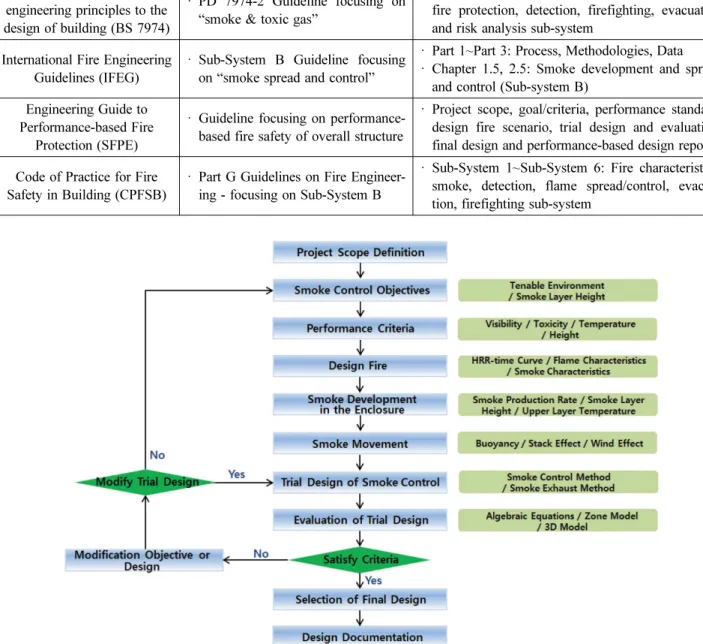
Figure 1. Framework for performance-based design of smoke control system.
고, 이를 위한 성능위주 화재안전 설계 가이드라인을 발행 하고 있다. Table 7은 연기제어 분야를 중심으로 각 가이 드라인의 구성을 간략히 나타낸 것으로서, 연기제어는 화 재안전공학(Fire Safety Engineering)의 전체 프레임 워크 에서 하나의 서브시스템으로 제시되고 있으며, 프로젝트의 목적과 성능기준 및 화재 시나리오, 초기설계, 설계평가 등의 절차가 준수되고, 연기 확산과 제어의 공학적 이론 · 데이터를 기반으로 성능위주 설계가 수행된다.
영국의 BS 7974에 대한 구성을 보면 우선 PD 7974-0에 전체적인 성능위주 설계 프레임이 제시되어 있고 PD 7974-2에 화재구역 내부와 외부로의 연기 및 독성가스 확 산에 대한 내용이 제시되어 있다. 그 외 PD 7974-1에는
화재구역 내부에서의 화재발생과 발달, PD 7974-3에 구조 체와 화염확산, PD 7974-4에 감지 및 대응설비, PD 7974- 5에 소방활동, PD 7974-6에 피난, PD 7974-7에 위험도 해 석의 내용이 각각 제시되어 있다. 이와 같이 성능위주 설 계 가이드라인에서는 화염, 연기, 내화, 감지, 소방, 피난 등을 각 서브시스템(Sub-System)으로 구성하고 이를 전체 총괄 프레임에서 연계하여 종합적인 설계를 수행하도록 하고 있다.
호주에서 사용하고 있는 가이드라인인 “International Fire Engineering Guidelines”도 BS 7974와 유사하게 화재 발생과 발달, 연기발달과 확산, 화염확산과 영향, 화재감지 와 경보 및 진화, 피난, 소방활동 등의 세부내용이 기술되 어 있고, 이를 바탕으로 상호 영향을 고려하여 전체 프레 임에서 설계를 수행하도록 하고 있다. 홍콩에서는 “Code of Practice for Fire Safety in Building”의 Part G에 성능 위주 설계의 수행을 위한 가이드라인을 제시하고 있다. 여 기에서 연기제어는 화재안전 서브시스템의 2번째 항목으 로 제시되어 있으며, 전체 프레임에서 설계가 진행되도록 구성되어 있다.
이상과 같이 전체 프레임워크 위주로 구성되어 있는 국 외의 성능위주 설계 가이드라인에 대한 분석결과를 바탕 으로 본 연구에서는 Figure 1과 같이 연기제어 중심의 성 능위주 설계 프레임워크에 대한 하나의 방안을 제시하고 자 한다. 구체적으로는 그림에서와 같이 설계초기에 연기 제어의 목적과 성능기준을 제시하고 화재시나리오에 따른 설계화재를 설정한다. 설계화재 단계에서 발열량-시간 곡 선과 화염 및 연기특성이 도출된다. 다음단계로서 설계화 재에 대한 구획실내에서의 연기발달 내용이 계산된다. 즉 연기발생율과 연기높이 및 연기층 온도 등이 도출된다. 구 획실내에서 생성된 연기가 부력이나 연돌효과 및 바람효 과 등의 구동원에 의해 이동할 수 있으며, 이에 대한 검토 가 이루어진다. 이후 단계로서 연기제어 기법과 연기배출 기법 등을 이용하여 초기 연기제어 설계가 수행되고 이에 대하여 적합한 계산방법을 통해서 초기설계가 성능기준을 만족하는지 판단한다. 여기서 초기설계가 기준을 만족하면 최종설계안으로 제출되고 그렇지 않으면 설계내용이나 성 능기준을 수정한 후 설계단계를 다시 진행한다.
5. 결 론
화재시 인명손실의 70% 이상이 연기에 의한 것이고, 고 층 · 대형 · 복합 건축물과 같이 연기에 취약한 건축물이 증가하고 있는 현실에서 협소한 범위의 시방적 설계기준 으로는 효과적인 연기안전 확보에 제한이 있고, 신개념의 연기제어 신기술 개발과 활용에 걸림돌로 작용할 수 있다.
따라서 공학적 기반의 성능위주 설계기준을 통해서 연기 제어 설비의 상호 연계성과 보완성을 높이고, 다양하고 복 잡한 건축구조에 대한 연기 안전성을 확보할 수 있어야 한
다. 본 연구에서는 성능위주 연기제어 설계방안의 정립을 위한 연구의 일환으로 국내외 성능위주 연기제어 설계기 준을 분석하였으며 다음과 같은 결론을 도출하였다.
(1) 국내의 건축물 연기제어 설계기준은 “건축법”과 “화 재예방, 소방시설 설치 · 유지 및 안전관리에 관한 법률”
에 혼재되어 있으며, 건축물 전체 구조와 연기유동을 고려 한 적용이 곤란하다.
(2) 국내의 건축물 연기제어 설계기준은 대상 범위가 거 실형태의 자연배연과 기계배연 및 부속실 형태의 자연배연 과 급기가압으로 협소하고, 근래 급속하게 증가하고 있는 대형 · 고층 · 복합의 첨단 건축물에 대해서는 여러 가지 성능저하와 경제성 문제 등의 개선사항이 대두되고 있다.
(3) 국내의 성능위주 소방시설 설계는 소방시설 자체의 설계 보다는 화재발달과 피난시간 중심의 수치해석 위주 로 수행되고 있다. 한편 지자체의 성능위주 심의 가이드라 인은 시방적 설계기준의 보강 및 보충 위주로 세부내용이 제시되어 있다.
(4) 선진외국에서는 각 국가의 건축법령 체계에서 성능 위주 설계에 대한 근거를 제시하고 있다. 즉, 호주 · 홍콩 과 같이 시방위주 설계와 성능위주 설계의 두가지 해법을 구분하여 규정하거나 영국 · 미국과 같이 시방위주 설계의 대안적 방안으로 제시하고 있다.
(5) 국내에서 성능위주 설계가 도입되는 단계에서는 영 국이나 미국과 같이 각 설비에 대한 시방위주 설계의 대안 적 방안으로 성능위주 설계가 사용될 수 있도록 법체계를 정비하는 것이 타당할 것으로 판단된다.
(6) 선진외국의 성능위주 설계 가이드라인에서 연기제어 부분은 화재안전공학(Fire Safety Engineering)의 전체 프 레임 워크에서 하나의 서브시스템으로 제시되고 있으며, 프로젝트의 목적과 성능기준 및 화재 시나리오, 초기설계, 설계평가 등의 절차가 준수되고, 연기 확산과 제어의 공학 적 이론 · 데이터를 기반으로 성능위주 설계가 수행된다.
후 기
본 연구는 국토교통부 도시건축연구사업의 일환으로 국 토교통과학기술진흥원이 관리하고 있는 “건축물의 성능위 주 화재안전 설계 기준 및 화재안전성 향상 기술 개발”과 제(16AUDP-B100356-02)의 지원으로 이루어진 것으로서 이에 감사를 드립니다.
References
1. C. B. Park, Y. J. Lee, M. J. Kim, M. O. Yoon, Y. H.
Choi, J. S. Park and H. J. Kim, “Case Study about Per- formance Based Design through Fire & Egress Simula- tion for Atrium of A Hotel & Casino”, Fire Science and Engineering, Vol. 23, No. 2, pp. 13-19 (2009).
2. Y. S. Choi, H. K. Kim and K. I. Lee, “A Study on Per-
formance Based Evacuation Plan for a Large Indoor- Arena”, Journal of Air Conditioning and Refrigeration Engineering, Vol. 23, No. 10, pp. 687-698 (2011).
3. H. H. Soo, “Fire Safety Feature for Super High Rise Building by Performance Based Design”, Review of Architecture and Building Science, Vol. 53, No. 8, pp.
687-698 (2011).
4. Y. J. Lee, K. C. Ko and W. C. Park, “A Study on Perfor- mance-Based Design Enforcement”, Fire Science and Engineering, Vol. 26, No. 1, pp. 68-73 (2012).
5. British Standards, “PD 7974 Application of Fire Safety Engineering Principles to the Design of Buildings” (2002).
6. ICC, NRC, DBH, ABCB, “International Fire Engineer- ing Guidelines (Edition 2005)” (2005).
7. SFPE, NFPA, “SFPE Engineering Guide to Performance- Based Fire Protection” (2007).
8. Building Department of Hong Kong, “Code of Practice for Fire Safety in Buildings” (2011).
9. C. H. Lim, B. G. Kim and Y. H. Park, “Mass Flow Rates and Performance of Natural Smoke Ventilators in High- rise Buildings”, Fire Science and Engineering, Vol. 23, No. 6, pp. 91-97 (2009).
10. J. Y. Kim and H. J. Shin, “Numerical Analysis on Pres-
surization System of Smoke Control in Consideration of Flow Rate of Supply and Leakage”, Fire Science and Engineering, Vol. 24, No. 5, pp. 87-93 (2010).
11. Y. J. Hur and C. K. Yu, “Study on Defect and Improve- ment of Mechanical Smoke Control System in High-rise Complex Buildings”, The Magazine of the Society of Air-Conditioning and Refrigeration Engineers of Korea, Vol. 32, No. 1, pp. 27-35 (2003).
12. J. Y. Yi and O. S. Baek, “The Legal Problems and Improvement in the Performance Based Design of Fire- fighting”, Fire Science and Engineering, Vol. 24, No. 1, pp. 54-63 (2010)
13. British Government, “Buildng Act 1984” (1984).
14. British Government, “Buildng Regulations 2010” (2010).
15. British Government, “The Building Regulation 2010-Fire Safety: Approved Document B” (2006).
16. ABCB, “The Building Code of Australia” (2015).
17. ICC, “International Building Code” (2012).
18. NFPA, “NFPA5000 Building Construction and Safety Code” (2015).
19. ICC, “ICC Performance Code for Buildings and Facili- ties” (2012).