韓應昆誌 49(2): 163~166 (2010) Kor. J. Appl. Entomol.
A List of Mealybugs (Hemiptera: Pseudococcidae) Intercepted at the Republic of Korea Ports of Entry on Plants Imported from China
Jungyoun Ji1, Wu San-an2 and Soo-Jung Suh*
1Incheon International Airport Branch, National Plant Quarantine Service, Korea;
2The Key Laboratory for Silviculture & Conservation of Ministry of Education, Beijing Forestry University, China; Yeongnam Regional Office, National Plant Quarantine Service, Korea
중국산 수입 묘목류에서 검출된 가루깍지벌레과(노린재목)
지정연1ㆍWu San-an2ㆍ서수정*
1국립식물검역원 인천공항지원; 2The Key Laboratory for Silviculture & Conservation of Ministry of Education, Beijing Forestry University, China; 국립식물검역원 영남지원
ABSTRACT: Thirteen species of mealybugs were intercepted in quarantine at Korean ports of entry on plant materials from China over the past 9 years (2000-2009). Of these, Phenacoccus madeirensis Green has been newly reported in China through this study. This list and key are provided to assist in identifying intercepted specimens of mealybugs from China.
Key words: Pseudococcidae, China, quarantine, intercepted, Phenacoccus madeirensis
초 록: 지난 9년 동안 (2000-2009) 우리나라 입항지로 수입된 중국산 묘목류에서13종의 가루깍지벌레과가 검출되었다. 이 중 Phenacocus madeirensis Green의 중국분포를 처음으로 보고하고, 중국산 수입 묘목류에서 검출된 가루깍지벌레과의 종 동정에 필요한 목록 및 검색표를 함께 기재하였다.
검색어: 가루깍지벌레과, 중국, 검역, 검출, Phenacocus madeirensis
단 보
*Corresponding author: [email protected] Received March 17 2010; revised June 18 2010;
accepted June 21 2010
The amount of plant material imported into Korea from its neighboring country China, has increased dramatically.
A total of 33 million young trees such as Ficus and Schefflera, were imported in 2009 from China based upon data from the Pest Information System (PIS) database. As a result, the number of mealybugs (Pseudococcidae) inter- cepted at the various ports of entry in Korea has also increased.
This may pose a threat to agricultural crops in Korea and presents a challenge for plant quarantine inspection officers in Korea. The long-range dispersal of mealybugs is usually through a human transport of infested plant material from
one area to another. If a mealybug is accidentally introduced and established in Korea, the cost of controlling it could be exorbitant.
Mealybugs are serious pests particularly as invasive species. The pest species intercepted from Chinese young trees such as the pink hibiscus mealybug (Maconellicoccus hirsutus (Green)) and the oriental cacao mealybug (Plano- coccus lilacinus (Cockerell)) are polyphagous species and reports of damage they cause vary (Williams, 2005).
Reviewing records, re-examining specimens and providing an identification key to the mealybugs intercepted at ports of entry of Korea from imported plants from China over the past 9 years (2000-2009) will help plant inspection officers to quickly and accurately identify intercepted mealybugs on imported plant materials from China. One 163
A List of Mealybugs (Hemiptera: Pseudococcidae) Intercepted at the Republic of Korea Ports of Entry on Plants Imported from China
164
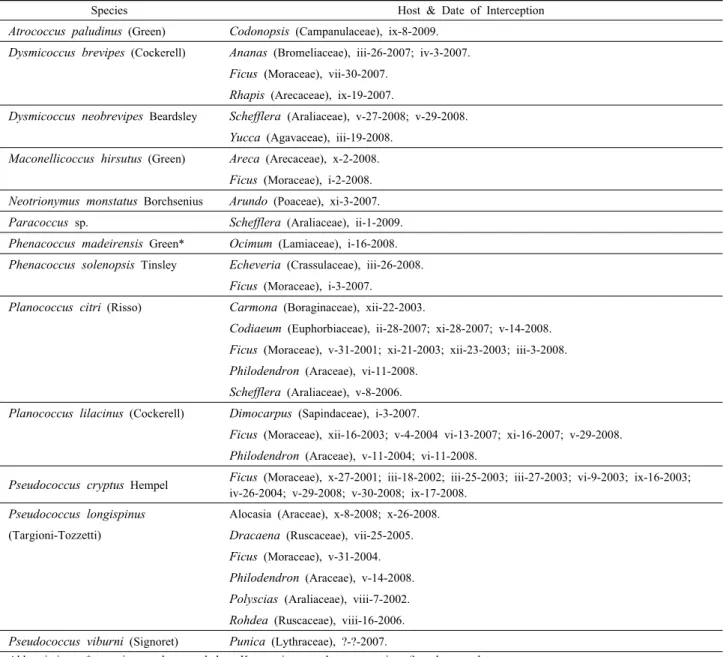
Table 1. A list of mealybugs intercepted on Chinese plants at ports of entry of Korea
Species Host & Date of Interception
Atrococcus paludinus (Green) Codonopsis (Campanulaceae), ix-8-2009.
Dysmicoccus brevipes (Cockerell) Ananas (Bromeliaceae), iii-26-2007; iv-3-2007.
Ficus (Moraceae), vii-30-2007.
Rhapis (Arecaceae), ix-19-2007.
Dysmicoccus neobrevipes Beardsley Schefflera (Araliaceae), v-27-2008; v-29-2008.
Yucca (Agavaceae), iii-19-2008.
Maconellicoccus hirsutus (Green) Areca (Arecaceae), x-2-2008.
Ficus (Moraceae), i-2-2008.
Neotrionymus monstatus Borchsenius Arundo (Poaceae), xi-3-2007.
Paracoccus sp. Schefflera (Araliaceae), ii-1-2009.
Phenacoccus madeirensis Green* Ocimum (Lamiaceae), i-16-2008.
Phenacoccus solenopsis Tinsley Echeveria (Crassulaceae), iii-26-2008.
Ficus (Moraceae), i-3-2007.
Planococcus citri (Risso) Carmona (Boraginaceae), xii-22-2003.
Codiaeum (Euphorbiaceae), ii-28-2007; xi-28-2007; v-14-2008.
Ficus (Moraceae), v-31-2001; xi-21-2003; xii-23-2003; iii-3-2008.
Philodendron (Araceae), vi-11-2008.
Schefflera (Araliaceae), v-8-2006.
Planococcus lilacinus (Cockerell) Dimocarpus (Sapindaceae), i-3-2007.
Ficus (Moraceae), xii-16-2003; v-4-2004 vi-13-2007; xi-16-2007; v-29-2008.
Philodendron (Araceae), v-11-2004; vi-11-2008.
Pseudococcus cryptus Hempel Ficus (Moraceae), x-27-2001; iii-18-2002; iii-25-2003; iii-27-2003; vi-9-2003; ix-16-2003;
iv-26-2004; v-29-2008; v-30-2008; ix-17-2008.
Pseudococcus longispinus Alocasia (Araceae), x-8-2008; x-26-2008.
(Targioni-Tozzetti) Dracaena (Ruscaceae), vii-25-2005.
Ficus (Moraceae), v-31-2004.
Philodendron (Araceae), v-14-2008.
Polyscias (Araliaceae), viii-7-2002.
Rohdea (Ruscaceae), viii-16-2006.
Pseudococcus viburni (Signoret) Punica (Lythraceae), ?-?-2007.
Abbreviations: *, species newly recorded to Korean import plant quarantine; ?, unknown date.
species, Phenacoccus madeirensis Green, was intercepted on Ocimum plants from China and represents the first record of this species in China. (Hua, 2000; Miller et al., 2009).
In addition, this species was recently collected on Hibiscus rosa-chinensis from Sanya, Hainan of the mainland China (Wu, S.A., personal communication).
We have examined specimens of the following species of Chinese mealybugs taken in quarantine; Atrococcus paludinus (Green) (on Codonopsis), Dysmicoccus brevipes (Cockerell) (on Ananas, Ficus, and Rhapis), Dysmicoccus neobrevipes Beardsley (on Schefflera and Yucca), Maco-
nellicoccus hirsutus (Green) (on Areca and Ficus), Neotri- onymus monstatus Borchsenius (on Arundo), Paracoccus sp. (on Schefflera), Phenacoccus madeirensis Green (on Ocimum), Phenacoccus solenopsis Tinsley (on Echeveria and Ficus), Planococcus citri (Risso) (on Carmona, Codiaeum, Ficus, Philodendron, and Schefflera), Planococcus lilacinus (Cockerell) (on Dimocarpus, Ficus, and Philodendron), Pseudococcus cryptus Hempel (on Ficus), Pseudococcus longispinus (Targioni-Tozzetti) (on Alocasia, Dracaena, Ficus, Philodendron, Polyscias, and Rohdea), and Pseudo- coccus viburni (Signoret) (on Punica) (Table 1).
Jungyoun Ji, Wu San-an and Soo-Jung Suh 165
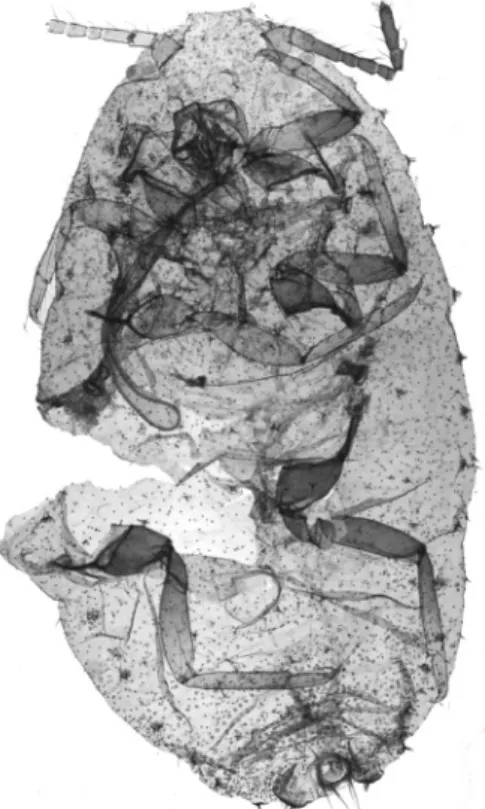
Fig. 1. Paracoccus sp., intercepted at Incheon Seaport, Schefflera sp., ii-1-2009.
This paper includes a list and key of 13 species of mealybugs in 8 genera intercepted on plants brought into Korea. The terminology for morphological structures used in this paper is that of Williams (2005). Illustrative photographs were taken using the Axion Vision Rel.4.8 Zeiss system.
Key to species of mealybugs intercepted from China (slide mounted adult female)
1. Oral rim tubular ducts present ···
··· 2 1b. Oral rim tubular ducts absent ···
··· 7 2(1). Cerarii numbering no more than 6 pairs ···
··· 3 2b. Cerarii numbering 9~18 pairs ···
··· 4 3(2). Circulus present (on Areca and Ficus) ···
··· Maconellicoccus hirsutus (Green) 3b. Circulus absent (on Codonopsis) ···
··· Atrococcus paludinus (Green) 4(2b). Venter of each anal lobe with anal lobe bar (on
Schefflera) ···
··· Paracoccus sp. (Fig. 1) 4b. 3Venter of each anal lobe without anal lobe bar
··· 5 5(4b). Ventral multilocular disc pores present ···
anterior to abdominal segment VI ··· 6 5b. Ventral multilocular disc pores absent from anterior
to abdominal segment VI (on Alocasia, Dracaena, Ficus, Philodendron, Polyscias, and Rohdea) ···
··· Pseudococcus longispinus (Targioni-Tozzetti) (Plate 1: C-D) 6(5). Eye surrounded by one or more discoidal pores
(on Punica) ···
··· Pseudococcus viburni (Signoret) 6b. Eye not surrounded by a discoidal pores (on Ficus)
··· Pseudococcus cryptus Hempel 7(1b). Cerarii numbering 18 pairs ···
··· 8 7b. Cerarii numbering 1~17 pairs ···
··· 11 8(7). Venter of each anal lobe with anal lobe bar;
without denticle on claw ···
··· 9 8b. Venter of each anal lobe without anal lobe bar;
with denticle on claw ···
··· 10 9(8). Multilocular disc pores present on margins or
submarginal areas of abdominal segments (on Carmona, Codiaeum, Ficus, Philodendron, and Schefflera) ···
··· Planococcus citri (Risso) (Plate 1: A) 9b. Multilocular disc pores absent from margins or
submarginal areas of abdominal segments (on Dimocarpus, Ficus, and Philodendron) ···
··· Planococcus lilacinus (Cockerell) 10(8b). Multilocular disc pores present on dorsum; quin- quelocular pores present on venter (on Ocimum)
A List of Mealybugs (Hemiptera: Pseudococcidae) Intercepted at the Republic of Korea Ports of Entry on Plants Imported from China
166
Fig. 2. Phenacoccus madeirensis Green, intercepted at Incheon Seaport, Ocimum sp., i-16-2008.
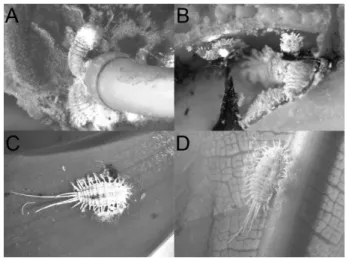
Plate 1. A. Planococcus citri (Risso); B. Dysmicoccus brevipes (Cockerell); C-D. Pseudococcus longispinus (T.-T.).
··· Phenacoccus madeirensis Green (Fig. 2) 10b. Multilocular disc pores absent from dorsum;
quinquelocular pores absent on venter (on Echeveria and Ficus) ···
··· Phenacoccus solenopsis Tinsley 11(7b). Minute duct-like pores numerous on derm next
to hind coxae; auxiliary setae present only in anal lobe cerarii (on Arundo) ···
··· Neotrionymus monstatus Borchsenius 11b. Minute duct-like pores absent on derm next to
hind coxae; auxiliary setae present in anal lobe cerarii and at least some of the other abdominal cerarii ···
··· 12 12(11b). Doral setae on abdominal segment VIII, anterior
to anal ring distinctly much longer than other dorsal
setae (on Ananas, Ficus, and Rhapis) ···
··· Dysmicoccus brevipes (Cockerell) (Plate 1: B) 12b. Doral setae on abdominal segment VIII, anterior
to anal ring shorter, or about same length as other dorsal setae (on Schefflera and Yucca) ···
··· Dysmicoccus neobrevipes Beardsley
Acknowledgements
I would like to thank Dr. Greg Evans (USDA/Animal and Plant Health Inspection, USA) for his useful editorial contributions to this manuscript.
Literature Cited
Hua, L.Z. 2000. List of Chinese Insects Vol. 1. 448 pp.
Zhongshan University Press, Guangzhou, China.
Miller, D.R., Y. Ben-Dov and G.A.C. Gibson. 2009. ScaleNet (webpage) http:// www.sel.barc.usda. gov/scalenet/scalenet.htm.
Accessed 8 March 2010.
Pest Information System. http://10.110.128.100. Accessed 8 March 2010.
Williams, D.J. 2004. Mealybugs of Southern Asia. 896 pp. The Natural History Museum, Kuala Lumpur, Southdene SDN.
BHD.