서 론
補脾湯은 尹吉榮 선생(1911-1987, 號 玄谷)이 지은 『東醫臨 床方劑學』의 「醫案要訣」1)에 나오는 방제이다. 방제의 임상효 용만을 강조하다보면 그 방제의 바탕이 되는 기초이론이 소홀해 지기 쉽다. 현곡 선생의 보비탕은 임상효용에서도 가치가 있을
뿐만 아니라 방제의 이론적 근간이 되는 『內經』의 和劑作成法
2)에 바탕을 두고 있어 旣存方이나 創方의 이론적 근거를 제시하 는데 시사하는 바가 적지 않다고 생각된다.
지금까지는 보비탕에 대한 동물실험연구로는 饑餓白鼠의 체 중 및 혈액성분에 미치는 효과,3) 노화과정의 흰쥐에서 비장의 대 사효소계에 미치는 영향4) 등이 있다. 임상에서 종종 사용하고 있 으면서도 증례보고나 임상통계연구는 거의 없는 실정이고, 보비 탕에 대한 이론적인 분석은 없는 상황이다.
방제학의 전통적인 기초이론을 이용하여 보비탕의 이론적인 근거를 밝히고자 한다.
玄谷 補脾湯의 구성한약과 그 氣味配伍 분석
엄현섭․서부일1․김경철2․신순식3*
동의대학교 한의과대학 병리학교실, 1 : 대구한의대학교 한의과대학 본초학교실, 2 : 동의대학교 한의과대학 진단학교실, 3 : 동의대학교 한의과대학 방제학교실
Hyeongok's Bobee-tang was Combined according to the Theory for Properties and Tastes of Herbal Medicines
Hyun Sup Eom, Bu Il Seo1, Gyeong Cheol Kim2, Soon Shik Shin3*
Department of Pathology, 2 : Department of Diagnostics, 3 : Department of Formula Sciences, College of Oriental Medicine, Dongeui University, 1 : Department of Herbology, College of Oriental Medicine, Daegu Haany University
The objectives of this study lie in theoretical establishment of Bobee-tang for curing the asthenic syndrome of spleen through analyzing the component medicines and combination principles of Hyeongok's Bobee-tang, and furthermore, maximizing the clinical use of Bobee-tang. This study analyzed the component medicines and combination principles of Hyeongok's Bobee-tang based on the theory for properties and tastes of herbal medicines from the
『Yellow Emperor's Canon of Internal Medicine』, the theory for principal herbal medicine, assistant herbal medicine, adjuvant herbal medicine, dispatcher herbal medicine, and the five elements doctrine. Hyeongok‘s Bobee-tang is an odd prescription, composed of 7 kinds of ingredients : No.1 Radix Ginseng (2don;7.5 g), No.2 Rhizoma Atractylodis Macrocephalae (1don;3.75 g), No.3 Carapax Et Plastrumtestudinis (1don), No.4 Concha Ostreae (1don), No.5 Cortex Cinnamomi (1don), No.6 Rhizoma Zingiberis Praeparatae (1don), and No.7 Radix Glycyrrhizae (1don). First, to cure the asthenic syndrome of the spleen, the methods of invigorating the spleen and the heart, and purging the liver should be used according to the five elements doctrine. Secondly, herbal medicines appropriate for those treatment methods should be chosen according to the theory for properties and tastes of herbal medicine and thirdly, the combination of those herbal medicines should be carried out according to the theory for principal herbal medicine, assistant herbal medicine, adjuvant herbal medicine, dispatcher herbal medicine. As a good example, Hyeongok's Bobee-tang is combined according to the above theories. In conclusion, this formula was created by applying to the theory for properties and tastes of herbal medicines.
Key words : Bobee-tang, the theory for properties and tastes of herbal medicines, the asthenic syndrome of the spleen, Radix Ginseng, Rhizoma Atractylodis Macrocephalae, the five elements doctrine
* 교신저자 : 신순식, 부산시 진구 양정 2동 산 45-1 동의대학교 한의과대학
․E-mail : [email protected], ․Tel : 051-850-7414
․접수 : 2008/01/18 ․채택 : 2008/03/13
본 론
1. 기존의 補脾方劑
脾虛를 補하는 기존 補脾方劑는 劑型의 유형에 따라 補脾 湯․補脾丸․補脾散․補脾飮․補脾丹 등 5종의 유형이 있다.
補脾湯에는 12종이, 補脾丸에는 11종이, 補脾散에는 9종이, 補 脾飮에는 3종이, 補脾丹에는 1종이 있다.5) 각 유형의 補脾방제 를 구성하는 한약들의 配伍는 일관된 원칙이 없이 의학자들의 치료경험에 따라 다양하게 구성되어 있어 임상활용에 어려움이 뒤따른다.
2. 현곡의 補脾湯
현곡선생의 보비탕은 人蔘 2돈 白朮 龜板 牡蠣粉 肉桂 乾薑 (炒) 甘草 각1돈으로 구성되어 있고, 그 한약수가 7종으로 奇方이 며, 脾虛를 치료하는 通治方이다(Table 1).1)
Table 1. Ingredients of Bobee-tang and their tastes, properties and dosages
herbal medicines tastes and properties original dosages Radix Ginseng (人蔘) sweet, slightly bitter, slightly
warm
2don*
(7.5 g) Rhizoma Atractylodis
Macrocephalae (白朮) bitter, sweet, warm 1don (3.75 g) Carapax et Plastrum Testudinis
(龜板) sweet, salty, cold 1don
(3.75 g) Concha Ostreae (牡蠣粉) salty, astringent, slightly cold 1don
(3.75 g) Cortex Cinnamomi (肉桂) pungent, sweet, hot 1don
(3.75 g) Rhizoma Zingiberis Praeparata
(乾薑(炒) pungent, hot 1don
(3.75 g) Radix Glycyrrhizae (甘草) sweet, neutral 1don
(3.75 g)
* One don is ten poon ; One don is 3.75 g.
2. 연구방법
『黃帝內經』의 氣味藥性論,2) 방제학의 君臣佐使論,6) 한의 학 기초이론인 五行論7)을 바탕으로 한 五行相生․五行相剋․
五行相乘․五行相侮, 『難經』의 補母瀉子法,8) 『舍岩道人鍼灸 要訣』의 抑官補讎法9)을 이용하여 현곡선생의 보비탕을 분석 하였다.
1) 氣味藥性論
甘味의 약리적 작용은 急迫症狀을 緩和하고 脾를 補하며 心을 瀉하고 脾와 肉에 친화성이 있어 상호 선택작용이 있고 肉病과 腎病에는 不利하며 脾病에는 利로우며 氣의 熱과 合하 면 內生의 寒을 제거하고 과식에서 오는 부작용은 喘滿、色 黑、悗心、骨痛、髮落의 症이 있으며 肉을 傷하며 鹹味에는 優勢하나 酸味에는 劣勢하다. 治濕에 幷熱하고 補脾에 幷和한 다(Table 2).2)
2) 君臣佐使論
방제를 조성하는 한약들을 君藥․臣藥․佐藥․使藥으로 배 치하고, 목표로 하는 치료효과를 달성하기 위하여 이들 한약들을 합리적으로 配伍하는 원리와 원칙을 말한다.6)
Table 2. The theory for properties and tastes of herbal medicines from the『Yellow Emperor's Canon of Internal Medicine』 (spleen)
taste sweetness
effect relax、treat endogenous cold、dispelling dampness (same to plain taste)
selective action spleen、muscle
invigoration spleen
purgation heart
side effect
dyspnea, becomeing black, the kidney energy will be abnormal to become ill, the bone pain and the falling of hair, oppression of
the heart, hurting the muscle disadvantage
(restraining of five phases)
kidney disease、muscle disease (increasing dampness、hurting the muscle) profitability (tastes of original
five organs ) spleen disease
characteristic of five organs
disease moderating impetuos liver
wish if wishes moderating, use sweetness relative standing of taste
(restraining of five phases)
overcoming the saltiness; not overcoming the sourness
treating six kinds of natural
factors endogenous cold sweetness
3) 五行論
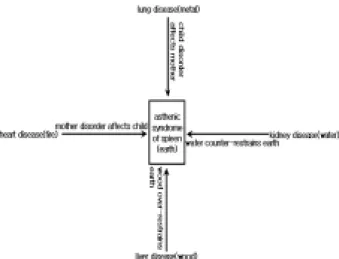
본래 오행론은 木․火․土․金․水라는 五行의 내함․특 성․상생상극원리를 연구하고, 이를 이용하여 우주만물의 운동 변화와 그 상호연계를 밝히는 고대 동양철학이론이다. 이 이론이 고대동양철학의 우주관과 방법론이 되면서 한의학에 도입되어 인체의 臟腑의 생리․병리 관계 및 이들과 외부환경의 관계를 밝히며 질병의 진단․예방과 치료의 기초이론이 되었다. 여기에 는 五行相生․五行相剋․五行相乘․五行相侮의 원리가 존재한 다(Fig. 1-7).7)
Fig. 1. Inter-promotion and inter-restraint among the five elements.
The five elements refer to the movement and changes of the five basic material elements, i.e., wood, fire, earth, metal, and water. Inter-promotion explains the meanings of mutual production, promotion, and assistance. The law of inter-promotion among the five elements is : Wood generates fire, fire generates earth, earth generates metal, metal generates water and water generates wood. Inter-restraint contains the meanings of mutual restriction, conquering, and suppression. The law of inter-restraint among the five elements is : Wood restrains earth, earth restrains water, water restrains fire, fire restrains metal and metal restrains wood. The liver corresponds to the wood, the heart to the fire, the spleen to the earth, the lung to the metal and the kidney to the water.
Fig. 2. The mother-child relationship in inter-promotion among the five elements. The fire generates the earth, and thus the fire is the mother of the earth.
The earth generates the metal, and thus the metal is the child of the earth.
Fig. 3. The relationship between the elements surpassed and ones not surpassed in inter-restraint among the five elements. The wood restrains the earth, and thus the wood is the earth not being surpassed. The earth restrains the water, and thus the water is the earth being surpassed.
Fig. 4. The inter-over-restraint among the five elements. The five elements refer to the movement and changes of the five basic material elements, i.e., wood, fire, earth, metal, and water. The inter-over-restraint is the abnormal phenomena of the five element relationships, which result from the influence of certain factors. Inter-over-restraint refers to the launch of an attack when a counterpart element is weak. The law of inter- over-restraint among the five elements is : Wood over-restrains earth, earth over-restrains water, water over-restrains fire, fire over-restrains metal and metal over-restrains wood.
Fig. 5. The inter-counter-restraint among the five elements. The five elements refer to the movement and changes of the five basic material elements, i.e., wood, fire, earth, metal, and water. The inter-counter-restraint is the abnormal phenomena of the five element relationships, which result from the influence of certain factors.
Inter-counter-restraint means preying upon other elements. The law of inter-counter-restraint among the five elements is : Wood counter-restrains metal, metal counter-restrains fire, fire counter-restrains water, water counter-restrains earth and earth counter-restrains wood.
Fig. 6. Generation and principle in the inter-over-restraint and the inter-counter-restraint among the five elements. If the earth is weak, the wood not being surpassed will over-restrain it, and thus exuberant wood over-restrains the earth; the water being surpassed will counter-restrain it, and thus exuberant water counter-restrains the earth due to its weakness.
Fig. 7. The asthenic syndrome of the spleen can be transmitted to other four viscera. Transmission related to the mother-child relationship includes two patterns: ‘the mother disorder affecting the child’ and ‘the child disorder affecting the mother’
If the spleen has the asthenic syndrome, the heart disease and the lung disease can be transmitted to the spleen. Transmission related to the over-restraint and counter-restraint relationship includes two patterns: ‘the transmission of inter-over-restraint’ and ‘the transmission of inter-counter-restraint’ If the spleen has the asthenic syndrome, the wood over-restrains the earth and thus exuberant liver over-restrains the spleen. If the spleen has the asthenic syndrome, the water counter-restrains the earth and thus exuberant kidney counter-restrains the spleen.
4) 補母瀉子法
『難經』의 「六十九難」에 “虛者補其母, 實者瀉其子.”8)라 하여 五行相生의 母子관계에서 虛하면 자신을 生하는 母를 補하 고, 實하면 자신이 生하는 子를 瀉하는 치료원칙이다.
5) 抑官補讎法
『舍岩道人鍼灸要訣』에 “虛則抑其官, 實則補其讎.”9)라하여 五行相剋의 所勝․所不勝 관계에서 虛하면 자신을 剋하는 所勝 를 瀉하고, 實하면 자신이 剋하는 所不勝을 補하는 치료원칙이다.
3. 현곡의 補脾湯 분석
脾虛하면 脾 자체를 補하는 방법, 五行相生의 母子관계에서 脾의 母가 되는 心을 補하는 방법, 五行相剋의 所勝․所不勝 관 계에서 脾의 所勝이 되는 肝을 瀉하는 방법이 있다.
脾 자체를 補하려면 氣味藥性論에 따라 味補와 氣補를 해야 한다 (Table 2). 『素問』「藏氣法時論篇第22」의 “脾病者, ……, 用苦瀉之, 甘補之.”10)에 의하면 脾의 味補는 甘味 한약을 사용해 야 한다 (甘補脾). 吳昆의 “順其性爲補, 反其性爲瀉.”11)에 의하면 脾의 氣補는 “順其性”을 해야한다. 脾는 장마철에 해당되고 장마 철의 氣는 濕溫하므로 脾는 溫한 氣를 받을 때 비로소 氣補가 된 다 (溫補脾). 따라서 脾의 味補는 甘味를 갖고 있는 人蔘․白朮을 배합하여 인삼은 君藥으로 백출은 臣藥으로 하였으며, 脾의 氣는 溫으로 그 性에 순종하려고 氣가 溫한 肉桂․乾薑을 배합하여 佐藥으로 하였다.
脾虛하면 五行相生의 母子관계에서 脾의 母가 되는 心을 補 해야 한다(Fig. 2). 『素問』「藏氣法時論篇第22」의 “心病者,
……, 用鹹補之, 甘瀉之.”10)에 의하면 心의 味補는 鹹味 한약을 사용해야 한다 (鹹補心). 吳昆의 “順其性爲補, 反其性爲瀉.”11)에 의하면 心의 氣補는 “順其性”을 해야한다. 心은 여름에 해당되고
여름의 氣는 熱하므로 心은 熱한 氣를 받을 때 비로소 氣補가 된 다 (熱補心). 따라서 心의 味補의 경우 鹹補心하므로 鹹味 한약을 사용해야하며, 心의 氣補의 경우 熱補心하므로 熱藥을 사용해야 한다. 鹹味인 구판․모려분을 佐藥으로 배합하여 心의 味補를 하 고, 氣熱한 육계․건강을 佐藥으로 배합하여 心의 氣補를 하였다.
脾虛하면 五行相剋의 所勝․所不勝 관계에서 脾의 所勝이 되 는 肝을 瀉해야한다(Fig. 3). 『素問』「藏氣法時論篇第22」의 “肝 病者, ……, 用辛補之, 酸瀉之.”10)에 의하면 肝의 味瀉는 酸味 한약 을 사용해야 한다 (酸瀉肝). 吳昆의 “順其性爲補, 反其性爲瀉.”11)에 의하면 肝의 氣瀉는 “反其性”을 해야한다. 肝은 봄에 해당되고 봄 의 氣는 溫하므로 肝은 溫한 氣에 反하는 凉氣를 받을 때 비로소 氣瀉가 된다 (凉瀉肝). 따라서 味瀉의 경우 酸瀉肝하므로 酸味 한 약을 사용해야하며, 氣瀉의 경우 凉瀉肝하므로 凉藥을 사용해야 한다. 酸味이면서 凉氣를 갖고 있는 구판․모려분을 배합하여 心 을 補하는 이외에도 肝을 瀉하는 작용을 하도록 하였다. 『素問』
「藏氣法時論篇第22」의 “脾苦濕, 急食苦以燥之.”10)에 따라 인 삼․백출의 苦味로 脾의 濕을 말려주고 있다. 그리고 감초를 使藥 으로 배합하여 방제를 구성하는 모든 한약들을 조화시키고 있다.
보비탕의 조성약물(人蔘․白朮․龜板․牡蠣粉․肉桂․乾薑 (炒)․甘草) 중에서 인삼은 君藥으로, 백출은 臣藥으로, 구판․모 려분․육계․건강은 佐藥으로, 감초는 使藥으로 배합하고 있다.
실제 임상에서 현곡선생의 보비탕을 활용할 때는 『黃帝內經』
式 補瀉溫凉2)에 따라 약물수를 조정할 수 있다(Table 3). 아래의 醫學入門 「湯散丸丹斟等分」에서 제시한 군신좌사의 용량을 표 준안으로 채택하여 원래 보비탕의 용량을 재조정하였다(Table 4).
Table 3. Invigorating, purging, warm and cool herbal medicines in
『Yellow Emperor's Canon of Internal Medicine』 (spleen) spleen, stomach
Warm in property and sweet in taste invigorate the spleen.
Cool in property and bitter in taste purge the spleen.
Sweet in taste invigorates the
spleen
Radix Ginseng․Rhizoma Atractylodis Macrocephalae․Radix Glycyrrhizae Praeparata․Radix
Astragali․Rhizoma Dioscoreae․Semen Nelumbinis․Fructus Jujubae․Arillus Longan․Mel etc.
Bitter in taste purges
the spleen Rhizoma Coptidis․Fructus Gardeniae․Radix Gentianae․Radix et Rhizoma Rhei․Natrii Sulfas etc.
Sweet in taste warms
the spleen Maltosa․Mel․Rhizoma Atractylodis Macrocephalae etc.
Bitter in taste cools the spleen
Radix Sophorae Flavescentis․Rhizoma Coptidis․
Fructus Gardeniae․Radix Gentianae etc.
Sweet in taste moderates the spleen
Radix Glycyrrhizae․Arillus Longan․Fructus Jujubae․Maltosa․Mel․Sucrose etc.
Bitter in taste dries
the spleen Rhizoma Atractylodis․Rhizoma Atractylodis Macrocephalae․Radix Stephaniae Tetrandrae etc.
醫學入門 「湯散丸丹斟等分」에서 제시한 군신좌사의 용 량 표준안에서는 “대체로 군약을 10푼으로 한다면 신약은 7~
8푼, 좌약은 5~6푼, 사약은 3~4푼으로 한다. 그밖의 가감하는 약은 좌사약의 용량과 같이 해야 한다. (大槪君藥用十分, 臣藥 用七八分, 佐藥用五六分, 使藥用三四分, 外有加減, 數同佐 使.)”12)고 하였다.
결 론
현곡의 보비탕을 『黃帝內經』의 氣味藥性論, 君臣佐使論, 五 行論으로 분석한 결과는 다음과 같다.
補脾에는 氣味藥性論에 따라 味補와 氣補가 있고, 味補는 甘 補脾하고 氣補는 溫補脾이다. 따라서 脾의 味補는 甘味의 人蔘․
白朮을 배합하여 인삼은 君藥으로 백출은 臣藥으로 하였으며, 脾 의 氣補는 氣溫한 肉桂․건강을 배합하여 佐藥으로 하였다.
脾虛하면 五行相生의 母子관계에서 脾의 母가 되는 心을 補 해야 한다. 補心에는 氣味藥性論에 따라 味補와 氣補가 있고, 味 補는 甘補脾하고 氣補는 溫補脾한다. 따라서 補心의 味補는 鹹味 한약을, 氣補는 熱藥을 사용해야한다. 鹹味인 구판․모려분을 佐 藥으로 배합하여 心의 味補를 하고, 氣熱한 육계․건강을 佐藥으 로 배합하여 心의 氣補를 하였다.
脾虛하면 五行相剋의 所勝․所不勝 관계에서 脾의 所勝이 되 는 肝을 瀉해야한다. 瀉肝에는 氣味藥性論에 따라 味瀉와 氣瀉가 있고, 味瀉는 酸瀉肝하고 氣瀉는 凉瀉肝한다. 따라서 瀉肝의 味 瀉는 酸味 한약을, 氣瀉는 凉藥을 사용해야 한다. 酸味이면서 凉 氣를 갖고 있는 구판․모려분을 배합하여 心을 補하는 이외에도 肝을 瀉하는 작용을 하도록 하였다. 그리고 감초를 使藥으로 배 합하여 방제를 구성하는 모든 한약들을 조화시키고 있다.
따라서 본 방제는 한약의 氣味藥性論을 방제작성에 응용하 여 創方되었음을 알 수 있다.
감사의 글
이 논문은 2007학년도 동의대학교 교내연구비에 의해 연구 되었음 (과제번호 2007AA127).
참고문헌
1. 尹吉榮 著. 東醫臨床方劑學. 서울, 明寶出版社, p 367, 368, 1985.
Table 4. Ingredients of Bobee-tang and their analysis
Herbal medicines Tastes and properties Original
dosages
Principal, assistant, adjuvant, dispatcher herbal medicine
Settled
proportion Settled dosage Radix Ginseng (人蔘) sweet, slightly bitter, slightly warm 2don (7.5 g) principal herbal medicine 10 2don*
Rhizoma Atractylodis Macrocephalae (白朮) bitter, sweet, warm 1don (3.75 g) assistant herbal medicine 7~8 1.4∼1.6don Carapax et Plastrum Testudinis (龜板) sweet, salty, cold 1don (3.75 g) adjuvant herbal medicine 5~6 1∼1.2don
Concha Ostreae (牡蠣粉) salty, astringent, slightly cold 1don (3.75 g) adjuvant herbal medicine 5~6 1∼1.2don Cortex Cinnamomi (肉桂) pungent, sweet, hot 1don (3.75 g) adjuvant herbal medicine 5~6 1∼1.2don Rhizoma Zingiberis Praeparata (乾薑(炒)) pungent, hot 1don (3.75 g) adjuvant herbal medicine 5~6 1∼1.2don Radix Glycyrrhizae (甘草) sweet, neutral 1don (3.75 g) dispatcher herbal medicine 3~4 0.6∼0.8don
* One don is ten poon ; One don is 3.75 g.
2. 尹吉榮 著. 東醫學의 方法論 硏究. 서울, 成輔社, pp 141-143, 144-175, 269, 1983.
3. 신민규, 신용호. 饑餓白鼠의 체중 및 혈액성분에 미치는 補脾 湯의 효과. 동서의학, 10(3):19-31, 1985.
4. 이동준, 오민석, 송태원. 노화과정의 흰쥐에서 보비탕이 비장 의 대사효소계에 미치는 영향. 대전대논문집, 8(1):689-710, 1999.
5. 彭懷仁 主編. 中醫方劑大辭典(第五冊). 第1版 第2次印刷. 北 京: 人民衛生出版社, pp 859-863, 2000.
6. 김도회, 서부일, 김보경, 김경철, 신순식. 방제구성의 표준적 규격 - 君臣佐使. 大韓韓醫學方劑學會誌 11(2):1-18, 2003.
7. 童瑤 主編. 中醫基礎理論. 第1版 第2次印刷. 北京, 中國中醫藥
出版社, pp 68-94, 1999.
8. 南京中醫學院 校釋. 難經校釋. 第1版 第3次印刷. 北京, 人民衛 生出版社, pp 151-153, 1989.
9. 舍巖道人 原著, 杏坡居士 譯註, 李泰浩 編著. 國文譯註 舍巖 道人鍼灸要訣(全). 重版發行. 서울, 杏林書院, pp 5-6, 1985.
10. 王冰 撰. 黃帝內經素問 . 第1版 第6次印刷. 北京, 人民衛生出 版社, pp 141-149, 1994.
11. 吳崐 注. 山東中醫學院 中醫文獻硏究室 校點. 內經素問吳注.
第1版 第1次印刷. 濟南, 山東科學技術出版社, pp 105-111, 1984.
12. 李梴 著, 金嫣莉 注. 醫學入門. 第1版 第1次印刷. 北京, 中國中 醫藥出版社, p 130, 1995.