최지환1·고광웅2,*
Jee-hwan Choe and Gwang-woong Go*
1고려대학교 식품공학부
Department of Food Science and Technology, Korea University
2국민대학교 식품영양학과
Department of Food and Nutrition, Kookmin University
축산식품 내 공액리놀레산(conjugated linoleic acid)의 건강기능성
Conjugated Linoleic Acid (Cla) in Animal Resources and Its Effects in Health
* Corresponding author: Gwang-woong Go
Department of Food and Nutrition, Kookmin University 77, Jeongneung-ro, Seongbuk-gu, Seoul
Tel: 82-2-910-5780 Fax: 82-2-910-4799 E-mail: [email protected]
I. 서론
축산식품은 뛰어난 영양적 가치로 인해 과거부 터 국민들에게 소중한 먹거리로 인식되어왔다.
다양한 육제품, 유제품, 란제품 등은 풍부한 단백 질과 지용성 비타민 그리고 무기질을 제공하여 일반 성인은 물론 임산부와 성장기 어린이에게 필수적인 식품이다( McNeill and Van Elswyk, 2012).
하지만 우리 사회가 급격히 서구화 되어감에 따 라 과영양상태에 기인한 여러 질병으로 거대한 사회비용을 지출하고 있다. 비만, 당뇨병, 심혈관 계질환, 각종 암 등은 우리 국민의 주요 사망원인 이거나 건강한 삶을 저해하는 주원인으로 인식 되고 있다( Weber and Noels, 2011). 최근 들어 이러 한 질병과 영양의 과잉을 해결하기 위한 사회적 노력 속에서 여러 축산식품들이 높은 지방 함량 과 가공공정 동안 추가되는 첨가제와 관련한 논 란에 의해 무조건 기피되어야 할 식품처럼 오인
되고 있다. 이에 따른 부작용으로 풍부한 영양소
가 요구되는 성장기 학생이나 임산부들에게마저
부정적인 인식을 확산시켜 원활한 필요 영양소
가 공급되지 못해 수 많은 영양불균형의 문제를
야기하고 있다. 따라서 학계 및 산업체 인력들은
축산식품에서 유래한 영양성분에 대한 정확한
과학적 지식을 구축하고 소비자들에게 올바른
정보를 전달하기 위한 노력을 경주해야 한다. 아
울러 축산식품에서 유래하는 공액리놀레산과 같
은 기능성 성분들도 발견 초기 다양한 기능성이
보고되며 건강기능성식품의 유행을 견인하기도
했으나, 최근 들어서는 여러 부작용이 보고되며
또 다시 논란의 중심에 서기도 했다. 본 글에서는
공액리놀레산의 발견, 축산식품 내 생성기작, 사
람에게 미치는 영향 그리고 최근 불어지고 있는
논란 등을 정리함으로써 보다 정확한 정보를 정
리하여 전달하고자 한다.
II. 본론
1. 공액리놀레산의 발견
공액리놀레산( conjugated linoleic acid, CLA)은 대표적인 다가불포화지방산 중 하나인 리놀레산 ( linoleic acid)과 동일한 분자식을 가지지만 이중 결합의 위치 차이에 의해 다른 생화학적 기능을 갖는 이성질체(isomer) 지방산이다. CLA는 18개 의 탄소와 두 개의 이중결합을 갖는 것은 리놀레 산과 동일하나 이중결합이 하나의 단일결합을 두고 서로 이어져 있어 공액( conjugated)이라는 독특한 구조적 특성을 가지고 있다. 이러한 CLA 는 이중결합의 위치와 형태에 따라 다양한 이성 질체를 가진다. 그러나 CLA 이성질체 중에서 가 장 많은 비율을 차지하며 생리활성효과가 있다 고 보고되는 것은 cis-9, trans- 11 (c9, t11-CLA) 과 trans-10, cis-12 (t10, c12-CLA) 이성질체이다 ( Brown et al., 2003; Kee, et al., 2010; M. W. Pariza et al., 1991). c9, t11-CLA는 전체 CLA 중 90% 까지 차지하는 주요 CLA이성질체로서 대부분 반추동 물에서 유래한 유제품 및 육제품에 존재하며(표 1), 다양하면서도 강력한 생리활성효과를 나타낸 다( Bhattacharya et al., 2006; Kee et al., 2010). 이와 달리 t10, c12-CLA는 전체 CLA 중 1 ~ 10%정도를 차지 하며, 가공식품 또는 건강기능식품을 통해 섭취할 수 있고, 주요 효과로는 비만억제가 있는 것으로 보고된다( Kee et al., 2010; Pariza et al., 2000).
CLA는 1935년 Booth 등에 의해 처음으로 그 존 재를 인식하게 되었다. 그들은 겨울이 지난 후 목 초지에서 자란 소의 유지방에서 230 nm 영역의 자외선 흡수량이 급격하게 증가하는 것을 발견 하였다(Booth et al., 1935). 이후 1939년 Moore는 자외선 흡수량의 증가가 두개의 공액이중결합 때문이라고 발표하였다(Moore, 1939). (Hilditch and Jasperson, 1941; Hilditch and Jasperson, 1945)은 공액불포화(conjugated unsaturation)가 탄소 18개 의 불포화지방산에서 일어나는 현상이라고 제안 하였고, (Bartlet and Chapman, 1961)은 트랜스(trans)
C18:1과 공액불포화성(conjegated unsaturation) 사이 에 뚜렷한 상관관계가 있음을 밝혔다. 이것은 이 후에 반추위에서 리놀레산의 생물학적 수소화(bio- hydrogenation)에 의한 일련의 반응을 설명하는데 도움을 주었다. 또한 1963년 Riel은 여름동안 목 초지에서 사육된 소의 유지방에서 겨울동안 total mixed ration을 급여한 소의 유지방에 비해 공액 이중결합이 2배 증가하였다고 보고하였고, 1977 년 Parodi는 처음으로 공액이중결합이 18개 탄소 사슬의 9번째에서 시스(cis)형태로, 11번째에서 트 랜스(trans)형태로 존재한다는 것을 밝혔다. 그 이 후에 이중결합이 다른 위치에서도 공액형태로 존 재한다는 것이 밝혀졌다(Khanal and Dhiman, 2004).
2. 공액리놀레산의 생성
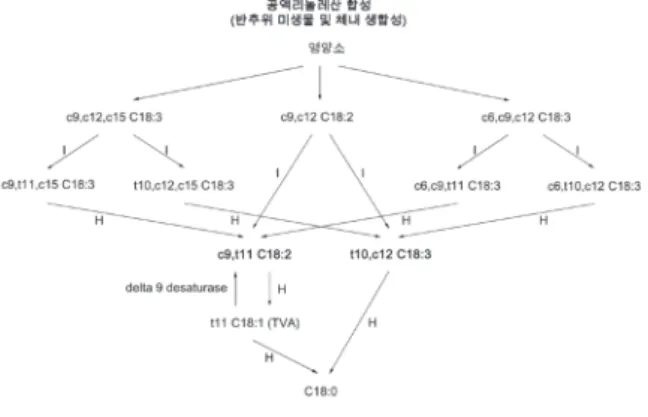
일반적으로 CLA는 반추동물의 반추위에서 미 생물에 의해 생성되는 것으로 알려져 있었으나, 최근에는 포유동물의 유선조직(mammary gland) 과 지방조직( adipose tissue)에서 델타 9 불포화효 소 (∆-9 desaturase)에 의해서도 형성되는 것으로 알려졌다. 1966년 Kepler 등은 반추동물의 반추위 에서
Butyrivibrio fibrisolvens에 의한 리놀레산의생물학적 수소화 반응의 중간산물( intermediate) 로서 CLA존재를 보고하였다(Kepler et al., 1966).
또한 1967년에 Kepler와 Tove는 리놀레산에서 B.
그림 1. 공액리놀레산의 반추위 미생물 및 체내 효소에 의한 형
성과정
fibrisolvens에 의해 c-9, t-11 CLA가 생성되고, 리
놀렌산( linolenic acid)에서는 같은 미생물에 의해 c-9, t-11, c-15 C18:3이 생성된다는 것을 보고하 였다( Kepler and Tove, 1967). 이후 Harfoot와 Hazle-
wood(1988)는 수소화 반응에 의해 c-9, t-11, c-15 C18:3이 trans vaccenic acid (TVA, t-11 C18:1)로 전 환된다는 것을 확인하였다. 구체적으로 살펴보 면, 리놀레산( c9, c12 C18:2)은 반추위에서 미생
표1. 동물성 식품의 지방에 존재하는 CLA 이성질체 조성(총 이성질체 함량에 대한 비율, %)과 CLA 함량 비율(총 지방함량에 대
한 비율, %)
CLA 이성질체 우유 버터 치즈 쇠고기
cis, trans 이성질체
7, 9 5.5 6.7 3.6 7.0
8, 10 1.5 0.3 1.0 2.6
9, 11 72.6 76.5 83.5 72.0
10, 12 0.4 1.1 - 2.6
11, 13 7.0 0.4 4.7 1.1
11, 13 - - - 2.2
12, 14 0.7 0.8 0.4 0.7
총 cis, trans (trans, cis) 비율 87.7 85.8 93.2 88.2
trans, trans 이성질체
6, 8 - 0.1 0.1 0.7
7, 9 2.4 - 0.6 1.5
8, 10 0.4 - 0.3 0.7
9, 11 2.0 - 1.5 3.7
10, 12 0.6 - 0.5 1.9
11, 13 4.2 - 2.3 1.9
12, 14 2.8 - 0.9 1.9
13, 15 - - 0.1 -
총 trans, trans 비율 12.3 9,4 6.3 12.3
cis, cis 이성질체
8, 10 - - <0.1 -
9, 11 - - 0.3 -
10, 12 - - <0.3 -
11, 13 - - 0.3 -
총 cis, cis 비율 - 4.8 0.7 -
총 CLA 함량비율 (%) 0.5 0.93 0.27
Cited from (Khanal, 2004)
물에 위해 c12위치의 이중결합이 c11으로 전환되 면서 c9, t11-CLA가 생성된다. 하지만 반추위 미 생물에 의해 리놀레산이 CLA로 전환되는 것만 으로는 반추동물에서 유래하는 유제품 및 육제 품의 총 CLA양을 설명할 수 없었다. 이에 1994년 Parodi는 ∆-9 desaturase 에 의한 TVA가 CLA로 전 환될 수 있다고 보고하였다(Parodi, 1994). 이 과정 은 앞에서 기술한 것과 같이 리놀렌산이 이성질 체화 과정과 생물학적 수소화 반응을 거쳐 TVA를 생성하고, 이 TVA가 ∆-9 desaturase에 의해 c9, t11- CLA로 전환되는 것이다. (Khanal and Dhiman, 2004) 에 따르면 우유에서 TVA 함량과 c9, t11-CLA는 정의 상관관계를 가지는 것으로 나타났으며, 이 는 TVA가 ∆-9 desaturase에 의해 CLA로 전환되어 진다는 것을 뒷받침해준다.
3. 공액리놀레산의 효능
많은 선행연구 결과 공액리놀레산의 건강기능 성 측면의 장점은 1) 항암효과(Belury et al., 1996;
Bhattacharya et al., 2006; Cesano et al., 1998; Ha et
al., 1990; Ip et al., 1991; Ip et al., 1997) 2) 면역력강화( Kelley et al., 2002; Song et al., 2005) 3) 항비 만효과(Bissonauth et al., 2006; Blankson et al., 2000; Choi et al., 2000; Du and Ahn, 2003) 4) 항산 화효과(Su et al., 2003) 등으로 정리할 수 있다. 이 러한 특성들은 이성질체 특이성을 갖는데, t10 공 액리놀레산의 경우 여러 세포실험과 동물실험에 서 지방합성 전사인자인 PPARγ, SREBP1c 등을 제어함으로써 지방세포 발달 억제에 탁월한 효 과가 있는 것으로 알려져 있다( Azain et al., 2000;
Kang et al., 2003; Gregoire et al., 1998).
표2. 다양한 식품에 존재하는 CLA 함량
식품 mg/g 지방 식품 mg/g 지방
Dairy product Meat/Fish
Homogenized
milk 5.5 Fresh ground
beef 4.3
2% milk 4.1 Veal 2.7
Butter fat 6.1 Lamb 5.8
Condensed
milk 7.0 Pork 0.6
Cultured
buttermilk 5.4 Chicken 0.9
Butter 4.7 Fresh ground
turkey 2.6
Sour cream 4.6 Salmon 0.3
Ice cream 3.6 Egg yolk 0.6
Low fat yogurt 4.4 Custard style
yogurt 4.8
Vegetable oils
Plain yogurt 4.8 Safflower oil 0.7
Frozen yogurt 2.8 Sunflower oil 0.4
Medium
Cheddar 4.1
American
processed 5.0
Cited from (MacDonald, 2000)
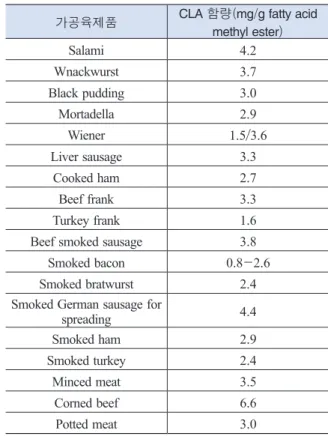
표3. 가공육제품에 존재하는 공액리놀레산 함량(mg/g fatty acid methyl ester)
가공육제품 CLA 함량(mg/g fatty acid methyl ester)
Salami 4.2
Wnackwurst 3.7
Black pudding 3.0
Mortadella 2.9
Wiener 1.5/3.6
Liver sausage 3.3
Cooked ham 2.7
Beef frank 3.3
Turkey frank 1.6
Beef smoked sausage 3.8
Smoked bacon 0.8-2.6
Smoked bratwurst 2.4
Smoked German sausage for
spreading 4.4
Smoked ham 2.9
Smoked turkey 2.4
Minced meat 3.5
Corned beef 6.6
Potted meat 3.0
Cited from (Schmid, Collomb, Sieber, & Bee, 2006)
3-1. 항암효과
CLA의 항암효과는 CLA의 대표적인 생리활성 효과 중 하나이다. 1987년 Ha 등에 의해 돌연변이 유발요인( mutagen)을 억제하는 활성이 발견된 이 후, CLA의 항암효과에 관한 연구가 활발하게 진
행되었다( Ha et al., 1987; O’Quinn et al., 2000). 특 히, CLA는 유선조직의 암(유방암), 위암, 피부암, 그리고 전립선암 등 다양한 종류의 암세포에 대 해 억제 효과가 있는 것으로 보고된다. Ip(1991) 등은 발암물질인 7, 12-dimethylbenz [a]anthracene ( DMBA)를 10 mg 수준으로 처리하여 암을 유도
표4. 공액리놀레산의 생리활성 작용
주요 작용 동물모델 및 작용효과 참고문헌
Body composition ↓ adiposity in chicks, mice, and rat (Cook, Miller, Park, & Pariza, 1993; Park et
al., 1997; Sisk et al., 2001)
↑ Adiposity in obese Zucker rats (Sisk et al., 2001)
↓ Adiposity in ZDF rats (K. L. Houseknecht et al., 1998)
↓ Adiposity is isomer specific (t10, c12-CLA) (Park, Storkson, Albright, Liu, & Pariza, 1999)
↓ Adiposity in human subjects (Smedman & Vessby, 2001; Thom, Wadstein,
& Gudmundsen, 2001)
↔ Adiposity in human subjects (Zambell et al., 2000)
Diabetes ↓ Onset of diabetes in ZDF male rats (K. L. Houseknecht et al., 1998)
↓ Insulin sensitivity in mice (Tsuboyama-Kasaoka et al., 2000)
Carcinogenesis ↓ Chemically induced mammary carcinogenesis in rats (Ip et al., 1991)
↓ Chemically induced mammary carcinogenesis in rats
by either c9, t11-CLA or synthetic CLA (Ip, Dong, Thompson, Bauman, & Ip, 2001)
↓ Chemically induced mammary carcinogenesis in rats regardless of level of fat or esterification of CLA (in
triglyceride) vs. free fatty acid (Ip et al., 1996; Ip et al., 1995)
↓ Growth of transplantable breast cancer tumor cells in
nude mice (Hubbard, Lim, Summers, & Erickson, 2000;
Visonneau et al., 1997)
↓ Growth of transplantable prostate cancer tumor cells
in nude mice (Cesano et al., 1998)
↓ Stages of chemically induced skin tumorigenesis in
mice (M. A. Belury et al., 1996; Ha et al., 1987)
↓ Chemically induced colon carcinogenesis in rats (Liew, Schut, Chin, Pariza, & Dashwood, 1995)
↔ Carcinogenesis in Min mice (Petrik et al., 2000)
↓ Chemically induced forestomach (Ha et al., 1990)
Atherosclerosis ↓ Atherosclerotic plaque formation in hamsters (Wilson, Nicolosi, Chrysam, & Kritchevsky, 2000)
Bone formation ↓ Eicosanoid production (Y. Li & Watkins, 1998)
Immune system ↓ Eicosanoid and histamine production (Sugano, Tsujita, Yamasaki, Noguchi, & Yamada, 1998; Whigham et al., 2001)
↑ Onset of lupus in mouse model (Yang, Pariza, & Cook, 2000) Cited from (Martha A Belury, 2002).
↓, decrease; ↑, increase; ↔, no effect; ZDF, Zucker diabetic fatty.
한 쥐에 CLA 1%가 함유된 사료를 급여하였을 때 유방암 억제효과를 확인하였고, 다른 연구에 의 해서도 유방암세포와 전립선암세포를 이식한 쥐 에게 1%의 CLA를 급여하였을 때 암세포의 성장 이 유의적으로 감소하는 것을 확인하였다(Vison- neau et al., 1997; Cesano et al., 1998). Ha(1990) 등도 DMBA를 이용하여 화학적으로 암을 유발시킨 쥐에 CLA를 급여하였을 때 피부암이 억제되었 고, 또한 유방암 및 식도 부분의 종양형성도 억제 하는 것으로 보고하였다. 또한 Shultz(1991) 등은 CLA에 의한 항암효과는 CLA 첨가방법에 의해 영향을 받기도 한다. CLA에 의한 유방암 억제효 과는 섭취하는 지방의 종류나 지방량과는 관계 가 없으며, CLA 급여량에 의존하는 것으로 보고 하였다. 화학적으로 암을 유발시킨 쥐에게 CLA 를 중성지방 형태로 급여하였을 때 종양의 영향 범위는 약 80%였으나, 자유지방산 형태로 급여 하였을 때에는 약 50%로 감소하였다(Ip et al., 1995). c-9, t-11 CLA와 t-10, c-12 CLA를 함께 급여하면 상승작용으로 인해 c-9, t-11 CLA를 단 독으로 급여했을 때 보다 항암효과가 뛰어난 것 으로 보고되었다( Ip et al., 1999; Ip et al., 2000;
Pariza et al., 2001). 이와는 달리 CLA가 발암물질 의 전구체의 잔존량을 감소시켜 항암효과를 나 타낼 수 있다는 보고도 있다. 주선(2000) 등은 CLA를 첨가한 돈육패티에서 발암물질을 형성할 수 있는 아질산염의 잔존량이 감소하는 것을 확 인하고 CLA에 의해 간접적으로 암발생이 억제 될 수 있다고 제안하였다. 이와반대로 Petrik(2000) 등은 CLA 급여와 쥐의 종양형성을 감소시키는 데 영향을 주지 못한다고 하였다.
이와 같이 CLA는 다양한 암에 대해 항암효과 를 나타내지만 CLA의 생화학적 항암기작은 아직 정확하게 밝혀지지 않았다. 다만 많은 연구자들은 CLA의 다양한 생리활성효과에 의해 발암을 억제 하는 것으로 보고있다( Pariza et al., 2001; 허선진 등 2002). Ip(1994) 등은 CLA에 의한 유방암 억제효과 는 CLA가 종양이 형성된 부위에 직접 작용하였기 때문일 것이라 보고하였다. 또한 CLA가 인지질내
아라키돈산(arachidonic acid) 함량을 감소시키고 arachidonate에서 유래되는 prostaglandin E2의 합성 을 억제하기 때문에 항암효과를 나타낸다고 보고 되기도 하였다( Li and Watkins, 1998; Liu and Belury, 1998). CLA는 리놀레산과 유사한 구조를 가지기 때문에, eicosanoid 또는 다른 지방매개체에 의한 세포내 신호전달기작에 영향을 주어 CLA에서 유 도된 다른 생리활성물질이 생성될 수 있다는 것이 다(Pariza et al., 2000; Sebedio et al., 1997). Ito와 Hirose(1989)는 항산화제가 암화과정을 억제시키 는 효과가 있다고 보고하였는데, 이를 토대로 허 선진( 2002) 등은 항산화효과를 가지는 CLA가 항 산화제로서 작용하여 항암효과를 나타낼 수도 있 다고 제안하였다. 이처럼 많은 연구에서 CLA는 다양한 생리활성효과를 바탕으로 여러 암에 대해 억제효과를 나타내는 것으로 보고되었다.
3-2. 혈중 지질조성 변화를 통한 심혈관계질환 개선 효과
공액리노레산은 동맥경화를 개선하는 데에도
그 효능이 보고된 바 있는데, 1% CLA(c9, t11 +
t10, c12)를 토끼에게 급여한 실험 결과 혈중 고밀
도 콜레스텔롤의 농도가 증가하며, 경동맥의 혈전
형성이 30% 가량 감소하는 것을 나타났다. 다른
실험결과에 의하면 t10, c12 공액리놀레산이 혈중
지질 개선효과가 뛰어난 것으로 확인되었으며 심
혈관계 질환 개선 효과도 있다고 알려졌다( Su et
al., 2003). 사람의 혈액 내 지질 특성과 관련한 연구도 진행되었는데, Benito 등은 하루 3-4 g의 공액
리놀레산을 섭취한 경우 중성지질의 함량이 낮아
진다고 보고하였다( Benito et al., 2001b). 지방산 조성
의 변화 또한 잘 알려져있는데, 공액리놀레산은
SCD1 효소의 활력을 억제시킴으로 인해 동물과
사람의 혈액에서 포화지방산의 함량을 높이고, 단
가불포화지방산의 함량을 낮출 수 있다( Choi et al.,
2014; Go et al., 2012). 공액리놀레산은 SCD1의 변
화를 통해 포화지방산의 조성을 높여 부정적인 요
소가 있는 것처럼 보이지만, SCD1 억제를 통한 중
성지질 생성 억제와 콜레스테롤 에스터의 결합을 저해하여 전체적인 지질대사를 억제시킬 수 있다 고 알려져 있다(Go et al., 2012).
3-3. 체지방 감소 효과
쥐와 닭 등 여러 동물을 이용한 실험에서도 공 액리놀레산 급여는 체내 지방을 감소시키는 효 능이 있다고 보고되었다(Bissonauth et al., 2006;
Chung et al., 2005; Du and Ahn, 2003; Go et al., 2012). 선행 연구결과들에 의하면 t10, c12 공액리 놀레산의 경우 체내 지방함량을 감소시킬 수 있 다고 조사되었는데, 많은 경우 이러한 지방감소 효과는 t10, c12 공액리놀레산에서 보다 두드러 진 현상으로 c9, t11 공액리놀레산의 경우 지질 감 소 효과가 상대적으로 적었다. 동물을 이용한 실 험에서 공액리놀레산 급여군에서 복부 둘레가 감소되었으며 체지방 지수 또한 감소되는 것으 로 확인되었다(Noone et al., 2002; Blankson et al., 2000). 공액리놀레산에 의한 체지방 감소는 1) 지 방조직에서의 새로운 지질합성 및 세포분화를 저하하거나 2) 기존에 축적되어 있던 지질의 분 해를 촉진하는 방식으로 진행된다고 알려져있 다. 사람에게 하루에 3.2 g의 공액리놀레산을 급 여한 경우 SCD의 활력이 크게 줄어 지질합성 과 정이 현저히 감소하였고, 이에 따른 체중감소가 관찰되었다(Benito et al., 2001a). 효소 SCD의 활
력이 감소한 경우 간과 근육에서의 AMPK가 증 가되어 지질산화가 촉진되며 새로운 지질의 합 성은 강하게 억제되는 것으로 알려져 있다(Hsu and Ip, 2011; Jiang et al., 2011). 뿐만 아니라 공액 리놀레산은PPARγ을 억제함으로써 지방구 발달 을 방해할 수 있고, C/EBPα를 억제시켜 지방조직 의 분화 및 발달을 감소시킨다. 이와 유사하게 사 람에게서 채취한 지방세포들로 진행한 실험 결 과 공액리놀레산 t10, c12 공액리놀레산은 지방 산 합성, 중성지질 합성, 지방구의 형성 등을 저 하시켜 결과적으로 체지방을 감소시킬 수 있다 고 밝혀졌다( Brown et al., 2003).
공액리놀레산에 의한 체지방 감소는 에너지 대 사 활성화를 통한 지방분해의 촉진으로 설명할 수 있다. 공액리놀레산은 근육에서 CPT-1b를 촉 진시켜 지방산 산화를 촉진시킬 수 있는 것으로 보고된 바 있다(Chung et al., 2005). 쥐를 이용한 실험에서 0.5%의 공액리놀레산을 급여받은 실험 군에서 운동 동안 활발히 에너지 대사를 증가시 켰다( Mizunoya et al., 2005). 이와 유사하게 1%의 공액리놀레산을 8주 동안 쥐에게 급여한 실험 결 과 산화적 스트레스에 영향 없이 PPARa, ACO, UCP 등 기질산화를 촉진시키는 인자들이 상승 시켰다( Choi et al., 2007). 사람을 통한 실험에서 도 유사한 결과를 얻을 수 있었는데, 약 6개월간 하루에 4 g의 공액리놀레산을 급여한 과체중 사 람들에게서 신진대사와 기질산화가 보다 활성화 되는 것으로 확인되었다( Close et al., 2007).
3-4. 공액리놀레산과 지방간 발달
체지방 감소 효과로 널리 알려진 공액리놀레산 의 기능은 간에서는 다소 다른 방향으로 진행된 다. 특히 많은 동물 실험 결과 체지방이 감소한 반면 간의 무게가 증가하고 지방간의 발달이 촉 진된다고 보고되었다( Clément et al., 2002; Ferra- mosca et al., 2006; Ide, 2005; Li et al., 2012; Vyas
et al., 2012). 최근 들어 공액리놀레산의 이러한기능에 대해 세부적 기작을 찾으려는 연구들이
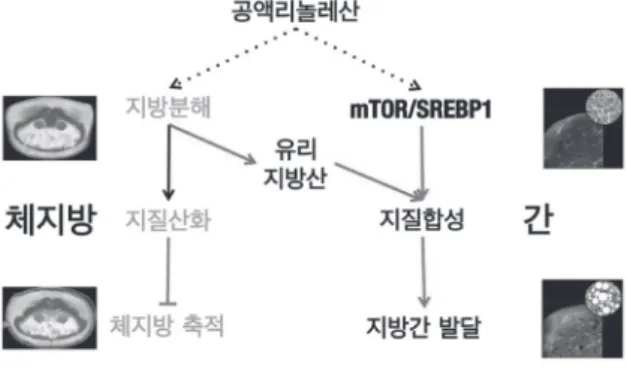
그림 2. 공액리놀레산에 의한 지질산화와 이이 따른 체지방 감소와
지방간 형성의 부작용
진행되었고, 공액리놀레산을 추가 급여한 동물 들의 간 내 중성지질이 증가하며 간 내 지질합성 효소들의 mRNA 양이 증가한다고 보고되었다 ( Ide, 2005). 이러한 간에서의 점차적인 지질합성 의 증가는 지방간의 발달을 유도할 수 있다고 조 사되었다( Ferramosca et al., 2006). 또 다른 실험에 서 0.3%의 t10 공액리놀레산을 6주간 급여받은 동물에서 복강 내 지방조직의 크기는 감소한 반 면 간의 크기가 증가되는 것으로 조사되었다(J.
Li et al., 2012). 이러한 현상은 공액리놀레산을 섭취할 경우 지방조직에서는 지방분해를 촉진시 키고 이로 인해 발생한 유리 지방산이 혈액을 타 고 간으로 이동해 축적되면서 지방간 발달을 촉 진시키는 것을 여겨진다( Vyas et al., 2012). 최근 공액리놀레산이 간세포에 미치는 영향에 대한 작용기작이 보고되었는데, t10, c12 공액리놀레 산은 acetate, palmitate, oleate, 2-deoxy-glucose와 같은 다양한 기질들이 중성지질로 축적되는 현상 을 증가시켰으며, SREBP1, ACC1, FASN, ELOVL6, GPAT1, DGAT1와 같은 지질대사에서 중추적인역할 을 하는 전사인자와 효소들의 mRNA 및 단백질 발현을 증가시키는 것으로 확인되었다. 무엇보 다 t10, c12 공액리놀레산을 공급받은 세포들에 서 mTOR/SREBP1 기전 활성화를 통해 지질 생합 성을 촉진시키고, 이후 중성지질 축적을 증가시 켜 지방간 발달에 영향을 미친다는 것이 밝혀졌 다(Go et al., 2013).
3-5. 동물의 성장특성 및 육질에 미치는 영향 CLA를 첨가한 사료 급여가 동물의 성장특성에 부분적으로 영향을 주는 것으로 보고된다. 일당 증체량에 대한 CLA의 영향은 다양한 결과를 나 타내 뚜렷한 증가효과가 있다고 보기는 어렵다 ( O’Quinn et al., 2000). 이러한 결과는 동물의 건강 및 영양상태, 주변환경조건, 연령, 성별, 유전적 요인, 사료조성, 급여기간 등 다양한 요인의 조건 차이에서 기인한다고 볼 수 있다( O’Quinn et al., 2000). 이와반대로 일당사료섭취량 및 사료효율
에서는 일관된 결과를 보여준다. 여러 연구(Dugan
et al., 1997; Eggert et al., 2001; O’Quinn et al., 2000;Park et al., 1997; West et al., 1998)에서 CLA를 급 여하였을때, 일당사료섭취량이 감소하는 것으로 나타났다. CLA에 의한 일당사료섭취량 감소효 과는 동물의 식욕감퇴와 연관되어 있다는 보고 가 있다(West et al., 1998). 또한 CLA는 급여량에 따라 PPARγ 유전자를 활성화시키고, 이것은 렙 틴(leptin) 유전자의 전사(transcription) 조절과 관련 되어 있다( Houseknecht et al., 1998). 따라서 CLA급 여는 렙틴 유전자의 발현을 증가시켜 사료섭취량 을 감소시킨다고 볼 수 있다. 또한 CLA의 급여는 사료효율도 증가시키는 것으로 나타났다(Chin et
al., 1994; Dugan et al., 1997).다양한 동물에 CLA를 급여했을때 실험동물 및 실험방법에 관계없이 체조성이 변하는 결과를 확인할 수 있었으며, 체조성 중에서도 지방조성 의 감소가 뚜렷하였다( Dugan et al., 1997; Park et
al., 1997; Sisk et al., 2001; West et al., 1998). 일부연구( Dugan et al., 1997)에서는 돼지의 등심근 직 경이 증가하는 것을 확인하기도 하였지만, 일반 적으로 CLA급여시 근육량 증가보다는 지방조직 의 감소가 뚜렷하게 나타났다. 지방조직의 감소 는 CLA급여에 따른 아드레날린 유도 지방분해, 호르몬 민감성 지방분해효소 활성화, cartinine pal- mitoyltransferase 활성화 증가에 따른 것으로 보고 된다(O’Quinn et al., 2000). 또한 CLA급여가 지방 분해를 증가시키지만 지단백질 지질분해 활성은 감소시키고, 골격근과 지방의 β-oxidation을 촉진 시키기 때문이라고 보고되기도 했다( Park et al., 1997). 최근에는 CLA급여가 골격근에서 mTOR 신호전달체계를 자극함으로서 단백질 회전률 ( protein turnover)을 감소시켜 적육량(lean mass)을 증가시킨다는 보고도 있다( Go et al., 2013).
CLA급여는 육질에도 영향을 주는 것으로 보고
된다. 특히 CLA 급여할 경우 CLA를 급여하지 않
았을 때보다 포화지방산 비율이 높고 올레산
( oleic acid) 함량이 적다고 보고되었다(Du and
Ahn, 2002; Du et al., 2001; O’Quinn et al., 2000).
이러한 지방산조성의 변화는 저장기간 중 산패 에 취약한 불포화지방산 비율이 감소하여 지방 의 산화안정성을 개선한다(Du et al., 2001). 또한 CLA급여에 의한 불포화지방산 및 올레산 함량 의 감소는 지방의 융점을 높여 삼겹살의 견고성 ( firmness)을 CLA비급여군에 비해 약 26% 증가시 켜 삼겹살의 가공적성을 향상시킨다고 보고되었 다( O’Quinn et al., 2000). CLA급여에 의한 지방산 패 억제는 육색에도 영향을 주는 것으로 나타났 다. 육색의 변색은 미오글로빈( myoglobin)의 산 화율과 밀접하게 관련되어 있으며, 지방산의 불 포화도 증가는 미오글로빈의 산화를 증가시키는 것으로 나타났다(Schaefer et al., 1995; Yin and Faustman, 1993). 따라서 CLA급여에 의한 포화지 방산의 증가와 지방산패 감소는 미오글로빈의 산화를 억제하여 육색의 변색을 억제한다.
III. 결론
축산식품은 우리에게 주요한 단백질 공급원이 자 지용성 비타민과 무기질의 보고이다. 이러한 우수한 가치에 따라 일반인은 물론이고 성장기 에 있는 학생들이나 임산부들에게는 필수불가결 한 식품으로 인식되어 있다. 뿐만 아니라 공액리 놀레산과 같은 다양한 건강기능성을 가진 독특 한 지방산을 식품으로 섭취할 수 있는 중요한 식 품군이기도 하다. 하지만 최근 들어 지나친 축산 식품에 대한 부정적 기류의 확산과 잘못된 정보 의 범람은 반드시 축산식품을 섭취하여 균형잡 힌 영양소를 공급받아야할 사람들에게까지 그릇 된 정보를 제공하고 있는 실정이다. 이를 바로 잡 고 올바른 정보를 전달하기 위한 축산관련 학계 와 산업체의 노력이 절실한데 이를 위한 가장 중 요한 노력은 올바른 과학적 지식을 정리하고 축 적하는 작업이라 할 수 있다. 따라서 본 논문에서 는 1935년 처음 발견된 이래 많은 논란과 관련 산 업을 키워온 공액리놀레산의 과학적 특성과 형 성 기작을 정리하고 이를 섭취한 동물과 사람에 게 미치는 영향에 대해 그간의 연구를 정리 및 요
약하였다.
참고문헌
1. Azain, M. J., Hausman, D. B., Sisk, M. B., Flatt, W. P., and Jewell, D. E. (2000). Dietary conjugated linoleic acid reduces rat adipose tissue cell size rather than cell number. J Nutr,
130(6), 1548-1554.
2. Bartlet, J., and Chapman, D. (1961). Butter adulteration, detection of hydrogenated fats in butter fat by measurement of cis-trans conjugated unsaturation. J Agric Food Chem, 9(1), 50-53.
3. Belury, M. A. (2002). Dietary Conjugated Linoleic Acid in Health: Physiological Effects and Mechanisms of Action 1. Ann Rev Nutr, 22(1), 505-531.
4. Belury, M. A., Nickel, K. P., Bird, C. E., and Wu, Y. (1996).
Dietary conjugated linoleic acid modulation of phorbol ester skin tumor promotion. Nutr Cancer, 26(2), 149-157.
5. Benito, P., Nelson, G. J., Kelley, D. S., Bartolini, G., Schmidt, P. C., and Simon, V. (2001a). The effect of conjugated linoleic acid on plasma lipoproteins and tissue fatty acid composition in humans. Lipids, 36(3), 229-236.
6. Benito, P., Nelson, G. J., Kelley, D. S., Bartolini, G., Schmidt, P. C., and Simon, V. (2001b). The effect of conjugated linoleic acid on platelet function, platelet fatty acid composition, and blood coagulation in humans. Lipids, 36(3), 221-227.
7. Bhattacharya, A., Banu, J., Rahman, M., Causey, J., and Fernandes, G. (2006). Biological effects of conjugated linoleic acids in health and disease. J Nutr Biochem, 17(12), 789-810.
8. Bissonauth, V., Chouinard, Y., Marin, J., Leblanc, N., Richard, D., and Jacques, H. (2006). The effects of t10,c12 CLA isomer compared with c9,t11 CLA isomer on lipid metabolism and body composition in hamsters. J Nutr Biochem, 17(9), 597-603.
9. Blankson, H., Stakkestad, J. A., Fagertun, H., Thom, E., Wadstein, J., and Gudmundsen, O. (2000). Conjugated linoleic acid reduces body fat mass in overweight and obese humans. J Nutr, 130(12), 2943-2948.
10. Booth, R. G., Kon, S. K., Dann, W. J., and Moore, T. (1935).
A study of seasonal variation in butter fat: A seasonal spectroscopic variation in the fatty acid fraction. Biochem J,
29(1), 133.
11. Brown, J. M., Boysen, M. S., Jensen, S. S., Morrison, R. F., Storkson, J., Lea-Currie, R., and McIntosh, M. K. (2003).
Isomer-specific regulation of metabolism and PPARγ signaling by CLA in human preadipocytes. J. Lipid. Res., 44, 1287-1300.
12. Cesano, A., Visonneau, S., Scimeca, J. A., Kritchevsky, D., and Santoli, D. (1998). Opposite effects of linoleic acid and conjugated linoleic acid on human prostatic cancer in SCID mice. Anticancer Res, 18(3a), 1429-1434.
13. Chin, S. F., Storkson, J. M., Albright, K. J., Cook, M. E., and Pariza, M. W. (1994). Conjugated linoleic acid is a growth factor for rats as shown by enhanced weight gain and improved feed efficiency. J Nutr, 124(12), 2344-2349.
14. Choi, J. S., Koh, I. U., Jung, M. H., and Song, J. (2007).
Effects of three different conjugated linoleic acid preparations on insulin signalling, fat oxidation and mitochondrial function in rats fed a high-fat diet. Br J Nutr, 98(2), 264-275.
15. Choi, S. H., Silvey, D. T., Johnson, B. J., Doumit, M. E., Chung, K. Y., Sawyer, J. E., and Smith, S. B. (2014). Conjugated linoleic acid (t-10, c-12) reduces fatty acid synthesis de novo, but not expression of genes for lipid metabolism in bovine adipose tissue ex vivo. Lipids, 49(1), 15-24.
16. Choi, Y., Kim, Y. C., Han, Y. B., Park, Y., Pariza, M. W., and Ntambi, J. M. (2000). The trans-10,cis-12 isomer of conjugated linoleic acid downregulates stearoyl-CoA desaturase 1 gene expression in 3T3-L1 Adipocytes. J. Nutr., 130(8), 1920-1924.
17. Chung, S., Brown, J. M., Sandberg, M. B., and McIntosh, M.
(2005). Trans-10,cis-12 CLA increases adipocyte lipolysis and alters lipid droplet-associated proteins: role of mTOR and ERK signaling. J Lipid Res, 46(5), 885-895.
18. Close, R. N., Schoeller, D. A., Watras, A. C., and Nora, E. H.
(2007). Conjugated linoleic acid supplementation alters the 6-mo change in fat oxidation during sleep. Am J Clin Nutr,
86(3), 797-804.
19. Clément, L., Poirier, H., Niot, I., Bocher, V., Guerre-Millo, M., Krief, S., and Besnard, P. (2002). Dietary trans-10,cis-12 conjugated linoleic acid induces hyperinsulinemia and fatty liver in the mouse. J Lipid Res, 43(9), 1400-1409.
20. Cook, M. E., Miller, C. C., Park, Y., and Pariza, M. (1993).
Immune modulation by altered nutrient metabolism: nutritional control of immune-induced growth depression. Poult Sci,
72(7), 1301-1305.
21. Du, M., and Ahn, D. (2002). Effect of dietary conjugated linoleic acid on the growth rate of live birds and on the abdominal fat content and quality of broiler meat. Poult Sci,
81(3), 428-433.
22. Du, M., Ahn, D., Nam, K., and Sell, J. (2001). Volatile profiles and lipid oxidation of irradiated cooked chicken meat from laying hens fed diets containing conjugated linoleic acid. Poult Sci, 80(2), 235-241.
23. Du, M., and Ahn, D. U. (2003). Dietary CLA affects lipid metabolism in broiler chicks. Lipids, 38(5), 505-511.
24. Dugan, M., Aalhus, J., Schaefer, A., and Kramer, J. (1997).
The effect of conjugated linoleic acid on fat to lean repartitioning and feed conversion in pigs. Can J Anim Sci, 77(4), 723-725.
25. Eggert, J. M., Belury, M. A., Kempa-Steczko, A., Mills, S. E., and Schinckel, A. P. (2001). Effects of conjugated linoleic acid on the belly firmness and fatty acid composition of genetically
lean pigs. J Anim Sci, 79(11), 2866-2872.
26. Ferramosca, A., Savy, V., Conte, L., Colombo, S., Einerhand, A. W., and Zara, V. (2006). Conjugated linoleic acid and hepatic lipogenesis in mouse: role of the mitochondrial citrate carrier. J Lipid Res, 47(9), 1994-2003.
27. Go, G., Wu, G., Silvey, D. T., Choi, S., Li, X., and Smith, S. B.
(2012). Lipid metabolism in pigs fed supplemental conjugated linoleic acid and/or dietary arginine. Amino Acids, 43(4), 1713-1726.
28. Go, G. W., Oh, S., Park, M., Gang, G., McLean, D., Yang, H.
S., and Kim, Y. (2013). t10,c12 conjugated linoleic acid upregulates hepatic de novo lipogenesis and triglyceride synthesis via mTOR pathway activation. J Microbiol Biotechnol,
23(11), 1569-1576.
29. Gregoire, F. M., Smas, C. M., and Sul, H. S. (1998).
Understanding adipocyte differentiation. Physiol. Rev., 78(3), 783-809.
30. Ha, Y. L., Grimm, N. K., and Pariza, M. W. (1987).
Anticarcinogens from fried ground beef: heat-altered derivatives of linoleic acid. Carcinogenesis, 8(12), 1881-1887.
31. Ha, Y. L., Storkson, J., and Pariza, M. W. (1990). Inhibition of benzo(a)pyrene-induced mouse forestomach neoplasia by conjugated dienoic derivatives of linoleic acid. Cancer Res,
50(4), 1097-1101.
32. Harfoot, C., and Hazlewood, G. (1988). Lipid metabolism in the rumen. In P. N. Hobson (Ed.), The rumen microbial ecosystem (pp. 285-322). London: Elsevier.
33. Hilditch, T., and Jasperson, H. (1941). Milk fats from cows fed on fresh pasture and on ensiled green fodder. I. observations on the component fatty acids. J Soc Chem Ind, 60(12), 305-310.
34. Hilditch, T. P., and Jasperson, H. (1945). The polyethenoid acids of the C18 series present in milk and grass fats. J Soc Chem Ind, 64, 109-111.
35. Houseknecht, K. L., Baile, C. A., Matteri, R. L., and Spurlock, M. E. (1998). The biology of leptin: a review. J Anim Sci,
76(5), 1405-1420.
36. Houseknecht, K. L., Vanden Heuvel, J. P., Moya-Camarena, S.
Y., Portocarrero, C. P., Peck, L. W., Nickel, K. P., and Belury, M. A. (1998). Dietary conjugated linoleic acid normalizes impaired glucose tolerance in the Zucker diabetic fatty fa/fa rat.
Biochem Biophys Res Commun, 244(3), 678-682.
37. Hsu, Y. C., and Ip, M. M. (2011). Conjugated linoleic acid- induced apoptosis in mouse mammary tumor cells is mediated by both G protein coupled receptor-dependent activation of the AMP-activated protein kinase pathway and by oxidative stress.
Cell Signal, 23(12), 2013-2020.
38. Hubbard, N. E., Lim, D., Summers, L., and Erickson, K. L.
(2000). Reduction of murine mammary tumor metastasis by conjugated linoleic acid. Cancer Lett, 150(1), 93-100.
39. Ide, T. (2005). Interaction of fish oil and conjugated linoleic
acid in affecting hepatic activity of lipogenic enzymes and gene expression in liver and adipose tissue. Diabetes, 54(2), 412-423.
40. Ip, C., Banni, S., Angioni, E., Carta, G., McGinley, J., Thompson, H. J., and Bauman, D. (1999). Conjugated linoleic acid–enriched butter fat alters mammary gland morphogenesis and reduces cancer risk in rats. J Nutr, 129(12), 2135-2142.
41. Ip, C., Briggs, S. P., Haegele, A. D., Thompson, H. J., Storkson, J., and Scimeca, J. A. (1996). The efficacy of conjugated linoleic acid in mammary cancer prevention is independent of the level or type of fat in the diet. Carcinogenesis,
17(5), 1045-1050.
42. Ip, C., Chin, S. F., Scimeca, J. A., and Pariza, M. W. (1991).
Mammary cancer prevention by conjugated dienoic derivative of linoleic acid. Cancer Res, 51(22), 6118-6124.
43. Ip, C., Dong, Y., Thompson, H. J., Bauman, D. E., and Ip, M.
M. (2001). Control of rat mammary epithelium proliferation by conjugated linoleic acid. Nutr Cancer, 39(2), 233-238.
44. Ip, C., Ip, M. M., Loftus, T., Shoemaker, S., and Shea-Eaton, W. (2000). Induction of apoptosis by conjugated linoleic acid in cultured mammary tumor cells and premalignant lesions of the rat mammary gland. Cancer Epidemiol Biomarkers Prev, 9(7), 689-696.
45. Ip, C., and Scimeca, J. A. (1997). Conjugated linoleic acid and linoleic acid are distinctive modulators of mammary carcinogenesis.
Nutr Cancer, 27(2), 131-135.
46. Ip, C., Scimeca, J. A., and Thompson, H. (1995). Effect of timing and duration of dietary conjugated linoleic acid on mammary cancer prevention. Nutr Cancer, 24(3), 241-247.
47. Ip, C., Scimeca, J. A., and Thompson, H. J. (1994). Conjugated linoleic acid. A powerful anticarcinogen from animal fat sources. Cancer, 74(3), 1050-1054.
48. Ito, N., and Hirose, M. (1989). Antioxidants-carcinogenic and chemopreventive properties. Adv Cancer Res, 53, 247-302.
49. Jiang, S., Chen, H., Wang, Z., Riethoven, J. J., Xia, Y., Miner, J., and Fromm, M. (2011). Activated AMPK and prostaglandins are involved in the response to conjugated linoleic acid and are sufficient to cause lipid reductions in adipocytes. J Nutr Biochem, 22(7), 656-664.
50. Kang, K., Liu, W., Albright, K. J., Park, Y., and Pariza, M. W.
(2003). trans-10, cis-12 CLA inhibits differentiation of 3T3- L1 adipocytes and decreases PPARγ expression. Biochem.
Biophys. Res. Commun., 303(3), 795-799.
51. Kee, J. I., Ganesan, P., and Kwak, H. S. (2010). Reviews : Bioactive Conjugated Linoleic Acid (CLA) in Milk. Korean J Food Sci Anim Resour, 30(6), 879-885.
52. Kelley, D. S., Warren, J. M., Simon, V. A., Bartolini, G., Mackey, B. E., and Erickson, K. L. (2002). Similar effects of c9,t11-CLA and t10,c12-CLA on immune cell functions in mice. Lipids, 37(7), 725-728.
53. Kepler, C. R., Hirons, K. P., McNeill, J., and Tove, S. (1966).
Intermediates and products of the biohydrogenation of linoleic acid by Butyrivibrio fibrisolvens. J Biol Chem, 241(6), 1350-1354.
54. Kepler, C. R., and Tove, S. (1967). Biohydrogenation of unsaturated fatty acids III. Purification and properties of a linoleate Δ12-cis, Δ11-trans-isomerase from Butyrivibrio fibrisolvens. J Biol Chem, 242(24), 5686-5692.
55. Khanal, R. (2004). Potential health benefits of conjugated linoleic acid (CLA): A review. Asian Austalas J Anim Sci,
17(9), 1315-1328.
56. Khanal, R., and Dhiman, T. (2004). Biosynthesis of conjugated linoleic acid (CLA): A review. Pakistan J Nutr, 3(2), 72-81.
57. Li, J., Viswanadha, S., and Loor, J. J. (2012). Hepatic metabolic, inflammatory, and stress-related gene expression in growing mice consuming a low dose of trans-10, cis-12-conjugated linoleic acid. J Lipids, 2012. ID571281
58. Li, Y., and Watkins, B. A. (1998). Conjugated linoleic acids alter bone fatty acid composition and reduce ex vivo prostaglandin E2 biosynthesis in rats fed n-6 or n-3 fatty acids.
Lipids, 33(4), 417-425.
59. Liew, C., Schut, H. A., Chin, S. F., Pariza, M. W., and Dashwood, R. H. (1995). Protection of conjugated linoleic acids against 2-amino-3- methylimidazo[4,5-f]quinoline-induced colon carcinogenesis in the F344 rat: a study of inhibitory mechanisms. Carcinogenesis, 16(12), 3037-3043.
60. Liu, K.-L., and Belury, M. A. (1998). Conjugated linoleic acid reduces arachidonic acid content and PGE2 synthesis in murine keratinocytes. Cancer Lett, 127(1), 15-22.
61. MacDonald, H. B. (2000). Conjugated linoleic acid and disease prevention: a review of current knowledge. J Am Coll Nutr, 19(sup2), 111S-118S.
62. McNeill, S., and Van Elswyk, M. E. (2012). Red meat in global nutrition. Meat Sci, 92(3), 166-173.
63. Mizunoya, W., Haramizu, S., Shibakusa, T., Okabe, Y., and Fushiki, T. (2005). Dietary conjugated linoleic acid increases endurance capacity and fat oxidation in mice during exercise.
Lipids, 40(3), 265-271.
64. Moore, T. (1939). Spectroscopic changes in fatty acids: General.
Biochem J, 33(10), 1635.
65. O’Quinn, P. R., Nelssen, J. L., Goodband, R. D., and Tokach, M. D. (2000). Conjugated linoleic acid. Anim Health Res Rev,
1(01), 35-46.
66. Pariza, M. W., Ha, Y. L., Benjamin, H., Sword, J. T., Grüter, A., Chin, S. F., and Albright, K. (1991). Formation and action of anticarcinogenic fatty acids. Adv Exp Med Biol, 289, 269-272.
67. Pariza, M. W., Park, Y., and Cook, M. E. (2000). Mechanisms of action of conjugated linoleic acid: evidence and speculation.
Proc Soc Exp Biol Med, 223(1), 8-13.
68. Pariza, M. W., Park, Y., and Cook, M. E. (2001). The
biologically active isomers of conjugated linoleic acid. Prog Lipid Res, 40(4), 283-298.
69. Park, Y., Albright, K. J., Liu, W., Storkson, J. M., Cook, M.
E., and Pariza, M. W. (1997). Effect of conjugated linoleic acid on body composition in mice. Lipids, 32(8), 853-858.
70. Park, Y., Storkson, J. M., Albright, K. J., Liu, W., and Pariza, M. W. (1999). Evidence that the trans-10,cis-12 isomer of conjugated linoleic acid induces body composition changes in mice. Lipids, 34(3), 235-241.
71. Parodi, P. (1977). Conjugated octadecadienoic acids of milk fat.
J Dairy Sci, 60(10), 1550-1553.
72. Parodi, P. W. (1994). Conjugated linoleic acid: an anticarcinogenic fatty acid present in milk fat. Austral J Dairy Technol, 49(2), 93-97.
73. Petrik, M. B., McEntee, M. F., Johnson, B. T., Obukowicz, M.
G., and Whelan, J. (2000). Highly unsaturated (n-3) fatty acids, but not alpha-linolenic, conjugated linoleic or gamma- linolenic acids, reduce tumorigenesis in Apc(Min/+) mice. J Nutr, 130(10), 2434-2443.
74. Riel, R. (1963). Physico-chemical characteristics of Canadian milk fat. Unsaturated fatty acids. J Dairy Sci, 46(2), 102-106.
75. Schaefer, D. M., Liu, Q., Faustman, C., and Yin, M.-C. (1995).
Supranutritional administration of vitamins E and C improves oxidative stability of beef. J Nutr, 125(6 Suppl), 1792S-1798S.
76. Schmid, A., Collomb, M., Sieber, R., and Bee, G. (2006).
Conjugated linoleic acid in meat and meat products: A review.
Meat Sci, 73(1), 29-41.
77. Sebedio, J., Juaneda, P., Dobson, G., Ramilison, I., Martin, J., Chardigny, J., and Christie, W. (1997). Metabolites of conjugated isomers of linoleic acid (CLA) in the rat. Biochimica et Biophysica Acta (BBA)-Lipids and Lipid Metab, 1345(1), 5-10.
78. Shultz, T., Chew, B., and Seaman, W. (1991). Differential stimulatory and inhibitory responses of human MCF-7 breast cancer cells to linoleic acid and conjugated linoleic acid in culture. Anticancer Res, 12, 2143-2145.
79. Sisk, M. B., Hausman, D. B., Martin, R. J., and Azain, M. J.
(2001). Dietary conjugated linoleic acid reduces adiposity in lean but not obese Zucker rats. J Nutr, 131(6), 1668-1674.
80. Smedman, A., and Vessby, B. (2001). Conjugated linoleic acid supplementation in humans--metabolic effects. Lipids, 36(8), 773-781.
81. Song, H. J., Grant, I., Rotondo, D., Mohede, I., Sattar, N., Heys, S. D., and Wahle, K. W. J. (2005). Effect of CLA supplementation on immune function in young healthy volunteers. Eur J Clin Nutr, 59(4), 508-517.
82. Su, N. D., Liu, X. W., Kim, M. R., Jeong, T. S., and Sok, D. E.
(2003). Protective action of CLA against oxidative inactivation of paraoxonase 1, an antioxidant enzyme. Lipids, 38(6), 615-622.
83. Sugano, M., Tsujita, A., Yamasaki, M., Noguchi, M., and Yamada, K. (1998). Conjugated linoleic acid modulates tissue levels of chemical mediators and immunoglobulins in rats.
Lipids, 33(5), 521-527.
84. Thom, E., Wadstein, J., and Gudmundsen, O. (2001). Conjugated linoleic acid reduces body fat in healthy exercising humans. J Int Med Res, 29(5), 392-396.
85. Tsuboyama-Kasaoka, N., Takahashi, M., Tanemura, K., Kim, H. J., Tange, T., Okuyama, H., and Ezaki, O. (2000). Conjugated linoleic acid supplementation reduces adipose tissue by apoptosis and develops lipodystrophy in mice. Diabetes, 49(9), 1534-1542.
86. Visonneau, S., Cesano, A., Tepper, S. A., Scimeca, J. A., Santoli, D., and Kritchevsky, D. (1997). Conjugated linoleic acid suppresses the growth of human breast adenocarcinoma cells in SCID mice. Anticancer Res, 17(2a), 969-973.
87. Vyas, D., Kadegowda, A. K., and Erdman, R. A. (2012).
Dietary conjugated linoleic Acid and hepatic steatosis: species- specific effects on liver and adipose lipid metabolism and gene expression. J Nutr Metab, 2012, 932928.
88. Weber, C., and Noels, H. (2011). Atherosclerosis: current pathogenesis and therapeutic options. Nat Med, 17(11), 1410-1422.
89. West, D. B., Delany, J. P., Camet, P. M., Blohm, F., Truett, A.
A., and Scimeca, J. (1998). Effects of conjugated linoleic acid on body fat and energy metabolism in the mouse. Am J Physiol Regul Integr Comp Physiol, 275(3), 667-672.
90. Whigham, L. D., Cook, E. B., Stahl, J. L., Saban, R., Bjorling, D. E., Pariza, M. W., and Cook, M. E. (2001). CLA reduces antigen- induced histamine and PGE(2) release from sensitized guinea pig tracheae. Am J Physiol Regul Integr Comp Physiol, 280(3), 908-912.
91. Wilson, T., Nicolosi, R., Chrysam, M., and Kritchevsky, D.
(2000). Conjugated linoleic acid reduces early aortic atherosclerosis greater than linoleic acid in hypercholesterolemic hamsters. Nutr Res, 20(12), 1795-1805.
92. Yang, M., Pariza, M. W., and Cook, M. E. (2000). Dietary conjugated linoleic acid protects against end stage disease of systemic lupus erythematosus in the NZB/W F1 mouse.
Immunopharm Immunot, 22(3), 433-449.
93. Yin, M. C., and Faustman, C. (1993). Influence of temperature, pH, and phospholipid composition upon the stability of myoglobin and phospholipid: a liposome model. J Agric Food Chem, 41(6), 853-857.
94. Zambell, K. L., Keim, N. L., Van Loan, M. D., Gale, B., Benito, P., Kelley, D. S., and Nelson, G. J. (2000). Conjugated linoleic acid supplementation in humans: effects on body composition and energy expenditure. Lipids, 35(7), 777-782.
95. Joo, S. T., Lee, J. L., Hah, K. H., Ha, Y. L. and Park, G. B.
(2000). Effect of Conjugated Linoleic Acid Additives on Quality Characteristics of Pork Patty, Korean J Food Sci Tech.
32(1), 62-68.
96. 허선진, 이정일, 하열래, 박구부, 주선태 (2002). Conjugated Linoleic Acid (CLA)의 생리활성과 축산식품, 44(4), 427-442.