만성 뇌졸중 환자에서 하지 균형 조절 훈련기의 훈련 효과
대구파티마병원 재활의학과, 1경북대학교 의과대학 재활의학교실 변승득ㆍ조동현ㆍ최원덕ㆍ홍용호ㆍ이지인ㆍ이양수1
Effects of the Balance Control Training in Chronic Hemiplegic Stroke Patients Seung Deuk Byun, M.D., Dong Hyun Cho, M.D., Won Duck Choi, M.D., Yong Ho Hong, M.D, Zee Ihn Lee, M.D. and Yang Soo Lee, M.D.1
Department of Rehabilitation Medicine, Dae-gu Fatima Hospital,
1Department of Rehabilitation Medicine, Kyung Pook National University College of Medicine
Objective: To investigate the training effects on balance and gait ability using balance control trainer
combined with partial weight-bearing system in chronic hemiplegic stroke patients.Method: A prospective crossover clinical trial was designed. The subjects consisted of 16 chronic
hemiplegic stroke patients. All patients had a stroke more than six months. In addition to conventional physical therapy (PT), 8 patients in group A were trained with the balance control trainer for 30 min/day, 5 day/week, for first 2 weeks and then received only conventional physical therapy for 2 weeks. The other 8 patients in group B received only conventional PT for first 2 weeks and then were trained with the balance control trainer for 30 min/day, 5 day/week, for next 2 weeks, with additional conventional PT. We evaluated with clinical tests including functional ambulation categories (FAC), Berg balance scale (BBS), 6 min walking distance (6mWT), timed up and go (TUG), Korean-modified barthel Index (K-MBI) and muscle strengthening of knee extensor (MMTknee) before training, 2 weeks and 4 weeks after training in those patients.Results: After training, subjects in experimental period (2weeks period of conventional PT+Balance
control trainer in group A&B) showed more improvement than those in control period (2 weeks period of only conventional PT in group A&B) in FAC, BBS, 6mWT, TUG, K-MBI (p<0.05).Conclusion: We think the balance control trainer combined with the partial weight-bearing system can
be a useful tool for improving balance and gait ability in chronic hemiplegic stroke patients. (Brain& NeuroRehabilitation 2012; 5: 32-38) Key Words: balance, physical therapy, stroke
접수일: 2012년 2월 9일, 1차 심사일: 2012년 3월 5일, 2차 심사일: 2012년 3월 9일, 게재승인일: 2012년 3월 9일 교신저자: 조동현, 대구시 동구 신암동 576-31
701-600, 대구파티마병원 재활의학과
Tel: 053-940-7824, Fax: 053-954-7417
서 론
뇌졸중 후 편 마비 환자는 기립시 비대칭적 자세를 취하 게 되며,1 비정상적인 보행 양상이나 이동거리의 제한 등 의 보행 이상이 동반되는 경우가 많고, 이를 개선하여 최 대한 정상적인 보행에 도달하기 위해 다양한 치료 방법들 이 연구되고 있다.2-6 편 마비 환자에서 효과적인 자세균형 및 제어능력의 증진은 이를 통한 기립 위 안정성 및 체중 부하 조절력을 향상시킬 수 있어 매우 중요하게 생각되어 지고 있으며, 균형 능력 향상을 위해 다양한 균형 훈련 시
스템(balance training system)이 사용되고 있다. 다양한 균 형 훈련 시스템은 고정되어 있는 힘판 위에 서서 시각 및 청각 등의 다양한 되먹임 기전을 통해 피검자가 자신의 압력중심점(center of pressure, COP)에 대한 움직임을 보 면서 특정 과제를 수행하는 것으로 균형장애의 평가 및 치료도구로써 이용되고 있다.7-9 최근에는 일반인들을 대 상으로 시각적 되먹임을 이용하여 균형 훈련을 통해 게임 을 하도록 하는 Wii fit balance board systemⓇ (Nintendo co, Kyoto, Japan) 게임기가 개발되어 사용되고 있으며, 이 러한 균형 훈련은 반복적인 움직임의 학습보다는 문제를 해결해가면서 움직임을 학습하는 것이 효과적이라는 Shumway-Cook의 운동학습이론에 기초를 두고 있다.10 그 러나, 힘판 시각적 되먹임 치료를 통한 기립 대칭성(stance symmetry)이 기립 균형의 임상적 평가에서 뿐만 아니라 무게 중심의 수직 이동이 포함된 ‘앉았다 서기’와 같은 기 능적 동작의 수행(performance of functional activities)까
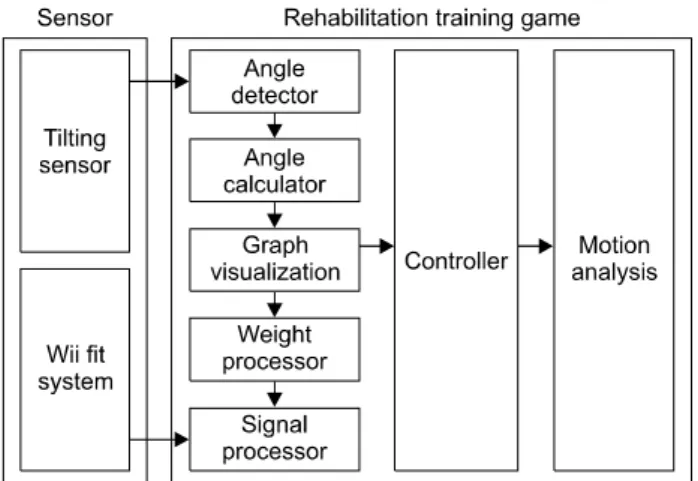
Fig. 1. Configuration of balance control trainer of lower extremity.
Fig. 2. The balance control trainer of lower extremity consists of the Wii fit balance board which detects the degree of weight shifting to right or left side, tilting sensor which detects the degree of affected knee flexion, and the computerized system which enables to perform the apple harvesting game using these data.
지 개선시킨다는 명확한 증거는 부족한 상태이다.11,12 또 한 일반인에게 사용되고 있는 Wii fitⓇ 게임기의 경우 안 전성과 난이도 등의 문제로 편 마비 환자들에게 적용하기 에는 어려움이 있어 그 효과를 연구하기에는 제한이 있다.
본 연구의 목적은 체중의 좌우 수평적 이동 뿐만 아니라, 슬 관절의 움직임을 통한 무게중심의 수직 이동 요소를 고려하여 시각적 되먹임과 보다 과제 지향적인 하지 운동 이 가능하도록 제작된 하지 균형조절 훈련기를 어느 정도 의 기립 및 보행은 가능하나 균형 감각의 감소 등으로 인 하여 원활한 보행에 어려움이 있는 만성기 편 마비 환자들 에게 적용한 후, 균형 및 보행 능력을 향상을 위한 치료 방법으로 사용 가능한지 알아보고자 하였다.
연구대상 및 방법
1) 연구대상
뇌졸중으로 입원한 환자 중 고관절 신전 근력이 3등급 (Fair) 이상으로 기립 상태를 유지할 수는 있는 발병 후 6개 월 이상 경과된 만 성기 편 마비 환자들을 대상으로 하였 다. 인지기능의 저하(간이 정신 상태 검사상 23점 이하)가 있거나, 시각 및 지각 장애가 심한 경우, 하지 근골격계의 이상이나 손상이 있는 경우, 고 위험도의 심장질환 및 다른 중등도 이상의 내과적 질환이 있는 경우는 연구에서 제외 하였다. 또한 치료 중 연속해서 3회 이상 치료를 받지 못하 거나 전체 치료 횟수의 80%를 채우지 못한 자는 연구에서 탈락되도록 하였다. 총 16명의 환자를 무작위로 A군 8명 과 B군 8명으로 분류하여 연구를 진행하였고, 모든 환자 들에게 충분한 정보를 제공하여 동의한 경우 연구에 참여 하도록 하였다. 본 연구는 연구를 시행한 기관의 임상연구 윤리심의위원회의 승인을 받은 후 시행되었다.
2) 연구방법
(1) 하지 균형 조절 훈련기
본 연구에 사용된 하지 균형 조절 훈련기는 현재 하지재 활 훈련장치로 상품화된 BalProⓇ (Man&tel co, Gumi, South Korea)의 원형(prototype) 모델로서 경북대학교 의 학전문대학원 재활의학교실과 경북대학교 공과대학 가상 현실연구소가 협력하여 자체 제작되었다. 하지 균형 조절 훈련기는 체중 부하의 좌우 이동 정도를 감지할 수 있는 센 서가 내장되어 있는 Wii fit balance board systemⓇ (Nintendo co, Kyoto, Japan), 슬 관절 각도를 인식할 수 있는 두 개의 기울기 센서(tilting sensor), 그리고, 이들 정보들을 이용한 게 임 소프트웨어가 포함된 컴퓨터 본체 및 시각적 되먹임이 가 능한 스크린으로 구성되었다(Fig. 1). 또한 기립 상태로 동 적인 체중 이동 시 낙상의 우려가 있는 대상 환자들의 안 전을 위하여 체중 탈 부하 시스템(하네스 및 고정대)을 이 용하였다(Fig. 2).
Wii fit balance board systemⓇ을 이용하여 발판 내부에 내장된 압력 감지자(pressure sensor)들이 환자의 압력 중 심점을 감지하여 환자의 체중의 좌우 이동에 따라 게임 시 표식자(cursor)가 좌우로 이동되도록 하였다(Fig. 3). 또 한 무릎 바깥쪽으로 붙여진 두 개의 기울기 센서(tilting sensor)들은 슬 관절 신전 및 굴곡 각도를 인식하여 게임 시 표식자가 상하로 움직이도록 하였다(Fig. 2). 이들 감지 자 들을 이용하여 체중의 좌우 이동 및 슬 관절의 신전
Fig. 3. The wii-fit balance board system has bluetooth and contains multiple pressure sensors that are used to measure the user's COP (center of pressure)-the location of the intersection between an imaginary line drawn vertically through the center of mass and the surface of the balance boardand weight. The sensors on the board can accurately measure up to 150 kg (330 pounds).
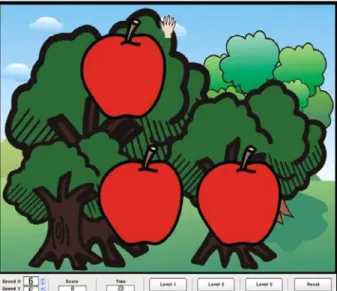
Fig. 4. This figure shows the apple harvesting game. According to weight shift to either side, the hand moves to right or left side, and according to the degree of knee flexion, the hand moves up or down side. When the hand touch apples on screen, apples disappear. When all apples have disappeared, apples re-appear on the screen randomly, and new game started.
굴곡에 따라 화면상 손 모양의 표식자가 좌우 및 상하로 이동 하면서 나무에 무작위로 달려있는 사과 열매를 따는 게임(사과 수확 게임, apple harvesting game)이 시행되도 록 하였다(Fig. 4). 사과 수확 게임은 무작위로 나무에 열 려 있는 사과를 다 땄을 경우 장면이 바뀌면서 새로운 사 과가 나무에 나타나도록 제작되었다.
(2) 고식적 재활치료와 하지 균형 조절 훈련기를 이용한 훈련
A 군에서는 기존의 고식적 재활치료와 함께 하지 균형 조절 훈련기를 이용한 훈련을 하루 30분, 주 5일, 2주간 추가로 실시하였고, 이후 2주간은 고식적 재활치료만 시 행하여 총 4주간 훈련을 시행하였다. B 군에서는 첫 2주간 은 고식적 재활치료만 시행하였고, 이후 2주간은 동일한 방법으로 고식적 재활치료 외에 하지 균형 조절 훈련기를 이용한 훈련을 추가로 시행하여 총 4주간 훈련을 시행하 였다. 하지 균형 조절 훈련기를 이용한 훈련은 첫 10분간 은 체중이동 및 슬관절의 굴곡을 하여 스크린의 커서를 움직이는 연습을 시행하였으며 그 다음 20분간 사과 수확 게임을 실시하면서 체중의 좌우 이동 및 슬 관절의 신전, 굴곡 훈련을 시각적 되먹임을 통하여 반복하도록 하였다.
(3) 균형 및 보행 능력의 평가
가) 임상적 평가: A 군과 B 군의 모든 환자 총 16명을 대상 으로 임상적 평가 척도로써 버그 균형지수(Berg balance scale, BBS), 기능적 보행 분류(functional ambulation categories, FAC), 6분 보행 검사(6 minute walking test, 6mWT), 일어나
(Korean modified Barthel index, K-MBI), 그리고 도수 근력검사 (manual muscle test, MMT)로 슬 관절 신전 근력을 측정하였다.
나) 치료 효과의 평가: 치료 시작 전, 치료 시작 2주째, 그리고 치료 종료 시점인 치료 4주째에 평가를 시행하였 다. A 군의 첫 2주 동안의 결과와 B 군의 2주에서 4주 사이 의 결과를 더하여 실험기간 동안의 변화를 구하였고, A 군 의 2주에서 4주 사이의 결과와 B 군의 첫 2주 동안의 결과 를 더하여 대조기간 동안의 변화를 구하여 실험기간과 대 조기간의 각 평가 항목들에 대한 호전 정도를 분석하였다.
(4) 통계 분석 방법
통계분석은 window용 SPSS 12.0 version을 이용하였다.
실험기간과 대조기간 각각에서 치료 시작 전과 치료 시작 2주 뒤에 평가한 측정치들을 Wilcoxon signed rank test를 이용하여 평가하였으며 두 군간 측정치들의 변화의 정도 를 비교하기 위해 Mann-Whithey U-test를 이용하였고, p value가 0.05 미만인 경우 통계적으로 의미 있는 것으로 해석하였다.
결 과
1) 대상 환자들의 특성
대상 환자들은 총 16명으로 이들 중 남자가 12명, 여자 가 4명이었고, 연령은 평균 55.4±12.6세, 유병 기간은 평 균 9.9±3.1개월 이었다. 우측 편 마비 환자가 8명, 좌측
Table 1. Demographic Data of Subjects
Subject number Sex Age (years) Onset (months) Affected side Cause of stroke Location of lesion MMT (knee extensor) 1
2 3 4 5 6 7 8 9 10 11 12 13 14 15 16 Mean ± S.D.
M M M M F M M F M M M M M F M F
64 50 67 41 60 52 68 64 39 63 49 56 73 29 68 44 55.4 ± 12.6
7 10 8 7 8 14 13 10 18 8 10 8 12 7 10 8 9.9 ± 3.1
R L R R L L L R R R L L R L R L
I I I H I H I I I I H I I H I H
MCA MCA MCA BG ACA BG MCA MCA MCA MCA BG MCA MCA BG MCA BG
3 3 3 3 3 4 4 3 4 3 4 4 4 3 3 3 3.4 ± 0.5 Values are mean ± S.D. M: Male, F: Female, L: Left, R: Right, H: Hemorrhage, I: Infarction, BG: Basal ganglia, MCA: Middle cerebral artery, ACA: Anterior cerebral artery.
Table 2. The Measurement Values of Clinical Parameters at Pre- training Period
Clinical parameters Measurement values FAC
6mWT TUG BBS K-MBI MMTknee
2.3 ± 0.8
178.6 ± 74.3 (meters) 23.0 ± 4.9 (sec) 36.5 ± 6.6 80.0 ± 6.5 3.3 ± 0.5
Values are mean ± S.D. FAC: Functional ambulation categories, 6mWT: 6-minute walking test, TUG: Timed up and go test, BBS:
Berg balance scale, K-MBI: Korean-modified barthel index, MMT: Manual muscle test.
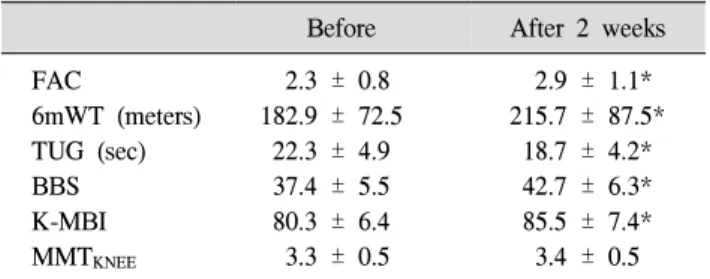
Table 3. The Changes of Parameters in Experimental Period (n = 16) Before After 2 weeks FAC
6mWT (meters) TUG (sec) BBS K-MBI MMTKNEE
2.3 ± 0.8 182.9 ± 72.5
22.3 ± 4.9 37.4 ± 5.5 80.3 ± 6.4 3.3 ± 0.5
2.9 ± 1.1*
215.7 ± 87.5*
18.7 ± 4.2*
42.7 ± 6.3*
85.5 ± 7.4*
3.4 ± 0.5 Values are mean ± S.D. FAC: Functional ambulation categories, 6mWT: 6 minute walking test, TUG: Timed up and go test, BBS:
Berg balance scale, K-MBI: Korean-modified barthel index, MMT: Manual muscle test. *p<0.05.
뇌출혈이 5명이었다(Table 1).
2) 치료 시작전 균형 및 보행 능력의 평가 결과 총 16명의 환자들에서 치료시작 전 측정한 버그 균형지수 (BBS)는 평균 36.5 ± 6.6점, 기능적 보행분류(FAC)는 평균 2.3 ± 0.8점, 6분 보행 검사(6mWT)는 평균 178.6 ± 74.3 미터(meters), 일어나서 걷기검사(TUG)는 평균 23.0 ± 4.9 초, 한국형 수정 바델지수(K-MBI)는 평균 80.0 ± 6.5점, 슬 관절 신전근력은 평균 3.3 ± 0.5이었다(Table 2).
3) 실험기간에서 2주간 훈련 후 평가 결과의 비교 실험기간의 치료시작 전과 치료 시작 2주 뒤의 측정 결과
들을 비교 시 슬 관절 신전근력을 제외한 버그 균형지수 (BBS), 기능적 보행 분류(FAC), 6분 보행 검사(6mWT), 일어 나서 걷기검사(TUG), 한국형 수정 바델지수(K-MBI)에서 통 계적으로 유의하게 호전된 소견을 보였다(p<0.05)(Table 3).
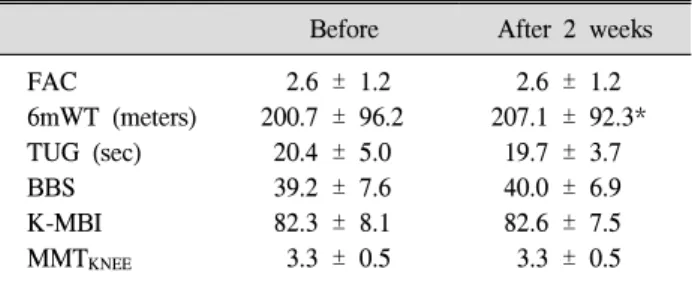
4) 대조기간에서 2주간 훈련 후 평가 결과의 비교 대조기간의 치료시작 전과 치료 시작 2주 뒤의 측정 결과들을 비교 시 6분 보행 검사(6mWT)에서 통계적으 로 유의하게 호전된 소견을 보였고 나머지 임상적 평가 척도들에서는 통계적으로 유의한 차이를 보이지 않았다 (p<0.05)(Table 4).
Table 4. The Changes of Parameters in Control Period (n = 16) Before After 2 weeks FAC
6mWT (meters) TUG (sec) BBS K-MBI MMTKNEE
2.6 ± 1.2 200.7 ± 96.2
20.4 ± 5.0 39.2 ± 7.6 82.3 ± 8.1 3.3 ± 0.5
2.6 ± 1.2 207.1 ± 92.3*
19.7 ± 3.7 40.0 ± 6.9 82.6 ± 7.5 3.3 ± 0.5 Values are mean ± S.D. FAC: Functional ambulation categories 6mWT: 6 minute walking test, TUG: Timed up and go test, BBS:
Berg balance scale, K-MBI: Korean-modified barthel index, MMT:
Manual muscle test. *p<0.05.
Table 5. Comparison of Changes in Measurement Values of Clinical Parameters between Experimental Period and Control Period
Clinical parameters Changes in experimental period
Changes in control period FAC
6mWT (meters) TUG (sec) BBS K-MBI MMTknee
0.4 ± 0.5*
32.9 ± 28.0*
3.6 ± 3.9*
5.3 ± 2.3*
5.2 ± 1.9*
0.2 ± 0.4
0.0 ± 0.0 6.4 ± 9.4 0.7 ± 1.4 0.8 ± 2.6 0.3 ± 1.9 0.0 ± 0.0 Values are mean ± S.D. FAC: Functional ambulation categories, 6mWT: 6-minute walking test, TUG: Timed up and go test, BBS:
Berg balance scale, K-MBI: Korean-modified barthel index, MMT:
Manual muscle test. *p<0.05.
5) 실험기간과 대조기간 사이의 2주간 훈련 후 호전 정도의 비교
실험기간과 대조기간에서 2주간 훈련 후 각 임상적 척도들 의 변화를 절대값으로 비교한 결과 실험기간에서 버그균형지 수(BBS), 기능적 보행 분류(FAC), 6분 보행 검사(6mWT), 일 어나서 걷기검사(TUG), 한국형 수정 바델지수(K-MBI)에서 대조기간과 비교하여 통계적으로 유의한 차이를 보여 더 의 미 있게 호전된 소견을 보였다(p<0.05)(Table 5).
고 찰
편 측 하지의 체중부하 감소로 인한 기립자세에서의 체 중부하의 비대칭성은 편 마비 뇌졸중 환자에서 흔히 발생 하는 문제점 중의 하나로, 이는 운동 기능과 일상생활 동 작 수행을 하는데 부정적인 영향을 미치는 것으로 알려져
있다.13,14 따라서, 일반적으로 편 마비 환자에서 보행을 위
한 재활치료 시 편 측 하지에 체중 부하를 증진 시키도록 치료를 우선적으로 시행하고 있다.15,16 다양한 균형 훈련 시스템과 같은 균형 훈련기를 이용한 힘판 시각적 되먹임 치료는 이러한 기립 대칭성을 보다 효과적으로 향상시킬 수 있는 것으로 보고되고 있다.17,18 그러나, Winstein 등19 은 3∼4주간의 시각적 되먹임 치료가 기립 시 정적인 대 칭적 균형 능력을 증진시킬 수는 있으나 보행 시 하지의 비대칭적 양상을 의미 있게 감소시키지는 못하는 것으로 보고하였다. Nichols20와 Betker 등21은 환자의 참여도와 순응도가 증가하고 낙상 횟수의 감소 및 무게 중심의 진폭 범위를 감소 시킴을 보고한 반면, Geiger 등22과 Walker 등23의 연구에서는 동적 및 정적 균형능력의 전반에 걸쳐 유의한 효과가 없음을 보고하였다. 또한 힘판을 이용한 시 각적 되먹임 치료가 보행을 포함한 기능적 동작의 수행에 있어 의미 있는 향상을 보인다는 명확한 증거는 아직까지
부족한 상태이다.24 이는 독립적 보행 및 일상 생활 동작의 수행에 있어 필수 요소인 의자에 앉은 자세에서 일어나거 나 다시 앉는 동작과 같은 무게 중심의 수직 이동의 요소 가 치료에 포함되지 않았기 때문으로,25-27 보행이나 일상 생활동작과 관련된 과제 지향적(task-specific) 학습이 아니 기 때문으로 생각된다.
본 연구에서는 균형 및 보행 능력을 평가 혹은 치료 시 이러한 기능적 동작의 요소가 반영되어야 할 것으로 생각 되어, 다양한 균형 훈련 시스템의 한계를 보완하여 체중의 좌우 이동 뿐만 아니라, 무게 중심의 수직적 이동 및 슬 관절 조절의 요소를 반영할 수 있도록 개발된 하지 균형 조절 훈련기를 이용하였다. 또한 본 연구에서 원활한 보행 에 어려움이 있는 만 성기 편 마비 환자들을 대상으로 하 였으므로 훈련 시 가장 중요하게 생각한 점이 환자들의 안전이었다. 이를 위해 체중 탈 부하 시스템을 사용하여 안전을 확보하고자 하였고, 필요 시 고정대를 손으로 잡고 지지가 가능하도록 하였다. 대상 환자 16명 중 낙상이나 탈락자 없이 높은 순응도를 보였다. 또한 연구를 진행 중 대부분의 환자들에서 고식적 재활치료로다 게임을 통한 과제지향적 학습이 훨씬 더 흥미롭고 만족도가 높다고 답 하였다.
현재까지 뇌의 자연적 회복과 가소성에 대한 대부분의 연구에서 발병 후 6개월 까지를 대부분의 회복이 일어나 는 기간으로 보고 있다.25-27 본 연구에 포함된 환자들은 중등도 이상의 균형 및 보행 능력의 장애가 있고 6개월 이상 경과된 만성기의 편 마비 환자들을 대상으로 하여 자연적 신경회복을 배제하고자 하였고, 고식적 재활치료 와 함께 하지 균형 조절 훈련기를 이용한 치료를 추가로 실시한 후 고식적 재활치료만을 실시한 경우와 비교하여 그 효과를 알아보고자 하였다. 치료 시작 전 실험군과 대
조군의 임상적 특성을 동일하게 하는 것이 어려우므로 본 연구에서는 교차실험을 통하여 A군과 B군에 속한 각각 8 명의 환자들에게 서로 다른 두 가지 훈련 방법을 교대로 시행하여 총 16명의 동일한 대상으로서 하지 균형 조절 훈련기를 사용한 실험기간과 사용하지 않은 대조기간으 로 분류하여 연구를 시행하였다. 실험 결과에서 실험기간 의 경우 슬 관절 신전근력을 제외한 모든 측정치들이 훈련 전보다 통계적으로 유의하게 호전되었으나, 대조기간의 경우 6분 보행 검사(6mWT)를 제외한 모든 측정치에서 통 계적으로 유의한 호전을 보이지 않았고, 실험기간과 대조 기간 사이의 측정치의 호전 정도를 비교 시에도 버그균형 지수(BBS), 기능적 보행 분류(FAC), 6분 보행 검사 (6mWT), 일어나서 걷기검사(timed up and go, TUG), 한 국형 수정 바델지수(K-MBI)에서 실험기간과 대조기간 사 이에 통계적으로 유의한 차이를 보여 하지 균형 조절 훈련 기를 이용한 훈련을 추가로 시행하는 것이 편 마비 환자의 균형 및 보행 기능 향상을 위한 더 좋은 치료 방법임을 알 수 있었다.
본 연구의 제한 점으로 타당도 및 신뢰도에 대한 검증을 하지 않아 실제 임상에서 평가 도구로써 사용되기 위해서 는 이에 대한 추가적인 연구가 필요할 것으로 생각되며, 뇌 경색 및 뇌출혈 환자 모두를 포함하였으나, 보다 균일한 환 자군을 대상으로 하거나 편 마비 환자 뿐만 아니라 균형조 절 능력이 떨어진 다양한 환자 군을 대상으로 추가적인 연 구도 필요할 것으로 생각된다. 본 연구에서는 평가도구로 서 뇌졸중 환자의 전반적인 기능평가 도구들을 이용하였으 나, 좌우 체중부하 비율(weight bearing ratio)이나 자세 흔 들림(postural sway) 등 균형능력에 대한 보다 객관적인 평 가를 이용한 연구도 추가적으로 필요할 것으로 생각된다. 또한 치료 시작 4주 이후 추적 관찰을 하지 않아 치료 효과 의 장기적 지속 여부에 대한 추가적 연구도 필요할 것이다.
결 론
독립적 보행이 불가능한 만 성기 편 마비 뇌졸중 환자의 균형 및 보행능력의 향상을 위한 재활훈련 시 무게중심의 수직이동을 고려하여 보다 과제 지향적이고 기능적인 요 소가 포함된 하지 균형 조절 훈련기를 이용한 훈련을 고식 적 재활치료와 함께 병행한다면 균형 및 보행 기능 향상에 도움이 될 것으로 생각된다.
참 고 문 헌
1) Brandstater ME, Bruin H, Gowland C, Clark BM.
Hemiplegic gait: analysis of temporal variables. Arch Phys Med Rehabil. 1983;64:583-587
2) Moseley AM, Stark A, Cameron ID, Pollock A. Treadmill training and body weight support for walking after stroke.
Cochrane Database Sys Rev. 2005:CD002840
3) Lorish TR, Sandin KJ, Roth EJ, Noll SF. Stroke rehabi- litation: 3. rehabilitation evaluation and management. Arch Phys Med Rehabil. 1994;75:S47-S51
4) Patton J, Brown DA, Peshkin M, Santos-Munné JJ, Makhlin A, Lewis E, Colgate EJ, Schwandt D. Design and develop- ment of a robotic overgroud gait and balance therapy device.
Top Stroke Rehabil. 2008;15:131-139
5) Mayr A, Kofler M, Quirbach E, Matzak H, Frohlich K, Saltuari L. Prospective, blinded, randomized crossover study of gait rehabilitation in stroke patients using the lokomat gait orthosis. Neurorehabil Neural Repair. 2007;21:307-314 6) Husemann B, Muller F, Krewer C, Heller S, Koeniq E.
Effects of locomotion training with assistance of a robot- driven gait orthosis in hemiparetic patients after stroke: a randomized controlled pilot study. Stroke. 2007;38:349-354 7) Lim KB, Na YM, Lee HJ, Hwang HO. Effect of balance
board training with tactile stimulation on affected leg in hemiplegic patient. J Korean Acad Rehab Med. 2002;26:
652-657
8) Nichols DS. Balance retraining after stroke using force platform biofeedback. Phys Ther. 1997;77:553-558 9) Liston RAL, Brouwer B. Reliability and validity of measures
obtained from stroke patients using the Balance Master. Arch Phys Med Rehabil. 1996;77:425-430
10) Shumway-Cook A, Woollacott MH. Motor control: tran- slating research into clinical practice. 3rd ed. Philadelphia:
Lippincott Williams & Wilkins; 2007:3-83
11) Barclay-Goddard R, Stevenson T, Poluha W, Moffatt ME, Taback SP. Force platform feedback for standing balance training after stroke. Cochrane Database Syst Rev. 2004;18:
CD004129
12) Richards CL, Malouin F, Wood-Dauphinee S, Williams JI, Bouchard JP, Brunet D. Task-specific physical therapy for optimization of gait recovery in acute stroke patients. Arch Phys Med Rehabil. 1993;74:612-620
13) Winstein CJ. Knowledge of results and motor-learning- implications for physical therapy. Phys Ther. 1991;71:140-149 14) Dickstein R, Nissan M, Pillar T, Scheer D. Foot-ground pressure pattern of standing hemiplegic patients-major cha- racteristics and patterns of involvement. Phys Ther. 1984;64:
19-23
15) De Haart M, Geurts AC, Dault MC, Nienhuis B, Duysens J.
Restoration of weight-shifting capacity in patients with pos- tacute stroke: a rehabilitation cohort study. Arch Phys Med Rehabil. 2005;86:755-762
16) Winstein CJ, Gardner ER, McNeal DR, Barto PS, Nicholison DE. Standing balance training: effect on balance and loco- motion in hemiparetic adults. Arch Phys Med Rehabil. 1989;
70:755-762
17) Nichols DS. Balance retraining after stroke using force
platform biofeedback. Phys Ther. 1997;77:553-558 18) Liston RAL, Brouwer B. Reliability and validity of measures
obtained from stroke patients using the Balance Master. Arch Phys Med Rehabil. 1996;77:425-430
19) Winstein CJ, Gardner ER, McNeal DR, Barto PS, Nicholison DE. Standing balance training: effect on balance and loco- motion in hemiparetic adults. Arch Phys Med Rehabil. 1989;
70:755-762
20) Nichols DS. Balance retraining after stroke using force platform biofeedback. Phys Ther. 1997;77:553-558
21) Betker AL, Szturm T, Moussavi ZK, Nett C. Video game-based exercises for balance rehabilitation: a single-subject design.
Arch Phys Med Rehabil. 2006;87:1141-1149
22) Geiger RA, Allen JB, O'Keefe J, Hicks RR. Balance and mobility following stroke: effects of physical therapy inter- ventions with and without biofeedback/forceplate training.
Phys Ther. 2001;81:995-1006
23) Walker C, Brouwer Bj, Culham EG. Use of visual feedback in retraining balance following acute stroke. Phys Ther.
2000;80:886-895
24) Barclay-Goddard R, Stevenson T, Poluha W, Moffatt ME, Taback SP. Force platform feedback for standing balance training after stroke. Cochrane Database Syst Rev. 2004;18:
CD004129
25) Mirbagheri MM, Tsao C, Settle K, Lilaonitkul T, Rymer WZ.
Time course of changes in neuromuscular properties following stroke. Conf Proc IEEE Eng Med Biol Soc. 2008;2008:5097-5100.
26) Kriz J, Lalancette-Hébert M. Inflammation, plasticity and real-time imaging after cerebral ischemia. Acta Neuropathol.
2009;117:497-509
27) Takatsuru Y, Fukumoto D, Yoshitomo M, Nemoto T, Tsukada H, Nabekura J. Neuronal circuit remodeling in the contralateral cortical hemisphere during functional recovery from cerebral infarction. J Neurosci. 2009;29:10081-10086