• 검색 결과가 없습니다.

Effects of Neuromuscular Electrical Stimulation in Combination with Saliva or Dry Swallowing in Stroke Patients with Dysphagia

N/A
N/A
Protected

Academic year: 2021

Share "Effects of Neuromuscular Electrical Stimulation in Combination with Saliva or Dry Swallowing in Stroke Patients with Dysphagia"

Copied!
7
0
0

로드 중.... (전체 텍스트 보기)

전체 글

(1)

Received: April 10 2018, Revised: June 1 2018, Accepted: June 5 2018

Corresponding author: Ji-Su Park, Department of Rehabilitation Science, Graduate School of Inje University, 197 Inje-ro, Gimhae 621-749, Korea

Tel: +82-55-320-3685, Fax: +82-55-326-4885 E-mail: [email protected]

Copyrights ⓒ The Korean Dysphagia Society, 2018.

Effects of Neuromuscular Electrical Stimulation in Combination with Saliva or Dry Swallowing in Stroke Patients with Dysphagia

Sang Hoon Jung, M.D.

1

, Young-A Kim, P.T.

2

, Na-Kyoung Hwang, O.T.

3

, Ji-Su Park, O.T.

2

, YunHo Kim, M.D.

1

1

Department of Physical Medicine and Rehabilitation, Inje University Busan Paik Hospital, College of Medicine, Inje University, Busan,

2

Department of Rehabilitation Science, Graduate School of Inje University, Gimhae,

3
Department of Occupational Therapy, Seoul North Municipal Hospital, Seoul, Korea

Objective: Dysphagia after stroke can cause a range of complications, especially aspiration pneumonia, which can be life-threatening. Therefore, rehabilitation methods to reduce aspiration in patients with dysphagia are important.

This study examined the effects of neuromuscular electrical stimulation combined with saliva or dry swallowing on the swallowing function of stroke patients with dysphagia.

Methods: The participants were assigned to either the experimental group (n=9) or control group (n=8). The ex- perimental group received neuromuscular electrical stimulation combined with saliva or dry swallowing, whereas the control group received only voluntary swallowing. Both groups received training 5 days per week for 4 weeks. The oropharyngeal swallowing function was assessed using the video fluoroscopic dysphagia scale (VDS) and pene- tration-aspiration scale (PAS) based on a video fluoroscopic swallowing study.

Results: After the intervention, the experimental group showed greater improvement in the pharyngeal phase of the VDS and PAS scores than the control group (P=0.038, 0.027, respectively).

Conclusion: Neuromuscular electrical stimulation combined with saliva or dry swallowing improves the pharyngeal swallowing function of stroke patients with dysphagia better than saliva or dry swallowing alone. (JKDS 2018;8:103-109) Keywords: Dysphagia, Neuromuscular electrical stimulation, Stroke, Swallowing, Voluntary swallowing exercise

INTRODUCTION

Dysphagia after a stroke is common, and it causes various problems during the oral, pharyngeal, and esophageal phases

1

. Dysphagia can also result in complications, such as dehydration, weight loss, mal- nutrition, and aspiration pneumonia

2

. Thus, rehabilitative treatment for improving swallowing function in

dysphagic patients is important.

Treatment for dysphagia is mainly divided into

compensatory and remedial approaches, which have

different purposes. Compensatory strategies aim to

enable safer swallowing by using postural changes,

such as chin tucking, head tilting, and head rotation,

and changes in viscosity. However, the effect of these

strategies is temporary. Conversely, the remedial strat-

(2)

egy aims to enhance one’s swallowing ability through strength training and sensory stimulation, and the effect is relatively persistent

3

.

Various remedial methods to improve swallowing function have been reported over the last few years.

The remedial strategy involve as voluntary swallowing exercise (VSE) and modality treatment, which both con- tribute positively to improving the swallowing function but differ in the application method and effect mech- anism. VSE is a remedial strategy wherein actual swal- lowing is performed in a variety of ways, including simple voluntary swallowing by dry or saliva swal- lowing, the Mendelsohn maneuver, effortful swallow- ing, and supraglottic swallowing

4-7

. VSE induces vigorous muscle contraction associated with swallowing by performing various swallowing maneuver, resulting in muscle activation and strengthening. In previous studies, various VSEs were used in patients with dysphagia after stroke, and the results were reported to be effective in improving hyoid movement, and reducing aspiration and pharyngeal residue

3,8

. However, muscle contraction through VSE stimulates type 1 fibers (red muscle, slow-twitch, and long-duration motor unit) rather than type 2 fibers (white muscle and fast-twitch motor unit)

9

.

Neuromuscular electrical stimulation (NMES) is a modality used to improve swallowing function in pati- ents with dysphagia, and it is commonly applied in clinical practice. NNES has been reported in several recent studies, and it is mainly applied to the muscles associated with swallowing in the anterior neck region

10

. The primary mechanism underlying NMES is that electrical stimulation induces muscle contractions by depolarization of the nerve fibers, which helps to increase muscle strength, movement re-education, and circulation and to prevent muscle atrophy

11,12

.The effectiveness of NMES therapy in patients with dys- phagia has been demonstrated as one of the effective ways to improve pharyngeal function, such as reduc- ing the aspiration risk, increasing hyoid bone move- ment, and improving the oral diet level

13-15

. An elec- trical stimulator is a non-invasive portable device that can be easily and safely used in patients with dys-

phagia.

VSE and NMES are remedial approaches for im- proving swallowing function, but there is controversy about which treatment is more effective

16

. However, according to several studies, it is theoretically and clearly known that the therapeutic effect of VSE combined with NMES is superior to VSE alone in swallowing function, because NMES differs from VSE in the targeted muscle fiber

17

. In other words, VSE combined with the NMES can exert a synergistic effect. However, related studies and convincing clinical evidence is still lacking. Therefore, this study investigates the effect of saliva or dry swallowing, which is relatively easily applicable among various VSEs during NMES, on the swallowing function in patients with dysphagia after stroke.

MATERIALS AND METHODS 1. Participants

Twenty stroke patients with dysphagia undergoing rehabilitation were recruited for this study according to the following inclusion criteria: 1) dysphagia from a stroke was confirmed by a videofluoroscopic swal- lowing study (VFSS), 2) the onset duration was <6 months, 3) patients were able to voluntarily swallow, and 4) the Mini-Mental State Examination score was

≥20. Exclusion criteria were as follows: 1) patients with an implanted cardiac pacemaker, 2) those with a severe communication disorder, such as severe apha- sia, 3) patients with a history of seizure or epilepsy, 4) those with unstable medical conditions, and 5) patients with skin problems associated with electrode placement. We explained the objective and requirements of our study to all participants, and they voluntarily signed informed consent forms. Ethical approval was obtained from the Inje University Institutional Review Board before conducting the experiment (2-1041024- AB-N-01-20160112-HR-337).

2. Procedures and intervention

Twenty stroke patients were randomly allocated to

either the experimental group (n=10) or the control

(3)

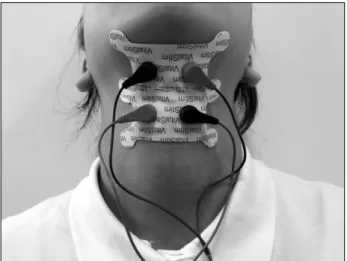
Fig. 1. Electrode placement.

group (n=10). The experimental group performed VSE combined with NMES. NMES was applied using the VitalStim (Chattanooga Group, Hixson, TN, USA), a transcutaneous-type electrical stimulator. The skin of the anterior neck was clean-shaven and cleansed with TENS Clean-Cote (Uni-Patch, Wabasha, MN, USA) for electrode placement, and two pairs of electrodes were placed on the anterior neck region. Two pairs of electrodes were also horizontally placed in the sub- mental region and thyroid cartilage to target suprahyoid muscles and the thyrohyoid muscle, based on a previous study’s methods

18-20

.(Fig. 1) The experimental group was asked to perform intensive repetition of dry or saliva swallowing during electrical stimulation.

The electrical stimulation unit provided two channels of bipolar electrical stimulation at a fixed 80-Hz pulse rate and a biphasic pulse width of 700 μs; the intensity of bipolar electrical stimulation could be adjusted between 0 to and 25 mA for each channel. The intensity was increased gradually at an interval of 0.5 mA. The stimulation intensity was increased until the patients felt a tolerable stimulation level, i.e., a grabbing sensa- tion in their neck muscles. The control group only performed dry or saliva swallowing. In addition, both groups received the same conventional dysphasia therapy, such as an orofacial exercise, thermal-tactile stimulation, and compensatory techniques for 30 minutes per day for 5 times per week for 4 weeks. An occu-

pational therapist who had professional practice in swallowing examination and the use of NMES was appointed as the only evaluator.

3. Outcome measurement

We used the videofluoroscopic dysphagia scale (VDS) and penetration-aspiration scale (PAS) to quantify the functional changes in swallowing. The VDS is a functional swallowing evaluation that can be used to predict the long-term prognosis of dysphagic patients with stroke based on the VFSS findings. The 14 items in the VDS consist of oral phase functions (lip closure, bolus formation, mastication, apraxia, tongue to palate contact, premature bolus loss, and oral transit time) and pharyngeal phase functions (pharyngeal triggering, vallecular residues, pyriform sinus resides, laryngeal elevation, epiglottic closure, pharyngeal wall coating, pharyngeal transit time, and aspiration). The score ranges from 0 to 100; the maximum score of oral function is 40 (superior score=0, inferior score=40), and the maximum score of pharyngeal function is 60 (superior score=0, inferior score=60). Higher scores indicate a higher severity of dysphasia

21

.

The PAS is a standard tool that reflects airway penetration and aspiration. The scale is broken down into 8 points based on the depth of material penetra- tion into the airway and whether the material entering the airway is expelled. Higher scores indicate a higher severity of aspiration

22

.

4. Statistical analyses

Participants’ characteristics were analyzed using

IBM SPSS Statistics version 20 (IBM Corp., Armonk,

NY, USA). The normality assumption was checked by

the Shapiro-Wilk’s test for test selection. Descriptive

statistics are presented as means with standard devi-

ations. The Wilcoxon signed-rank test was used to com-

pare the differences in muscle strength and activation

before and after intervention. The Mann-Whitney

U-test was used to compare pre- and post-intervention

data between groups. The significance level was set

at P<0.05. Effect sizes (Cohen d) of changed scores

comparing experimental and control group were cal-

(4)

Table 2. Comparison of results between experimental groupand control group

parameters Experimental group Control Group Between

groups P-values

Pre-test Post-test P-value Pre-test Post-test P-value

VDS

Oral phase 18.00±7.37 8.33±6.15 .008* 18.62±6.47 12.00±5.19 .018* .321

Pharyngeal phase 36.33±13.87 20.50±8.65 .012* 35.31±6.25 29.06±5.38 .018* .038

PAS 4.44±1.87 2.44±1.50 .026* 5.25±1.98 4.50±1.77 .109 .027

Values are expressed as Mean±SD

VDS: Videofluoroscopy Dysphagia Scale, PAS: Penetration-Aspiration Scale.

*P<0.05,

P<0.05, *Wilcoxon signed-rank test,

Mann-Whitney U-test.

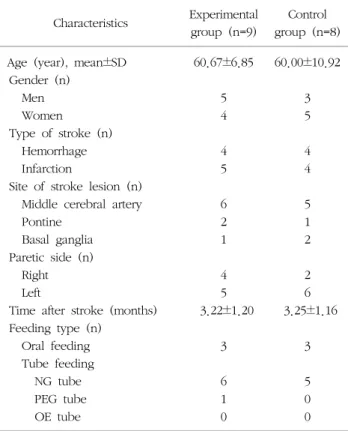
Table 1. Characteristics of participants

Characteristics Experimental group (n=9)

Control group (n=8) Age (year), mean±SD 60.67±6.85 60.00±10.92

Gender (n)

Men 5 3

Women 4 5

Type of stroke (n)

Hemorrhage 4 4

Infarction 5 4

Site of stroke lesion (n)

Middle cerebral artery 6 5

Pontine 2 1

Basal ganglia 1 2

Paretic side (n)

Right 4 2

Left 5 6

Time after stroke (months) 3.22±1.20 3.25±1.16 Feeding type (n)

Oral feeding 3 3

Tube feeding

NG tube 6 5

PEG tube 1 0

OE tube 0 0

SD: standard deviation. NG tube: nasogastric tube, PEG: percu- taneous gastrostomy tube: OE tube: Oro-esophageal tube.

culated. Effect size of 0.2, 0.5 and 0.8 represent a small, moderate or large effect respectively.

RESULTS

General characteristics of the participants are de- scribed in Table 1. There were no significant differ- ences between groups based on general characteri- stics and the VDS and PAS scores. Three participants (experimental group, n =1; control group, n =2) dropped out before the post-test because of transfer to another hospital. Therefore, 17 participants were analyzed.

1. VDS assessment

The experimental group showed more improvement in the pharyngeal phase of VDS than the control group.

After the intervention, statistical analysis showed a significant difference in the pharyngeal phase of VDS between the groups (P=0.038).(Table 2) Effect sizes were observed for the oral phase (0.28), and pharyngeal phase of VDS (1.45).

2. PAS assessment

The experimental group showed more improvement in the PAS score than the control group. After the intervention, statistical analysis showed a significant different in the PAS score between the groups (P=0.027).

(Table 2) Effect sizes were observed for the PAS (0.83).

3. Remove ratio of Nasogastric tube

After intervention, 3 of 6 patients in the experimen-

tal group removed the NG tube. In the control group,

2 out of 5 NG tubes were removed.

(5)

DISCUSSION

We demonstrated that the NMES combined with saliva or dry swallowing in the experimental group showed more improvement in the pharyngeal phase of swallowing than saliva or dry swallowing only in the control group. The results of this study can be explained as follows. Saliva or dry swallowing during NMES can induce various positive changes through swallowing muscles and sensory stimulation.

First, VSE and NMES differ in the target muscle fibers to be trained

17

. Muscles related to swallowing in pharyngeal phase are predominantly type 2 muscle fibers, but these muscles undergo relative atrophy after stroke

23

. NMES is effective in strengthening muscles, preventing atrophy, and retraining neuromuscular muscles by inducing muscle contraction from depo- larization of nerve fibers and selectively stimulating type 2 fibers

24,25

. VSE such as saliva or dry swallowing predominantly targets type 1 muscle fibers, which typ- ically activate with less strenuous force than do type 2 muscle fibers. These muscle fibers related to swal- lowing located in the front of the neck are composed of mixed type 1 and type 2 muscle fibers like other skeletal muscles. Type 1 muscle fibers are recruited first during normal muscle contraction, followed by type 2 muscle fibers. Recruitment patterns during NMES are reversed, with type 2 fibers being recruited first

26

. Therefore, theoretically, the synchronous recruitment of types 1 and 2 fibers by NMES combined with VSE could provide more effective swallowing and related muscle training, and a more therapeutic effect than VSE alone

3,16,27

.

Second, VSE during NMES has a positive effect on peripheral effects, such as muscle strength and move- ment of the hyolaryngeal complex. A previous study reported that these structures were slightly lowered when NMES was applied to the hyolaryngeal com- plex

28

. This is related to the muscles connected to the hyolaryngeal complex. The muscles connected to the hyolaryngeal muscles are largely classified into the suprahyoid and infrahyoid muscles. When the muscles contract in the swallowing process, the force of the

infrahyoid muscles acts to pull the hyolaryngeal com- plex downward

29

. The descending hyolaryngeal complex movement is the opposite of the mechanism of normal swallowing, so caution is required for patients at risk of aspiration. However, when effortful swallowing or normal swallowing is performed to overcome the down- ward movement of the hyoid bone, it can be applied to the concept of resistance training. Park et al.

3

applied NMES to infrahyoid muscles of patients with dysphagia after stroke and then applied effortful swal- lowing. The results of the 6-week intervention showed improvement in the hyolaryngeal movement and oro- pharyngeal swallowing function, because the anterosu- perior movement of the hyolaryngeal complex affects the airway protection mechanism, such as aspiration and the reduction of pharyngeal residues. This study also applied NMES to the hyolaryngeal muscles com- bined with VSE, which may have had a positive effect on swallowing function, similar to previous studies

3

.

Finally, our findings can be explained by the neural effect. Repeated VSE continues to cause muscle con- traction and contributes to motor learning of the hyo- laryngeal movement

30

. However, this action does not have an afferent stimulus from the actual peripheral nerve. VSE with NMES, however, delivers afferent stimu- lation to the cortex or brain stem associated with swal- lowing

13

as well as motor learning of the hyolaryngeal movement. NMES is thought to affect the neuromus- cular system peripherally, and it may play a role in modulating the central nervous system, in which per- ipheral stimulation maybe capable of affecting cortical plasticity

17,31

. This sensory stimulation may have a long- term effect in reorganization of the human cortex, resulting in the enhancement of brain recovery in swallowing control

32-34

. These repetitive stimuli are likely to have a positive effect on the oropharyngeal swallowing function.

This study has some limitations. First, the small

sample size may have affected the results. Therefore,

these results cannot be generalized. Second, this

study was only conducted in subacute patients, so the

effects of natural recovery, considering the rapid nature

of neurological recovery, cannot be excluded. Third,

(6)

the absence of a follow-up after the intervention did not enable us to determine the robustness of effects.

Fourth, brain imaging was not performed; hence, swal- lowing-related cortical change could not be confirmed.

CONCLUSION

We confirmed that VSE during NMES had a positive effect on swallowing function in patients with stroke with dysphagia. In addition, saliva or dry swallowing conducted in this study could be easily performed with only a small cue in stroke patients with lower cognitive function compared to other remedial or compensation approaches. It also has the advantage of high compliance. In addition, implementing NMES with VSE at the same time could reduce treatment time.

REFERENCES

1. Park NJ, Kim SJ, Lee HJ, Jeon JY, Lim JY, Han TR.

Movement of the hyoid bone and the epiglottis during swallowing in patients with dysphagia from different etiologies. J Electromyogr Kinesiol. 2008;18:329-35.

2. Park JS, Oh DH, Chang MY. Effect of expiratory muscle strength training on swallowing related muscle strength in community-dwelling elderly individuals: a randomized controlled trial. Gerodontology. 2017;34:121-8.

3. Park JS, Oh DH, Hwang NK, Lee JH. Effects of neuro- muscular electrical stimulation combined with effortful swallowing on post-stroke oropharyngeal dysphagia: a randomised controlled trial. J Oral Rehabil. 2016;43:426-34.

4. Byeon H. Effect of the Masako maneuver and neuro- muscular electrical stimulation on the improvement of swallowing function in patients with dysphagia caused by stroke. J Phys Ther Sci. 2016;28:2069-71.

5. Clark HM, Shelton N. Training effects of the effortful swallow under three exercise conditions. Dysphagia. 2014;

29:553-63.

6. Imada M, Kagaya H, Ishiguro Y, Kato M, Inamoto Y, Tanaka T et al. Effect of visual biofeedback to acquire supraglottic swallow in healthy individuals: a random- ized-controlled trial. Int J Rehabil Res. 2016;39:181-4.

7. McCullough GH, Kim Y. Effects of the Mendelsohn ma- neuver on extent of hyoid movement and UES opening post-stroke. Dysphagia. 2013;28:511-9.

8. McCullough GH, Kamarunas E, Mann GC, Schmidley JW, Robbins JA, Crary MA. Effects of Mendelsohn ma- neuver on measures of swallowing duration post stroke.

Top in Stroke Rehabil. 2012;19:234-43

9. Huang KL, Liu TY, Huang YC, Leong CP, Lin WC, Pong YP. Functional outcome in acute stroke patients with or- opharyngeal Dysphagia after swallowing therapy. J Stroke Cerebrovasc Dis. 2014;23:2547-53.

10. Barikroo A, Berretin-Felix G, Carnaby G, Crary M. Effect of transcutaneous electrical stimulation amplitude on tim- ing of swallow pressure peaks between healthy young and older adults. Gerodontology. 2017;34:24-32.

11. Ludlow CL, Humbert I, Saxon K, Poletto C, Sonies B, Crujido L. Effects of surface electrical stimulation both at rest and during swallowing in chronic pharyngeal dysphagia.

Dysphagia. 2007;22:1-10.

12. Suiter DM, Leder SB, Ruark JL. Effects of neuromuscular electrical stimulation on submental muscle activity. Dys- phagia. 2006;21:56-60.

13. Beom J, Oh BM, Choi KH, Kim W, Song YJ, You DS et al. Effect of electrical stimulation of the suprahyoid mus- cles in brain-injured patients with dysphagia. Dysphagia;

2015:30,423-9.

14. Nam HS, Beom J, Oh BM, Han TR. Kinematic effects of hyolaryngeal electrical stimulation therapy on hyoid ex- cursion and laryngeal elevation. Dysphagia. 2013;28:548- 56.

15. Zhang M, Tao T, Zhang ZB, Zhu X, Fan WG, Pu LJ et al. Effectiveness of neuromuscular electrical stimulation on patients with dysphagia with medullary infarction. Arch Phys Med Rehabil. 2016;97:355-62.

16. Tan C, Liu Y, Li W, Liu J, Chen L. Transcutaneous neu- romuscular electrical stimulation can improve swallow- ing function in patients with dysphagia caused by non- stroke diseases: a meta-analysis. J Oral Rehabil. 2014;40:

472-80.

17. Kushner DS, Peters K, Eroglu ST, Perless-Carroll M, Johnson-Greene D. Neuromuscular electrical stimulation efficacy in acute stroke feeding tube-dependent dyspha- gia during inpatient rehabilitation. Am J Phys Med Rehabil.

2013;92:486-95.

18. Lim KB, Lee HJ, Lim SS, Choi YI. Neuromuscular elec- trical and thermal-tactile stimulation for dysphagia caused by stroke: a randomized controlled trial. J Rehabil Med.

2009;41:174-8.

19. Chen YW, Chang KH, Chen HC, Liang WM, Wang YH, Lin YN. The effects of surface neuromuscular electrical stimulation on post-stroke dysphagia: a systemic review and meta-analysis. Clin Rehabil. 2016;30:24-35.

20. Yoon IJ. Neuromuscular Electrical Stimulation for Dysphagia.

Journal of the Korean Dysphagia Society. 2011;1:60-6.

21. Han TR, Paik NJ, Park JW, Kwon BS. The prediction of persistent dysphagia beyond six months after stroke.

Dysphagia. 2008;23:59-64.

22. Rosenbek JC, Robbins JA, Roecker EB, Coyle JL, Wood JL. A penetration-aspiration scale. Dysphagia. 1996;11:93-8.

23. Shaw GY, Sechtem PR, Searl J, Keller K, Rawi TA,

Dowdy E. Transcutaneous neuromuscular electrical stim-

(7)

ulation (VitalStim) curative therapy for severe dysphagia:

myth or reality?. Ann Otol Rhinol Laryngol. 2007;116:36- 44.

24. Freed ML, Freed L, Chatburn RL, Christian M. Electrical stimulation for swallowing disorders caused by stroke.

Respir Care. 2001;46:466-74.

25. Permsirivanich W, Tipchatyotin S, Wongchai M, Leelama- nit V, Setthawatcharawanich S, Sathirapanya P et al. Com- paring the effects of rehabilitation swallowing therapy vs. neuromuscular electrical stimulation therapy among stroke patients with persistent pharyngeal dysphagia: a randomized controlled study. J Med Assoc Thai. 2009;

92:259-65.

26. Carnaby-Mann GD, Crary MA. Adjunctive neuromuscular electrical stimulation for treatment-refractory dysphagia.

Ann Otol Rhinol Laryngol. 2008;117:279-87.

27. Blumenfeld L, Hahn Y, Lepage A, Leonard R, Belafsky PC. Transcutaneouselectrical stimulation versus traditional dysphagia therapy: a nonconcurrent cohort study. Oto- laryngol Head Neck Surg. 2006;135:754-7.

28. Humbert IA, Poletto CJ, Saxon KG, Kearney PR, Crujido L, Wright-Harp W et al. The effect of surface electrical stimulation on hyolaryngeal movement in normal in- dividuals at rest and during swallowing. J Appl Physiol.

2006;101:1657-63.

29. Pearson WG Jr, Langmore SE, Yu LB, Zumwalt AC. Struc- tural analysis of muscles elevating the hyolaryngeal com- plex. Dysphagia. 2012;27:445-51.

30. Humbert IA, Christopherson H, Lokhande A, German R, Gonzalez-Fernandez M, Celnik P. Human hyolaryngeal movements show adaptive motor learning during swal- lowing. Dysphagia. 2013;28:139-45.

31. Laufer Y, Elboim-Gabyzon M. Does sensory transcuta- neous electrical stimulation enhance motor recovery fol- lowing a stroke? A systematic review. Neurorehabil Neural Repair. 2011;25:799-809.

32. Hamdy S, Rothwell JC, Aziz Q, Singh KD, Thompson DG.

Long-term reorganization of human motor cortex driven by short-term sensory stimulation. Nat Neurosci. 1998;1:

64-8.

33. Hamdy S, Rothwell JC, Aziz Q, Thompson DG. Organ- ization and reorganization of human swallowing motor cortex: implications for recovery after stroke. Clin Sci. 2000;

99:151-7.

34. Steele CM, Miller AJ. Sensory input pathways and mech- anisms in swallowing: a review. Dysphagia. 2010; 25:

323-33.

수치

Fig.  1.  Electrode  placement.
Table  2.  Comparison  of  results  between  experimental  groupand  control  group

참조

관련 문서

Various studies have been performed to improve properties of material, electrical and mechanical properties of railway train according to the increase of the speed in the

As a result of the analysis, we consider the reason why presupposition is frequently used in advertisement and why concealment function is used a lot

Compromised CD4+ CD25(high) regulatory T-cell function in patients with relap sing-remitting multiple sclerosis is correlated with a reduced frequency of

Laser-induced doping of amorphous copper diselenide (α-CuSe 2 ) thin film with gallium (Ga) and indium (In) was performed to control/improve their electrical

Conclusion: In conclusion, the relaxant effects of neuromuscular blockers on the uterine smooth muscle may be transmitted via nicotinic acetylcholine receptors

 Although van der Waals equation is still less accurate at high

The following key words were used: artificial vision, blindness, cortical prosthesis, electrical stimulation electronic implants, macular degener- ation, optic nerve,

Power cables (superconductors, or quantum conductors) with which to rewire the electrical transmission grid, and enable continental, and even worldwide electrical energy