딸기( Fragaria ananassa var. ‘Seolhyang’) 잎 분획별 추출물의 항산화 활성 평가
이다솜․김경희․육홍선 충남대학교 식품영양학과
Antioxidant Effects of Fractional Extracts from Strawberry (Fragaria ananassa var. ‘Seolhyang’) Leaves
Da-Som Lee, Kyoung-Hee Kim, and Hong-Sun Yook Department of Food & Nutrition, Chungnam National University
ABSTRACT This study analyzed the antioxidant activities (total polyphenol contents, total flavonoid contents, 2,2-di- phenyl-1-picrylhydrazyl (DPPH) radical scavenging activity, 2,2’-azino-bis(3-ethylbenzothiazoline-6-sulfonic acid) (ABTS) radical scavenging activity, ferric reducing antioxidant power (FRAP) activity and reducing power) to inves- tigate the functional effects of fractions of strawberry (Fragaria ananassa var. ‘Seolhyang’) leaf extract. The extraction yield of ethanol extract of strawberry leaves was 22.37%, while total polyphenolic and flavonoids contents of fractions of the strawberry leaf extract were 43.06∼516.85 mg gallic acid equivalent/g and 13.13∼191.07 mg catechin equivalent/
g, respectively. The ethyl acetate fraction of strawberry leaves extract showed the highest total polyphenols and total flavonoids content, the highest DPPH, ABTS, and FRAP activity, and the greatest reducing power. These results suggest that the ethyl acetate fraction of strawberry leaf extracts can be used as a food additive and anti-aging cosmetic material.
Key words: strawberry (Fragaria ananassa var. ‘Seolhyang’) leaves, antioxidant, polyphenol, flavonoid
Received 28 December 2017; Accepted 2 March 2018
Corresponding author: Hong-Sun Yook, Deparment of Food and Nutrition, Chungnam National University, Daejeon 34134, Korea E-mail: [email protected], Phone: +82-42-821-6840
서 론
딸기(Fragaria ananassa Duch.)는 장미과에 속하는 다 년생 식물로 재배 기간이 길고 노동력이 많이 드는 작물에 속하지만, 저온에서 생육이 가능하며 저가온 시설재배로 11 월부터 5월까지 수확할 수 있다(1). 딸기는 품종에 따라 함 유 성분의 종류와 양이 다르지만, 당분과 유기산이 많고 비 타민 C, quercetin, ferulic acid, flavonol류 등 다양한 기능 성 성분들을 포함하고 있으며(2), 이에 딸기를 이용한 항염 (3), 항암(4), 신장 질환(5) 등과 관련한 많은 연구가 진행되 어 있다. 또한, 향기와 색상이 우수하여 현재 잼, 시럽, 주스 등의 제조 원료로 많이 사용되고 있으며(6), 이를 이용한 가 공품 가치도 높아 관련 연구들도 많이 진행된 상태이다.
딸기 잎은 짧은 줄기인 관부에서 발생하며, 휴면기의 잎 은 작고 짧으며 생육기의 잎은 커져서 10~15 cm에 달한다.
딸기의 잎은 보통 3매의 소엽이 잎자루의 끝에 붙어 있다.
딸기 잎에는 딸기의 주요 페놀 화합물 중 하나인 엘라직산 (ellagic acid)이 과실보다 더 많이 함유되어 있으며, 이 엘라 직산은 체내의 과산화지질 형성을 억제하여 활성 유리기에 의한 조직손상을 예방하고 체내의 주요한 해독 효소들의 활
성을 촉진함으로써 발암억제 효과가 알려져 있으며(7), 특히 피부암(8), 소장암(9) 및 간암(10) 등의 발생을 억제하는 것 으로 알려져 있다. 최근 다양한 생리활성이 알려진 과일의 부산물, 즉 잎과 줄기 등에 대한 생리활성 연구가 활발하게 진행되고 있으며, 특히 과일의 잎 관련 기능성에 관한 연구 들로는 복분자 잎 추출물의 항산화, 항염증, 콜레스테롤 및 혈압개선 효과에 관한 연구(11,12), 블루베리 잎의 영양성 분 및 항산화 효과에 관한 연구(13), 아로니아 잎 추출물의 항산화 활성에 관한 연구(14) 등 다양한 연구들이 활발히 진행되고 있다.
따라서 본 연구에서는 딸기 잎 추출물을 식의약품 및 화장 품 소재로서 개발하기 위한 연구의 일환으로 딸기 잎의 용매 추출 및 분획물의 항산화 활성 및 항균 활성을 측정하고 비교 분석하여 관련 산업의 응용에 기초자료로 제공하고자 한다.
재료 및 방법
시료 제조
실험에 사용한 딸기 잎(Fragaria ananassa var. ‘Seol- hyang’)은 2016년 5월에 충청남도 논산 김종원 농장에서 수확하여 수세한 후 일주일간 음건하였고, 마쇄하여 분말로 만들어 각종 실험 및 분석에 사용하였다. 건조된 딸기 잎은 시료 200 g당 15배량(w/v)의 80% 에탄올로 24시간 3회 추 출한 다음, 추출액을 여과지(Whatman No. 2, Maidstone,
UK)로 감압 여과하였다. 여액을 40°C 수욕상에서 rotary vacuum evaporator(EYELA A-1000S, Tokyo Rikakikai Co., Tokyo, Japan)로 용매를 제거하고 감압 농축한 후 동결 건조(SFDSM12-60Hz, Samwon Freezing Engineering Co., Seoul, Korea)하여 4°C 이하로 냉장 보관하면서 실험에 사 용하였다. 건조된 80% 에탄올 추출물에 증류수를 넣어 녹인 후, n-hexane 용액을 1:1이 되게 혼합한 다음 분액깔때기를 이용하여 분획한 후 rotary vacuum evaporator로 감압 농 축하여 n-hexane 분획물을 얻었다. 동일한 방법으로 ethyl acetate, n-butanol 그리고 물 층을 분획하여 각각의 순차 분획물을 얻은 다음, 각 분획물을 동결 건조해 수율을 계산 하였다.
총 폴리페놀 함량
총 폴리페놀 화합물 함량은 Folin과 Denis의 방법(15)에 따라 측정하였다. 시료 0.2 mL에 Folin-Ciocalteu’s phenol reagent(Sigma Chemical Co., St. Louis, MO, USA)와 증 류수를 1:2로 섞은 혼합액 0.2 mL를 첨가하여 실온에서 3분 간 방치한 후, 10% sodium carbonate(Samchun Pure Chemical Co., Ltd., Pyeongtaek, Korea) 3 mL를 가하여 1시간 동안 암실에서 반응시킨 뒤 765 nm에서 흡광도를 측정하였다. Gallic acid를 이용하여 얻은 standard curve 의 검량식에 흡광도를 적용하여 이 검량곡선으로부터 시료 중의 총 폴리페놀 함량을 구하였다.
총 플라보노이드 함량
총 플라보노이드는 Zhishen 등의 방법(16)에 따라 측정 하였다. 시료 1.25 mL에 5% sodium nitrite(Samchun Pure Chemical Co.) 75 μL를 넣고 5분간 방치한 후 10% alumi- nium chloride(Junsei Chemical Co., Ltd., Tokyo, Japan) 150 μL를 넣고 6분간 방치하였다. 그다음 1 M sodium hy- droxide(Samchun Pure Chemical Co.) 500 μL를 가하여 11분 후 510 nm에서 흡광도를 측정하였다. 총 플라보노이 드의 함량은 표준물질을 catechin으로 하여 얻은 standard curve의 검량식에 흡광도를 적용하여 구하였다.
DPPH 라디칼 소거 활성 측정
DPPH(2,2-diphenyl-1-picrylhydrazyl) 라디칼 소거 활 성은 Blois의 방법(17)에 따라 측정하였다. 시료 0.1 mL에 0.2 mM DPPH(Sigma Chemical Co.) 용액 0.1 mL를 가하 여 vortex mixing 후 암실에서 30분간 반응시켜 517 nm에 서 흡광도를 측정하였다. DPPH 라디칼 소거 활성은 아래의 식에 따라 백분율로 나타낸 후 50%의 소거 활성을 나타내는 시료 농도인 IC50(inhibitory concentration) 값을 구하였다.
DPPH 라디칼
소거 활성(%)=
(
1- 시료 첨가구의 흡광도)
×100시료 무첨가구의 흡광도
ABTS 라디칼 소거 활성 측정
ABTS[2,2’-azino-bis(3-ethylbenzothiazoline-6- sulfonic acid)] 라디칼 소거 활성은 Fellegrini 등의 방법 (18)에 따라 측정하였다. 증류수 5 mL에 140 mM potassium persulfate(Samchun Pure Chemical Co.) 88 μL를 가하여 혼합 시약을 제조한 후, 이 혼합 시약에 ABTS diammonium salt tablet(Sigma Chemical Co.) 2알을 넣어 7 mM ABTS 수용액을 만들고 암실에 14~16시간 방치시킨 후, 이를 에 탄올과 1:88의 비율로 섞어 734 nm에서 측정한 흡광도 값 이 0.70±0.02가 되도록 조절한 ABTS solution을 시약으로 사용하였다. 시료 50 μL에 ABTS solution 1 mL를 가해 10 초 동안 vortex mixer(G-560, Scientific Industries Inc., Bohemia, NY, USA)로 섞은 후 2분 30초간 incubation 하 여 734 nm에서 반응액의 흡광도를 측정하였다. ABTS 라디 칼 소거 활성은 아래의 식에 따라 백분율로 나타낸 후 50%
의 소거 활성을 나타내는 시료 농도인 IC50(inhibitory con- centration) 값을 구하였다.
ABTS 라디칼
소거 활성(%)=
(
1- 시료 첨가구의 흡광도)
×100시료 무첨가구의 흡광도
Ferric reducing antioxidant power(FRAP) 측정 FRAP assay는 Benzie와 Strain의 방법(19)에 따라 측정 하였다. 시약은 0.3 M acetate buffer(pH 3.6)(Sigma Chem- ical Co.)와 40 mM HCl(Samchun Pure Chemical Co.)을 용매로 하여 제조한 10 mM 2,4,6-tris(2-pyridyl)-s-tri- azine(TPTZ)(Sigma Chemical Co.) solution, 20 mM fer- ric chloride solution(Samchun Pure Chemical Co.)을 사 용하였다. 미리 제조된 acetate buffer, TPTZ solution 및 ferric chloride solution을 각각 10:1:1(v/v/v)의 비율로 혼 합해 37°C에서 10분간 incubation 하여 FRAP reagent를 준비하였다. 그다음 시료 30 μL에 FRAP reagent 900 μL와 증류수 90 μL를 가하여 vortex mixer로 혼합한 후 37°C에 서 10분간 방치한 뒤 593 nm에서 흡광도를 측정하였다.
FRAP value는 표준물질을 iron sulfate hexahydrate로 하 여 얻은 standard curve의 검량식에 흡광도를 적용하여 구 했으며, 시료 1 mg에 들어있는 iron sulfate hexahydrate의 mM 함량으로 나타내었다.
Reducing power 측정
Reducing power는 Oyaizu의 방법(20)에 따라 측정하였 다. 시료 0.25 mL에 200 mM phosphate buffer(pH 6.6) (Sigma Chemical Co.) 및 1% potassium ferricyanide (Samchun Pure Chemical Co.) 0.25 mL를 차례로 가하여 교반한 후 50°C의 수욕상에서 20분간 반응시킨 뒤 10분간 냉각하였다. 이 혼합액에 10% trichloroacetic acid(Sam- chun Pure Chemical Co.) 용액 0.25 mL를 가하여 원심 분리한 후 상등액 0.5 mL에 증류수 0.5 mL와 0.01% ferric chloride(Samchun Pure Chemical Co.) 0.05 mL를 가하여
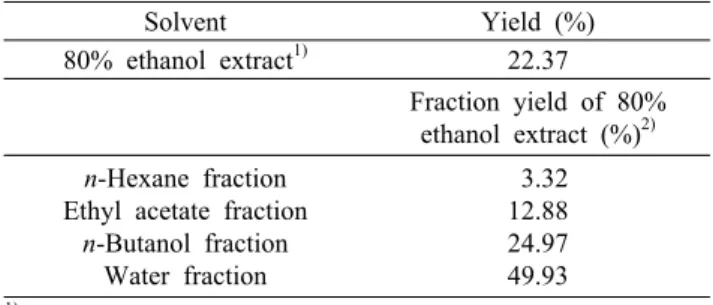
Table 1. Yield of each fractions from 80% ethanol extract of strawberry (Fragaria ananassa var. ‘Seolhyang’) leaves
Solvent Yield (%)
80% ethanol extract1) 22.37
Fraction yield of 80%
ethanol extract (%)2) n-Hexane fraction
Ethyl acetate fraction n-Butanol fraction
Water fraction
3.32 12.88 24.97 49.93
1)Yield (%)=(weight of solid extract/ weight of dry sam- ple)×100.
2)Yield (%)=(weight of solid fraction/ weight of 80% ethanol extract)×100.
Table 2. Total polyphenol contents of various solvent fractions from 80% ethanol extract of strawberry (Fragaria ananassa var.
‘Seolhyang’) leaves
Solvent Total polyphenol contents (mg GAE1)/g) 80% ethanol extract
n-Hexane fraction Ethyl acetate fraction
n-Butanol fraction Water fraction
307.46±7.60c2)3) 43.06±1.45e 516.85±8.43a 477.18±1.98b 109.84±0.41d
1)GAE: gallic acid equivalent.
2)Values are mean±SD (n=3).
3)Values with different letters (a-e) within a column differ sig- nificantly (P<0.05).
Dried strawberry leaves
↓ - Extraction with 80% ethanol 80% ethanol extracts
↓ - n-Hexane/H2O n-Hexane fraction Aqueous phase
↓ -Ethyl acetate Ethyl acetate fraction Aqueous phase
↓ - n-Butanol
n-Butanol fraction Aqueous phase Fig. 1. Procedure for fractionation of 80% ethanol extraction from strawberry (Fragaria ananassa var. ‘Seolhyang’) leaves by various solvents.
혼합한 다음 700 nm에서 흡광도를 측정하였다. 시료의 환 원력은 흡광도의 값으로 나타내었으며 흡광도 값을 퍼센트 (%)로 환산하여 흡광도 0~1의 범위를 0~100%의 범위로 보아 50%의 환원력을 나타내는 시료 농도인 EC50(effec- tive concentration) 값을 구하였다.
통계처리
모든 실험은 3회 이상 반복 측정하여 평균과 표준편차로 나타내었으며 그 결과는 SPSS 22.0(Statistical Package for Social Sciences, SPSS Inc., Chicago IL, USA) soft- ware를 이용하여 일원배치 분산분석(ANOVA)을 하였다.
유의적 차이가 있는 항목에 대해서는 Duncan’s multiple range test로 P<0.05 수준에서 유의차 검정을 하였다.
결과 및 고찰
딸기 잎의 에탄올 추출물 및 용매별 분획물 수율
딸기 잎의 생리활성 및 유효 활성을 분석하기 위해 자연 건조하여 마쇄시킨 딸기 잎을 80% 에탄올로 추출하여 감압 농축한 후, 극성의 차이를 이용하여 서로 다른 용매를 첨가 해 단계적으로 분획하였다(Fig. 1). 추출물 및 용매별로 얻 어진 분획물의 추출 수율을 계산한 결과는 Table 1과 같다.
80% 에탄올로 추출한 딸기 잎의 추출 수율은 22.37%였으 며, 80% 에탄올 추출물에 대하여 용매별로 분획한 분획물의 추출 수율은 water 분획물이 49.93%로 가장 높은 수율을 나타내었고 n-butanol 분획물이 24.97%, ethyl acetate 분 획물이 12.88%, n-hexane 분획물이 3.32%의 순으로 측정 되었다. Bae 등(21)과 Kim(22)의 연구에서는 각각 비파나 무의 잎과 산딸나무 잎을 이용하여 용매 분획한 분획물의 추출 수율을 측정하였을 때 water 분획물에서 가장 높은 수율을 나타내었다고 보고하였는데, 본 연구에서도 water 분획물에서 가장 높은 수율이 나타나 유사한 결과를 보였다.
총 폴리페놀 함량
폴리페놀 화합물은 식물계에 널리 분포하는 2차 대사물 질이며(23), 한 분자 내에 2개 이상의 phenolic hydroxyl (-OH)기를 가진 방향족 화합물로서 flavonoid, tannin, catechin 등이 있으며, 식물체에 색을 부여하고 항산화, 항 암, 충치 예방 등의 기능적 활성을 가진다(24). 딸기 잎 추출 물의 분획별 총 폴리페놀 함량을 측정한 결과 값은 시료 1 g에 대한 mg gallic acid equivalent(GAE)로 Table 2에 나타내었다. 딸기 잎 추출물의 분획별 총 폴리페놀 함량은 ethyl acetate 분획물에서 516.85±8.43 mg GAE/g으로 가 장 높은 함량을 나타내었고 n-butanol 분획물에서 477.18
±1.98 mg GAE/g, 80% ethanol 추출물에서 307.46±7.60 mg GAE/g, water 추출물에서 109.84±0.41 mg GAE/g, n-hexane 분획물에서 43.06±1.45 mg GAE/g 순으로 측 정되었다. Kårlund 등(25)의 연구에 따르면 딸기 잎에는 gallic acid derivatives, ellagitannins, flavonoids, pro- anthocyanidins, chlorogenic acids 등 다양한 폴리페놀이 함유되어 있으며, 식물활성제로 처리한 딸기 잎에서 ellagi- tannin 계통이 총 페놀 화합물의 47~54.3%를 차지하였다 고 보고하였다. Ellagitannin은 딸기 열매에서도 9.7~22.9 mg/100 g의 높은 함량을 나타내며(26), 이중 agrimoniin은 딸기 열매의 주요 ellagitannin인 동시에(27) 딸기 잎에서 가장 풍부한 주요 ellagitannin이라고 보고되어 있다(28,
Table 3. Total flavonoid contents of various solvent fractions from 80% ethanol extract of strawberry (Fragaria ananassa var.
‘Seolhyang’) leaves
Solvent Total flavonoid contents (mg CE1)/g) 80% ethanol extract
n-Hexane fraction Ethyl acetate fraction
n-Butanol fraction Water fraction
77.03±1.08c2)3) 13.13±0.94e 191.07±2.36a 100.50±0.25b 20.15±0.47d
1)CE: catechin equivalent.
2)Values are mean±SD (n=3).
3)Values with different letters (a-e) within a column differ sig- nificantly (P<0.05).
Table 4. DPPH radical scavenging activity of various solvent fractions from 80% ethanol extract of strawberry (Fragaria ana- nassa var. ‘Seolhyang’) leaves
Solvent DPPH IC50 value1) (mg/mL) 80% ethanol extract
n-Hexane fraction Ethyl acetate fraction
n-Butanol fraction Water fraction
0.08±0.00c2)3) 0.52±0.02a 0.05±0.00d 0.05±0.01d 0.15±0.01b Ascorbic acid 0.01±0.00e
1)Amount required for 50% reduction of DPPH radical scaveng- ing activity.
2)Values are mean±SD (n=3).
3)Values with different letters (a-e) within a column differ sig- nificantly (P<0.05).
29). Jeong 등(13)은 블루베리 잎 분획물의 총 폴리페놀 함 량을 측정한 결과 ethyl acetate 분획물이 50.51 mg GAE/g 으로 가장 높은 함량을 나타내었고, Kim 등(30)은 고욤 잎 분획물의 총 폴리페놀 함량을 측정한 결과 ethyl acetate 분획물이 324.30±7.16 mg GAE/g으로 가장 높은 함량을 보였다고 보고하여 본 논문과 유사한 결과를 나타냈으며, 블루베리 잎 및 고욤 잎의 ethyl acetate 분획물보다 딸기 잎 ethyl acetate 분획물이 더 많은 페놀 함량을 보여 딸기 잎의 ethyl acetate 분획물에 다량의 페놀 물질이 함유된 것을 확인하였다.
총 플라보노이드 함량
플라보노이드는 노란색 혹은 담황색을 띠는 폴리페놀계 화합물로 식물의 잎, 꽃, 줄기 등의 자연계에 널리 분포하고 있으며(31), 식물에 포함된 플라보노이드 성분은 항산화를 비롯하여 여러 생리활성 기능을 가지고 있는 것으로 보고되 고 있다(32). 딸기 잎 추출물의 분획별 총 플라보노이드 함량 을 측정한 결과 값은 시료 1 g에 대한 mg catechin equiva- lent(CE)로 Table 3에 나타내었다. 딸기 잎 추출물의 분획별 총 플라보노이드 함량은 ethyl acetate 분획물에서 191.07
±2.36 mg CE/g으로 가장 높은 함량을 나타냈으며, 이어서 n-butanol 분획물이 100.50±0.25 mg CE/g, 80% ethanol 추출물이 77.03±1.08 mg CE/g, water 분획물이 20.15±
0.47 mg CE/g, n-hexane 분획물이 13.13±0.94 mg CE/g 의 함량을 나타냈다. Simirgiotis와 Schmeda-Hirschmann (33)은 흰딸기의 열매, 잎, 뿌리줄기의 메탄올 추출물의 플 라보노이드 함량 측정 결과, 열매 부분은 2.00±0.01, 잎 부 분은 0.83±0.01, 뿌리줄기 부분은 0.55±0.00 g quercetin equivalents/100 g dry weight의 함량을 나타내었다고 보 고하였다. Cho 등(34)은 야관문 잎 분획물의 총 플라보노이 드 함량을 측정한 결과 ethyl acetate 분획물에서 90.4±7.9 mg/g으로 가장 높은 함량을 보여 본 연구와 유사한 결과를 나타냈으며, Kim 등(22)은 산딸나무 잎 분획물의 총 플라보 노이드 함량을 측정한 결과 ethyl acetate 분획물에서 2.060 mg/g의 함량을 보였다고 보고하고 있어, 야관문 잎 및 산딸 나무 잎의 결과와 비교할 때 딸기 잎 ethyl acetate 분획물에
서 더 높은 총 플라보노이드 함량을 가지는 것으로 나타났 다.
DPPH 라디칼 소거 활성
DPPH 라디칼 소거 활성법은 항산화 물질로부터 자유라 디칼에 전자를 공여하여 산화를 억제하는 척도로 사용되고 있을 뿐만 아니라 인체 내 자유라디칼에 의한 노화를 억제하 는 작용의 척도로 사용함으로써 실제 항산화 활성과 높은 연관성이 있다(31). 딸기 잎 추출물의 분획별 DPPH 라디칼 소거 활성은 50% 라디칼 소거 활성을 나타내는 IC50 값으로 Table 4에 나타내었다. 딸기 잎 추출물의 분획별 DPPH 라 디칼 소거 활성의 IC50 값은 ethyl acetate 분획물이 0.05±
0.00 mg/mL, n-butanol 분획물이 0.05±0.01 mg/mL로 가 장 높은 활성을 나타냈으며, 80% ethanol 추출물이 0.08±
0.00 mg/mL, water 분획물이 0.15±0.01 mg/mL, n-hex- ane 분획물이 0.52±0.02 mg/mL로 그 뒤를 이었다. 양성 대조군인 ascorbic acid의 DPPH 라디칼 소거 활성의 IC50 값은 0.01±0.00 mg/mL로 나타났다. Simirgiotis와 Schme- da-Hirschmann(33)은 흰딸기 잎 메탄올 추출물의 DPPH 라디칼 소거 활성 측정 결과 IC50 값이 49.40 μg/mL를 나타 내었다고 보고하였으며, Lee 등(35)은 산벚나무 잎 추출물 과 용매별 분획의 DPPH 라디칼 소거 활성 측정 결과, n- butanol 분획물과 ethyl acetate 분획물의 IC50 값이 각각 26.36 μg/mL와 29.57 μg/mL로 ascorbic acid의 26.68 μg/
mL와 비교한 상대적 활성이 101.21%와 90.24% 수준으로 양성 대조군과 동일한 항산화 효과를 나타내었다고 보고하 였다. Jeon 등(36)은 고욤 잎 분획물의 DPPH 라디칼 소거 활성 IC50 값을 측정한 결과 ethyl acetate 분획물에서 5.3 μg/mL로 가장 높은 활성을 나타내었고, Kang 등(37)은 청 미래덩굴 잎 분획물의 DPPH 라디칼 소거 활성 IC50 값을 측정한 결과 ethyl acetate 분획물에서 0.022±0.001 mg/
mL로 가장 높은 활성을 나타내었다고 보고하였는데, 이는 본 논문과 유사한 결과이며 딸기 잎 ethyl acetate 분획물과 유사한 활성을 보여 딸기 잎의 DPPH 라디칼 소거 활성이
Table 5. ABTS radical scavenging activity of various solvent fractions from 80% ethanol extract of strawberry (Fragaria ana- nassa var. ‘Seolhyang’) leaves
Solvent ABTS IC50 value1) (mg/mL) 80% ethanol extract
n-Hexane fraction Ethyl acetate fraction
n-Butanol fraction Water fraction
0.20±0.01c2)3) 1.27±0.03a 0.11±0.00d 0.12±0.01d 0.81±0.08b Ascorbic acid 0.06±0.00d
1)Amount required for 50% reduction of ABTS radical scaveng- ing activity.
2)Values are mean±SD (n=3).
3)Values with different letters (a-d) within a column differ sig- nificantly (P<0.05).
Table 6. Ferric reducing antioxidant power (FRAP) value of various solvent fractions from 80% ethanol extract of strawberry (Fragaria ananassa var. ‘Seolhyang’) leaves
Solvent FRAP value (mM/mg) 80% ethanol extract
n-Hexane fraction Ethyl acetate fraction
n-Butanol fraction Water fraction
0.76±0.02c1)2) 0.11±0.00e 1.27±0.03a 1.20±0.01b 0.36±0.01d
1)Values are mean±SD (n=3).
2)Values with different letters (a-e) within a column differ sig- nificantly (P<0.05).
비교적 우수한 편임을 나타내었다.
ABTS 라디칼 소거 활성
ABTS 라디칼 소거법은 peroxidase 및 H2O2와의 반응으 로 인하여 활성 양이온인 ABTS+가 형성되는데, 항산화 물 질로부터 전자를 공여 받음으로써 ABTS+가 소거되고 라디 칼 특유의 색인 청록색이 탈색되어 이 탈색 정도를 이용하여 항산화 활성을 평가하는 방법이다(38). 딸기 잎 추출물의 분획별 ABTS 라디칼 소거 활성은 50% 라디칼 소거 활성을 나타내는 IC50 값으로 Table 5에 나타내었다. 딸기 잎 추출 물의 분획별 ABTS 라디칼 소거 활성의 IC50 값은 ethyl acetate 분획물이 0.11±0.00 mg/mL로 가장 높은 활성을 나타냈으며, n-butanol 분획물이 0.12±0.01 mg/mL, 80%
ethanol 추출물이 0.20±0.01 mg/mL, water 분획물이 0.81
±0.08 mg/mL, n-hexane 분획물이 1.27±0.03 mg/mL의 순이었다. 양성 대조군으로 사용한 ascorbic acid의 IC50 값 은 0.06±0.00 mg/mL였으며, 이와 비교했을 때 딸기 잎 추 출물 및 분획물에 높은 활성이 있는 것으로 나타났다. 딸기 메탄올 추출물의 ABTS법에 따른 항산화 활성 측정 결과 4.44±0.45 mmol Trolox/100 g dry weight의 활성을 나타 내었으며(39), 딸기 항산화 활성의 주요 항산화 페놀류는 E- cinnamic acid 유도체, cyanidin glycosides, ellagic acid 인 것으로 보고되고 있다(33). Kim 등(40)은 누리장나무 잎 추출물의 ABTS 라디칼 소거 활성을 측정한 결과 양성 대조 군인 ascorbic acid(IC50=9.66±3.51 μg/mL)와 비교할 때, n-butanol 분획물(IC50=25.40±5.93 μg/mL)과 ethyl ace- tate 분획물(IC50=33.86±2.29 μg/mL)의 활성이 비교적 높 았다고 보고하였으며, Jeong 등(13)은 블루베리 잎 분획물 의 ABTS 라디칼 소거 활성 IC50의값을 측정한 결과 ethyl acetate 분획물에서 0.125~0.250 mg/mL로 가장 높은 활 성을 나타내었다고 보고하였다. Kang 등(37)도 청미래덩굴 잎 분획물의 ABTS 라디칼 소거 활성 IC50의값을 측정한 결과 ethyl acetate 분획물에서 0.130±0.015 mg/mL로 가 장 높은 활성을 나타내었다고 보고하였는데 이는 본 연구와
유사한 결과이며, 블루베리 잎 및 청미래덩굴 잎의 ethyl acetate 분획물보다 딸기 잎 ethyl acetate 분획물에서 높은 활성을 나타내어 ABTS 라디칼 소거 활성이 비교적 높은 편임을 나타내었다. ABTS 라디칼 소거 활성은 앞선 실험 결과인 DPPH 라디칼 소거 활성과 유사한 경향을 나타내었 는데, Choi 등(41)은 시판 다류 제품의 항산화 활성을 측정 한 결과 ABTS 라디칼 소거 활성이 DPPH 라디칼 소거 활성 과 높은 상관관계가 있음을 보고하였으며, 이는 자유라디칼 을 제거한다는 공통 기작을 가지기 때문인 것으로 여겨진다.
FRAP 활성
FRAP는 낮은 pH에서 환원제에 의해 ferric tripyridyl- triazine(Fe3+-TPTZ) 복합체가 ferrous tripyridyltriazine (Fe2+-TPTZ)으로 환원되는 원리를 이용한 것으로 시료 중 항산화 물질의 함량에 대한 의존도가 높은 것으로 알려져 있다(19). 딸기 잎 추출물의 분획별 FRAP value의 측정 결 과는 시료 1 mg에 들어있는 iron sulfate hexahydrate (FeSO4・6H2O)의 mM 함량으로 환산하여 계산하였으며 Table 6에 나타내었다. 딸기 잎 추출물의 분획별 FRAP value를 측정한 결과 ethyl acetate 분획물이 1.27±0.03 mM/mg으로 가장 높게 나타났으며, n-butanol 분획물이 1.20±0.01 mM/mg, 80% ethanol 추출물이 0.76±0.02 mM/
mg, water 분획물이 0.36±0.01 mM/mg, n-hexane 분획 물이 0.11±0.00 mM/mg의 순으로 나타났다. Raudonis 등 (42)은 딸기 및 딸기 잎에 함유된 주요 화합물들의 FRAP 활성에 의한 항산화 활성을 Trolox의 활성을 1로 하여 Trolox equivalent antioxidant capacities(TEAC)를 측정한 결과, caffeic acid(1.21), ellagic acid(1.46), quercetin(1.34), quercitrin(1.04), hyperoside(1.33), (+)-catechin(1.30), (-)-epicatechin(1.03), epigallocatechin gallate 등의 화 합물이 1 이상의 높은 활성을 나타내었다고 보고하였는데, 본 딸기 잎 에탄올 추출물 및 분획물의 항산화 활성도 이러 한 화합물에 기인하는 것이라 여겨진다. 또한, 딸기 잎 및 열매의 ABTS 및 FRAP 활성에 의한 항산화 활성 측정 결과, 잎 추출물의 항산화 활성이 열매 부분의 항산화 활성보다 높은 활성을 나타내었다고 보고하였다(42). Bae와 Chung (43)은 오죽 잎 용매 분획물의 FRAP 활성 측정 결과, ethyl
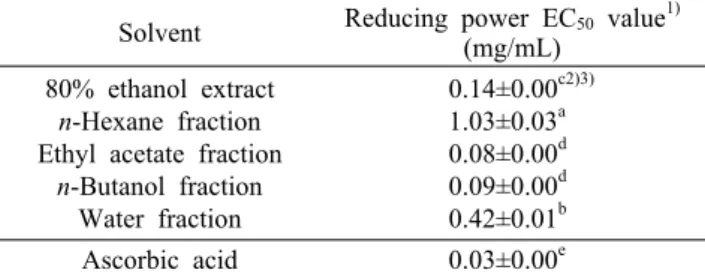
Table 7. Reducing power of various solvent fractions from 80%
ethanol extract of strawberry (Fragaria ananassa var. ‘Seolhy- ang’) leaves
Solvent Reducing power EC50 value1) (mg/mL)
80% ethanol extract n-Hexane fraction Ethyl acetate fraction
n-Butanol fraction Water fraction
0.14±0.00c2)3) 1.03±0.03a 0.08±0.00d 0.09±0.00d 0.42±0.01b Ascorbic acid 0.03±0.00e
1)Amount required for 50% effective of reducing power.
2)Values are mean±SD (n=3).
3)Values with different letters (a-e) within a column differ sig- nificantly (P<0.05).
acetate 분획물이 202.33±10.25 TE μM로 가장 높게 나타 났고 n-hexane, n-butanol, 물 분획물의 순으로 활성을 나 타내었다고 보고하였으며, Hwang(44)은 부방종 비파 잎 분 획물의 FRAP value를 측정한 결과 ethyl acetate 분획물이 100 μg에서 1.14±0.02 mM의 값을 보여 가장 높은 값을 나타냈다고 보고하였다. Sánchez-González 등(45)과 Lee 등(46)은 총 폴리페놀 함량과 FRAP value가 높은 상관관계 가 있다고 보고하였는데 본 연구 결과에서도 총 폴리페놀 함량과 FRAP value가 비슷한 경향을 보였으며, 이에 총 페 놀 물질의 함량이 FRAP value에 영향을 줄 수 있으리라 판단된다.
Reducing power
Reducing power는 환원력을 가진 물질이 ferric-ferri- cyanide(Fe3+) 혼합물에 수소를 공여함으로써 자유라디칼 을 안정화해 ferrous(Fe2+)로 전환되는 환원력을 흡광도 값 으로 나타낸 것으로, 환원력이 강할수록 녹색에 가깝게 발색 되며 높은 흡광도 값을 나타낸다(20). 딸기 잎 추출물의 분 획별 reducing power는 50% 환원력을 나타내는 시료 농도 인 EC50 값으로 Table 7에 나타내었다. 딸기 잎 추출물의 분획별 reducing power의 EC50 값은 ethyl acetate 분획물 이 0.08±0.00 mg/mL로 가장 높은 활성을 나타냈으며, n- butanol 분획물이 0.09±0.00 mg/mL, 80% ethanol 추출물 이 0.14±0.00 mg/mL, water 분획물이 0.42±0.01 mg/mL, n-hexane 분획물이 1.03±0.03 mg/mL의 순으로 활성을 나타내었다. 양성 대조군으로 사용한 ascorbic acid의 EC50
값은 0.03±0.00 mg/mL로 나타났다. Mendes 등(47)은 딸 기나무 잎과 열매 열수 추출물의 페놀 함량 측정 결과 잎 추출물에서 열매 추출물보다 더 높은 페놀 함량을 나타내었 으며, flavanols(catechins, procyanidin dimers과 re- spective gallate esters), flavonols(glucosides of myr- icetin, quercetin, kaempferol), 일부 galloyl(gallotannins) 과 ellagic(ellagitannins) 유도체들이 존재함을 확인하였 다. 또한, 딸기나무 잎과 열매 열수 추출물의 환원력을 측정 한 결과, 잎의 활성(0.318±0.007 mg/mL)이 열매의 활성
(2.894±0.049 mg/mL)보다 높은 EC50 값을 나타내었다고 보고하여, 본 연구의 설향 딸기 잎 ethyl acetate와 n-buta- nol 분획물 및 80% ethanol 추출물의 환원력이 딸기나무 잎 열수 추출물의 활성보다 높은 활성을 나타내는 것으로 확인 되었다. Kanoun 등(48)은 은매화의 잎, 줄기 및 열매 용매 분획물의 환원력을 측정한 결과, 잎>줄기>열매 순으로 활성 을 나타내었으며, 양성 대조군인 ascorbic acid의 0.06 mg/
mL(EC50)와 비교할 때 n-butanol 분획물과 ethyl acetate 분획물의 EC50 값이 각각 0.23 mg/mL와 0.26 mg/mL를 나타내었다고 보고하였고, 특히 잎 ethyl acetate 분획물이 우수한 항산화 활성을 나타내었다고 보고하였다. Kang 등 (37)은 청미래덩굴 잎 분획물의 환원력을 측정한 결과 ethyl acetate 분획물에서 가장 높은 활성을 나타내었으며 0.5 mg/mL에서 0.581±0.020의 흡광도 값을 보였다고 보고하 여 본 연구의 설향 딸기 잎 ethyl acetate 분획물이 다른 잎 추출물 및 분획물에 비해 비교적 높은 환원력을 가져 우 수한 항산화 활성을 나타내는 것으로 확인되었다.
요 약
본 연구는 천연물인 딸기(Fragaria ananassa var. ‘Seol- hyang’) 잎을 이용하여 80% 에탄올로 농축한 후 이를 n- hexane, ethyl acetate, n-butanol, water 용매로 분획한 다음 총 폴리페놀 함량, 총 플라보노이드 함량, DPPH 라디 칼 소거 활성, ABTS 라디칼 소거 활성, FRAP 활성, reduc- ing power를 평가하였다. 딸기 잎 에탄올 추출물의 추출 수율은 22.37%였으며, 분획물의 수율은 water 분획물에서 가장 높은 수율을 나타내었고 n-hexane 분획물에서 가장 낮은 값을 나타내었다. 딸기 잎 추출물 및 분획물의 총 폴리 페놀 함량 및 플라보노이드 함량은 각각 43.06~516.85 mg GAE/g과 13.13~191.07 mg CE/g의 함량을 나타내었으며, 항산화 활성은 모두 ethyl acetate 분획물에서 가장 높게 나타났다. 이상의 결과에서 딸기 잎의 추출물 및 분획물 중 ethyl acetate 분획물의 경우 우수한 항산화 활성을 나타내 어 식품첨가물 및 화장품 소재로써 이용 가능성이 있음을 확인하였다.
REFERENCES
1. Kim JG, Choi JW, Park MH. 2016. Effect of different days of postharvest treatment and CO2 concentrations on the qual- ity of ‘Seolhyang’ strawberry during storage. Korean J Food Preserv 23: 12-19.
2. Deuel CL, Plotto A. 2005. Strawberries and raspberries. In Processing Fruits: Science and Technology. 2nd ed. Barrett DM, Somogyi L, Ramaswamy H, eds. CRC Press Inc., Boca Raton, FL, USA. p 531-561.
3. Liu CJ, Lin JY. 2012. Anti-inflammatory and anti-apoptotic effects of strawberry and mulberry fruit polysaccharides on lipopolysaccharide-stimulated macrophages through modu- lating pro-/anti-inflammatory cytokines secretion and Bcl-2/
Bak protein ratio. Food Chem Toxicol 50: 3032-3039.
4. Aiyer HS, Warri AM, Woode DR, Hilakivi-Clarke L, Clarke R. 2012. Influence of berry-polyphenols on receptor signal- ing and cell-death pathways: implications for breast cancer prevention. J Agric Food Chem 60: 5693-5708.
5. da Silva Pinto M, Kwon YI, Apostolidis E, Lajolo FM, Genovese MI, Shetty K. 2008. Functionality of bioactive com- pounds in Brazilian strawberry (Fragaria×ananassa Duch.) cultivars: evaluation of hyperglycemia and hypertension po- tential using in vitro models. J Agric Food Chem 56: 4386- 4392.
6. Lee TS, Chi YS. 1989. Studies on the change in chemical composition of strawberry during maturing. J Korean Agric Chem Soc 32: 232-239.
7. Mass JL, Galletta GJ. 1991. Ellagic acid, an anticarcinogen in fruits, especially in strawberries: a review. Hortscience 26: 10-14.
8. Mukhtar H, Das M, Bickers DR. 1986. Inhibition of 3-meth- ylcholanthrene-induced skin tumorigenicity in BALB/c mice by chronic oral feeding of trace amounts of ellagic acid in drinking water. Cancer Res 46: 2262-2265.
9. Rao CV, Tokumo K, Rigotty J, Zang E, Kelloff G, Reddy BS. 1991. Chemoprevention of colon carcinogenesis by diet- ary administration of piroxicam, α-difluoromethylornithine, 16α-fluoro-5-androsten-17-one, and ellagic acid individually and in combination. Cancer Res 51: 4528-4534.
10. Tanaka T, Iwata H, Niwa K, Mori Y, Mori H. 1988. Inhibi- tory effect of ellagic acid on N-2-fluorenylacetamide-induced liver carcinogenesis in male ACI/N rats. Jpn J Cancer Res 79: 1297-1303.
11. Lee YJ. 2016. Antioxidant and anti-inflammatory response of stem and leaf extracts from Rubus coreanus Miquel. MS Thesis. Hanyang University, Seoul, Korea.
12. Lee MJ, Lee SJ, Choi HR, Lee JH, Kwon JW, Chae KS, Jeong JT, Lee TB. 2014. Improvement of cholesterol and blood pressure in fruit, leaf and stem extracts from black raspberry in vitro. Korean J Med Crop Sci 22: 177-187.
13. Jeong HR, Jo YN, Jeong JH, Kim HJ, Heo HJ. 2012. Nutri- tional composition and in vitro antioxidant activities of blue- berry (Vaccinium ashei) leaf. Korean J Food Preserv 19:
604-610.
14. Lee HM, Kong BJ, Kwon SS, Kim KJ, Kim HS, Jeon SH, Ha JH, Kim JS, Park SN. 2013. Antioxidative activities of Aronia melanocarpa fruit and leaf extracts. J Soc Cosmet Sci Korea 39: 337-345.
15. Folin O, Denis W. 1912. On phosphotungstic-phosphomo- lybdic compounds as color reagents. J Biol Chem 12: 239- 243.
16. Zhishen J, Mengcheng T, Jianming W. 1999. The determi- nation of flavonoid contents in mulberry and their scaveng- ing effects on superoxide radicals. Food Chem 64: 555-559.
17. Blois MS. 1958. Antioxidant determinations by the use of a stable free radical. Nature 181: 1199-1200.
18. Fellegrini N, Ke R, Yang M, Rice-Evans C. 1998. Screening of dietary carotenoids and carotenoid-rich fruit extracts for antioxidant activities applying 2,2'-azinobis(3-ethyleneben- zothiazoline-6-sulfonic acid) radical cation decolorization assay. Methods Enzymol 299: 379-389.
19. Benzie IF, Strain JJ. 1996. The ferric reducing ability of plasma (FRAP) as a measure of “antioxidant power”: The FRAP assay. Anal Biochem 239: 70-79.
20. Oyaizu M. 1986. Studies on products of browning reaction:
antioxidative activities of products of browning reaction prepared from glucosamine. Jpn J Nutr 44: 307-315.
21. Bae YI, Chung YC, Shim KH. 2002. Antimicrobial and anti-
oxidant activities of various solvent extract from different parts of loquat (Eriobotrya japonica, Lindl.). Korean J Food Preserv 9: 97-101.
22. Kim YJ, Jeong JA, Kwon SH, Lee CH. 2008. Comparison of biological activities of extracts from different parts and solvent fractions in Cornus kousa Buerg. Korean J Plant Res 21: 28-35.
23. Hyon JS, Kang SM, Senevirathne M, Koh WJ, Yang TS, Oh MC, Oh CK, Jeon YJ, Kim SH. 2010. Antioxidative activities of extracts from dried Citrus sunki and C. unshiu peels. J Korean Soc Food Sci Nutr 39: 1-7.
24. Kim HH. 2010. The study on verification of cosmeceutical activities from Aster glehni Fr. Schm. and application of oleosome on advanced formulation. MS Thesis. Daegu Haany University, Daegu, Korea.
25. Kårlund A, Salminen JP, Koskinen P, Ahern JR, Karonen M, Tiilikkala K, Karjalainen RO. 2014. Polyphenols in straw- berry (Fragaria×ananassa) leaves induced by plant activa- tors. J Agric Food Chem 62: 4592-4600.
26. Buendía B, Gil MI, Tudela JA, Gady AL, Medina JJ, Soria C, López JM, Tomás-Barberán FA. 2010. HPLC-MS analy- sis of proanthocyanidin oligomers and other phenolics in 15 strawberry cultivars. J Agric Food Chem 58: 3916-3926.
27. Hukkanen AT, Kokko HI, Buchala AJ, McDougall GJ, Stewart D, Kärenlampi SO, Karjalainen RO. 2007. Benzo- thiadiazole induces the accumulation of phenolics and im- proves resistance to powdery mildew in strawberries. J Agric Food Chem 55: 1862-1870.
28. Aaby K, Mazur S, Nes A, Skrede G. 2012. Phenolic com- pounds in strawberry (Fragaria×ananassa Duch.) fruits:
Composition in 27 cultivars and changes during ripening.
Food Chem 132: 86-97.
29. Vrhovsek U, Guella G, Gasperotti M, Pojer E, Zancato M, Mattivi F. 2012. Clarifying the identity of the main ellagi- tannin in the fruit of the strawberry, Fragaria vesca and Fragaria ananassa Duch. J Agric Food Chem 60: 2507- 2516.
30. Kim SY, Kim SJ, Kim JA, Kim DH, Kwak SH, Chung CH, Jeon IH, Jang SI, Jeong SI. 2014. Anti-oxidant and α-gluco- sidase inhibition activity of extracts or fractions from Dio- spyros lotus L. leaves and quantitative analysis of their fla- vonoid compounds. J Life Sci 24: 935-945.
31. Hertog MGL, Hollman PCH, van de Pette B. 1993. Content of potentially anticarcinogenic flavonoids of tea infusions, wines, and fruit juices. J Agric Food Chem 41: 1242-1246.
32. Kim EJ, Choi JY, Yu M, Kim MY, Lee S, Lee BH. 2012.
Total polyphenols, total flavonoid contents, and antioxidant activity of Korean natural and medicinal plants. Korean J Food Sci Technol 44: 337-342.
33. Simirgiotis MJ, Schmeda-Hirschmann G. 2010. Determina- tion of phenolic composition and antioxidant activity in fruits, rhizomes and leaves of the white strawberry (Fraga- ria chiloensis spp. chiloensis form chiloensis) using HPLC- DAD-ESI-MS and free radical quenching techniques. J Food Compos Anal 23: 545-553.
34. Cho EJ, Ju HM, Jeong CH, Eom SH, Heo HJ, Kim DO.
2011. Effect of phenolic extract of dry leaves of Lespedeza cuneata G. Don on antioxidant capacity and tyrosinase in- hibition. Korean J Hortic Sci Technol 29: 358-365.
35. Lee KI, Yang SA, Pyo BS, Kim SM. 2012. Antibacterial activity and nitric oxide production inhibitory activity of the extract and its fractions from the leaves of Prunus sargentii.
Korean J Med Crop Sci 20: 308-314.
36. Jeon IH, Kang HJ, Kim SJ, Jeong SI, Lee HS, Jang SI. 2014.
Antioxidant and antipruritic activities of ethyl acetate frac- tion from Diospyros lotus leaves. J Korean Soc Food Sci Nutr 43: 1635-1641.
37. Kang YH, Lee YS, Kim KK, Kim DJ, Kim TW, Choe M.
2013. Study on antioxidative, antidiabetic and antiobesity activity of solvent fractions of Smilax china L. leaf extract.
J Nutr Health 46: 401-409.
38. Shin JH, Lee SJ, Jung WJ, Kang MJ, Sung NJ. 2011.
Physicochemical characteristics of garlic (Allium sativum L.) on collected from the different regions. J Agric Life Sci 45:
103-114.
39. Huang WY, Zhang HC, Liu WX, Li CY. 2012. Survey of antioxidant capacity and phenolic composition of blueberry, blackberry, and strawberry in Nanjing. Biomed Biotechnol 13: 94-102.
40. Kim JH, Song H, Ko HC, Lee JY, Jang MG, Kim SJ. 2017.
Anti-oxidant and anti-inflammatory properties of Cleroden- drum trichotomum leaf extracts. J Life Sci 27: 640-645.
41. Choi Y, Kim M, Shin JJ, Park JM, Lee J. 2003. The anti- oxidant activities of the some commercial teas. J Korean Soc Food Sci Nutr 32: 723-727.
42. Raudonis R, Raudone L, Jakstas V, Janulis V. 2012. Com- parative evaluation of post-column free radical scavenging and ferric reducing antioxidant power assays for screening
of antioxidants in strawberries. J Chromatogr A 1233: 8-15.
43. Bae HK, Chung SK. 2014. Antioxidant and antimicrobial activity of solvent fractions from black bamboo leaves. Ko- rean J Food Preserv 21: 560-564.
44. Hwnag HR. 2010. A study on antioxidant activities and analysis of bioactive compounds of the extract fraction from leaves of loquat (Eriobotrya japonica Lindl.) by cultivar.
MS Thesis. Chungnam National University, Daejeon, Korea.
45. Sánchez-González I, Jiménez-Escrig A, Saura-Calixto F.
2005. In vitro antioxidant activity of coffees brewed using different procedures (Italian, espresso and filter). Food Chem 90: 133-139.
46. Lee HR, Jung BR, Park JY, Hwang IW, Kim SK, Choi JU, Lee SH, Chung SK. 2008. Antioxidant activity and total phe- nolic contents of grape juice products in the Korean market.
Korean J Food Preserv 15: 445-449.
47. Mendes L, de Freitas V, Baptista P, Carvalho M. 2011. Com- parative antihemolytic and radical scavenging activities of strawberry tree (Arbutus unedo L.) leaf and fruit. Food Chem Toxicol 49: 2285-2291.
48. Kanoun K, Belyagoubi-Benhammou N, Ghembaza N, Atik Bekkara F. 2014. Comparative studies on antioxidant activ- ities of extracts from the leaf, stem and berry of Myrtus com- munis L.. Int Food Res J 21: 1957-1962.