Vol. 17, No. 12 pp. 488-495, 2016
문화재 내진진단과 보수 ·보강에 관한 기초적인 연구 -한국과 일본의 목조 건조물 문화재를 중심으로-
홍지완
신라대학교 건축학부
A Basic Study on The Seismic Capacity Evaluation and Repair Reinforcement in Cultural Assets : Focused on Wooden Structure
Cultural Assets in Korea and Japan
Ji-Wan Hong
Division of Architecture, Silla University
요 약 본 연구는 목조 건조물 문화재의 내진 대책과 보수·보강 개선에 관한 기초적인 연구이다. 현재 문화재 내진에 관한 규정은 문화재청의 ‘문화재 지진재해 등에 관한 규정’으로 문화재 지진발생 후의 피해 상황 보고체계만을 규정하고 있다.
한국은 2013년 이후, 일본의 ‘중요 문화재(건조물) 내진진단·내진보강 지침’을 참고로 하여 전문가의 내진점수평가 체계를 도입하는 연구가 진행되고 있다. 일본의 목조 건조물 문화재의 내진은 우리나라와 유사하게 전문가의 점수평가로 진단되지 만, 지진 발생 전, 지진 발생 중, 지진 발생 후로 구분하여 관리되고 있다. 또한 ‘헤리티지 매니저’와 ‘문화재 닥터’를 운용하여 문화재의 상시적인 관리와 재난 발생 시 신속한 복구가 가능한 체계를 갖추고 있다. 우리나라의 목조 건조물 문화재의 지진 발생 후의 피해복구 중심의 관리체계를 벗어나 문화재의 상시적인 관리를 위한 전문가의 양성과 문화재 내진기준의 정립, 건축 관련 민간단체의 활용을 통한 상시적인 관리체계의 도입이 필요하다. 그리고 목조 건조물 문화재의 현황을 조사하여 개별 목조 건조물 문화재의 점검을 통한 다양한 내진진단 기법의 개발과 적합한 보수·보강 지침의 마련이 필요하다.
Abstract The purpose of this study is to improve the repair and reinforcement of cultural construction assets made of wood and develop seismic countermeasures. The existing regulations for the earthquake proofing of cultural assets are termed 'Regulations concerning earthquake disasters affecting cultural assets' of the cultural heritage administration, which only specifies the reporting of damage to cultural assets after the occurrence of an earthquake. Since 2013, Korea has been studying the introduction of a seismic evaluation system consisting of experts by referring to the 'Guideline for the diagnosis and reinforcement of important cultural properties in Japan. The earthquake proofing of wooden cultural assets in Japan is assessed by experts using a scoring system similar to the one in Korea, but the system in Japan is managed in three steps, viz. before, during and after the occurrence of the earthquake. In order to extend the existing management system by focusing on the repair of the damage after the occurrence of an earthquake, it is necessary for Korea to cultivate experts for the regular management of cultural assets, establish seismic criteria for them, and introduce a regular management system through a civil organization related to construction. By examining the current status of wooden cultural assets, it is necessary to develop various seismic diagnosis techniques and produce guidelines for the repair and reinforcement of individual wooden cultural construction assets following their identification.
Keywords : Cultural Assets, Seismic Preparedness, Repair Reinforcement Method, Wooden Cultural Properties, Architecture Planning
*
Corresponding Author : Ji-Wan Hong(Silla Univ.) Tel: +82-10-2528-4065 email: [email protected] Received November 8, 2016
Accepted December 8, 2016
Revised (1st November 24, 2016, 2nd November 30, 2016)
Published December 31, 2016
1. 서론
1.1 개요
우리나라의 지진 발생건수는 디지털 측정이 시작된 1999년 이후 연평균 47.8회로 연간 2000회 정도 발생하 는 일본에 비하여 안전지대이지만, 최근 계속되는 강진 의 발생은 한반도가 더 이상 안전지대가 아니라는 우려 를 현실화시키고 있다[1].
일반적인 국내 내진 규정은 지역지구 내의 건축물로 3층 이상 연면적 1,000㎡이상은 지진에 대하여 안전 여 부 확인을 의무화하고 있다. 문화재에 대한 내진 규정은
‘문화재 지진재해 등에 관한 규정’에 기초하여 지진 발 생시 문화재 주변의 방재와 인명피해를 줄이고 문화재청 과 지방자치단체의 피해보고 사항만을 정하고 있다[2].
일본의 경우, 1990년대의 한신대지진과 2011년의 동일 본 대지진으로 다수의 문화재가 소실되거나 붕괴되는 피 해가 발생하여 문화재 내진지침을 마련하여 상시적인 보 수보강을 통한 지진 피해 최소화를 추진하고 있다[3]. 그 러나 최근 계속되는 강진의 발생으로 건물의 내진성능 확보가 주요 관심사가 되고 있지만, 역사적 문화적 가치 가 높고 보존해야만 하는 문화재에 대한 명확한 내진 대 책은 없다.
이와 같은 문화재의 내진 대책의 현황을 토대로 본 연 구는 지진으로부터 문화재를 보호하고 그 가치를 지속시 키기 위하여, 문화재 유형이 유사한 일본과의 문화재 내 진 대책의 특징과 장단점을 비교하여 국내 문화재 내진 대책의 제도적인 개선과 정책의 개선, 발전을 목적으로 하는 연구이다.
1.2 선행연구
건조물 내진에 관한 연구는 철근콘크리트 구조물 및 철골철근콘크리트 구조물에 관한 내진 연구가 중심이다.
그러나 문화재의 내진에 관한 연구는 구조부재의 노후화 및 훼손의 위험성 때문에 지진 발생 시 구조체의 움직임 을 컴퓨터로 시뮬레이션한 연구가 중심이 되고 있지만, 소수의 중요 문화재에 국한된 연구이므로 문화재 전체를 대표하는 연구로는 보기 어렵다.
중요 문화재 지진 발생 시 움직임에 관한 연구는 조선 초기 주심포양식 건축물을 대상으로 접합부에 현대적인 부재를 더하여 구조 안전성을 확인하고 있는 한재수 외 1의 연구[3]가 가장 대표적이다. 그러나 이 연구는 전통
건축물에 현대적인 부재의 사용에 따른 구조해석을 하고 있지만, 전통 건축물의 내진성능에 대한 검증은 하고 있 지 않다.
그 밖의 연구로서 한중근 외 2의 연구[4]는 지진 발생 시 석탑의 피해 정도를 확인하기 위하여 석탑 주위의 지 반 움직임을 해석한 연구이지만, 내진 성능에 대해 고려 를 하지 않고 붕괴까지의 지반 거동만을 단순 시뮬레이 션하고 있다. 김은재 외 1의 연구[5]는 붕괴 시뮬레이션 을 통하여 지진 발생에 따른 석탑의 움직임을 해석하고 있지만, 한중근 외 2의 연구와 유사한 연구이다. 김승범 외 3의 연구[6]는 문화재의 지진위험도 계산 평가방법을 제안하고 있지만, 문화재청의 ‘내진 점검 및 진단 매뉴 얼’과 충돌하고 있다.
일본의 문화재 내진에 관한 대표적인 연구는 전통적 인 목조 5층 석탑의 축소모형을 사용하여 지진 시 목조 5층 석탑의 진동특성을 확인한 FUJITA Kaori 외 2의 연 구[7]와 일본 민가와 법륭사 대웅전에 대한 전통적인 목 구조의 내진 특성을 컴퓨터 시뮬레이션으로 해석한 MAEKAWA Hideyuki 외 2의 연구[8, 9]가 대표적이다.
그러나 이 연구는 전통적인 목구조의 지진 시 거동해석, 내진성능의 유무만을 고찰하고 있으며, 문화재의 내진진 단에 대한 제도적인 개선과 지진 피해복구를 위한 문화 재의 구조적인 보수·보강은 미흡한 연구이다.
국내의 문화재의 내진 진단에 관한 연구는 문화재청 의 ‘국가지정문화재(목조, 석조) 내진점검 및 진단 매뉴 얼;2013 문화재 내진재해 기초평가 연구[10]’가 유일하 다. 그러나 일본의 ‘문화재 건축물 중 지진 시의 안전성 확보에 관한 연구[11]’와 ‘중요 문화재(건조물) 내진진단 지침[12]’, ‘중요 문화재(건조물) 내진예비진단 실시요항 [13]’, ‘중요 문화재(건조물) 내진기초진단 실시요항[14]’
과 같은 구체적인 지침이 아닌 일반구조물 내진진단법을 문화재에 적용하고 있다. 특히 대부분이 구조가 목구조 인 문화재의 내진진단에는 한계를 가지고 있고 문화재의 보수보강에 대한 명확한 가이드라인을 제시하지 못하고 있다.
따라서 본 연구는 상기의 연구 결과를 토대로 국내 목 조 건조물 문화재의 역사적·문화적 가치를 지속을 위하 여 한국과 일본의 문화재 내진화 정책에 관한 지침과 제 도적 구성을 비교하여, 우리니라의 문화재 내진 대책의 제도적 정착과 발전을 위한 연구이다.
1.3 연구방법 및 범위
본 연구는 우리나라의 문화재의 내진 대책의 제도적 정착과 발전을 위하여 문화재 유형이 유사하고 지진대책 의 선진국인 일본의 문화재 내진 대책과 우리나라의 문 화재 내진 대책을 비교하여 그 특징과 개선방향, 향후 발 전을 고찰하였다.
연구의 대상은 ‘문화재 보호법’에서 규정하고 있는 문 화재 유형 중, 유형문화재 중, 건조물 문화재인 ‘석조 건 조물 문화재(이하 석조 문화재로 함.)’와 ‘목조 건조물 문화재(이하 목조 문화재로 함.)’ 중 목조 문화재로 하였 다. 석조문화재는 탑 및 석축, 성벽 등이므로 연구대상에 서 제외하였다. ‘지정문화재’인 ‘근대 건축 문화재’는 구 조가 조적조와 RC조, S조 등으로 내진 조치가 비교적 용이하므로 연구대상에서 제외하였다.
내진 대책의 비교를 위하여 국내 유일한 문화재 내진 화에 대한 연구인 ‘국가지정 문화재 (목조, 석조) 내진점 검 및 진단 매뉴얼’[15]과 일본 문화청의 ‘중요문화재 내 진진단 지침’[11, 12, 13, 14]을 기초로 내진대책 등을 상호 비교 및 고찰하였다.
문화재 내진 대책의 비교는 Fig 1.과 같이 전체적인 문화재 내진대책과 지진 발생에 따른 대응방식, 내진 보 강을 중심으로, 문화재 내진대책의 구성과 구조, 지진 발 생 전, 지진 발생, 지진 발생 후의 문화재 지진 피해방지 대책, 내진보강 대책 중 일상적인 내진보강과 지진 발생 후 내진보강, 보수 작업에 관한 내용을 비교하여 국내 문 화재 내진 대책 개선과 발전방향을 고찰하였다.
yCultural Properties Seismic Preparedness
y Fabric of Coubter Measure y Measure Component
yEarthquake-proof Action
y Before Earthquake y Occurrence of earthquake y Post-Earthquake
yE a r t h q u a k e - P r o o f Reinforcement
Guidelines
y Usual Reinforcement y Emergency Reinforcement y Post-Earthquake
Reinforcement y Repair Work
y Improvement of Seismic Preparedness y Inroduction of Rainforcement or Repair Work Fig. 1. method of study and research range
2. 문화재 내진진단 흐름
2.1 건축 내진 기준의 변화과정
국내 내진 기준은 Table 1.과 같이 1978년 충남 홍성 지진과 1985년 멕시코 지진을 계기로 일반건축물의 내 진설계가 의무화되었다. 2009년부터 지진위험도를 도 입하고 주요 건물의 중요도와 높이 제한, 허용한계변화 가 적용되었다. 현재는 3층 이상, 연면적 1,000㎡ 이상 의 건축물은 진도 5.5~6.6으로 내진설계를 의무화하고 있다[16].
Table 1. Change Seismic Standard of Korea
Year Seismic Standard
1962
y Construction Law Legislate
y Seismic Review in Structural Calculation y No Specific Seismic Standard
1985 y Construction Law Enforcement Ordinance Amendment y No Substance Change
1988 y USA ATC3-06, Apply Criteria
2000 y Structural Design Standard Legislate y More than 3F, All Floor Area 1,000㎡
2009 y Construction Structure Design Standard Legislate
일본의 내진기준은 Table 2.와 같이 1924년 세계에서 처음으로 내진기준이 도입되었다. 1950년에는 새로운 건축법규인 ‘건축기준법’을 제정하여 내진기준에 허용응 력도법을 고려한 장기 및 단기 2종류와 내진기준의 기본 이 되는 목조 건축물의 벽량규정, 벽배율 규정이 적용되 었다. 1981년에는 ‘신내진기준’이 도입되었고, 2000년부 터는 ‘한계내력계산법’을 도입하여 내진기준이 강화되었 다. 2006년에는 구 내진기준이 적용된 건축물의 내진 보 수를 위하여 ‘내진개수촉진법’이 추가되었다, 이후 일본 의 내진기준은 진도 6강~7의 대규모 지진에서 붕괴되지 않고 진도 5강의 중규모 지진을 견디도록 내진설계를 의 무화하고 있다[17].
그러나 역사적인 가치를 가지는 석조 및 목조 건조물 문화재에 대한 내진 기준은 건조물의 형상 및 구조 등의 특성이 일반건축물과는 상이하기 때문에 별도의 규정을 적용하고 있다.
Table 2. Change Seismic Standard of Japan
Year Seismic Standard
1924 y Establishment of Seismic Standard
Old Standard 1950 y Establishmen of Building Standard Act Enacted 1971 y Strengthen Building Standard
1981 y Induction of New Seismic Standard
New Standard 1995 y Establishment of the Law for Promoting Seismic
Improvement
2000 y Revised Building Standard Act
2006 y Revised of the Law for Promoting Seismic Improvement
2.2 문화재의 내진 기준 개념
우리나라의 건조물 문화재는 석조 건조물 문화재와 목조 건조물 문화재로 구분하고 있다. 문화재의 내진기 준은 Table 3.과 같이 지진 발생 후의 주요 구조부의 손 상 없고 구조 부재의 시급한 보수·보강이 필요 없는 상태 인 ‘즉시 복구 수준’과 지진 발생 후 전체적인 붕괴가 확 인되며 여진에 의한 이차적인 피해 발생의 위험성이 있 으며, 보수·복원이 어려운 상태를 의미하는 ‘붕괴 방지 수준’으로 구분하고 있다. 내진 기준의 구분은 기초조사 에 의한 판단과 전문가에 의한 점수 평가로 판정된다.
Table 3. Seismic Performance Standard of Korea Cultural Properties
Performance
Level Seismic Standard
Instant Recovery
y No Probleam Condition
y Ignore Damage of Structural Element y Nonstructural Element of Damage y Safety Residence
y Function Can be Performed only by Maintenance and Cleaning
Collapse Prevent
y Excessive Damage to the Meterial is Expected
y Stiffness Degradation of Structural Element y Verticality Load Resistance System y No Collapse of Resistance y Risk of After Shocks y Not Suitable for Residence y Collapse Due to Structural Repair
Collapse y Collapse
y Overall Collapse Occurres
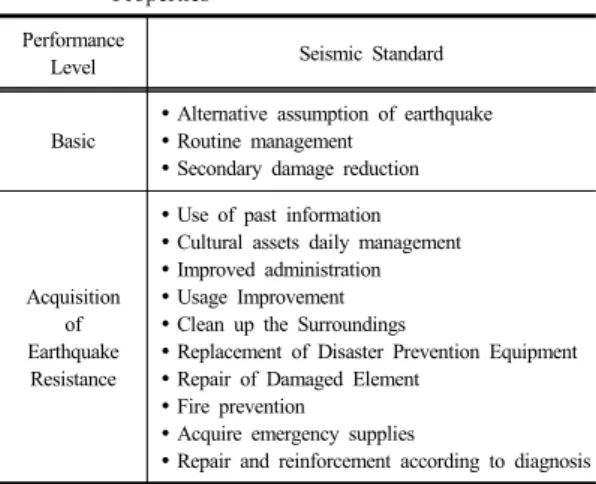
일본의 경우, Table 4.와 같이 ‘지진을 가정한 대안 마 련’과 ‘일상적인 관리’를 축으로 지진 시 발생에 따른 인 명피해를 줄이고 문화재 가치를 보존하기 위해 문화재
하고 있다. 특히 과거의 지진 정보의 활용을 통한 문화재 소유자의 일상적인 유지관리 및 보수·보강, 주변 환경의 정리, 방재설비의 보충, 화재 방지, 응급대응 물자 확보 등의 관리주체에 대한 대응을 중요시하고 있다.
Table 4. Seismic Performance Standard of Japan Cultural Properties
Performance
Level Seismic Standard
Basic
y Alternative assumption of earthquake y Routine management
y Secondary damage reduction
Acquisition of Earthquake Resistance
y Use of past information y Cultural assets daily management y Improved administration y Usage Improvement y Clean up the Surroundings
y Replacement of Disaster Prevention Equipment y Repair of Damaged Element
y Fire prevention
y Acquire emergency supplies
y Repair and reinforcement according to diagnosis
2.3 문화재의 내진진단 과정과 특징
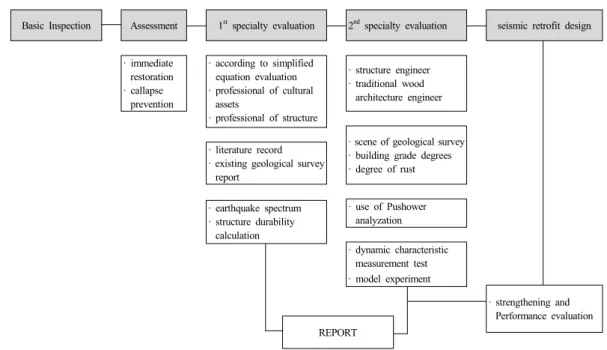
목조 문화재는 Fig 2.와 같이 기본적인 외형과 상태를 파악하는 ‘기초 진단평가’를 거쳐 보수·보강이 필요한 경 우, 정성적인 구조계산으로 내진성을 평가하는 ‘평가단 계’를 거친다. 이후 전문가의 지진 스펙트럼에 의한 건물 내력을 정밀 진단하는 ‘전문가 1차 평가’가 실시된다. 이 평가에서 일차적인 내진성능이 진단·평가되어 1차적인 보고서가 작성된다. 그러나 구체적인 평가가 필요한 경 우 건축구조전문가와 전통 목조건축 전문가의 현장 지질 조사 및 건물의 기울기, 부식정도, 동적특성 계측실험, 실험실 모형실험에 의한 ‘전문가 2차 평가’가 실시된다.
‘전문가 2차 평가’는 ‘전문가 1차 평가’의 신뢰성 증명을 중심으로 실시된다. 이후 보고서 작성과 함께 '내진보강 설계'가 실시되고 다시 성능평가가 실시된다.
일본의 목조 문화재 내진 평가는 Fig 3.과 같이 예비 내진진단에서 내진성이 필요하다고 판단되는 경우, ‘내 진 기초진단’과 ‘내진 전문진단’이 실시된다. 이 단계에 서는 내진성능의 설정과 구조조사, 구조해석을 통하여 일상적인 내진 성능 확보가 중요시되고 있다. 일본의 문화재 내진 평가는 지진 후 문화재의 보수보강을 위한 내진평가를 실시하는 우리나라와는 달리 일상적인 점 검에 의한 내진성능 평가가 상시적으로 운용되는 특징
wooden structure cultural assets
earthquake proof prenentive diagnosis
basic seismic diagonostics
seismic reinforcement consideration specialized seismic
diagonostics
scoring (60/100) structure research software element review
hardware element review
· location condition
· size or form
· frame
· roof
· preserve condition
· field
· data
· ground
· damaged
· material
· form
· property6
· utilization method change
· danger mark
· usage limits
· entrance limitations
· flee method in earthquake
· wall
· frame
· slab
· horizontal plane
· structure link
· footing
· ground
· building weight lighten
gradual reinforcement consideration Fig. 3. Seismic Diagnosis flow of Cultural Assets Japan
Basic Inspection Assessment 1
stspecialty evaluation 2
ndspecialty evaluation seismic retrofit design
· immediate restoration
· callapse prevention
· according to simplified equation evaluation
· professional of cultural assets
· professional of structure
· structure engineer
· traditional wood architecture engineer
· scene of geological survey
· building grade degrees
· degree of rust
· literature record
· existing geological survey report
· use of Pushower analyzation
· earthquake spectrum
· structure durability calculation
· dynamic characteristic measurement test
· model experiment
· strengthening and Performance evaluation REPORT
Fig. 2. Seismic Diagnosis flow of Cultural Assets Korea
이 있다.
따라서 한국과 일본의 문화재 내진 대책의 가장 큰 특 징은 한국은 지진 발생 후, 피해 문화재의 복구에 대책의 중심이 있는 반면, 일본은 지진 발생 전에 기초적인 내진 진단을 통하여 내진 보강을 단계적으로 시행하고 국가의 보조금 등을 지원하여 지진 발생 전 지진을 소프트웨어 적인 보수·보강과 하드웨어적인 보수·보강을 하고 내진 대책을 시행하고 있다.
3. 문화재 내진진단과 보수보강
3.1 내진 보수·보강의 판단
우리나라의 문화재 내진 진단에 따른 보수·보강 판단 부위는 ‘지붕 부재’와 기둥, 보, 도리 등의 ‘구조부재’,
‘기초’, ‘벽체’에 대하여 지반상태, 구조형식, 구조부재의 상태, 지붕면의 상태, 문화재 내부의 상황에 대한 부분을 평가하는 기초평가를 실시한다. 그러나 기초평가는 주관 적인 사항이 많으므로 객관적인 평가를 위하여 Table 5.
와 같이 정상(19점 이상), 양호(17~18점), 보통(14~16 점), 경계(12~13점), 위험(11점 이하)의 5단계로 점수를 부여하여 1차 평가를 실시한다. 기초점검 결과 진단이 필요한 경우(보통단계, 14~16점), 문화재 전문가의 전문 진단을 수행하도록 한다. 1차 진단이 만족하지 않는 경 우 2차 평가를 실시한다. 평과 결과는 기둥과 보의 간격 과 기초와 기둥 간격의 변화된 ‘즉시 복구’와 기둥과 보 의 접합부 손상, 구조 구성 재료의 손상의 원인이 되는
‘붕괴 방지’로 구분하여 복구와 수리가 진행된다. 이 단 계 판단을 만족하지 못하는 경우, 전문가에 의한 구조해 석 모델의 수치해석을 수행하는 2차 판정을 한다. 2차 판정을 만족하지 못하는 경우 붕괴 정도를 관찰하고 변 형에 대한 내력이 부족한 경우에는 추가적인 보수·보강 이 실시된다.
Table 5. Korea Cultural Property for Seismic Diagnosis Point
Ruling Total
Score Point
Evaluation
Results Measure
Normal Over 19 *1 *5
Good 17 ~ 18 *2 *6
Usually 14 ~ 16 *3 *7
Warning 12 ~ 13 *4 *8
Danger Under 11
*1 : Seismic Performance Retention
*2 : Seismic Performance Proper
*3 : No strain, Caution
*4 : Additional measures needed for earthquake safety
*5 : Need to secure safety
*6 : Good condition
*7 : Continuous observation
*8 : Expert consultation required
*9 : First Expert Needs Diagnosis
*10 :First Expert Group and Second Expert Diagnosis Needed
일본의 경우 Table 6.과 같이 우리나라의 내진진단 평 가점수와 유사하게 점수화하여 문화재 내진성을 평가하 여 ‘입지조건’과 ‘규모·형상’, ‘축부 구조’, ‘지붕구조’,
‘보존상태’ 5개 항목에 관하여 내진성을 판정한다. 각 항 목은 점수는 100점 만점으로 평가하며 합격점수는 60점 이상이다. 이와 같은 각 항목의 점수를 기초로 하여 3단 계로 내진성의 유무를 판단한다. 60점 이상인 제1단계는 내진성이 있다고 판단되며 내진보강을 서두를 필요는 없 지만, 반드시 전문가에 의한 내진진단을 받을 것을 권장 하는 단계이다. 60점 이하인 제2단계는 구조적인 문제가 발생하고 있으며 조기에 보수보강이 필요한 단계이다.
그리고 60점 이하이지만, 각 평가항목 중 하나가 60점
시 전문가에 의한 내진진단이 필요한 단계이다. 2011년 1,834건의 목조 문화재의 내진진단을 조사한 결과에 따 르면 60%의 목조 문화재가 제3단계로 판정된다.
Table 6. Japan Cultural Property for Seismic Diagnosis Point
Step Total
Score Point Indication Standard Step 1 Over 60 y Acquisition of seismic performance
y Expert diagnosis recommended Step 2 Under 60 y Existence of Structural Problems
y Need to repair
Step 3 Under 60 y Possible structural problems y Perform professional seismic diagnosis
3.2 부위별 보수·보강 기준
우리나라의 목조 문화재 보수보강은 건축연도에 따른 구조 부재의 노화 정도를 고려하지 않고 지진 발생 후의 붕괴 방지 및 긴급보수만을 실시하도록 ‘문화재 지진재 해 대응 등에 관한 규정’에서 정하고 있다. 그러나 일본 의 경우는 사전예방에 주안점을 둔 내진진단으로 구조해 석에 의한 판단은 한국과 유사하지만, 보수·보강 단계에 서 문화재의 환경과 보존 정도를 고려한 보수·보강이라 는 차이를 가진다.
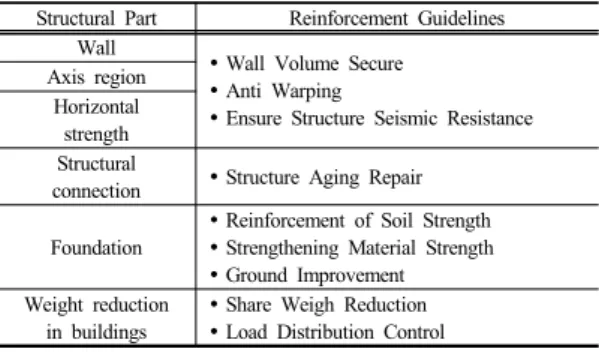
지진 발생 후 붕괴에 따른 긴급 보수를 실시하는 우리 나라와는 달리 일본은 문화재 소유자와 지자체의 ‘교육위 원회’와 문화재 보호 지도원, 건축 전문가가 참가하는 상 시적인 내진 진단을 실시하고 있다. 특히 예비진단의 필 요성에 따라 ‘내진 기초조사와 구조상태, 현장조사, 지반 조사, 재료조사, 구조실험이 실시된다. 보수·보강을 필요 한 경우 내진보강 이외의 대책과 함께 활용법을 고려한 보강법을 검토한다. 보수·보강은 ‘벽면’, ‘축부’, ‘수평강 도’, ‘부재 연결부’, ‘기초’, ‘지반’, ‘건조물의 무게 감소’
등을 중심으로 진행되며, 각 부위에 대한 보수·보강 지침 은 Table 7.과 같다. ‘벽면’, ‘축부’, ‘수평강도’는 건조물의 벽량 및 뒤틀림, 국소적인 뒤틀림을 방지하고 내진성을 확보를 목표로 하고 있다. ‘부재 연결부’는 목조 문화재의 구조적인 노후화로 인한 구조부 파손방지를 위한 보수·보 강, ‘기초 부위’는 내진성능을 향상시키는 재료 등을 사용 한 보강 및 지반내력을 확보, ‘건조물의 무게 감소’는 건 조물 무게의 대부분을 차지하는 지붕무게 감소와 건조물 의 하중 분포 등을 중심으로 보수·보강을 실시한다.
이와 같이 일본의 문화재 내진 진단에 따른 보수·보강
복구를 목적으로 하고 있으므로 명확한 지침에 의한 보 수·보강 지침 마련과 함께 구조 특성을 고려한 지침의 마 련과 다양한 보수·보강법의 개발이 필요하다.
Table 7. Seismic Reinforcement Guideline in Japan Structural Part Reinforcement Guidelines
Wall y Wall Volume Secure y Anti Warping
y Ensure Structure Seismic Resistance Axis region
Horizontal strength Structural
connection y Structure Aging Repair
Foundation
y Reinforcement of Soil Strength y Strengthening Material Strength y Ground Improvement Weight reduction
in buildings
y Share Weigh Reduction y Load Distribution Control
4. 결론
본 연구는 문화재의 내진 대책 현황을 기초로 지진에 대한 문화재의 가치 보호를 위하여 문화재 유형이 유사 한 일본과의 문화재 내진 대책 비교를 통한 국내 문화재 내진 대책의 제도적인 정착과 발전을 목적으로 하는 연 구이다.
우리나라와 일본의 문화재 내진 대책을 비교를 위하 여 국내의 문화재 내진 대책인 ‘국가지정 문화재(목조, 석조) 내진점검 및 진단 매뉴얼; 2013 문화재 내진재해 기조평가 연구’와 ‘문화재 지진재해 대응 등에 관한 규 정’를 기초로 일본의 ‘문화재 건축물 중 지진 시의 안전 성 확보에 관한 연구’, ‘중요 문화재(건조물) 내진진단 지침’, ‘중요 문화재(건조물) 내진 예비진단 실시요항’,
‘중요 문화재(건조물) 내진기초진단 실시요항’ 전체적인 문화재 내진대책과 지진 발생에 따른 대응방식, 내진 보 강을 중심으로 국내 문화재 내진 대책 개선과 내진대책 의 발전방향을 고찰하였다. 그 결과는 Table 8.과 같다.
우리나라와 일본의 목조 문화재 내진점검 및 진단은 일본의 문화재 내진 기준을 참고로 하여 일반건축물의 내진 기준을 점수화하여 진단하고 있으며, 지진 발생 후 에 전문가가 해당 문화재의 내진성을 진단하여 적절히 보수·보강한다. 그러나 한국의 내진진단에서는 문화재청 이 선정한 문화재 전문가 및 건축구조 전문가, 건축 관련 전문가에 의한 붕괴를 위험을 중심으로 하는 내진진단이 이루어지기 때문에 지진이 목조 문화재가 밀집된 정부,
지자체, 교육위원회가 관리의 중심이 되어, 지역과 피해 가 광범위한 지역에 발생한 경우, 문화재의 보수·보강이 명확히 실시될 가능성이 낮다. 일본의 경우, 2011년 동 일본 대지진 이후 소유자와 정부, 지자체, 교육위원회가 관리의 중심이 되어, ‘해리티지 매니저’와 ‘문화재 닥터 파견사업’, ‘문화재 레스큐사업’을 제도화하여 문화재의 상시진단과 응급구조, 긴급복구에 민간의 역할을 중시하 고 조속한 피해상황 파악과 복구에 대응하고 있다.
Table 8. Comparative Cultural Properties of Korea and Japan
Part Korea Japan
Type y Wooden Structure y Stone Structure
y Wooden Structure y Stone Structure Diagnosis
type
y Emergency diagnosis after earthquake
y Daily diagnosis before earthquake y Diagnosis after
earthquake
Diagnosis Flow
y Basic check y Professional
1st Assessment y Professional
2nd Assessment
y preliminary diagnosis y Foundation
Diagnosis y Reinforcement
Review y Reinforcement Assessment
Methods y Evaluation Score y Evaluation Score Reinforcement
judgment y 1~19Score y 60/100 Score
Reinforcement Part y None
y Wall y Axis Region y Horizontal Strength y Structural Connection y Foundation y Weight reduction
Grant support y None y support of national
treasury Implement
Main Agent
y Government y Local Goverment
y Owner y Government y Local Goverment
따라서 우리나라도 지진에 대한 문화재의 내진성 확 보를 위하여 지금의 지진발생 후의 문화재 응급 복구를 중심으로 하는 문화재 내진 대책 보다는 문화재의 상시 적인 점검과 보호를 위한 관리체계가 필요하다. 특히, 상 시적인 관리체계의 인적자원을 충족시키기 위하여, 문화 재의 현황에 맞는 실시점검과 표준화된 새로운 내진진단 기법의 개발, 건축 관련 민간단체를 통한 문화재 관리 전 문가 양성이 필요하다. 향후 문화재 내진 대책의 보다 빠 른 정책을 위하여 건조물 문화재의 현황을 고려한 개별 적인 내진 대책 매뉴얼이 필요하다.
현재 우리나라와 일본의 문화재 내진화 연구의 대부 분이 되고 있는 지진 시 거동해석을 기초로 상시적인 문
화재 내진 진단을 위한 기법의 개발과 면진, 제진장치 적 용을 위한 구체화된 공법의 적용, 역사적 가치 지속을 위 한 새로운 보수·보강 기법의 연구가 필요하다.
References
[1] monthly Chosun, ,Korean buildings that are not vulnerable to earthquakes, 2011,
http://www.monthly.chosun.com (accessed 2016. 09. 10) [2] Cultural Heritage Administration, Regulations on
Responding to Cultural Properties Earthquake Disaster, Cultural Heritage Administration, 2010.
[3] JeaSu Han, Chang-Jun KIm, An Experimental Study on mechanical performance of Column and Girder Joint system for analysis structural system and modernization on Traditional of Wooden Architecture (form late korean dynasty to early Chosun Dynasty era), Journal of architecture institute of korea planning & design, 25(4), pp. 195-206, 2005.
[4] JungGeun Han, SeoungKon Keon, KiKown Hong, Seismic Analysis Ground for Seismic Risk Assessment of Architectural Heritage in Seoul, J. Korean Geosynthetics Society vol. 12 no. 4, pp. 133-141, 2013.
DOI: https://doi.org/10.12814/jkgss.2013.12.4.133 [5] Eun-Jea Kim, Sung-Gul Hong, Seismic Performance of
Korean Cultural Heritage of Stone Pagoda, Journal of architecture institute of korea, AIK conference 2012, vol.
32 no. 2, pp. 373-374, 2012.
[6] SeoungBeom Kim, Moon-Seo Park, HyunSeo Lee, KwonSik Song. Propose of assessment process for management of arcitectual cultural heritage from earthquake, Journal of architecture institute of korea, vol.
33 no. 2, pp. 721-722, 2013.
[7] FUJITA Kaori, HANAZATO Toshikazu, SAKAMOTO Isao, Vibration Characteristics Of Traditional Timber Five Storied Pagodas, Earthquake of Tsukannon Pagoda, part 6, Summaries of technical papers of Annual Meeting Architectural Institute of Japan. C-1, Structures III, Timber structures steel structures steel reinforced concrete structures, pp. 539-540, 2009.
[8] MAEKAWA Hideyuki, KAWAI Naohito, UCHIDA Akito, Dynamic Characteristic of Traditional Wooden Buildings, Estimation of Load-displacement Relationship and Natural Frequencies on Houses, patr 9, Summaries of technical papers of Annual Meeting Architectural Institute of Japan, C-1, Structures III, Timber structures steel structures steel reinforced concrete structures pp.
145-146, 2000.
[9] MAEKAWA Hideyuki, UCHIDA Akihito, KAWAI Naohito, Dynamic Characteristics of Traditional Wooden Building, Micro Tremor Measurement on Horyuji Dai-kodo, part 6, Summaries of technical papers of Annual Meeting Architectural Institute of Japan. C-1, Structures III, Timber structures steel structures steel reinforced concrete structures pp. 175-176, 1996.
[10] Cultural Heritage Adminstration, State designated
guidelines; study on the cultural assets earthquake disaster baseline assessment 2013, 2013.
[11] Agency for Cultural Affairs Government of Japan, Guidelines for Ensuring Safety of Cultural Properties (bulidings) During Earthquakes, Agency for Cultural Affairs Government of Japan, p.7, 1996.
[12] Agency for Cultural Affairs Government of Japan, Guidelines for Assessing Seismic Resistance of Important Cultural Properties (Building), Agency for Cultural Affairs Government of Japan, p.8, 2012.
[13] Agency for Cultural Affairs Government of Japan, Implementation Guidelines for Preliminary Seismic Assessment of Important Cultural Properties (Buildings), Agency for Cultural Affairs Government of Japan, p.17, 2012.
[14] Agency for Cultural Affairs Government of Japan, Implementation Guidance for Basic Seismic Assessment of Important Cultural Properties (building), Agency for Cultural Affairs Government of Japan, p.39, 2012.
[14] Seongkon Jeon, Dukmoon Kim, Youngcheul Kwon. One Dimensional Seismic Response Analysis on Sub-ground of Architectural Heritage in Seoul, Korea, Journal of the korean Geoenvironmental Society, vol. 33 no. 2, pp29-36, 2013.
DOI: http://dx.doi.org/10.14481/jkges.2014.15.9.29 [15] Ministry of education, culture, sports, science and
technology japan, For ensuring safety at the time of the earthquake, such as cultural heritage buildings, http://www.mext.go.jp. (accessed 2016. 09. 25)
[16] Cultural Heritage Adminstration safety standards division, Provisions relating such cultural assets earthquake damage corresponding, Cultural Heritage Adminstration, 2010.
[17] Ministry of education, culture, sports, science and technology japan,For ensuring safety at the time of the earthquake, such as cultural heritage buildings, http://www.mext.go.jp. (accessed 2016. 09. 25)
[18] Japan Federation of construction contractors, Recommendation of seismic retrofitting, http://www.
nikkenren.com (accessed 2016. 09. 30)
홍 지 완(Ji-Wan Hong) [정회원]