Does the Gut Microbiota Regulate a Cognitive Function?
Jeonghyun Choi1,2,3†, Yunho Jin1,2,3†, Joo-Heon Kim4* and Yonggeun Hong1,2,3,5*
1Department of Physical Therapy, College of Healthcare Medical Science & Engineering, Inje University, Gimhae 50834, Korea
2Ubiquitous Healthcare & Anti-aging Research Center (u-HARC), Inje University, Gimhae 50834, Korea
3Biohealth Product Research Center (BPRC), Inje University, Gimhae 50834, Korea
4Institute of Animal Medicine, College of Veterinary Medicine, Gyeongsang National University, Jinju 52828, Korea
5Department of Rehabilitation Science, Graduate School, Inje University, Gimhae 50834, Korea Received June 9, 2019 /Revised June 22, 2019 /Accepted June 24, 2019
Cognitive decline is characterized by reduced long-/short-term memory and attention span, and in- creased depression and anxiety. Such decline is associated with various degenerative brain disorders, especially Alzheimer’s disease (AD) and Parkinson’s disease (PD). The increases in elderly populations suffering from cognitive decline create social problems and impose economic burdens, and also pose safety threats; all of these problems have been extensively researched over the past several decades.
Possible causes of cognitive decline include metabolic and hormone imbalance, infection, medication abuse, and neuronal changes associated with aging. However, no treatment for cognitive decline is available. In neurodegenerative diseases, changes in the gut microbiota and gut metabolites can alter molecular expression and neurobehavioral symptoms. Changes in the gut microbiota affect memory loss in AD via the downregulation of NMDA receptor expression and increased glutamate levels.
Furthermore, the use of probiotics resulted in neurological improvement in an AD model. PD and gut microbiota dysbiosis are linked directly. This interrelationship affected the development of con- stipation, a secondary symptom in PD. In a PD model, the administration of probiotics prevented neu- ron death by increasing butyrate levels. Dysfunction of the blood–brain barrier (BBB) has been identi- fied in AD and PD. Increased BBB permeability is also associated with gut microbiota dysbiosis, which led to the destruction of microtubules via systemic inflammation. Notably, metabolites of the gut microbiota may trigger either the development or attenuation of neurodegenerative disease. Here, we discuss the correlation between cognitive decline and the gut microbiota.
Key words : Cognitive decline, gut microbiota, gut metabolite
†Authors contributed equally.
*Corresponding authors
*Tel : +82-55-320-3681, Fax : +82-55-329-1678
*E-mail : [email protected] (Yonggeun Hong)
*Tel : +82-55-772-2344, Fax : +82-55-772-2308
*E-mail : [email protected] (Joo-Heon Kim)
This is an Open-Access article distributed under the terms of the Creative Commons Attribution Non-Commercial License (http://creativecommons.org/licenses/by-nc/3.0) which permits unrestricted non-commercial use, distribution, and reproduction in any medium, provided the original work is properly cited.
Journal of Life Science 2019 Vol. 29. No. 6. 747~753 DOI : https://doi.org/10.5352/JLS.2019.29.6.747
서 론
전 세계적으로 의학과 의술의 발전은 현저한 기대수명 연장 을 이루었지만 그에 따른 삶의 질까지 발전시키지는 못하였 다. 생명연장은 불가피한 고령화 사회로의 진입을 야기하였고 이와 관련된 다양한 신경학적 질환의 유병률이 증가되었다.
이 중 삶의 질과 가장 밀접하게 연관되어있는 대표적인 현상 은 인지기능 저하(cognitive decline)이다. 인지기능 저하는 노 화와 더불어 알츠하이머병(Alzheimer’s disease, AD), 파킨슨 병(Parkinson’s disease, PD) 등과 같은 퇴행성 뇌질환에서 동
반되는 신경학적 특징으로 삶의 질 감소와 밀접하게 관련되어 있다[8, 30, 48, 55]. 최근, 정부는 치매국가책임제를 발표하였 으며, 이에 대한 기전 규명 및 치료제 발굴을 위해 막대한 국가 예산을 투입하고 있다. 일반적으로 치료제 발굴 및 임상적용 까지는 수많은 시간과 천문학적 비용이 소요되는 것으로 알려 져 있다. 불행히도 이와 같은 각종 질환의 발생은 치료제 발굴 을 기다리지 않으며 치료제 발굴에 소요된 시간에 비례해서 인지기능 저하로 고통 받는 환자의 수는 증가할 것이다. 따라 서, 본 고찰에서는 인지기능 저하를 동반하는 퇴행성 뇌질환 과 뇌-혈관장벽(blood-brain barrier, BBB)의 구조 및 기능 유 지에 있어서 장내미생물의 역할과 치료적 잠재성에 대해 논하 며 인지기능 저하 심화를 예방할 수 있는 효율적인 방법을 최근 발표된 논문을 중심으로 제시하고자 한다.
인지기능 저하
인지기능(cognitive function)은 뇌의 가장 고차원적 기능의 하나로써 일반적으로 언어행동 및 자극에 대한 반응의 정확성 등과 연관되며 동기부여 및 감정에 영향을 미치는 중요한 요
- Review -
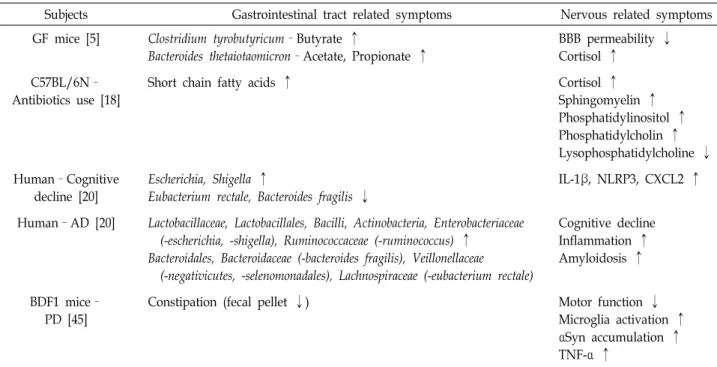
Table 1. Gastrointestinal tract and nervous system symptoms in subjects exhibiting cognitive decline
Subjects Gastrointestinal tract related symptoms Nervous related symptoms
GF mice [5] Clostridium tyrobutyricum–Butyrate ↑
Bacteroides thetaiotaomicron–Acetate, Propionate ↑
BBB permeability ↓ Cortisol ↑
C57BL/6N–
Antibiotics use [18]
Short chain fatty acids ↑ Cortisol ↑
Sphingomyelin ↑ Phosphatidylinositol ↑ Phosphatidylcholin ↑ Lysophosphatidylcholine ↓ Human–Cognitive
decline [20]
Escherichia, Shigella ↑
Eubacterium rectale, Bacteroides fragilis ↓
IL-1β, NLRP3, CXCL2 ↑
Human–AD [20] Lactobacillaceae, Lactobacillales, Bacilli, Actinobacteria, Enterobacteriaceae (-escherichia, -shigella), Ruminococcaceae (-ruminococcus) ↑
Bacteroidales, Bacteroidaceae (-bacteroides fragilis), Veillonellaceae (-negativicutes, -selenomonadales), Lachnospiraceae (-eubacterium rectale)
Cognitive decline Inflammation ↑ Amyloidosis ↑
BDF1 mice–
PD [45]
Constipation (fecal pellet ↓) Motor function ↓
Microglia activation ↑ αSyn accumulation ↑ TNF-α ↑
GF, germ free; AD, Alzheimer’s disease; PD, Parkinson’s disease; BBB, blood-brain barrier; IL, interleukin; NLRP3, NLR Family Pyrin domain containing 3; CXCL2, chemokine (C-X-C motif) ligand 2; TNF-α, tumor necrosis factor-alpha.
소이다[42]. 인지기능에는 장・단기 기억 및 작업 기억, 불안, 우울 등 다양한 요소가 포함되어 있으며[14, 28], 뇌의 기능을 평가하는 표현적 요소로 고려될 수 있다. 인지기능 저하는 기 억력 저하를 동반하며 다양한 뇌질환에 따른 일차 혹은 이차 적 증상으로 나타난다. 또한 인지기능 저하는 본인을 포함한 가족 모두의 삶의 질 감소에 영향을 미치며 이를 관리하기 위한 경제적 부담 또한 현저한 증가추세에 있다.
인지기능 저하 지연을 위한 장내미생물의 잠재성
장내세균총(microbiota)은 사람 신체를 구성하는 세포수의 10배, 유전자의 100배 수준이라고 알려져 있으며 태아 발달시 기부터 공존한다. 특히, 인체 기관 중 대장에 가장 많은 수(1014 개)의 미생물이 존재한다고 보고되었으며[47], 이를 장내미생 물(gut microbiota)이라고 한다. 일반적으로 장내미생물은 출 생과 동시에 정착이 시작되며 마이크로바이옴 샤워(microbi- ome shower)를 통해 이루어져 태아기를 포함하지 않는다[6, 38]. 하지만 태아 발달과정 중 모체에서 생성된 장내대사산물 이 태반을 통해 태아에 전달되기 때문에 실제로는 태아기부터 장내미생물과 공존한다고 할 수 있다[1, 13, 19, 32]. 인간의 삶과 공존하는 장내미생물은 고령화에 따라 종 다양성이 소실 되며 일차적으로 소화력 저하 등의 장관계 문제를 일으킨다 [35, 46, 57]. 최근 장내미생물 및 이들의 대사산물이 뇌에 영향 을 미친다는 다양한 연구결과가 보고되었으며 이러한 상관관 계를 장-뇌 축(gut-brain axis)으로 설명하고 있다[12, 15, 41].
Table 1에는 대상자의 질환에 따른 장관계 및 신경계 증상이 기술되어 있다. Table에서 나타난 것과 같이 장-뇌 축의 관점 에서 장내미생물과 뇌질환 사이의 병태생리학적 연관성에 대 한 과학적 접근이 이루어지고 있을 뿐만 아니라 장내미생물이 이들 질병의 치료적 대안으로 고려되고 있다[43, 51].
퇴행성 뇌질환과 장내미생물
알츠하이머병
알츠하이머병은 광범위한 병의 원인과 다양한 병태생리학 적 기전을 바탕으로 발생하는 퇴행성 뇌질환 중 하나로 신경 염증을 통한 신경세포의 소실과 시냅스 연결 감소 및 지속적 인 인지기능 저하를 특징으로 한다[31, 52]. 알츠하이머병의 잘 알려진 병리학적 소견으로는 비정상적인 베타아밀로이드 (β-Amyloid, Aβ)와 신경원매듭섬유(neurofibrillary tangles) 가 뇌의 뉴런 내에 다량 침착된 소견을 나타난다[7, 31, 34].
알츠하이머병 환자에서 전염증성 사이토카인(proinflamma- tory cytokines)인 종양괴사인자 알파(TNF-α)와 인터루킨 6 (IL-6)의 분비량이 증가되어 나타나는 뇌의 신경염증은 다양한 병리학적 상황에서 발생할 수 있으며 특이적으로 베타아밀로 이드의 침착과 미세아교세포(microglia)의 활성을 야기하는 것으로 알려져 있다[3, 37, 53].
치매(dementia) 환자에서의 장관계 특징은 Bacteroidetes의 현저한 감소 소견을 나타내며[44], 인지기능장애 환자에게 프 로바이오틱스를 12주간 제공하였을 때 인지기능의 유의적인
향상이 보고되었다[2]. 반면, Franceschi 등[17]의 보고에 따르 면 헬리코박터균(Helicobacter pylori) 감염은 알츠하이머병 환 자에서 장내미생물의 불균형을 야기하며 대사과정 중 생긴 암모니아는 뇌-혈관장벽을 투과함으로써 신경세포에 대한 독 성을 일으켜 신경세포 사멸 및 인지기능 저하를 유발하게 된 다.
이와 유사하게 항생제 또한 사람과 동물에서 장내미생물의 불균형을 초래함으로써 뇌의 기능적 변화를 유도할 수 있다.
일반적으로 항생제의 과도한 사용은 불안, 우울 등 정신의과 학적 문제를 야기할 수 있다고 보고되었으며, 알츠하이머병 동물모델에서 신경염증의 증가를 초래하는 것으로 보고되었 다[18, 28, 40]. 특히, 인지기능 저하의 범주에 포함되는 불안, 우울 등의 정신의과학적 문제는 스트레스호르몬으로 알려진 코티솔의 양적 증가를 초래하며 점차적으로 기억력 소실과 해마 내 뇌유래신경성장인자(BDNF)의 발현 감소를 야기하게 된다[50, 54]. 인지기능이 저하된 뇌 환경을 가진 실험동물에 Lactobacillus가 포함된 프로바이오틱스를 투여하였을 때 비정 상적인 신경행동이 감소되었다고 보고되었다[54].
알츠하이머병 동물모델의 뇌에서 나타나는 해마 내 NMDA 수용체 2B (NR2B) 소실의 특징은 무균 마우스(germ-free, GF) 에서도 확인되었으며, Tau 단백질의 침착이 NMDA 수용체를 억제함으로써 신호 변환기 및 전사 활성제-1(STAT-1) 의존적 기억소실을 야기한다고 보고되었다[36, 39]. 또한, 알츠하이머 병 환자에서 증가한 글루탐산(glutamate)은 현상 자체로의 흥 분 독성뿐만 아니라 NMDA 수용체의 과활성을 통해 학습, 기억, 장기기억 기전의 소실을 야기한다고 보고하였으며[20], 흥미롭게도 비정상적인 장내미생물 군집은 글루탐산 과합성 을 유발하는 것으로 보고되었다[4].
알츠하이머병의 인지기능 저하와 영양학적 상관관계에 대 한 연구가 보고된 점으로 미루어 보아[33] 장내미생물은 알츠 하이머병의 인지기능 저하와 밀접하게 관련되어 있으며 적정 한 상태의 장내미생물 군집 유지를 통해 인지기능 저하의 진 행 및 심화를 예방할 수 있을 것으로 사료된다.
파킨슨병
파킨슨병은 진전, 근육 강직, 운동완서, 보행장애 등 운동장 애를 동반한 두 번째로 발병률이 높은 퇴행성 뇌질환으로 대 부분 원인을 알 수 없는 특발성(idiopathic) 파킨슨병으로 불린 다[29, 45]. 파킨슨병은 비정상적인 알파시누클레인(α-synu- clein, αSyn)의 침착 및 미세아교세포의 활성이 나타나며, 흑색 질선조체 경로(nigrostriatal pathway)와 주변 뇌영역의 광범 위한 신경세포 소실을 통한 인지기능 저하 등의 신경학적 특 징을 보인다[26]. 특히, 파킨슨병 환자에서 합병증으로 알려져 있는 변비는 장관계적 특징으로 구분할 수 있으며 비정상적인 장내미생물 조성을 보인다[45].
또한, 파킨슨병 환자 사후에 뇌에서 분리한 3종의 알파시누
클레인(monomer, oligomer, fibril form)을 설치류의 위와 십 이지장에 주입하였을 때, 미주신경을 통해 뇌로 역행성수송 (retrograde transportation)하는 것으로 보고되었다[25]. 뿐만 아니라, 파킨슨병 설치류 모델에 항생제를 처리하였을 때, 파 킨슨병 증상이 호전되었으며 파킨슨병 무균 설치류 동물모델 에 장내미생물을 군집화 하였을 때, 미세아교세포 활성을 통 한 파킨슨병 증상이 가속화되는 특징을 보였다. 또한, 장내대 사산물인 단쇄지방산(short chain fatty acid, SCFA)을 처리하 였을 때 운동장애가 심화되었다[45]. 미세아교세포의 활성 증 가 및 파킨슨병 증상 심화는 신경세포 사멸을 통한 인지기능 저하에 관여한다[21].
Srivastav 등[49]은 1-methyl-4-phenyl-1,2,3,6-tetrahydropy- ridine (MPTP) 주입을 통해 구축한 파킨슨병 동물모델에서 Lactobacillus rhamnosus GG, Bifidobacterium animalis lactis, Lactobacillus acidophilus가 포함된 프로바이오틱스를 주입하였 을 때, 단쇄지방산 중 하나인 뷰티르산(butyrate)의 생성이 증 가되었으며, 이는 선조체에서 모노아민 산화효소 B(mono- amine oxidase B, MAO B) 및 MPTP의 대사산물인 methyl-4- phenylpyrimidinium (MPP+)의 감소를 통해 도파민성 신경 세포(dopaminergic neuron)를 보호하는 것으로 보고되었다.
이는 광범위한 신경세포 소실 억제를 통해 인지기능 저하 또 한 억제할 수 있을 것으로 사료된다. 이러한 내용을 요약하면 장내미생물이 형성한 대사산물은 미주신경을 통해 뇌로 전달 될 수 있으며 파킨슨병의 증상 악화 및 개선에 관여할 수 있을 것으로 사료된다.
장내미생물과 뇌-혈관장벽
뇌-혈관장벽은 혈관과 뇌 실질 사이에 존재하며 혈관을 통 해 뇌로 함입되는 여러 물질이 통과하는 관문역할을 통해 뇌의 항상성 조절에 관여한다[42]. 뇌-혈관장벽의 투과성은 Clau- din-5, Occludin과 같은 단백질에 의해 조절되며 이의 발현 감소는 투과성 증가를 통해 뇌 실질 내 독소의 침입을 야기한 다[5]. 뇌-혈관장벽의 구조를 유지하는 단백질 외 부착 단백질 (adherence proteins), 기저판(basal lamina), 세포외기질(ex- tracellular matrix)의 소실 또한 뇌-혈관장벽 투과성 증가를 야기하며, 이러한 경우 점차적으로 인지기능 저하 및 치매가 야기될 수 있는 것으로 보고되었다[16, 27].
알츠하이머병과 파킨슨병 모델에서 뇌-혈관장벽 유지 단백 질의 발현 감소 및 뇌-혈관장벽의 기능이상이 확인되었으며[9, 23], 이는 장내미생물 불균형과도 밀접한 관련이 있다. 장내미 생물 불균형을 통해 생성된 비정상적인 대사산물은 국소적/
전신적 염증을 유발하며[24], Janus kinase (JAK)-STAT 신호 전달경로를 통한 전염증성 사이토카인의 일종인 IL-1β, IL-6, TNF-α의 증가가 뇌의 미세소관을 파괴함으로써 뇌-혈관장벽 투과성 증가에 영향을 미친다[10, 22, 56].
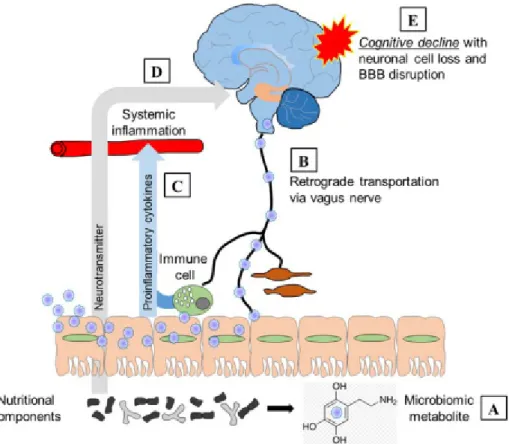
Fig. 1. Involvement of the gut–brain axis in cognitive decline. A. Gut microbiotic metabolites may vary by microbiotic biogeography.
Imbalances in metabolites such as short-chain fatty acids affect the brain in various ways. B. Gut metabolites are retrogradely transported to the brain via the vagus nerve. C. Gut microbiotic dysbiosis causes pre-inflammatory cytokines to diffuse into the bloodstream, triggering systemic inflammation. D. Increases in the levels of neurotransmitters (including glutamate) caused by the establishment of certain gut microbiotic clusters also affect the brain after the neurotransmitters diffuse into the bloodstream. E. Gut microbiotic dysbiosis caused by both brain disease and the medicines used to treat such disease is followed by neural cell loss and the blood–brain barrier, ultimately triggering cognitive decline.
따라서, 장내미생물 불균형은 다양한 염증성 인자의 활성을 통해 뇌-혈관장벽 구조 및 투과성을 변화시켜 뇌 실질조직을 파괴하고 이는 인지기능 저하에 영향을 미칠 것으로 사료된다.
결 론
인구의 고령화는 역으로 거슬러 갈 수 없는 현실이며 의료, 경제 등 다양한 분야에서 사회적 문제를 야기하는 중요한 인 자임과 동시에 반드시 해결해야 하는 미해결의 당면과제이다.
특히, 고령화에 따른 퇴행성 뇌 질환으로 인한 문제는 현 세대 뿐만 아니라 미래세대에도 적잖은 경제적 부담과 삶의 질 저 하를 초래하는 중대한 문제로 인식된다. 이에 따라 본 연구에 서는 인지기능 저하에 대한 장내미생물학적 접근을 고찰하였 다. 현재, 장내미생물 조절을 통한 각종 질환의 증상 완화에 대한 분자생물학적, 조직학적, 전기생리학적 연구결과는 보고 되고 있지만 장내미생물 변화가 인지기능에 미치는 영향에 대한 연구는 여전히 시작단계에 머물러 있다. 본 논문에서는 장내미생물과 이들의 대사산물이 뇌에 미치는 영향을 신경학
적 측면에서 고찰하였다. 프로바이오틱스 투여를 통한 유익균 군집화 및 장내미생물 불균형 해소가 국소적・전신적 염증 감 소 및 신경전달물질 생합성 불균형의 억제와 신경세포 손상/
사멸 감소를 비롯한 뇌-혈관장벽의 완전성 보존에 영향을 미 침으로써 인지기능 저하 진행과 심화를 극복할 수 있는 지속가 능하고 실현 가능한 치료적 대안임을 제안하고자 한다(Fig. 1).
감사의 글
본 연구는 한국연구재단(2017R1D1A1B03029565)과 한국생 명공학연구원(KGM4611821)의 지원에 의해 수행 되었으며, 이에 감사드립니다.
References
1. Aagaard, K., Ma, J., Antony, K. M., Ganu, R., Petrosino, J.
and Versalovic, J. 2014. The placenta harbors a unique microbiome. Sci. Transl. Med. 6, 237ra65.
2. Akbari, E., Asemi, Z., Daneshvar, Kakhaki, R., Bahmani, F.,
Kouchaki, E., Tamtaji, O. R., Hamidi, G. A. and Salami, M.
2016. Effect of probiotic supplementation on cognitive func- tion and metabolic status in Alzheimer’s disease: A random- ized, double-blind and controlled trial. Front. Aging. Neuro- sci. 8, 256.
3. Bagyinszky, E., Giau, V. V., Shim, K., Suk, K., An, S. S. A.
and Kim, S. 2017. Role of inflammatory molecules in the Alzheimer’s disease progression and diagnosis. J. Neurol.
Sci. 376, 242-254.
4. Baj, A., Moro, E., Bistoletti, M., Orlandi, V., Crema, F. and Giaroni, C. 2019. Glutamatergic signaling along the micro- biota-gut-brain axis. Int. J. Mol. Sci. 20, E1482.
5. Braniste, V., Al-Asmakh, M., Kowal, C., Anuar, F., Abbas- pour, A., Tóth, M., Korecka, A., Bakocevic, N., Ng, L. G., Kundu, P., Gulyás, B., Halldin, C., Hultenby, K., Nilsson, H., Hebert, H., Volpe, B. T., Diamond, B. and Pettersson, S. 2014. The gut microbiota influences blood-brain barrier permeability in mice. Sci. Transl. Med. 6, 263ra158.
6. Browne, H. P., Veville, B. A., Forster, S. C. and Lawley, T.
D. 2017. Transmission of the gut microbiota: spreading of health. Nat. Rev. Microbiol. 15, 531-543.
7. Cai, H. Y., Yang, J. T., Wang, Z. J., Zhang, J., Yang, W., Wu, M. N. and Qi, J. S. 2018. Lixisenatide reduces amyloid plaques, neurofibrillary tangles and neuroinflammation in an APP/PS1/tau mouse model of Alzheimer’s disease.
Biochem. Biophys. Res. Commun. 495, 1034-1040.
8. Carney, R. S. E. D. 2019. Estrogen-dominant ovarian cycle stages are associated with neural network dysfunction and cognitive and behavioral deficits in the hAPP-J20 mouse model of Alzheimer’s disease. eNeuro 6, e0179.
9. Chen, W. W., Zhang, X. and Huang, W. J. 2016. Role of neuroinflammation in neurodegenerative disease (Review).
Mol. Med. Rep. 13, 3391-3396.
10. Chio, C. C., Chang, C. H., Wang, C. C., Cheong, C. U., Chao, C. M., Cheng, B. C., Yang, C. Z. and Chang, C. P. 2013.
Etanercept attenuates traumatic brain injury in rats by re- ducing early microglial expression of tumor necrosis factor- α. BMC Neurosci. 14, 33.
11. Choi, J., Hur, T. Y. and Hong, Y. 2018. Influence of altered gut microbiota composition on aging and aging-related diseases. J. Lifestyle Med. 8, 1-7.
12. Choi, J., Lee, S., Won, J., Jin, Y., Hong, Y., Hur, T. Y., Kim, J. H., Lee, S. R. and Hong, Y. 2018. Pathophysiological and neurobehavioral characteristics of a propionic acid-medi- ated autism-like rat model. PLoS One 13, e0192925.
13. Collado, M. C., Rautava, S., Aakko, J., Isolauri, E. and Salmi- nen, S. 2016. Human gut colonization may be initiated in utero by distinct microbial communities in the placenta and amniotic fluid. Sci. Rep. 6, 23129.
14. Dissanayaka, N. N. W., Lawson, R. A., Yarnall, A. J., Duncan, G. W., Breen, D. P., Khoo, T. K., Barker, R. A., Burn, D. J. and ICICLE-PD study group. 2017. Anxiety is associated with cognitive impairment in newly-diagnosed Parkinson’s disease. Parkinsonism Relat. Disord. 36, 63-68.
15. Dodiya, H. B., Forsyth, C. B., Voigt, R. M., Engen, P. A., Patel, J., Shaikh, M., Green, S. J., Nagib, A., Roy, A., Kor-
dower, J. H, Pahan, K., Shannon, K. M. and Keshavarzian, A. 2018. Chronic stress-induced gut dysfunction exacerbates Parkinson’s disease phenotype and pathology in a rotenone- induced mouse model of Parkinson’s disease. Neurobiol. Dis.
S0969-0061, 30768-X.
16. Erdő, F., Denes, L. and de Lange, E. 2017. Age-associated physiological and pathological changes at the blood-brain barrier: A review. J. Cereb. Blood Flow Metab. 37, 4-24.
17. Franceschi, F., Ojetti, V., Candelli, M., Covino, M., Cardone, S., Potenza, A., Simeoni, B., Gabrielli, M., Sabia, L., Gasbarrini, G., Lopetuso, L., Scaldaferri, F., Rossini, P. M. and Gasbarri- ni, A. 2019. Microbes and Alzheimer’s disease: lessons from H. pylori and gut microbiota. Eur. Rev. Med. Pharmacol. Sci.
23, 426-430.
18. Fröhlich, E. E., Farzi, A., Mayerhofer, R., Reichmann, F., Jačan, A., Wagner, B., Zinser, E., Bordag, N., Magnes, C., Fröhlich, E., Kashoferm, K., Gorkiewicz, G. and Holzer, P.
2016. Cognitive impairment by antibiotic-induced gut dys- biosis: Analysis of gut microbiota-brain communication.
Brain Behav. Immun. 56, 140-155.
19. Funkhouser, L. J. and Bordenstein, S. R. 2013. Mom knows best: the universality of maternal microbial transmission.
PLoS Biol. 11, e1001631.
20. Garcez, M. L., Jacobs, K. R. and Guillemin, G. J. 2019.
Microbiota alterations in Alzheimer’s disease: Involvement of the kynurenine pathway and inflammation. Neurotox. Res.
[Epub ahead of print]
21. Gefen, T., Kim, G., Bolbolan, K., Geoly, A., Ohm, D., Obou- diyat, C., Shahidehpour, R., Rademaker, A., Weintraub, S., Bigio, E. H., Mesulam, M. M., Rogalski, E. and Geula, C.
2019. Activated microglia in cortical white matter across cognitive aging trajectories. Front. Aging Neurosci. 11, 94.
22. Ghosh, S., Wu, M. D., Shaftel, S. S., Kyrkanides, S., LaFerla, F. M., Olschowka, J. A. and O’Banion, M. K. 2013. Sustained interleukin-1β overexpression exacerbates tau pathology de- spite reduced amyloid burden in an Alzheimer’s mouse model. J. Neurosci. 33, 5053-5064.
23. Gray, M. T. and Woulfe, J. M. 2015. Striatal blood-brain bar- rier permeability in Parkinson’s disease. J. Cereb. Blood Flow Metab. 35, 747-750.
24. Ho, J. T., Chan, G. C. and Li, J. C. 2015. Systemic effects of gut microbiota and its relationship with disease and modulation. BMC Immunol. 16, 21.
25. Holmgvist, S., Chutna, O., Bousset, L., Aldrin-Kirk, P., Li, W., Björklund, T., Wang, Z. Y., Roybon, L., Melki, R. and Li, J. Y. 2014. Direct evidence of Parkinson pathology spread from the gastrointestinal tract to the brain in rats. Acta Neuropathol. 128, 805-820.
26. Ho, P. W., Leung, C. T., Liu, H., Pang, S. Y., Lam, C. S., Xian, J., Li, L., Kung, M. H., Ramsden, D. B. and Ho, S.
L. 2019. Age-dependent accumulation of oligomeric SNCA/
α-synuclein from impaired degradation in mutant LRRK2 knockin mouse model of Parkinson disease: role for ther- apeutic activation of chaperone-mediated autophagy (CMA).
Autophagy 14, 1-24.
27. Hoyles, L., Snelling, T., Umlai, U. K., Nicholson, J. K.,
Carding, S. R., Glen, R. C. and McArthur, S. 2018. Microbi- ome-host systems interaction: protective effects of propio- nate upon the blood-brain barrier. Microbiome 6, 55.
28. Ianiro, G., Tilg, H. and Gasbarrini, A. 2016. Antibiotics a s deep modulators of gut microbiota: between good and evil. Gut 65, 1906-1915.
29. Isaacson, S. H., Boroojerdi, B., Waln, O., McGraw, M., Kreitzman, D. L., Klos, K., Revilla, F. J., Heldman, D., Phillips, M., Terricabras, D., Markowitz, M., Woltering, F., Carson, S. and Truong, D. 2019. Effect of using a wearable device on clinical decision-making and motor symptoms in patients with Parkinson’s disease starting transdermal roti- gotine patch: A pilot study. Parkinsonism Relat. Disord.
S1353-8020, 30025-2.
30. Iyer, K. K., Au, T. R., Angwin, A. J., Copland, D. A. and Dissanayaka, N. N. W. 2019. Source activity during emotion processing and its relationship to cognitive impairment in Parkinson’s disease. J. Affect. Disord. 253, 327-335.
31. Jagust, W. 2018. Imaging the evolution and pathophysiology of Alzheimer’s disease. Nat. Rev. Neurosci. 19, 687-700.
32. Jin, Y., Choi, J., Won, J. and Hong, Y. 2018. The relationship between autism spectrum disorder and melatonin during fetal development. Molecules 23, E198.
33. Kakutani, S., Watanabe, H. and Murayama, N. 2019. Green tea intake and risks for dementia, Alzheimer’s disease, mild cognitive impairment, and cognitive impairment: A sys- temic review. Nutrients 11, E1165.
34. Kashyap, G., Bapat, D., Das, D., Gowaikar, R., Amritkar, R. E., Rangarajan, G., Ravindranath, V. and Ambika, G. 2019.
Synapse loss and progress of Alzheimer’s disease –A net- work model. Sci. Rep. 9, 6555.
35. Kumar, M., Babaei, P. and Nielsen, J. 2016. Human gut mi- crobiota and healthy aging: Recent developments and future prospective. Nutr. Healthy Aging 4, 3-16.
36. Li, X. J., Hong, X. Y., Wang, Y. L., Zhang, S. J., Zhang, J.
F., Li, X. C., Liu, Y. C., Sun, D. S., Feng, Q., Ye, J. W., Gao, Y., Ke, D., Wang, Q., Li, H. L., Ye, K., Liu, G. P. and Wang, J. Z. 2019. Tau accumulation triggers STAT-1-dependent memory deficits by suppressing NMDA receptor expression.
EMBO Rep. e47202.
37. Minter, M. R., Taylor, J. M. and Crack, P. J. 2016. The con- tribution of neuroinflammation of amyloid toxicity in Alzheimer’s disease. J. Neurochem. 136, 457-474.
38. Mutic, A. D., Jordan, S., Edwards, S. M., Ferranti, E. P., Thul, T. A. and Yang, I. 2017. The postpartum maternal and new- born microbiomes. MCN Am. J. Matern. Child Nurs. 42, 326- 331.
39. Neufeld, K. M., Kang, N., Bienenstock, J. and Foster, J. A.
2011. Reduced anxiety-like behavior and central neuro- chemical change in germ-free mice. Neurogastroenterol. Motil.
23, 255-264.
40. Neuman, H., Forsythe, P., Uzan, A., Avni, O. and Koren, O. 2018. Antibiotics in early life: dysbiosis and the damage done. FEMS Microbiol. Rev. 42, 489-499.
41. Perez-Pardo, P., Dodiya, H. B., Engen, P. A., Forsyth, C.
B., Huschens, A. M., Shaikh, M., Voigt, R. M., Nagib, A.,
Green, S. J., Kordower, J. H., Shannon, K. M., Garssen, J., Kraneveld, A. D. and Keshavarzian, A. 2019. Role of TLR4 in the gut-brain axis in Parkinson’s disease: a translational study from men to mice. Gut 68, 829-843.
42. Robbins, T. W. 2011. Cognition: the ultimate brain function.
Neuropsychopharmacology 36, 1-2.
43. Romo-Araiza, A., Gutiérrez-Salmeán, G., Galván, E. J., Hernández-Frausto, M., Herrera-López, G., Romo-Parra, H., García-Contreras, V., Fernández-Presas, A. M., Jasso-Chávez, R., Borlongan, C. V. and Ibarra, A. 2018. Probiotics and pre- biotics as a therapeutic strategy to improve memory on a model of middle-aged rats. Front. Aging Neurosci. 10, 416.
44. Saji, N., Niida, S., Murotani, K., Hisada, T., Tsuduki, T., Sugimoto, T., Kimura, A., Toba, K. and Sakurai, T. 2019.
Analysis of the relationship between the gut microbiome and dementia: a cross-sectional study conducted in Japan.
Sci. Rep. 9, 1008.
45. Sampson, T. R., Debelius, J. W., Thron, T., Janssen, S., Shastri, G. G., Ilhan, Z. E., Challis, C., Schretter, C. E., Rocha, S., Gradinaru, V., Chesselet, M. F., Keshavarzian, A., Shannon, K. M., Krajmalnik-Brown, R., Wittung-Stafshede, P., Knight, R. and Mazmanian, S. K. 2016. Gut microbiota regulate mo- tor deficits and neuroinflammation in a model of Parkin- son’s disease. Cell 167, 1469-1480.
46. Saraswati, S. and Sitaraman, R. 2015. Aging and the human gut microbiota-from correlation to causality. Front. Microbiol.
5, 764.
47. Sender, R., Fuchs, S. and Milo, R. 2016. Revised estimates for the number of human and bacteria cells in the body.
PLoS Biol. 14, e1002533.
48. Shi, Y., Lu, X., Zhang, L., Shu, H., Gu, L., Wang, Z., Gao, L., Zhu, J., Zhang, H., Zhou, D. and Zhang, Z. J. 2019. Potential value of plasma Amyloid-β, total tau and neurofilament light for identification of early Alzheimer’s disease. ACS Chem. Neurosci. [Epub ahead of print].
49. Srivastav, S., Neupane, S., Bhurtel, S., Katila, N., Maharjan, S., Choi, H., Hong, J. T. and Choi, D. Y. 2019. Probiotics mixture increases butyrate, and subsequently rescues the nigral dopaminergic neurons from MPTP and rotenone-in- duced neurotoxicity. J. Nutr. Biochem. 69, 73-86.
50. Sudo, N., Chida, Y., Aiba, Y., Sonoda, J., Oyama, N., Yu, X. N., Kubo, C. and Koga, Y. 2004. Postnatal microbial colo- nization programs the hypothalamic-pituitary-adrenal sys- tem for stress response in mice. J. Physiol. 558, 263-275.
51. Tian, P., Wang, G., Zhao, J., Zhang, H. and Chen, W. 2019.
Bifidobacterium with the role of 5-hydroxytryptophan syn- thesis regulation alleviates the symptom of depression and related microbiota dysbiosis. J. Nutr. Biochem. 66, 43-51.
52. Viña, J. and Sanz-Ros, J. 2018. Alzheimer’s disease: Only prevention makes sense. Eur. J. Clin. Invest. 48, e13005.
53. Wang, M. M., Miao, D., Cao, X. P., Tan, L. and Tan, L. 2018.
Innate immune activation in Alzheimer’s disease. Ann.
Transl. Med. 6, 177.
54. Wang, T., Hu, X., Liang, S., Li, W., Wu, X., Wang, L. and Jin, F. 2015. Lactobacillus fermentum NS9 restores the anti- biotic induced physiological and psychological abnormal-
초록:장내미생물과 인지기능은 서로 연관되어 있는가?
최정현1,2,3†․진윤호1,2,3†․김주헌4*․홍용근1,2,3,5*
(1인제대학교 보건의료융합대학 물리치료학과, 2인제대학교 u-항노화헬스케어연구소(u-HARC), 3인제대학교 바이
오헬스소재연구센터(BPRC), 4경상대학교 수의과대학 동물의학연구소, 5인제대학교 대학원 재활과학과)
인지기능 저하는 장・단기 기억 및 주의력 소실과 우울증, 불안증의 증가를 특징으로 한다. 또한, 인지기능 저하 는 알츠하이머, 파킨슨병과 같은 다양한 퇴행성 뇌질환과 연관되어 있다. 경제적 부담, 안전 위협을 포함하는 인지 기능 저하와 관련된 사회적 문제는 고령화가 진행됨에 따라 증가하고 있다. 이러한 문제를 해결하기 위해 전 세계 적으로 많은 연구가 수행되고 있다. 일반적으로 인지기능 저하를 유발할 가능성이 있는 원인으로는 노화에 따른 대사 및 호르몬 불균형, 감염, 약물 오남용, 신경세포 손상 등이 알려져 있지만 다양한 요인이 관련되어 있으므로 원인 규명이 어려운 한계점 때문에 뚜렷한 치료전략 수립이 어려운 실정이다. 최근의 연구에 따르면 퇴행성 뇌질 환 발생의 원인과 이에 대한 치료전략 수립에 있어서 장내미생물의 역할이 중요하게 제시되고 있다. 특히, 알츠하 이머병과 파킨슨병에서 장내미생물 조성의 변화 및 이들에 의한 대사산물에 따른 분자생물학적, 신경행동학적 증상의 변화가 밝혀졌다. 알츠하이머병 동물모델에서 장내미생물의 변화는 NMDA 수용체와 글루탐산의 변화를 통해 기억능력 소실을 야기하였다. 반면, 알츠하이머병 동물모델에 프로바이오틱스를 투여하였을 때, 비정상적인 신경학적 행동이 유의적으로 감소하였다. 파킨슨병은 장내미생물 군집의 변화와 직접적인 연관성을 보였으며 이 는 이차적 증상인 변비 발생에도 영향을 미치는 것으로 나타났다. 파킨슨병 동물모델에 투여한 프로바이오틱스는 단쇄지방산 중 하나인 뷰티르산 증가를 통한 신경세포 보호효과를 나타내었다. 또한, 알츠하이머병과 파킨슨병에 서 뇌-혈관장벽의 기능이상이 밝혀졌으며, 뇌-혈관장벽 변화는 장내미생물 불균형에 의한 전신성 염증에 따른 미 세소관의 파괴 및 투과성 증가와 연관된 것으로 나타났다. 더불어 장내미생물 대사과정에서 생성된 대사산물은 퇴행성 뇌질환의 발생과 치료에 영향을 미친다. 본 논문에서는 인지기능 저하의 진행을 지연시킴으로써 심화를 방지할 수 있는 효과적인 접근법을 제시하기 위하여 인지기능 저하와 장내미생물의 연관성을 심층적으로 고찰하 여 치료적 대안으로 제시하고자 한다.
ities in rat. Benef. Microbes 6, 707-717.
55. Weil, R. S., Winston, J. S., Leyland, L. A., Pappa, K., Mahmood, R. B., Morris, H. R. and Rees, G. 2019. Neural correlates of early cognitive dysfunction in Parkinson’s disease. Ann. Clin. Transl. Neurol. 6, 902-912.
56. Welcome, M. O. 2019. Gut microbiota disorder, gut epi-
thelial and blood-brain barrier dysfunctions in etiopatho- genesis of dementia: Molecular mechanisms and signaling pathways. Neuromolecular Med. [Epub ahead of print].
57. Woodmansey, E. J. 2007. Intestinal bacteria and ageing. J.
Appl. Microbiol. 102, 1178-1186.