A descriptive statistical analysis of inpatients with lumbar disc herniation at a Korean medicine hospital
in 2014
Jeong Kyo Jeong, Myung Kwan Kim, Gi Nam Park, Jung Ho Kim and Young Il Kim
*Dept. of Acupuncture & Moxibustion, College of Korean Medicine, Daejeon University
[Abstract]
Objectives : This is a retrospective statistical analysis of the demographic and therapeutic char- acteristics influencing the continued improvement of symptoms in patients treated in 2014 for herniated lumbar discs at a Korean medicine hospital; thereby, providing clinical data to further improve medical services of Korean medicine.
Methods : We investigated the demographic and therapeutic variables of all patients who were diagnosed with a herniated lumbar intervertebral disc and were hospitalized for more than 1 night at Dunsan Korean medicine hospital from January 1, 2014, to December 31, 2014. IBM SPSS 21.0 was used to conduct a logistic multiple regression analysis and a covariance analy- sis (ANCOVA) of the demographic and therapeutic variables collected from the electronic medical records and telephone surveys.
Results : 1. A longer duration of hospitalization was significantly better for the maintenance of pain relief or a decrease in the pain after discharge.
2. Younger patients were significantly less likely to be treated with a Western medical treatment after discharge.
3. Most of the demographic and therapeutic variables were not statistically significant in regards to treatment for lower back pain since discharge.
Conclusion : Some of the demographic and therapeutic variables had a positive effect on the prognosis at one year or greater in patients who received integrative Korean medical treatment for lumbar disc herniation. Continued and systematic research will be needed.
✱ Corresponding author : Department of Acupuncture & Moxibustion Medicine, Dunsan Korean medicine Hospital of Daejeon University, 75, Daedeok-daero, 176 Beon-gil, Seo-gu, Daejeon,
Republic of Korea
Tel : +82-42-470-9137 E-mail : [email protected] Key words :
Herniation of lumbar disc;
Korean medical
treatment;
Retrospective
statistical analysis;
Logistic multiple
regression analysis;
Analysis of
covariance (ANCOVA)
Received : 2017. 01. 11.
Revised : 2017. 02. 27.
Accepted : 2017. 03. 03.
On-line : 2017. 05. 20.
This is an Open-Access article distributed under the terms of the Creative Commons Attribution Non-Commercial License (http://creativecommons.org/licenses/by- nc/3.0) which permits unrestricted non-commercial use, distribution, and reproduction in any medium, provided the original work is properly cited.
The Acupuncture is the Journal of Korean Acupuncture & Moxibustion Medicine Society. (http://www.TheAcupuncture.org)
Copyright 2017 KAMMS. Korean Acupuncture & Moxibustion Medicine Society. All rights reserved.
Ⅰ. Introduction
The “2015 Health Insurance Statistical Yearbook”
indicated that 1,886,452 patients were treated for lumbar intervertebral disc herniation (M51.0 other intervertebral disc disorders), making it the fifth most common musculoskeletal disease in Korea
1-6)(Table 1; Fig. 1). Lumbar intervertebral disc herni- ation is the most common cause of lower back and radiating leg pain, and is caused by a combination of various factors, such as trauma, smoking, vi- bration, repetitive micro-injury, and mental prob- lems
7).
Patients with severe lumbar intervertebral disc
herniation may be treated with surgical interven- tion, such as a nerve block, discectomy, and spinal fusion; however, it is also well known that conser- vation treatment alone has great therapeutic effect in approximately 60 to 90% of cases of lumbar disc herniation
8). In a Korean medicine clinic, lumbar disc herniation is generally treated with various conservative non-surgical treatments, including acupuncture, moxibustion, bee venom pharmacopuncture, and chuna by the Department of Acupuncture & Moxibustion (Dept.
of Acu. & Moxi.).
Most patients with lumbar disc herniation in a Korean medicine hospital are diagnosed with her- niated intervertebral disc (HIVD) via magnetic res-
Year Rank Patients Men Women
M51.0
Other intervertebral disc disorders
2010 36 1,609,060 662,610 946,450
2011 36 1,702,638 703,200 999,438
2012 33 1,815,448 754,188 1,061,260
2013 30 1,847,234 777,797 1,069,437
2014 30 1,879,098 798,063 1,081,035
2015 30 1,886,452 811,488 1,074,964
Table 1. The rank and patients of other intervertebral disc disorders(M51.0) at National Health Insurance Statisti- cal Yearbook by year (2010~2015)
1-6)Fig. 1. The change of rank and patients of other intervertebral disc disorders(M51.0) at National Health Insurance
Statistical Yearbook by year (2010~2015)
1-6)onance imaging (MRI). Those having difficulty with daily living due to the severe pain are admitted for inpatient treatment. Several studies have demonstrated the efficacy of Korean medicine in patients with lumbar disc herniation, such as those by Jung
9)and Jung
10). The herniation is naturally reduced through conservative treat- ment
12); however, the pain easily recurs due to the repetition of the wrong habits. In Western medicine, many studies have investigated the prognosis and failure rates of surgical treatment for herniated lumbar discs
13-17). In Korean medicine, some studies have investigated the prognosis in terms of a patient’s pain level or persistence of treatment after treatment with Korean medicine
9-11)
. However, studies analyzing a correlation of fac- tors that may affect prognosis are rare.
The purpose of this study was to retrospectively evaluate the prognostic factors in patients 2 years after being discharged from a hospital stay in 2014 at the Dunsan Korean medical hospital for inpatient treatment by the Department of Acupuncture &
Moxibustion. We investigated whether a patient di- agnosed with lumbar disc herniation and certain prognostic factors was effectively treated with Ko- rean medicine that had continued therapeutic effect.
Furthermore, we wanted to contribute towards the development of treatment with Korean medicine.
Ⅱ. Methods
1. Participants and variables
We selected patients who had been hospitalized and treated for lumbar intervertebral disc herniation for more than 2 days during a one-year period from January 1, 2014, to December 31, 2014, at the Department of Acupuncture & Moxibustion of the Dunsan Korean medicine hospital of Daejeon University. Most of the patients with lumbar inter- vertebral disc herniation were treated in the Dept.
of Acu. & Moxi.; therefore, from the entire popula- tion of inpatients, we surveyed those who had been admitted to the Dept. of Acu. & Moxi. If a patient was re-admitted within one year, the total number of days of admission to the hospital during that one year were combined. Patients who were unable to have their current status checked due to death, being missing, or a change in their contact informa- tion during the telephone survey were excluded (Fig.
2).
The collected variables were classified into either demographic (age, sex, occupation, smoking history, and drinking history at admission) or therapeutic variables (patient's disease duration, injection or op- eration before hospitalization, severity of disease, whether acupotomy was performed, and whether bee venom pharmacopuncture was performed).
2. Statistical analysis
Thedatausedforthisstudywerecollectedthrough
medical records and telephone interviews (Appendix
1). The statistical analysis was performed using
Fig. 2. Flowchart of process of sample extracting
IBM SPSS 21.0. First, the characteristics of the subjects were analyzed by analyzing the frequency and descriptive statistics of the demographic vari- ables and therapeutic variables. Since the depend- ent variable is dichotomous, a multiple logistic regression was used to identify the variables that affect the dependent variables and backward elim- ination was used for variable selection.
In order to evaluate the effectiveness of Korean medicine through hospitalization, the degree of im- provement was defined using three categories of improvement maintenance patterns. One-hun- dred-four samples were divided into two groups and were analyzed according to three improvement maintenance patterns as follows:
1) Improvement maintenance patterns
(1) Improvement pattern 1:
The difference between the current Visual Ana- logue Scale (VAS) score and the score at discharge was less than 0 ('current VAS' - 'discharge VAS' ≦ 0)
(2) Improvement pattern 2:
No injection (Inj.) or surgery (Op.) had been re- ceived since discharge
(3) Improvement pattern 3:
No back pain treatment had been recently re- ceived
2) Group classification and analysis
First, based on Improvement pattern 1, 104 sam- ples were divided into a group with reduced pain and non-reduced pain. Based on Improvement pattern 2, 104 samples were divided into an Inj. or Op. treatment group and a non-Inj. or non-Op.
treatment group. Finally, based on Improvement pattern 3, 104 samples were divided into a group treated for lower back pain and a group without.
The Analysis of Covariance (ANCOVA) was used to analyze the mean differences in the lumbar range of motion (ROM; flexion [°] and extension [°]
and the Straight Leg Raise [SLR] test [°]) between
admission and discharge.
The significance level of all statistical analyses used in this study was set based on the commonly used 5% (α = 0.05).
Ⅲ. Results
1. Frequency analysis and descrip- tive statistics of patients
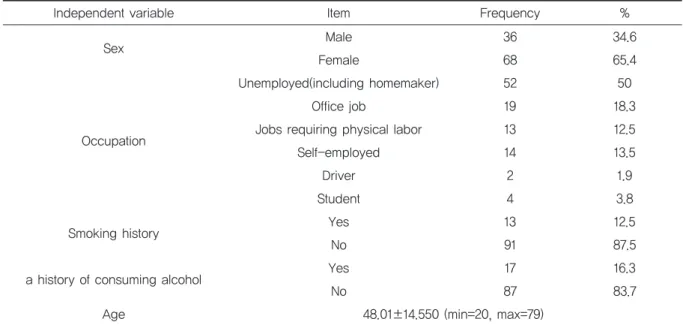
Table 2 shows the frequency analysis and de- scriptive statistics for the demographic variables.
A total of 104 subjects were surveyed and there were 36 men (34.6%) and 68 women (65.4%). Fifty- two patients (50.0%) were unemployed (including a homemaker), 19 patients (18.3%) had office jobs, 13 patients (12.5%) had jobs requiring physical labor, 14 patients (13.5%) were self-employed, 2 patients (1.9%) were drivers, and 4 patients (3.8%) were stu- dents. Thirteen patients (12.5%) were smokers and 91 patients (87.5%) were non-smokers at admission. Eighteen patients (16.3%) answered that they had a history of consuming alcohol and 87 patients (83.7%) did not. Finally, the mean age of the patients was 48.01 years old. The youngest patient was 20 years old, and the eldest was 79 years old (Fig. 3).
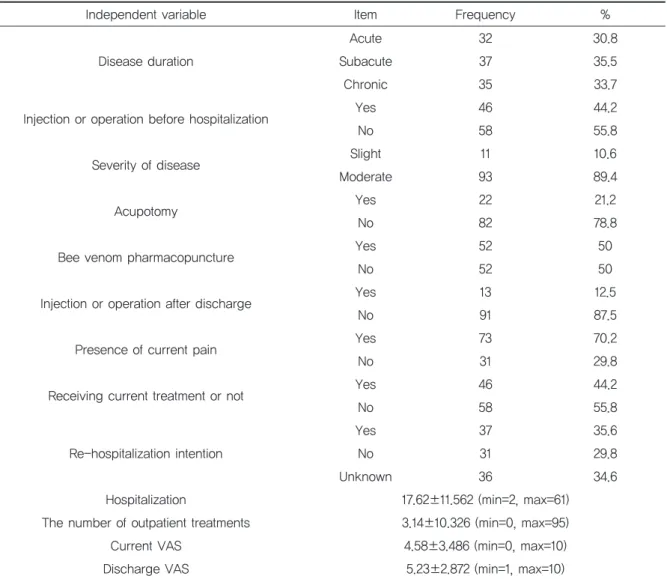
Table 3 shows the frequency analysis and de- scriptive statistics for the therapeutic variables.
First, regarding the onset of lower back pain or ra- diating leg pain, 32 patients (30.8%) were in the acutephase(within4 weeks), 37 patients(35.5%) in the subacute phase (4 to 12 weeks), and 35 patients (33.7%) in the chronic phase (12 weeks or more).
Forty-six patients (44.2%) answered yes to having
a history of Western medical treatment before ad-
mission to the Dunsan Korean medicine hospital
and 58 patients (55.8%) answered no. The severity
of the lumbar intervertebral disc herniation was
given the following rating based on the
radiological findings: mild (bulging disc; 11
patients [10.6%]) and moderate (over protrusion; 93 patients [89.4%]). During the inpatient treatment period, 22 patients (21.2%) received an acupotomy and 82 patients (78.8%) did not and 52 patients (50.0%) received a bee venom pharmacopuncture treatment, while 52 patients (50.0%) did not. Next, 13 patients (12.5%) answered yes to an injection or operation for treatment after discharge and 91 pa- tients (87.5%) did not. Seventy-three patients
(70.2%) answered that they continued to have lower back pain after discharge and 31 patients (29.8%) did not. After discharge, 46 patients (44.2%) answered that they were still being treated for lower back pain and 58 patients (55.8%) were not. Thirty-seven patients (35.6%) answered that they would be treated at a Korean hospital if they had recurring lower back pain due to lumbar inter- vertebral disc herniation, 31 patients (29.8%) an- Table 2. Frequency analysis and descriptive statistics of demographic variables
Independent variable Item Frequency %
Sex Male 36 34.6
Female 68 65.4
Occupation
Unemployed(including homemaker) 52 50
Office job 19 18.3
Jobs requiring physical labor 13 12.5
Self-employed 14 13.5
Driver 2 1.9
Student 4 3.8
Smoking history Yes 13 12.5
No 91 87.5
a history of consuming alcohol Yes 17 16.3
No 87 83.7
Age 48.01±14.550 (min=20, max=79)
Fig. 3. The graph of demographic variable's ratio
Independent variable Item Frequency % Disease duration
Acute 32 30.8
Subacute 37 35.5
Chronic 35 33.7
Injection or operation before hospitalization Yes 46 44.2
No 58 55.8
Severity of disease Slight 11 10.6
Moderate 93 89.4
Acupotomy Yes 22 21.2
No 82 78.8
Bee venom pharmacopuncture Yes 52 50
No 52 50
Injection or operation after discharge Yes 13 12.5
No 91 87.5
Presence of current pain Yes 73 70.2
No 31 29.8
Receiving current treatment or not Yes 46 44.2
No 58 55.8
Re-hospitalization intention
Yes 37 35.6
No 31 29.8
Unknown 36 34.6
Hospitalization 17.62±11.562 (min=2, max=61)
The number of outpatient treatments 3.14±10.326 (min=0, max=95)
Current VAS 4.58±3.486 (min=0, max=10)
Discharge VAS 5.23±2.872 (min=1, max=10)
Table 3. Frequency analysis and descriptive statistics of therapeutic variables
Fig. 4. The graph of therapeutic variable's ratio
swered that they would not, and 36 patients (34.6%) answered that they do not know. Finally, the average number of hospitalization days was 17.62 days, ranging from 2 to 61 days, and the av- erage number of outpatient visits after discharge was 3.14 times, ranging from 0 to 95 times. In ad- dition, the mean VAS at discharge was 5.23, rang- ing from 1 to 10, and the average current VAS was 4.58, ranging from 0 to 10 (Fig. 4).
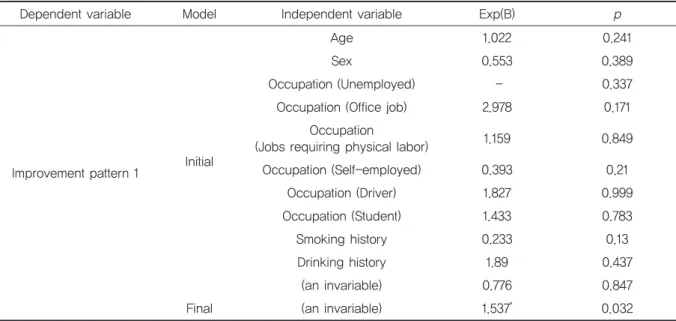
2. Logistic multiple regression analysis using backward elimina- tion for Improvement pattern 1 1) Demographic variables
Table 4 shows the results of the logistic regres- sion analysis using backward elimination for Im- provement pattern 1 with regards to the demographic variables. There were no variables with a significant effect in the initial model. Re- moving variables using the backward elimination
method showed that there was no statistically sig- nificant effect for Improvement pattern 1.
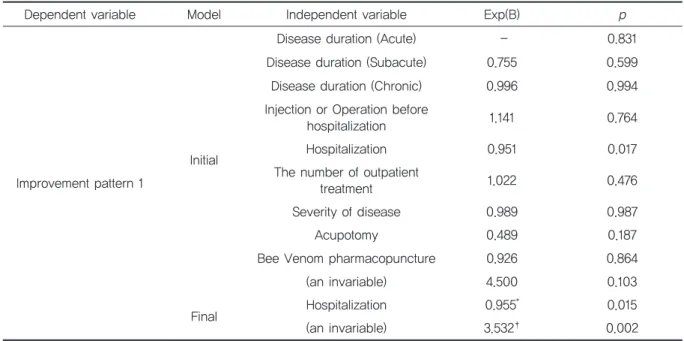
2) Therapeutic variable
Table 5 shows the results of a logistic regression analysis using backward elimination for Improve- ment pattern 1 according to the therapeutic vari- ables. There are no variables with a significant effect in the initial model. As a result of removing the variables using the backward elimination method, the variable statistically affecting Im- provement pattern 1 was the number of hospital- ization days per year (Exp(B) = 0.955, p < 0.5).
Therefore, the number of hospitalization days per year had a negative effect on Improvement pattern 1. In other words, as the number of hospitalization days per year increased by 1 day, the Improvement pattern 1 measurements decreased by 0.955 times.
This suggests that patients with longer hospital- ization days are more likely to have sustained pain relief or to have been steadily relieved from pain.
Table 4. Improvement pattern 1 by demographic variables
Dependent variable Model Independent variable Exp(B) p
Improvement pattern 1 Initial
Age 1.022 0.241
Sex 0.553 0.389
Occupation (Unemployed) - 0.337
Occupation (Office job) 2.978 0.171
Occupation
(Jobs requiring physical labor) 1.159 0.849
Occupation (Self-employed) 0.393 0.21
Occupation (Driver) 1.827 0.999
Occupation (Student) 1.433 0.783
Smoking history 0.233 0.13
Drinking history 1.89 0.437
(an invariable) 0.776 0.847
Final (an invariable) 1.537
*0.032
Occupation dummy processed based on unemployed.
* p<0.5, † p<0.1, ‡ p<0.01
3. Logistic multiple regression analysis using backward elimina- tion for Improvement pattern 2 1) Demographic variable
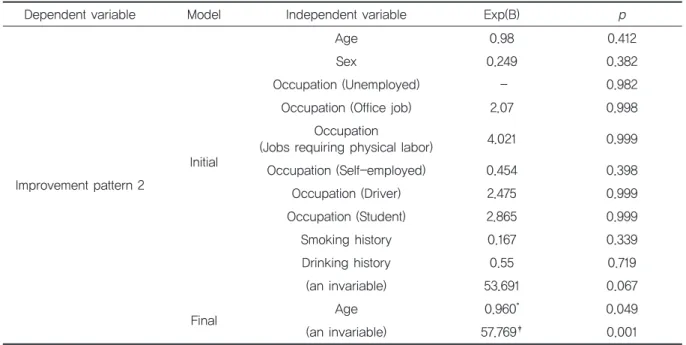
Table 6 shows the results of a logistic regression using backward elimination for Improvement pat- tern 2 with regards to the demographic variables.
There were no variables with a significant effect in the initial model. Removing the variables using backward elimination resulted in age as the vari- able statistically affecting Improvement pattern 2 (Exp(B) = 0.960, p < 0.5). Age had a negative effect on Improvement pattern 2. In other words, as age increased, the measurements for Improvement pattern 2 decreased by 0.960 times, suggesting that after discharge from the Korean medicine hospital, younger patients were less likely to receive Western medical treatment, such as an in- jection or surgery, for their lumbar intervertebral disc.
2) Therapeutic variable
Table 7 shows the results of the logistic regres- sion analysis using the backward elimination method for Improvement pattern 2 with regards to the therapeutic variables. There were no variables with a significant effect in the initial model and there were no statistically significant effects of Im- provement pattern 2 as a result of removing the variables using backward elimination.
4. Logistic multiple regression analysis using backward elimina- tion for Improvement pattern 3
1) Demographic variable
Table 8 shows the results of the logistic regres- sion analysis using backward elimination for Im- provement pattern 3 based on the demographic variables. There were no variables with a signifi- Table 5. Improvement pattern 1 by therapeutic variables
Dependent variable Model Independent variable Exp(B) p
Improvement pattern 1
Initial
Disease duration (Acute) - 0.831
Disease duration (Subacute) 0.755 0.599
Disease duration (Chronic) 0.996 0.994
Injection or Operation before
hospitalization 1.141 0.764
Hospitalization 0.951 0.017
The number of outpatient
treatment 1.022 0.476
Severity of disease 0.989 0.987
Acupotomy 0.489 0.187
Bee Venom pharmacopuncture 0.926 0.864
(an invariable) 4.500 0.103
Final Hospitalization 0.955
*0.015
(an invariable) 3.532
†0.002
Disease duration dummy processed based on acute.
* p<0.5, † p<0.1, ‡ p<0.01
Table 6. Improvement pattern 2 by demographic variables
Occupation dummy processed based on unemployed.
* p<0.5, † p<0.1, ‡ p<0.01
Dependent variable Model Independent variable Exp(B) p
Improvement pattern 2
Initial
Age 0.98 0.412
Sex 0.249 0.382
Occupation (Unemployed) - 0.982
Occupation (Office job) 2.07 0.998
Occupation
(Jobs requiring physical labor) 4.021 0.999
Occupation (Self-employed) 0.454 0.398
Occupation (Driver) 2.475 0.999
Occupation (Student) 2.865 0.999
Smoking history 0.167 0.339
Drinking history 0.55 0.719
(an invariable) 53.691 0.067
Final Age 0.960
*0.049
(an invariable) 57.769
‡0.001
Dependent variable Model Independent variable Exp(B) p
Improvement pattern 2 Initial
Disease duration (Acute) - 0.903
Disease duration (Subacute) 0.846 0.824
Disease duration (Chronic) 1.198 0.823
Injection or Operation before
hospitalization 1.158 0.818
Hospitalization 0.991 0.751
The number of outpatient
treatment 1.117 0.317
Severity of disease 2.262 0.374
Acupotomy 2.637 0.184
Bee Venom pharmacopuncture 0.827 0.767
(an invariable) 1.628 0.306
Final (an invariable) 7.000
‡0.001
Table 7. Improvement pattern 2 by therapeutic variables
Disease duration dummy processed based on acute.
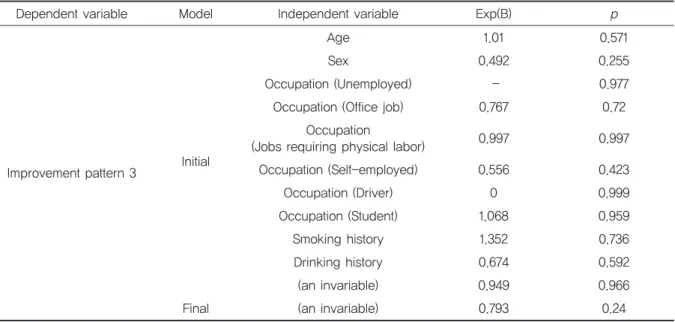
* p<0.5, † p<0.1, ‡ p<0.01
cant effect in the initial model, and there was no statistically significant effect on Improvement pat- tern 3 as a result of removing the variables using backward elimination.
2) Therapeutic variable
Table 9 shows the results of the logistic regres- sion analysis using backward elimination for Im- provement pattern 3 with regards to the
Dependent variable Model Independent variable Exp(B) p
Improvement pattern 3 Initial
Disease duration (Acute) - 0.14
Disease duration (Subacute) 2.327 0.109 Disease duration (Chronic) 0.884 0.812 Injection or Operation before
hospitalization 1.037 0.933
Hospitalization 1.014 0.469
The number of outpatient
treatment 0.998 0.933
Severity of disease 1.013 0.985
Acupotomy 1.735 0.297
Bee Venom pharmacopuncture 0.78 0.57
(an invariable) 0.554 0.744
Final (an invariable) 1.261 0.24
Table 9. Improvement pattern 3 by therapeutic variables
Disease duration dummy processed based on acute.
* p<0.5, † p<0.1, ‡ p<0.01
Table 8. Improvement pattern 3 by demographic variables
Occupation dummy processed based on unemployed.
* p<0.5, † p<0.1, ‡ p<0.01
Dependent variable Model Independent variable Exp(B) p
Improvement pattern 3 Initial
Age 1.01 0.571
Sex 0.492 0.255
Occupation (Unemployed) - 0.977
Occupation (Office job) 0.767 0.72
Occupation
(Jobs requiring physical labor) 0.997 0.997
Occupation (Self-employed) 0.556 0.423
Occupation (Driver) 0 0.999
Occupation (Student) 1.068 0.959
Smoking history 1.352 0.736
Drinking history 0.674 0.592
(an invariable) 0.949 0.966
Final (an invariable) 0.793 0.24
therapeutic variables. There were no variables with a significant effect in the initial model, and there were no statistically significant effects on Improvement pattern 3 as a result of removing the variables using backward elimination.
5. Analysis of covariance (AN- COVA) and average estimation for Improvement pattern 1
The group was divided into a pain reduction and non-pain reduction sub-groups. After treatment with Korean medicine, the mean difference of the
flexion, extension, and SLR test was not statisti- cally significant between the pain reduction and non-pain reduction groups (Table 10).
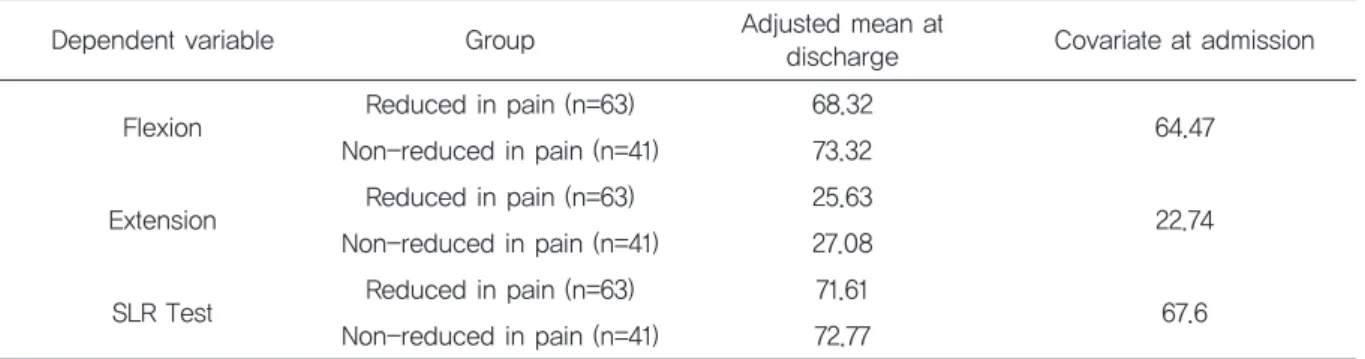
Table 11 shows the mean estimates of the AN- COVA results for Improvement pattern 1. The av- erage value of the lumbar flexion at admission was estimated to be 64.47. After discharge, the pain re- duction group increased to 68.32 and the non-re- duced in pain group increased to 73.32; this was not significantly different. Next, the average value of the lumbar extension at admission was estimated to be 22.74. After discharge, the pain re- duction group increased to 25.63, and the non- pain reduction group increased to 27.08, but there
Table 10. ANCOVA result by Improvement pattern 1
Table 11. Estimated average by Improvement pattern 1
* p<0.5, † p<0.1, ‡ p<0.01 Dependent
variable Source SS df MSE F η
2Flexion
Intercept 19502.625 1 19502.625 90.065
‡0.471
Covariate 22357.444 1 22357.444 103.248
‡0.506
TRT 608.306 1 608.306 2.809 0.027
Error 21870.604 101 216.541
Extension
Intercept 4402.871 1 4402.871 121.365
‡0.546
Covariate 3507.224 1 3507.224 96.677
‡0.489
TRT 50.826 1 50.826 1.401 0.014
Error 3664.069 101 36.278
SLR Test
Intercept 11284.267 1 11284.267 88.163
‡0.466
Covariate 10407.215 1 10407.215 81.310
‡0.446
TRT 32.304 1 32.304 0.252 0.002
Error 12927.376 101 127.994
Dependent variable Group Adjusted mean at
discharge Covariate at admission
Flexion Reduced in pain (n=63) 68.32
64.47 Non-reduced in pain (n=41) 73.32
Extension Reduced in pain (n=63) 25.63
22.74 Non-reduced in pain (n=41) 27.08
SLR Test Reduced in pain (n=63) 71.61
Non-reduced in pain (n=41) 72.77 67.6
was no significant difference. Finally, the average value of the SLR test at admission was estimated to be 67.60. After discharge, the pain reduction group increased to 71.61 and the non-pain reduc- tion group increased to 72.77, but there was no sig- nificant difference.
6. Analysis of covariance (AN- COVA) and average estimation for Improvement pattern 2
The group was divided into the Inj. or Op. treat-
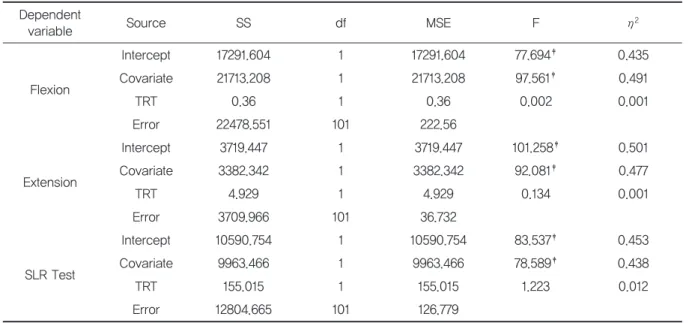
ment group and non-Inj. or non-Op. treatment sub-group. After treatment with Korean medicine, the mean difference of the flexion, extension, and SLR test was not statistically significant between the Inj. or Op. treatment group and the non-Inj. or non-Op. treatment group (Table 12).
Table 13 shows the mean estimates of the AN- COVA results for Improvement pattern 2. The av- erage value for lumbar flexion was estimated at admission to be 64.47. After discharge, the Inj. or Op. treatment group increased to 70.27, and the non-Inj. or non-Op. treatment group increased to 70.44, but there was no statistical difference. Next,
Dependent
variable Source SS df MSE F η
2Flexion
Intercept 17291.604 1 17291.604 77.694
‡0.435
Covariate 21713.208 1 21713.208 97.561
‡0.491
TRT 0.36 1 0.36 0.002 0.001
Error 22478.551 101 222.56
Extension
Intercept 3719.447 1 3719.447 101.258
‡0.501
Covariate 3382.342 1 3382.342 92.081
‡0.477
TRT 4.929 1 4.929 0.134 0.001
Error 3709.966 101 36.732
SLR Test
Intercept 10590.754 1 10590.754 83.537
‡0.453
Covariate 9963.466 1 9963.466 78.589
‡0.438
TRT 155.015 1 155.015 1.223 0.012
Error 12804.665 101 126.779
Table 12. ANCOVA result by Improvement pattern 2
* p<0.5, † p<0.1, ‡ p<0.01
Table 13. Estimated average by Improvement pattern 2
Inj. = Injection, Op. = Operation
Dependent variable Group Adjusted mean at
discharge Covariate at admission
Flexion Inj. or Op. treatment (n=13) 70.44
64.47 Non-Inj. or non-Op. treatment (n=91) 70.27
Extension Inj. or Op. treatment (n=13) 25.62
22.74 Non-Inj. or non-Op. treatment (n=91) 26.29
SLR Test Inj. or Op. treatment (n=13) 75.33
Non-Inj. or non-Op. treatment (n=91) 71.6 67.6
the average value of lumbar extension at admission was estimated to be 22.74. After dis- charge, the Inj. or Op. treatment group increased to 26.29, and the non-Inj. or non-Op. treatment group increased to 25.62, but there was no statisti- cal difference. Finally, the average value of the SLR test at admission was estimated to be 67.60.
After discharge, the Inj. or Op. treatment group in- creased to 71.60, and the non-Inj. or non-Op.
treatment group increased to 75.33, but there was no significant difference.
7. Analysis of covariance (AN- COVA) and average estimation for Improvement pattern 3
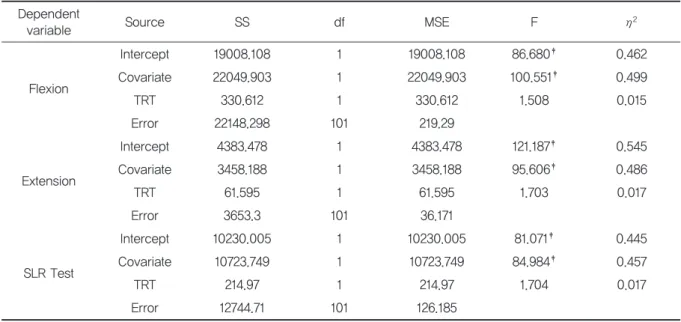
The group was divided into a group with treat- ment for lower back pain (LBP) and a group without treatment for LBP. After treatment with Korean medicine, the mean difference for the flex- ion, extension, and SLR test between the LBP treatment group and non-LBP treatment group was not statistically significant (Table 14).
Table 15 shows the mean estimates of the AN- COVA results for Improvement pattern 3. The av-
Table 14. ANCOVA result by Improvement pattern 3 Dependent
variable Source SS df MSE F η
2Flexion
Intercept 19008.108 1 19008.108 86.680
‡0.462
Covariate 22049.903 1 22049.903 100.551
‡0.499
TRT 330.612 1 330.612 1.508 0.015
Error 22148.298 101 219.29
Extension
Intercept 4383.478 1 4383.478 121.187
‡0.545
Covariate 3458.188 1 3458.188 95.606
‡0.486
TRT 61.595 1 61.595 1.703 0.017
Error 3653.3 101 36.171
SLR Test
Intercept 10230.005 1 10230.005 81.071
‡0.445
Covariate 10723.749 1 10723.749 84.984
‡0.457
TRT 214.97 1 214.97 1.704 0.017
Error 12744.71 101 126.185
* p<0.5, † p<0.1, ‡ p<0.01
Dependent variable Group Adjusted mean at
discharge Covariate at admission
Flexion L.B.P. treatment (n=46) 68.28
64.47 Non-L.B.P treatment (n=58) 71.89
Extension L.B.P. treatment (n=46) 25.34
22.74 Non-L.B.P treatment (n=58) 26.89
SLR Test L.B.P. treatment (n=46) 70.41
Non-L.B.P treatment (n=58) 73.38 67.6
Table 15. Estimated average by Improvement pattern 3
erage value of the lumbar flexion at admission was estimated to be 64.47. After discharge, the non- LBP treatment group increased to 71.89 and the LBP treatment group increased to 68.28, but there was no significant difference. Next, the average value of the lumbar extension at admission was es- timated to be 22.74. After discharge, the non-LBP treatment group increased to 26.89 and the LBP treatment group increased to 25.34, but there was no significant difference. Finally, the average value of the SLR test at admission was estimated to be 67.60. After discharge, the non-LBP treat- ment group increased to 73.38 and the LBP treat- ment group increased to 70.41, but there was no significant difference.
Ⅳ. Discussion
Lumbar intervertebral disc herniation is one of the most common degenerative diseases that can cause lower back pain and radiating leg pain
18). This is a pathological condition that frequently affects the spine of young and middle-aged adults
19). It is defined as the dislocation of the intervertebral disc components (nucleus pulposus or annulus fibrosus) beyond the space between the vertebral bodies
19-22). The most common symptoms of lumbar interverte- bral disc herniation are lower back pain, radiating leg pain, sensory abnormalities (paresthesia, numbness and tingling), lower limb weakness, and, occasionally, incontinence
23). Symptomatic lumbar intervertebral disc herniation appears in 1% to 2%
of the total population
24). Approximately 90% of the cases radiculopathy are caused by a herniation of the lumbar intervertebral disc, making it the most common cause
25,26). The highest prevalence is seen in the 30- to 50-year-old age group. Men were twice as likely as women to have a higher prevalence rate
27). In adults aged 25 to 55 years, about 95% of lumbar intervertebral disc herniation mostly occur in the L4 to L5 and L5 to S1 spinal lev-
els. Lumbar intervertebral disc herniation above the L4 spine level is more common in adults over 55 years old
23).
Lumbar intervertebral disc herniation is the most common limitation to activity in people under 45 years of age
28). Moreover, this is the most com- mon cause of lower back pain and radiating leg pain, resulting in high personal and social costs
29-31)
.
Since the introduction of lumbar discetomy
32), surgical intervention has been performed in most lumbar intervertebral disc herniation patients.
However, various conservative interventions have been introduced in recent years; thus, patients are treated early and are actively involved in therapy.
Early recovery of function and prevention of recur- rence are the most important goals and so are con- sidered to be a desirable treatment direction
33,34).
Korean medicine treatment for patients with lumbar intervertebral disc herniation has also re- cently become popular, and to date, many studies have shown that patients with lumbar interverte- bral disc treated with Korean medicine have had a significant improvement in pain
9-11). According to Kim's
35)study and from the 2010 to 2015 with the National Health Insurance Statistical Yearbook
1-6), the number of patients receiving inpatient treat- ment for lumbar intervertebral disc herniation in Korean medical institutions is gradually increasing (Fig. 5).
Likewise, the number of patients with lumbar in-
tervertebral disc herniation who receive conserva-
tive treatment in Korean medical institutions is
gradually increasing. Therefore, it is important to
improve the competitiveness of treatment with Ko-
rean medicine for lumbar intervertebral disc herni-
ation. The patients who received inpatient
treatment at Korean medicine hospital were stud-
ied, and the prognostic factors of patients who
maintained an improvement for more than 1 year
were identified. It is necessary to analyze the char-
acteristics of patients that had relatively effective
improvements from treatment with Korean medi-
cine.
This study investigated patients admitted to the Dept. of Acu. & Moxi. at the Dunsan Korean medi- cine hospital of Daejeon University for more than 2 days in 2014 and analyzed their demographic vari- ables, including sex, age, and occupation, as well as, therapeutic variables, including the duration and severity of the disease. This study was con- ducted to improve the competition over the treat- ment at the Korean medicine hospital for patients with lumbar disc herniation.
Among the 3,274 patients admitted to Dunsan Korean medicine hospital of Daejeon Univ., 561 pa- tients were admitted to the Dept. of Acu. & Moxi.
Among them, 147 patients were diagnosed with lumbar intervertebral disc herniation and received inpatient treatment. All patients that were not ad- mitted for more than 2 days, could not be contacted, or had since died were excluded. If the same patient was re-admitted more than twice in 2014, the total number of hospital days during the one year were added up. As a result, a total 104 pa- tients were hospitalized for more than 2 days with lumbar intervertebral disc herniation at the De- partment of Acu. & Moxi. of Dunsan Korean medi-
cine hospital in 2014 (Fig. 2). There was a higher proportion of women in the study population. This seems to be a result of the higher prevalence of chronic diseases in women than in men, as seen in a number of the studies, as well as a higher level of subjective unhealthiness and preference to use Ko- rean medicine services than men
36-39).
The mean age of the patients was 48.01 years and the largest age group was the 40- to 50-year- old group, which accounted for 53.9% of the study population. The prevalence rate in the 30’s age group was 15.4%. This is similar to the results of a study that suggested the highest prevalence is seen in the 30-50 age group
27). It is also thought to be partially related to the recent increase in the utilization of Korean medicine services by patients in their 40's
36,40).
Fifty-two patients were unemployed, which ac-
counted for 50% of the total study population. Al-
though men were evenly distributed among the
various occupational groups, 48 women (70.6%)
were unemployed. As shown in Tables 4, 6, and 8, it
is difficult to say that occupation was a statistically
influential variable in the persistence effect of
Fig. 5. The change of inpatient of other intervertebral disc disorders(M51.0) at National Health Insurance Statisti-
cal Yearbook by year (2010~2015)
1-6)treatment in patients receiving Korean medicine treatment. However, in this study, it was difficult to distinguish whether patients were already un- employed or became unemployed because of the pain. Therefore, further research is necessary to determine the relationship between unemployment and pain.
To evaluate the situation where patients main- tained a state of improvement with Korean medi- cine, we evaluated each of the 104 patients with three hypotheses using the VAS scores to indicate the patient's current degree of lower back pain: 1) the difference in VAS scores between the present time and discharge was less than 0; 2) they received no injections or surgery since discharge;
and 3) they received no recent treatment for back pain. We confirmed the relationship between these and the demographic and therapeutic variables.
The results of the logistic multiple regression analysis that compared the degree of improvement with regards to the demographic variables through changes in VAS or whether they recently received treatment for lower back pain showed no signifi- cant differences between the groups. However, as the age increased, the probability of receiving less Western treatment, such as an injection or surgery, was 0.960 times lower than after receiving Korean medicine treatment. In other words, as a patients' age decreased by one year, patients would receive Western medical treatment 1.042 times signifi- cantly less after Korean medicine treatment with lumbar intervertebral disc herniation (Table 6).
When using logistic multiple regression to com- pare the degree of the improvement pattern with regards to the therapeutic variables with whether they received Western medical treatment, such as an injection or operation, or whether they recently received lower back pain treatment, the difference between the groups was not statistically significant. However, as the duration of hospital- ization increased by 1 day, the VAS difference de- creased by 0.955 times. In other words, patients with longer hospitalization days were significantly more likely to gradually relieve their pain or main-
tain their improvement (Table 5).
It was difficult to determine whether the degree of the lumbar ROM or SLR test maintained the same degree or increased during hospitalization using the ANCOVA and mean estimation.
The purpose of this study was to analyze the re- lationship between the variables and prognosis of the patients treated for a herniated lumbar inter- vertebral disc by the Department of Acu. & Moxi.
of Dunsan Korean medicine hospital of Daejeon Univ. in 2014 using a retrospective statistical analysis. It seems necessary to improve pain relief and patient satisfaction by developing and improv- ing Korean medical services by analyzing the fac- tors that have a positive effect on the prognosis of patients treated with lumbar intervertebral disc herniation. However, this study has limitations in that the level of significance could be somewhat lower since data were collected based on two-year- old medical records and patient statements. There- fore, there might be a mixture of slightly unclear information. In addition, since this study was not a prospective study, but was a retrospective chart review study, the main treatments such as acupuncture, pharmacopuncture, and herbal med- icine were the same, but the specific treatment, such as the kind of herbal medicine, number of pharmacopuncture treatments, were not controlled, so the possibility to study various vari- ables was limited. This study was a retrospective analysis conducted at just one university hospital, so expanding the sample population in the future is necessary. We hope that further research could clarify the relationship between various variables and make a prognosis through more systematic planning from the beginning of the study.
Ⅴ. Conclusion
From January 1, 2014, to December 31, 2014, the
relationship between the demographic and thera-
peutic variables of patients admitted to the De- partment of Acu. & Moxi. of Dunsan Korean medi- cine hospital of Daejeon Univ. for lumbar intervertebral disc herniation for more than 2 days were analyzed and the results are as follows:
1. The analysis of the relationship between main- taining pain relief and the variables showed that patients with a longer hospitalization at a Korean medicine hospital are significantly more likely to maintain their state of steady pain relief state.
2. The analysis of the relationship between the patient variables and whether patients sought Western medicine treatment after dis- charge showed that younger patients were significantly less likely to receive Western medical treatment for lumbar intervertebral disc.
3. In the analysis of the relationship between whether patients have continuously received treatment for their lower back pain and their variables, it was difficult to identify statisti- cally significant variables.
Ⅵ. Reference
1. SeongSC, SonMS. 2015 NationalHealthInsur- ance Statistical Yearbook. National Health In- surance Service, Health Insurance Review &
Assessment Service. 2016:562.
2. Seong SC, Son MS. 2014 National Health In- surance Statistical Yearbook. National Health Insurance Service, Health Insurance Review &
Assessment Service. 2015:554.
3. Kim JD, Son MS. 2013 National Health Insur- ance Statistical Yearbook. National Health In- surance Service, Health Insurance Review &
Assessment Service. 2014:556.
4. Kim JD, Kang YK. 2012 National Health Insur- ance Statistical Yearbook. National Health In- surance Service, Health Insurance Review &
Assessment Service. 2013:552.
5. Kim JD, Kang YK. 2011 National Health Insur- ance Statistical Yearbook. National Health In- surance Service, Health Insurance Review &
Assessment Service. 2012:558.
6. Kim JD, Kang YK. 2010 National Health Insur- ance Statistical Yearbook. National Health In- surance Service, Health Insurance Review &
Assessment Service. 2011:556.
7. Korean Acupuncture & Moxibution Soc. The Acupunct Acupuncture and Moxibution Medi- cine. Paju: Hanmi medical publishing co.
2016:495-8.
8. Weber H. Lumbar disc herniation. A controlled, prospective study with ten years of observation. Spine (Phila Pa 1976) 1983;8:131- 40.
9. Jung BH, Jo JH, Yoon YI et al. Lumbar Herni- ated Disc Resorption of 78 Patients after Ko- rean Medicine Treatment. J Korean Medicine Rehabilitation. 2016;26(1):87-93.
10. Jung JH, Kim WW, Seong IH et al. The Study on Effectiveness of Oriental Medicine Treat- mentforLumbarDiscHerniationInpatientson 208 Cases. J Korean Medicine Rehabilitation.
2013;23(1):77-86.
11. Lee EK, Choi EH, Lee JE et al. The Clinical Study on 137 Cases of Herniated Lumbar Disc Patients. J Korean Acupuncture &
Moxibustion Society. 2008:25(3):1-12.
12. Chiu CC, Chuang TY, Chang KH et al. The probability of spontaneous regression of lumbar herniated disc: a systemic review. Clin- ical Rehabilitation. 2015;29(2):184-95.
13. Ha KY, Kim KW, Chang CH, Won JY. Multiply Operated Lumbar Spine. J of Korean Spine Surg. 1997:4(2):329-36.
14. Shin BJ, Kim JB, Cho YH et al. Clinical Recov- ery after Surgical Treatment of Lumbar HIVD.
J of Korean Spine Surg. 1997:4(2):337-43.
15. Park BM, Kim NH, Kwon SW, Yang KH. A
Clinical Study of the Operative Treatment of
the Herniated Lumbar Disc. J of Korean
Orthop. Assoc. 1984:19(1):41-8.
16. Kim EH, Woo BC, Cho DY. Prognostic Factors after Conventional Surgery of Lumbar Disc Herniation. J of Korean Spine Surg.
1997:4(1):18-26.
17. Lee KY, Shon SK, Lee MJ, Wang L. Treatment Outcome of Reoperative Lumbar Disc Hernia- tion. J of Korean Spine Surg. 2007:14(3):151-7.
18. Yang H, Liu H, Li Z et al. Low back pain asso- ciated with lumbar disc herniation: role of moderately degenerative disc and annulus fi- brous tears. Int J Clin Exp Med. 2015;8:1634- 44.
19. Schoenfeld AJ, Weiner BK. Treatment of lum- bar disc herniation:evidence-based practice.
Int J Gen Med 2010;3:209–14.
20. Anderson PA, McCormick PC, Angevine PD.
Randomized controlled trials of the treatment of lumbar disk herniation: 1983–-2007. J Am Acad Orthop Surg. 2008;16:566–73.
21. Jordan J, Konstantinou K, O’'Dowd J. Herni- ated lumbar disc. BMJ Clin Evid. 2009;3:1–34.
22. Ozkanli S, Kaner T, Efendioglu M et al. The re- lation of matrix metalloproteinase 1, 2, 3 ex- pressions with clinical and radiological findings in primary and recurrent lumbar disc herniations. Turk Neurosurg. 2015;25:111–16.
23. Rajagopal TS, Marshall RW. Chapter 28: Mi- crodiscectomy. In: Bentley G, ed. European surgical orthopaedics and traumatology: the EFORT textbook. Springer Berlin Heidelberg.
2014:557–80.
24. Deyo RA, Tsui-Wu YJ. Descriptive epidemiol- ogy of low-back pain and its related medical care in the United States. Spine (Phila Pa 1976).
1987:12:264-8.
25. Hahne AJ, Ford JJ, McMeeken JM. Conserva- tive management of lumbar disc herniation with associated radiculopathy: a systematic re- view. Spine (Phila Pa 1976). 2010;35:488–504.
26. Koes BW, van Tulder MW, Peul WC. Diagnosis and treatment of sciatica. BMJ. 2007;334:1313–
-7.
27. Jordan J, Konstantinou K, O’'Dowd J. Herni- ated lumbar disc. BMJ Clin Evid. 2009;3:1–34.
28. Andersson GB. Epidemiological features of chronic low-back pain. Lancet. 1999;354:581- 5.
29. Atlas SJ, Keller RB, Wu YA et al. Long-term outcomes of surgical and nonsurgical manage- ment of sciatica secondary to a lumbar disc herniation: 10 year results from the maine lumbar spine study. Spine(Phila Pa 1976).
2005;30:927–35.
30. Awad JN, Moskovich R. Lumbar disc hernia- tions: surgical versus nonsurgical treatment.
Clin Orthop Relat Res. 2006;443:183–97.
31. Lee J, Shin JS, Lee YJ et al. Effects of Shinbaro pharmacopuncture in sciatic pain patients with lumbar disc herniation: study protocol for a randomized controlled trial. Trials. 2015;16:455.
32. Mixter WJ, Barr JS. Rupture of the interverte- bral disc with involvement of the spinal canal.
N Eng J. 1934:211:210-5.
33. Stankovic R, Johnell O. Conservative treatment of acute low back pain:a 5-year follow-up study of two methods of treatment. Spine.
1995:20:468-72.
34. Song BK. Study on the Conservative Treatment of Herniated Lumbar Intervertebral Disc.
KOMS. 1995:16(2):62-78.
35. KimHS, KimSY, KimJH, KimYI. TheAnalysis on Annual Utilization Patterns of Inpatients in Korean Medical Hospitals for the Past 10 years.
The Acupunct. 2016:33(2):61-76.
36. Seo YJ, Kang SH, Kim YH, Choi DB, Shin HK.
Customers' Utilization and Satisfaction in Ori- ental Medical Clinics. Journal of Korean Medi- cine. 2010;31(2):124-36.
37. Park JE, Kwon SM. Determinants of the Uti- lization of Oriental Medical Services by the Elderly. J Korean Oriental Med. 2011;32(1):97- 108.
38. Yoo WK, Ryu KA. Utilization Patterns and De- terminants of Oriental Medical Services:Fo- cused on the Residents of Taegu City. Journal of Society of Preventive Korean Medicine.
2000;4(2):1-24.
39. Jeon GS, Choi ES, Lee HY. Gender-related Dif-
ference in the Utilization of Health Care Serv- ices by Korean Adults. Journal of Korean public health nursing. 2010;24(2):182-96.
40. Kim SY, Park JY. The Utilization of Western
and Oriental Medical Services by Outpatients
with Musculoskeletal System Disorders and Its
Related Factors. The Korean journal of health
service management. 2012;6(1):27-38.
Appendix 1.
2014년 요추 추간판 탈출증 입원환자
현재 상태 확인을 위한 전화 설문지