PGHN
Original Article
Helicobacter pylori Infection and Risk Factors in Relation to Allergy in Children
Ilva Daugule*, Daiga Karklina*
,†, Silvija Remberga*
,†, and Ingrida Rumba-Rozenfelde*
,†*Faculty of Medicine, University of Latvia, † Clinics for Children Diseases, Children Clinical University Hospital, Riga, Latvia
Purpose: To analyze presence of Helicobacter pylori infection and environmental risk factors among children with and without allergy.
Methods: Parents of children at primary health care centres/kindergartens and allergologist consultation were asked to answer a questionnaire and to bring a faecal sample. H. pylori infection was detected by monoclonal stool antigen test. Prevalence of H. pylori infection and risk factors were compared between individuals with and without allergy using χ2 test, ANOVA test and parameters and logistic regression.
Results: Among 220 children (mean age, 4.7 years; ±standard deviation 2.3 years) H. pylori positivity was non-sig- nificantly lower among patients with allergy (n=122) compared to individuals without allergy (n=98): 13.9% (17/122) vs. 22.4% (22/98); p=0.106. In logistic regression analysis presence of allergy was significantly associated with family history of allergy (odds ratio [OR], 8.038; 95% confidence interval [CI], 4.067-15.886; p<0.0001), delivery by Caesarean section (OR, 2.980; 95% CI, 1.300-6.831; p=0.009), exclusive breast feeding for five months (OR, 2.601;
95% CI, 1.316-5.142; p=0.006), antibacterial treatment during the previous year (OR, 2.381; 95% CI, 1.186-4.782;
p=0.015).
Conclusion: Prevalence of H. pylori infection did not differ significantly between children with and without allergy.
Significant association of allergy with delivery by Caesarean section and antibacterial therapy possibly suggests the role of gastrointestinal flora in the development of allergy, while association with family history of allergy indicates the importance of genetic factors in the arise of allergy.
Key Words: Allergy, Helicobacter pylori, Risk factors
Received:September 30, 2017, Revised:November 17, 2017, Accepted:November 22, 2017
Corresponding author: Ilva Daugule, Faculty of Medicine, University of Latvia, Raina bulvaris 19, LV1586, Riga, Latvia. Tel: +371-26320374, Fax:
+371-67034369, E-mail: [email protected]
Copyright ⓒ 2017 by The Korean Society of Pediatric Gastroenterology, Hepatology and Nutrition
This is an openaccess article distributed under the terms of the Creative Commons Attribution NonCommercial License (http://creativecommons.org/licenses/by-nc/4.0/) which permits unrestricted noncommercial use, distribution, and reproduction in any medium, provided the original work is properly cited.
INTRODUCTION
Opposite prevalence trends of Helicobacter pylori in-
fection and allergy in different populations have giv- en rise to speculations about the possible role of H.
pylori in the development of allergy [1,2]. Although
evidence from observational studies indeed shows a weak inverse association between prevalence of H.
pylori infection and allergy [3], lower prevalence of infection observed in allergic children could also be influenced by several confounders like socioeconomic factors, antibiotic use and others. Therefore analyz- ing the possible association between H. pylori in- fection and allergy, controlling for several confound- ing factors is important, in order to see if H. pylori is independently inversely linked to the presence of al- lergic diseases. Since developement of allergy is in- fluenced by many factors during childhood, the pos- sible association between the bacterium and allergy could be better observed in children, since effect of several factors could disappeared later in life, as sug- gested also by Chen and Blaser [2].
Despite H. pylori prevalence decrease in Eastern European countries, previous studies show rather high H. pylori prevalence in Latvia, both in children [4] and adults [5]. However, the prevalence of aller- gic diseases is also increasing in the area during the previous decades. Therefore the association between H. pylori and allergy could be easily evaluated in Latvian population.
Aim of the study was to compare the prevalence of active H. pylori infection among children with and without allergy and further, to analyse the associa- tion between different environmental risk factors and presence of allergy.
MATERIALS AND METHODS
Study design
The study was performed in two primary health care centres, in three kindergartens and in an out-pa- tient allergologist consultation at Children Clinical University Hospital Gailezers, Riga, Latvia from 2009 to 2011. The parents of the children were asked to fill-out a questionnaire and to bring a faecal sample of the child.
Different risk factors as well as presence of H. pylori were compared between children with and without allergy.
Patients
The study included consecutive children (1-7 years of age) attending allergologist consultation and diagnosed with allergy. The control group in- cluded consecutive children (aged 1-7 years) coming for general check-up or due to minor health prob- lems at primary care out-patient clinics and children of the same age at kindergartens.
Children diagnosed with allergy at allergologist consultation were considered as individuals with
“physician diagnosed allergy.” Children, whose pa- rents had marked the presence of physician diag- nosed allergy in a questionnaire, were excluded from the final sample.
Methods 1. Questionnaire
A structured questionnaire asked data about the presence of allergic disease in first stage relatives, the type of the delivery of the child (vaginal vs. Caeserain section), perinatal period (normal vs. with complica- tions), duration (in months) of exclusive and total breast feeding, number of siblings and number of household members, as well as parental education (12 years vs. more than 12 years) and possession of different household facilities and equipment (washing machine, dish-washer, computer, mobile phone).
Further, questionnaire asked about usage of differ- ent vegetables and fruit (banana, oranges, tomatoes, grapes, apples, local fruit, imported fruit) and soft carbonated drinks, indicating frequency of consump- tion of the product (every day, 2-3 times per week, once per week or once per months). Parents/family doctor were asked to specify, if child had been treat- ed with antibiotics during the first year of life, during the previous year or more than a year before.
2. Monoclonal enzyme-linked immune assay stool antigen test
Presence of H. pylori infection was detected by monoclonal enzyme-linked immune assay stool an- tigen test (Meridian Diagnostics Inc., OH, USA). In Caucasian population the monoclonal stool anitgen test has shown a sensitivity of 88.9% (95% con-
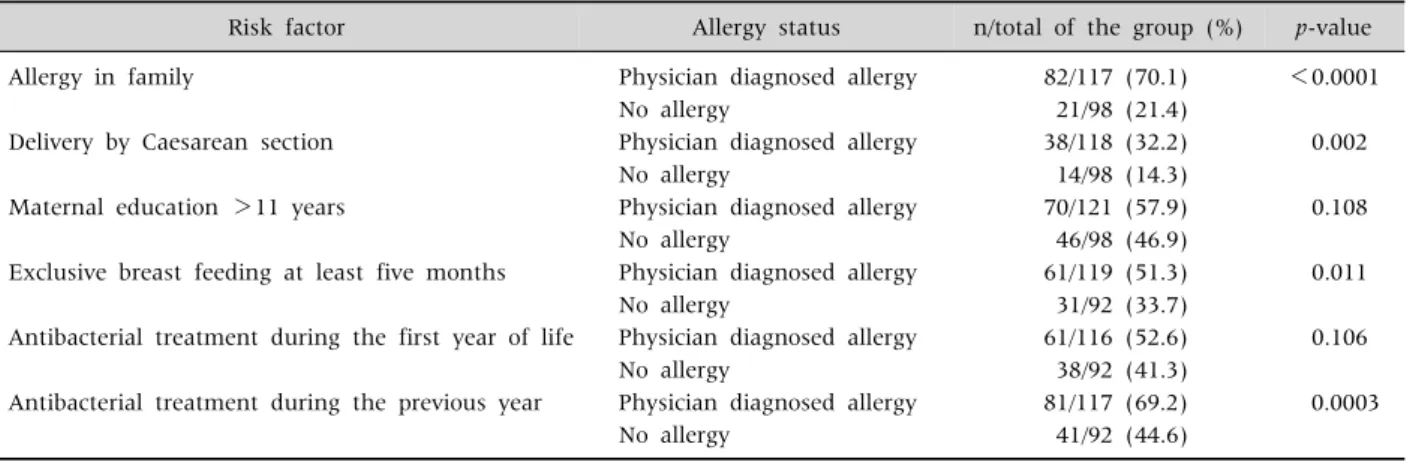
Table 1.Factors Associated with the Presence of Allergy in the Univariate Analysis
Risk factor Allergy status n/total of the group (%) p-value
Allergy in family Physician diagnosed allergy 82/117 (70.1) <0.0001
No allergy 21/98 (21.4)
Delivery by Caesarean section Physician diagnosed allergy 38/118 (32.2) 0.002
No allergy 14/98 (14.3)
Maternal education >11 years Physician diagnosed allergy 70/121 (57.9) 0.108
No allergy 46/98 (46.9)
Exclusive breast feeding at least five months Physician diagnosed allergy 61/119 (51.3) 0.011
No allergy 31/92 (33.7)
Antibacterial treatment during the first year of life Physician diagnosed allergy 61/116 (52.6) 0.106
No allergy 38/92 (41.3)
Antibacterial treatment during the previous year Physician diagnosed allergy 81/117 (69.2) 0.0003
No allergy 41/92 (44.6)
fidence interval [CI], 77.3-96.3) and a specificity of 94.0% (95% CI, 88.1-97.7) [6]. The faecal samples were stored at −20oC until analysis. The analysis was performed according to manufacturer’s in- structions in a certified laboratory and read by one person. The samples with values >0.18 were consid- ered positive.
Statistics
The Pearson χ2 test and Fisher exact were used to assess the univariate associations between presence of allergy and H. pylori positivity and possible risk factors. Mean values were compared with ANOVA test. Variables with a p-value<0.08 were entered in- to a multivariate logistic regression analysis model and the odds ratios (OR) with the 95% CI were calculated. Statistical analysis was performed using statistical programme MedCalc Statistical Software ver. 13.2.0 (MedCalc Software bvba, Ostend, Belgium;
http://www.medcalc.org; 2014).
The study was approved by the Ethics Committee of University of Latvia, Institute for Experimental and Clinical Medicine. Parents of the children signed patient written consent form.
RESULTS
The patient sample involved 242 children (122, at allergologist consultation; 120, healthy children).
Among 120 healthy children, parents of 22 in-
dividuals had marked the presence of allergy in the questionnaire; therefore the final patient sample for analysis contained 220 children (mean age, 4.7 years;
standard deviation [SD], ±2.3 years; median of age, 5 years; range, 1-7 years; boys, 54% [119/220]): 98 children without allergy and 122, with physician di- agnosed allergy (food allergy, allergic rhinitis, atopic dermatitis, asthma).
In the total patient sample H. pylori positivity was 17.7% (39/220). H. pylori positivity was non-sig- nificantly lower among patients with allergy com- pared to individuals without allergy: 13.9% (17/122) vs. 22.4% (22/98); OR, 0.565; 95% CI, 0.281-1.136;
p=0.106. However, H. pylori positivity was 31.8%
(7/22) among individuals with a parent-reported al- lergy, 22.4% (22/98) among individuals without al- lergy and 13.9% (17/122) among patients with physi- cian diagnosed allergy (p for trend=0.031).
In the univariate analysis presence of allergy was significantly associated with the following variables:
“allergy in family history,” “delivery by Caesarean section,” “exclusive breast feeding for five months,”
“education of the mother >11 years,” “treatment with antibiotics during the previous year,” “antibac- terial treatment during the first year of life” (Table 1).
Duration of exclusive and total breast feeding was longer among children with allergy compared to child- ren without allergy: 4.7±2.1 vs. 4.2±2.8; p=0.129 and 10.07±7.57 vs. 8.31±5.42; p=0.051, respectively.
Presence of allergy was not associated with the fol-
lowing factors: number of siblings, consumption of different kinds of fruit, carbonated drinks and varia- bles, indicating socioeconomic status.
In the logistic regression model the following variables showed a significant association with al- lergy: “family history of allergy” (OR, 8.038; 95% CI, 4.067-15.886; p<0.0001), “delivery by Caesarean section” (OR, 2.980; 95% CI; 1.300-6.831; p=0.009),
“exclusive breast feeding for five months” (OR, 2.601;
95% CI, 1.316-5.142; p=0.006), “antibacterial treat- ment during the previous year” (OR, 2.381; 95% CI, 1.186-4.782; p=0.015).
DISCUSSION
The present study showed that the prevalence of H. pylori infection did not differ significantly be- tween children with and without allergy and identi- fied the role of interaction of genetic (family history of allergy) and environmental (type of delivery, breast feeding, previous antibacterial therapy) fac- tors in the development of allergy, thus suggesting the importance of gastrointestinal microbiota in the formation process of allergy.
An inverse association between H. pylori infection and allergy has been demonstrated in several me- ta-analyses [7-9]. However, as mentioned previously, the main criticism in respect to the association be- tween infection and allergy is related to the con- founding factors that could influence lower preva- lence of infection in allergic children.
In our patient sample prevalence of H. pylori in- fection was only non-significantly lower among pa- tients with allergy compared to healthy children. We have to mention that socioeconomic status was eval- uated by different variables regarding socioeconomic class (possession of household utilities, parental ed- ucation and other factors) and the studied patient sample appeared to be rather homogeneous in re- spect to socioeconomical factors. Further, we ob- served a significant association between presence of allergy and previous antibacterial treatment. Therefore we could speculate that allergic children are fre- quently treated with antibiotics due to respiratory
diseases that could further lead to disappearance of H. pylori infection or false negative H. pylori faecal tests. Transient H. pylori infection in children and negative association between H. pylori and anti- bacterial treatment has been reported by O’Ryan et al. [10].
On the other hand, studies show, that antibac- terial therapy per se (especially during infancy) could be independently linked to the development of an al- lergic disease. For example, Xie et al. [11] in a meta-analysis demonstrate that use of antibacterial agents in the first years of life increases the risk of childhood asthma. Morover, Timm et al. [12] has demonstrated that even prenatal exposure to anti- biotics could be associated with an increased risk of atopic dermatitis among children born by atopic mothers. However, in our patient sample antibacterial therapy during the first year of life was not in- dependently significantly associated with the pres- ence of allergy, suggesting that therapy could be a marker of compromised health status during infancy.
Nevertheless, possible changes of microbiota due to frequent antibacterial therapy go together with the idea about the role of microbiota in the develop- ment of allergy, supported also by a study that dem- onstrate association between type of delivery and al- lergy [13]. For example, an association between Cae- sarean section and childhood asthma is shown by meta-analysis of studies in 2008, suggesting that de- livery by Caesarean section influences the formation of gastric microbiota and further leads to develop- ment of allergy [14]. A subsequent meta-analysis by Huang et al. [15] demonstrates even a a 20% increase in risk of asthma in children delivered by Caesarean section, that made the authors speculate that the rise in asthma could be explained by increasing rate of Caesarean section during the same time period. A significant independent association between type of delivery and presence of allergy was identified also in our studied patient sample, thus supporting the hy- pothesis about the association between the delivery by Caesarean section and development of allergy.
Further, the formation of gastrointestinal micro- biota is also largely influenced by the type of infant
feeding (breast feeding vs. formula feeding), that is also related to the development of allergy. However, recently results of a systematic review of studies con- cluded that the association between breast feeding and allergy is still controversial [16]. It could be ex- plained by co-existence of several pathogenetic mechanisms. Firstly, it has been proposed that dif- ferent immunological components in human milk could influence the development of immune system and protect against the development of allergy (also by promoting formation of normal microbiota) [17].
On the other hand, in allergic mothers food antigens could be transfered to the infant [18] and a recent study even showed, that transforming growth fac- tor-beta levels in human milk were associated with increased risk of eczema in infant [19].
Therefore the association between allergy and ex- clusive breast feeding for at least five months ob- served in our patient sample, could be explained by possible transfer of allergens in human milk, pro- moting development of allergy in infants with genet- ic predisposition. On the other hand, breast feeding could be an indicator of higher parental education together with higher living standards, that could be associated with increased risk of allergy. Therefore we could speculate that the possible protective effect of breastfeeding probably depends on the right bal- lance of the amount of antigens in breast milk, pres- ence of immunomodulatory factors as well as inter- action of all other factors (like family history), sug- gested also by Verhasselt [20]. Interestingly, Munblit and Verhasselt [21] have proposed an idea that the composition of breast milk could be modified to in- duce tolerogenic potential.
Nevertheless, family history of allergy showed the highest risk for development of allergy in a child, thus confirming the role of genetic factors in the de- velopment of allergy. Family history of atopy as a risk factor for allergy in children has been identified by several authors [22,23], also supported by twin stud- ies [24] and many genes that have been identified in the pathogenesis of asthma [25]. However, Wu et al.
[26] argue that family might also share common en- vironmental risk factors, indicating the need to
study environmental risk factors further.
Prevalence of H. pylori infection did not differ sig- nificantly between children with and without allergy suggesting that bacteria per se may not be linked to the protection against allergy and previously ob- served associations could be biased by more frequent antibacterial therapy among children with allergy.
The observed significant association between presence of allergy and delivery by Caesarean sec- tion, previous antibacterial therapy and family his- tory of allergy indicates the role of interaction of en- vironmental and genetic factors in the development of allergy. The finding indirectly emphasizes also the importance of gastrointestinal tract microflora in the formation of immune system; therefore, H. pylori could be regarded as one of the components of mi- crobiota indicating complex changes in gut micro- biome.
ACKNOWLEDGEMENTS
The study was supported by the grant from Latvia State Research programme, “Biomedicine.” We ac- knowledge Sarmite Kupca, Rita Seske, Dananji Se- naratne, Mārtiņš Būmanis and Dace Rudzite for par- ticipation in patient involvement and analysis of the stool samples, as well as we are grateful to patients and parents who participated in the study.
REFERENCES
1. Chen Y, Blaser MJ. Inverse associations of Helicobacter pylori with asthma and allergy. Arch Intern Med 2007;167:821-7.
2. Chen Y, Blaser MJ. Helicobacter pylori colonization is inversely associated with childhood asthma. J Infect Dis 2008;198:553-60.
3. Daugule I, Zavoronkova J, Santare D. Helicobacter py- lori and allergy: update of research. World J Methodol 2015;5:203-11.
4. Daugule I, Karklina D, Rudzite D, Remberga S, Rumba- Rozenfelde I. Prevalence of Helicobacter pylori in- fection among preschool children in Latvia: no sig- nificant decrease in prevalence during a ten year period. Scand J Public Health 2016;44:418-22.
5. Leja M, Cine E, Rudzite D, Vilkoite I, Huttunen T,
Daugule I, et al. Prevalence of Helicobacter pylori in- fection and atrophic gastritis in Latvia. Eur J Gastroenterol Hepatol 2012;24:1410-7.
6. Konstantopoulos N, Rüssmann H, Tasch C, Sauerwald T, Demmelmair H, Autenrieth I, et al. Evaluation of the Helicobacter pylori stool antigen test (HpSA) for de- tection of Helicobacter pylori infection in children. Am J Gastroenterol 2001;96:677-83.
7. Lionetti E, Leonardi S, Lanzafame A, Garozzo MT, Filippelli M, Tomarchio S, et al. Helicobacter pylori in- fection and atopic diseases: is there a relationship? A systematic review and meta-analysis. World J Gastro- enterol 2014;20:17635-47.
8. Wang Q, Yu C, Sun Y. The association between asthma and Helicobacter pylori: a meta-analysis. Helicobacter 2013;18:41-53.
9. Zhou X, Wu J, Zhang G. Association between Helicobacter pylori and asthma: a meta-analysis. Eur J Gastroenterol Hepatol 2013;25:460-8.
10. O'Ryan ML, Lucero Y, Rabello M, Mamani N, Salinas AM, Peña A, et al. Persistent and transient Helicobacter pylori infections in early childhood. Clin Infect Dis 2015;61:211-8.
11. Xie MY, Yuan YH, Liu LM, Gu R, Zhao XD. Association between use of antibacterial agents in the first year of life and childhood asthma: a Meta analysis. Zhongguo Dang Dai Er Ke Za Zhi 2016;18:995-1000.
12. Timm S, Schlünssen V, Olsen J, Ramlau-Hansen CH.
Prenatal antibiotics and atopic dermatitis among 18-month-old children in the Danish National Birth Cohort. Clin Exp Allergy 2017;47:929-36.
13. Walker WA. The importance of appropriate initial bac- terial colonization of the intestine in newborn, child, and adult health. Pediatr Res 2017;82:387-95.
14. Thavagnanam S, Fleming J, Bromley A, Shields MD, Cardwell CR. A meta-analysis of the association be- tween Caesarean section and childhood asthma. Clin Exp Allergy 2008;38:629-33.
15. Huang L, Chen Q, Zhao Y, Wang W, Fang F, Bao Y. Is elective cesarean section associated with a higher risk of asthma? A meta-analysis. J Asthma 2015;52:16-25.
16. de Silva D, Geromi M, Halken S, Host A, Panesar SS, Muraro A, et al. Primary prevention of food allergy in
children and adults: systematic review. Allergy 2014;
69:581-9.
17. D'Alessandro A, Scaloni A, Zolla L. Human milk pro- teins: an interactomics and updated functional overview.
J Proteome Res 2010;9:3339-73.
18. Tawia S. Development of oral tolerance to allergens via breastmilk. Breastfeed Rev 2015;23:35-9.
19. Munblit D, Treneva M, Peroni DG, Colicino S, Chow LY, Dissanayeke S, et al. Immune components in human milk are associated with early infant immunological health outcomes: a prospective three-country analysis.
Nutrients 2017;9:E532. doi: 10.3390/nu9060532.
20. Verhasselt V. Neonatal tolerance under breastfeeding influence: the presence of allergen and transforming growth factor-beta in breast milk protects the progeny from allergic asthma. J Pediatr 2010;156(2 Suppl):S16- 20.
21. Munblit D, Verhasselt V. Allergy prevention by breast- feeding: possible mechanisms and evidence from hu- man cohorts. Curr Opin Allergy Clin Immunol 2016;16:427-33.
22. Christiansen ES, Kjaer HF, Eller E, Bindslev-Jensen C, Høst A, Mortz CG, et al. Early childhood risk factors for rhinoconjunctivitis in adolescence: a prospective birth cohort study. Clin Transl Allergy 2017;7:9.
23. Bolat E, Arikoglu T, Sungur MA, Batmaz SB, Kuyucu S. Prevalence and risk factors for wheezing and allergic diseases in preschool children: a perspective from the Mediterranean coast of Turkey. Allergol Immunopathol (Madr) 2017;45:362-8.
24. Ullemar V, Magnusson PK, Lundholm C, Zettergren A, Melén E, Lichtenstein P, et al. Heritability and con- firmation of genetic association studies for childhood asthma in twins. Allergy 2016;71:230-8.
25. Forno E, Wang T, Yan Q, Brehm J, Acosta-Perez E, Colon-Semidey A, et al. A multiomics approach to iden- tify genes associated with childhood asthma risk and morbidity. Am J Respir Cell Mol Biol 2017;57:439-47.
26. Wu LS, Sjakste T, Sakalauskas R, Sitkauskiene B, Paramonova N, Gasiuniene E, et al. The burden of aller- gic asthma in children: a landscape comparison based on data from Lithuanian, Latvian, and Taiwanese populations. Pediatr Neonatol 2012;53:276-82.