Korean J Androl. Vol. 29, No. 2, August 2011 http://dx.doi.org/10.5534/kja.2011.29.2.91
91
접수일자: 2011년 7월 28일, 수정일자: 2011년 8월 12일, 게재일자: 2011년 8월 17일
Correspondence to: Jong Kwan Park
Department of Urology, Medical School, Chonbuk National University, 634-18, Keumam-dong, Deokjin-gu, Jeonju 561-712, Korea
Tel: 02-250-1510, Fax: 02-250-1564 E-mail: [email protected]
Role of Phosphodiesterase Type 5 Inhibitor on Benign Prostatic Hyperplasia/Lower Urinary Tract Symptoms
Sang Deuk Kim, Jong Kwan Park
Department of Urology, Medical School, and Institute for Medical Sciences, Chonbuk National University, and Research Institute and CTC for Medical
Device of Chonbuk National University Hospital, Jeonju, Korea
= Abstract =
There is strong evidence from multiple epidemiological studies that benign prostate hyperplasia (BPH) induced lower urinary tract symptoms (LUTS) are correlated with erectile dysfunction (ED). Although a direct causal relationship is not established yet, four pathophysiological mechanisms can explain the relationship. These include alteration in activity of nitric oxide (NO)-cyclic GMP signal pathway, autonomic hyperactivity, increased Rho kinase/Rho A pathway and pelvic atherosclerosis. Androgens have been suggested to have an important role in the maintenance of the functional and structural integrity of the urinary tract. Sexual function should be assessed and discussed with the patient when choosing the appropriate management strategy for LUTS, as well as when evaluating the patient’s response to treatment. Multiple large clinical trials have shown an improvement in LUTS after phosphodiesterase-5 (PDE5)-inhibitor treatment. Sildenafil is a pioneer of this clinical trial and appears to improve both erectile function and LUTS in subjects with ED. Basically PDE5 I with long half life is an appropriate candidate, therefore tadalafil and undenafil had been used to evaluate both diseases. Placebo-controlled trials of tadalafil showed improvement of LUTS secondary to BPH, but none of the studies showed a significant effect on urodynamic measures. PDE5 Is, such as sildenafil and tadalafil, increase the concentration of cGMP in plasma and smooth muscle, facilitating erection of the penis, relaxation of the bladder neck and prostate and subsequent bladder emptying. And theses PDE5 Is increase cAMP and cGMP levels and are more highly distributed in the prostate than plasma. These findings may help in the assessment of the feasibility of using PDE5 Is to concurrently treat both LUTS and ED.
Key Words: Phosphodiesterase type 5 inhibitor (PDE5 I), Sexual function, erectile dysfunction (ED), Lower urinary tract symptoms (LUTS)
Introduction
Benign prostate hyperplasia (BPH) associated with lower urinary tract symptoms (LUTS) and erectile dys-
function (ED) is highly prevalent in men >50 years of age.1,2 The prevalence of BPH is very high; 40%
of men have BPH by 50 years of age, increasing to
>80% by 80 years of age.3 The prostate, bladder, ure- thra and central nervous system can be a etiological organs for LUTS caused by BPH, although it is not clear that prostate hypertrophy is a source of LUTS.4 The prevalence of ED is similarly high and also in- creases with age; 40% of 40-year-old men experience some degree of ED, and the rate is as high as 70%
in 70-year-old men.5 The severity of BPH induced
LUTS is proportional to the severity of ED. Both BPH and ED have a significant negative impact on health- related quality of life measures for ageing men.6 There has been increasing interest in the nitric oxide (NO) pathway as a potential pharmacological target for treating BPH/LUTS. The presence of nitric oxide synthase (NOS) has been described in the human pros- tate by biochemical, immunohistochemical and molec- ular biological methods.7 In the human prostate, endo- thelial NOS is related to the maintenance of local vas- cular perfusion, whereas neuronal NOS is mainly in- volved in the initiation of the relaxation of smooth muscle and in the control of glandular function, in- cluding the proliferation of epithelial and subepithelial cells.8 Inducible NOS has not been detected in normal prostate tissue, although there is evidence that in- ducible NOS is expressed in hyperplastic and malig- nant tissues.9
Uckert et al10 described the expression of phospho- diesterase (PDE) isoenzymes in the human prostate by means of molecular biology and protein chemistry.
They found mRNA transcripts encoding for PDE 1, 2, 4, 5, 7, 8, 9 and 10 in different anatomic regions of the human prostate, and demonstrated hydrolytic activ- ities of PDE isoenzymes 4 and 5 in cytosolic fractions of prostatic tissue.10
NO mediates smooth muscle relaxation in the cor- pus cavernosum, prostate and bladder.10-12 Phosphodie- sterase 5 inhibitors (PDE5 Is), such as sildenafil, tada- lafil and udenafil increase the concentration of cGMP in smooth muscle by blocking the PDE 5, facilitating erection of the penis, relaxation of the bladder neck and prostate leading to bladder emptying.
Considering the high incidence of ED and BPH in aging men, the ability to treat both disorders with a single agent, such as a PDE5 I, would be in valuable.13 Recently, several studies on PDE5 Is have yielded statistically significant improvements in various meas- ures of sexual function and urinary symptoms.14,15 Accordingly, we examined the inter-relationship be- tween BPH/LUTS and ED and also the role of PDE5 I on BPH/LUTS.
Inter-relationships between LUTS and ED
To date, the following four biologically plausible in- ter-relationships between BPH/LUTS and ED have been proposed: (i) an alteration in NO levels; (ii) auto- nomic hyperactivity; (iii) the increased Rho kin- ase/Rho A signaling; and (iv) pelvic atherosclerosis.16 These four hypotheses are partially overlaped, each with a variable amount of supporting data to explain the BPH/LUTS-ED relationship which has been dem- onstrated in multiple studies.17
1. Alteration in NO levels
NO has been identified as the capital signaling mol- ecule for penile erection. In recent years, it has been recognized that reduced NO availability is linked to the development of prostate gland hyperplasia and the subsequent development of LUTS. As a logical result, there is an increasing interest in the NO-cGMP path- way as a potential pharmacological target to treat male BPH induced LUTS. NOS is found in the normal pros- tate in two isoforms: endothelial NOS (eNOS) in the endothelial cells and under the form of neuronal NOS (nNOS) not only in nerve fibers transversing the fi- bromuscular prostatic stroma, but also, interestingly, in the cytoplasm of the basal cells.18,19 It has been re- ported that NOS expression, and thus NO production, of the prostate is reduced in the transition zone of the prostate in BPH, compared with normal prostate tissue.20 The proposed reduction in expression of NOS isoforms resulted in increased smooth muscle cell con- tractile forces at the bladder neck and prostatic urethra.
Additionally, the NO bioavailability results in prostatic smooth muscle cell proliferation, which further con- tributes to increased outlet resistance. A recent discovery was made of PDE5 expression in the striated muscle of the urethra and levator ani in rats.21 This finding was surprising, as it was previously believed that PDE5 was not expressed, or not of relevance, in striated muscle fibers. The discovery of PDE5 expression in striated muscle of the urethra and levator ani could lead to bet- ter understanding of urethral relaxation and pelvic floor disorders, both of which can manifest as LUTS.
2. Autonomic hyperactivity
Rat models have demonstrated an effect on prostatic growth and differentiation through manipulation of au- tonomic activity.22 A recent study trying to explain the epidemiological relationship between the metabolic syndrome and LUTS hypothesized that the metabolic syndrome is associated with an overactivity of the au- tonomic nervous system for which hyperinsulinemia, a key element of the metabolic syndrome might be responsible.23,24 Autonomic hyperactivity and a compo- nent of the metabolic syndrome refer to a dysregula- tion of sympathetic and parasympathetic tones. Increased sympathetic tone results in penile flaccidity and antag- onizes penile erections and contraction of prostate smooth muscle. PDE5 Is can attenuate the contracted prostatic tissue through norepinephrine and elevated cGMP levels.25
3. The Rho kinase/Rho A pathway
Contraction of smooth muscle is stimulated by the inhibition of myosin light chain phosphatase by Rho kinase, and, therefore, provides a calcium-independent mechanism for smooth muscle contraction. Thus, an abnormally upregulated Rho-kinase/Rho A pathway could contribute to a lack of smooth muscle relaxation, changes in bladder compliance and thus LUTS. Upre- gulation of Rho kinase/Rho A has indeed been linked to both ED and LUTS in various studies.26,27 Further- more, the relaxant and anti-proliferative effect of Rho-kinase inhibitors corroborated this finding.28 The suggestion that bladder outlet obstruction (BOO) in- duces ED via an upregulation of Rho kinase in the pe- nis has experimental merit.29 There is also a possibility that a multisystem dysfunction of Rho kinase exists and leads to both ED and LUTS.30 Rho kinase has fur- ther been shown to have a role in hypertension and its expression correlates to aging, which provides a partial explanation not only for the relationship be- tween LUTS and ED, but also for the connection of LUTS, ED and hypertension.31
4. Pelvic atherosclerosis
An additional mechanism is diffuse atherosclerosis
of blood vessels supplying pelvic organ such as pros- tate, penis and bladder.32 In a recent epidemiologic study that supports this notion, both men and women who had two risk factors of atherosclerosis (diabetes mellitus, hypertension, hyperlipidemia and nicotine use) had a statistically significant higher the Interna- tional Prostate Symptom Score (IPSS) compared with subjects with one or no risk factors.33 Another epi- demiologic study showed that men with risk factors for vascular disease are more likely to have a higher IPSS and a lower International Index of Erectile Function (IIEF) score than men without risk factors.34 Animal models mimicking pelvic ischemia and hyper- cholesterolemia show a striking similarity in the smooth muscle alterations of the detrusor muscle and corpora cavernosa. In the rabbit, chronic ischemia re- sulted in fibrosis, smooth muscle atrophy and de- creased compliance of the bladder.35 Chronic ischemia is associated with an increased production of profi- brotic and proapoptotic cytokines, such as trans- forming growth factor-b1 (TGF β1), which correlates with the severity of fibrosis.35 TGF β1further impairs neurogenic relaxation in the prostate, which appears to involve the NO pathway, and may result in a loss of elasticity and an increase in smooth muscle tone of the prostate.36 Penile ischemia leads to smooth muscle loss in the penis, resulting in ED. Loss of smooth muscle in the bladder decreases compliance and worsens LUTS.
Testosterone in LUTS
Androgens have been suggested to have an im- portant role in the maintenance of the functional and structural integrity of the urinary tract. It is possible that declining testosterone production with aging con- tributes to the development of BPH induced LUTS.37 Androgen receptors have been found to be expressed in the epithelial cells of the urethra and the bladder of rabbits and in the urothelium, bladder smooth mus- cle, striated muscle cells of the proximal urethra and in the neurons in the autonomic ganglia of the pro- static plexus of the male rat.38,39
The role of testosterone and its metabolites on main- taining the reflex activity in the pelvic part of the auto-
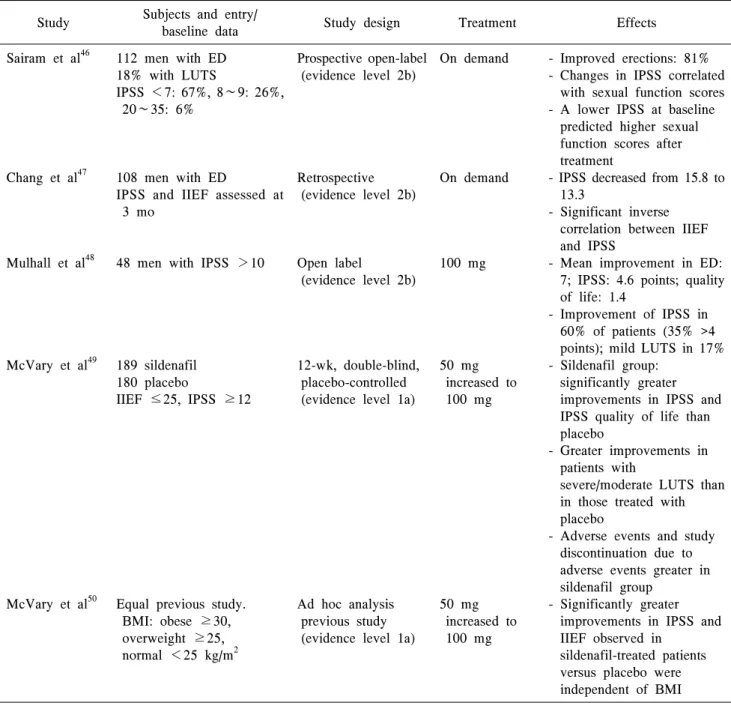
Table 1. Clinical evidence of sildenafil and lower urinary tract symptoms Study Subjects and entry/
baseline data Study design Treatment Effects
Sairam et al46
Chang et al47
Mulhall et al48
McVary et al49
McVary et al50
112 men with ED 18% with LUTS
IPSS <7: 67%, 8∼9: 26%, 20∼35: 6%
108 men with ED
IPSS and IIEF assessed at 3 mo
48 men with IPSS >10
189 sildenafil 180 placebo
IIEF ≤25, IPSS ≥12
Equal previous study.
BMI: obese ≥30, overweight ≥25, normal <25 kg/m2
Prospective open-label (evidence level 2b)
Retrospective (evidence level 2b)
Open label
(evidence level 2b)
12-wk, double-blind, placebo-controlled (evidence level 1a)
Ad hoc analysis previous study (evidence level 1a)
On demand
On demand
100 mg
50 mg increased to 100 mg
50 mg increased to 100 mg
- Improved erections: 81%
- Changes in IPSS correlated with sexual function scores - A lower IPSS at baseline
predicted higher sexual function scores after treatment
- IPSS decreased from 15.8 to 13.3
- Significant inverse correlation between IIEF and IPSS
- Mean improvement in ED:
7; IPSS: 4.6 points; quality of life: 1.4
- Improvement of IPSS in 60% of patients (35% >4 points); mild LUTS in 17%
- Sildenafil group:
significantly greater improvements in IPSS and IPSS quality of life than placebo
- Greater improvements in patients with
severe/moderate LUTS than in those treated with placebo
- Adverse events and study discontinuation due to adverse events greater in sildenafil group
- Significantly greater improvements in IPSS and IIEF observed in
sildenafil-treated patients versus placebo were independent of BMI ED: erectile dysfunction, LUTS: lower urinary tract infection, IPSS: International Prostate Symptom Score, IIEF: International Index of Erectile Function, BMI: body mass index.
nomic nervous system has been demonstrated in rats.40 The effects of testosterone can be partially explained by the fact that NO production is androgen dependent in the urinary tract. NOS in an earlier study had ap- peared to be androgen dependent in the urogenital tract of the rat.41 It suggested that LUTS may be related with low level of testosterone.42,43
Activity of Phosphodiesterase Type 5 Inhibitors in Patients with Lower
Urinary Tract Symptoms
PDE5 mRNA is expressed in the bladder, urethra and prostate. PDE5 Is has also been shown to inhibit the contraction of isolated bladder, urethra and prostate
Table 2. Clinical evidence of tadalafil and lower urinary tract symptoms derived from clinical trials Study Subjects and entry/
baseline data Study design Treatment/duration Effects McVary et al52
Roehrborn et al53
Dmochowski et al54
138 tadalafil
143 placebo Stratified by IPSS <20 or ≥20 and prior a-blocker therapy
1058 (approximately 200 per group):
placebo, four tadalafil doses, stratified by IPSS <20 or ≥20 99 tadalafil 101 placebo IPSS 13
Prospective,
randomized, double- blind, placebo- controlled
(evidence level 1a)
Prospective,
randomized, double- blind, placebo- controlled
(evidence level 1a)
Prospective,
randomized, double- blind, placebo- controlled
(evidence level Ia)
5 mg increased to 20 mg after 6 wk;
12 wk
2.5, 5, 10, 20 mg;
12 wk
20 mg; 12 wk
- At 6 and 12 wk, IPSS improvements significantly higher in tadalafil than placebo groups
- Withdrawal due to adverse events: placebo 1.4%, tadalafil 3.6%; no changes in urodynamic parameters - Significant improvement in
the 5-mg group
- IPSS increased from 4.9 to 1.8 - Higher doses associated with IPSS improvements but more adverse events
- Significant improvement of IPSS (mean difference between treatments: 4.2).
- No change in urodynamic measures (detrusor pressure at maximal urinary low rate)
IPSS: International Prostate Symptom Score.
strips in an in vitro study.44 These results serve as an impetus to attempt PDE5 Is in patients with BPH in- duced LUTS. Multiple studies indicate that PDE5 Is improve BPH induced LUTS.
1. Sildenafil and lower urinary tract symptoms The most common form of management of ED is pharmaco-therapy with PDE5 Is.45 Table 1 presents a summary of clinical studies of sildenafil and BPH/
LUTS.46-50 Mulhall et al48 found that sildenafil has a positive effect in men presenting to a sexual dysfunc- tion clinic with mild-to-moderate LUTS and ED.
Kaplan et al51 recently reported the results obtained in a pilot study designed to ascertain the safety and effi- cacy of the combination of the α-blocker, alfuzosin SR and sildenafil versus monotherapy for the treat- ment of BPH/LUTS and ED. They concluded that combination treatment was a safe and effective therapy for enhancing both voiding and sexual function in men at high risk for BPH/LUTS and ED.
2. Tadalafil and lower urinary tract symptoms The efficacy of tadalafil to relieve LUTS secondary to BPH has been reported in a number of clinical trials (Table 2).52-54 In a recently completed phase II proof of concept study, the PDE5 I, tadalafil, was effective in treating LUTS due to BPH. The primary efficacy endpoint was a change in IPSS at 6 and 12 weeks.
Responses to 5 mg of tadalafil for 6 weeks, followed by dose escalation to 20 mg for 6 weeks, were com- pared with 12 weeks of placebo.52 At both 6 and 12 weeks, tadalafil produced greater improvements over baseline measures in the IPSS, IPSS health-related quality of life index and bladder impact index com- pared to placebo. The peak flow rate changes were similar in the placebo- and tadalafil-treated groups.
3. Vardenafil and lower urinary tract symptoms In a randomized and placebo-controlled study, var- denafil 10 mg taken twice a day was used as a treat- ment for LUTS (IPSS >12) in men with BPH.55 A
Fig. 1. cAMP and cGMP levels in prostate tissue. (A) cAMP and (B) cGMP levels were significantly higher in prostate tissues of groups 2 (udenafil, 200 mg) and 3 (tadalafil, 20 mg) than group 1 (control). *p<0.05, **p<0.01.
Fig. 2. cAMP and cGMP levels in plasma. (A) cAMP and (B) cGMP levels increased significantly 1 h after TURP in the plasma of groups 2 (udenafil, 200 mg) and 3 (tadalafil, 20 mg), but not group 1 (control). *p<0.01.
total of 247 men were randomized, and 225 completed the 8-wk intention-to-treat study. The mean change in total IPSS in this study was 5.9 in the vardenafil arm and 3.6 in the placebo arm. Although the difference in total score was statistically significant, it is of inter- est that the placebo arm experienced what would be considered a clinically significant improvement in total IPSS score. There were neither significant changes in flow rate nor changes in post-voiding residual (PVR) urine volume.
4. The impact and distribution of a single phos- phodiesterase type 5 inhibitor dose in prostate tissue and plasma in patients with BPH PDE5 Is with short (sildenafil) and long (tadalafil)
half-lives have been demonstrated to significantly im- prove symptoms in men with LUTS. In a study re- ported by Zhao et al,56 evaluated the single dose ef- fects of tadalafil or udenafil, comprising novel PDE5 Is with intermediate half-lives of 7.3∼12.1 h. Udenafil and tadalafil significantly increased the levels of cGMP and cAMP in the prostate and plasma (Fig. 1).56 These results suggest that PDE5 Is enhanced the pro- duction of cyclic nucleotides in the plasma and prostate. In addition, the amount produced was not de- pendent on the trauma of the TURP but rather the type of PDE5 Is, although the source of the cyclic nucleo- tides remains unknown (Fig. 2).56 The commonly ac- cepted pathway involves activation of potassium chan- nels by cGMP- and cGMP-specific protein kinases (as
Fig. 3. The prostate tissue-to-plasma (T/P) ratio of the phosphodiesterase type 5 inhibitor (PDE5 I) concentration. The ratio was significantly higher in group 2 (udenafil, 200 mg) than in group 3 (tadalafil, 20 mg).
well as by NO itself), leading to hyperpolarization and closure of voltage-dependent calcium channels. This change elicits a decrease in intracellular calcium, the dissociation of calmodulin from myosin light chain (MLC) kinase, phosphorylation and inactivation of MLC, and the subsequent dephosphorylation of my- osin (by MLC phosphatase), and detachment from actin. Most tissues contain multiple forms of PDEs but, in tissues (including the penile corpus cav- enosum), PDE5 is the major cGMP hydrolyzing PDE.57 PDE5 Is act by inhibiting the PDE5 enzyme in the tissue/organ. The physiological activity of the tissue is regulated by cGMP and the cellular cGMP level is dictated by the balance between the rates of synthesis by guanylate cyclase and breakdown by PDE. PDEs cleave the cyclic phosphate ring that is re- quired for the action of cGMP.58 Therefore, the admin- istration of PDE5 I results in an equivalent pharmaco- logical effect at the site or the organ where the enzyme exists. It is also known that the PDE5 enzyme is ex- pressed in the prostate.25 Therefore, the high T/P ratio in the prostate indicates a longer duration of action at the relevant tissue, and udenafil has a longer influence than the PDE5 Is with a shorter half-life (p=0.0001) (Fig. 3).56 However, the role of cGMP in the plasma is unclear. Further research is needed to elucidate the exact effects of PDE5 Is on prostate tissues and the underlying mechanisms of action.
Conclusion
BPH/LUTS and ED are common disorders in aging men, which are independently associated to one another. The two disorders share certain pathophysio- logic mechanisms and this association has many clin- ical implications. These four pathophysiologic mecha- nisms are alteration in NO bioavailability, Rho kin- ase/Rho A pathway, autonomic hyperactivity, and pel- vic atherosclerosis. Androgens have been suggested to have an important role in the maintenance of the func- tional and structural integrity of the urinary tract.
Nocturia may be related with cause of low testo- sterone. Multiple large clinical trials have shown an improvement in BPH/LUTS after PDE5 I treatment.
PDE5 mRNA is expressed in the bladder, urethra and prostate. PDE5 Is has also been shown to inhibit the contraction of isolated bladder, urethra and prostate.
PDE5 Is significantly increased the levels of cAMP and cGMP in the human prostate and plasma, and the distribution of PDE5 Is in the prostate was higher than in the plasma. These findings may facilitate the feasi- bility of PDE5 Is for the simultaneously treatment of BPH-induced LUTS and ED.
REFERENCES
1) Garraway WM, Collins GN, Lee RJ. High preva- lence of benign prostatic hypertrophy in the community. Lancet 1991;338:469-71
2) Feldman HA, Goldstein I, Hatzichristou DG, Krane RJ, McKinlay JB. Impotence and its medical and psychosocial correlates: results of the Massachusetts Male Aging Study. J Urol 1994;151:54-61
3) Berry SJ, Coffey DS, Walsh PC, Ewing LL. The de- velopment of human benign prostatic hyperplasia with age. J Urol 1984;132:474-9
4) Laborde EE, McVary KT. Medical management of lower urinary tract symptoms. Rev Urol 2009;
11(Suppl 1):S19-25
5) Braun M, Wassmer G, Klotz T, Reifenrath B, Mathers M, Engelmann U. Epidemiology of erectile dysfunction: results of the 'Cologne Male Survey'.
Int J Impot Res 2000;12:305-11
6) Girman CJ, Jacobsen SJ, Rhodes T, Guess HA, Roberts RO, Lieber MM. Association of health-re- lated quality of life and benign prostatic enlargement.
Eur Urol 1999;35:277-84
7) Burnett AL, Maguire MP, Chamness SL, Ricker DD, Takeda M, Lepor H, et al. Characterization and lo- calization of nitric oxide synthase in the human prostate. Urology 1995;45:435-9
8) Kedia GT, Uckert S, Jonas U, Kuczyk MA, Burchardt M. The nitric oxide pathway in the human prostate: clinical implications in men with lower uri- nary tract symptoms. World J Urol 2008;26:603-9 9) Baltaci S, Orhan D, Gögüs C, Türkölmez K,
Tulunay O, Gögüs O. Inducible nitric oxide synthase expression in benign prostatic hyperplasia, low- and high-grade prostatic intraepithelial neoplasia and pro- static carcinoma. BJU Int 2001;88:100-3
10) Uckert S, Küthe A, Jonas U, Stief CG. Characteriza- tion and functional relevance of cyclic nucleotide phosphodiesterase isoenzymes of the human prostate.
J Urol 2001;166:2484-90
11) Khan MA, Thompson CS, Dashwood MR, Mumtaz FH, Morgan RJ, Mikhailidis DP. Endothelin-1 and nitric oxide in the pathogenesis of urinary tract dis- orders secondary to bladder outlet obstruction. Curr Vasc Pharmacol 2003;1:27-31
12) Andersson KE, Chapple CR, Höfner K. Future drugs for the treatment of benign prostatic hyperplasia.
World J Urol 2002;19:436-42
13) Kaplan SA, Gonzalez RR. Phosphodiesterase type 5 inhibitors for the treatment of male lower urinary tract symptoms. Rev Urol 2007;9:73-7
14) Roehrborn CG, McVary KT, Elion-Mboussa A, Viktrup L. Tadalafil administered once daily for low- er urinary tract symptoms secondary to benign pro- static hyperplasia: a dose finding study. J Urol 2008;180:1228-34
15) Roumeguère T, Zouaoui Boudjeltia K, Hauzeur C, Schulman C, Vanhaeverbeek M, Wespes E. Is there a rationale for the chronic use of phosphodiester- ase-5 inhibitors for lower urinary tract symptoms secondary to benign prostatic hyperplasia? BJU Int 2009;104:511-7
16) Köhler TS, McVary KT. The relationship between erectile dysfunction and lower urinary tract symp- toms and the role of phosphodiesterase type 5 inhibitors. Eur Urol 2009;55:38-48
17) Hotston M, Shukla N, Bloor J, Persad R, Jeremy JY.
Pre-clinical evidence for the use of phosphodiester- ase-5 inhibitors for treating benign prostatic hyper- plasia and lower urinary tract symptoms. BJU Int 2006;98:1331-2
18) Kedia GT, Uckert S, Jonas U, Kuczyk MA, Burchardt M. The nitric oxide pathway in the human prostate: clinical implications in men with lower uri- nary tract symptoms. World J Urol 2008;26:603-9 19) Richter K, Heuer O, Uckert S, Stief CG, Jonas U,
Wolf G. Immunocytochemical distribution of nitric oxide synthases in the human prostate. J Urol Suppl 2004;171:abstract 347
20) Bloch W, Klotz T, Loch C, Schmidt G, Engelmann U, Addicks K. Distribution of nitric oxide synthase implies a regulation of circulation, smooth muscle tone, and secretory function in the human prostate by nitric oxide. Prostate 1997;33:1-8
21) Lin G, Huang YC, Wang G, Lue TF, Lin CS.
Prominent expression of phosphodiesterase 5 in stri- ated muscle of the rat urethra and levator ani. J Urol 2010;184:769-74
22) McVary KT, Razzaq A, Lee C, Venegas MF, Rademaker A, McKenna KE. Growth of the rat pros- tate gland is facilitated by the autonomic nervous system. Biol Reprod 1994;51:99-107
23) Björntorp P, Rosmond R. The metabolic syndrome--a neuroendocrine disorder? Br J Nutr 2000;83(Suppl 1):S49-57
24) Rosmond R, Dallman MF, Björntorp P. Stress-re- lated cortisol secretion in men: relationships with ab- dominal obesity and endocrine, metabolic and hemo- dynamic abnormalities. J Clin Endocrinol Metab 1998;83:1853-9
25) Uckert S, Sormes M, Kedia G, Scheller F, Knapp WH, Jonas U, et al. Effects of phosphodiesterase in- hibitors on tension induced by norepinephrine and accumulation of cyclic nucleotides in isolated human prostatic tissue. Urology 2008;71:526-30
26) Chitaley K, Wingard CJ, Clinton Webb R, Branam H, Stopper VS, Lewis RW, et al. Antagonism of Rho-kinase stimulates rat penile erection via a nitric oxide-independent pathway. Nat Med 2001;7:119-22 27) Chitaley K, Bivalacqua TJ, Champion HC, Usta MF,
Hellstrom WJ, Mills TM, et al. Adeno-associated vi- ral gene transfer of dominant negative RhoA enhan- ces erectile function in rats. Biochem Biophys Res
Commun 2002;298:427-32
28) Rees RW, Foxwell NA, Ralph DJ, Kell PD, Moncada S, Cellek S. Y-27632, a Rho-kinase in- hibitor, inhibits proliferation and adrenergic con- traction of prostatic smooth muscle cells. J Urol 2003;170:2517-22
29) Chang S, Hypolite JA, Zderic SA, Wein AJ, Chacko S, DiSanto ME. Enhanced force generation by cor- pus cavernosum smooth muscle in rabbits with partial bladder outlet obstruction. J Urol 2002;167:2636-44 30) Bing W, Chang S, Hypolite JA, DiSanto ME, Zderic
SA, Rolf L, et al. Obstruction-induced changes in urinary bladder smooth muscle contractility: a role for Rho kinase. Am J Physiol Renal Physiol 2003;
285:F990-7
31) Hale TM, Okabe H, Bushfield TL, Heaton JP, Adams MA. Recovery of erectile function after brief aggressive antihypertensive therapy. J Urol 2002;
168:348-54
32) Tarcan T, Azadzoi KM, Siroky MB, Goldstein I, Krane RJ. Age-related erectile and voiding dysfunc- tion: the role of arterial insufficiency. Br J Urol 1998;82(Suppl 1):26-33
33) Ponholzer A, Temml C, Wehrberger C, Marszalek M, Madersbacher S. The association between vas- cular risk factors and lower urinary tract symptoms in both sexes. Eur Urol 2006;50:581-6
34) Kim SO, Son KC, Im CM, Jung SI, Kwon DD, Park KS et al. The effects of risk factors for vascular dis- ease on LUTS and erectile dysfunction. Eur Urol Suppl 2008;7:131
35) Azadzoi KM, Tarcan T, Siroky MB, Krane RJ.
Atherosclerosis-induced chronic ischemia causes bladder fibrosis and non-compliance in the rabbit. J Urol 1999;161:1626-35
36) Kozlowski R, Kershen RT, Siroky MB, Krane RJ, Azadzoi KM. Chronic ischemia alters prostate struc- ture and reactivity in rabbits. J Urol 2001;165:1019-26 37) Yassin AA, El-Sakka AI, Saad F, Gooren LJ. Lower
urinary-tract symptoms and testosterone in elderly men. World J Urol 2008;26:359-64
38) Rosenzweig BA, Bolina PS, Birch L, Moran C, Marcovici I, Prins GS. Location and concentration of estrogen, progesterone, and androgen receptors in the bladder and urethra of the rabbit. Neurourol Urodyn 1995;14:87-96
39) Salmi S, Santti R, Gustafsson JA, Mäkelä S. Co-lo-
calization of androgen receptor with estrogen re- ceptor beta in the lower urinary tract of the male rat.
J Urol 2001;166:674-7
40) Keast JR. The autonomic nerve supply of male sex organs--an important target of circulating androgens.
Behav Brain Res 1999;105:81-92
41) Chamness SL, Ricker DD, Crone JK, Dembeck CL, Maguire MP, Burnett AL, et al. The effect of an- drogen on nitric oxide synthase in the male repro- ductive tract of the rat. Fertil Steril 1995;63:1101-7 42) Rohrmann S, Nelson WG, Rifai N, Kanarek N,
Basaria S, Tsilidis KK, et al. Serum sex steroid hor- mones and lower urinary tract symptoms in Third National Health and Nutrition Examination Survey (NHANES III). Urology 2007;69:708-13
43) Ponholzer A, Madersbacher S. Lower urinary tract symptoms and erectile dysfunction; links for diag- nosis, management and treatment. Int J Impot Res 2007;19:544-50
44) Tinel H, Stelte-Ludwig B, Hütter J, Sandner P.
Pre-clinical evidence for the use of phosphodiester- ase-5 inhibitors for treating benign prostatic hyper- plasia and lower urinary tract symptoms. BJU Int 2006;98:1259-63
45) Eardley I, Donatucci C, Corbin J, El-Meliegy A, Hatzimouratidis K, McVary K, et al. Pharmacotherapy for erectile dysfunction. J Sex Med 2010;7:524-40 46) Sairam K, Kulinskaya E, McNicholas TA, Boustead
GB, Hanbury DC. Sildenafil influences lower uri- nary tract symptoms. BJU Int 2002;90:836-9 47) Chang HS, Park CH, Kim CI, Kim KS, Kim DG,
Seo YJ, et al. Influence of sildenafil on lower uri- nary tract symptoms. Eur Urol 2006;5(Suppl):178 48) Mulhall JP, Guhring P, Parker M, Hopps C.
Assessment of the impact of sildenafil citrate on lower urinary tract symptoms in men with erectile dysfunction. J Sex Med 2006;3:662-7
49) McVary KT, Monnig W, Camps JL Jr, Young JM, Tseng LJ, van den Ende G. Sildenafil citrate im- proves erectile function and urinary symptoms in men with erectile dysfunction and lower urinary tract symptoms associated with benign prostatic hyper- plasia: a randomized, double-blind trial. J Urol 2007;177:1071-7
50) McVary KT, Siegel RL, Carlsson M. Sildenafil cit- rate improves erectile function and lower urinary tract symptoms independent of baseline body mass
index or LUTS severity. Urology 2008;72:575-9 51) Kaplan SA, Gonzalez RR, Te AE. Combination of
alfuzosin and sildenafil is superior to monotherapy in treating lower urinary tract symptoms and erectile dysfunction. Eur Urol 2007;51:1717-23
52) McVary KT, Roehrborn CG, Kaminetsky JC, Auerbach SM, Wachs B, Young JM, et al. Tadalafil relieves lower urinary tract symptoms secondary to benign prostatic hyperplasia. J Urol 2007;177:1401-7 53) Roehrborn CG, McVary KT, Elion-Mboussa A,
Viktrup L. Tadalafil administered once daily for low- er urinary tract symptoms secondary to benign pro- static hyperplasia: a dose finding study. J Urol 2008;180:1228-34
54) Dmochowski R, Roehrborn C, Klise S, Xu L, Kaminetsky J, Kraus S. Urodynamic effects of once daily tadalafil in men with lower urinary tract symp- toms secondary to clinical benign prostatic hyper- plasia: a randomized, placebo controlled 12-week
clinical trial. J Urol 2010;183:1092-7
55) Stief CG, Porst H, Neuser D, Beneke M, Ulbrich E.
A randomised, placebo-controlled study to assess the efficacy of twice-daily vardenafil in the treatment of lower urinary tract symptoms secondary to benign prostatic hyperplasia. Eur Urol 2008;53:1236-44 56) Zhao C, Kim SH, Lee SW, Jeon JH, Kang KK, Choi
SB, et al. Activity of phosphodiesterase type 5 in- hibitors in patients with lower urinary tract symp- toms due to benign prostatic hyperplasia. BJU Int 2011;107:1943-7
57) Taher A, Meyer M, Stief CG, Jonas U, Forssmann WG. Cyclic nucleotide phosphodiesterase in human cavernous smooth muscle. World J Urol 1997;15:
32-5
58) Francis SH, Corbin JD. Phosphodiesterase-5 in- hibition: the molecular biology of erectile function and dysfunction. Urol Clin North Am 2005;32:419-29