Exploration of Alternative Woody Biomass for Manufacturing Biopellets
Chang-Yeong Lee
1, Chul-Hwan Kim
2†, Ji-Young Lee
2, Min-Seok Lee
1, Ho-Kyung Goo
1, Jin-Hwa Park
3, See-Han Park
4, Jeong-Heon Ryu
3Received November 17, 2020; Received in revised form November 30, 2020; Accepted December 2, 2020
ABSTRACT
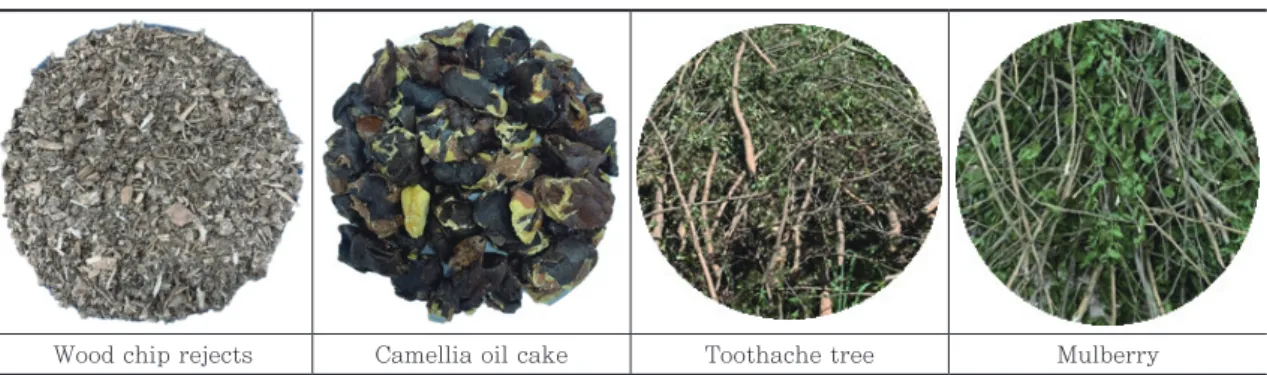
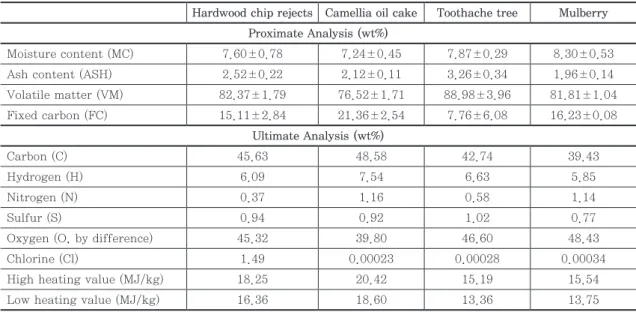
As the global warming problem becomes more serious, regulations on the use of fossil fuels are tightening. The Korean government has been also making efforts to reduce the use of fossil fuels and increase the mandatory use of new and renewable energy annually. In this study, biopellets were prepared using hardwood wood chip rejects of Moorim P&P Co, Ltd., camellia oil cake, toothache tree and mulberry tree, and their quality characteristics were analyzed. All biopellets met the quality standards of bio-SRF except for the sulfur content.
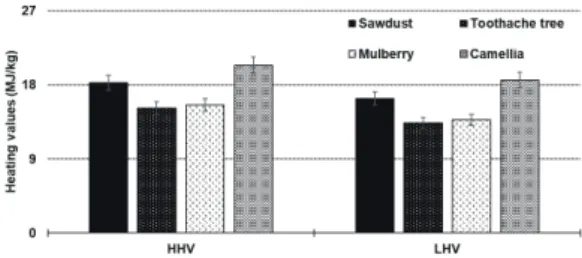
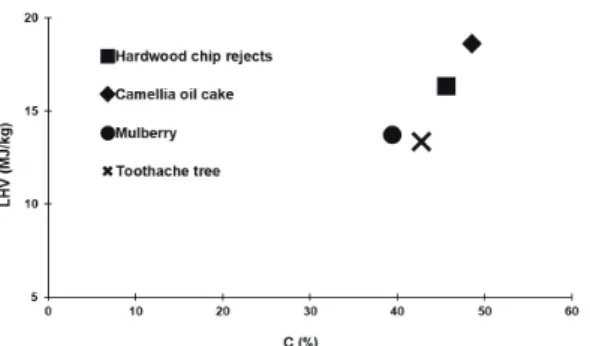
The pellets made of hardwood chip rejects and camellia oil cake showed a low heating value of about 17-18 MJ/kg, which was better than the other pellets. Ignition and combustion duration were different depending on the types of biopellets, but camellia oil cake pellets showed the best combustion characteristics. In conclusion, it was expected that, if the un- used woody biomass in Korea was used as a renewable energy source, it would be of great help to the self-reliance efforts of power generation companies that must satisfy RPS an- nually.
Keywords: RPS, bio-SRF, biopellets, unused woody biomass, low heating value
1 Graduate student, Department of Forest Products, Gyeongsang National University, Jinju, 52828, Korea 2 Professor, Major of Environmental Materials Science, IALS, Gyeongsang National University, Jinju, 52828, Korea 3 Undergraduate students, Major of Environmental Materials Science, Gyeongsang National University, Jinju, 52828, Korea 4 Advisory Professor, Major of Pulp & Paper Chemical Engineering, Gyeongsang National University, Jinju, 52828, Korea
† Corresponding Author: E-mail: [email protected]