ISSN 2288-1069 (Online)
http://dx.doi.org/10.12925/jkocs.2021.38.4.1117
The Effect of 4-Week Health Promotion Summer Camp on the Metabolic Syndrome and Insulin Resistance
among Obese Elementary Students
Hee-Jung Kim
1․Yoonsuk Jekal
2✝1
Department of Physical Education, Sookmyung Women University
2
Department of Physical Education, Jeju National University
(Received August 20, 2021; Revised August 30, 2021; Accepted August 30, 2021)
비만 초등학생의 4주 여름 건강증진캠프 참여가 대사증후군 및 인슐린저항성에 미치는 효과
김희정1*․제갈윤석2✝
1숙명여자대학교, 체육교육과, 강사
2제주대학교, 체육교육과, 교수
(2021년 8월 20일 접수: 2021년 8월 30일 수정: 2021년 8월 30일 채택)
Abstract : The purpose of the current study was to investigate the effects of 4-week health promotion intervention program consisting of high-intensity aerobic exercise to improve energy consumption and cardiorespiratory capacity, circuit training to strengthen muscular strength and endurance and education for lifestyle changes on the obesity level, physical fitness, insulin resistance and metabolic syndrome among overweight or obese elementary school students. Twenty three overweight or obese children as obese group and 15 normal body weight children as normal group were recruited. The health promotion program consisted of two exercise sessions and one education session, 3days/week in 4-week. Obesity level(body mass index, waist circumference, %body fat), physical fitness(muscular strength, muscular endurance, flexibility, cardiopulmonary fitness), insulin resistance(homeostasis model assessment of insulin resistance) and metabolic syndrome risk factors(blood pressure, fasting glucose, triglycerides, high density lipoprotein cholesterol) were measured. There was not significant decrease in obesity level; however, there were significant improvement in physical fitness, insulin resistance and metabolic syndrome risk factors after program participation among obese children. As a result, through participation in the summer camp consisting mainly of exercise, the improvement of the physical fitness level and the decrease of insulin resistance had an effect on the reduction of the metabolic syndrome frequency.
✝
Corresponding author
(E-mail: [email protected])
Keywords : insulin resistance, health promotion camp, metabolic syndrome, obese children, physical fitness
요 약 : 본 연구의 목적은 에너지 소비 및 심폐 능력 향상을 위한 고강도 유산소 운동, 근력 및 근 지구력 강화를 위한 서킷 트레이닝, 생활 습관 변화 교육으로 구성된 4주간의 건강증진 중재 프로그램 이 과체중 또는 비만 초등학생의 비만도, 체력수준, 인슐린 저항성 및 대사증후군 미치는 영향을 조사하 는데 있다. 과체중 또는 비만 아동 23명을 비만군으로, 정상체중 아동 15명을 정상군으로 선발하였다.
건강증진 프로그램은 총 4주간, 주 3일, 1일 2시간의 운동시간과 1시간의 교육으로 구성되었다. 비만도 (체질량지수, 허리둘레, 체지방률), 체력(근력, 근지구력, 유연성, 심폐체력), 인슐린 저항성 및 대사증후 군 위험요인(혈압, 공복 혈당, 중성지방, 고밀도 지단백 콜레스테롤)을 측정하였다. 프로그램 참여 후, 비 만도의 유의미한 감소는 없었지만, 비만 아동의 체력수준, 인슐린 저항성 및 대사 증후군 위험 요인은 상당한 개선이 있었다. 결과적으로 여름캠프 참여를 통해 비만 초등학생의 체력수준 향상, 인슐린 저항 성 감소 및 대사증후군 위험요인의 빈도 감소에 효과가 있는 것으로 밝혀졌다.
주제어 : 건강증진 캠프, 대사증후군, 비만 아동, 인슐린 저항성, 체력
1. Introduction
Obesity was recognized as a problem of limited subjects such as some classes, regions, and age, but it is being treated as the most serious problem in modern society[1]. Over the past few decades, the number of obese people worldwide has increased exponentially[2].
Korea is no exception to this serious rapid increase in the obese population. According to the National Health and Nutrition Examination Survey(NHANES), the proportion of adult males with a body mass index of 25 or higher was 25.1% in 1998, but increased by more than 50% to 39.7% in 2015[3]. In particular, the prevalence of severe obesity nearly doubled from 2.7% in 2002 to 4.7% in 2013, with a body mass index of 30 or more, and more than doubled from 0.21% to 0.50%
for severe obese people with a body mass index of 35 or more[3]. The prevalence of obesity in children and adolescents is also showing a serious level[4]. According to the 2016 Student Health Examination Sample Statistics, 22.4% of elementary school students were overweight and 15.1% obese, 22.6% of middle school students were overweight, and 11.0% of middle school students were
classified as obese[4].
The severity of obesity reported through numerous studies has been identified as one of the major causes of metabolic diseases such as hypertension, hyperlipidemia, and diabetes, as well as colon cancer and breast cancer[5-8].
Since childhood obesity has a high morbidity to adult obesity, thorough management is required[9]. Moreover, according to a recent study, thorough management is required because childhood obesity increases concurrent metabolic diseases[10]. Insulin resistance is a pathological condition severly associated with obesity, and there are evident association between insulin resistance and metabolic syndrome[11]. The previous research have reported significantly higher prevalence of insulin resistance and metabolic syndrome in obese children, such as 60.6% of insulin resistance and 15.6% of metabolic syndrome[10]. Consequently, obesity in children and adolescents is not a problem of appearance or body status, but requires thorough management by recognizing that it is accompanied by diseases.
Exercise is proposed as an important healthy lifestyle to prevent, reduce, and manage obesity[12]. Elementary school students are
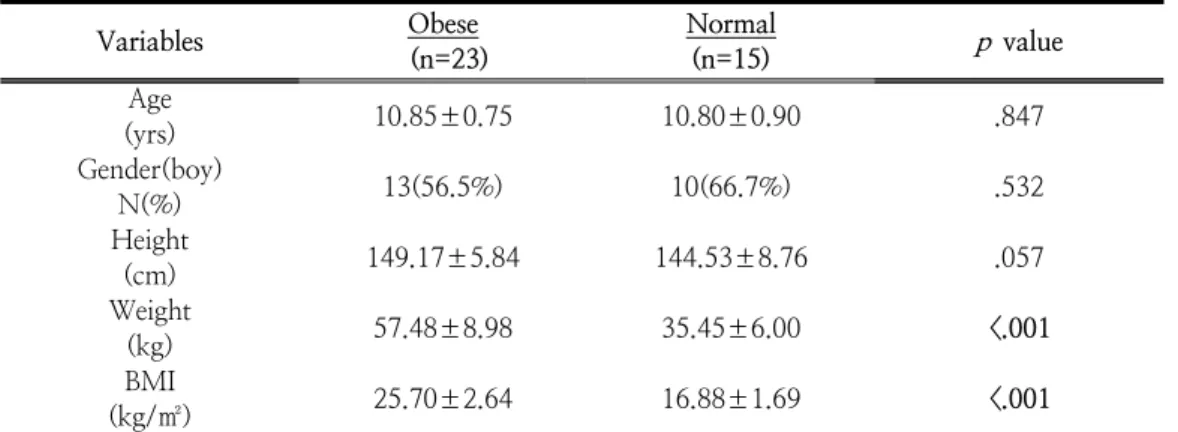
Table 1. Participants‘ Characteristics
Variables Obese
(n=23)
Normal
(n=15)
p
valueAge
(yrs) 10.85±0.75 10.80±0.90 .847
Gender(boy)
N(%) 13(56.5%) 10(66.7%) .532
Height
(cm) 149.17±5.84 144.53±8.76 .057
Weight
(kg) 57.48±8.98 35.45±6.00 <.001
BMI
(kg/㎡) 25.70±2.64 16.88±1.69 <.001
BMI: Body Mass Index
performing in accordance with the recommended amount of physical activity through school physical education and sports club activities[13]. However, during summer and winter vacations, it is difficult to maintain a regular life pattern because we mainly live at home, and it is difficult to participate in compulsory physical education classes and sports club activities, so obesity may increase.
Therefore, the purpose of this study is to investigate the effect of 4-week health promotion camp on obesity level, metabolic syndrome factors, and insulin resistance for obese elementary school students during summer vacation.
2. Methods
2.1. Participants
This study was conducted on the 4th-6th grades(10-12 years old) of an elementary school located in J-si. The study subjects were 33 overweight or obese students who had a Body Mass Index (BMI) greater than or equal to the 85th percentile of their age [14]
and did not participate in other exercise programs at baseline. In the obese group, a total of 10 vacancies occurred, including students who gave up in the middle of the
program, and students who did not have blood analysis or physical fitness measurements, so the final analysis was made on 23 students(13 boys). A total of 15 normal weight students were selected for comparison before and after the exercise program participation in the obese group as reference criteria for factors such as obesity level, physical fitness, insulin resistance, and metabolic syndrome. All participating students did not have any special exercise experience and wished to participate voluntarily in this study, and submitted the participation application and consent form written by themselves and their parents. The characteristics of the study subjects are shown in <Table 1>. All study participants understood the research content, procedure, purpose, etc., and completed a study agreement. This study was deliberated by J University Ethics Review Committee(IRB).
2.2. Research Procedure
This study was conducted as an intervention study to investigate the effects of participation in 4-week health promotion camp on physical fitness, insulin resistance, and metabolic syndrome in overweight or obese elementary school students. All subjects (23 obese students and 15 normal students) were pre-tested for
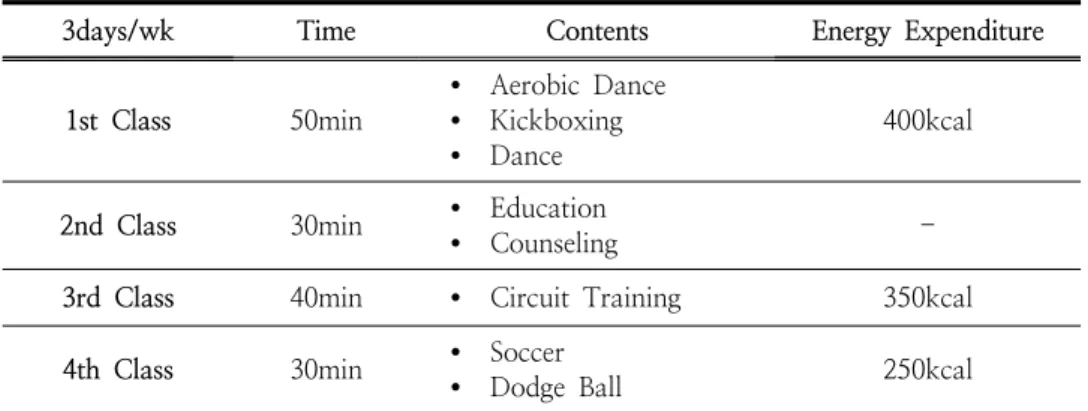
Table 2. Health Promotion Camp Daily Program
3days/wk Time Contents Energy Expenditure
1st Class 50min
Ÿ Aerobic Dance Ÿ Kickboxing Ÿ Dance
400kcal
2nd Class 30min Ÿ Education
Ÿ Counseling -
3rd Class 40min Ÿ Circuit Training 350kcal
4th Class 30min Ÿ Soccer
Ÿ Dodge Ball 250kcal
Every 2 weeks Education class for Parents body composition, physical fitness, blood pressure, and blood tests. After participating in the intervention program, the obese group re-executed body composition, physical fitness, blood pressure and blood tests as a post-intervention program to monitor changes before and after participating in the intervention program. The difference with the normal weight group was compared and analyzed.
The intervention program was conducted 3 days/week for 4 weeks during summer vacation, consisting of 2 hours of exercise program and 1 hour of education program per day, for a total of 3 hours. The exercise program was structured and implemented under the cooperation of this researcher and the exercise prescription specialist, and the educational program was constructed and implemented under the consultation of experts from the Department of Physical Education, Pediatric Psychiatry, and Food and Nutrition
<Table 2.>.
2.3. Health Promotion Intervention Program The exercise program was conducted for 2 hours a day at the gym at J University. For one hour of the exercise program, a dance program (aerobics, aerobic boxing, line dance) that stimulates students' interest and improves aerobic ability was conducted (400 kcal/hour
energy), and 1 hour performed circuit training consisting of push-ups, burpee tests, lunges, squats, and sit-ups (350 kcal/hour) to enhance physical fitness such as cardiorespiratory fitness, muscular strength, muscular endurance, and flexibility. In addition, as an additional exercise, one of soccer, dodgeball, and padminton was selected and performed once a week (every wednesday, 250 kcal/time). Energy consumption (kcal) for each individual was measured by wearing a portable wireless heart rate monitor (Polar Analyzer, Polar Elector of Finland).
The education program consisted of health and nutrition education and individual counseling in the classroom, and one topic was selected and educated per day. The content of the educational program focused on the long-term intervention effect so that overweight or obese elementary school students could continue to manage themselves after participating in the program.
Parent education class educated students to understand the definition, standards, causes, and relationship of childhood obesity, and to recognize the current trend of childhood obesity and the importance of parents' role in preventing obesity and promoting health in children. In addition, the importance of physical activity and healthy lifestyle were presented to improve the level of health
awareness so that children can receive proper health education at home.
2.4. Assessments
Height and weight were measured using JENIX (Dongsan Genix, Korea), which is an automatic measurement device after taking off shoes and putting on the simplest possible clothes. Body mass index(BMI) was calculated by dividing the measured weight (kg) by the square of the height (m). Waist Circumference (WC) was measured at the thinnest circumference between the midpoint boundary line between the iliac crest and the 12th rib, with the arm relaxed, and measured during normal expiration. Percent body fat (PBF)were measured using Inbody 720 (Biospace Co., Korea).
Grip strength and back strength were measured using a grip dynamometer (DW-701, Japan) and a back muscle dynamometer (T.K.K.5102, Japan). They were conducted twice and the highest value was recorded in units of 0.1 kg. For muscular endurance, sit-up (SU) was measured for 60 seconds using a sit-up table (KT2522, Korea).
Flexibility was measured by sitting forward bending (Sit and Reach, SR) using a left forward flexion meter (T.K.K.5103, Japan).
Cardiorespiratory fitness was measured using the Progressive Aerobic Cardiovascular Endurance Run (PACER), and the total number of times the subject performed was recorded.
Systolic blood pressure (SBP) and diastolic blood pressure (DBP) were measured in the left upper arm using an automatic blood pressure meter (OMRON HEM-770A, Japan) after resting for at least 3 minutes.
All blood collections were performed in the morning with 12-hour fasting. Fasting glucose (FG), triglycerides (TG), total cholesterol (TC), high density lipoprotein cholesterol (HDL-C), low density lipoprotein cholesterol (LDL-C), the concentration of fasting insulin (FI) was examined.
To examine the degree of insulin resistance, it was calculated using the Homeostasis Model Assessment of Insulin Resistance (HOMA-IR), and the calculation formula is as follows[15].
HOMA-IR =
fasting insulin (μU/mL) × fasting glucose (mg/dL) / 405
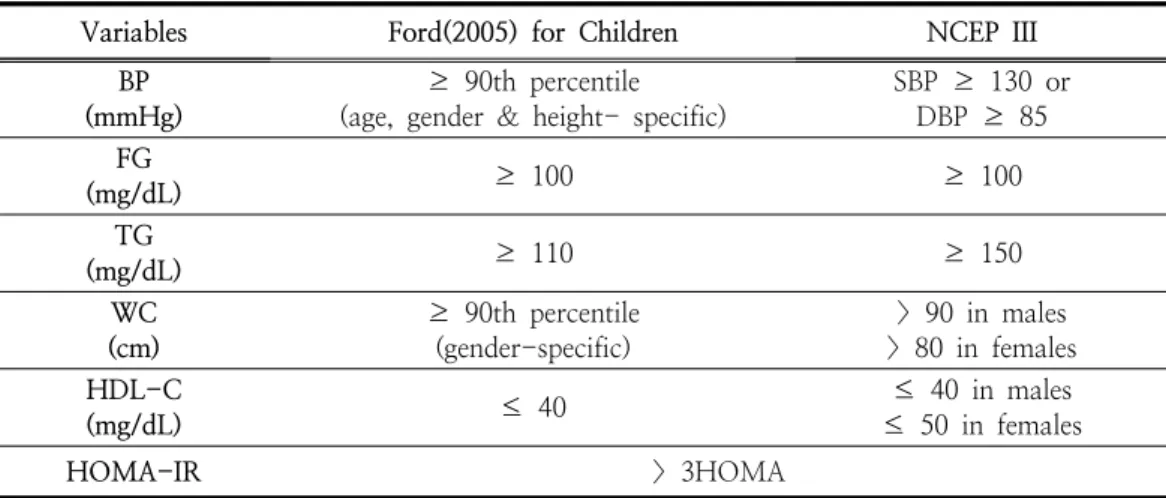
To define metabolic syndrome, Ford's method, which modified the definition presented by the National Cholesterol Education Program[16] for children and adolescents, was used to establish the diagnostic criteria[17]. For percentiles of waist circumference, the percentiles for waist circumference by age and gender presented in the 2007 standard growth chart for children and adolescents were used. Metabolic syndrome was defined if 3 or more of the 5 risk factors were applicable, and the diagnostic criteria are as shown in <Table 3>.
2.5. Statistical Analysis
The data measured for this study were analyzed as follows using the Statistical Package for Predictive Analytics Soft Ware (PASW) 18.0 statistical program. For measurement items, categorical variables were described as frequency, and continuous variables were calculated as the mean and standard deviation. The significance level for hypothesis testing was set as
p
<.05.Independent t-test method was used to compare the obesity level, physical fitness, insulin resistance and metabolic syndrome risk factors of the obese group and the normal group. Obesity level, physical fitness, insulin resistance and metabolic syndrome before and after participation in the obese group. Paired t-test method was used to compare changes in variables in obese group. Chi-square test method was used to analyze the prevalence of insulin resistance and metabolic syndrome in the obese group and normal group before and
Table 3. Definition of Metabolic Syndrome among Children
Variables Ford(2005) for Children NCEP III
BP (mmHg)
≥ 90th percentile (age, gender & height- specific)
SBP ≥ 130 or DBP ≥ 85 FG
(mg/dL) ≥ 100 ≥ 100
TG
(mg/dL) ≥ 110 ≥ 150
WC (cm)
≥ 90th percentile (gender-specific)
> 90 in males
> 80 in females HDL-C
(mg/dL) ≤ 40 ≤ 40 in males
≤ 50 in females
HOMA-IR > 3HOMA
BP: blood presure, DBP: diastolic blood pressure, FG: fasting glucose, HDL-C: high density lipoprotein cholesterol, HOMA-IR: Homeostasis Model Assessment of Insulin Resistance, NCEP: national cholesterol education program, SBP: systolic blood pressure, TG: triglycerides, WC: waist circumference
after participating in the intervention program.
3. The Results
3.1. Comparison of obesity level, physical fitness level, insulin resistance and metabolic syndrome risk factors between obese group and normal group at baseline
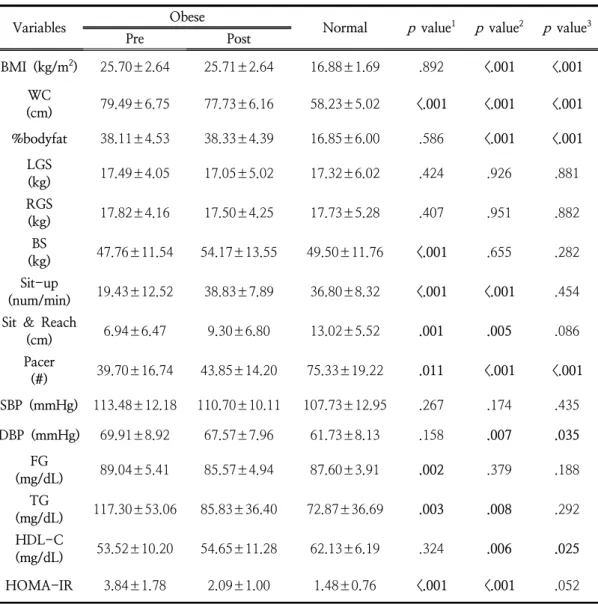
<Table 4> shows the results of obesity level, physical fitness level, insulin resistance and metabolic syndrome risk factors analysis of the obese group and the normal group. In the obesity level variables, the obese group showed significantly higher body mass index, waist circumference, and % body fat compared to the normal group. In physical fitness level variables, the obese group showed significantly lower levels of sit-up (muscular endurance), sit
& reach (flexibility), and pacer (cardio- respiratory fitness) compared to the normal group. In metabolic syndrome risk factors and insulin resistance, compared to the normal
group, the obese group showed significantly higher DBP, TG and IR, and significantly lower HDL-C.
3.2. Comparison of obesity level, physical fitness level, insulin resistance and metabolic syndrome risk factors in obese group before and after program participation
<Table 4> shows the results of analysis of changes in obesity level, physical fitness level, insulin resistance and metabolic syndrome risk factors before and after program participation in the obese group. In the obesity level variables, the WC decreased significantly after program participation. In physical fitness level variables, the levels of back strength (muscular strength), sit-up (muscular endurance), sit &
reach (flexibility), and pacer (cardiorespiratory fitness) significantly increased after program participation. In metabolic syndrome risk factors and insulin resistance, after program participation, FG, TG and IR were significantly decreased.
Table 4. Comparison of Obese & Normal Group before and after Program Participation and Comparison of Obese Group before and after Program Participation
Variables Obese
Normal
p
value1p
value2p
value3Pre Post
BMI (kg/m2) 25.70±2.64 25.71±2.64 16.88±1.69 .892 <.001 <.001 WC
(cm) 79.49±6.75 77.73±6.16 58.23±5.02 <.001 <.001 <.001
%bodyfat 38.11±4.53 38.33±4.39 16.85±6.00 .586 <.001 <.001 LGS
(kg) 17.49±4.05 17.05±5.02 17.32±6.02 .424 .926 .881
RGS
(kg) 17.82±4.16 17.50±4.25 17.73±5.28 .407 .951 .882
BS
(kg) 47.76±11.54 54.17±13.55 49.50±11.76 <.001 .655 .282
Sit-up
(num/min) 19.43±12.52 38.83±7.89 36.80±8.32 <.001 <.001 .454 Sit & Reach
(cm) 6.94±6.47 9.30±6.80 13.02±5.52 .001 .005 .086
Pacer
(#) 39.70±16.74 43.85±14.20 75.33±19.22 .011 <.001 <.001 SBP (mmHg) 113.48±12.18 110.70±10.11 107.73±12.95 .267 .174 .435
DBP (mmHg) 69.91±8.92 67.57±7.96 61.73±8.13 .158 .007 .035
FG
(mg/dL) 89.04±5.41 85.57±4.94 87.60±3.91 .002 .379 .188
TG
(mg/dL) 117.30±53.06 85.83±36.40 72.87±36.69 .003 .008 .292
HDL-C
(mg/dL) 53.52±10.20 54.65±11.28 62.13±6.19 .324 .006 .025
HOMA-IR 3.84±1.78 2.09±1.00 1.48±0.76 <.001 <.001 .052
BMI: body mass index, BP: blood presure, BS: back strength, DBP: diastolic blood pressure, FG:
fasting glucose, HDL-C: high density lipoprotein cholesterol, HOMA-IR: Homeostasis Model Assessment of Insulin Resistance, LGS: left grip strength, NCEP: national cholesterol education program, PACER: Progressive Aerobic Cardiovascular Endurance Run, RGS: right grip strength, SBP: systolic blood pressure, TG: triglycerides, WC: waist circumference
p
value1: comparison between pre and post obese groupp
value2: comparison between obese and normal group at baselinep
value3: comparison between obese after program and normal group3.3. Comparison of obesity level, physical fitness level, insulin resistance and metabolic syndrome risk factors between obese group after program participation and normal group <Table 4> shows the results of obesity level, physical fitness level, insulin resistance and metabolic syndrome risk factors analysis of the obese group after program participation and the normal group. In the obesity level variables, the obese group showed significantly higher body mass index, waist circumference, and % body fat percentage compared to the normal group. In physical fitness level variables, the normal group showed significantly lower levels of pacer (cardiorespiratory fitness) only compared to the normal group. In metabolic syndrome risk factors and insulin resistance, compared to the control group, the obese group showed significantly higher DBP, TG, FI and IR, and significantly lower HDL-C.
3.4. Changes in the frequency of insulin resistance and metabolic syndrome before and after obese program participation
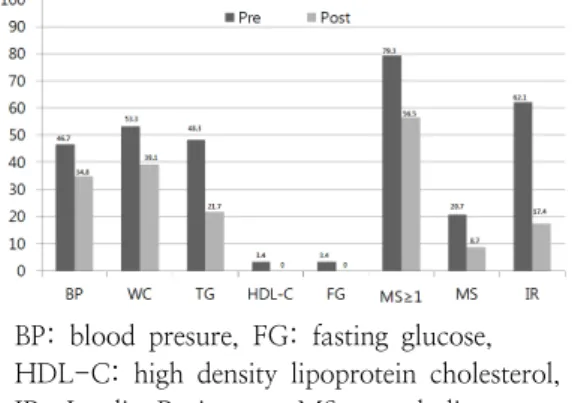
<Figure 1> shows the results of analysis of the frequency of IR and MS in the obese group before and after program participation.
As a result of the analysis, the frequency of IR decreased from 62.1% to 17.4%, and the frequency of students with one or more MS risk factors decreased from 79.3% to 56.5%.
In addition, the frequency of MS decreased from 20.7% to 8.7%.
As a result of analysis of the change in the frequency of risk factors for each MS risk factor, the obese group showed abdominal obesity (53.3%→39.1%) and hypertriglyceridemia (48.3%→21.7%), hypertension (46.7%→34.8%), low-density lipoprotein cholesterolemia (3.4%
→0%), and impaired fasting blood glucose (3.4%→0%).
BP: blood presure, FG: fasting glucose, HDL-C: high density lipoprotein cholesterol, IR: Insulin Resistance, MS: metabolic syndrome, TG: triglycerides, WC: waist circumference
Fig. 1. Changes in the Frequency of IR & MS before and after Intervention Program.
4. Discussions
Although various intervention programs are being implemented to prevent and treat obesity in children and adolescents, there are insufficient studies on programs to promote the obesity or health of elementary school students in situations where school life is difficult, such as during vacations. For elementary school students, the chance of physical activity is relatively reduced during the vacation period compared to during the semester, so exercise practice habits are more likely to decrease, which is expected to increase the risk of obesity.
This study analyzed the effects of intervention program consisting of exercise, health and nutrition education, counseling, and parent education for health promotion on the level of obesity, physical fitness, insulin resistance and metabolic syndrome of overweight or obese elementary school students during summer vacation.
In this study, overweight or obese elementary school students before participating
in the intervention program showed significantly higher levels of obesity in BMI, WC, and
%body fat than normal body weight elementary school students, and showed muscular endurance, flexibility, and cardiorespiratory fitness were significantly lower. In addition, DBP, TG, FI and IR were significantly higher, and HDL-C was significantly lower. This suggests that overweight or obese elementary school students need management and efforts to improve their physical fitness level and health along with a decrease in obesity level to prevent the development of metabolic syndrome
Abdominal obesity has a high correlation with metabolic diseases such as hypertension, dyslipidemia, type 2 diabetes, IR and coronary artery disease independently of BMI[18], and waist circumference is the most effective index to determine abdominal obesity. In this study, after participation in the intervention program, waist circumference and hip circumference, which are indices for predicting abdominal obesity in overweight or obese elementary school students, significantly decreased. Waist circumference is a suitable method to analyze changes in the amount of abdominal fat before and after participation in an intervention program for obese people. It is clear that exercise is helpful in burning body fat, but it is not known where body fat is reduced.
However, according to previous studies, high-intensity exercise has been reported to have a direct effect on the reduction of visceral obesity[19]. Although statistical results were not calculated in this study because abdominal visceral fat was not included in the analysis, the significant decrease in waist circumference is presumed to be due to the decrease in abdominal visceral fat. In future studies, it is considered that it is necessary to measure and verify the change in the visceral fat of the abdomen in detail.
In this study, the physical fitness, muscular endurance, flexibility, and cardiorespiratory fitness level of overweight or obese elementary
school students after participating in the intervention program significantly increased, and FG, TG, FI and IR were significantly decreased. In addition, the frequency of IR and MS decreased. This exercise program was conducted for obese children to increase physical fitness level such as muscular strength, muscular endurance, flexibility, and cardiorespiratory fitness, and to significantly improve MS risk factors such as FG, TC, TG, FI and IR. It is similar to the reported study results[20]. As a result of analyzing the relationship between obesity and physical fitness level and metabolic disease, the risk of metabolic diseases such as cardiovascular disease and insulin resistance was significantly reduced when obese but high muscular strength and cardiorespiratory fitness level compared to people who were underweight but low muscular strength and cardiorespiratory fitness level do. When the physical fitness level is improved through regular exercise, FG control ability is improved, FG level is improved, IR is decreased, and the risk of metabolic diseases such as type 2 diabetes and coronary artery disease is reduced[21]. Therefore, it has been demonstrated that improving physical strength such as strength, muscular endurance, flexibility, and cardiorespiratory fitness through regular physical activity is an important factor in preventing the risk of insulin resistance and metabolic syndrome and maintaining and promoting health.
In conclusion, through participation in the 4-week vacation intervention program for health promotion, the degree of obesity such as body mass index and body fat percentage was still at the obese level, but the waist circumference indicating abdominal obesity significantly decreased. In addition, it was found that the health level of muscular strength, muscular endurance, flexibility, and cardiorespiratory fitness was improved, and the health level of overweight or obese elementary school students was improved as the
prevalence of insulin resistance and metabolic syndrome decreased. As a result of performing the intervention program for obese adolescents, Jekal et al.[20] showed that body mass index was still above obesity level, but physical fitness level improved, and metabolic disease risk factors such as systolic blood pressure, total cholesterol, high-density lipoprotein cholesterol, insulin and insulin resistance were significantly improved. reported the results of the study. In addition, Dengel et al.[22]
reported that regular physical activity participation of obese people had a positive effect on metabolic disease risk factors even if weight loss or body composition did not change. is supporting When you start participating in regular physical activity, your health level, including your fitness level, gradually improves [20]. Based on this, the improvement effect of body composition including obesity is expected when continuously participating in physical activity.
Therefore, it is considered that it is necessary to judge the effect of participating in physical activity in terms of improvement of the level of physical strength and health rather than simply limiting the reduction of obesity such as weight, body mass index, and body fat percentage.
In this study, 6.7% of normal-weight elementary school students had insulin resistance, and 33.3% had more than one metabolic syndrome risk factor. This suggests the importance of improving physical strength as well as reducing obesity in order to prevent insulin resistance and metabolic syndrome, and to maintain and promote health. Therefore, not only overweight or obese students, but also normal-weight students should participate in regular physical activity. It is recommended that students of normal weight participate in regular physical activity for the purpose of preventing obesity and promoting physical strength and health, and for overweight or obese students, for the purpose of reducing obesity and improving physical strength, and
preventing and treating insulin resistance and metabolic syndrome.
5. Conclusions
The purpose of this study was to investigate the effect of a four-week health promotion intervention program consisting of high-intensity aerobic exercise to improve energy consumption and cardiorespiratory capacity, circuit training to strengthen muscular strength and endurance and education for lifestyle changes on insulin resistance and metabolic syndrome in obese children. After participating in the program, the degree of obesity in obese children did not improve as much as in the normal children, but physical fitness and insulin resistance became as healthy as in the normal children.
In conclusion, obese children cannot expect a change in their obesity level right away through regular exercise, but they can prevent metabolic syndrome by improving their physical fitness and insulin resistance.
Acknowledgements
This research was supported by the 2020 scientific promotion program funded by Jeju National University.
References
1. T. P. James, R. Leach, E. Kalamara, M.
Shayeghi, "The worldwide obesity epidemic",
Obesity Research,
Vol.9, pp. S228-233, (2001).2. Y. C. Chooi, C. Ding, F. Magkos, "The epidemiology of obesity",
Metabolism:
Clinical and Experimental.
, Vol.92, pp.6-10,(2019).
3. S. W. Oh, "Recent epidemiological changes in Korean obesity",
The Korean Journal of
Helicobacter and Upper Gastrointestinal Research.,
Vol.17, No.2 pp. 62-65,(2017).4. C. S. Han, S. Kim, H. K. Kim,
"Identifying the prevalence of thinness, overweight, obesity among adolescents: A comparison of national and international growth references",
Journal of Korean Public Health Nursing
, Vol.33, No.3 pp.364-378,(2019).
5. A. P. Rocchini, "Obesity hypertension",
American Journal of Hypertension,
Vol.15, No.S2 pp. S50-52,(2002).6. M. Charlton, "Obesity, hyperlipidemia, and metabolic syndrome",
Liver Transplantation
, Vol.15, No.S2 pp. S83-89,(2009).7. A. H. Mokdad, E. S. Ford, B. A.
Bowman, W. H. Dietz, F. Vinicor, V. S.
Bale, J. S. Mark, "Prevalence of obesity, diabetes, and obesity-related health risk factors, 2001",
The Journal of American Medical Association
, Vol.289, No.1 pp.76-79,(2003).
8. E. E. Calle, M. J. Thun, "Obesity and cancer",
Oncogene,
Vol.23, pp. 6365-6378, (2004).9. F. M. Biro, M. Wien, "Childhood obesity and adult morbidities",
The American Journal of Clinical Nutrition,
Vol.91, No.5 pp. S1499-1505,(2010).10. D. J. Roh, Y. Jekal, "Obesity rate by a variety of obesity measurements and prevalence of insulin resistance and metabolic syndrome among overweight or obese children",
Journal of The Korean Society of Living Environmental System,
Vol.20, No.1 pp. 88-97,(2013).11. G. Wilcox, "Insulin and insulin resistance.",
The Clinical Biochemist Review
., Vol.26, No.2 pp. 19-39,(2005).12. A. Petridou, A. Siopi, V. Mougios,
"Exercise in the management of obesity",
Metabolism,
Vol.92, pp. 163-169,(2019).13. O. N. Enriquez, K. L. Oliver, "'Can we play the real sport'? Co-creating a student-centered after-school sports club",
Physical Education and Sport Pedagogy,
https://doi.org/10.1080/17408989.2020.186 7716, (2020).
14. Korean Academy of Pediatrics, "Standard values for physical development in children and adolescents in Korea",
Seoul: Health Statistics Committee,
(1999).15. D. R. Matthews, J. P. Hosker, A. S.
Rudenski, B. A. Naylor, D. F. Treacher, R. C. Turner, "Homeostasis model assessment: insulin resistance and β-cell function from fasting plasma glucose and insulin concentrations in man",
Diabetologia,
Vol.28, No.7 pp. 412-419, (1985).16. Expert Panel on Depection, Evaluation, and Treatment of High Blood Cholesterol in Adults, "Executive Summary of the Third Report of the National Cholesterol Education Program (NCEP) Expert Panel on Detection, Evaluation, and Treatment of High Blood Cholesterol in Adults (Adult Treatment Panel III)",
The Journal of American Medical Association,
Vol.285, No.19 pp. 2486-2497,(2001).17. E. S. Ford, U. A. Ajani, A. H. Mokdad,
"The metabolic syndrome and concentrations of C-reactive protein among U.S. youth",
Diabetes Care,
Vol.28, No.4 pp. 878-881,(2005).18. D. G. Carey, "Abdominal obesity",
Current Opinion in Lipidology.,
Vol.9, No.1 pp.35-40, (1998).
19. B. A. Irving, C. K. Davis, D. W. Brock, J.
Y. Weltman, D. Swift, E. J. Barrett, G. A.
Gaesser, A. Weltman, "Effect of exercise training intensity on abdominal visceral fat and body composition",
Medicine and Science in Sports and Exercise,
Vol.40, No.11 pp. 1863-1872,(2008)20. Y. Jekal, E. S. Kim, J. A. Im, J. H. Park, M. K. Lee, S. H. Lee, S. H. Suh, S. H.
Chu, E. S. Kang, H. C. Lee, J. Y. Jeon, "
Interaction between fatness and fitness on CVD risk factors in Asian youth",
International Journal of Sports Medicine,
Vol.30, No.10 pp. 733-740,(2009).21. S. Cassidy, C. Thoma, D. Houghton, M.
I. Trenell, "High-intensity internal training:
a review of its impact on glucose control and cardiometabolic health",
Diabetologia,
Vol. 60, No.1 pp. 7-23,(2017).22. D. R. Dengel, R. E. Pratley, J. M. Hagberg, E. M. Rogus, A. P. Goldberg, "Distinct effects of aerobic exercise training and weight loss on glucose homeostasis in obese sedentary men",