Print ISSN: 1738-3110 / Online ISSN 2093-7717 JDS website: http://kodisa.jams.or.kr/
http://dx.doi.org/10.15722/jds.18.11.202011.41
The Distribution of New Town Development Paradigm against COVID-19:
Lessons and Prospects*
Choongik CHOI
1, Jaebum JUN
2Received: September 16, 2020. Revised: October 14, 2020. Accepted: November 05, 2020.
Abstract
Purpose: This article aims to explore the new town development paradigm against infectious diseases. The distribution of COVID-19 constricts economic activity. The high frequency of outbreaks of COVID-19 nationwide is due to neither malnutrition nor unhygienic environment. Research design, data and methodology: The research question starts with the idea that understanding the features of the outbreak of pandemic diseases could help public health authorities to better cope with upcoming risks in the future. We have employed a big data-based methodology to explore the outbreak of pandemic diseases. Also, an idiographic approach is used to describe the distribution of new towns against COVID-19. Results: The results demonstrate that the rapid spread of COVID-19 has had a strong impact on regional economies and urban development. It was found that there is a close relationship between infectious diseases outbreaks and new town development. Conclusions: The findings could be used to deal with new town development against infectious diseases better in other cities or countries as well. The distribution of COVID-19 may become an unexpected opportunity for a paradigm shift in the distribution of new town development to prevent not only an excessive concentration in Seoul, but also an imbalance between national and local development.
Keywords: Distribution, COVID-19, New Town Development, Climate Change, Distribution of Urbanization, Risk Society, Real Estate Development
JEL Classification Codes: I15, I18, O15, O18, O2
1. Introduction
12COVID-19, once regarded as just a slight cold, has completely changed our daily life pattern. The distribution of coronavirus pandemic reduces social and economic
* This work was supported by the Ministry of Education of the Republic of Korea and the National Research Foundation of Korea (NRF-2019S1A5A2A01035379). This paper was based on the title of “The New Town Development against COVID-19” of Uninomic Review 3(4).
1 First Author. Professor, Department of Public Administration, Kangwon National University, Korea.
Email: [email protected].
2 Corresponding Author, Jaebum Jun, Associate Professor, Institute of Liberal Education, Kangwon National University, Korea. E-mail: [email protected].
ⓒCopyright: The Author(s)
This is an Open Access article distributed under the terms of the Creative Commons Attribution Non-Commercial License (http://Creativecommons.org/licenses/by-nc/4.0/) which permits unrestricted noncommercial use, distribution, and reproduction in any medium, provided the original work is properly cited.
activity, which is likely to bring about a drop in trade volume. Although many countries have not enforced a lockdown, the socioeconomic activities declined sharply after the health authorities ordered the closure of shops, cafes and other small businesses. Since the first COVID-19 case was confirmed in the quarantine process of entrants from Wuhan City, China at the National Quarantine Station in Incheon Airport on January 19, 2020, the cases increased to 21,743 as of September 10, 2020, and the COVID-19 has spread nationwide. Although fatality rate (No. of deaths/No.
of confirmed cases) is less than 2%, life pattern had to be rapidly changed due to pandemic management including that moving paths of confirmed cases are made public and self-quarantine is carried out. Above all, fact-to-face contact raising infection risk has to be avoided and high segregation and control at community, area, and national levels, as well as compliance with personal hygienic rules, require human settlements far different from the past(Khan, et al., 2020).
As cities have such a feature as highly concentrated
spatial development, namely, concentrated facilities are activities are carried out in narrow spaces, infectious diseases have been a serious threatening factor to cities historically. In modern era when cutting-edge science and technology develop day by day, such a threat has continued, and the distribution of COVID-19 has fortified its threat.
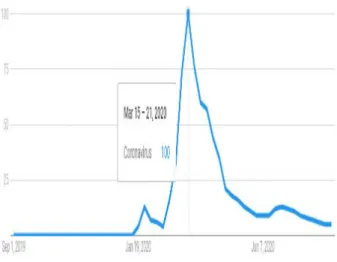
Figure 1: Trend of COVID-19 Observed through Big Data
Source:https://trends.google.com/trends/explore?q=%2Fm%2F01cp yy&geo=US2. Distribution of the COVID-19 and the Change of Human Settlements in Risk Society
COVID-19 spreading worldwide showed the most high interest index in the Google big data analysis in March 2019. When looking at the trend of Korea’s confirmed cases, the COVID-19 showed a rapid spread by group confirmed cases by Shincheonji believers in March, and then showed a lull. But, COVID-19 has quickly spread again since August 2020. As of September 10, 2020, 30 million conformed cases and one million deaths worldwide clearly show the really powerful influence of COVID-19. Given that an infectious disease that broke out in a city, China affects the whole world within a year, we can easily guess its temporal and spatial ripple effect and influence.
Infectious diseases such as COVID-19 are a highly influential factor that can innovatively change future urban development, in addition to rapid change of human settlements in cities (Kim & Lee, 2020). Urban development receives pressure to give up physical integration and highly concentrated development nowadays to properly cope with infectious diseases threat, and also faces a new phase, namely intact eco-spatial development beyond past development paradigm.
Figure 2: Current Status of Confirmed Cases of COVID-19 in Korea
Source: http://www.newspim.com/news/view/20200825000408