약학회지 제35권 제3호 165〜 173(1991) Yakhak Hoeji Vol. 35,No. 3
Flavonoids의 약리작용(IV)
— 백혈구유주,superoxide anion 및 과산화지질 생성 억제작■§—
김창종• 정현삼• 정진모
중앙대학교 약학대학 (Received March 9, 1991)
Pharmacological Activities of Flavonoids (IV)
— Inhibitory Actions of Leukocyte Migration, Superoxide Anion Production and Lipid Peroxidation —
Chang-Johng K im , H y un Sam Ju n g and Jin M o C h u ng College of Pharmacy, Chung-Ang University, Seoul 156-756,Korea
Abstract—Effects of eight flavonoids and their related compounds on leukocytes migration, supe
roxide anion production and lipid peroxidation in the phagocytosis of latex beads or E. coli by guinea pig peritoneal exudate cells were studied in vitro. It shows that most of flavonoids generally inhibited the leukocytes migration and production of superoxide anion and malonedialdehydes.
Their inhibitory activities in the phagocytosis of latex beads had more active than that of E. coli Quercetin has the most inhibitory activity in leukocytes migration and production of superoxide anion and lipid peroxides at the concentration of 1,2 and 10 jiM. Catechin and rutin at the concentration of 2 and 10 (iM inhibited significantly the production of superoxide anion and lipid peroxides. Flavone, catechin, naringin and rutin at the concentration of 2 and 10 |iM inhibited significantly the leukocytes migration.
Keywords □ Flavonoids, superoxide anion, lipid peroxidation, leukocytes migration, guinea pig peri
toneal exudate cells, phagocytosis of latex beads or E. coli.
Rakieten 등1〉과 Srivastava 등2〉은 streptozotocin 이 유리기 (free radicals) 를 형성하여 p-cell 막에서 과 산화지질화가 일어나므로 당뇨병이 유발된다고 보고 하였고^ 또 여러 가지 화학물질들3ᅳ5)에 의하여 유리 기가 형성되어 질병이 유발된다는 소위 화학적 세포 상해기 전을 보고하였다. 또한 Rugh 등6〉은 방사선이나 자외선조사에 의하여 세포 구성성분이 유리기를 형 성하므로 세포상해가 일어난다고 보고하였다. 이러한 유리기유발 세포상해는 여러 가지 병리기전7-9〉에도 관여된다고 보고되고 있고,특히 노화현상10)은 산화 환원반응에서 생성되는 유리기에 의하여 세포막 인 지질의 과산화 때문이라고 알려져 있지만, 인체에서는 superoxide dismutase(SOD) ,n ' 15) catalase,15) gluta
thione peroxidase16) 등과 같은 효소와 ceruloplasmin 및 transferrin 같은 혈청단백,16) SH 기 함유아미노 산16〉 등이 유리기 제거작용을 한다고 보고하였다.
또한 Umeo 등17’18)은 식물의 엽록소에서 quercetin이 광과산화반응(photoperoxidation) 을 억제한다고 보고 하였다.
한편 Johnston 등19〉과 Babior 등20)은 백혈구가 세 균의 탐식과정에서 superoxide anion( 0 5 ) 이 생성되 어 hydrogen peroxide (H2O2) 로 전환되어 H2()2-mye- loperoxidase-hilide system20) 이 나 myeloperoxidase- independent killing system21)을 통하여 살균작용을 갖는다고 보고하였으며, Busse 등22〉과 Pagonis 등23〉
은 quercetin, morin, chalcone 등이 호중구의 supero
165
xide anion 생성을 억제한다고 보고하였다. 또한 Ho- dnick 등24》은 quercetin이 미토콘드리아에서 succino- xidase 활성과 유리기형성을 억제한다고 보고하였고, Fraga 등25}은 eriodyctiol과 ( + )catechin이 사염화탄 소 유리기(CC13. ) 에 의한 지질과산화반응을 억제한 다고 보고하였으며,Younes 등26》은 quercetin이 glu
tathione 고갈에 의한 지질과산화반응을 억제한다고 보고하였다. 또 Lambev 등27》은 naringin과 rutin이 항산화작용 및 histamine 유리억제작용이 있다고 보 고하였다. 이와 같이 몇 가지 flavonoids가 유리기생 성을 억제할 뿐만 아니라 Sandler 등28〉은 dimethylu- rea가 streptozotocin 유발당뇨를 억제하므로 유리기 제거작용(free radical scavenger action) 을 한다고 보 고 하 였 으 며 ,또 한 penicillamine,16) flavins,29) quino- nes,29) C u ( I I) -(3,5-diisopropyl salicylate)2,30} a-toco
pherol,31) acrolein,32) croton aldehyde,32) 항암제 및 인삼배당체34} 등33}도 유리기 제거작용이 있다고 보 고되었다.
저자 등은 전보들3느3” 에서 여러 가지 flavonoids가 과민반응과 면역반응을 억제하며,항염작용과 백혈구 의 탐식작용을 촉진하지만 상처치유를 억제하므로 glucocorticoidal activity3^ 가 있다고 보고하였다.
본보에서는 flavonoids의 항염작용기전을 규명하기 위하여 flavonoids 및 관련화합물들이 guinea pig 복 강삼출 백 혈구에 의한 대 장균 및 latex beads 탐식 때 백혈구유주, superoxide 및 과산화지질 형성에 미치는 영향에 관하여 실험한 결과 flavonoids가 백혈구유주,
지질과산화 및 유리기생성을 억제한다는 지견을 얻 었기에 이에 보고한다.
실험재료 및 방법
재료 및 시약ᅳ Prednisolone acetate는 Roussel Uclaf Co.에서 구입하여 사용하였으며,bovine, supe
roxide dismutase, flavonoids, cytochrome C, latex beads, l,l,3,3-tetraethoxypropane 등은 Sigma Co.에 서 구입 하였고,대 장균(E coli NIHJ) 은 국제약품에서 구입하여 사용하였다.
실험동물ᅳ일정한 조건하에서 2주일간 사육한 체중 350土 50g의 건강한 숫 Hartley quinea pig을 실험 전 24시간 동안 절식시킨 다음 사용하였다.
시료의 조제一 Flavonoids는 dimethyl sulfoxide에
녹여 20 mM 용액을 조제하였고» superoxide dismu- tase와 prednisolone acetate는 증류수에 녹여 50 (iM 및 20 mM 농도로 각각 조제하여 사용하였다.
복강삼출세포액 제조ᅳ일정한 조건에서 사육한 Hartley guinea pig을 급사시킨 다음 탈이온수로 조 제한 Hank’s balanced salt solution (HBSS, pH 7.3) 30 m/을 복강주사하고 복부를 5분간 완만하게 맛사
지 한 다음 복강액을 채 취 하여 2,700 rpm으로 10분간 원심분리하여 침전된 복강세포를 HBSS로 2회 세척 하였다. 이 액 소량을 스라이드그라스에 도말하여 May-Griindwald Giemsa 염색38}한 결과 과립구,단 핵구,임파구 및 거핵구가 각각 27, 3,18 및 52%를 차지하였으며, trypan blue exclusion test39>에서 95%
이상의 생존율을 보였다. 이 세척액을 과립구로서 1.2 X10⁶ cells/m/가 되게 HBSS로 희석하여 사용하였 다.41)
Latex beads 현탁액 조제一Latex beads(평균직경 1.1 |im) 일정량을 증류수에 현탁하여 hemocytome- ter를 이용하여 latex leads 입자수가 1.5X10⁹개/ m/이 되도록 희석하여 사용하였다.
대장균액 조제一대장균을 정상 Buion 배지 5 m/에 1백금이를 이식하여 37°C 에서 2일간 배양한 후 2,700 rpm으로 원심분리 하고 침 전된 대 장균을 HBSS로 2회 세척한 다음 혈구계산판에서 균수가 1.5X10⁹ organi- sms/m/가 되게끔 HBSS로 희석하여 사용하였다.
백혈구유주 측정 一Ketchel법42)에 따라 다음과 같이 시험하였다. hematocrit 측정용 모세관에 혈액을 넣고 한쪽을 점토로 막고 1,600XG로 1분간 원심분리하여 상층으로부터 혈장, 백혈구 및 적혈구 3층으로 분리 시킨 다음 혈장층 위에 약물과 대장균(1.2X10⁹ orga- nisms/m/)을 혼화한 혼액 10 p/를 넣고 100배 현미 경을 사용하여 백혈구층의 길이를 측정한 다음 37°C 에서 4시간 동안 배양한 후 다시 백혈구층의 길이를 측정하고 그 차를 백혈구유주거리로 하였다.
백혈구의 탐식측정ᅳ미리 냉각시킨 시험관에 복강 삼출세포액(1.2X10⁶cells/m/) 3 m/을 넣고 대장균액 (10 organisms/m/) 25 \d 또는 latex beads 현탁액 (10 particles/m/) 2 5 p/를 넣고, 또 여기에 cytochrome C (45 nm/m/) 25 |j/를 넣고 약물을 1, 2 및 10 |iM 농 도가 되도록 첨가한 후 회석하고 이중 1.5m/는 0 t 로 보관하고, 나머지 혼합액은 37°C에서 15분간 배양한 후 급히 빙냉시켜 반응을 종결시킨 다음 각각 4°C에서
/ Pharm. Soc. Korea
Flavonoids의 약리 작용(IV) 167
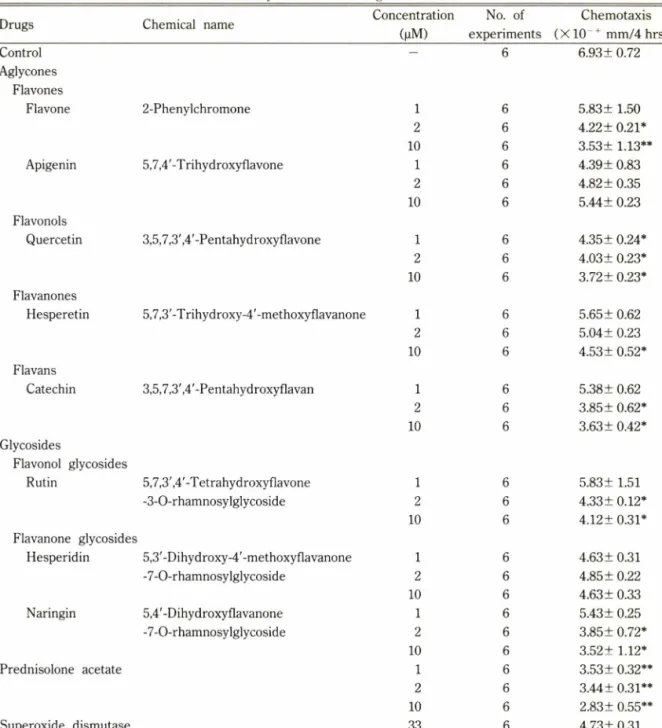
Table I —Effect of flavonoids on the leukocytes chemotaxis against E. coli.
Drugs Chemical name Concentration
(fiM)
No. of experiments
Chemotaxis ( X 1으 + mm /4 hrs.)1}
Control - 6 6.93士 0.72
Aglycones Flavones
Flavone 2-Phenylchromone 1 6 5.83土 1.50
2 6 4.22士 0.21*
10 6 3.53土 1.13**
Apigenin 5,7’4'-T rihydroxyflavone 1 6 4.39± 0.83
2 6 4.82 士 0.35
10 6 5.44土 0.23
Flavonols
Quercetin 3,5,7,3',4'-Pentahydroxyflavone 1 6 4.35士 0.24*
2 6 4.03± 0.23*
10 6 3.72 ± 0.23*
Flavanones
Hesperetin S J ’^-Trihydroxy-^-methoxyflavanone 1 6 5.65士 0.62
2 6 5.04 土 0.23
10 6 4.53士 0.52*
Flavans
Catechin S’SH^-Pentahydroxyflavan 1 6 5.38士 0.62
2 6 3.85土 0.62*
10 6 3.63± 0.42*
Glycosides
Flavonol glycosides
Rutin 5,7,3',4'-Tetrahydroxyflavone 1 6 5.83士1.51
-3-O-rhamnosylglycoside 2 6 4.33士0.12*
10 6 4.12± 0.31*
Flavanone glycosides
Hesperidin S^'-Dihydroxy^'-methoxyflavanone 1 6 4.63± 0.31
-7-O-rhamnosylgly coside 2 6 4.85± 0.22
10 6 4.63士 0.33
Naringin 5,4,-Dihydroxy flavanone 1 6 5.43± 0.25
-7-O-rhamnosylglycoside 2 6 3.85士 0.72*
10 6 3.52士 1.12*
Prednisolone acetate 1 6 3.53士 0.32**
2 6 3.44± 0.31**
10 6 2.83士 0.55**
Superoxide dismutase 33 6 4.73士 0.31
^ h e migration distance of leukocytes against E. coli. (1.2 X10⁹ organism/m/) by Ketchel method.42) Significantly different from control (*p<0.05 and **p<0.01)
20분간 600X G 로 원심분리하고 상등액을 취하여 su
peroxides 생성량을 측정하는데 사용하였다.43^ 대 조약물로는 prednisolone acetate 1,2 및 10 (iM 농 도와 SOD 33|iM 농도로 첨가하였다.
Superoxide anion 정량一 Margoliash법45〉에 따라
다음과 같이 정량하였다. 백혈구와 latex beads 또는 대장균의 배양액중 상등액을 각각 취하여 증류수를 대조로 하여 파장 550nm 에서 Spectronic 20으로 흡 광도를 측정하고 흡광도차(ferrocytochrome C-ferric- ytochrome C) 를 구하여 표준곡선( ᅀEWM 二15.5)45)에
Table II —Effect of flavonoids on superoxide anion and lipid peroxide production in the phagocytosis of latex beads by guinea pig peritoneal exudate cells.
Concentration1) No. of Superoxide anion Lipid peroxide urugs L-nemicai name
(|iM) experiments Cytochrome C reduction Malonedialdehyde (nM/1.2 X106 cells/15 mins) (nM/1.2 X106 cells/15 mins)
Control 6 2.46土 0.112) 14.92 土 0.27
Aglycones Flavones
Flavone 2-Phenylchromone 1 6 2.39士 0.06 14.82士 0.55
2 6 2.33土 0.03 14.05土 0.63
10 6 2.37士 0.01 18.02± 1.86
Apigenin 5,7,4'-Trihydroxyflavone 1 6 2.28± 0.11 18.36± 0.99
2 6 2.28士 0.04 16.79士 0.96
10 6 2.27± 0.04 16.23士 1.23
Flavonols
Quercetin 3,5,7,3',4#-Pentahydroxy- 1 6 2.12± 0.16* 12.84 土 0.16*
flavone 2 6 2.03± 0.11* 12.65士 0.34*
10 6 1.65± 0.02** 12.02± 0.65*
Flavanones
Hesperetin 5,7,3'-Trihydroxy-4'- 1 6 2.41 ± 0.05 15.12士 0.63
methoxyflavanone 2 6 2.43士 0.11 14.68± 1.46
10 6 2.37土 0.64 14.75± 1.23
Flavans
Catechin 3,5,7,3',4'- 1 6 2.48 土 0.11 13.47土 0.64
Pentahydroxyflavan 2 6 2.43土 0.67 13.57± 0.35
10 6 2.17± 0.02* 12.74士 0.62*
Glycosides
Flavonol glycosides
Rutin 5,7,3V^-Tetrahydroxy- 1 6 2.37± 0.13 13.71 土 0.29
flavone-3-O-rhamnosyl- 2 6 2.25土 0.07 13.78± 0.26
glycoside 10 6 2.19± 0.04* 13.57± 0.21
Flavanone glycosides
Hesperidin W-Dihydroxy- 1 6 2.34土 0.04 14.15± 1.01
4'-methoxyflavanone 2 6 2.31 土 0.09 14.34士 2.10
-7-O-rhamnosylglycoside 10 6 2.45± 0.09 14.61土 0.37
Naringin S^'-Dihydroxyflavanone 1 6 2.27± 0.04 15.07± 0.64
-7-O-rhamnosylglycoside 2 6 2.21士 0.09 15.01 土 3.97
10 6 2.37土 0.13 15.48± 0.36
Prednisolone acetate 1 6 2.35士 0.07 13.59士 0.51
2 6 2.33士 0.16 13.08士 0.66
10 6 2.28士 0.27 13.13士 1.18
Superoxide dismutase 33 6 1.45士 0.03** 14.68± 0.67
1}A reaction mixture containing 3 mi of peritoneal exudate cell suspension (1.2 X10⁶ cell/m/), 25 (j/ latex beads suspension (10 particles/cell) and 25 \jI cytochrome C (45 nM/m/) was incubated at 37°C for 15 mins.
2)Each value represents the mean土 S.E. Significantly different from control (*p<0.05 and **p<0.01).
따라 환원된 cytochrome C 양을 구하여 이를 supero- 과산화지질의 생성량으로 하였다.
xide anion 생 성 량으로 하였다.
과산화지질 정량ᅳM asugi법46}에 따라 다음과 같이 결과 및 고찰
정량하였다. 1,1,3,3-tetraethoxypropane을 표준물질로
하여 시료에 대한 m alonedialdehyde(M DA ) 양을 백혈구유주 억제작용ᅳFlavonoids는 일반적으로 / Pharm. Soc. Korea
Flavonoids의 약리 작용(IV) 169
Table III —Effect of flavonoids on superoxide anion and lipid peroxide production in the phagocytosis of E. coli ___________ by guinea pig peritoneal exudate cells. __________________________________________________________
Concentration1) No. of Superoxide anion Lipid peroxide Drugs Chemical name (jjM) experiments Cytochrome C reduction Malonedialdehyde
(nM/1.2 X106 cells/15 mins) (nM/1.2 X106 cells/15 mins)
Control 6 1.45± 0.362) 13.23士 0.45
Aglycones Flavones
Flavone 2-Phenylchromone 1 6 1.52土 0.11 15.36士 0.68
2 6 1.41 ±0.07 14.54± 0.17
10 6 1.40± 0.16 13.66士 0.25
Apigenin 5’7,4'-Trihydroxyflavone 1 6 1.43± 0.17 14.20± 0.26
2 6 1.42士 0.09 13.81±0.22
10 6 1.26土 0.11 13.45士 0.37
Flavonols
Quercetin 3,5,7,3',4'-Pentahydroxy- 1 6 1.13士 0.14* 11.14士 0.67*
flavone 2 6 1.03± 0.13* 10.55± 0.22*
10 6 0.87士 0.14** 8.80士 0.14**
Flavanones
Hesperetin SJ^'-Trihydroxy-f- 1 6 1.33 土 0.29 13.81 土 0.16
methoxyflavanone 2 6 1.32士 0.52 13.75土 0.07
10 6 1.33士 0.29 11.92土 1.02
Flavans
Catechin 3,5,7,3',4/- 1 6 1.77士 0.18 12.21±0.17
Pentahydroxyflavan 2 6 1.41 土 0.25 11.15± 0.67*
10 6 1.28± 0.17* 10.57土 0.21*
Glycosides
Flavonol glycosides
Rutin 5,7,3',4/-Tetrahydroxy- 1 6 1.36土 0.20 11.87± 0.38
flavone-3-O-rhamnosyl- 2 6 1.34± 0.29 11.63土 0.30*
glycoside 10 6 1.24土 0.07* 10.85土 0.56*
Flavanone glycosides
Hesperidin 5’3'-Dihydroxy- 1 6 1.41±0.11 12.79± 0.30
4'-methoxyflavanone 2 6 1.34± 0.07 12.81 ± 0.44
-7-O-rhamnosylglycoside 10 6 1.32± 0.05 12.30士 0.53
Naringin 5,4’-Dihydroxyflavanone 1 6 1.50士 0.13 14.58土 0.27
-7-O-rhamnosylglycoside 2 6 1.44士 0.20 14.55± 1.03
10 6 1.29 土 0.02 14.03± 0.53
Prednisolone acetate 1 6 1.59士 0.15 13.28土 0.21
2 6 1.44± 0.21 12.64 士 0.30
10 6 1.39土 0.05 12.32士 0.62
Superoxide dismutase 33 6 0.91 ±0.02** 12.02士 0.77
!)A reaction mixture containing 3 m/ of peritoneal exudate cell suspension (1.2 X10⁶ cell/m/), 25 \d E. coli suspen
sion (10 organisms/cell) and 25 |i/ cytochrome C (45 nM/m/) was incubated at 37°C for 15 mins.
2)Each value represents the mean± S.E. Significantly different from control (*p<0.05 and **p<0.01).
대장균에 대한 백혈구유주를 억제하였다(Table I). 2 및 1 0 (iM에서도 대조군에 비하여 농도의존적으로 quercetin 1,2 및 10 mM에서 백혈구유주거리가 각각 유의성있게 백혈구유주 억제작용이 있었다. 그러나 4.35, 4.03 및 3.72X 10—1 m m /4 hrs로서 대조군의 6.93 이들 flavonoids의 백 혁구유주 억제력은 prednisolone X H r 1 mm/4 hrs에 비해 농도의존적으로 유의성있게 acetate 1,2 및 1 0 (jM에서 백혈구유주거리가 각각 억제되었다. 또한 flavone, catechin, naringin 및 rutin 3.53,3.44 및 2.83X10 1 mm/4 hrs보다 미약하였다.
Latex beads 탐식 때 superoxide anion 및 과산 화지질 생성억제작용ᅳ Flavonoids가 latex beads 탐 식 때 일반적으로 superoxide anion과 malonedialde- hyde 생성을 억제시켰다(Table II). 특히 quercetin 1, 2 및 10 jiM 농도에 서 superoxide 생 성 량이 각각 2.12, 2.03 및 1.65 X10⁶nM/1.2X106 cells/15 mins로 서 대 조군의 2.46 nM/1.2X106 cells/15 mins 에 비 해 농도의존적으로 유의성있게 억제되었다. 또한 cate- chin과 rutin 10 |iM 농도에 서도 superoxide 생 성 량이 유의성있게 억제되었다. 그러나 prednisolone ace- tate에서 유의성있는 유리기 생성억제가 없었는데 이 러한 결과는 Drath 등47〉이 주장한 것과 같이 면역억 제가 superoxide anion 생성량과는 상관성이 없는 것으로 사려된다.
또한 과산화지질 생성에 있어서도 superoxide 생 성억제와 같은 양상으로 flavonoids가 일반적으로 과 산화지질 생성을 억제하였으며,quercetin은 농도의 존적으로 유의성있는 억제작용이 있었다.
대장균 탐식 때 superoxide anion 및 과산화지질 생성억제작용一 Flavonoids 가 일반적으로 백혈구와 대장균 탐식 때도 superoxide anion 및 과산화지질 생성을 억제하였다(Table III). 특히 quercetin 1,2 및 10(iM에서 superoxide anion 생성량이 각각 1.13, 1.03 및 0.87 nM/1.2X106 cells/15 mins로서 대 조군의 1.45 nM/1.2X106 cells/15 mins에 비해 농도의존적으 로 유의성있게 억제되었다. 또한 catechin 및 rutin 10|iM에서도 superoxide anion 생성량이 각각 유의 성있게 억제되었다.
한편 과산화지질 생성에 있어서도 quercetin 1, 2 및 10|iM 에서 각각 11.14,10.55 및 8.80nM/1.2X106 cells/15 mins로서 대 조군의 13.23 nM/1.2X 106 cells/
15 mins에 비해 농도의존적으로 유의성있게 억제되 었다. 또 catechin과 rutin 2 및 10나보에서도 농도 의존적인 억제작용이 있었다.
이상과 같은 결과에서 보듯이 대조군에서 supero
xide anion 생성 량이 latex beads 탐식 때는 2.46 nM/
1.2X10⁶ cells/15 mins이었으나 대장균 탐식 때는 1.45 nM/1.2X106 cells/15 mins로서 약 54% 정도 적 게 생성되었다. 이러한 실험결과는 Hassan 등48〉이 주장 한 것과 같이 대장균이 superoxide anion dismutase 생성을 조절하여 제거해주기 때문이라고 생각된다.
더우기 거의 모든 flavonoids에서도 latex beads 탐식
때보다 대장균 탐식 때 superoxide anion 및 과산화 지질 생성이 더 억제되었다. 또 특히 quercetin이 su
peroxide 및 과산화지질 생성을 억제하는 것은 Afa- nasev 등49〉이 보고한 것처럼 quercetin과 rutin이 유 리기와 chelate를 형성하여 유리기 제거작용이 있기 때문이라 사려된다.
한편 flavonoids 구조와 생리활성과의 상관성올 보 면 C-ring의 3위탄소의 O H 기에 당이 결합된 배당체인 rutin 이 그의 비배당체인 quercetin 에 비하여 생리활 성이 감소하였는데 이러한 결과는 Kim 등35> 및 Va- rma 등50〉의 보고와 일치하였다. 또한 B-ring의 OH 기가 meta 위치에 존재하는 quercetin과 rutin, cate
chin 등에서 OH 기가 존재하지 않는 flavone 및 apige- nin 보다 생리활성이 강하였지만, 이 O H 기에 me
thyl 기가 결합된 hesperetin과 hesperidin은 생리활 성이 미약하였다.
결 론
Flavonoids가 백혈구의 latex beads 또는 대장균 탐식 때 superoxide anion 및 과산화지질 생성과 백 혈구유주에 미치는 영향을 in y&ro에서 실험한 결과는 다음과 같다.
백혈구가 latex beads보다 대장균 탐식 때 supero
xide anion 및 과산화지질이 더 적게 생성되었다. fla- vonoids는 일반적으로 백혈구유주, superoxide anion 및 과산화지질 생성을 억제하였는데,특히 quercetin 1,2 및 10fiM에서 농도의존적으로 유의성있게 억제 되었으며, 또 catechin 및 rutin 2 및 10(iM에서 유 리기 생성을 각각 억제하였으며,flavone, catechin, naringin 및 rutin 2 및 10|iM에서 각각 백혈구유주를 억제하였다.
문 헌
1) Rakieten, N., Rakieten, M.L. and Nakani, M.V.:
Studies on the diabetogenic action of streptozoto- cin. Cancer Chemotherapy Reports 29, 91(1963).
2) Srivastava, L.M., Bora, P.S. and Bhatt, S.D.: Diabe
togenic action of streptozotocin. Trends Pharmacol.
3, 376(1982).
3) Freeman, B.A. and Crapo, J.D.: Biology of disease;
Free radicals and tissue injury. Lab. Invest. 47,
J. Pharm. Soc. Korea
Flavonoids의 약리작용(IV) 171
412(1982).
4) Plaa, G.L. and Witschi, H.: Chemicals, drugs and lipid peroxidation. Am. Rev. Toxicol Pharmacol 16, 125(1976).
5) Recknagel, R.O. and Glende, E.A.: Carbon tetrach
loride hepatotoxicity; An example of lethal clea
vage. CRC Crit. Rev. Toxicol 2,263(1973).
6) Rugh, R.: Damage to cells by ionizing radiation.
Atompraxis 14, 13(1968).
7) Fantone, J.C. and Ward, P.A.: Role of oxygen deri
ved free radicals and metabolites in leukocyte-de
pendent inflammatory reactions. Am. J. Pathol.
107,397(1982).
8) Badwey, J.A., Curnutte, J.T. and Karnovsky, M.L.:
as-Polyunsaturated fatty acids induced high levels of superoxide production by human neutrophils.
J. Biol Chem. 256, 12640(1981).
9) Lewis, K.O. and Paton, C.: Could superoxide cause cirrhosis. Lancet 24,188(1982).
10) Toubald, R.D.: Studies on the chemical nature of lipofuscin(age pigment) isolated from normal hu
man brain. Lipids 10, 383(1975).
11) McCord, J.M. and Fridovich, I.: Superoxide dis- mutase. An enzymatic function for erythrocuprein (hemocuprine). J. Biol. Chem. 244,6049(1969).
12) Baret, A., Jadot, G. and Michelson,A.M.: Pharma
cokinetic and antiinflammatory properties in the rat of superoxide dismutase(CU SOD and Mn SOD) from various species. Biochem. Pharmacol 33,2755(1984).
13) Nishida, T. and Nakagawa, S.: Supeoroxide dismu- tase activity in the diabetic rat retina. Jpn. J. Oph
thalmol. 28, 377(1984).
14) Marklund, S.L., Westman, N.G., Lundgren, E. and Roos, G.: Copper and Zinc-containing superoxide dismutase, catalase, and glutathione peroxidase in normal and neoplastic human cell lines and nor
mal human tissues. Cancer Research 42, 1955 (1982).
15) Grankvist, K , Marklund, S., Shelin, J. and Taljedal, I.: Superoxide dismutase, catalase and scavenger of hydroxyl radical protector against the toxic ac
tion of alloxan on pancreatic islet cells in vitro.
Biochem. J. 182,17(1979).
16) Cortran, R.S., Kumar, V. and Robbins, S.L.: Rob
bins pathologic basis of disease, 4th ed., W.B. Sau
nders Co., pl2(1989).
17) Umeo, T.: Suppression of lipid peroxidation by quercetin and its glycosides in spinach chloropla- sts. Phytochem. Photobiol. 38,363(1983).
18) Umeo, T.: Hydrogen peroxide-dependent oxida
tion of flavonols by infact spinach chloroplasts.
Plant Physiol. 74,852(1984).
19) Johnston, R.B., Keele, B.B., Misra, H.P., Lehmeyer, J.E., Webb, L.S., Baehner, R.L. and Rajagopalan, K.V.: The role of superoxide anion generation in phagocytic biological activity; Studies with normal and chronic granulomatous disease leukocytes. /•
Clin. Invest. 55,1357(1975).
20) Babior, B.M., Kipnes, R.S. and Curnutte, J.T.: Bio
logical defense mechanism. The production by leukocytes of superoxide a potential bactericidal agent. J. Clin. Invest. 52, 741(1973).
21) Babior, B.M.: Oxygen-dependent microbial killing by phagocytes. N. Engl. J. Med. 298, 659(1978).
22) Busse, W.W.,Kopp, D.E. and Middleton, E.: Flavo- noid modulation of human neutrophil function. J.
Allergy Clin. Immunol. 73,801(1984).
23) Pagonis,C.’ Tauber, A.I., Pavlosky, N. and Simons, E.: Flavonoid impairment of neutrophil response.
Biochem. Pharmacol 35,237(1986).
24) Hodnick, W.F., Kung, F.S., Roettger, W.L., Boh- mont, C.W. and Pardini, R.S.: Inhibition of mito
chondrial respiration and production of toxic oxy
gen radicals by flavonoids. Biochem. Pharmacol. 35, 2345(1986).
25) Fraga,C.G., Martino, V., Ferraro, G.E., Coussio, J.D. and Boveris, A.: Flavonoids as antioxidants evaluated by in vitro and in situ liver chemilumi- nescence. Biochem. Pharmacol 36,717(1987).
26) Younes, M. and Siegers, C. P.: Inhibitory action of some flavonoids on enhanced spontaneous lipid peroxidation following glutathione depletion. Pla- nta Medica 43,240(1981).
27) Lambev, I.,Belcheva,A. and Zhelyazkov, D.: Fla
vonoids with anti-oxidant action(naringin and ru
tin) and the release of mastocytic and nonmastoc- ytic histamine. Acta Physiol et Pharmacol Bulga-
rica 6,70(1980).
28) Sandler, S. and Andersson, A.: The partial protec
tive effect of the hydroxyl radical scavenger dime- thylurea on streptozotocin-induced diabetes in the mouse in vivo and in vitro. Diabetologia 22, 374 (1982).
29) Misra, H.P. and Fridovich, I.: The univalent redu
ction of oxygen by reduced flavins and quinones.
J. Biol Chem. 247, 188(1972).
30) Leuthauser, S.W.C., Oberley, L.W., Oberley, T.D., Sorensen, J.RJ. and Ramakrishna, K.: Antitumor effect of a copper cordination compound with su
peroxide dismutase-like activity. JNCI. 66, 1077 (1981).
31) Shvedova, A.A., Sidorov, A.S.,Novkov,K.N., Galu- shchenko, I.V. and Kagan, V.E.: Lipid peroxidation and electric activity of the retina. Vision Research 19, 49(1979).
32) Witz, G. Lawrie, N.J., Amoruso, M.A. and Golds
tein, B.D.: Inhibition by reactive aldehyde of supe
roxide anion radical production from stimulated polymorphonuclear leukocytes and pulmonary al
veolar macrophages. Biochem. Pharmacol. 36,721 (1987).
33) Georgleff, K.K.: Free radical inhibitory effect of some anti-cancer compounds. Science 173, 537 (1971).
34) Kim, CJ. and Yu, J.S.: Effect of ginsenosides on the WBC chemotaxis, and the superoxide anion and lipid peroxide production in the phagocytosis by guinea pig peritoneal exudate cells or reticu
loendothelial system. Chung-Ang J. Pharm. 2,58 (1988).
35) Kim, CJ. and Chung, J.M.: Pharmacological activi
ties of flavonoids(I). Relationships of chemical st
ructure of flavonoids and their inhibitory activity of hypersensitivities. Yakhak Hoeji 34,348(1990).
36) Kim, CJ. and Cho, S.G.: Pharmacological activities of flavonoids (III). Structure-activity relationships of flavonoids in immunosuppressions. Achiv.
Pharm. Res. 14, 250(1991).
37) Kim, CJ., Su, S.K., Joo, J.H. and Cho, S.K.: Phar
macological activities of flavonoids(II). Relation
ships of anti-inflammatory and anti-granulamatous
actions. Yakhak Hoeji 34,407(1990).
38) Kim, CJ.: Relationships of chemical structure of flavonoids and glucocorticoidal activities: Inhibi
tory activity of hypersensitivities, inflammation and wound healing. Korean-Japan-China sympo
sium on drug development from natural products.
Korean Pharmacog. Symposium p.41-47(1991).
39) Cook, H.C.: Manual of histological demonstration technigues. Butterworth and Co. Ltd., p.185(1974).
40) Ramellini, G. and Meldolesi, J.: Liver protection by silymarin: In vitro effect of dissociated rat he- patocytes. Arzneim. Forsch. 26, 69(1976).
41) Allen, R.C., Stjernholm, R.L. and Steele, R.H.: Evi
dence for the generation of an electronic excita
tion states in human polymorphonuclear leukocy
tes and its participation in bactericidal activity.
Biochem. Biophysic. Res. Comm. 47,679(1972).
42) Ketchel, M.M. and Favour, C.B.: J. Experimental Med.., 101, 647(1955); Ishikawa, H.: On the inde
pendence of increased vascular permeability and leukocyte migration in the exudate inflammation.
Yakugaku Zasshi 90, 1201(1970).
43) Oyanagui, Y.: Inhibition of superoxide anion pro
duction in non-stimulated guinea pig peritoneal exudate cells by anti-inflammatory drugs. Biochem.
Pharmacol 27, 777(1978).
44) Curnutte, J.T. and Babior, B.M.: Biological defense mechanism. The effect of bacteria and serum on superoxide production by granulocytes. J. Clin. In vest. 53,1662(1974).
45) Margoliash, E. and Frohwirt, N.: Spectrum of ho- rse-heart cytochrome C. Biochem. J. 71, 570(1959).
46) Masugi, F. and Nakamura, T.: Measurement of thiobarbituric acid value in liver homogenate solu
bilized with sodium dodecylsulfate and variation of the value affected by the vitamin E and drugs.
Vitamins 51, 21(1977).
47) Drath, D.B. and Kahan, B.D.: Phagocytic cell func
tion in response to immunosuppressive therapy.
Arch. Surg. 119,156(1984).
48) Hassan, H.M. and Fridovich, I.: Regulation of su
peroxide dismutase synthesis in Escherichia coli;
glucose effect. J. Bacteriol. 132, 505(1977).
49) Afanasev, I. B. and Dorozhko, A.I.: Chelating and
J. Pharm. Soc. Korea
Flavonoids의 약리 작용(IV) 173
free radial scavengering mechanism of inhibitory action of rutin and quercetin in lipid peroxidation.
Biochem. Pharmacol 38,1763(1989).
50) Varma, S.D.; Inhibition of vonoids. Prog. Clin. Biol.
aldose ruductase by fla- Res. 213,343(1986).