• 검색 결과가 없습니다.

Molecular Authentication of Acanthopanacis Cortex by Multiplex-PCR Analysis Tools

N/A
N/A
Protected

Academic year: 2021

Share "Molecular Authentication of Acanthopanacis Cortex by Multiplex-PCR Analysis Tools"

Copied!
7
0
0

로드 중.... (전체 텍스트 보기)

전체 글

(1)

Molecular Authentication of Acanthopanacis Cortex by Multiplex-PCR Analysis Tools

Min-Kyeoung Kim

1†

, Gyu-Hwan Jang

2†

, Deok-Chun Yang

2

, Sanghun Lee

1

, Hee-Nyeong Lee

2

and Chi-Gyu Jin

2

*

1

Division of Medical Research Acupuncture, Moxibustion & Meridian Research Group, Korea Institute of Oriental Medicine, Daejeon 305-811, Korea

2

Korean Ginseng Center for Most Valuable Products & Ginseng Genetic Resource Bank, Kyung Hee University, Yongin 446-701, Korea

Abstract - Acanthopanacis Cortex has been used for oriental medicinal purposes in Asian countries especially in Korea and China. In the Korean Pharmacopeia, the cortexes of the dried roots, stems and branches of all species in Eleutherococcus and Eleutherococcus sessiliflorus are known as ‘Ogapi’. Mostly the cortexes of E. gracilistylus roots and E.senticosus roots were used as ‘Ogapi’ in China and Japan, respectively. Therefore, the purpose of this study was to determine and compare the molecular authentication of Korean ‘Ogapi’ by using the ribosomal internal transcribed spacer (ITS) region. The ITS region has the highest possibility of effective and successful identification for the widest variety of molecular authentication.

The ITS region was targeted for molecular analysis with Single nucleotide polymorphisms (SNPs) specific for morphologically similar to E. gracilistylus, E. senticosus, E. sessiliflorus from their adulterant, moreover, E. sieboldianus were detected within sequence data. Thus, based on these SNP sites, specific primers were designed and multiplex PCR analysis were conducted for molecular authentication of four plants (E. gracilistylus, E. senticosus, E. sessiliflorus, and E.

sieboldianus). The findings of results indicated that ITS region might be established multiplex-PCR analysis systems and hence were proved to be an effective tools for molecular evaluation and comparison of ‘Ogapi’ with other plants.

Key words - ITS, SNP, Acanthopanacis Cortex, multiplex-PCR

*Corresponding author. E-mail : [email protected]

These authors contributed equally to this work.

Introduction

Acanthopanacis Cortex (Ogapi in Korean) is important Oriental medicinal herbs in Korea and China. The trees Ogapi the Eleutherococcus sessiliflorum Seman or same plants (Ohgagwa Araliaceae) of the bark of roots, stems and branches is defined the Eleutherococcus as Natural Currently Pharma- copoeia of various origins and mountains, and medicinal parts are mixed distribution. In contrast, China E. gracilistylus (Ogapi) the dried root bark of E. senticosus (Oga) defined as the root, stem, and bark, and is defined to be different. It is cortexes of dried roots, stems and branches with clinical properties that belong to the Araliaceae family, the cortical root and stem tissues of Eleutherococcus genus are used as

tonic and sedative as well as to treat rheumatism and diabetic disorders (Umeyama et al.,1992; Davydov and Krikorian 2000). The treatment of various diseases such as psychophysical stress, fatigue, allergic conditions and cancer (Fujikawa et al., 1996; Deyama et al., 2001; Yi et al., 2002; Jung et al., 2003). In China, Acanthopanacis Cortex is Radix Cortex of E. gracilistryus (Chinese Pharmacopoeia Commission, 2010).

In Korea, the Republic of Korea Food and Drug Administration has defined Acanthopanacis Cortex in the Pharmacopoeia as E. sessillorum and belonging to the Araliaceae (Korea Food and Drug Administration, 2008).

Traditionally, medicinal plants have been authenticated by historical and morphological features, but growth stages and environmental conditions can affect this authentication (Zhu et al., 2004). Most of medicinal plant products in markets are packaged as powders of slices that no longer bear the original morphological features of the plants (Park

Original Research Article

(2)

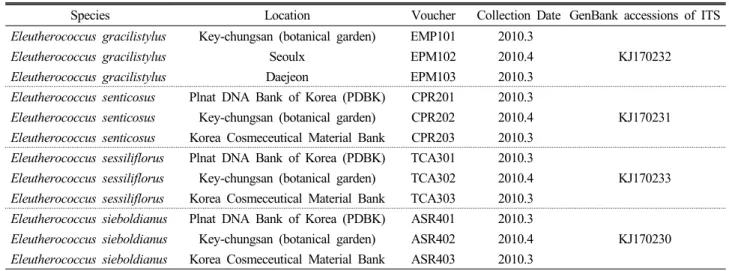
Table 1. Plant samples used in this study

Species Location Voucher Collection Date GenBank accessions of ITS Eleutherococcus gracilistylus Key-chungsan (botanical garden) EMP101 2010.3

KJ170232

Eleutherococcus gracilistylus Seoulx EPM102 2010.4

Eleutherococcus gracilistylus Daejeon EPM103 2010.3

Eleutherococcus senticosus Plnat DNA Bank of Korea (PDBK) CPR201 2010.3

KJ170231 Eleutherococcus senticosus Key-chungsan (botanical garden) CPR202 2010.4

Eleutherococcus senticosus Korea Cosmeceutical Material Bank CPR203 2010.3 Eleutherococcus sessiliflorus Plnat DNA Bank of Korea (PDBK) TCA301 2010.3

KJ170233 Eleutherococcus sessiliflorus Key-chungsan (botanical garden) TCA302 2010.4

Eleutherococcus sessiliflorus Korea Cosmeceutical Material Bank TCA303 2010.3 Eleutherococcus sieboldianus Plnat DNA Bank of Korea (PDBK) ASR401 2010.3

KJ170230 Eleutherococcus sieboldianus Key-chungsan (botanical garden) ASR402 2010.4

Eleutherococcus sieboldianus Korea Cosmeceutical Material Bank ASR403 2010.3 et al., 2006; Jigden et al., 2010; Jin et al., 2013). In this study,

E. gracilistylus, E. senticosus, E. sessiliflorus are morpho- logically similar and their adulterant, E. sieboldianus are often sold dried or in slices, which makes it even more difficult to distinguish between the plants.

We describe general ways to differentiate medicinally important plants in a more reproducible and robust approach by analyzing single-nucleotide polymorphism (SNP). For the SNP analysis, there are several genes to be tested.

Therefore, more robust and advanced DNA technology such as multiplex PCR should be applied when identifying these plants (In et al., 2010; Sun et al., 2010). The established multiplex-PCR systems were proved to be effective for molecular identification of Acanthopanacis Cortex. The medicinal materials collected in markets were identified by multiplex-PCR tests.

These markers nucleotide would be useful to identify the medicinal herbs by providing of definitive information that can identify the standard medicinal plant species and distinguish from unauthentic adulterant Eleutherococcus species. In this study, a simple and reliable DNA method was developed for simultaneous detection of Acanthopanacis Cortex (Ogapi in Korean), Cortex Acanthopanacis (Ogapi in China), Acanthopanacis Senticosi (Oga in China and Japan) form their adulterant, Plant, E. Sieboldianus by SNP analysis in nuclear ribosomal ITS region.

Materials and Methods

Plant materials

The samples of E. gracilistylus, E. senticosus, E. sessiliflorus and E. sieboldianus were collected from Plant DNA bank, Korea Cosmeceutical Material Bank. The E. gracilistylus samples were purchased from Korea local market. All the plant materials were collected from different localities and identified by the Table 1.

DNA extraction and PCR amplification of the ITS region

Sample branches were frozen in liquid nitrogen and

ground to a fine powder. Genomic DNA was isolated and

purified using a G-spin

TM

genomic DNA extraction kit

(iNtRON, Biotechnology, Seoul, Korea), and each dried

sample was isolated using a modified cetyltrimethylammonium

bromide (CTAB) method (Murray et al., 1980). The primer

pairs used for amplification of the ribosomal ITS region was

amplified using primer pair ITSPF (5’-TAC CGA TTG AAT

GGT CCG-3’) and ITSPR (5’-ATA TGC TTA AAC TCA

GCG GGT-3’) (Wang et al., 2012). PCR amplification was

performed in a total volume of 20 ㎕, and the reaction

mixture consisted of each of the primers at a concentration

of 0.5 ㎛, 20 ng of template DNA, and 10 ㎕ of 2× PCR

premix (Genotech, South Korea). The amplification profile

consisted of one pre-denaturation cycle of 4 min at 94℃,

followed by 35 cycles of 30 s at 94℃, 30 s at 58℃, 1 min at

72℃, and a final extension at 72℃ for 7 min. The PCR

(3)

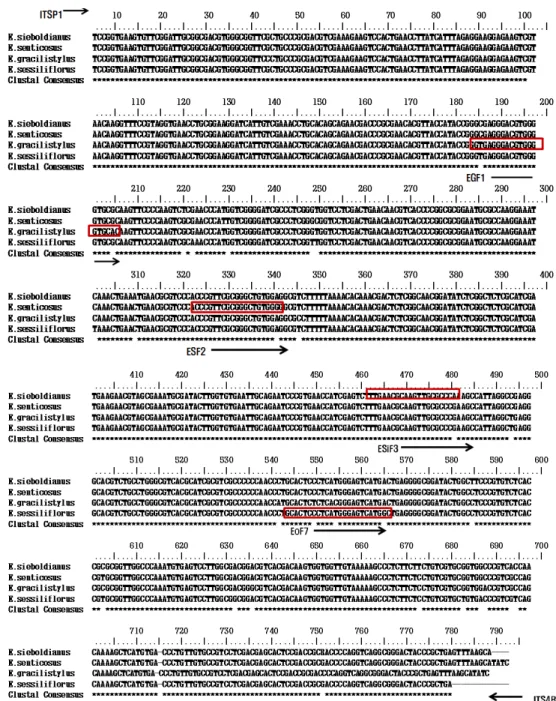
Fig. 1. Comparison of the ITS regions of E. gracilistylus, E. sessiliflorus, E. sieboldianus and E. senticosus.

products were visualized via 1.0% agarose gel electrophoresis with Ethidium bromide staining under UV light.

Sequencing and DNA sequence analysis

The PCR products were purified using a PCR product purification kit (GENEALL PCR SV, General Bio Systems) per the manufacturer’s instructions and then sequenced by Genotech, Inc. The DNA sequences of the ITS region obtained in sequencing experiments were compiled using SeqMan

software, and sequences were edited with the BioEdit program (Hall, 1999). Multiple sequence alignments were performed using the online ClustalW2 program (http://www.ebi.ac.uk/

Tools/clustalw2/).

Design of specific primers

Specific primers were designed for E. sessiliflorus, E.

senticosus, E. sieboldianus and E. gracilidtylus based on the

detected DNA polymorphisms (Fig. 1). E0F, ESF, ESiF and

(4)

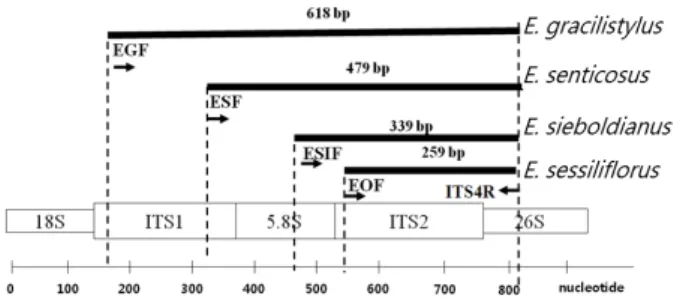
Fig. 2. Schematic diagrams of the primers used in multiplex PCR.

EGF were designed for authentication of E. sessiliflorus, E.

senticosus, E. sieboldianus and E. gracilidtylus respectively, based on specific polymorphism sites. Primer E0F was designed for specific identification of E. sessiliflorus based on its specific 1-bp polymorphism. Primer ESF was designed for specific identification of E. senticosus, based on its specific 1-bp polymorphism. Primer ESiF was designed for specific identification of E. sieboldianus, based on its specific 1-bp polymorphism. Another sense primer of EGF was designed for specific identification of E. gracilidtylus, based on its specific 1-bp polymorphism. The primer was designed to serve as a positive control for Ogapi. The sequences and orientations of specific primers and common primers are shown in Table 1 and Fig. 2.

Multiplex PCR

Molecular authentication of E. sessiliflorus, E. senticosus, E. sieboldianus and E. gracilidtylus was performed using multiplex PCR. Five primers (E0F, ESF, ESiF, EGF and ITSPR) were used simultaneously in multiplex PCR amplifi- cation. The reaction mixture was identical to the one described above except the concentrations of E0F, ESF, ESiF, EGF and ITSPR were 0.5 ㎛, 0.5 ㎛, 0.38 ㎛, and 0.5 ㎛, respectively.

PCR amplification was performed in a total volume of 20 ㎕.

The amplification profile consisted of one pre-denaturation cycle of 4 min at 95℃, followed by 32 cycles of 30 s at 95℃, 30 s at 62.5℃, 1 min at 72℃, and a final extension at 72℃

for 7 min. The PCR products were visualized on a 1.0%

agarose gel.

Results and Discussion

Ribosomal DNA ITS regions have proven useful for species-level identification (Olmstead et al., 1994). The coding sequence of nrDNA is distantly related among different species and populations, whereas the non-coding internal transcribed spacers (ITS) are vary widely (Baldwin 1992).

These regions can be used for authentication of E. sessiliflorus, E. senticosus, E. sieboldianus and E. gracilidtylus.

As an effort to minimize negative side effects from misuses of relatively common medicinal materials, Acanthopanacis Cortex, which might be misidentified from the standards, this study was carried out to analyzed the phylogenies and develop the molecular markers of three medicinal herbs to identify correctly and efficiently. The herbal criteria of medicinal herbs are documented in the Korean Pharmacopoeia (KHP) as follows: Acanthopanacis Cortex is the cortexes of roots, stems and branches of the Eleutherococcus sessiliflorum or of plants the same Eleutherococcus genus in Araliaceae.

The DNA information of three medicinal plants for analyses of phylogenetic relationship were obtained from National Center for Biotechnology Information (NCBI). In this study, analyzed nucleotide sequences of the Internal transcribed spacer (ITS) region in nrDNA showed close genetic relationships among E. sessiliflorus, E. senticosus, E. sieboldianus and E. gracilidtylus in Eleutherococcus genus.

Seventeen plants samples of Eleutherococcus genus ITS regions DNA sequences were collected from NCBI, and aligned in Bioedit program with ClustalX program and a phylogenetic tree was built using the Mega4 program.

Eleutherococcus genus E. senticosus, E. seoulensis and E.

trifoliatus is classified cousin relationship with E. sessiliflorus, while E. gracilistylus and E. koreanus is classified distant relationship (Fig. 3).

Thus it renders them as a suitable target for the investigation of phylogenetic relationships within the same species. These regions can be used for authentication of E. sessiliflorus, E.

senticosus, E. sieboldianus and E. gracilidtylus. The sequences

of introns and intergenic regions are highly variable due to

the lack of sequence conservation (Quandt et al., 2004). ITS

reference to a piece of non-functional situated between

(5)

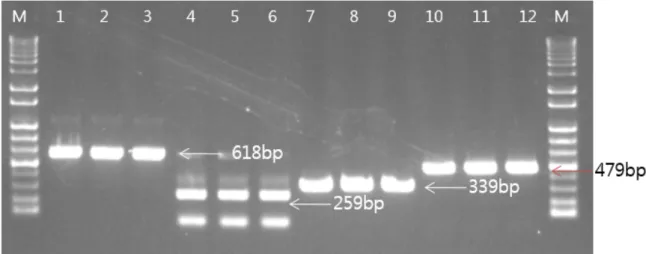
Fig. 4. Gel image of multiplex-PCR products. Lane M: 1000 bp DNA ladder; lane 1,2,3: E. gracilistylus; lane 4,5,6: E. sessiliflorus:

lane 7,8,9: E. sieboldianus: lane 10,11,12 E. senticosus.

Fig. 3. The neighbor-joining tree of species in genus Eleutherococcus by ITS sequences.

structural (rRNA), which were excised during rRNA matura- tion. Because, this region is not only easy to amplify even from small amount of DNA but also has a high degree of variation even between closely related species (Wang and Hong, 2014). In this study, the ITS regions non-coding region was targeted for molecular analysis and differentiation among E. sessiliflorus, E. senticosus, E. gracilidtylus and their adulterant, E. sieboldianus.

The ribosomal ITS region of four species were PCR- amplified using the universal primer sets of ITS non-coding region, ‘ITSPF’ and ‘ITSPR. The ITS regions non-coding region of E. sieboldianus, E. senticosus, E. gracilistylus and E. sessiliflorus was determined to be 259 bp, 339 bp, 479 bp and 618 bp. Their sequences were deposited in GeneBank (KJ170230-KJ 170233).

Multiplex alignments of the ITS regions non-coding region of E. sessiliflorus, E. senticosus, E. gracilidtylus and their adulterant, E. sieboldianus were performed with the CLUSTAL X program. DNA polymorphisms, including SNP sites, insertions and deletions were detected among these three species. The E. sessiliflorus- specific primer E0F was designed according to the insertions located at the 543

th

- 565

th

nucleotide positions. The E. senticosus-specific primer ESF was designed according to the deletions located at the 461

th

- 481

th

nucleotide positions. The E. sieboldianus-specific primer ESiF was designed according to DNA polymorphisms located at the 321

th

- 340

th

nucleotide positions. The E.

gracilidtylus-specific primer EGF was designed according to DNA polymorphisms located at the 183

th

- 205

th

nucleotide positions (Fig. 1).

Molecular discrimination of E. sessiliflorus, E. senticosus,

E. sieboldianus and E. gracilidtylus was conducted using

multiplex PCR with the five primers described. The combina-

tion of five specific primers, as shown in Fig. 4, yielded

expected amplicons for different species. E. sessiliflorus

(6)

yielded specific amplicons of 618 bp and E. senticosus, E.

sieboldianus and E. gracilidtylus yielded specific amplicons of 479 bp, 339 bp and 259 bp, generated by their specific primer sets, E0F, ESF, ESiF, EGF and ITSPR, respectively.

Therefore, E. sessiliflorus, E. senticosus, E. sieboldianus, E.

gracilidtylus can be clearly differentiated from each other by the multiplex PCR system developed in this study.

In the present study, we identified four plant species, E.

sessiliflorus, E. senticosus, E. gracilidtylus and their adulterant plants E. sieboldianus, by simultaneously amplifying their specific primer using multiplex PCR. The results indicate that it is possible to identify “Ogapi” and “Oga” from their adulterant using the ribosomal ITS regions non-coding region. Compared to other molecular markers, this method is reliable, efficient, and can be used for numerous repeated tests of many medicinal plants. In this result have great impact to prevent adulteration and the authentication of precise E. sessiliflorus, E. senticosus, E. sieboldianus form their adulterant plant E. gracilidtylus using the ITS region.

Compared to other molecular markers, this method is reliable, efficient and can be used for numerous repeated tests of many medicinal plants. We hope the described method should serve as a powerful tool in the multiplex PCR for the identifi- cation of medicinal plants, and the methodology presented in this study can be adapted for authentication of other medicinal materials.

Acknowledgement

This research was supported by the Knowledge Resource Development by Excavation and preservation and DB Establishment of Traditional Home Remedy (K14210), Division of Medical Research Acupuncture, Moxibustion &

Meridian Research Groups of the Korea Institute of Oriental Medicine.

References

Baldwin, B.G. 1992. Phylogenetic utility of the internal transcribed spacers of nuclear ribosomal DNA in plants:

an example from the Compositae. mol phylogenet evol.

1:3-6.

Davydov, M. and A.D. Krikorian. 2000. Eleutherococcus senticosus (Rupr. & Maxim.) Maxim. (Araliaceae) as an adaptogen: a closer look. J. Ethnopharmacol. 72(3):345- 393.

Deyama, T., S. Nishibe and Y. Nakazawa. 2001. Constituents and pharmacological effects of Eucommia and Siberian ginseng. Acta Pharmacological Sin. 22:1057-1070.

Fujikawa, T., A. Yamaguchi, I. Morita, H. Takeda and S.

Nishibe. 1996. Protective effects of Acanthopanax senticosus harms from Hokkaido and its components on gastric ulcer in restrained cold water stressed rats.

Biological and Pharmaceutical Bulletin 19:1227-1230.

Hall, T.A. 1999. BioEdit: a user-friendly biological sequence alignment editor and analysis program for Windows 95/98/NT. Nucl. Acids. Symp. Ser. 41:95-98.

In, J.G., M.K. Kim, O.R. Lee, Y.J. Kim, B.S. Lee, S.Y. Kim, W.S. Kwon and D.C. Yang. 2010. Molecular identification of Korean mountain ginseng using an Amplification Refractory Mutation System (ARMS). J. Ginseng Res.

34:41-46.

Jigden, B., H. Wang, Y.J. Kim, N. Samdan, J.G. In and D.C.

Yang. 2010. Molecular identification of oriental medicinal plant Schizonepeta tenuifolia bunge (‘Hyung-Gae’) by multiplex PCR. Plant Biotechnol Rep. 4:223-228.

Jin, C.G., M.K. Kim, J.Y. Kim, M.S. Sun, W.S. Kwon and D.C. Yang. 2013. Molecular authentication of Morus folium using mitochondrial nad7 intron 2 region. Korean J.

Plant Res. 26(3):397-402.

Jung, J.D., H.W. Park, Y. Hahn, C.G. Hur, D.S. In, H.J. Chung, J.R. Liu and D.W. Choi. 2003. Discovery of genes for ginsenoside biosynthesis by analysis of ginseng expressed sequence tags. Plant Cell Rep. 22:224-230.

Murray, M.G and W.F. Thompson. 1980. Rapid isolation of high molecular weight plant DNA. Nucleic Acids Res.

8:4321-4325.

Olmstead, R and J.D. Palmer. 1994. Chloroplast DNA systematics: a review of methods and data analysis. Am.

J. Bot. 81:1205-1224.

Park, M.J., M.K. Kim, J.G. In and D.C.Yang. 2006. Molecular identification of Korean ginseng by amplification refractory mutation system-PCR. Food Res. Int. 39:568-574.

Quandt, D., K.F. Muller, M. Stech, K.W. Hilu, W. Frey, J.P.

Frahm and T. Borsch. 2004. Molecular evolution of the chloroplast trnL-F region in land plants. Monogr. Syst.

Bot. Missouri Botanical Garden. 98:13-37.

(7)

Sun, H., H.T. Wang, W.S. Kwon, J.G. In, B.S. Lee and D.C.

Yang. 2010. Development of molecular markers for the determination of the new cultivar ‘Chunpoong’ in Panax ginseng C.A. Meyer associated with a major latex-like protein gene. Biol. Pharm. Bull. 33:183-187.

Umeyama, A., N. Shoji, M. Takei, K. Endo and S. Arihara.

1992. Ciwujianosides Dl and Cl: powerful inhibitors of histamine release induced by anti-immunoglobulin E from rat peritoneal mast cells. J. Pharm. Sci. 81:661-662.

Wang, D. and S.K. Hong. 2014. Genetic variation of rice populations estimated using nrDNA ITS region sequence.

Korean J. Plant Res. 27(3):249-255.

Wang, H.T., M.K. Kim, Y.J. Kim, H.N. Lee, H. Jin, J. Chen

and D.C. Yang. 2012. Molecular authentication of the oriental medicines Pericarpium Citri Reticulatae and Citri Unshius Pericarpium using SNP markers. GENE 494:92-95.

Yi, J.M., S.H. Hong, J.H. Kim, H.K. Kim, H.J. Song and H.M. Kim. 2002. Effects of Acathopanax senticosus stem on mast cell-dependent anaphylaxis. Journal of Ethnopharmacology 79:347-352.

Zhu, S., H. Fushimi, S. Cai and K. Komatsu. 2004. Species identification from ginseng drugs by multiplex amplification refractory mutation system (MARMS). Planta Med.

70:189-192.

(Received 16 September 2014 ; Revised 19 November 2014 ; Accepted 15 December 2014)

수치

Table 1. Plant samples used in this study
Fig. 1. Comparison of the ITS regions of E. gracilistylus, E. sessiliflorus, E. sieboldianus and E
Fig. 2. Schematic diagrams of the primers used in multiplex  PCR.
Fig. 3. The neighbor-joining tree of species in genus  Eleutherococcus by ITS sequences.

참조

관련 문서

And based on these results, in order to utilize the witty stories appeared in the novels of Korean Pansori as actual educational texts, the brief analysis

mRNA expression of osteonectin, Runx2 and BSP(bone sialoprotein) in MC3T3-E1 cells cultured for 24 hours on 4 different titanium surfaces.. The mRNA were analyzed

This study was conducted to investigate the storage period and optimal temperature of seed potato which were based on technique of dormancy prolonging by

Second, exploratory factor analysis and Cronbach's α were conducted to analyze the validity and reliability of the questionnaire regarding participation

First, the general characteristics of the two groups were analyzed by frequency analysis and correlation analysis, which is technical statistics, and the

Based on the experimental results, the execution time in the matching process for 36 fingerprint minutiae, 200 chaff minutiae and 34 authentication fingerprint

For confirmation of results of direct real-time melting curve analysis, we also performed an in-house JAK2 V617F ASP and a BsaXI-treated nested PCR-direct

Comparison of genotypes using REP-PCR and Integron-IS26 PCR results among 78 IRAB strains isolated from 2 university hospitals.. The result of REP-PCR genotypes and