INTRODUCTION
Kidney transplantation (KT) has improved patient survival and quality of life compared to other modes of renal re- placement therapy. It has become the treatment of choice in end-stage renal failure [1]. However, the gradual decline in renal function after transplantation is inevitable [2]. The rate may be influenced by numerous variables, including both donor- and recipient-related characteristics. Donor
age, donor and recipient race, cold ischemia time, human leukocyte antibody (HLA) mismatching, and delayed graft function have all been shown to significantly influence short- and long-term graft survival [3-5]. Moreover, a calci- neurin inhibitor (CNI) based immunosuppression regimens exhibit dose-related nephrotoxicity and could be a contrib- uting factor in graft function decline [6].
Early identification of those patients at risk of graft function and subsequent timely therapeutic intervention is
Serum creatinine level at 1-month
posttransplant can independently predict long-term graft survival and functional status
Sung Min Koh, Man Ki Ju, Kyu Ha Huh, Yu Suen Kim, Myoung Soo Kim
Department of Surgery, Yonsei University College of Medicine, Seoul, Korea
Background: After the year 2000, kidney transplants with high immunologic risk and deceased donors increased rapidly in Korea. At the same time, the medical community developed special pretransplant and early posttransplantation management protocols.
Our team evaluated the effect of early graft stabilization on long-term graft survival and functional status using databases from a high-volume kidney transplantation center.
Methods: We included 1,895 kidney transplant patients from a total of 1,976 performed between 2005 and 2018. Early graft failure within 1 month (n=9), loss to follow-up (n=2), pediatric recipient or donor (n=37), and combined organ transplantation (n=33) cases were excluded. We grouped the cases at 1-month posttransplantation by serum creati- nine quantiles (1.0 mg%, 1.23 mg%, and 1.52 mg%).
Results: After an average of 95 months of follow-up (maximum 189 months), the high-se- rum creatinine group (4th quantile) showed significantly poorer graft survival than other groups (1st to 3rd quantile) (P<0.05). In multiple Cox regression analysis, a high serum creatinine level (4th quantile) at 1-month posttransplant is an independent risk factor for graft failure with a hazard ratio of 1.799 (P=0.013). The quantile group by serum cre- atinine shows a persistent, significant difference of functional graft status (glomerular filtration rate by Modification of Diet in Renal Disease method) among quantile groups beyond ten years posttransplant.
Conclusions: Serum creatinine level at 1-month posttransplant is a strong independent predictor of graft survival and functional graft status beyond ten years posttransplant.
Keywords: Creatinine; Kidney transplant; Graft survival
Received November 13, 2020 Revised November 20, 2020 Accepted November 20, 2020
Corresponding author: Myoung Soo Kim Department of Surgery, Yonsei University College of Medicine, 50-1 Yonsei-ro, Seodaemun-gu, Seoul 03722, Korea Tel: +82-2-2019-3893
Fax: +82-2-3462-5994 E-mail: [email protected]
Co-Corresponding author: Man Ki Ju Department of Surgery, Yonsei University College of Medicine, 50-1 Yonsei-ro, Seodaemun-gu, Seoul 03722, Korea Tel: +82-2-2019-3893
Fax: +82-2-3462-5994 E-mail: [email protected]
© The Korean Society for Transplantation This is an Open Access article distributed under the terms of the Creative Commons Attribution Non-Commercial License (http://creativecommons.org/licenses/
by-nc/4.0/) which permits unrestricted non-commercial use, distribution, and reproduction in any medium, provided the original work is properly cited.
pISSN 2671-8790
eISSN 2671-8804
necessary to improve outcomes in the kidney transplant patients.
Previous studies have shown that the parameters of re- nal function, mainly serum creatinine, creatinine clearance, and glomerular filtration rate (GFR), are valuable indicators of long-term outcomes. Early graft function, especially the 1 year posttransplant graft filtration rate or serum creatine level, is the most powerful predictor of long-term graft and patient survival [7-9]. However, these studies included patients who were treated in the early period of the trans- plantation era. Thus, the studies did not consider highly sensitized patients, ABO-incompatible transplantations, and marginal deceased donor.
After 2000, the number of kidney transplants of high immunologic risk patients (e.g., highly sensitized recipi- ents, leucocyte cross-matching positive, and ABO-incom- patible transplantation) and deceased donor transplanta- tion, including marginal donors, rapidly increased in Korea.
Special pretransplant and early posttransplantation man- agement regimens were developed, such as plasmaphere- sis for antibody filtration and use of rituximab for antibody depletion [10]. At the same time, new immunosuppressive agents were rapidly developed [11,12].
Given the recent changes, early graft stabilization af- ter transplantation is essential. Therefore, we evaluated the effect of early graft stabilization on long-term graft survival and functional status using the databases from a large-volume KT center.
METHODS
We accessed the data of 1,976 consecutive KT recipients between 2005 and 2018 performed at Severance Hospital, Korea. We identified 1,895 cases that met our inclusion cri- teria. We excluded the following cases: graft failure within
1 month (n=9), loss to follow-up (n=2), pediatric recipient or donor (age under 18 years old, n=37), or combined or- gan transplantation (n=33). We categorized the included patients into four groups defined by quartiles (Q) of serum creatinine levels at 1-month posttransplant. The cut points for the groups were 1.0 mg%, 1.23 mg%, and 1.52 mg%.
We used CNI based triple regimen (mycophenolate mofetil, steroid) as an immunosuppressants protocol, and after 6 months, steroid withdrawal is considered.
Our purpose of this study was comparing of graft sur- vival of each group and comparing graft function and fail- ure rate. Graft function was measured by estimated GFR by Modification of Diet in Renal Disease equation. Graft failure was defined as returning to dialysis or renal retrans- plantation. Categorical variables are presented as frequen- cies. We used the chi-square test or Fisher’s exact test to evaluate these data. Time-to-event data were compared by Kaplan-Meier survival curves with log-rank tests. For the adjusted model, we used a Cox regression analysis. All analyses were performed using standard statistical soft- ware (IBM SPSS ver. 25.0; IBM Corp., Armonk, NY, USA) and P<0.05 was considered statistically significant.
RESULTS
We had 450 individuals in the 1st Q (serum creatinine <1.0 mg%), 476 in the 2nd Q (serum creatinine <1.23 mg%), 489 in the 3rd Q (serum creatinine <1.52 mg%), and 480 HIGHLIGHTS
• One-month posttransplant serum creatinine level is re- lated to long-term graft function.
• The glomerular filtration rate is associated with graft outcome.
• After the year 2000, higher risk kidney transplants in- creased rapidly in Korea.
90 80 70 60 50 40 30 20 10
GFR(mL/hr/m)2
Posttransplant year 0
1st Q (<1.0 mg%) 2nd Q (<1.23 mg%) 3rd Q (<1.52 mg%) 4th Q (>1.52 mg%)
1 2 3 4 5 6 7 8 9 10 11 12
a)
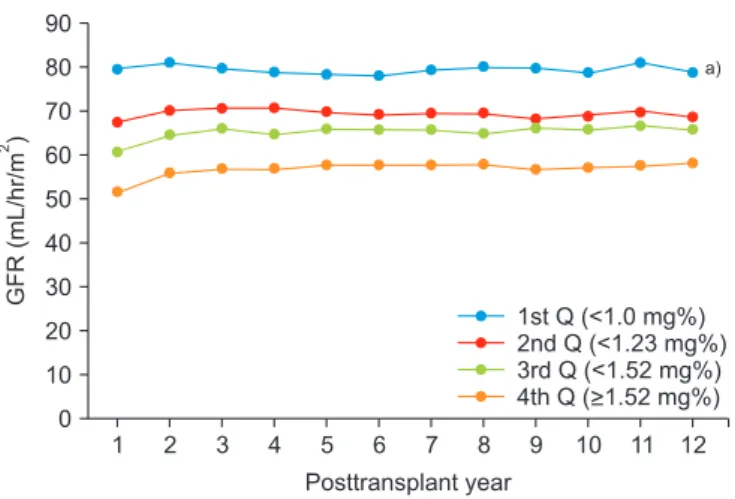
Fig. 1. Mean glomerular filtration rate (GFR) of functioning graft by quan-
tile group of serum creatinine quantile at 1-month posttransplant. Q, quar-
tile.
a)P<0.05 vs. each other.
in the 4th Q (serum creatinine ≥1.52 mg%). With respect to high-risk transplantation, there were 582 (30.7%) cases of ABO-incompatible transplants and 170 (9.0%) cases of retransplantation, including four cases of three transplants and one case of four transplants. Finally, 286 (15.1%) recipients underwent plasmapheresis at least one time (range, 1–7 times).
Serial changes of GFR for each group by year are shown in Fig. 1. The 1st Q group showed statistical signif- icance compared to all other groups each year. Within the entire sample, there were 251 graft failure events in the 1st Q group with 35 (8.8%) cases, 2nd Q with 54 (11.3%) cas- es, 3rd Q with 63 (12.9%) case, and 4th Q with 99 (20.6%) cases. The graft survival rate of the 1st Q was significantly higher than that of all the other groups at posttransplant
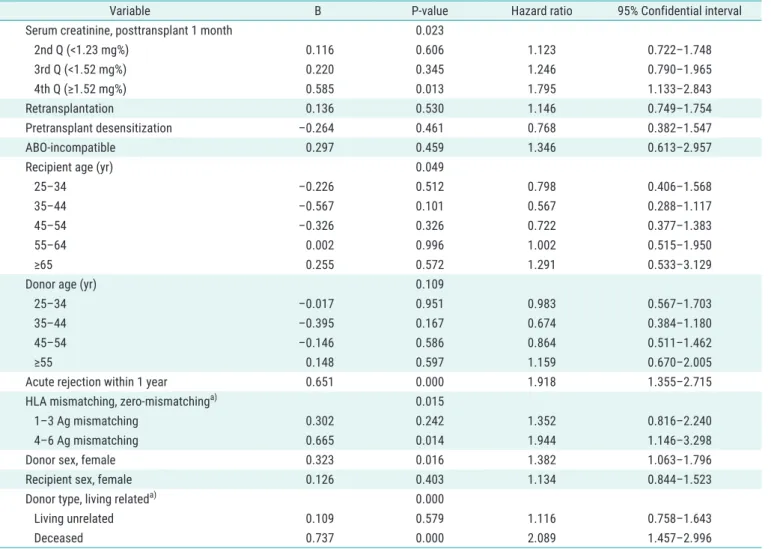
Table 1. Multiple Cox regression analysis for graft failure
Variable B P-value Hazard ratio 95% Confidential interval
Serum creatinine, posttransplant 1 month 0.023
2nd Q (<1.23 mg%) 0.116 0.606 1.123 0.722–1.748
3rd Q (<1.52 mg%) 0.220 0.345 1.246 0.790–1.965
4th Q (≥1.52 mg%) 0.585 0.013 1.795 1.133–2.843
Retransplantation 0.136 0.530 1.146 0.749–1.754
Pretransplant desensitization –0.264 0.461 0.768 0.382–1.547
ABO-incompatible 0.297 0.459 1.346 0.613–2.957
Recipient age (yr) 0.049
25–34 –0.226 0.512 0.798 0.406–1.568
35–44 –0.567 0.101 0.567 0.288–1.117
45–54 –0.326 0.326 0.722 0.377–1.383
55–64 0.002 0.996 1.002 0.515–1.950
≥65 0.255 0.572 1.291 0.533–3.129
Donor age (yr) 0.109
25–34 –0.017 0.951 0.983 0.567–1.703
35–44 –0.395 0.167 0.674 0.384–1.180
45–54 –0.146 0.586 0.864 0.511–1.462
≥55 0.148 0.597 1.159 0.670–2.005
Acute rejection within 1 year 0.651 0.000 1.918 1.355–2.715
HLA mismatching, zero-mismatching
a)0.015
1–3 Ag mismatching 0.302 0.242 1.352 0.816–2.240
4–6 Ag mismatching 0.665 0.014 1.944 1.146–3.298
Donor sex, female 0.323 0.016 1.382 1.063–1.796
Recipient sex, female 0.126 0.403 1.134 0.844–1.523
Donor type, living related
a)0.000
Living unrelated 0.109 0.579 1.116 0.758–1.643
Deceased 0.737 0.000 2.089 1.457–2.996
Q, quartile; HLA, human leukocyte antibody.
a)
Reference value.
0 2 4 6 8
1.0
0.8
0.6
0.4
0.2
10 12 14
Graftsurvivalrate
Posttransplant year
1st Q (<1.0 mg%) 2nd Q (<1.23 mg%) 3rd Q (<1.52 mg%) 4th Q (>1.52 mg%)
a)
Fig. 2. Graft survival rate by quantile group of serum creatinine quantile