• 검색 결과가 없습니다.

The effects of dual-task training on ambulatory abilities of stroke patients: Review of the latest trend

N/A
N/A
Protected

Academic year: 2021

Share "The effects of dual-task training on ambulatory abilities of stroke patients: Review of the latest trend"

Copied!
5
0
0

로드 중.... (전체 텍스트 보기)

전체 글

(1)

Received: 19 May, 2012 Revised: 28 July, 2012 Accepted: 15 August, 2012 Corresponding author: Won Jae Choi

Department of Physical Therapy, Uijeongbu Healings Hospital, 19 Cheongsa-ro 48beon-gil, Uijeongbu 480-865, Republic of Korea Tel: 82-31-853-9222 Fax: 82-31-853-9221 E-mail: [email protected]

This is an Open-Access article distributed under the terms of the Creative Commons Attribution Non-Commercial License (http://creativecommons.org/licens es/by-nc/3.0) which permits unrestricted non-commercial use, distribution, and reproduction in any medium, provided the original work is properly cited.

Copyright © 2012 Korean Academy of Physical Therapy Rehabilitation Science

pISSN 2287-7576 Phys Ther Rehabil Sci

eISSN 2287-7584 2012, 1 (1), 1-5

www.jptrs.org

The effects of dual-task training on ambulatory abilities of stroke patients: Review of the latest trend

Gyu Chang Lee a , Won Jae Choi b

a

Department of Physical Therapy, College of Natural Sciences, Kyungnam University, Changwon, Republic of Korea

b
Department of Physical Therapy, Uijeongbu Healings Hospital, Uijeongbu, Republic of Korea

Objective: Dual-task walking deficits impact functional daily life, which often requires walking while performing simultaneous tasks such as talking, thinking or carrying an object. This study is to find out the latest trend of dual-task training’s influence on am- bulatory abilities of a stroke patient.

Design: Systematic review of randomized controlled trials.

Methods: This literature review was conducted in Pubmed and Sciencedirect with the follwing key words:stroke, cerebro-vas- cular accident, hemiplegia, gait, rehabilitation, exercise. 7 studies were chosen in findings by search tool. 3 studies were case study, 3 studies were cross sectional observational study and 1 study was randomized controlled trial.

Results: It was found that stroke patients have difficulties in doing 2 motor tasks simultaneously and when they do 2 tasks, one is done in a naturally preferred activity areas. Moreover, when simply applying dual-tasks, the walking speed decreased.

Meanwhile, when applying them through training, the speed increased. This showed the improvement of effective task-im- plementation abilities after dual-task training using task-integration models.

Conclusions: In the beginning of the 2000s, dual-tasks were implemented by simply combining walking and cognition or ex- ercise task, and the results of this study suggest that subjects with stroke have difficulty performing dual task. However, the latest trend is to let patients do the dual-task training by combining it with virtual reality. Therefore, dual task training could be per- formed in a safe in the environment such as virtual reality or augment reality.

Key Words: Stroke, Task, Walking

Introduction

Stroke is a major problem that comes with aging. It leads to physical and sensory perception loss such as loss of motor skills and paresthesia. Moreover, it could trigger cognitive and social disabilities such as a speech disorder [1]. After 6 months it occurs, most physical functions are still deterio- rated [2]. Accordingly, improvement potentials for physical functions should be increased through training based on the degree of patients’ damaged function [3]. Loss and impair- ment of ambulatory abilities are one of the major devastating outcomes of post-stoke [4]. For those suffering from after ef-

fect of stroke, independent ambulatory abilities are an im- portant goal in terms of rehabilitation program and for the combination with daily activities [5,6].

Since a series of tasks should be done in daily lives, peo-

ple should be able to juggle exercise tasks and high cognitive

functions simultaneously [7]. Dual-task training triggers de-

velopment of strategic methods to implement several tasks

at the same time [8,9]. Therefore, two models were proposed

in order to explain changes related with dual-task training

[9,10]. Task-automation model shows the improvement of

dual-task implementation as each task’s automation is

increased. According to this model, dual-task implemen-

(2)

Table 1. List of inclusion and exclusion details

Area Contents

Inclusion details

Population Any subjects over 30 years, studies with stroke patients

Study type Intervention studies of any type, including case studies and non-randomized trials Intervention Dual task training (motor dual task and cognitive dual task)

Outcomes Outcomes focus on gait parameters

Exclusion details

Animal studies, reviews, methodological, theoretical or discussion papers

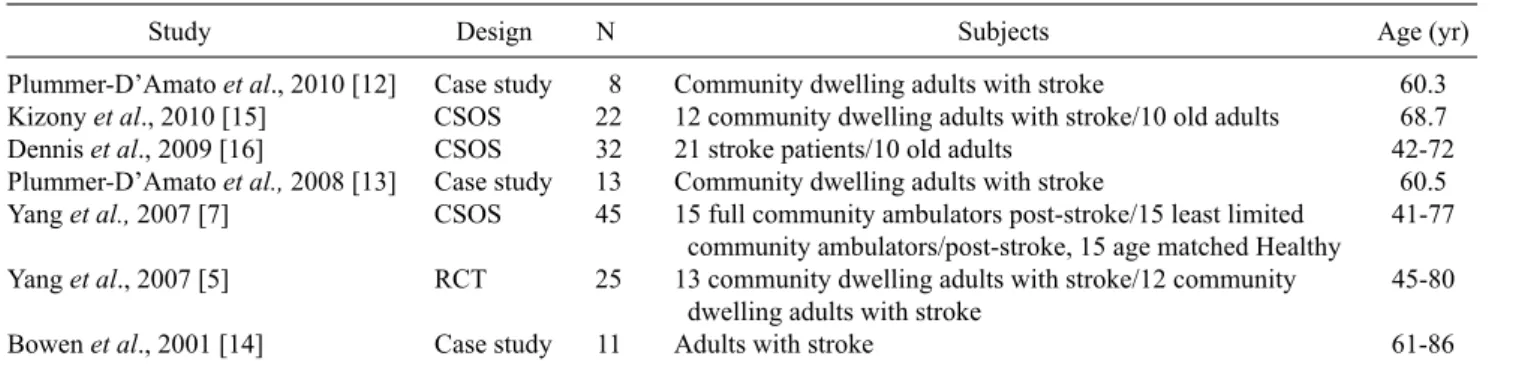
Table 2. Included studies reported by design and subjects specifications

Study Design N Subjects Age (yr)

Plummer-D’Amato et al., 2010 [12] Case study 8 Community dwelling adults with stroke 60.3 Kizony et al., 2010 [15] CSOS 22 12 community dwelling adults with stroke/10 old adults 68.7

Dennis et al., 2009 [16] CSOS 32 21 stroke patients/10 old adults 42-72

Plummer-D’Amato et al., 2008 [13] Case study 13 Community dwelling adults with stroke 60.5 Yang et al., 2007 [7] CSOS 45 15 full community ambulators post-stroke/15 least limited 41-77

community ambulators/post-stroke, 15 age matched Healthy

Yang et al., 2007 [5] RCT 25 13 community dwelling adults with stroke/12 community 45-80 dwelling adults with stroke

Bowen et al., 2001 [14] Case study 11 Adults with stroke 61-86

CSOS: cross sectional observational study, RCT: randomized controlled trial.

tation is expected to be improved through single task and du- al-task training. Meanwhile, according to task-integration model, effective combination of two tasks which were re- quired for dual-task training play a decisive role in improve- ment of dual-task implementation. As a result, the improve- ment of dual-task implementation is not achieved through single-task training but through dual-task training [11].

Dual motor interference is considered as clinically im- portant for reasons as follows. First, the simultaneous im- plementation of two exercise tasks could be a prescription it- self for treatment. Second, the degree of interference accord- ing to dual-task differs among patients. Therefore, exercise implementation abilities of each individual could affect on treatment plans. Third, several exercise activities are done at the same time in most daily lives. Therefore, evaluation of dual-task implementation would be able to provide better standard in terms of evaluating functional daily abilities in comparison with single exercise task evaluation [7].

Accordingly, the aim of this study is to find out the latest trend of dual-task training’s influence on stroke patients’

ambulatory abilities.

Methods

With essential study subjects about dual-task for stroke

patients, literatures -books, thesis, academic journals and in- ternet information which were written by experts- were collected. The collection process was done through expert books, internet search and electronic searching program for thesis. Through literatures about dual-task, basic knowledge and latest authorized studies between 2001 and 2010, the lat- est trend was looked into.

To search information, for foreign literatures, medical thesis site (www.pubmed.com) and search site for scientific information (www.sciencedirect.com) which are provided by National Institute of Health were used. Moreover, throu- gh combined searching methods in which searching words such as stroke, cerebro-vascular accident, hemiplegia, gait, rehabilitation, exercise were used, periodicals and thesis were found.

The standard for searching was to select literatures in which dual-task was implemented to stroke patients over 30.

Moreover, they should be studies that measured variables for walk. Animal test, contemplation study, methodological and theoretical discussions were exempted (Table 1).

Results

After searching latest study trend, 8 theses that befitted se-

lection standard were found as shown in Table 2. Among

(3)

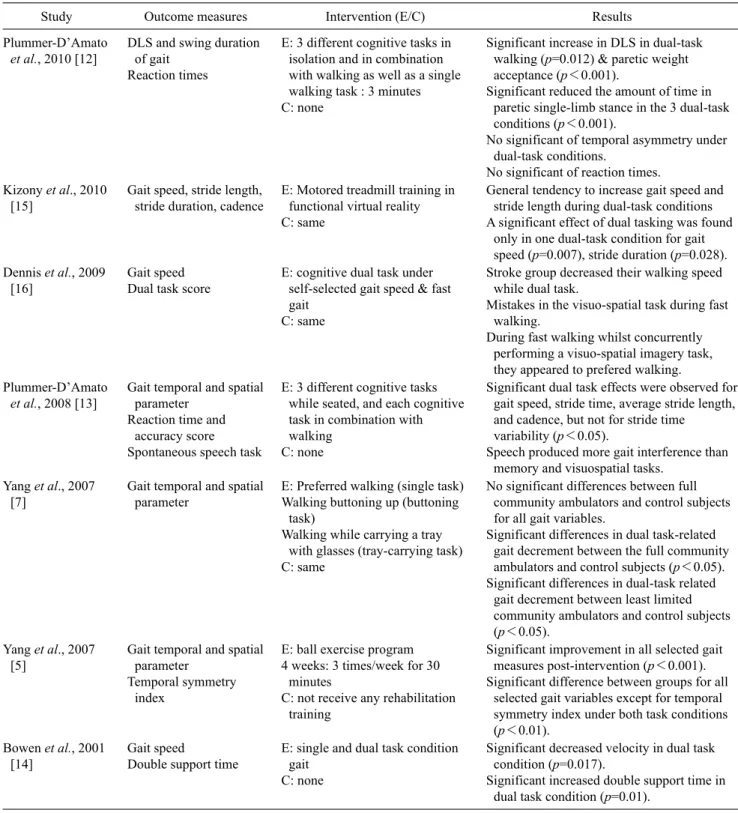
Table 3. Included studies reported by outcome measures, intervention and results

Study Outcome measures Intervention (E/C) Results

Plummer-D’Amato et al., 2010 [12]

DLS and swing duration of gait

Reaction times

E: 3 different cognitive tasks in isolation and in combination with walking as well as a single walking task : 3 minutes C: none

Significant increase in DLS in dual-task walking (p=0.012) & paretic weight acceptance (p<0.001).

Significant reduced the amount of time in paretic single-limb stance in the 3 dual-task conditions (p<0.001).

No significant of temporal asymmetry under dual-task conditions.

No significant of reaction times.

Kizony et al., 2010 [15]

Gait speed, stride length, stride duration, cadence

E: Motored treadmill training in functional virtual reality C: same

General tendency to increase gait speed and stride length during dual-task conditions A significant effect of dual tasking was found

only in one dual-task condition for gait speed (p=0.007), stride duration (p=0.028).

Dennis et al., 2009 [16]

Gait speed Dual task score

E: cognitive dual task under self-selected gait speed & fast gait

C: same

Stroke group decreased their walking speed while dual task.

Mistakes in the visuo-spatial task during fast walking.

During fast walking whilst concurrently performing a visuo-spatial imagery task, they appeared to prefered walking.

Plummer-D’Amato et al., 2008 [13]

Gait temporal and spatial parameter

Reaction time and accuracy score Spontaneous speech task

E: 3 different cognitive tasks while seated, and each cognitive task in combination with walking

C: none

Significant dual task effects were observed for gait speed, stride time, average stride length, and cadence, but not for stride time variability (p<0.05).

Speech produced more gait interference than memory and visuospatial tasks.

Yang et al., 2007 [7]

Gait temporal and spatial parameter

E: Preferred walking (single task) Walking buttoning up (buttoning

task)

Walking while carrying a tray with glasses (tray-carrying task) C: same

No significant differences between full community ambulators and control subjects for all gait variables.

Significant differences in dual task-related gait decrement between the full community ambulators and control subjects (p<0.05).

Significant differences in dual-task related gait decrement between least limited community ambulators and control subjects (p<0.05).

Yang et al., 2007 [5]

Gait temporal and spatial parameter

Temporal symmetry index

E: ball exercise program 4 weeks: 3 times/week for 30

minutes

C: not receive any rehabilitation training

Significant improvement in all selected gait measures post-intervention (p<0.001).

Significant difference between groups for all selected gait variables except for temporal symmetry index under both task conditions (p<0.01).

Bowen et al., 2001 [14]

Gait speed

Double support time

E: single and dual task condition gait

C: none

Significant decreased velocity in dual task condition (p=0.017).

Significant increased double support time in dual task condition (p=0.01).

E: experimental group, C: control group, DLS: double limb support.

them, 1 studies [5] were randomized control trial. 3 studies [12-14] were case study and the rest 3 [7,15,16] were cross sectional observational study.

Ambulatory abilities can be classified into 2 sectors: spa- tial ambulatory ability and temporal ambulatory ability. For

evaluation of ambulatory abilities, clinical evaluation meth- ods such as ambulatory ability-evaluation equipment or community walk test are used. Walking speed, cadence, dual limb support degree mean temporal ambulatory abilities.

Also, the result of evaluating step length and stride length

(4)

mean spatial ambulatory abilities. In most studies, temporal and spatial ambulatory abilities were measured at the same time (Table 3).

Plummer-D’Amato et al. [12] let 8 stroke patients not on- ly simply walk but also walk while doing other cognitive tasks. Then, changes in swing phase and dual limb support while walking were analyzed. As a result, paralyzed limb’s phase of weight support was increased while doing 3 du- al-tasks (p<0.05). The swing phase of non-paralyzed limb was decreased while doing dual-tasks (p<0.001). More- over, 6 out of the total of 8 patients showed the increase of stand phase of non-paralyzed limb, having asymmetric walking aspects.

In studies of Kizony et al. [15], 12 stroke patients and 10 normal people were made to walk on tread mill according to their preferred walking speed. Then, researchers made them select virtual products on the screen which was set 1.5 m in front of them and showed a virtual grocery store. The walk- ing speed of stroke patients was increased from 0.51±0.23 m/s to 0.74±0.42 m/s. Normal people’s walking speed was increased from 0.87±0.13 m/s to 1.26±0.20 m/s. Stride length of paralyzed limb was increased from 0.62 m to 0.68 m.

Dennis et al. [16] argued that the interaction of cognitive task-implementation and walking speed differ according to walking speed. Therefore, using dual-task methods, the im- pact of the two cognitive tasks while walking with proper speed and fast speed on stroke patients were measured. At here, the two cognitive tasks were to subtract the number 3 consecutively and spatio-temporal tasks. In this process, cognitive task scores and walking speed were measured.

When they consecutively subtracted the number 3 while walking both with preferred walking speed and fast speed, the walking speed was slowed. Moreover, when they walked in fast speed while doing spatio-temporal tasks, they made many mistakes and walked in their preferred speed.

Plummer-D’Amato et al. [13] let 13 stroke patients not only simply walk but also do 3 different cognitive tasks while seated and walking. In the process, walking speed, stride length and the change of cadence were measured. As a result, the walking speed was decreased while doing du- al-task. Stride length and cadence were both decreased, Yang et al. [7] emphasized the importance of dual-exercise task in which two exercise tasks are implemented simulta- neously rather than a dual task in which exercise task and cognitive task are done simultaneously. For example, in or-

der to find out the influence of dual-task interference, abil- ities to implement exercise tasks were analyzed while 3 groups were walking. The 3 groups were classified as fol- lows: those who can independently live after suffering stroke, those whose social lives are limited after stroke, and those who are normal. Exercise tasks included 1) simply walking in preferred speed (single task), 2) fastening a but- ton while walking (dual task), and 3) holding a tray on which a cup is put while walking (dual task). At here, the walking variables between socially independent group and limited group after stroke showed no big difference. While doing dual-task rather than single task, walking speed of all group were decreased. However, the walking speed was even more significantly decreased for socially independent and limited groups after stroke than for normal group. While the in- dependent group who walked outside did dual-task, the walking speed was decreased from 98.49±15.62 cm/s to 84.20±15.13 cm/s and 80.87±17.18 cm/s (p<0.05). Ca- dence was decreased from 103.61±5.55 step/min to 99.58±

3.70 step/min (p<0.05) and 99.89±7.72 step/min (p<

0.005). Stride length was decreased from 114.81±13.23 cm to 101.88±16.49 cm and 96.55±13.05 cm (p<0.05).

Yang et al. [5] let 13 residents who previously suffered stroke do dual-exercise task including 7 exercise activities using a ball. The training program included 1) walking while holding 1 or 2 balls on both hands, 2) walking to match the rhythm of bouncing 1 ball with 1 hand or both hands, 3) walking while holding 1 ball on 1 hand and concurrently bouncing another ball with the other hand, 4) walking in time while kicking a basketball (the basketball was put into a net, and the net was held by the subject), 5) walking while holding 1 ball and concurrently kicking another basketball within a net, 6) walking while bouncing 1 ball and con- currently kicking another basketball within a net, and 7) walking while reciprocally bouncing 1 ball with both hands.

As a result, the walking speed increased from 85.62±19.85 cm/s to 115.35±18.14 cm/s. Cadence was increased from 95.72±8.51 step/min to 110.69±10.66 step/min. Stride length was increased from 107.45±17.12 cm to 125.53±

10.83 cm.

Bowen et al. [14] looked into the change of walking speed

and both limb support of 11 stroke patients when doing a sin-

gle task and dual-task. As a result, walking speed was de-

creased over 4 m/min. Both limb support increased from

18.9% to 20.9%.

(5)

Discussion

The first aim of rehabilitation is the increase of walking speed. However, simply increasing walking speed is not enough to set it as an indicator for a patient’s returning to a society [5]. Accordingly, dual-task implementation while walking can be a significant indicator for returning to a society.

Dual-task training is to consecutively do more than 2 tasks simultaneously [17]. Since the relationship between cognition and exercise is related with the understanding of restoration of motor control after suffering neurological damage such as stroke, it have come to the fore of studies [7,13]. Cognitive motor interference (CMI) means a sit- uation where single task or dual task are interfered while im- plementing them [13]. Conventionally, it is guessed that these interferences occur due to the need for concentration [18], according to recent studies, however, experts say that damaged executive control ability occur interference to CMI [19,20].

Through these studies, it was found that stroke patients have difficulties in doing 2 motor tasks simultaneously and when they do 2 tasks, one is done in a naturally preferred ac- tivity areas. Moreover, when simply applying dual-tasks, the walking speed decreased. Meanwhile, when applying them through training, the speed increased. This showed the im- provement of effective task-implementation abilities after dual-task training using task-integration models.

Recent studies for dual-task training are mostly done in virtual-reality surroundings. This method can help resear- chers select a task that is normally seen in everyday lives and patients experience a similar environment of real one. Al- though current virtual reality program simply shows a pro- grammed screen to a experiment participant, more vivid sur- roundings would be available in the near future.

References

1. Braun SM, Beurskens AJ, van Kroonenburgh SM, Demarteau J, Schols JM, Wade DT. Effects of mental practice embedded in daily therapy compared to therapy as usual in adult stroke pa- tients in Dutch nursing homes: design of a randomised controlled trial. BMC Neurol 2007;7:34.

2. Jørgensen HS, Nakayama H, Raaschou HO, Olsen TS. Recovery of walking function in stroke patients: the Copenhagen Stroke Study. Arch Phys Med Rehabil 1995;76:27-32.

3. Michaelsen SM, Dannenbaum R, Levin MF. Task-specific train- ing with trunk restraint on arm recovery in stroke: randomized

control trial. Stroke 2006;37:186-92.

4. Yang YR, Tsai MP, Chuang TY, Sung WH, Wang RY. Virtual re- ality-based training improves community ambulation in in- dividuals with stroke: a randomized controlled trial. Gait Posture 2008;28:201-6.

5. Yang YR, Wang RY, Chen YC, Kao MJ. Dual-task exercise im- proves walking ability in chronic stroke: a randomized con- trolled trial. Arch Phys Med Rehabil 2007;88:1236-40.

6. Ada L, Dean CM, Hall JM, Bampton J, Crompton S. A treadmill and overground walking program improves walking in persons residing in the community after stroke: a placebo-controlled, randomized trial. Arch Phys Med Rehabil 2003;84:1486-91.

7. Yang YR, Chen YC, Lee CS, Cheng SJ, Wang RY. Dual-task-re- lated gait changes in individuals with stroke. Gait Posture 2007;

25:185-90.

8. Bherer L, Kramer AF, Peterson MS, Colcombe S, Erickson K, Becic E. Training effects on dual-task performance: are there age-related differences in plasticity of attentional control?

Psychol Aging 2005;20:695-709.

9. Ruthruff E, Van Selst M, Johnston JC, Remington R. How does practice reduce dual-task interference: integration, automa- tization, or just stage-shortening? Psychol Res 2006;70:125-42.

10. Ruthruff E, Johnston JC, Van Selst M. Why practice reduces du- al-task interference. J Exp Psychol Hum Percept Perform 2001;

27:3-21.

11. Silsupadol P, Lugade V, Shumway-Cook A, van Donkelaar P, Chou LS, Mayr U, et al. Training-related changes in dual-task walking performance of elderly persons with balance impair- ment: a double-blind, randomized controlled trial. Gait Posture 2009;29:634-9.

12. Plummer-D'Amato P, Altmann LJ, Behrman AL, Marsiske M.

Interference between cognition, double-limb support, and swing during gait in community-dwelling individuals poststroke. Neu- rorehabil Neural Repair 2010;24:542-9.

13. Plummer-D'Amato P, Altmann LJ, Saracino D, Fox E, Behrman AL, Marsiske M. Interactions between cognitive tasks and gait after stroke: a dual task study. Gait Posture 2008;27:683-8.

14. Bowen A, Wenman R, Mickelborough J, Foster J, Hill E, Tallis R. Dual-task effects of talking while walking on velocity and bal- ance following a stroke. Age Ageing 2001;30:319-23.

15. Kizony R, Levin MF, Hughey L, Perez C, Fung J. Cognitive load and dual-task performance during locomotion poststroke: a fea- sibility study using a functional virtual environment. Phys Ther 2010;90:252-60.

16. Dennis A, Dawes H, Elsworth C, Collett J, Howells K, Wade DT, et al. Fast walking under cognitive-motor interference conditions in chronic stroke. Brain Res 2009;1287:104-10.

17. Pellecchia GL. Dual-task training reduces impact of cognitive task on postural sway. J Mot Behav 2005;37:239-46.

18. Woollacott M, Shumway-Cook A. Attention and the control of posture and gait: a review of an emerging area of research. Gait Posture 2002;16:1-14.

19. Holtzer R, Stern Y, Rakitin BC. Age-related differences in execu- tive control of working memory. Mem Cognit 2004;32:1333-45.

20. Holtzer R, Stern Y, Rakitin BC. Predicting age-related dual-task effects with individual differences on neuropsychological tests.

Neuropsychology 2005;19:18-27.

수치

Table 2. Included studies reported by design and subjects specifications
Table 3. Included studies reported by outcome measures, intervention and results

참조

관련 문서

웹 표준을 지원하는 플랫폼에서 큰 수정없이 실행 가능함 패키징을 통해 다양한 기기를 위한 앱을 작성할 수 있음 네이티브 앱과

_____ culture appears to be attractive (도시의) to the

The “Asset Allocation” portfolio assumes the following weights: 25% in the S&P 500, 10% in the Russell 2000, 15% in the MSCI EAFE, 5% in the MSCI EME, 25% in the

1 John Owen, Justification by Faith Alone, in The Works of John Owen, ed. John Bolt, trans. Scott Clark, "Do This and Live: Christ's Active Obedience as the

t-test and F-test were employed to find out the influence of child gender, birth of order and family atmosphere on parent communication style and child

The purpose of this study is to analyze the effects of word- recording on learning vocabulary, reading and listening of English. control groups to answer

In order to investigate the effects of process parameters on qualities of the drilled hole quantitatively, laser drilling experiments were carried out using

The data from the questionnaire survey were analyzed to prove the effects of Myung Power Therapy on such scales of the relaxation of pain as improvement