
Article http://dx.doi.org/10.14478/ace.2016.1009
고감도 나노 -바이오센서를 위한 나노로드 전극 표면 개질에 관한 연구
이승준
조지아대학교
(2016년 1월 29일 접수, 2016년 2월 16일 심사, 2016년 3월 10일 채택)
A Study on Surface Modification of Nanorod Electrodes for Highly Sensitive Nano-biosensor
Seung Jun Lee
Micro/Nano Bioengineering Laboratory, Department of Biological and Agricultural Engineering, The University of Georgia, Athens, GA 30602, USA
(Received January 29, 2016; Revised February 16, 2016; Accepted March 10, 2016)
초 록
많은 생체 친화적인 센서들 중에서 avidin-biotin system은 높은 상호 특이적인 친화성으로 인하여 많은 생물학적인 응 용 연구에 이용되어 왔다. 효과적인 avidin-biotin 바이오센서 개발을 위해 avidin-biotin 간의 상호 반응성을 증대시키기 위해서는 높은 표면적을 가지는 전극이 필요하다. 본 연구에서는 이러한 목적을 위해 gold nanorods electrode를 사용하 였다. 전기화학적인 특성은 cyclic voltammetry (CV)와 electrochemical impedance spectroscopy (EIS)를 가지고 redox cou- ple [Fe(CN)6]3-/4-를 사용하여 다양한 biotin의 농도에 따라 분석되었다. 결론적으로 nanorod의 전극은 1 ng/mL보다 낮은 biotin의 농도도 감지할 수 있음을 보였다.
Abstract
Among many kinds of bioaffinity sensors, the avidin-biotin system has been widely used in a variety of biological applications due to the specific and high affinity interaction of the system. In this work, gold nanorods with high surface area were explored as electrodes in order to amplify the signal response from the avidin-biotin interaction which can be further utilized for avi- din-biotin biosensors. Electrochemical performance of electrodes modified with nanorods and functionalized with avidin in re- sponse to interactions with biotin at various concentrations using [Fe(CN)6]3-/4- couple as the redox probe were investigated using cyclic voltammetry (CV) and electrochemical impedance spectroscopy (EIS). A very low biotin concentration of less than 1 ng/mL could be detected using the electrodes modified with nanorods.
Keywords: nano/biosensor, avidin/biotin, surface modification
1)1. 서 론
초소형 나노-바이오센서 소자는 생명현상의 이해 및 공학적 응용을 위해서는 미량으로 존재하는 생체분자를 측정할 수 있어야 한다. 생 물학적 검출기술은 다량의 바이오 정보를 일차적으로 획득하는 수단으 로서 그리고, 질병의 예방, 진단 등 산업적 응용이라는 측면에서도 매우 중요하다. 시스템적 생물학 연구가 진행되기 위해서도 다량의 시료를 동시에 상호 비교 분석할 수 있는 도구가 있어야 한다. 최근 바이오산 업에서 미세 바이오 분석 시스템 개발의 필요성은 유전체 및 단백질체 연구와 신약 개발 등에 있어 큰 의미를 갖고 있다. 분석, 진단 및 신약
† Author (current address): Samsung Electronics, Samsung-Ro, Suwon 16677, Republic of Korea
Tel: +82-70-8699-6720 e-mail: [email protected]
†*This research was mainly conducted while Seung Jun Lee was working at the University of Georgia.
pISSN: 1225-0112 eISSN: 2288-4505 @ 2016 The Korean Society of Industrial and Engineering Chemistry. All rights reserved.
개발 시 소요되는 비용의 절감과 대량검색의 고효율성이라는 장점을 제공해 줄 수 있기 때문이다. 최근의 바이오 분석 시스템은 다량의 시 료를 처리할 수 있도록 어레이(array)화 및 소형화(miniaturization) 되 어 가고 있는 것이 지금의 큰 흐름이다[1-3]. 기존 바이오센서의 한계 를 극복하여 현장진단, 실시간 분석이 가능한 개선된 나노-바이오센 서의 개발을 실현하기 위해서는 센서매트릭스(sensor matrix)가 되는 나노 구조화된 기능성 지지체(substrate) 매트릭스(matrix)의 연구 개발 이 요구되어 진다. 나노 구조화된 나노 제작 기술로는 MEMS(micro electro mechanical system), 자기조립(self-assembly)기술, DPN(dip-pen nanolithography), 스마트 나노입자(smart nanoparticles), 나노 임프린 트(nano-imprinting)기술, 그리고 nanocarpet, nanopillar, nanorod와 같 은 nano-array 제작기술 등이 대표적이다. 특히, 소형화된 초소형 나노 -바이오센서는 정확한 분석을 위해 극미량의 물질에도 높은 민감성을 가져야 한다. 이러한 목적으로 바이오센서의 민감도를 증가시키기 위 해 센서 전극을 nanopillar 또는 nanorod와 같은 nanostructure array로 제작하여 많은 연구가 진행되어 왔다[4-8]. 특히, gold nanorod 전극 구조에 따른 민감도 및 gold flat 전극과의 민감도 비교에 대한 것은
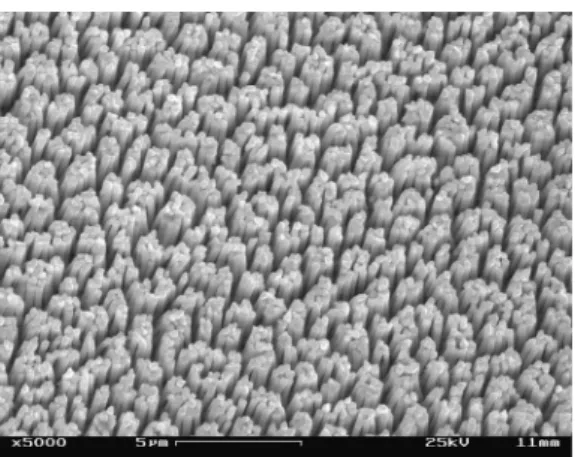
Figure 1. The morphology of gold nanorods using SEM.
Figure 2. The schematic diagram for stepwise formation of multilayer on the gold nanorods electrode surface.
이전의 연구에서 설명하였듯이 gold nanorod 전극은 gold flat 전극보 다 높은 민감도를 가진다[9-11].
본 연구에서는 고감도 나노-바이오센서의 응용을 위한 나노 구조의 전극의 제작 공정 및 실험적 검증에 관한 연구로 electro-chemical depo- sition 방법을 이용하여 수 마이크로의 크기를 가지는 gold-nanorods를 제작하고, gold-nanorods의 표면을 카르복실기 말단과 알킬 사실구조를 가지는 물질을 이용하여 gold-nanorod의 표면에 고정화한 이후, protein 를 그 위에 재고정화 하여 개질된 gold-nanorod protein 전극을 제작하 고, 초미량의 protein-ligand가 인식되는지를 확인하였고, 제작된 gold-nanorod 전극의 높은 감도(sensitivity)를 실험적으로 검증함과 동 시에 감도(sensitivity) 증가에 기인한 이유에 관하여 연구를 진행하였다.
2. 실 험
2.1. 시약 및 기구
표면 개질되지 않은 bare gold nanorod 전극시편은 University of Georgia의 Micro/Nano Bioengineering Lab.으로부터 제공받아 사용하 였다(GA, USA). 11-Mercaptoundecanoic acid (MUA), 1-[3-(Dimethy- lamino)propyl]-3-ethyl carbodiimide hydrochloride (EDC), N-hydrox- ysuccinimide (NHS), Biotin, 그리고 Avidin 등은 Sigma-Aldrich로부터 구입하여 사용하였다. avidin과 biotin 용액을 제조하기 위해 Phosphate buffered saline (PBS, 0.01 M pH 7.4)이 사용되었다.
2.2. Gold nanorod 전극 제조 및 표면 개질
수용액 상에서 electro-chemical deposition 방법을 통하여 4 µm-5 µm 높이를 가지는 bare gold nanorod가 제작되었다. 간략히 설명하면 commercial porous anodic alumina disc (PAA, d = 25 mm; Whatman Inc, Maidstone, England)를 gold plate 수용액상에 immerse한 이후 three-electrode system (gold-coated PAA (working 전극), platinum wire gauze (counter 전극), Ag/AgCl (reference 전극))를 통해 5 mA/cm2의 current density와, 65 ℃ 환경하에서 전기화학적인 방법을 통해 일정하게 배열된 bare gold nanorods를 제작하였다. 자세한 제작 방법은 이전의 연구에서 설명되었고, 제작된 bare gold nanorod를 scanning electron microscopy (SEM)으로 측정한 형상을 Figure 1에 나 타내었다[9-10]. 특히, 이전의 연구에서 설명되었듯이 nanorods로 인 한 표면적의 증가를 평가하기 위해 cyclic voltammetry (CV)를 통해 flat 전극과 nanorods 전극을 비교하였고, 그 결과 0.7 V와 1.1 V 사이 에서 reduction peak이 관찰되었고, flat 전극보다 nanorods 전극에서
더 높은 reduction peak 값을 보여 nanorods 전극의 표면적이 더 증가 하여 나타난 현상으로 설명하였다[10].
표면이 개질된 nanorod 전극을 제작하게 위해 nano size로 제조된 bare gold nanorods 표면 위에 11-Mercaptoundecanoic acid (MUA) monolayers를 고정화한 이후, N-hydroxysuccinimice esters (NHS)를 통해 MUA의 말단 카르복실기를 NHS로 치환하고 이후, avidin pro- tein의 아민과 반응하여 avidin를 전극에 고정화하여 avidin-immobi- lized 전극을 만든다(Figure 2). 우선, 표면개질 전에 inorganic과 organ- ic 오염물을 제거하기 위해 gold nanorod modified 전극(1.2 mm × 1.2 mm)이 0.1 M H2SO4제하에서 Cyclic voltammetry (CV)에 의해 clean- ing한 후, ethanol 과 DI water를 통해 수차례 세정 단계를 거친다. 이 후, nanorod modified 전극이 10 mM MUA 용액에 12 h 동안 상온하 (under constant stirring)에서 담가져 SAM layer를 형성한다. 그런 후, MUA-modified gold nanorod의 미반응 MUA 제거와 세정을 위해 ethanol과 DI-water를 가지고 세정한다. 결론적으로 gold nanorod 전극 표면에 MUA가 고정화된다(i.e., turning the COOH groups of the MUA into reactive N-hydroxysuccinimice esters). 또한, MUA-modified gold nanorod는 30 mM EDC와 15 mM NHS가 포함된 PBS (0.01 M, pH 7.4) 용액에 3 h 동안 상온하에서 담가져 activation되고, 200 µg/ml avidin (in PBS)의 300 µL solution이 첨가되어 avidin-functionalized gold nanorod modified 전극을 제작한다. 이후, biotin이 농도에 따라 첨가되어 avidin-biotin system의 센싱 분석이 수행되었다.
2.3. 전기화학적 분석
표면 전기화학적인 특성 분석은 cyclic voltammetry (CV)와 electro- chemical impedance spectroscopy (EIS)의 three-electrode probe를 가지 고 redox couple [Fe(CN)6]3-/4-를 사용하여 분석되었으며, 또한, 전형적 인 three-electrode electrochemical cell system인 counter electrode (CE) 인 platinum (Pt) wire와 reference electrode (RE)인 Ag/AgCl 그리고 working electrode (WE)인 modified-gold nanorods electrode를 사용하 여 multistat 1480와 SI 1260 (Solartron Corp, Houston TX, USA)를 가 지고 수행되었다. 단계별 공정을 통해 각 단계에 따른 cyclic voltam- metry (CV)와 electrochemical impedance spectroscopy (EIS)를 측정 하여 분석 진행하였다. Cyclic voltammetry는 산화 환원의 formal po- tential과 반응에 관련된 전자의 수를 결정하는데 있어 기본적으로 가 장 많이 사용되는 전기 화학적인 technique이며, 시간에 비례하여 전 위를 변화시킬 때에 흐르는 전류를 전류-전위 곡선으로 기록하는 방 법을 전위 주사법(potential sweep method)이라고 하는데, 이것을 계속 반복해서 전위 주사하는 경우를 Cyclic voltammetry라고 부른다. 또한, electrochemical impedance spectroscopy (EIS)는 작은 진폭의 교류신 호에 대한 부식전극의 반응을 여러 범위의 주파수에 걸쳐 전기화학적 스펙트럼 분광법(EIS, Electrochemical Impedance Spectroscopy)에 의 해 분석하고 그 결과를 Nyquist Plot 또는 Bode Plot으로 나타내어 분
Potential (V)
-0.4 -0.2 0.0 0.2 0.4 0.6 0.8
Current (A)
-3e-5 -2e-5 -1e-5 0 1e-5 2e-5 3e-5
(a) Bare gold-nanorod (b) MUA gold-nanorod (c) MUA + Avidin gold-nanorod (d) MUA + Avidin + Biotin gold-nanorod
(a) (b)
(c)(d)
Figure 3. Cyclic voltamogramms of the bared gold nanorods electrode (a) following modification of MUA (b), MUA+ avidin (c), and MUA+
avidin + biotin (50 ng/ml) (d). The supporting electrolyte is PBS (0.01 M pH7.4) solution containing [Fe(CN)6]3-/4- couple.
Figure 4. Nyquist plots (Zim vs. Zre) of the bared gold nanorods electrode (a) following modification of MUA (b), MUA+ avidin (c), and MUA+ avidin + biotin (50 ng/ml) (d) in the PBS (0.01 M pH7.4) solution containing a redox probe of [Fe(CN)6]3-/4- couple. The insert figure is curve (a).
극 저항 값을 측정하여 분석하는 기술이다.
CV 측정은 PBS (0.01 M, pH 7.0)에서 2.5 mM K4[Fe(CN)6] + 2.5 mM K3[Fe(CN)6]가 mixing된 상에서 진행하였으며, potential은 -0.3 V 에서 0.6 V, 50 mV/s rate에서 진행하였다. 또한, EIS 측정은 frequency range 0.5 Hz-100 kHz, PBS (0.01 M, pH 7.0)에서 2.5 mM K4[Fe(CN)6] + 2.5 mM K3[Fe(CN)6]가 mixing된 상에서 진행하였다.
또한, 모든 측정은 상온하의 nitrogen flow condition에서 진행되었다.
3. 결과 및 고찰
3.1. 표면개질된 nanorod 전극의 전기화학적 특성
Surface modification와 functionalization process의 각 단계별 elec- trode/electrolyte interface에 대한 electrochemical characteristics를 조사 하기 위해 Cyclic voltammetry 분석이 수행되었다. Figure 3에서처럼 bare gold nanorod-electrode는 reversible CV curve를 보이고 있으며, Figure 4에서처럼 전극표면에 molecules (i.e., MUA, avidin, and bio- tin)이 단계별로 bounded됨에 따라 CV curve에서 단계별 redox couple 의 peck current가 감소하고, peak-to-peak separation에서의 증가 경향 을 보이고 있다. 이는 명확하게 multilayer molecular structures가 전극 표면(electrode surface)에 형성되어 두께(thickness)의 증감이 이루어져 [Fe(CN)6]3-/4-의 redox activity에 대한 전자의 전달 비율(electron trans- fer rate)이 감소되어 이러한 현상이 나타난 것으로 판단된다. 또한, Ding group은 이전 연구발표에서 전극 표면 위에 MUA가 자기조립 됨으로써 자기조립 층에 의해 전자의 전달이 억제되어 electron trans- fer resistance (Ret) 값이 증가함을 설명하였다[15].
또한, MUA, avidin, biotin를 가지고 electrode surface의 sequential modification동안의 electrode/electrolyte interfaces 특성이 EIS에 의해 측정 되었다. Figure 4는 얻어진 Nyquist plots이다. 명확하게 얻어진 반원(semicircle)의 지름(diameter)이 분자의 층(layer)이 증가함에 따라 증가하였다. 이러한 현상은 분자(molecules)의 층(layer)이 증가함에
따라 electrode/electrolyte interface에서의 electron-transfer resistance가 증가되었고, 높은 electron-transfer resistance은 [Fe(CN)6]3-/4-의 redox reaction를 감소시키기 때문이다. 이는 CV measurement와 비교할 때, EIS 측정(measurements)은 surface modification 단계에 따라 명확히 각 단계별 효과가 구별이 된다.
일반적으로 electrode/electrolyte interface의 electrical 거동은 re- sistors와 capacitor 사이에 equivalent circuit에 의해 나타낼 수 있다.
이전의 연구에서처럼 단계별 surface modification 동안 electrode/elec- trolyte interfaces을 위한 equivalent circuits을 특성분석하기 위해 Zplot/Zview (Scibner Associates Inc.)를 이용하여 impedance data를 가지고 statistical curve fitting하였다[10]. Multi-layer molecular struc- ture의 단계별 형성에 대한 fitted values가 Table 1에 나타내었다. 여기 서 Rs는 the resistance of the electrolyte, Ret은 the electron transfer re- sistance (at the electrode/electrolyte interface), 그리고 CPE는 a con- stant phase element이다. CPE의 physical origin는 많은 문헌[10-14]에 명시되어 있으며, 문헌을 참조하여 CPE의 impedance는 ZCPE = 1/[T(i*w)P]이고 여기서 i는 imaginary number이고, w는 angular fre- quency이고, P는 상수이며(0 ≤ P ≤ 1), T는 CPE의 inverse im- pedance로 단위는 F (rad/s)1-P이다[10,12,15]. 이 연구에서의 CPE는 modified layer capacitance (Cm)와 double layer capacitance (Cdl)를 포 함한다. 그러므로, equivalent capacitance는 1/CPE = 1/Cm + 1/Cdl로 표현될 수 있으며, 동일하게 Ret도 Ret = Rm + Rdl로 표현될 수 있다 [10-12,16].
Table 1에서 보이듯이, P는 0.94-0.96의 범위이며, 이는 ideal capaci- tive response (P = 1)에 근접하여, electrode/electrolyte interface에 대한 equivalent circuit분석에서 CPE가 pure capacitance을 대신할 수 있음을 의미한다. 또한, electrolyte resistance, Rs,은 일정하며, nanorod 전극 표 면에 다른 분자들이 deposition되어짐에 따라 electron transfer resistance (Ret)의 증가와 capacitance (CPE)의 감소가 나타남을 확인 할 수 있다.
즉, bare gold electrode의 Ret value는 (ca. 7137 Ω) 단계별 반응 진행 후와 비교할 때 아주 작은 값을 가지며, 이는 표면에 MUA의 self-as-
Ret (Ω) Rs (Ω) CPE-T (nF(rad/s)1-P) P
Step 1 : Modified-MUA 19358 ± 246 246.7 ± 1.9 2803.7 ± 37.5 0.94
Step 2 : Avidin 24435 ± 277 244.6 ± 1.6 2615.7 ± 25.7 0.96
Step 3 : Biotin concentration (ng/mL)
0.2 24484 ± 279 243.3 ± 1.6 2607.7 ± 25.6 0.96
0.5 25649 ± 298 243.6 ± 1.6 2477.7 ± 26.4 0.95
2 26835 ± 338 242.2 ± 1.7 2365.8 ± 28.1 0.95
6 28140 ± 331 242.4 ± 1.8 2295.8 ± 29.6 0.95
10 29741 ± 344 241.3 ± 2.1 2065.8 ± 33.8 0.95
30 31531 ± 359 242.6 ± 2.1 1815.8 ± 32.1 0.94
50 32973 ± 347 243.5 ± 2.2 1665.8 ± 29.8 0.94
100 34201 ± 367 243.8 ± 2.4 1484.5 ± 44.2 0.94
200 35474 ± 393 243.4 ± 2.6 1301.6 ± 49.9 0.94
300 35517 ± 394 243.2 ± 2.5 1298.6 ± 49.1 0.94
Table 1. Fitted Impedance Values for the Gold Nanorods Electrode After Multiplayer Modification and the Addition of Biotin
Figure 5. Cyclic voltammgrams of the avidin-immobilized gold nanorods electrode in the PBS (0.01 M pH 7.4) solution containing a redox probe of [Fe(CN)6]3-/4- couple with the addition of biotin at different concentrations. Biotin concentration 0 ng/mL (a), 0.2 ng/mL (b), 0.5 ng/mL (c), 2 ng/mL (d), 6 ng/mL (e), 10 ng/mL (f), 30 ng/mL (g), 50 ng/mL (h), 100 ng/mL (i), 200 ng/mL (j), 300 ng/mL (k). The curve (a) is avidin-immobilized gold nanorods electrode.
Figure 6. Nyquist plots of the avidin-immobilized gold nanorods electrode in the PBS (0.01 M pH 7.4) solution containing a redox probe of [Fe(CN)6]3-/4- couple with the addition of biotin at different concentrations. Biotin concentration 0 ng/mL (a), 0.2 ng/mL (b), 0.5 ng/mL (c), 2 ng/mL (d), 6 ng/mL (e), 10 ng/mL (f), 30 ng/mL (g), 50 ng/mL (h), 100 ng/mL (i), 200 ng/mL (j), 300 ng/mL (k). The curve (a) is avidin-immobilized gold nanorods electrode.
sembly가 진행됨에 따라 Ret는 self-assembled layer에 의해 elec- tron-transfer의 inhibition으로 인하여 증가된 것으로 판단된다. 또한, avidin immobilization 이후, Ret value는 24435 Ω로 증가하였고, capaci- tance는 2803.7 nF에서 2615.7 nF로 nanorod 전극 위의 코팅 layers가 증가함에 따라 감소하였다. 이는 CV의 결과와 일치함을 알 수가 있다.
3.2. Avidin-Biotin 고감도 센서의 전기적 특성
CV와 EIS을 이용하여 avidin-immobilized gold nanorod 전극과 bio- tin 사이의 상호관계를 분석하였다. Figure 5는 avidin-immobilized gold nanorod electrode가 있는 PBS 용액 상으로 biotin이 저농도에서
고농도까지 농도(0.2, 0.5, 2, 6, 10, 30, 50, 100, 200, 300 ng/mL)에 따라 첨가될 때 CV의 변화를 나타내었다. 하지만, CV 측정으로는 농 도에 따른 차이가 쉽게 구별되게 어렵다. 이는 농도가 낮을 때는 Faradic current가 쉽게 구별되기가 어렵고, current response가 avidin 과 biotin사이의 high affinity에 따른 전기적인 변화에 민감도가 크지 않기 때문이다. 그러므로, Figure 6에서처럼, EIS에 대한 분석이 동시 에 수행되어 비교 분석 되었다. 0.2 ng/mL-300 ng/mL로 농도에 따라 biotin이 첨가되었을 때, avidin-immobilized nanorod electrode surface 에 biotin의 binding으로 인하여 electron-transfer resistance이 증가하여 impedance에서의 큰 차이가 보였다. 이러한 결과는 이전의 연구에서
측정되었던 현상과 유사하며, 더 많은 biotin이 전극표면에 bounded 됨에 따라서 더 높은 impedance value를 가짐을 의미한다. 이전의 연 구에서는 1 ng/mL 미만의 농도를 감지할 수 없었으나[10], 본 연구에 서는 biotin농도 1 ng/mL 미만의 낮은 농도까지도 감지할 수 있음을 알 수가 있었다. 이는 초기 제작된 bare gold nanorod 전극의 길이에 영향이 있을 것으로 판단된다. 이전의 연구에서는 nanorod의 높이가 2 µm-3 µm이었으나, 본 연구에서 사용된 것은 nanorod의 높이가 4 µm-6 µm로 기존보다 더 높은 길이로 인하여 전체적인 표면적의 증가 로 인한 현상으로 설명될 수 있다[10]. Zhang group은 이전의 연구 발 표에서 cyclic voltammetry (CV)를 통해 nanorod의 높이에 따른 감도 (sensitivity)를 비교하였고, nanorods의 길이가 높은 전극에서의 감도 (sensitivity)가 더 증가하였음을 나타내었다[9].
Avidin-immobilized gold nanorod 전극에 biotin 농도에 따라 첨가 후, equivalent circuit를 통해 experimental curves를 fitting 한 결과가 Table 1에 나타내었다. avidin-immobilized gold nanorod 전극에 biotin 0.5 ng/mL가 첨가된 전후의 값을 비교하여 볼 때, Ret values는 24.435 kΩ에서 25.649 kΩ로 증가하였다. 그리고 0.2 ng/mL-300 ng/mL의 농도의 범위에서는 24484 Ω에서 35517 Ω로 증가하였다. 반면, CPE 는 2607.7 nF에서 1298.6 nF로 감소하였다. 즉, avidin-immobilized 전 극에 biotin이 binding된 후, redox couple의 access가 biotin의 존재보 다도 더 hindered되었기 때문에 Ret는 증가하였고, capacitance는 감소 하였다.
4. 결 론
본 연구를 통해 수 마이크로의 크기를 가지는 gold-nanorods를 제작 하고, gold-nanorods의 표면을 개질하여 Avidin-modified된 gold-nano- rod 전극을 제작하고, 초미량의 protein-ligand인 biotin이 인식되는지 를 확인하였고, 전기화학적인 특성은 cyclic voltammetry (CV)와 elec- trochemical impedance spectroscopy (EIS)를 가지고 redox couple [Fe(CN)6]3-/4-를 사용하여 다양한 biotin의 농도에 따라 분석되었다. 결 론적으로 nanorod의 전극은 1 ng/mL보다 낮은 biotin의 농도도 감지 할 수 있음을 보였다. 또한 nanorod의 높이가 증가됨에 따라 전체적인 표면적의 증가로 인한 더 높은 감도(sensitivity)를 가질 수 있음을 확 인할 수가 있었다.
감 사
본 논문 연구에 도움을 주신 University of Georgia의 Guigen Zhang 박사와 Venkataramani Anandan 박사에게 감사를 드립니다.
References
1. J. Kim and D. Ahn, Nanostructured Polydiacetylene Sensor, Polymer Science and Technology, 14, 266-273 (2003).
2. K. S. Ha and J. S. Yuk, Nano-biotechnology and protein chip, Trends Med. Res., 11(5), 9-16 (2004).
3. U. Kim, Biosensors, Korean J. Biotechnol. Bioeng., 15, 423-427 (2000).
4. R. D. Piner, J. Zhu, F. Xu, S. Hong, and C. A. Mirkin, Dip-Pen Nanolithography, Science, 283, 661-663 (1999).
5. T. G. Drummond, M. G. Hill, and J. K. Barton, Electrochemical DNA sensors, Nature Biotechnol., 21, 1192-1199 (2003).
6. J. W. Hong and S. R. Quake, Integrated nanoliter systems, Nature Biotechnol., 21, 1179-1183 (2003).
7. S. Zhang, Fabrication of novel biomaterials through molecular self-assembly, Nature Biotechnol., 21, 1171-1178 (2003).
8. J. G. Fan, D. Dyer, G. Zhang, and Y. P. Zhao, Nanocarpet Effect:
Pattern Formation during the Wetting of Vertically Aligned Nanorod Arrays, Nano Lett., 4, 2133-2138 (2004).
9. V. Anandan, X. Yang, E. Kim, Y. Rao, and G. Zhang, Role of reaction kinetics and mass transport in glucose sensing with nano- pillar array electrodes, J. Biol. Eng., 1:5, doi:10.1186/1754-1611-1-5 (2007).
10. S. Lee, V. Anandan, and G. Zhang, Electrochemical fabrication and evaluation of highly sensitive nanorod-modified electrodes for a biotin/avidin system avidin, Biosens. Bioelectron., 23, 1117-1124 (2008).
11. V. Anandan, R. Gangadharan, and G. Zhang, Role of SAM chain length in enhancing the sensitivity of nanopillar modified electro- des for glucose detection, Sensors, 9, 1295-1305 (2009).
12. A. Norlin, J. Pan, and C. Leygraf, Investigation of interfacial ca- pacitance of Pt, Ti and TiN coated electrodes by electrochemical impedance spectroscopy, Biomol. Eng., 19, 67-71 (2002).
14. P. Zoltowski, On the electrical capacitance of interfaces exhibiting constant phase element behavior, J. Electroanal. Chem., 443, 149-154 (1998).
15. G. Lang and K. Heusler, Remarks on the energetics of interfaces exhibiting constant phase element behavior, J. Electroanal. Chem., 457, 257-260 (1998).
16. S. Ding, B. Chang, C. Wu, M. Lai, and H. Chang, Electrochemical evaluation of avidin-biotin interaction on self-assembled gold elec- trodes, Electrochim. Acta, 50, 3660-3666 (2005).
17. S. Ding, B. Chang, C. Wu, M. Lai, and H. Chang, Impedance spectral studies of self-assembly of alkanethiols with different chain lengths using different immobilization strategies on Au elec- trodes, Anal. Chim. Acta, 554, 43-51 (2005).
![Figure 4. Nyquist plots (Z im vs. Z re ) of the bared gold nanorods electrode (a) following modification of MUA (b), MUA+ avidin (c), and MUA+ avidin + biotin (50 ng/ml) (d) in the PBS (0.01 M pH7.4) solution containing a redox probe of [Fe(CN) 6 ] 3-/](https://thumb-ap.123doks.com/thumbv2/123dokinfo/5034052.310207/3.892.69.420.110.432/figure-nyquist-nanorods-electrode-following-modification-solution-containing.webp)
![Figure 6. Nyquist plots of the avidin-immobilized gold nanorods electrode in the PBS (0.01 M pH 7.4) solution containing a redox probe of [Fe(CN) 6 ] 3-/4- couple with the addition of biotin at different concentrations](https://thumb-ap.123doks.com/thumbv2/123dokinfo/5034052.310207/4.892.59.834.134.455/nyquist-immobilized-nanorods-electrode-solution-containing-different-concentrations.webp)
