* 본 연구는 한국환경산업기술원의 “2014년도 기술료사업 - 도시지역 생태계 건전성 확보를 위한 멸종위기종 서식처 복원기술 개발”의 지원에 의해 수행되었습니다.
First author:Park, Yong-Su, National Institute of Ecology, Tel:+82-41-950-5412, E-mail:[email protected]
Corresponding author:Cho, Dong-Gil, NEXUS Environmental Design Centre, Tel:+82-2-578-2930, E-mail:[email protected] Received:18 June, 2015. Revised:27 June, 2015. Accepted:29 June, 2015.
- 109 -
서식지 적합성 지수(HSI)를 활용한 남생이 서식지 복원 대상지 선정 방안 연구*
박용수1)․장민호1)․차진열1)․조동길2)․김승희3)․이성우3)
1)국립생태원․2)넥서스환경디자인연구원․3)국립공원관리공단
A Study on Site Selection for Reeve’s turtle(
Maunemys reevesii) Habitats Using Habitat Suitability Index*
Park, Yong-Su1)․Chang, Min-Ho1)․Cha, Jin-Yeol1) Cho, Dong-Gil2)․Kim, Seung-Hee3) and Lee, Sung-Woo3)
1)National Institute of Ecology, 2)NEXUS Environmental Design Centre,
3)Korea National Park Service.
ABSTRACT
This study was performed to propose the site selection plan for the restoration of the target Reeve’s turtle (Maunemys reevesii) habitat and has developed the AHP model to select the optimal site for Reeve’s turtle habitat restoration on the basis of the Reeve’s turtle Habitat Suitability Index (HSI) items (factors and variables). The assessment areas were established by the Reeve’s turtle HSI factors such as breeding space, feed, cover, water, threatening factors and others and the sub-assessment items by each assessment area were established based on the Reeve’s turtle HSI variables. The weighting values of the assessment areas and items were calculated by the developed AHP method. The weighting values of the 5 assessment areas were arranged in order as breeding space(0.293), food(0.273), water(0.217), cover(0.113), and threatening factor(0.104). The final weighting values of the 17 assessment items were arranged in order of height as all kind of food(0.222), water
depth(0.096), altitude of spawning ground(0.093). The scoring criteria according to the assessment items and factors were marked and applied by equal intervals considering the criteria by HSI items of the Reeve’s turtle and finally the scoring criteria diagram as been proposed for the optimal site selection of the Reeve’s turtle habitat restoration.
Key Words:Endangered Species, Reptiles, Freshwater Turtle, Ecological Restoration, AHP (Analytic Hierarchy Process).
I. 서 론
남생이(Maunemys revesii)는 파충강(Reptilia) 거북목(Testudines) 남생이과(Geoemydidae)에 속 하는 민물거북으로 과거 우리나라 전역에 분포 하는 것으로 알려져 있으나 인간의 무분별한 개 발로 서식지가 파괴되거나 단절되어 현재 자연 에서 그 개체를 찾아보기 힘든 실정이 되었다.
국내에서는 바다거북을 제외한, 남생이와 자라 (Pelodiscus maacki) 등 2종의 토종 민물거북이 서식하고 있으며, 국외에서 도입된 Trachemys속 의 전종이 생태계 교란 야생동물로 지정되어 있 다(NIBR, 2012).
남생이 개체군의 감소 원인으로는 서식지 파 괴와 남획 이외에도 남생이와 유사한 서식지를 이용하는 붉은귀거북(Trachemys scripta elegans)과 노랑배거북(T. scripta scripta), 보석거북(Ocadia sinensis) 등의 외래종이 우리나라 생태계에 무 차별적으로 방사되어 위협 요인으로 작용하고 있기 때문으로 알려져 있다(NIBR, 2012). 남생 이는 전 세계적으로 야생상태에서 멸종 위험이 높은 종으로 IUCN 적색목록 멸종위기종(EN, Endangered)으로 분류하여 보호하고 있으며 (http://www.iucnredlist.org), 우리나라에는 환경 부 지정 멸종위기Ⅱ급이자 문화재청 지정 천연 기념물 제453호로 지정하여 보호받고 있다(Jo, 2014).
남생이는 생태계 구성원 중 중간자 역할을 하고 있는 분류군으로 수생생태계와 육상생태
계를 연결해 주는 고리 역할을 담당하고 있어 생태계 건강성 유지를 위해서 반드시 관리가 필 요한 종이다(Shim et al., 2015). 남생이와 같은 생물종의 서식지는 유형화하여 지도화 할 수 있 으며, 서식지 적합성 지수(HSI)를 활용하여 보 호가치가 높은 서식지를 도출할 수도 있다(Kim et al., 2013).
서식지 적합성 지수를 이용한 생물종별 서식 지 적합성 평가 예측 모형 개발은 이미 1980년 대 후반부터 미국과 영국, 일본 등과 같은 선진 국에서는 개발 사업에 있어 생물종별 서식지 유 형분류 및 분포를 조사하여 도면화하여 활용하 고 있다(U.S. Fish and Wildlife Service, 1980).
환경영향평가를 통해 지난 30년 동안 수질, 대기, 소음진동 등 생활환경 분야의 현황조사 및 영향예측을 위한 모델이 크게 발전한 반면, 개발로 인한 동식물상의 서식지 파괴 및 생태 계 변화를 측정할 수 있는 모형개발은 거의 이 루어지지 못한 실정이며, 선진국과 달리 생물 종 및 서식지에 대한 조사연구가 부족한 우리 나라에서는 일부 생물종에 대해서만 서식지 분포모형을 개발하고 있는 실정이다(Kim et al., 2013).
서식지 적합성 지수(HSI)란 생물종이 서식할 수 있는 서식지의 질을 정량적으로 나타낼 수 있는 지표1)로 구성요소와 변수에 따른 기준 도 출을 통해 특정 생물종의 서식을 위한 요구조건 을 제시할 수 있다(Shim et al., 2014). 따라서 본 연구에서는 국내에 서식하는 남생이의 보전
을 위해서 남생이 서식지로 가치가 높은 지역을 도출할 수 있는 각 항목별 평가 기준을 구체적 으로 제시하고, 이를 검증하여 남생이 서식지 복원 대상지로 보호가치가 높은 서식지를 도출 할 수 있는 평가 기준을 제시하고자 한다.
II. 연구 방법
본 연구는 남생이의 서식지 복원을 위한 대상 지 선정 기준 마련을 위하여 Saaty(2001, 2008, 2012)에 의해 개발된 다기준의사결정방법의 하 나인 계층분석방법(Analytic Hierarchy Process, AHP)을 이용하여 대상지 선정 기준을 마련하 였다. 또한 이를 활용한 남생이 서식지 모형 개발 은 1) 남생이 서식지 복원 최적 위치 선정 AHP 구조 모형의 개발, 2) 설문조사, 3) 가중치의 산 정, 4) 일관성 검증, 5) 적용(배점 기준 제시)의 5 단계로 구분하여 수행하였다.
1. 남생이 서식지 복원 최적 위치 선정 AHP 구조 모형 개발
남생이 서식지 복원 최적 위치 선정 AHP 구 조 모형 개발을 위해서 Kim et al.(2013)이 제시 한 남생이 HSI 변수를 활용하였다. 제1계층은 남생이 서식지 복원 최적 위치 선정으로 설정하 고, 제2계층은 HSI의 구성요소를 중심으로 설 정하였으며, 제3계층은 HSI의 구성요소별 변수 를 중심으로 설정하였다.
2. 설문조사
설문조사는 양서․파충류 생태 연구 및 생태 복원에 종사하는 실무경력 만 5년 이상인 전문 가 25명을 대상으로 실시하였다.2)
AHP 분석은 전문가를 대상으로 쌍대비교를 통하여 기준간의 우선순위와 중요도를 산정하 기 때문에 표본이 클 필요가 없다(Kim, 2006).
일반적으로 설문조사의 경우, 분석결과의 신뢰 성 확보나 유의성 확보를 위해서 일정 수 이상 의 표본이 필요하다. 하지만 AHP 분석은 전문 성과 논리일관성이 전제되는 경우에는 표본의 크기에 구애받지 않는다(KRF, 2007).
설문조사는 인간의 주관화된 선호정도를 수 량화된 가치로 할당하기 위해 Saaty의 9점 척도 쌍대비교 방식을 사용하였으며 상위기준에 대 한 제2계층 평가인자의 중요도 역시 9점 척도 쌍대비교 방식으로 비교하고, 마찬가지로 상위 기준에 대한 제3계층 평가인자의 중요도를 평 가하였다.
3. 가중치 산정
상대적 중요도(가중치)를 산정하기 위해 Saaty (2001)가 제안한 고유치-고유벡터 계산방법을 사용하였다. 관련 계산과정은 MS Excel 2010을 이용하여 수행하였다.
4. 일관성 검증
AHP분석은 전문가의 주관적 판단을 기준으 로 하기 때문에 각 평가 항목에 대한 설문자들 의 일관성을 검토할 필요가 있다(Bae, 2013).
이러한 일관성 검증을 위해 Saaty(2001)가 개발 한 일관성 비율(Consistency Rate; CR)을 산출 하였다.
Saaty는 일관성 비율 값이 0.1 이내인 경우에 는 신뢰할 수 있는 만족스런 수준으로 보았고, AHP에 대한 이해가 낮은 사람들을 대상으로 할 경우, 0.2미만이면 허용범위의 일관도라고
1) HSI란 동일한 목표종에 대하여 최적의 서식지 조건 대 연구대상지역의 서식지 조건의 비라고 할 수 있으며 다음과 같이 식으로 나타낼 수 있다(Shim, 2004).
HSI = 연구대상지역의 서식지 조건
최적의 서식지 조건
2) 파충류 생태연구 및 생태복원 관련 전문가 중 남생이의 생태적 특성을 잘 아는 전문가를 중심으로 구성하였다.
Level Ⅰ
Level Ⅱ
Level Ⅲ
Figure 1. The AHP model for the optimal site selection of the Reeve’s turtle (Maunemys reevesii) habitat restoration.
판단하는 기준을 제시하였다(Saaty, 1980; Lee, 2003; Suh and Yang, 2004).
본 연구에서는 설문 분석 결과 일관성 비율 (CR값)이 0.1이상인 값은 제외하고 중요도(가 중치) 분석을 실시하였다.
5. 적용(배점 기준 제시)
연구 결과를 남생이 서식지 복원 위치 선정 을 판단하는데 실질적으로 적용하기 위하여 남 생이 서식지 복원 최적 위치 선정 배점 기준표 를 제시하였다. 이 기준표는 남생이 서식지 복 원 최적 위치 선정 AHP 구조 모형의 평가항목 과 산출된 가중치를 이용하여 작성하였다. 배점 기준은 Kim et al.(2013)의 HSI 항목별 기준을 근거로 제시하였다.
III. 연구 결과 및 고찰
1. 남생이 서식지 복원 최적 위치 선정 AHP 구조 모형 개발
1) 제1계층 설정(의사결정문제의 정의) 남생이 서식지 복원의 1차 목적은 남생이의 절멸 방지이며, 이를 위해 최적의 서식지 복원 위치를 선정하는 것이 남생이 서식지 복원에 있어 매우 중요한 사항이다. 따라서 제1계층은 남생이 서식지 복원 최적 위치 선정으로 설정 하였다.
2) 제2계층 설정
본 연구에서는 서식지 적합성 지수(HSI)를 활용하여 남생이 서식지 복원의 위치 선정과 밀 접한 관계를 가지고 있는 야생동물 서식지 구성 요소인 번식 공간, 먹이, 은신처, 물, 위협요소 등으로 구분하였다.
3) 제3계층 설정
제2계층(번식 공간, 먹이, 은신처, 물, 위협요 소)에 따른 제3계층은 남생이 서식지 적합성 지 수(HSI)의 구성요소별 변수를 중심으로 설정하 였다. 공간에 대해서는 산란지 고도, 저수지 면 적, 모래톱 면적, 제방 면적, 주변 강(수계)과의 거리, 주변 산림 및 경작지와의 거리를 설정하였 다. 먹이에 대해서는 먹이원의 종류, 수초의 면적 을 설정하였다. 은신처에 대해서는 돌 및 통나무 개수, 토질을 설정하였다. 수환경에 대해서는 수 심 1.5m 이상, 습지 수생식물의 피도, pH, 탁도로 설정하였다. 위협요소에 대해서는 인간의 이용 형태, 도로 및 주거지와의 거리, 외래종의 서식종 류로 설정하였다. 제3계층의 설정에 있어 평가항 목의 독립성, 개념적 크기(conceptual magnitude) 의 동일성, 상위 기준의 평가 인자에 포함됨 등 의 설정 원칙(Jang, 1998)을 고려하였다.
최종적으로 Kim et al.(2013)의 남생이 서식 지 적합성 지수(HSI)를 활용한 서식지 복원 최 적 위치 선정 AHP 구조모형은 Figure 1과 같다.
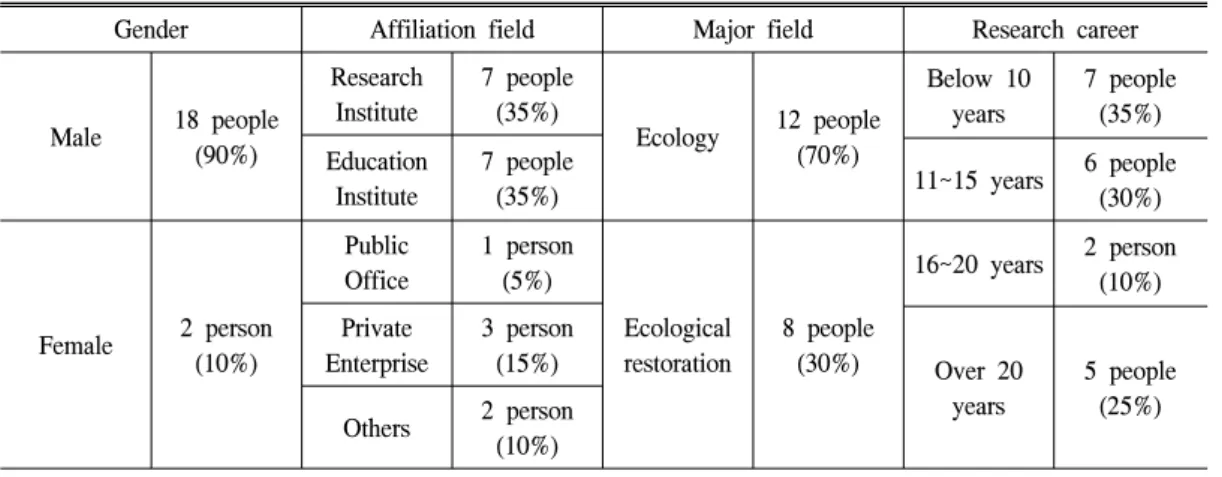
Table 1. General characteristics of the survey responders.
Gender Affiliation field Major field Research career
Male 18 people (90%)
Research Institute
7 people (35%)
Ecology 12 people (70%)
Below 10 years
7 people (35%) Education
Institute
7 people
(35%) 11~15 years 6 people
(30%)
Female 2 person (10%)
Public Office
1 person (5%)
Ecological restoration
8 people (30%)
16~20 years 2 person (10%) Private
Enterprise
3 person
(15%) Over 20
years
5 people (25%) Others 2 person
(10%) 2. 설문조사
설문조사는 2015년 2월과 4월에 시행하였으 며 총 25부를 이메일로 보내 25부 전량을 회수 하였다. 회수된 설문지 25부에 대한 일관성 비 율을 산출하여 0.1을 초과하는 설문지는 제외하 고 일관성 비율이 0.1 이하인 유효한 표본 20부 의 설문결과를 분석하였다.
AHP 수행 시 표본수에 대해서 Lee(2000)는 필요한 문제에 대한 실무지식과 전문적 경험이 있는 집단의 규모는 집단의 특성이 동질적일 때 10명 이내로도 충분하다고 하였다. 한편, KDI (2000, 2008)는 AHP를 통한 예비타당성조사 수 행에 있어 통상 3∼4명 내외의 전문가를 평가 에 참여시켰으며 결정 참여자의 수가 전문가 3 명 이상일 경우 분석의 신뢰성을 인정하고 있 다. 즉 AHP의 분석 시 유효표본수에 집중하기 보다는 어떤 전문가 집단을 선정하였느냐, 응답 자가 얼마나 성실하게 일관성을 가지고 응답하 였느냐가 중요한 요인이 될 수 있다(Kim et al., 2007). 따라서 AHP기법을 이용한 선행연구들 을 검토한 결과 일관성이 확보된 20명은 적당 한 표본 수라 판단된다.
유효한 응답자 20명은 대부분 박사학위 소유 자로 연구 경력 10년 이하 7명, 11년 이상 6명, 16년 이상 7명으로 구성되었으며(Table 1), 남
생이의 서식지 복원 대상지 선정을 위한 평가항 목 및 평가요소에 대한 내용은 Table 2와 같다.
3. 가중치 산정
남생이 서식지 복원 최적 위치 선정을 위해 평가항목에 대한 전문가 설문 결과를 토대로 쌍 대 비교 행렬을 작성하고 표준화 행렬 과정을 통해 각 평가항목의 가중치(상대적 중요도)를 산 정하였다(Table 3).
번식 공간, 먹이, 은신처, 물, 위협요소 등 5 개의 평가영역 간 가중치 산정 결과, 번식 공간 (0.293), 먹이(0.273), 물(0.217), 은신처(0.113), 위협요소(0.104) 순으로 나타났다.
공간 평가영역의 하위 평가항목 간 가중치 산 정 결과, 산란지 고도(0.314), 저수지 면적(0.228), 모래톱 면적(0.147), 주변 강(수계)과의 거리 (0.143), 주변 산림 및 경작지와의 거리(0.118), 저수지 내 제방 면적(0.049) 순으로 나타났다. 먹 이의 경우 먹이원 종류(0.813)가 수초의 면적 (0.187) 보다 높게 나타났다. 은신처는 돌 및 통 나무 개수(0.589)가 토질(0.411) 보다 높게 나타 났다. 물의 경우 수심 1.5m 이상(0.442), 습지 수 생식물의 피도(0.347), pH(0.112), 탁도(0.100) 순으로 나타났다. 끝으로 위협요소는 인간의 이 용 형태(0.430)가 가장 높게 나타났으며, 도로 및
Table 2. The assessment items and factors for the optimal site selection of the Reeve’s turtle (Maunemys reevesii) habitat restoration.
Optimal site selection of the
Reeve's turtle (Maunemys
reevesii) habitat restoration
Assessment
area Assessment item Assessment factor
Breeding space
Area of reservoir Habitat area of Reeve’s turtle Altitude of spawning ground Altitude of spawning area Area of sandbank in a river Ares of spawning ground
Rate of bank in a reservoir Disturbance factor of inhabit for Reeve’s turtle
Distance from forest and cultivated land The spatial relationship between the habitat and its surroundings
Distance from hydrospheres The spatial relationship between main habitat and hydrospheres
Feed Rate of water grass Habitats space being the food resource of Reeve’s turtle
All kinds of food Diversity of food resources
Cover
Number of Stones and a log The place of sunbath for Reeve’s turtle Soil quality Space for Reeve’s turtle can burrow and
hide underground
Water
Coverage of emerged plants on wetland (Ratio of open water)
Cover of Reeve’s turtle larvae and habitat of the food source
Water depth (1.5m over) Frost penetration depth in water Turbidity of water Water quality of Reeve’s turtle spawns
and the larvae lives in
pH pH of Reeve’s turtle spawns and the
larvae lives in
Threatening factor
Distance
Distance from streets and residential area to Reeve’s turtle spawns and the larvae lives in
Human disturbance
Fishing, Jogging, Recreation, Illegal poaching ect of their habitats contributed to this decline in population
Introduced species Introduced species also pose a serious threat to baby Reeve’s turtle and egg
주거지와의 거리, 외래종의 서식 종류가 동일하 게 0.285로 나타났다.
17개의 평가항목 중 최종가중치는 먹이원 종 류(0.222), 수심 1.5m 이상(0.096), 산란지 고도 (0.092) 등의 순으로 높게 나타났다.
4. 일관성 검증
분석 자료의 신뢰도와 산정된 가중치의 논리 적 일관성을 검증하기 위하여 일관성 비율(CR) 을 산출하였다. 산출 결과, 5개 평가영역들의 가중치의 일관성 비율은 0.062이며, 번식 공간
Table 3. The outcomes of calculated weighting values of the assessment items for the optimal site selection of the Reeve’s turtle (Maunemys reevesii) habitat restoration.
Assessment area
High levels of
weighting values Assessment item Low levels of
weighting values
Final weighting values (rank)
Breeding
space 0.293
Area of reservoir 0.228 0.066 (06)
Altitude of spawning ground 0.314 0.092 (03)
Area of sandbank in a river 0.147 0.043 (10) Rate of bank in a reservoir 0.049 0.014 (17) Distance from forest and cultivated land 0.118 0.035 (12)
Distance from hydrospheres 0.143 0.042 (11)
Feed 0.273 Rate of water grass 0.187 0.051 (07)
All kinds of food 0.813 0.222 (01)
Cover 0.113 Number of Stones and a log 0.589 0.067 (05)
Soil quality 0.411 0.046 (08)
Water 0.217
Coverage of emerged plants on wetland
(Ratio of open water) 0.347 0.075 (04)
Water depth (1.5m over) 0.442 0.096 (02)
Turbidity of water 0.100 0.022 (16)
pH 0.112 0.024 (15)
Threatening
factor 0.104
Distance 0.285 0.030 (13)
Human disturbance 0.430 0.045 (09)
Introduced species 0.285 0.030 (13)
평가영역의 6개 평가항목들의 가중치의 일관성 비율은 0.060, 물의 경우 4개 평가항목의 일관 성 비율은 0.017, 위협요소 3개 평가항목의 가 중치의 일관성 비율은 0.001로 나타나 본 연구 에서 사용한 평가항목의 가중치는 모두 일관성 을 확보하였다.
5. 적용(배점 기준 제시)
평가항목 및 평가요소는 남생이 서식이 특성 중 자료 취득이 용이하고 정량화 및 수치화가 가능한 자료를 활용하였으며, 배점기준은 남생 이의 HSI 항목별 기준을 고려하여 등 간격으로 점수화하였다(Table 4). 따라서 남생이 서식지 복원을 위한 최적 위치 선정 기준표는 각각의
사업대상지에 대한 계량화가 편리하고 신속한 의사결정이 가능하여(Hong et al., 2014). 지금 까지 연구된 남생이 서식지의 재평가 및 각 서 식지별 가치 평가가 가능할 것으로 판단한다.
IV. 결 론
본 연구는 남생이 서식지 복원에 필요한 대상 지 선정 기준을 마련하기 위하여 남생이의 서식지 적합성 지수(HSI)를 바탕으로 다기준의사결정방 법의 하나인 계층분석방법(AHP)을 이용하여 각 평가항목에 대한 가중치를 산출하여 남생이 복원 대상지 선정 기준을 마련한 것으로 판단한다.
각 평가항목에 대한 가중치를 산출하기 위하
Table 4. The scoring criteria diagram for the optimal site selection of the Reeve’s turtle (Maunemys reevesii) habitat restoration.
Assessment
area Assessment item Scoring criteria Weighting
values
5 4 3 2 1
Breeding space
Area of reservoir >1ha >0.8ha >0.6ha >0.4ha >0.2ha 0.066 (06) Altitude of spawning ground ≤100m ≤80m ≤60m ≤40m ≤20m 0.092 (03) Area of sandbank in a river >10㎡ >8㎡ >6㎡ >4㎡ >2㎡ 0.043 (10) Rate of bank in a reservoir <10% <20% <30% <40% >40% 0.014 (17) Distance from forest and
cultivated land ≤20m ≤40m ≤60m ≤80m ≤100m 0.035 (12)
Distance from hydrospheres <200m <400m <600m <800m >800m 0.042 (11)
Feed
Rate of water grass <25% <20% <15% <10% <5% 0.051 (07)
All kinds of food ≥5
species 4 species
3 species
2 species
1
species 0.222 (01)
Cover Number of Stones and a log ≥10개 ≥8개 ≥6개 ≥4개 ≥2개 0.067 (05)
Soil quality (mud or silt) >30cm 30cm <30cm 0.046 (08)
Water
Coverage of emerged plants on wetland
(Ratio of open water)
30% 20% 10% 0.075 (04)
Water depth (1.5m over) >80% >60% >40% >20% >0% 0.096 (02)
Turbidity of water <1 <2 <3 <4 >4 0.022 (16)
pH 7.2-8.0 8.1-9.0
6.0-7.1
>9.0
<6.0 0.024 (15)
Threatening factor
Distance >200m >150m >100m >50m >0m 0.030 (13)
Human disturbance 1ea 2ea 3ea 4ea 5ea 0.045 (09)
Introduced species 0 species 1 species
2 species
3 species
>3
species 0.030 (13)
여 야생동물 서식지 구성 요소인 번식 공간, 먹 이, 은신처, 물, 위협요소 등 5개의 평가영역으 로 구분하였고 각 평가영역별 하위 평가항목은 남생이 서식지 적합성 지수(HSI)의 변수를 바 탕으로 구성하였다.
각 평가영역별 가중치를 분석한 결과 번식 공간 0.293, 먹이 0.273, 물 0.217, 은신처 0.113, 위협요소 0.104 순으로 나타났고, 그 결과 남생 이 서식지 복원 대상지를 선택하기 위해서는 번 식을 위한 환경조건이 가장 중요하며, 그 다음
으로 개체군을 유지할 수 있는 다양한 먹이 자 원이 있는 곳을 선택하는 것이 중요한 평가항목 으로 밝혀낼 수 있었다.
각 평가영역별 하위 평가항목 간 가중치 산 정 결과, 번식 공간의 경우 산란지 고도 0.314와 저수지 면적 0.228이 중요한 평가항목으로 밝혀 졌으며, 주로 저고도에 형성되어 있는 하천이나 농경지 주변 저수지에서 서식하는 남생이의 생 태적 특성으로 볼 때 고도는 매우 중요한 서식 지 선택 요인 중 하나로 생각된다(KNP, 2013).
먹이의 경우 먹이원 종류 0.813가 수초의 면적 0.187 보다 높게 나타나 안정적이지만 한정된 종 류의 먹이원을 공급할 수 있는 수초보다는 다양 한 종류의 먹이원이 존재하는 것이 남생이가 서 식하는데 더 중요하다는 것을 밝혀낼 수 있었다.
은신처의 경우 돌 및 통나무 개수 0.589와 토질 0.411로 모두 높게 나타나 변온동물인 남생이가 일광욕을 통하여 체온을 올리고 외부기생충을 제거할 수 있는 장소와 동면지로 활용할 수 있는 토질 모두 남생이의 중요한 서식지 선택요소임 을 확인할 수 있었다. 물의 경우 수심 1.5m 이상 0.442과 습지 수생식물의 피도 0.347로 중요한 평가항목으로 밝혀졌으며, 수심이 1.5m 이상이 가장 높게 나타난 것은 남생이의 동면과 관련하 여 물이 얼어 붇는 동결 심도와 관련이 깊은 것 으로 생각한다(Kim et al., 2013). 위협요소는 인 간의 이용 형태 0.430으로 가장 높게 나타났으 며, 이는 어로행위와 체육활동 같은 인간의 직접 적인 간섭이 더 위협적인 요인으로 판단된다. 그 러나 낚시터나 어업행위가 이루어지고 있는 작 은 저수지에서도 남생이가 발견되는 사례가 있 었고(KNP, 2013), 현재 붉은귀거북이나 보석거 북과 같은 외래종과의 경쟁으로 인한 피해가 급 격히 증가하고 있기 때문에 이 부분에 대한 추가 적인 연구가 필요할 것으로 생각한다.
본 연구 결과 남생이 서식지 복원에 필요한 대상지 선정 기준 마련을 위하여 17개의 평가항 목 중 먹이의 종류 0.222, 수심 1.5m 이상 0.096, 산란지 고도 0.092 등의 순으로 평가항목에 대 한 가중치를 달리하였다. 그리고 평가요소에 따 른 배점기준은 남생이 HSI의 항목별 기준을 고 려하여 등 간격으로 점수화하여 남생이 서식지 복원 최적 위치 선정 배점 기준표를 제시하였다.
본 연구를 통하여 도출된 배점 기준표는 향 후 남생이 대체서식지 조성 시 복원 대상지의 위치를 선정할 수 있는 중요한 의사결정 자료로 활용될 수 있으며, 생태계보전협력금반환사업 과 자연마당 같이 도심 내 멸종위기종 서식지
복원 사업에 적용이 가능할 것으로 판단된다.
따라서 본 연구를 통하여 도출된 배점 기준표를 현장에 적용하기 위해서는 서식 환경 조성에 한 계를 가지고 있는 현장의 현실을 감안할 때 향 후 서식지 복원을 위한 최적지 선정 연구와 공 간조건과 관련된 하위 계층의 추가 연구가 필요 할 것으로 생각한다.
References
Bae SW. 2013. A Study of Planning Indicators for the Creation of Environment-friendly External Space in Apartment House Rege- neration Projects. Ph.D dissertation, Graduate School Dankook University. (in Korean with English summary)
Hong JP․Lee JW․Choi OH․Son JD․Cho DG and Ahn TM. 2014. A Study on Land Acquisiton Priority for Establishing Riparian Buffer Zones in Korea. Journal of the Korea Society of Environmental Restoration Tech- nology 17(4): 29-41. (in Korean with English summary)
Jang JW. 1998. A study on improving AHP user interface. Master Thisis, Seoul National University, Seoul, Korea. (in Korean with English summary)
Jo SI. 2014. The study for ecological restoration of the 453 natural monument species, Endangered species Ⅱ, Maunemys reevesii in Korea. Ph.D dissertation. Graduate school of Seoul Women's University. (in Korean with English summary)
Kim BC. 2006. A Priority Analysis on Corporate Social Contribution Programs Through Analy- tical Hierarchy Process(AHP), ADVERTISING RESEARCH 71: 131-151. (in Korean) Kim DK․Park YW and Lee SM. 2007.
Assessment of tourism resource development by the Analytic Hierarchy Process: Focusing on the Planning Process. International Journal of Tourism and Hospitality Research 21(4):
5-18. (in Korean with English summary) Kim SR․Lee JH․Song JY․Chang MH․Sung
HC and Cho DG. 2013. A study on the habitat restoration model for Chinemys reevesii. The korean society of environmental restoration technology 16(2): 115-125.
Korea Development Institute(KDI). 2000. A Study on Multi-Criteria Analysis for Pre-feasibility Study. (in Korean)
Korea Development Institute(KDI). 2008. A Study on General Guidelines for Pre-feasibility Study (5th Edition). (in Korean)
Korea National Park(KNP). 2013. A Study on restoration and inbreeding of Reeve’s turtle (Maunemys reevesii). (in Korean)
Korea Research Foundation(KRF). 2007. A Study on the Development Direction of Academic Research Support Programs using AHP:
Centered on the Basic Research Support of Science and Engineering. Korea Research Foundation Report (Policy Research-2007- 005-Academic Policy). (in Korean) Lee CH. 2000. Group Decision Theory. Sejong
publishers, Seoul. (in Korean)
Lee EJ. 2003. A Program Evaluation of the Environment Education in Practical Experience using Analytic Hierarchy Process(AHP). MA dissertation, Graduate School of Environmental Studies, Seoul National University. (in Korean with English summary)
National Institute of Biological Resources(NIBR).
2012. The study for breeding and restoration of Reeve’s turtle (Maunemys reevesii) in KoreaⅢ.
Saaty, T. L. 1980. The Analytic Hierarchy Process.
New York: McGraw. pp. 3-35.
Saaty, T. L. 2001. Fundamentals of Decision Making and Priority Theory with the Analytic Hierarchy Process(2nd ed.). Pittsburgh: RWS Publications. pp. 84.
Saaty, T. L. 2008. Decision making with the Analytic Hierarchy Process. Services Sciences 1(1): 83-98.
Saaty, T. L. and N. Begicevic. 2012. The analytic hierarchy process applied to complexity.
International Journal of Economics and Business Research 4(3): 266-283.
Shim YJ․Cho DG․Hong JP․Kim DH․Park YS and Sung HC. 2015. Site Selection of Narrow-mouth Frog(Kaloula borealis) Habitat Restoration Using Habitat Suitability Index.
Journal of the Korea Society of Environmental Restoration Technology 18(2): 33-44. (in Korean with English summary)
Shim YJ․Cho DG․Park YS․Lee DJ․Seo Y H․Kim SH․Kim DH․Ko SB․Cha JY and Sung HC. 2014. Development of Habitat Suitability Index for Habitat Restoration of Narrow-mouth Frog(Kaloula borealis). Journal of the Korea Society of Environmental Restoration Technology 17(2): 109-123. (in Korean with English summary)
Suh JH and Yang HS. 2004. A Study on Framing Techniques of Landscape Assessment Using the Analytic Hierarchy Process: The Assess- ment on the Landscape Control Points.
Journal of Korean institute of landscape architecture 32(4): 94-104. (in Korean with English summary)
U.S Fish and Wildlife Service. 1980. Habitat as a Basis for Environmental Assessment.
http://www.iucnredlist.org/ IUCN Red-list.