• 검색 결과가 없습니다.

Improved DT Algorithm Based Human Action Features Detection

N/A
N/A
Protected

Academic year: 2021

Share "Improved DT Algorithm Based Human Action Features Detection"

Copied!
7
0
0

로드 중.... (전체 텍스트 보기)

전체 글

(1)

1. INTRODUCTION

The main way for human understanding the world and receiving information is vision, it is not only pointed the perception of the external source, but also pointed a plurality of process such as in- formation obtained, processed and understood, there is research demonstrates that there is 80%

information obtained by human brain on the basis of vision, therefore, as the most important way for transmitting information among human, vision acts an important role in the life of human.

Human action recognition [1,2] in videos attracts increasing research interests in computer vision community due to its potential applications in video surveillance, human computer interaction, and vid- eo content analysis. However, action recognition

remains as a difficult problem when focusing on realistic datasets collected from movies [3], web videos [4,5],Virtual Reality(VR) [6], and TV shows [7]. In recent years, with the development and widely popularization of film, internet and so on, vision has become a more important tool for ob- taining information, and the need for automatically gathering and recognizing the information in the vision has become more and more.

With the rapid development and application of information technology and the popularity of the application, the use of computer vision technology in image processing and pattern recognition in the field, and the video image of human motion feature extraction and effective identification has become a hot topic of concern. Computer vision technology to identify the human body movement video or im-

Improved DT Algorithm Based Human Action Features Detection

Zeyuan Hu

, Suk-Hwan Lee

††

, Eung-Joo Lee

†††

ABSTRACT

The choice of the motion features influences the result of the human action recognition method directly.

Many factors often influence the single feature differently, such as appearance of the human body, environment and video camera. So the accuracy of action recognition is restricted. On the bases of studying the representation and recognition of human actions, and giving fully consideration to the advantages and disadvantages of different features, the Dense Trajectories(DT) algorithm is a very classic algorithm in the field of behavior recognition feature extraction, but there are some defects in the use of optical flow images. In this paper, we will use the improved Dense Trajectories(iDT) algorithm to optimize and extract the optical flow features in the movement of human action, then we will combined with Support Vector Machine methods to identify human behavior, and use the image in the KTH database for training and testing..

Key words: Features Detection, Dense Trajectories, Improved Dense Trajectories, Action Recognition

※ Corresponding Author : Eung-Joo Lee, Address: 428, Sinseon-ro, Nam-gu, Busan, Korea, TEL : +82-51-629- 1143, E-mail : [email protected]

Receipt date : Mar. 8, 2018, Revision date : Apr. 2, 2018 Approval date : Apr. 10, 2018

Dept. of Information Communication Engineering, Tongmyong University (E-mail : [email protected])

†††

Dept. of Information Security Engineering, Tongmyong University (E-mail : [email protected])

†††

Dept. of Information Communication Engineering, Tongmyong University

※ This research was supported by the National Research

Foundation of Korea (NRF) funded by the Ministry of

Education (NRF-2016R1D1A3B03931003).

(2)

age is based on its video or image sequence analy- sis and processing; the detection of human motion targets for motor feature extraction and classi- fication of identification, so as to achieve the pur- pose of understanding and describing their behavior.

It is mainly involved in a series of research fields such as image processing, multi-sensor technol- ogy, virtual reality, pattern recognition[8], com- puter vision and graphics, computer aided design, visualization technology and intelligent robot in the field of scientific research. For the human body motion image sequence analysis and processing of the human body visual analysis technology, under normal circumstances can be divided into the fol- lowing process, moving target detection, moving target feature extraction and identification of com- plex background sport target identity. The de- tection, identification and tracking of the important parts of the human body (head, hand, etc.) are the basis for understanding human behavior. On the basis of solving these basic problems, more im- portant and more difficult problems are action rec- ognition and behavior understanding. Human body movement characteristics include: limb swing characteristics [9], gait characteristics [10], human body contour projection features [11], human sym- metry features.

At present, motion characteristics in motion fea- ture recognition include two components: struc- tured component and dynamic component. Which is the structure of the static component of the static component, which is responsible for recording the movement of the body height, pace and other body shape information; While the dynamic component is the image of the movement in the process of showing the body's arm swing, limb tilt, legs and other sports characteristics, according to the above two types of components. Existing motion feature recognition algorithms are broadly divided into two categories: statistical-based and model-based ap- proaches.

On the basis of taking into account the advan- tages and disadvantages of the different features and the scope of application, a new hybrid feature combining the static characteristics of the global shape description and the dynamic characteristics of the local optical flow description is proposed.

Firstly, we use the background subtraction method to determine the approximate area of motion, get the silhouette of the human body, and use the sil- houette contour vector to express the overall in- formation of the human body appearance; And then extract the optical flow in the motion area and use the local optical flow information of the sub-region to represent the local characteristics of the human body movement, so as to improve the anti - noise ability of the optical flow; Finally, the global sil- houette feature is combined with the local optical flow feature as a mixed feature. The experimental results show that the robustness and recognition performance of the mixed feature is better than that of the single feature.

In this paper, we will introduce the feature ex- traction method of iDT for firstly, and the second, we will use iDT feature to construct the classi- fication method by SVM(Support Vector Machine), the last, we will use the KTH database to train and test the network.

2. DENSE TRAJECTORIES METHOD The DT method divides the feature points sepa- rately on multiple scales of the image by way of meshing. Sampling on multiple spatial scales can ensure that the sampled feature points cover all spatial positions and scales, and that usually eight spatial scales are already sufficient, and if the im- age is large, it can be increased appropriately.

Subsequent feature extraction is performed on each scale separately. The interval at which the feature points are sampled on W (the size of the grid) usually takes W = 5.

The next step is to track these feature points

in the time series, but tracking the feature points

(3)

in an area that lacks a change (such as a point in the middle of a white wall) cannot be achieved. So before the tracking, we remove some features of the previous point. The method here is to calculate the eigenvalues of the autocorrelation matrix for each pixel and set the threshold to remove the fea- ture points below the threshold. The threshold is determined by:

   ×max

∈

min 

 

 (1) Where 

 

 is the eigenvalue of the pixel i in the image I. 0.001 for the experiment to determine a more appropriate value.

Let the coordinates of a feature point sampled in the step is

 

 

 , then we can use the fol- lowing formula to calculate the position of the fea- ture point in the next frame image.

  

 

  

 

  

  

 

  ×



(2)

Where

 

 

 is the dense light flow field, calculated from

and

  

, u and v represent the horizontal and vertical components of the optical flow respectively. And M represents the median filter, the size of 3 * 3. Therefore, the formula is obtained by calculating the direction of the motion of the feature points in the middle of the optical flow in the neighborhood of the feature point.

The position of a feature point on a continuous L-frame image constitutes a trajectory, and sub- sequent feature extraction is performed along each track 

 

  

 

 

 . As the tracking of feature points there is drift phenomenon, so long tracking is unreliable, so every L-frame to re-dense sam- pling of a feature point, re-tracking. In the DT/iDT algorithm, select L = 15.

In addition, the trajectory itself may also con- stitute a trajectory shape feature descriptor. For a trajectory of length L, its shape can be described by ∆

 ∆

  

 ∆

   

 , where the displace- ment vector ∆

 

  



  

  

 

 

  

 

 is used. After the regularization, the trajectory fea- ture descriptor can be obtained. Regularization is:
  

  

   

∆



∆

 ∆

  

 ∆

   

(3)

So the final trajectory is characterized by a 15

* 2 = 30-dimensional vector.

In addition to the trajectory shape features, we also need more powerful features to describe the optical flow, DT/iDT used HOF (Histogram of Flow), HOG (Histogram of Oriented Gradient) and MBH (Motion Boundary Histograms) three characteristics.

Along the trajectory of length L of a feature point, the area of N×N around the feature point is taken on each frame, and a time-space body is formed. In this time-space body, in a grid division, the space is divided into

in each direction, the time is evenly selected

copies. So there

×

× 

regions are used as a feature extraction in the time-space body. In DT/iDT, take N=32,

  ,

  , then the details of the extraction of each feature are introduced.

HOG Features: The HOG feature calculates the histogram of the gray scale image gradient. The big number of the histogram is taken as 8. So the length of the HOG feature is 96 (2 * 2 * 3 * 8).

HOF features: HOF calculates the histogram of the optical flow (including the direction and ampli- tude information). The big number of the histo- gram is taken as 8 + 1. The first eight bits are the same as HOG, and the extra bit is used to count the pixels whose optical flow amplitude is less than a certain threshold. Therefore, the characteristic length of HOF is 108 (2 * 2 * 3 * 9).

MBH Features: MBH calculates the histogram of the gradient of the optical flow image and can also be understood as the HOG feature calculated on the optical flow image. Since the optical flow image includes the x direction and the y direction, MBHx and MBHy are calculated, respectively.

MBH has a total feature length of 192 (2 * 96).

After the calculation, the normalization of the

feature is also needed, and the HOG, HOF and

(4)

MBH are normalized in the DT algorithm.

For a video, there are a large number of trajecto- ries, each of which corresponds to a set of traits (trajectory, HOG, HOF, MBH), so it is necessary to encode these feature sets to obtain a fixed- length coding feature for the final video classi- fication.

3. IMPROVED DENSE TRAJECTORIES METHOD

The basic framework of the iDT algorithm is the same as that of the DT algorithm. The main im- provement lies in the optimization of the optical flow image, the improvement of the characteristic regularization method and the improvement of the characteristic coding method.

In order to estimate the projection transfor- mation accurately, the iDT algorithm uses two methods to obtain the matching point pair. Respec- tively, SURF features and optical flow character- istics. After obtaining the matching point, you can use the RANSAC algorithm to estimate the projec- tion transformation matrix. The specific operation is: The gray scale images at time t and time t+1

are 

and 

  

, respectively, and the projection

transformation matrix 

  

  ×

 is calculated from two images. And then transform (warp) with the inverse of H. That is:

    

 

 

× 

  

(4)

    

represents the assumption that there is no image at time t+1 when the camera moves.

and

    

can be used to calculate the optimized optical flow.

Eliminating the effects of camera movement from optical flow has two main advantages:

The motion descriptor (mainly HOF and MBH) can describe the action more accurately, and the accuracy of classification with a single descriptor is much higher than that in DT.

Since the trajectory is also performed using the optical flow, it is possible to eliminate the tra-

jectory of the displacement vector in the optimized optical flow which is smaller than the threshold value by setting the threshold value.

In the iDT algorithm, the HOF, HOG, and MBH features are taken in a different way than the DT algorithm (L2 normalization) - the regularization of L1 is then squared to each dimension of the feature.

Feature coding phase The iDT algorithm no lon- ger uses the Bag of Features method, but uses a better Fisher Vector code. The parameters of the Fisher Vector used in iDT are:

The length of the feature used for training: tra- jectory + HOF + HOG + MBH = 30 + 96 + 108 + 192 = 426.

Number of features used for training: 256,000 random samples from the training set.

PCA dimensionality reduction ratio: 2, ie di- mension divided by 2, dimensionality after di- mensionality is 213. First downs dimension, after encoding.

The number of Gaussian clusters in Fisher Vector K: K = 256.

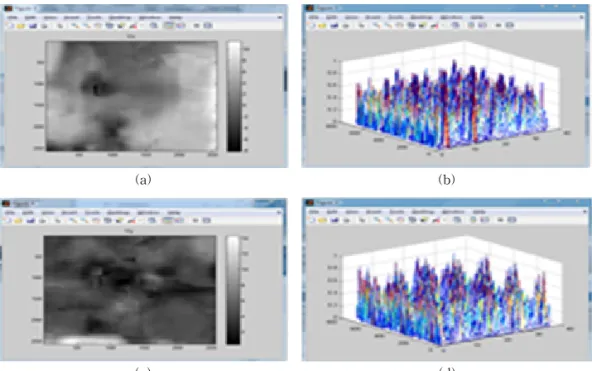
Fig. 2 is in the MATLAB simulation gives the HOG features of video capture image, is a gray scale image gradient.

The MBH features is calculates the histogram of the gradient of the optical flow image and can also be understood as the HOG frature calculated on the optical flow image. The optical flow image includes the X direction and the Y direction ,so the

(a) (b)

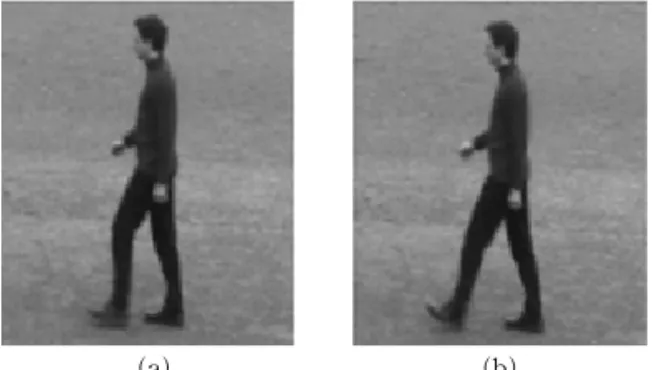
Fig. 1. In experiment, (a) and (b) is a video capture the

moment of T and T+1 point of two images.

(5)

images (a) and (b) are the histogram of the gra- dient in X direction, called MBHx. The images (c) (d) are the histogram of the gradient in Y direction, called MBHy.

So the number of bits after encoding is 2KD, that is 109056 dimensions. After encoding, SVM is used for classification. Use one-against-rest strategy to train multiple classifiers.

4. EXPERIMENT and RESULTS

In order to verify the effectiveness of this algo-

rithm, a large number of comparative experiments were made on the published KTH database.

This experiment is run in MATLAB2010b implementation. KTH database has six kinds of actions, respectively, boxing, hand-clapping, hand- waving, jogging, running, walking, each action by 25 different people in four scenes to complete a to- tal of 599 video; Background is relatively static, in addition to the lens closer / pull away, the camera's movement is relatively slight, as shown in Fig. 5.

The experiment result showed in Table 1, and we do some comparison with some other method, such as Ahmad method include Optical Flow +Shape Flow, Sawant method include Silhouette + Local Optical Flow, and Original DT method. The result shows that the iDT algorithm has an ex- cellent recognized rate 91.20%, as the best behavior recognition algorithm before the depth of learning, has excellent results and good robustness.

5. CONCLUSION

Human action recognition is an important re- search direction in the field of computer vision, In Fig. 2. HOG features.

(a) (b)

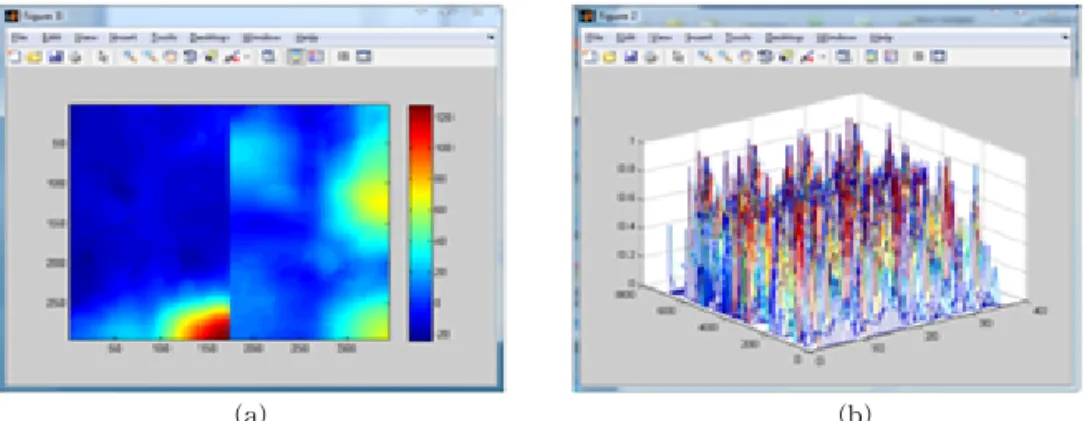
Fig. 3. The image (a) is the histogram of the optical flow. The image (b) is the characteristics of HOF features.

(Including the direction and amplitude information).

Table 1. The different features combine the corresponding recognition rates

Method Feature Rate

Ahmad [12] Optical Flow+Shape Flow 88.29%

Sawant [13] Silhouette+Local Optical Flow 90.80%

Original Method DT(HOG, HOF, MBH) 84.50%

Improved Method iDT(HOG, HOF, MBH) 91.20%

(6)

the field of pattern recognition and artificial in- telligence also has important theoretical and prac- tical significance. Gesture recognition technology is widely used in video surveillance, motion analy- sis, virtual reality, auxiliary medical, human-ma- chine intelligent interaction, etc, the research has the very high application prospects and market value. However, due to the fact that the hard to avoid complex environmental factors, including the complex background, the action of the internal fac- tors and external factors, shade, and illumination changes, etc.

This paper during the training step we find that there are some factors (such as motion blur, the camera motion estimation is inaccurate when the figure is high), it can affect the results of activity recognition, but in vast majority of people and sit- uation, this method can quickly and correctly train, and get a expect result.

REFERENCE

[ 1 ] J.K. Aggarwal, and M.S. Ryoo, "Human Ac- tivity Analysis: A Review,” Journal of Asso- ciation for Computing Machinery(ACM) Com- puting Surveys, Vol. 43, No. 3, pp. 102-145, 2011.

[ 2 ] H. Wang, and C. Schmid, “Action Recognition with Improved Trajectories,” Proceeding of IEEE International Conference on Computer Vision, pp. 3551-3558, 2013.

[ 3 ] I. Laptev, M. Marszalek, C. Schmid, and B.

Rozenfeld, “Learning Realistic Human Actions from Movies,” Proceeding of IEEE Confer- ence on Computer Vision and Pattern Re- cognition, pp. 1-8, 2008.

[ 4 ] H. Kuehne, H. Jhuang, E. Garrote, T. Poggio,

(a) (b)

(c) (d)

Fig. 4. MBH features.

Fig. 5. Human action images of KTH database.

(7)

and T. Serre, “HMDB: A Large Video Data- base for Human Motion Recognition,” Pro- ceeding of International Conference on Com- puter Vision, pp. 2556-2563, 2011.

[ 5 ] K. Soomro, A.R. Zamir, and M. Shah, UFC101:

A Dataset of 101 Human Actions Classes From Videos in The Wild, Master’s Thesis of Cornell University, 2012.

[ 6 ] K.G. Cho, "A Human Action Recognition Scheme in Temporal Spatial Data for Intelli- gent Web Browser,” Journal of Korea Multi- media Society, Vol. 8, No. 6, pp. 844-855, 2005.

[ 7 ] A. Patron-Perez, M. Marszalek, I. Reid, and A. Zisserman, “Structured Learning of Human Interactions in TV Shows,” IEEE Transac- tions on Pattern Analysis and Machine Intelligence, pp. 2441-2453, 2012.

[ 8 ] L.B. Truong, S.H. Kim, and G.M. Jeong,

“Pattern Recognition with feature feedback:

Feature Mask By Using PCA," Proceeding of Conference on Korea Multimedia Society, pp.

14-16, 2010.

[ 9 ] Z. Guangyu, X. Changsheng, H. Qingming, and G. Wen, “Action Recognition in Broad- cast Tennis Video,” Proceeding of the 18th International IEEE Conference on Pattern Recognition, pp. 251-254, 2006.

[10] A. Gritai, Y. Sheikh, and M. Shah, “On the Use of Anthropometry in the Invariant Analysis of Human Actions," Proceeding of the 17

th

International IEEE Conference on Pattern Recognition, pp. 923-926, 2004.

[11] W. Liang, and D. Suter, “Recognizing Human Activities from Silhouette: Motion Subspace and Factorial Discriminative Graphical Model,”

P roceeding of IEEE Conference on Compu- ter Vision and P attern Recognition, pp. 1-8, 2007.

[12] M. Ahmad, and S.W. Lee, "Human Action Recognition Using Shape and CLG-motion Flow from Multi-view Image Sequences,”

J ournal of P attern Recognition, Vol. 41, No.

7, pp. 2237-2252, 2008.

[13] N. Sawant, and K.K. Biswa, “Human Action Recognition Based on Spatio-temporal Feature,"

P roceeding of International Conference on P attern Recognition and Machine Intelli- gence, pp. 357-362, 2009.

Zeyuan Hu

He received his B. S. at Qingdao Institute of Technology in China (2011-2015). Currently, he is studying in the Department of Information and Communications Engineering in Tongmyong Uni- versity, Korea for his Masters degree. His main research areas are image processing and pattern recognition.

Suk-Hwan Lee

He received his B. S., M. S. and Ph. D. in Electrical Engineering from Kyungpook National University. Korea in 1999, 2001, and 2004 respectively. He is cur rently an associate professor in Department of Information Security at Tongmyong University. His research in- terests include multimedia security, digital image processing, and computer graphics.

Eung-Joo Lee

He received his B. S., M. S. and

Ph. D. in Electronic Engineering

from Kyungpook National Uni-

versity. Korea, in 1990, 1992, and

Aug. 1996, respectively. Since

1997, he has been with the De-

partment of Information & Com-

munications Engineering, Tongmyong University,

Korea, where he is currently a Professor. From 2000

to July 2002, he was a president of Digital Net Bank

Inc. From 2005 to July 2006, he was a visiting professor

in the Department of Computer and Information

Engineering, Dalian Polytechnic University, China. His

main research interests include biometrics, image

processing, and computer vision.

수치

Fig. 2 is in the MATLAB simulation gives the HOG features of video capture image, is a gray scale image gradient.
Table 1. The different features combine the corresponding recognition rates
Fig. 4. MBH features.

참조

관련 문서

Fourth, as the information technology is developed due to the fourth industrial revolution and the proportion of information technology in the commercial

The new activation programs of industry academic cooperation are delivered, that is, The bonus payments system of technology development patent and free

adio Frequency Identification Tech- nology (RFID) is the state-of-the-art information and communication tech- nology(ICT) that uses radio waves for

그것은 이미지를 문자적 으로 서술하는 문제이며 옐름슬레브Hjelmslev[4]의 용어를 쓰자면 (코노테 이션과 반대되는 의미로서) 공정작용operation의

웹 표준을 지원하는 플랫폼에서 큰 수정없이 실행 가능함 패키징을 통해 다양한 기기를 위한 앱을 작성할 수 있음 네이티브 앱과

이하선의 실질 속에서 하악경의 후내측에서 나와 하악지의 내측면을 따라 앞으로 간다. (귀밑샘 부위에서 갈라져 나와

Common corporate digital crimes include piracy, financial fraud, espionage, and theft of services.. _______________________________________ such as

1 John Owen, Justification by Faith Alone, in The Works of John Owen, ed. John Bolt, trans. Scott Clark, "Do This and Live: Christ's Active Obedience as the