• 검색 결과가 없습니다.

Various Types of Stress Deteriorate Spatial Memory through Inhibition of Cell Proliferation in the Hippocampus of Rats

N/A
N/A
Protected

Academic year: 2021

Share "Various Types of Stress Deteriorate Spatial Memory through Inhibition of Cell Proliferation in the Hippocampus of Rats"

Copied!
9
0
0

로드 중.... (전체 텍스트 보기)

전체 글

(1)

Corresponding author: Chang-Ju Kim, Department of Physiology, College of Medicine, Kyung Hee University, 1, Hoeigi-dong, Dongdaemoon-gu, Seoul 130-701, Korea

Tel: +82-2-961-0407, E-mail: [email protected] Received August 15, 2011, Revised September 1, 2011 Accepted September 20, 2011

This work was supported by the National Research Foundation of Korea Grant funded by the Korean Government (NRF-2009-352-G00056).

Various Types of Stress Deteriorate Spatial Memory through Inhibition of Cell Proliferation in the Hippocampus of Rats

Departments of *Biochemistry and Molecular Biology,

Physiology, College of Medicine, Kyung Hee University,

Department of Physical Education, Korea Military Academy, Seoul, Korea

Jee-Sang Yoon*, Hyung-Hwan Baik*, Su-Shin Lee

, Yu-Mi Heo

, Bo-Kyun Kim

, Mal-Soon Shin

, Sang-Won Lee

, Chang-Ju Kim

Stress is defined as physical, physiological, and psychological modifications that disrupt the homeostasis and internal balance of the body. Stress is closely associated with neuronal changes such as impaired neurogenesis, neuronal atrophy, and neuronal apoptosis in the hippocampus. In the present study, we investigated the effects of various types of stress (restraint stress, noise stress, cold stress) on spatial memory, cell proliferation, and expression of brain-derived neurotrophic factor (BDNF) and its receptor tyrosine kinase B (TrkB) in the hippocampus of rats. The rats in the restraint stress group were restrained in a transparent cylinder.

The rats in the noise stress group were exposed to a 120 dB supersonic machine sound. The rats in the cold stress group were exposed to a cold chamber at 4

o

C. The rats in the control group were left undisturbed. Application of each stress was conducted for 60 min 2 times a day, and continued for 10 days. In the present results, all three types of stress induced spatial memory impairment. All three types of stress suppressed cell proliferation and inhibited expression of BDNF and TrkB in the hippocampus.

The strength of the deteriorating and suppressing effects of stresses had the following rank order: restraint stress>noise stress>

cold stress. Thus, impairment of spatial memory by stresses may be due to the inhibition of cell proliferation through suppressing BDNF expression in the hippocampus. (Korean J Str Res 2011;19:243∼251)

Key Words: Restraint stress, Noise stress, Cold stress, Spatial memory, Hippocampus

INTRODUCTION

Stress is defined as physical, physiological, and psychological modifications that disrupt the homeostasis and internal balance of

the body. Stress is known to be implicated in several neurodegenerative and psychiatric diseases including depression (Sung YH et al., 2010), stroke (Manolescu et al., 2011), and Alzheimer's disease (Clark et al., 2010). Stress causes structural changes and neuronal damage, especially in the hippocampus (Smith et al., 1995), which is a region that is important in learning ability and memory function. Stress is closely associated with neuronal changes such as impaired neurogenesis, neuronal atrophy, and neuronal apoptosis in the hippocampus (McEwen et al., 2001; Sung YH et al., 2010).

Neurogenesis is associated with hippocampal function,

(2)

including learning ability and memory function, and neurogenesis is modulated by a variety of factors including stress, an enriched environment, learning, serotonin, N-methyl-D-aspartate (NMDA) receptor antagonists, and stroke (Kempermann et al., 1997; Fuchs et al., 2000; Ko IG et al., 2009). Stress inhibits cell proliferation of new granular cells in the hippocampal dentate gyrus (Fuchs et al., 2001; Tanapat et al., 2001).

The neurotrophic factors include nerve growth factor (NGF), neurotrophin-3 (NT-3), neurotrophin-4/5 (NT-4/5), and brain-de- rived neurotrophic factor (BDNF). Among these, BDNF acts as a modulator of long-term potentiation (LTP), synaptic plasticity, and neuronal plasticity in the adult central nervous system (Martin et al., 2000; Lee E et al., 2009). BDNF is found in many areas of the brain (Smith et al., 1996; Givalois et al., 2001;

Alonso et al., 2002). BDNF and its receptor, tyrosine kinase B (TrkB), are crucial for hippocampal-dependent learning ability and memory function (Patterson et al., 1996). In addition, BDNF promotes survival and growth of neurons in the hippocampus (Lowenstein et al., 1996; Bartrup et al., 1997). BDNF is known as a key molecule in stress, because BDNF expression is decreased by exposure to stress (Smith et al., 1995; Adlard et al., 2004).

Stress is known to reduce neurogenesis through the suppression of BDNF expression in the hippocampus (Lucassen et al., 2010).

However, the effects of various types of stress (restraint stress, noise stress, cold stress) on spatial memory in relation to cell proliferation have not been compared, and the exact underlying mechanisms of stress on memory function are unclear. In the present study, we investigated the effects of these kinds of stresses on spatial memory, cell proliferation, and expression of BDNF and TrkB in the hippocampus of rats. To this end, we used an 8-arm maze test for spatial memory, immunohistochemistry for 5-bromo-2'-deoxyuridine (BrdU) and Ki-67, and western blot analysis for BDNF and TrkB.

MATERIALS AND METHODS

1. Animals and treatments

Experimental procedures were performed in accordance with the guidelines of the National Institute of Health (NIH) and the Korean Academy of Medical Sciences. Male Sprague-Dawley rats weighing 200±10 g were used for the experiment. Food and

water were made available ad libitum. The rats were randomly divided into four groups (n=8 in each group): a control group, a restraint stress group, a noise stress group, and a cold stress group. All rats received 50 mg/kg BrdU (Sigma Chemical Co., St.

Louis, MO, USA) intraperitoneally 30 min before the start of first stress exposure, once a day for 5 consecutive days. The animals were sacrificed immediately after the completion of the behavior test.

2. Stress exposure

We applied each stress twice per day according to the previous studies (Endo et al., 1999; Adlard et al., 2004; Heine et al., 2005). The rats in the restraint stress group were restrained in a transparent Plexiglas cylinder (21 cm long, 6 cm diameter). The rats in the noise stress group were exposed to a 120 dB supersonic machine sound. The rats in the cold stress group were exposed to a cold chamber that was maintained at 4°C. The rats in the control group were left undisturbed. Application of each stress was conducted for 60 min, 2 times a day, and continued for 10 days.

3. Radial-8-arm maze test

Spatial memory was tested using a radial-8-arm maze apparatus as previously described method (Kim SE et al., 2010;

Ko IG et al., 2011). The radial-8-arm maze apparatus consisted of a central octagonal plate (30 cm in diameter) and eight radiating arms (each 50 cm in length and 10 cm in width). The apparatus was placed 1 m above the floor. A small receptacle filled with water (3 cm in diameter and 1 cm in depth) was located at the end of the arms. The rats were trained three times before the spatial learning test. The rats deprived of water for 24 h were allowed to explore for water and to drink for 5 min. On 9 days after each stress exposure, radial-8-arm maze test was performed. The time spent seeking water at the end of the arms was recorded. The test was terminated when a rat found water in all eight arms or over 5 min elapsed. Re-entering a previously visited arm was counted as an error. In addition, the number of correct choice before the first error was counted.

4. Tissue preparation

For brain tissue preparation, animals were fully anesthetized

(3)

with Zoletil 50

(10 mg/kg, i.p.; Vibac Laboratories, Carros, France), transcardially perfused with 50 mM phosphate-buffered saline (PBS), and fixed with freshly prepared solution consisting of 4% paraformaldehyde (PFA) in 100 mM phosphate buffer (PB, pH 7.4). Brains were then removed, post-fixed in the same fixative overnight, and transferred into a 30% sucrose solution for cryoprotection. Coronal sections of 40 μm thickness were made using a freezing microtome (Leica, Nussloch, Germany).

5. BrdU immunohistochemistry

For the detection of newly generated cells in the dentate gyrus, BrdU incorporation, which has been generally used as an indicator of DNA synthesis, was visualized using an immunohi- stochemical method as previously described method (Kim SE et al., 2010; Jung SY et al., 2011). Briefly, the sections were permeabilized by incubation with 0.5% Triton X-100 in PBS for 20 min, treated with 50% formamide-2× standard saline citrate (SSC) at 65

o

C for 2 h, denatured in 2 N HCl at 37

o

C for 30 min, and rinsed twice in 100 mM sodium borate (pH 8.5).

Subsequently, the sections were incubated overnight at 4

o

C with BrdU-specific mouse monoclonal antibody (1 : 600; Roche, Mannheim, Germany). The sections were then washed three times with PBS and incubated for 1 h with a biotinylated mouse secondary antibody (1 : 200; Vector Laboratories, Burlingame, CA, USA). Then, the sections were incubated for another 1 h with avidin–peroxidase complex (1 : 100; Vector Laboratories). For the visualization of BrdU, the sections were incubated with 50 mM Tris-HCl buffer (pH 7.6) containing 0.02% 3,3'-diamino- benzidine (DAB), nickel chloride (40 mg/ml) and 0.03% H

2

O

2

for 5 min. After BrdU-specific staining, counter-staining was performed on the same sections using a mouse anti-neuronal nuclei (NeuN) antibody (1 : 300; Chemicon International, Teme- cula, CA, USA). The sections were washed three times with PBS, incubated for 1 h with a biotinylated anti-mouse secondary antibody, and processed with VECTASTAIN

ABC kits. For staining, the sections were reacted with 0.02% DAB and 0.03%

H

2

O

2

in 50 mM Tris-HCl buffer (pH 7.6) for 5 min after which the sections were mounted onto gelatin-coated slides. The slides were air dried overnight at room temperature, and coverslips were mounted using Permount

.

6. Ki-67 immunohistochemistry

For the detection of Ki-67-positive cells in the dentate gyrus, immunohistochemistry was performed as previously described method (Sung YH et al., 2010). The sections were then incubated in 50 mM PBS for 10 min, washed 3 times using in 50 mM PBS, and then incubated in 3% H

2

O

2

for 30 min. After that, the sections were incubated overnight with mouse anti-Ki-67 antibody (1 : 500; Novocastra Laboratories, Newcastle, UK). Next day, we incubated the sections for 1 h with biotinylated anti-mouse secondary antibody (Vector Laboratories), and subsequently incubated them with an avidin-biotin-peroxidase complex (Vector Laboratories) for 1 h at room temperature.

Immunoreactivity was visualized by incubating the sections in a solution consisting of 0.05% DAB and 0.01% H

2

O

2

in 50 mM Tris-HCl buffer (pH 7.6) for approximately 3 min. The sections were then mounted on gelatin-coated glass slides, and coverslips were mounted using Permount

.

7. Western blot analysis

Western blot analysis was conducted for the determination of BDNF and TrKB expression as previously described method (Kim SE et al., 2010). Hippocampal tissues were collected and then immediately frozen at −70

o

C. Hippocampal tissues were homogenized on ice, and lysed in a lysis buffer containing 50 mM HEPES (pH 7.5), 150 mM NaCl, 10% glycerol, 1% Triton X-100, 1 mM PMSF, 1 mM EGTA, 1.5 mM MgCl

2

ㆍ6H

2

O, 1 mM sodium orthovanadate, and 100 mM sodium fluoride. Protein content was measured using a Bio-Rad colorimetric protein assay kit (Hercules, CA, USA). Protein (30 μg) was separated on SDS-polyacrylamide gels and transferred onto a nitrocellulose membrane. Mouse beta actin antibody (1 : 500; Santa Cruz Biotechnology, Santa Cruz, CA, USA), rabbit BDNF and TrkB antibody (1 : 1,000; Santa Cruz Biotechnology) were used as the primary antibodies. Horseradish peroxidase-conjugated anti-rabbit antibody for BDNF and TrkB (1 : 3,000; Vector Laboratories) were used as the secondary antibodies.

Experiments were performed under normal laboratory

conditions and at room temperature, except for the transfer to

membranes. The transfer was performed at 4°C with a cold pack

and pre-chilled buffer. Band detection was performed using

(4)

enhanced chemiluminescence (ECL) detection kits (Santa Cruz Biotechnology).

8. Data analysis

The area of the hippocampal dentate gyrus was measured using Image-Pro Plus software (Media Cybernetics, Silver Spring, MD, USA). The numbers of BrdU-positive and Ki-67-positive cells in the hippocampus were counted hemilaterally. The data are expressed as the number of cells per mm

2

of the hippocampus.

To compare the relative expressions of BDNF and TrKB, the detected bands were calculated densitometrically using Image-Pro Plus software (Media Cybernetics).

Statistical analysis was performed using one-way ANOVA followed by Duncan's post-hoc test. The results are presented as the mean±standard error of the mean (S.E.M.). Significance was set as p<0.05.

RESULTS

1. Effects of various types of stress on spatial memory

To verify the effects of various types of stress on spatial memory, the radial-8-arm maze test was performed. All rats completed eight successful performances within 106.00±12.35 sec in the normal group, 253.28±14.13 sec in the restraint stress group, 226.62±22.91 sec in the noise stress group, and 154.42±14.04 sec in the cold stress group (Fig. 1A).

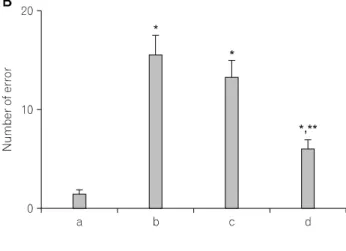
The number of errors made before eight successful perfor- mances was 1.28±0.47 in the normal group, 15.57±1.95 in the restraint stress group, 13.25±1.72 in the noise stress group, and 6.00±0.87 in the cold stress group (Fig. 1B).

The number of correct choices before the first error in the control group was 7.42±0.20 in the normal group, 3.28±0.42 in the restraint stress group, 3.62±0.37 in the noise stress group, and 5.57±0.42 in the cold stress group (Fig. 1C).

Fig. 1. The effects of various types of stress on spatial memory. (A)

The time for eight successful performances. (B) The number of errors

made before eight successful performances. (C) The number of correct

choices made before the first error. (a) Normal group, (b) restraint

stress group, (c) noise stress group, (d) cold stress group. The data are

mean±standard error of the mean (S.E.M.). *p<0.05 compared to the

normal group. **p<0.05 compared to the restraint stress group.

(5)

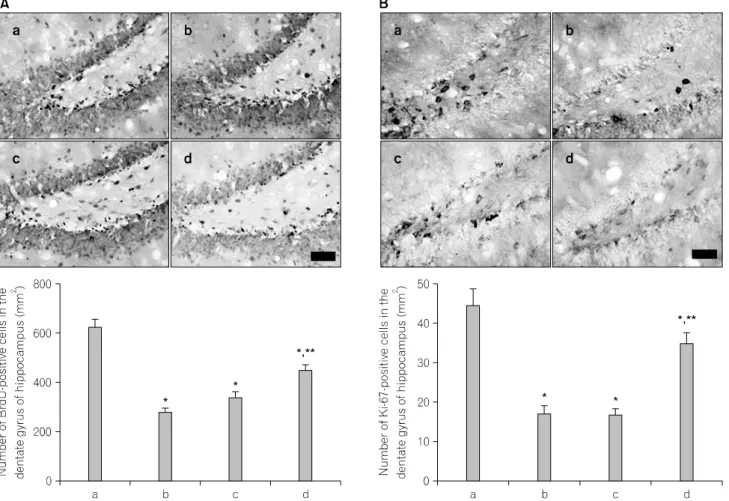
Fig. 2. The effects of various types of stress on cell proliferation in the hippocampus. (A) 5-Bromo-2'-deoxyuridine (BrdU)-positive cells. Upper:

Photomicrographs of BrdU-positive cells in hippocampal dentate gyrus. The scale bar is 50 μm. Lower: Number of BrdU-positive cells in the hippocampal dentate gyrus. (B) Ki-67-positive cells. Upper: Photomicrographs of Ki-67-positive cells in the hippocampal dentate gyrus. The scale bar is 50 μm. Lower: Number of Ki-67-positive cells in the hippocampal dentate gyrus. (a) Normal group, (b) restraint stress group, (c) noise stress group, (d) cold stress group. The data are mean±standard error of the mean (S.E.M.). *p<0.05 compared to the normal group. **p<0.05 compared to the restraint stress group.

The time of performance and the error number were increased and the correct number was decreased in all stress groups relative to the normal group (p<0.05). The deteriorative effects of these stresses on spatial memory appeared to have the following rank order: restraint stress>noise stress>cold stress.

2. Effects of various types of stress on cell proliferation in the hippocampal dentate gyrus

Photomicrographs of BrdU-positive cells in the hippocampal dentate gyrus in each group are presented in Fig. 2A. The number of BrdU-positive cells was 624.32±30.88/mm

2

in the normal group, 281.10±14.87/mm

2

in the restraint stress group,

338.72±20.86/mm

2

in the noise stress group, and 446.91±

19.68/mm

2

in the cold stress group.

Photomicrographs of Ki-67-positive cells in the hippocampal dentate gyrus in each group are presented in Fig. 2B. The number of Ki-67-positive cells was 44.44±4.14/mm

2

in the normal group, 16.94±1.98/mm

2

in the restraint stress group, 16.74±1.53/mm

2

in the noise stress group, and 34.93±2.68/mm

2

in the cold stress group.

Cell proliferation in the hippocampal dentate gyrus was decreased in all stress groups relative to the normal group (p

<0.05). The suppressing effect of these stresses on cell prolife-

ration in the hippocampal dentate gyrus appeared to have the

following rank order: restraint stress>noise stress>cold stress.

(6)

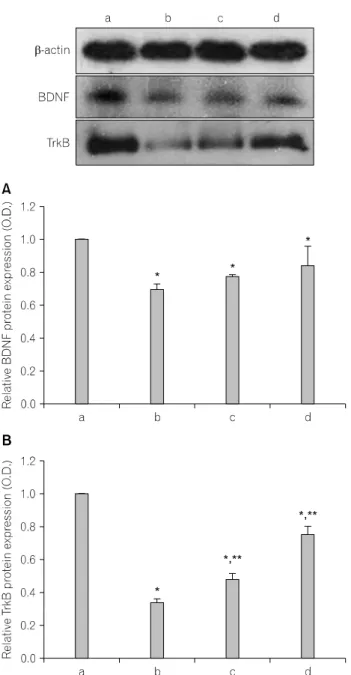
Fig. 3. The effects of various types of stress on the BDNF and TrkB
expression in the hippocampus. (A) Brain-derived neutrophic factor (BDNF). (B) Tyrosine kinase B (TrkB). (a) Normal group, (b) restraint stress group, (c) noise stress group, (d) cold stress group. The data are mean±standard error of the mean (S.E.M.). *p<0.05 compared to the normal group. **p<0.05 compared to the restraint stress group.

3. Effects of various types of stress on the expression of BDNF and TrkB in the hippo- campus

We determined the relative expression of BDNF and TrkB in the hippocampus. BDNF exists as a precursor form (32∼47.5 kDa) and a mature form (14 kDa). When the level of mature BDNF (14 kDa) in the normal group was set at 1.00, the level of mature BDNF was 0.70±0.03 in the restraint stress group, 0.78±0.00 in the noise stress group, and 0.85±0.11 in the cold stress group (Fig. 3A).

When the level of TrkB (95∼145 kDa) in the normal group was set at 1.00, the level of TrkB was 0.34±0.02 in the restraint stress group, 0.48±0.04 in the noise stress group, and 0.76±0.05 in the cold stress group (Fig. 3B).

The levels of BDNF and TrkB in the hippocampus were decreased in all stress groups relative to the normal group (p

<0.05). The suppressing effect of these stresses on BDNF and TrkB expression in the hippocampus appeared to have the following rank order: restraint stress>noise stress>cold stress.

DISCUSSION

Stress is associated with deleterious changes in hippocampal excitability, long-term potentiation, cerebral blood flow, and spatial learning memory (Joëls et al., 1992; Endo et al., 1999).

Stress is known to cause deteriorative effect on cognition and memory in humans and animal models (McEwen, 1999; Stawski et al., 2006). Elizalde et al.(2008) reported that chronic mild stress induced recognition memory deficits. Exposure to chronic stress leads to dendrite atrophy and neuronal cell death associated with memory impairment and behavioral abnormalities (Luine et al., 1994; Vyas et al., 2002; Lucassen et al., 2010).

In order to determine the effect of various types of stress on spatial memory, a radial-8-arm maze test was conducted. In the radial-8-arm maze test, longer time of the successful performance, higher error number, and lower correct number indicate spatial memory disturbance (Ko IG et al., 2011). All three types of stress (restraint, noise, and cold stress) increased the time of the performance and the error number and decreased the correct number in the radial-arm maze test, showing that these stresses

induced spatial memory impairment. Restraint stress had the most potent deteriorative effect and cold stress the least deteriorative on spatial memory.

The hippocampus is a vulnerable region of the brain, and

susceptible to damage during repeated stress (McEwen, 1999).

(7)

Hippocampal neurogenesis is regulated by variable environmental factors (Fuchs et al., 2000; Gage, 2000; Gould et al., 2000).

Stress is well documented to decrease neurogenesis in the hippocampal dentate gyrus (Fuchs et al., 2001; Falconer et al., 2003). Stress also induces alteration in hippocampal morphology with loss of pyramidal neurons by elevation of corticosteroid level (McEwen et al., 1999; Sousa et al., 2000). Increased glucocor- ticoids following stress exposure decreased cell proliferation in the hippocampus (Nichols et al., 2001). The expressions of BrdU and Ki-67 have been used as markers for cell proliferation (Scholzen et al., 2000; Kim SE et al., 2010; Sung YH et al., 2010). All three types of stress (restraint, noise, and cold stress) suppressed cell proliferation in the hippocampus, indicating that these stresses inhibited new cell formation in the hippocampus. Restraint stress had the most potent suppressing effect on new cell formation in the hippocampus and cold stress the least.

Such a reducing effect of stress on cell proliferation and/or neurogenesis has been postulated to be due to the decreased expression of neurotrophic factors such as BDNF (Xu et al., 2007;

Badowska-Szalewska et al., 2010). BDNF is a neurotrophin involved in neuronal survival and plasticity that binds to high-affinity receptor, TrkB (Givalois et al., 2001). BDNF-TrkB interaction promotes the survival and differentiation of neurons and is involved in the modification of neurotransmission and synaptic plasticity of the central and peripheral nervous systems (Leibrock et al., 1989). Overexpression of BDNF and its receptor TrkB is known to improve learning or cognitive behavior, whereas inhibition of BDNF or TrkB causes memory impairment (Alonso et al., 2002; Koponen et al., 2004; Pietropaolo et al., 2007). BDNF was also suggested as the main factor for the maternal exercise-induced enhancing of memory in rat pups (Kim H et al., 2007). Jung SY et al.(2011) suggested that diabetes mellitus-induced memory impairment is closely associated with suppression of BDNF expression in the hippocampus. Stress or corticosterone treatment reduced BDNF protein level in the hippocampus (Smith et al., 1995). BDNF and TrkB are implicated in the stress response of the hippocampal neurons (Smith et al., 1996; Schaaf et al., 2000). All three types of stress (restraint, noise, and cold stress) suppressed the expression of BDNF and TrkB in the hippocampus, indicating that these stresses inhibited memory-associated neurotransmitter and its

receptor expression. Restraint stress caused the most potent inhibition of BDNF and TrkB expression in the hippocampus and cold stress the least.

Spatial memory was significantly deteriorated by restraint, noise, and cold stress. Cold stress had the least deteriorating effect on spatial memory and restraint stress the most. Cell proliferation and expression of BDNF and TrkB in the hippocampus were decreased by these stresses. Cold stress had the least suppressing effect on cell proliferation, BDNF, and TrkB and restraint stress the most. These ameliorating and suppressing effects of stresses were ranked as follows: restraint stress>noise stress group>cold stress. We showed that the impairment of spatial memory by stress may be due to inhibition of cell proliferation through suppression of BDNF expression in the hippocampus.

REFERENCES

Adlard PA, Perreau VM, Cotman CW (2004) Chronic immobilization stress differentially affects the expression of BDNF mRNA and protein in the mouse hippocampus. Stress Health 20:175-180.

Alonso M, Vianna MR, Depino AM et al. (2002) BDNF-triggered events in the rat hippocampus are required for both short- and long-term memory formation. Hippocampus 12:551-560.

Badowska-Szalewska E, Spodnik E, Klejbor I et al. (2010) Effects of chronic forced swim stress on hippocampal brain-derived neutrophic factor (BDNF) and its receptor (TrkB) immuno- reactive cells in juvenile and aged rats. Acta Neurobiol. Exp.

(Wars) 70:370-381.

Bartrup JT, Moorman JM, Newberry NR (1997) BDNF enhances neuronal growth and synaptic activity in hippocampal cell cultures. Neuroreport 8:3791-3794.

Clark TA, Lee HP, Rolston RK et al. (2010) Oxidative stress and its implications for future treatments and management of Alzheimer disease. Int. J. Biomed. Sci. 6:225-227.

Elizalde N, Gil-Bea FJ, Ramirez MJ et al. (2008) Long-lasting behavioral effects and cognition memory deficit induced by chronic mild stress in mice: effect of antidepressant treatment.

Psychopharmacology (Berl) 199:1-14.

Endo Y, Nishimura JI, Kobayashi S et al. (1999) Chronic stress exposure influences local cerebral blood flow in the rat hippocampus. Neuroscience 93:551-555.

Falconer EM, Galea LA (2003) Sex differences in cell proliferation, cell death and defensive behavior following acute predator odor stress in adult rats. Brain Res. 975:22-36.

Fuchs E, Flűgge G, Ohl F et al. (2001) Psychosocial stress,

(8)

glucocorticoids, and structural alterations in the tree shrew hippocampus. Physiol. Behav. 73:285-291.

Fuchs E, Gould E (2000) Mini-review: in vivo neurogenesis in the adult brain: regulation and functional implications. Eur. J.

Neurosci. 12:2211-2214.

Gage FH (2000) Mammalian neural stem cells. Science 287:1433- 1438.

Givalois L, Marmigère F, Rage F et al. (2001) Immobilization stress rapidly and differentially modulates BDNF and TrkB mRNA expression in the pituitary gland of adult male rats.

Neuroendocrinology 74:148-159.

Gould E, Tanapat P, Rydel T et al. (2000) Regulation of hippocam- pal neurogenesis in adulthood. Biol. Psychiatry 48:715-720.

Heine VM, Zareno J, Maslam S et al. (2005) Chronic stress in the adult dentate gyrus reduces cell proliferation near the vasculature and VEGF and Flk-1 protein expression. Eur. J. Neurosci.

21:1304-1314.

Joëls M, de Kloet ER (1992) Control of neuronal excitability by corticosteroid hormones. Trends Neurosci. 15:25-30.

Jung SY, Seo JH, Sung YH et al. (2011) Effect of treadmill exercise on memory impairment in the diabetic rats. Korean J. Str. Res.

19:175-182.

Kempermann G, Kuhn HG, Gage FH (1997) More hippocampal neurons in adult mice living in an enriched environment. Nature 386:493-495.

Kim H, Lee MH, Chang HK et al. (2006) Influence of prenatal noise and music on the spatial memory and neurogenesis in the hippocampus of developing rats. Brain Dev. 28:109-114.

Kim H, Lee SH, Kim SS et al. (2007) The influence of maternal treadmill running during pregnancy on short-term memory and hippocampal cell survival in rat pups. Int. J. Dev. Neurosci.

25:243-249.

Kim SE, Ko IG, Kim BK et al. (2010) Treadmill exercise prevents aging-induced failure of memory through an increase in neurogenesis and suppression of apoptosis in rat hippocampus.

Exp. Gerontol. 45:357-365.

Ko IG, Kim SE, Shin MS et al. (2011) Treadmill exercise reduces lipopolysaccharide-induced apoptotic neuronal cell death in the hippocampus of the young and old rats. Korean J. Str. Res.

19:97-105.

Ko IG, Shin MS, Kim BK et al. (2009) Tadalafil improves short-term memory by suppressing ischemia-induced apoptosis of hippocam- pal neuronal cells in gerbils. Pharmacol. Biochem. Behav. 91:629- 635.

Koponen E, Võikar V, Riekki R et al. (2004) Transgenic mice overexpressing the full-length neurotrophin receptor trkB exhibit increased activation of the trkB-PLCγ pathway, reduced anxiety, and facilitated learning. Mol. Cell. Neurosci. 26:166-181.

Lee E, Son H (2009) Adult hippocampal neurogenesis and related neurotrophic factors. BMB Rep. 42:239-244.

Leibrock J, Lottspeich F, Hohn A et al. (1989) Molecular cloning and expression of brain-derived neurotrophic factor. Nature 341:149- 152.

Lowenstein DH, Arsenault L (1996) The effects of growth factors on the survival and differentiation of cultured dentate granule neurons. J. Neurosci. 16:1759-1769.

Lucassen PJ, Meerlo P, Naylor AS et al. (2010) Regulation of adult neurogenesis by stress, sleep disruption, exercise and inflamma- tion: Implications for depression and antidepressant action. Eur.

Neuropsychopharmacol. 20:1-17.

Luine V, Villegas M, Martinez C et al. (1994) Repeated stress causes reversible impairments of spatial memory performance. Brain Res.

639:167-170.

Manolescu BN, Berteanu M, Oprea E et al. (2011) Dynamic of oxidative and nitrosative stress markers during the convalescent period of stroke patients undergoing rehabilitation. Ann. Clin.

Biochem. 48:338-343.

Martin SJ, Grimwood PD, Morris RG (2000) Synaptic plasticity and memory: an evaluation of the hypothesis. Annu. Rev. Neurosci.

23:649-711.

McEwen BS (1999) Stress and hippocampal plasticity. Annu. Rev.

Neurosci. 22:105-122.

McEwen BS, Magarinos AM (2001) Stress and hippocampal plasti- city: implications for the pathophysiology of affective disorders.

Hum. Psychopharmacol. 16:S7-S19.

Nichols RM, Zieba M, Bye N (2001) Do glucocorticoids contribute to brain aging? Brain Res. Rev. 37:273-286.

Patterson SL, Abel T, Deuel TA et al. (1996) Recombinant BDNF rescues deficits in basal synaptic transmission and hippocampal LTP in BDNF knockout mice. Neuron 16:1137-1145.

Pietropaolo S, Paterna JC, Büeler H et al. (2007) Bidirectional changes in water-maze learning following recombinant adeno- virus-associated viral vector (rAAV)-mediated brain-derived neurotrophic factor expression in the rat hippocampus. Behav.

Pharmacol. 18:533-547.

Schaaf MJM, de Kloet ER, Vreugdenhil E (2000) Corticosterone effects on BDNF expression in the hippocampus implications for memory formation. Stress 3:201-208.

Scholzen T, Gerdes J (2000) The Ki-67 Protein: from the known and the unknown. J. Cell Physiol. 182:311-322.

Smith MA, Cizza G (1996) Stress-induced changes in brain-derived neurotrophic factor expression are attenuated in aged Fischer 344/N rats. Neurobiol. Aging 17:859-864.

Smith MA, Makino S, Kvetnansky R et al. (1995) Stress and

glucocorticoids affect the expression of brain-derived neurotrophic

factor and neurotrophin-3 mRNAs in the hippocampus. J.

(9)

= 국문초록 =

스트레스는 항상성과 체내 균형을 교란시키는 물리적, 생리적, 그리고 정신적 변화를 의미한다. 스트레스는 우울증, 뇌졸중, 그리고 알쯔하이머 병 등 여러 뇌 질환을 유발 시키는 인자로 알려져 있다. 해마는 스트레스에 민감한 뇌의 부위이다. 본 연구에서는 구속 스트레스, 소음 스트레스, 그리고 추위 스트레스 등 여러 종류의 스트레스가 공간기억 과 해마에서의 세포 생성에 미치는 영향을 실험하였다. 본 실험에서는 8-arm maze test, 면역조직화학법, 그리고 웨스 턴 블롯을 사용하였다. 각각의 스트레스는 하루 1시간씩 2회, 10일간 적용하였다. 본 실험결과 구속 스트레스, 소음 스트레스, 그리고 추위 스트레스는 공간기억을 감소시켰다. 또한 구속 스트레스, 소음 스트레스, 그리고 추위 스트레 스는 해마에서의 신경세포 생성을 억제하였다. 이러한 스트레스의 작용은 brain-derived neurotrophic factor (BDNF)와 tyrosine kinase receptor B (TrkB)의 발현을 억제함으로써 일어났다. 본 실험을 통하여 구속 스트레스, 소음 스트레스, 그리고 추위 스트레스 모두 신경세포의 생성을 억제하여 기억력 감퇴를 유발시킴을 알 수 있었다. 이 세가지 스트레 스 중 신경세포생성을 억제하고 공간기억력을 감퇴시키는 작용은 구속 스트레스>소음 스트레스>추위 스트레스의 순으로 나타났다.

중심단어: 구속 스트레스, 소음 스트레스, 추위 스트레스, 공간 기억, 신경세포생성 Neurosci. 15:1768-1777.

Sousa N, Lukoyanov NV, Madeira MD et al. (2000) Reorganization of the morphology of hippocampal neurites and synapses after stress-induced damage correlates with behavioral improvement.

Neuroscience 97:253-266.

Stawski RS, Sliwinski MJ, Smyth JM (2006) Stress-related cognitive interference predicts cognitive function in old age. Psychol. Aging 21:535-544.

Sung YH, Shin MS, Cho S et al. (2010) Depression-like state in maternal rats induced by repeated separation of pups is accom- panied by a decrease of cell proliferation and an increase of apoptosis in the hippocampus. Neurosci. Lett. 470:86-90.

Tanapat P, Hastings NB, Rydel TA et al. (2001) Exposure to fox odor inhibits cell proliferation in the hippocampus of adult rats via an adrenal hormone dependent mechanism. J. Comp. Neurol.

437:496-504.

Vyas A, Mitra R, Shankaranarayana Rao BS et al. (2002) Chronic stress induces contrasting patterns of dendritic remodeling in hippocampal and amygdaloid neurons. J. Neurosci. 22:6810-6818.

Xu Y, Ku B, Cui L et al. (2007) Curcumin reverses impaired

hippocampal neurogenesis and increases serotonin receptor 1A

mRNA and brain-derived neurotrophic factor expression in

chronically stressed rats. Brain Res. 1162:9-18.

수치

Fig.  1.  The  effects  of  various  types  of  stress  on  spatial  memory.  (A)  The  time  for  eight  successful  performances
Fig.  2.  The  effects  of  various  types  of  stress  on  cell  proliferation  in  the  hippocampus
Fig.  3.  The  effects  of  various  types  of  stress  on  the  BDNF  and  TrkB  expression  in  the  hippocampus
참조

관련 문서

In addition, this study confirmed the superiority of the thermomechanical reliability of drilled Cu pillar bump (DCPB) through a hysteresis loop, which showed the

under the transient condition using the Lock-in infrared thermography and predict the stress value and the dynamic stress concentration factor based on the

95 Effects of the heat treatment of the substrate on residual stress distributions for the case of the deposition of multiple lines and layers

  Investigation of turnover comes from the job itself and in this study worked in a care facility for the elderly, Caregiver Stress, Burnout comes from

The effect of the stress management program on the stress coping and perceived stress of the patients with finger replantation. Unpublished master's

In the present study we investigated the proliferation effect of human oral cancer KB cell treated with pulsatilla koreana extract.. We analyzed the effects of this

Statistical

à Further relations are needed before the equations can be solved to determine the distributions of stress and strain in a body; i.e., the distribution of stress and