ABSTRACT
BACKGROUND/OBJECTIVES: Although some juices affect subjective sleep quality, there is a lack of information on the effect of a specific juice on objective sleep quality and heart rate variability (HRV) during sleep; thus the present study investigated whether a blended juice made from natural extracts influenced sleep quality and HRV during sleep in adults with disturbed sleep.
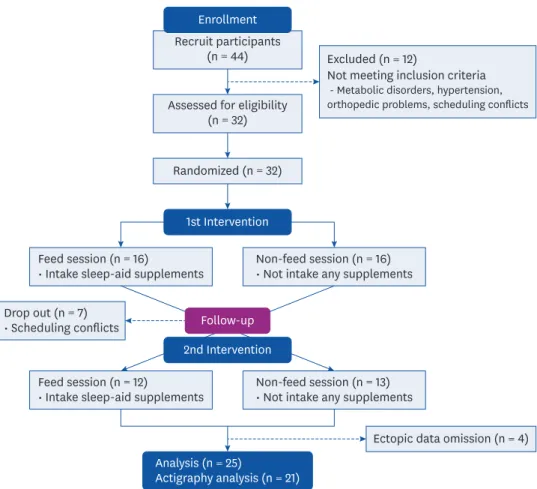
SUBJECTS/METHODS: A randomized, crossover study was conducted on twenty-five adults (15/10, female/male) complaining of difficulty initiating or maintaining nighttime sleep (Pittsburgh sleep quality index [PSQI] ≥ 5). During feeding sessions (FS), subjects received sleep-inducing juice made of natural ingredients (250 mL/trial) twice a day for 8 weeks or non-FS (N-FS) for 8 weeks while maintaining normal activities. Sleep quality and parameters were recorded via wearable actigraph for 7 consecutive days, and PSQI scores were assessed before and after the intervention. HRV was also monitored at rest and during sleep.
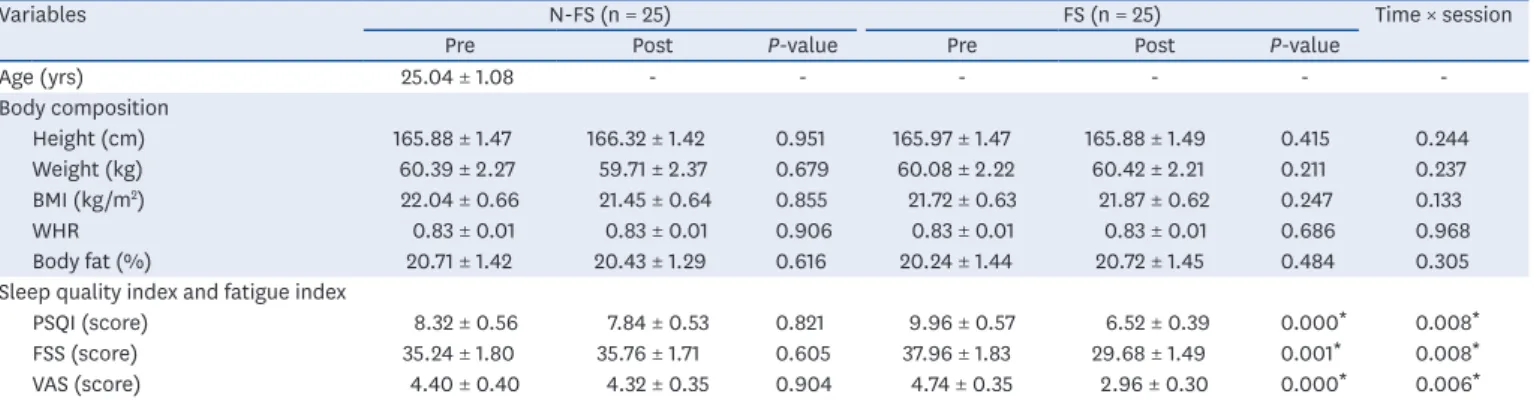
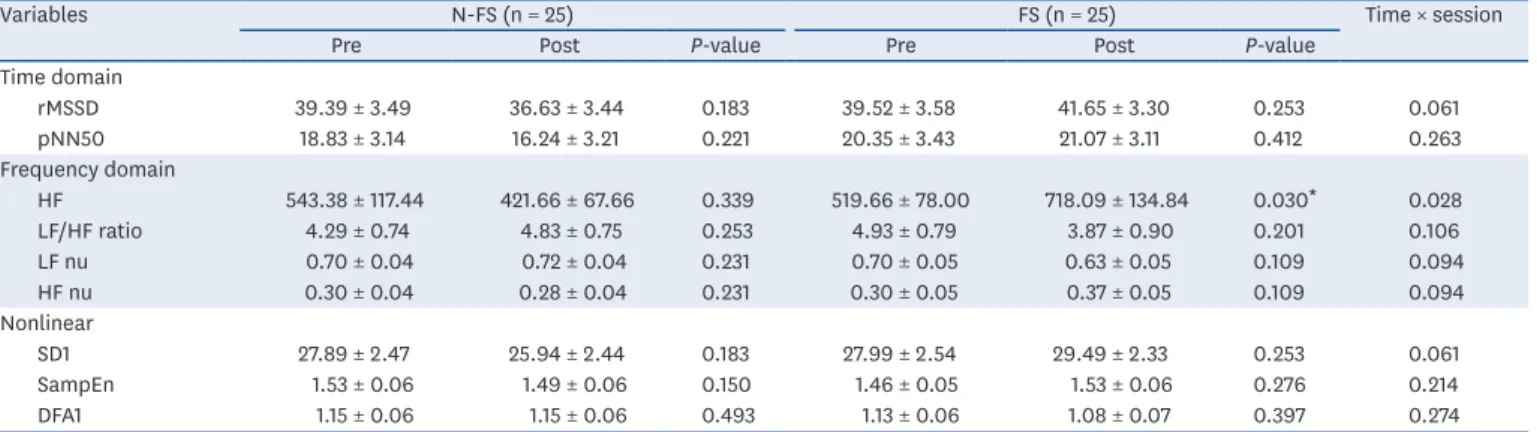
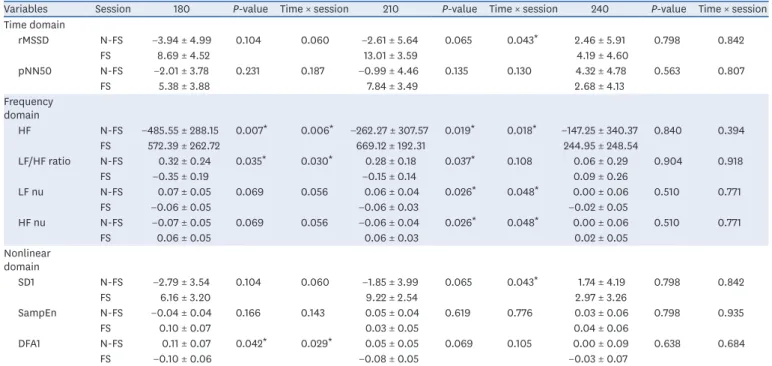
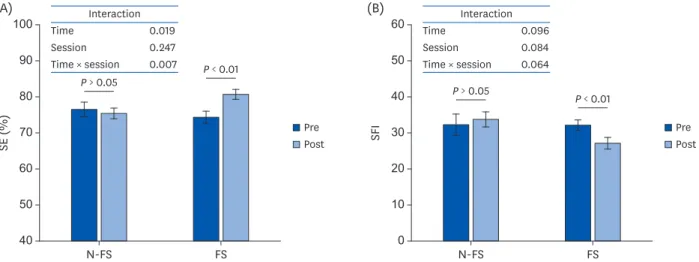
RESULTS: After receiving the sleep-inducing juice intervention (FS), PSQI scores were significantly decreased (P < 0.001) and correlated with a significant decline in fatigue severity scale and visual analogue scale levels (P < 0.05; both). HRV indices of vagal activity were significantly improved during FS (P < 0.05), and no significant differences in N-FS were observed. Sleep efficiency and total sleep time increased significantly (P < 0.05) and sleep latency, total counts, sleep fragmentation index, and movement index, decreased significantly (P < 0.05, all 4) during FS, with no significant differences-observed during N-FS.
CONCLUSIONS: This study results demonstrated that an 8-week course of sleep-inducing juice has led to improve sleep quality, suggesting an enhanced cardiac vagal tone during sleep. Thus, it could be a well-tolerated option for adults with disturbed sleep.
Keywords: Cross-over studies; sleep latency; autonomic nerves; heart rate
INTRODUCTION
Important biological functions, including physiological, cognition, and cardiovascular system processes [1] occur during sleep, yet more than 27% of adults worldwide suffer from sleep disorders, including difficulty in initiating and/or maintaining sleep [2]. The Korean National Health Insurance Corporation has reported an increasing trend in sleep disorders
Original Research
Received: Dec 23, 2019 Revised: Feb 17, 2020 Accepted: Jun 29, 2020
§
Corresponding Author:
Maengkyu Kim
Sports Medicine Lab, Department of Physical Education, Kyungpook National University, 80 Daehak-ro, Buk-gu, Daegu 41566, Korea.
Tel. +82-53-950-5937 Fax. +82-53-955-4235 E-mail. [email protected]
©2020 The Korean Nutrition Society and the Korean Society of Community Nutrition This is an Open Access article distributed under the terms of the Creative Commons Attribution Non-Commercial License (https://
creativecommons.org/licenses/by-nc/4.0/) which permits unrestricted non-commercial use, distribution, and reproduction in any medium, provided the original work is properly cited.
ORCID iDs Choun-sub Kim
https://orcid.org/0000-0003-1995-080X Maengkyu Kim
https://orcid.org/0000-0002-7855-608X Min-ju Kim
https://orcid.org/0000-0002-0967-2116 Hyeyoung Jung
https://orcid.org/0000-0002-9160-4226 Funding
This research was supported by Hurom Co., Ltd. (No. 201703320000).
Conflict of Interest
The authors declare no potential conflicts of interests.
Choun-sub Kim 1 , Maengkyu Kim 1§ , Min-ju Kim 2 , and Hyeyoung Jung 1
1
Sports Medicine Lab, Department of Physical Education, Kyungpook National University, Daegu 41566, Korea
2