• 검색 결과가 없습니다.

JSUJournal of Surgical Ultrasound

N/A
N/A
Protected

Academic year: 2021

Share "JSUJournal of Surgical Ultrasound"

Copied!
7
0
0

로드 중.... (전체 텍스트 보기)

전체 글

(1)

Randomized Comparison of Thrombus Resolution Outcome

between Direct Xa Inhibitor Anticoagulant and Warfarin In Acute Deep Vein Thrombosis

Jae Hoon Lee, Ki Hyuk Park

Division of Vascular Surgery, Department of Surgery, Daegu Catholic University School of Medicine, Daegu, Korea

Received July 24, 2020 Revised September 13, 2020 Accepted September 15, 2020

Purpose: Newly developed factor Xa inhibitor anticoagulants (Xaban) produced non-in- ferior outcomes in terms of venous thromboembolism (VTE) recurrence and safety. On the other hand, thrombus resolution (TR), a factor associated with VTE recurrence and post-thrombotic syndrome, was not expressed clearly in these studies. This study compared the long-term TR outcomes in patients treated with Xaban or warfarin.

Methods: Fifty-seven acute deep vein thrombosis (DVT) patients were enrolled. After the in- itial heparin therapy, randomly assigned patients received oral Xaban or warfarin. The time in the therapeutic range was maintained at more than 60% during the anticoagulation period. After 3–12 months on the medication, a duplex scan was performed to diagnose the thrombus changes.

Results: Unprovoked DVT occurred in 80.7% of patients (46/57), and the mean age was 60.1 ± 13.99 years; 26 patients were female. Concurrent pulmonary embolism was diag- nosed in 20 patients (52.6%) in the Xaban group and 10 (52.6%) in the warfarin group. The complete TR rate for the proximal venous segment was 47.4% (18/38) for the Xaban group and 57.9% (11/19) for the warfarin group. Complete DVT TR was observed in 26.3% of pa- tients (10/38) in the Xaban group and 42.1% (8/19) in the warfarin group. No significant difference was observed between the proximal (P = 0.657) and complete TR rates (P = 0.227) between the two groups.

Conclusion: Xaban administration for acute DVT showed no difference in TR compared to warfarin. Xaban could also be an easy-to-use anticoagulation treatment option because it does not require monitoring and has a short half-life.

Keywords: Deep vein thrombosis, Anticoagulants, Warfarin Correspondence to:

Ki Hyuk Park

Division of Vascular Surgery, Department of Surgery, Daegu Catholic University School of Medicine, 17-33 St.

Dooryou-Gongwon, Nam-gu, Daegu 42472, Korea Tel: +82-53-650-4065 Fax: +82-53-624-7185 E-mail: [email protected]

INTRODUCTION

Deep vein thrombosis (DVT) is a significant healthcare concern resulting in serious morbidity, mortality and re- source expenditure. Appropriate anticoagulation therapy is crucial for preventing early and late episodes of recurrent venous thromboembolism (VTE). However, the cumulative recurrence rate after cessation is reported as 11.0%, 29.1%

and 39.9% after 1, 5 and 10 years, respectively.(1) In a sys- tematic review, the rate of VTE recurrence after 24 months was 3.3% per patient year for all patients with transient risk factor and 7.4% per patient year after unprovoked VTE.(2) The persistence of residual vein thrombosis (RT) is also considered an important risk factor for recurrence.

Prandoni et al .(3) reported that RT has a hazard ratio for recurrence of 2.4 (confidence interval (CI): 1.3–4.4) and

JSU

Journal of Surgical Ultrasound J Surg Ultrasound 2020;7:29-35

https://doi.org/10.46268/jsu.2020.7.2.29

(2)

Young et al .(4) reported a hazard ratio of 2.2 (CI: 1.19–4.21).

RT also has an important late clinical consequence in VTE, which is post-thrombotic syndrome (PTS). In our cohort of patients with DVT, who were followed for two years, mod- erate or severe PTS signs were detected in 10% and 3%, re- spectively, and these results were closely associated with the persistence of vein obstruction, which is the main cause of chronic venous hypertension.(5)

However, thrombus resolution (TR) and vein patency re- covery are unpredictable during anticoagulation. Several studies evaluated TR with ultrasonography in symptomatic DVT patients and normalization rates at 1 year ranged from 36%–96% with conventional anticoagulation.(6,7) Caprini et al .(8) reported that, during warfarin therapy, the inter- national normalized ratio (INR) values were significantly higher in patients with complete DVT resolution. Recently developed new oral anticoagulants (NOACs), such as factor Xa inhibitor anticoagulants (Xaban), have advantages that make them a beneficial treatment option with consistent anticoagulation effects.(9–11) However, recanalization of thrombosed venous segments and evolution of thrombus were not clearly expressed in these studies. We performed a prospective randomized controlled study to compare the degree and rate of TR between warfarin and Xaban therapy.

METHODS

Fifty-seven consecutive patients (26 women, 31 men) with acute leg DVT were enrolled in this randomized, dou- ble-blind study after providing informed consent. The study uses a design in which all patients receive either ac- tive Xaban and warfarin placebo, or active warfarin and Xaban placebo, along with regular blood testing with re- porting of real or sham INR results. Randomization was performed using of an interactive, Web-based system. All patients were hospitalized for proper diagnosis and treatment.

A duplex scan was done for DVT extent and chest CT scan used for diagnosis of pulmonary embolism for initial

diagnosis. The protein C, S level and factor V anomaly as hy- percoagulability test were checked before anticoagulation.

Initial treatment was started with low molecular heparin for at least 5 days.

Either Xaban or warfarin was administered in a dou- ble-blind, double-dummy fashion. Xaban was started after discontinuation of initial heparin with recommended dose for patient condition. The Xaban regimen is 60 mg orally once daily, taken with or without food. A reduced dose of Xaban of 30 mg once daily is used for patients with moder- ate renal impairment (creatinine clearance of 30–50 mL/min), body weight of ≤ 60 kg, or who are receiving strong P‐glycoprotein inhibitors. Xaban is started after dis- continuing initial heparin, either 12 ± 3 h after the last dose of the twice‐daily Xaban regimen, 24 ± 3 h after the last dose of the once‐daily Xaban regimen, or 4 ± 1 h after discontinuing intravenous unfractionated heparin.

Warfarin was started concurrently with the study regi- men of heparin with adjustment of the dose to maintain the international normalized ratio (INR) between 2.0 and 3.0.

All measurements were performed by means of a point-of-care device that provided an actual INR value for patients receiving warfarin and a sham INR value for pa- tients receiving Xaban. INR measurements were performed at least monthly and the time in therapeutic range (TTR) been kept over 60% during as follow up period.

Anticoagulation was continued for at least 3 months.

Patients underwent monthly assessment in the out-pa- tients-clinic regarding proper taking medicine, any ad- verse events and symptom changes. All patients followed up were continued to 6 months and to be contacted at 12 months. To assess thrombosed vein segments recanaliza- tion, we have performed duplex scan before start medi- cation and after complete anticoagulation on last follow up visit after complete medication.

Ultrasonography (LOGIQ P9, GE Healthcare, Marlbor-

ough, Mass) was done with 5–10 MHz linear probe or 2.5–5

MHz convex transducer depending on the depth of veins to

be examined. The examination of the lower limb veins is

started with thigh to visualize the common, deep, and su-

(3)

Fig. 2. After 6 months warfarin medication, partial resolution was observed: (A) Initial total occlusion with thrombus in popliteal vein; (B) after long-term medication, partial thrombus resolution with limited flow restoration.

Fig. 1. Thrombus in femoral vein was completely resolved after 6 months Xaban medication: (A) initial finding showed no color signal in color doppler view and (B) throm- bosed vein was not compressed; (C) after 6 months, flow was restored with color dopper view and (D) complete obliteration in compression test.

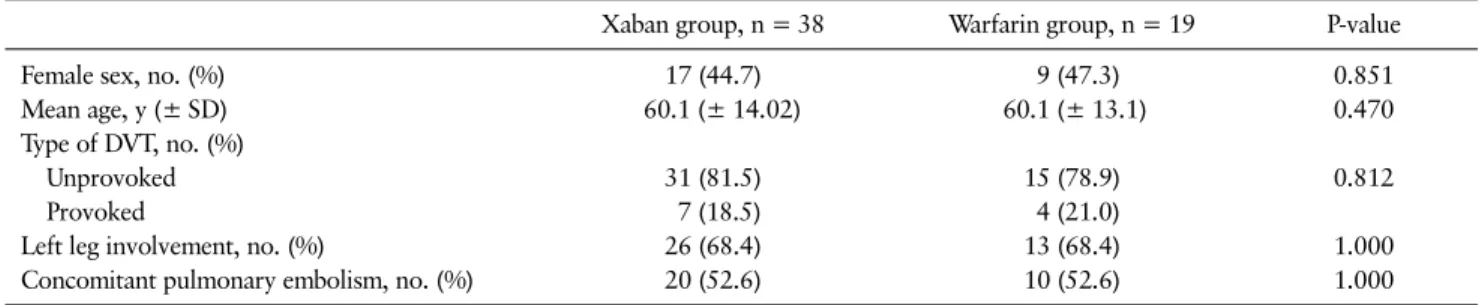
Table 1. Baseline Characteristics of Patients

Xaban group, n = 38 Warfarin group, n = 19 P-value

Female sex, no. (%) 17 (44.7) 9 (47.3) 0.851

Mean age, y (± SD) 60.1 (± 14.02) 60.1 (± 13.1) 0.470

Type of DVT, no. (%)

Unprovoked 31 (81.5) 15 (78.9) 0.812

Provoked 7 (18.5) 4 (21.0)

Left leg involvement, no. (%) 26 (68.4) 13 (68.4) 1.000

Concomitant pulmonary embolism, no. (%) 20 (52.6) 10 (52.6) 1.000

perficial femoral veins. The popliteal vein and the calf veins (anterior tibial, posterior tibial, peroneal) were examined in the sitting position. The convex probe used to scan the iliac veins. B-mode with compression and color doppler flow visualization applied for whole vein. Thrombus finding at

every vein segment was recorded. All duplex scan was done

by a same vascular technician. To diagnose concurrent pul-

monary embolism, chest CT scan was taken in the initial

diagnosis. For simplify classification of thrombus quantifi-

cation, we define complete resolution for total resolving at

(4)

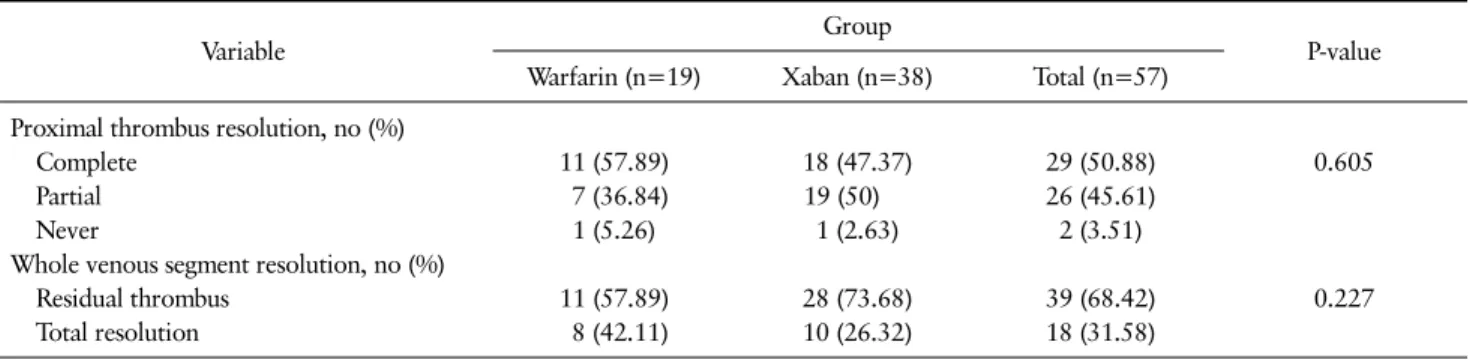
Table 3. 12 Months Follow Up Thrombus Resolution Outcome with Duplex Scan

Variable Group

P-value Warfarin (n=19) Xaban (n=38) Total (n=57)

Proximal thrombus resolution, no (%)

Complete 11 (57.89) 18 (47.37) 29 (50.88) 0.605

Partial 7 (36.84) 19 (50) 26 (45.61)

Never 1 (5.26) 1 (2.63) 2 (3.51)

Whole venous segment resolution, no (%)

Residual thrombus 11 (57.89) 28 (73.68) 39 (68.42) 0.227

Total resolution 8 (42.11) 10 (26.32) 18 (31.58)

Table 2. Thrombosis Involving Venous Segments Proximal thrombosed

vein segment

Xaban group, n = 38

Warfarin group, n = 19

Inferior vena cava 2 0

Iliac vein 15 8

Femoral vein 16 9

Popliteal vein 5 2

Table 4. Bleeding Complication between Two Groups All bleeding

events, no (%)

OR (odds ratio)

95% CI for OR Group

Warfarin (n=19) 6 (31.58)* 2.462 0.669–9.053

Xaban (n=38) 6 (15.79)

1 -

P-value 0.168 0.175

*Two major bleeding events (huge muscle hematoma, severe sclera hemorrhage) which defined as a condition needs for hospitalization included.

One major bleeding, melena event included and there was no active bleeding focus in endoscopy.

each vein segment and partial for any degree of thrombus reduction than no resolution (Figs. 1, 2). Statistics was done by chi-square test and binary logistic regression.

RESULTS

The study protocol was approved by the Institutional Review Board of Daegu Catholic University Hospital (IRB no. CR-14-081). All patients had presented symptomatic lower extremity swelling. The baseline characteristics of the patients were similar in the two study groups (Table 1).

Subjects included 26 female patients and had mean age of 60.1 years (SD±13.99 years and range, 23 to 80 years). All fifty-seven patients have been completed study follow up protocol. No patients were lost to follow up during 12 months period. The left limb was involved in 39 patients (68.4%) and no patients had bilateral involvement.

Regarding the type of DVT, provoked type was 19.2%

(11/57). Thirty-eight patients were randomized to Xaban group and nineteen patients for Warfarin group.

Concurrent pulmonary embolism was diagnosed in Xaban group 20 (52%) patients and 10 (50%) patients in warfarin

group.

Initial thrombus extent in venous system reported in Table 2. Thrombosis involved proximal vein which defined as inferior vena cava or iliac vein in 25 patients (43.8%) and located femoro-popliteal vein segments in 32 patients (56.1%). The proximal levels of thrombus in Xaban group were Inferior vena cava in 2, iliac 15, femoral 16 and above knee popliteal vein in 5 patients. In Warfarin group, iliac 8, femoral 9, and popliteal vein were in 2 patients.

Among patients receiving warfarin, the INR was in the therapeutic range for 63.5% of the time. No VTE related death was encountered in both groups during the study period. The complete resolution rate in proximal segment was 47.3% (18/38) and partial resolution rate was 51%

(19/38) in Xaban group (Table 3). In warfarin group com-

plete resolution was 57% (11/19) and partial resolution was

57% (11/19). Whole DVT resolution was 26.3% (10/38) in

Xaban, 42.1% (8/19) in warfarin. There was no statistically

difference regarding proximal resolution (P = 0.657) and

(5)

complete resolution rate (P = 0.227) between two groups.

For initial coagulation anomaly function test, 85.9% (49/57) patients showed at least one anomalous result. The most frequent abnormality was protein S activity reduction % 80.7% (46/57).

There was no VTE recurrence during 12 months follow up in both groups. Clinically relevant bleeding complica- tion (major or minor) occurred in 6 of 38 patients (15.7%) in the Xaban group and in 6 of 19 patients (31.5%) in warfarin group and odds ratio was 2.462 (95% CI for OR, P = 0.175) (Table 4).

DISCUSSION

Prevention of VTE recurrence and PTS is the most im- portant therapeutic goals in acute DVT patients. During natural course of long-term anticoagulation, variable de- gree of thrombus may remain in thrombosed vein segments. RT after completion of anticoagulation was re- ported that it closely related with these two adverse outcomes. A number of studies have explored the role of RT and the associated risk of VTE recurrence. A recent meta-analysis demonstrated an elevated odds or VTE re- currence in DVT patients with residual vein thrombosis 2.5, (95% CI 1.1–2.0).(12) However thrombus evolution is dy- namic and complex procedure that involves organization and neovascularization as well as fibrinolysis so it re- mained poorly defined. Application ultrasound for diag- nosis of thrombus remnant status also widely reported in the literature. Killewich et al .(13) reported that 55% of acute DVT patients showed complete recanalization within 6 to 9 months. In DACUS study, the adjusted hazard ratio of residual thrombus versus those without was 24.9 (95% CI, 3.4–183.6; P = 0.002) and absence of thrombus identifies patients at low risk for recurrent VTE.(14) Warfarin pro- motes fibrinolysis by reducing thrombin induced activation of thrombin activatable fibrinolysis inhibitor.(15) During warfarin medication, proper maintain of INR value is crit- ical for thrombus resolution. Caprini et al . (8) reported that at the end of 1-year follow up, the rate of complete DVT

resolution was 68% and the median INR values significantly lower with incomplete DVT resolution. Also in this less thrombus resolved group, 62% had chronic venous in- sufficiency symptoms develop, whereas only 11% of the pa- tients with non-occlusive thrombi (P = 0.003). In our study, complete whole venous thrombus resolution rate in warfar- in was 42.1% (8/19) and 26.3% (10/38) in Xaban group. Our results showed similar resolution rate with others pro- spective study in which after 3 months anticoagulation 42.86% of provoked proximal DVT patients showed com- plete resolution.(16) In our study Xaban group outcome re- vealed higher RT rate without statistical significance. Since thrombus resolution observed in proximal vein, we also studied the evolution of the most proximal thrombus in DVT and it showed no significant difference in two anti- coagulation groups. It is known that compare to distal thrombus, proximal DVT has increased risk of recurrence (odds ratio = 2.4; 95% confidence interval [CI]: 0.95, 5.9) as in Douketis et al . report.(17) In the future, larger scale of prospective study is warranted to find out more robust results.

Although Xaban also block the thrombin action by se- quential interaction beginning with factor Xa, the scope of interaction with coagulation factor is different with warfarin. So far there is no specific study defining what would be the result of this complex interaction in thrombus evolution with NOAC. Although many Xaban trials reported VTE recurrence, no specific PTS occurrence was reported.

However warfarin has intrinsic limitations such as un-

predictable pharmacokinetics, monitoring requirements,

drug-food or drug-drug interactions. Also because of

bleeding risk, physicians tend to be monitored in sub-

therapeutic INR level. In population based real-world re-

search with 19,113 VTE patients, only 36% had TTR value

over 70%.(18) There is a high amount of unpredictable vari-

ability in an individual TTR. These findings confirm the dif-

ficulty of achieving high quality anticoagulation with war-

farin in real-world clinical practice. In our study warfarin

assigned patient’s TTR was 63.5% and it is essential for

comparing proper therapeutic effect evaluation. Compared

(6)

with warfarin, NOACs has more predictable anticoagulant responses and it have been shown to be effective in the pre- vention and treatment of VTE. Also NOACs has little food interactions, or drug interaction with predictable pharma- co-kinetics it could be administered with fixed dose with- out laboratory monitoring. So far three (Rivaroxaban, Apixaban, Edoxaban) direct factor Xa inhibitor drug ap- proved from Food and Drug Administration for VTE treatment. In all NOAC trials it is found that these drugs found to be non-inferior to warfarin with regards to the pri- mary efficacy outcomes and fewer major bleeding events.(9 –11) However all these trials had similar outcome assess- ments for primary efficacy and it was recurrent venous thromboembolism. Even with high quality study design with strict follow up protocol, final thrombus resolution results compare with conventional anticoagulation were not clear- ly mentioned especially imaging final outcomes.

Our randomized study was focused the thrombus recan- alization rate comparison. Study patients characteristics were not different with other studies. Unprovoked vs. pro- voked DVT ratio (78.9% vs. 21%) in warfarin group were similar with DACUS trial (75% vs. 25%).(14) Clinical relevant bleeding event was higher in warfarin group 31.5% vs.

15.7% without significance. Although the rates was higher to Xaban phase III trials (Apixaban 8.0% vs. 3.8%, Edoxaban 10.3% vs. 8.5%, Rivaroxaban 8.1% vs. 8.1%), most of bleed- ing events were minor bleeding such as bruising, menor- rhagia, oral mucosa ecchymosis and subconjunctival hemorrhage. There were two major bleeding events oc- curred in warfarin group which defined as the condition needs to be hospitalized. One patient admitted for tempo- rary hematemesis and the other patient was for muscle hematoma in thigh.

Both patients treated with conservative treatment with- out any intervention. RT occlusion also has close relation with PTS which is a late complication of DVT that greatly affects the morbidity and quality of life of patients and leads to high social costs. Limbs with the PTS had more than three times the odds of having combined reflux and obstruction than did limbs without the PTS (odds ratio =

3.5, 0.95 confidence intervals = 1.4, 8.6) with duplex scan test.(19) In our study TR rate was not significantly different Xaban with warfarin. Based on this finding, we hypothesize that the incidence of PTS would not be influenced by the choice of these two different drugs. However when we con- sider that rather lower level of INR maintenance for warfar- in prescription in practical VTE treatment, it is presumed that PTS could be frequent with conventional treatment.

Further real world comparison study need to be find out this subject. Duplex sonography is the method of choice for diagnosis of DVT since it offers both anatomic and he- modynamic information with gray scale imaging and pulsed Doppler waveform analysis. There were some stud- ies to objectify the extent of thrombus with ultraso- nogram.(20) However even with high validity of scoring system, the complexity decrease the real-world applica- tion especially extensive leg thrombosis. Instead of using thrombus scoring index, we simplify the TR with total reso- lution, partial and no resolution. It is practical for follow up thrombus absorption in whole segment for comparing the changes of thrombus volume. We also focused the most proximal thrombus resolution during the follow up image to define longitudinal thrombus regression.

In conclusion, Xaban administration for acute VTE showed no difference regarding TR with warfarin. Based on this result there is a possibility that PTS related with RT would not be different between new and conventional anticoagulant. Because Xaban does not require monitoring and has a short half-life, Xaban could also be an easy-to-use anticoagulation treatment option. Further larger scales study expect to warrant our results.

CONFLICT OF INTEREST

The authors have nothing to disclose.

ACKNOWLEDGEMENTS

This work was supported by research grants from Daegu

Catholic University in 2017.

(7)

REFERENCES

1. Prandoni P, Noventa F, Ghirarduzzi A, Pengo V, Bernardi E, Pesavento R, et al. The risk of recurrent venous thromboemb- olism after discontinuing anticoagulation in patients with acute proximal deep vein thrombosis or pulmonary embolism.

A prospective cohort study in 1,626 patients. Haematologica 2007;92:199-205.

2. Iorio A, Kearon C, Filippucci E, Marcucci M, Macura A, Pengo V, et al. Risk of recurrence after a first episode of symptomatic venous thromboembolism provoked by a transient risk factor:

a systematic review. Arch Intern Med 2010;170:1710-6.

3. Prandoni P, Lensing AW, Prins MH, Bernardi E, Marchiori A, Bagatella P, et al. Residual venous thrombosis as a predictive factor of recurrent venous thromboembolism. Ann Intern Med 2002;137:955-60.

4. Young L, Ockelford P, Milne D, Rolfe-Vyson V, Mckelvie S, Harper P. Post-treatment residual thrombus increases the risk of recurrent deep vein thrombosis and mortality. J Thromb Haemost 2006;4:1919-24.

5. Kahn SR, Shrier I, Julian JA, Ducruet T, Arsenault L, Miron MJ, et al. Determinants and time course of the postthrombotic syndrome after acute deep venous thrombosis. Ann Intern Med 2008;149:698-707.

6. Killewich LA, Bedford GR, Beach KW, Strandness DE Jr.

Spontaneous lysis of deep venous thrombi: rate and outcome. J Vasc Surg 1989;9:89-97.

7. Murphy TP, Cronan JJ. Evolution of deep venous thrombosis: a prospective evaluation with US. Radiology 1990177:543-8.

8. Caprini JA, Arcelus JI, Reyna JJ, Motykie GD, Mohktee D, Zebala LP, et al. Deep vein thrombosis outcome and the level of oral anticoagulation therapy. J Vasc Surg 1999;30:805-11.

9. Agnelli G, Buller HR, Cohen A, Curto M, Gallus AS, Johnson M, et al. Oral apixaban for the treatment of acute venous thromboembolism. N Engl J Med 2013;369:799-808.

10. Bauersachs R, Berkowitz SD, Brenner B, Buller HR, Decousus H, Gallus AS, et al. Oral rivaroxaban for symptomatic venous thromboembolism. N Engl J Med 2010;363:2499-510.

11. Büller HR, Décousus H, Grosso MA, Mercuri M, Middeldorp S, Prins MH, et al. Edoxaban versus warfarin for the treatment of symptomatic venous thromboembolism. N Engl J Med

2013;369:1406-15.

12. Carrier M, Rodger MA, Wells PS, Righini M, LE Gal G. Residual vein obstruction to predict the risk of recurrent venous throm- boembolism in patients with deep vein thrombosis: a system- atic review and meta-analysis. J Thromb Haemost 2011;

9:1119-25.

13. Killewich LA, Macko RF, Cox K, Franklin DR, Benjamin ME, Lilly MP, et al. Regression of proximal deep venous thrombosis is associated with fibrinolytic enhancement. J Vasc Surg 1997;

26:861-8.

14. Siragusa S, Malato A, Anastasio R, Cigna V, Milio G, Amato C, et al. Residual vein thrombosis to establish duration of anti- coagulation after a first episode of deep vein thrombosis: the Duration of Anticoagulation based on Compression UltraSonography (DACUS) study. Blood 2008;112:511-5.

15. Incampo F, Carrieri C, Galasso R, Scaraggi FA, Di Serio F, Woodhams B, et al. Effect of warfarin treatment on thrombin activatable fibrinolysis inhibitor (TAFI) activation and TAFI-mediated inhibition of fibrinolysis. J Thromb Haemost 2013;11:315-24.

16. Brownson K, Satoskar S, Reynolds J, Sumpio B, Sarac T, Scoutt L, et al. Thrombus resolution as guide to anticoagulation ther- apy for provoked deep vein thrombosis: TRUDVT pilot study. J Vasc Surg Venous Lymphat Disord 2016;4:149.

17. Douketis JD, Crowther MA, Foster GA, Ginsberg JS. Does the location of thrombosis determine the risk of disease re- currence in patients with proximal deep vein thrombosis? Am J Med 2001;110:515-9.

18. Macedo AF, Bell J, McCarron C, Conroy R, Richardson J, Scowcroft A, et al. Determinants of oral anticoagulation con- trol in new warfarin patients: analysis using data from Clinical Practice Research Datalink. Thromb Res 2015;136:250-60.

19. Johnson BF, Manzo RA, Bergelin RO, Strandness DE Jr.

Relationship between changes in the deep venous system and the development of the postthrombotic syndrome after an acute episode of lower limb deep vein thrombosis: a one- to six-year follow-up. J Vasc Surg 1995;21:307-12; discussion 313.

20. Ouriel K, Greenberg RK, Green RM, Massullo JM, Goines DR. A

volumetric index for the quantification of deep venous

thrombosis. J Vasc Surg 1999;30:1060-6.

수치

Fig. 1. Thrombus in femoral vein  was completely resolved after 6  months Xaban medication: (A) initial  finding showed no color signal in  color doppler view and (B)  throm-bosed vein was not compressed; (C)  after 6 months, flow was restored  with color
Table 4. Bleeding Complication between Two Groups All bleeding  events, no (%) OR  (odds ratio)  95% CI for OR Group  Warfarin (n=19) 6 (31.58)* 2.462 0.669–9.053 Xaban (n=38) 6 (15.79) † 1  -P-value 0.168 0.175

참조

관련 문서

As a results, the SDF showed the greatest remineralization effect among.. The fluoride varnish and tape showed similar remineralizing effect. Only in the SDF group, a difference

Our results also showed that pigment epithelium-derived factor concentration in vitreous was higher than that in serum, suggesting that it is mainly derived from

From the results of Micro Vickers hardness test, Ti- 40Hf alloy showed significantly increasing of hardness and tensile strength than others in the case of

In addition, this study confirmed the superiority of the thermomechanical reliability of drilled Cu pillar bump (DCPB) through a hysteresis loop, which showed the

This showed that the surgical outcome was successfulin 269 patients (98.89%),butthe revision surgery due to surgicalrelapse was performed in three patients.Of 152 patients

Results after 4 weeks showed that both deep neck bending muscle exercise+general neck strengthening exercise group showed decreased pain and improved functional status

In exercise group, change in physical strength after measurement showed significant increase in muscular strength, muscle endurance, cardiovascular endurance, agility,

In this study, we investigated the effects of a HF+HS diet in DMM-induced OA mice and found that compared with a HF diet, a HF+HS diet promoted OA. Moreover, our results