제 5 회 첨단 사이언스 교육 허브 개발(EDISON) 경진대회
- 37 -
First-principles Study of the Efficient Li-ion Insertion into TiO
2anatase Nanolayer for High Performance Li-ion Battery
Dong Jae Shin1, Yong Hoon Kim*2
1Department of Chemical Engineering, University of Seoul, Seoul 130-743, Korea
2Graduate School of EEWS, KAIST, 291 Daehak-ro, Yuseong-gu, Daejeon, Korea E-mail: [email protected]
We calculated Li ion migration energy barrier, applying three different models on Li ion insertion into TiO2 nanolayers to elucidate the previously reported high rate of charge-discharge. With the existence of additional Li ion on the surface of TiO2
structure, spontaneous insertion of Li ion into the second layer from the first layer was observed. Using this result, we showed the intrinsic property of TiO2 structure and it has a contribution to the reported performance. In the end, we give a suggestion on the fabrication of TiO2-Graphene hybrid structure for Li ion battery electrode.
INTRODUCTION
A secondary battery is the energy storage device that can transform electrical energy into the form of electrochemical energy through a reversible, chemical reduction-oxidation reaction.
Currently, Li-ion battery is one of the most representative rechargeable battery and being considered as the leading candidate for the energy storage device to be used in applications such as electric vehicles and renewable energy storage system. [1]
However, many potential electrode materials for Li-ion battery are limited by slow Li-ion diffusion, poor electron transport in the electrode and the resistance at the electrode/electrolyte interface.
For the Li-ion diffusion, many studies are widely being performed to improve the diffusion properties. For example, the use of Titanium dioxide(TiO2)–Graphene hybrid nanostructure could improve the transport of the Li-ion in the electrode by shortening the distance of insertion/extraction pathway.
Additionally, a TiO2 has come into the spotlight due to its superior properties of the stability during Li-ion insertion/extraction, and safety and also due to the environmental benignity, abundance and low cost. D. Wang et al. has shown that TiO2-Graphene nanostructure has high charge-discharge rate and demonstrated that the increased electrode conductivity due to the high conductivity of Graphene has a contribution to the phenomenon. [2]
In this report, we calculated the energy barrier for the Li-ion insertion into the TiO2 anatase nanolayer. By conducting the simulation on the system without graphene, we studied on the Li-ion insertion properties of TiO2 itself and showed that the reported properties of TiO2-Graphene electrode is also related with the intrinsic property of TiO2 structure as well as the conductivity of Graphene. To elucidate the property, we observed how the energy barrier value changes as the more realistic insertion model is applied. Finally we have found the
appropriate atomic insertion model.
CALCULATION METHODS
The calculations in this work have been performed by Density functional theory(DFT), which is available on the EDISON web platform and named LCAODFTLab(Linear Combination of Atomic Orbitals-based Density Functional Theory Electronic Structure Calculation SW).
Exchange-correlation energy functional was described with Perdew-Burke-Ernzerhof generalized gradient approximation. 2x2x1 k-points grid was chosen and the lattice parameter 7.7696 Å and 34Å were used respectively for a and c. For the calculation of Li ion migration energy barrier in bulk TiO2
crystal, we used 2x2x2 k-points grid and 7.7696Å and 9.7105Å as a lattice parameter a
and c, respectively. Li ion was treated as neutral based on the result of previous research [3]
that the charge of Li ion has negligible effect on the calculation.
305
- 38 -
Fig. 1. The three scenarios which adopt different simulation models and the snapshots in minimum energy path(MEP). A purple bead indicates Li ion and the additional Li ion in scenario3 was particularly tagged as yellow bead. The crystal structure given is anatase TiO2.
0 1 2 3 4 5
0.0 0.2 0.4 0.6 0.8 1.0 1.2 1.4
Energy Difference (eV)
Li ion Migration Energy Difference
1.24eV
Three scenarios and the calculation of energy barrier of Li ion migration
We have made the simulation model of anatase TiO2 7 layer (001) slab and these layers were fixed for the convenience of calculation and this condition was applied for all the calculations.
We introduced three insertion model which is called scenario 1, scenario 2 and scenario 3, respectively and Fig. 1. describes these scenarios.
Fig. 2. The calculation of the energy barrier between layer1 and layer2 in scenario1. 0 and the 5 in the x axis indicate initial and final position respectively.
In the first model a single Li ion migrates in the TiO2 structure and the Li ion crowding effect is applied in the second model. In the third model, additional Li ion on the surface of the TiO2 is introduced into the model of scenario2.
Table. 1. Calculated energy barriers of each scenario. L1, L2 and L3 indicates layer 1, layer2 and layer3.
The total energies were calculated following the
minimum energy path(MEP)s which were divided into 5 intervals in each scenario and the energy barriers between layers were derived from the energy values calculated on the every snapshots on the MEPs as in the Fig. 2. The y axis indicates the difference of energy of each migration position from that of initial position.
RESULTS AND DISCUSSION
L1L2 L2L3 L3L4
-0.2 0.0 0.2 0.4 0.6 0.8 1.0 1.2 1.4
0.00eV
0.68eV 1.20eV
1.19eV
Energy Barrier(eV)
Migration Path
scenario1 scenario2 scenario3 1.24eV
0.55eV(bulk)
Fig. 3. Summarized calculation results on the energy barrier about every scenario.
layer 1 layer 2 layer 3 layer 4
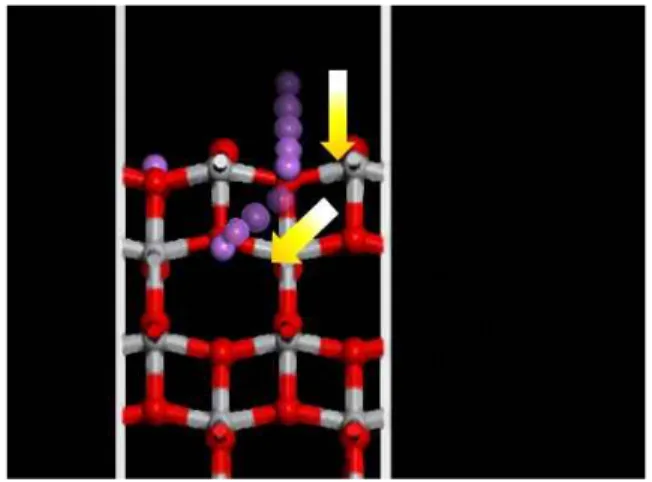
Fig. 4. Description of the migration between layer 1 and layer 2 in scenario 3.
Suface effect on the migration barrier energy We calculated the energies of each step in scenario 1, 2 and 3, respectively. As shown in the Table. 1 and Fig. 3., the energy barrier between layer1 and layer2(L1→L2) decreases as the Li ion goes through the lower layers and it approached the Li ion migration energy barrier
306
제 4 회 첨단 사이언스 교육 허브 개발(EDISON) 나노물리
회 - 39 -
in the bulk TiO2 crystal, 0.55eV. This result means that the Li ion becomes less exposed to the surface effect which is due to the unbalanced atomic interaction on the surface of TiO2 crystal, as it penetrates into the middle of the TiO2 slab structure.
Application of more realistic models
After we applied the scenario 2 in which we filled all the unoccupied spaces on the first layer with Li ions, a little drop(~0.05eV) in the energy barrier was observed. This result can possibly be understood that applying scenario 2 made the simulation model more realistic and in better agreement with experiment result reported before but it seems to be not sufficient.
By introducing additional Li ion on the surface of TiO2 structure in the scenario 3, we observed that the migration between layer 1 and layer 2 occurs spontaneously while a Li ion is pushed away to the next layer by the repulsive interaction from the additional Li ion above it. (Fig. 4.) This indicates that Li ion insertion into TiO2 is favorable to some degree and that this intrinsic property of TiO2 structure has a contribution to high charge-discharge rate of TiO2-Graphene hybrid nanostructure.
Further consideration on scenario 3
In fact, the result from the surface effect section which was considered in scenario 1 is not perfect to be applied in the scenario 3.
However, considering the possibility that the pushing effect from the additional Li ion becomes relatively smaller when it is applied on more than one Li ion, it is expected hard for Li ion to diffuse deeper. Thus, the middle of TiO2
will behave as bulk TiO2 even in scenario3. It means that the energy barrier value, 0.0000eV is expected to become higher as the considering layer gets deeper, approaching the value of 0.55eV.
CONCLUSION
From the DFT calculation on the system in which the scenario 3 is adopted, we observed
that Li ion insertion into TiO2 structure is favorable. We also demonstrated that the surface effect by the unbalanced atomic interaction decreases as Li ion gets into the middle of the TiO2 and the migration energy barrier approaches that of bulk TiO2. By integrating the results from scenario 3 and that of the further consideration section, we can give a suggestion to electrode fabricators. By making TiO2 structure atomically thin, we can fully utilize the spontaneous Li ion insertion effect. Otherwise, the possibility that Li ion insertion experience the energy barrier higher than 0.0000eV will be bigger. This can be achieved by coating an electrode material with TiO2 nanoparticles. Additionally, we can maximize the surface area that suffer the spontaneous insertion by using porous Graphene coated with TiO2 nanoparticles.
ACKNOWLEDGEMENT
This research was supported by the EDISON Program through the National Research Foundation of Korea(NRF) funded by the Ministry of Science, ICT & Future Planning (2012M3C1A6035302)
REFERENCES
[1] D. J. Kim, J, W, Choi, Lithium-ion Batteries:
Present and Future, Physics and High Technology, 21, 15-19 (2012).
[2] D. Wang et al., Self-Assembled TiO2– Graphene Hybrid Nanostructures for Enhanced Li-Ion Insertion, ACS Nano, 3, 907-914 (2009).
[3] G. H. Lee et al., Ultrafast Charge/Discharge Rate and Robust Cycle Life for High Performance Energy Storage Using Ultrafine TiO2 Nanocrystals Integrated with the Binder-free Macroporous Graphene Foam(submitted)
307