http://dx.doi.org/10.5468/ogs.2014.57.6.484 pISSN 2287-8572 · eISSN 2287-8580
Received: 2014.4.14. Revised: 2014.6.14. Accepted: 2014.7.15.
Corresponding author: Ki-Heon Lee
Department of Obstetrics and Gynecology, Cheil General Hospital and Women’s Healthcare Center, Kwandong University College of Medicine, 17 Seoae-ro 1-gil, Jung-gu, Seoul 100-380, Korea Tel: +82-2-2000-7196 Fax: +82-2-2000-7183
E-mail: [email protected]
Articles published in Obstet Gynecol Sci are open-access, distributed under the terms of the Creative Commons Attribution Non-Commercial License (http://creativecommons.
org/licenses/by-nc/3.0/) which permits unrestricted non-commercial use, distribution, and reproduction in any medium, provided the original work is properly cited.
Copyright © 2014 Korean Society of Obstetrics and Gynecology
Introduction
Epithelial ovarian cancer (EOC) is the leading cause of death in women with gynecologic malignancies worldwide. In 2013, there were an estimated 22,240 new cases of ovarian cancer and 14,030 deaths in the United States [1]. In Korea, 2,215 patients were newly diagnosed with ovarian cancer between 1993 and 1995, and the number increased steadily to 8,391 between 2006 and 2010 [2]. EOC is rarely diagnosed during the early stages because there is still no effective screening tool and the symptoms are mostly unspecific as well as late
Survival outcomes and toxicity of intraoperative
intraperitoneal chemotherapy in advanced epithelial ovarian cancer
Ji-Young Yoon, Yu-Jin Koo, Mi-Jung Kim, Tae-Jin Kim, Kyung-Taek Lim, Ki-Heon Lee
Department of Obstetrics and Gynecology, Cheil General Hospital and Women’s Healthcare Center, Kwandong University College of Medicine, Seoul, Korea
Objective
To assess the effect of single-dose cisplatin intraperitoneally administered during cytoreductive surgery in advanced epithelial ovarian cancer.
Methods
Data from patients who underwent surgical management followed by intravenous (IV) chemotherapy for stage III epithelial ovarian cancer from 2003 to 2012 were retrospectively reviewed. Subjects were divided into intraperitoneal (IP) and no-intraperitoneal (NIP) groups according to the administration of IP cisplatin 100 mg during the staging surgery. Clinical results such as survival outcomes and chemotherapeutic toxicity were compared between the two groups.
Results
Thirty-seven patients in the IP group and 26 in the NIP group were identified. There were no significant differences between the two groups in basic characteristics such as age, histology, and surgical procedures. After the surgery with or without IP chemotherapy, there was no difference in the rate of either hematologic or gastrointestinal toxicity or in the rate of incompletion of following IV chemotherapy. Tumor recurrence occurred in 67.6% (25 patients) of IP group and 57.7% (15 patients) of NIP group (P=0.423) during the mean follow-up period of 37 months. The 3-year disease free-survival rate was 39.9% in the IP group and 35.8% in the NIP group, and the relative risk of recurrence was 0.864 (95% confidence interval, 0.447–1.673; P=0.665) in the IP group as compared with the NIP group.
Conclusion
IP chemotherapy with single-dose cisplatin during cytoreductive surgery is safe and feasible with little chemotherapeutic toxicity in advanced epithelial ovarian cancer, but no distinct improvement in survival could be demonstrated in the present study.
Keywords: Intraperitoneal chemotherapy; Ovarian neoplasms; Survival outcome; Toxicity
developing. Therefore, patients with EOC usually visit the hos- pital due to a palpable mass in the abdomen or symptoms of tumor metastasis.
A standard treatment of EOC is maximal cytoreductive sur- gery followed by platinum-based intravascular chemotherapy.
Over the last several decades, numerous attempts have been made to assess the effect of intraperitoneal (IP) chemotherapy compared to intravenous (IV) chemotherapy. The rationale for IP chemotherapy stems from the speculation that IP adminis- tration may be more effective against post-operative residual tumors and initial recurrences which generally remain in the peritoneal cavity [3].
IP chemotherapy was first tried in 1978 [4], and three recent randomized trials reported a significantly improved survival for IP over IV chemotherapy in patients with EOC [5-7]. In the Gynecologic Oncology Group (GOG) 172 trial [5], a milestone study investigating the survival between the two groups, patients with stage III ovarian or primary peritoneal cancer were randomized to receive IV paclitaxel and cisplatin versus IV paclitaxel, followed by IP cisplatin and paclitaxel. There was significant prolongation of both progression-free survival (PFS, 24 vs. 18 months) and overall survival (OS, 66 vs. 50 months) in the IP group compared to the IV group. Finally, in 2006, the National Cancer Institute in the United States issued a clinical statement suggesting that patients with stage III EOC who had received optimal debulking surgery should be considered for IP chemotherapy [8].
However, in spite of the compelling results of the study, several issues still remain unclear; specifically, it is unknown whether any protocol of IP administration can be helpful for survival and which chemotherapeutic regimen is optimal. In addition, several studies indicated that IP chemotherapy was associated with a higher rate of grade III or IV toxicity, particu- larly in terms of gastrointestinal disorders such as abdominal pain, ileus, nausea, vomiting, and diarrhea [5], because of direct contact between chemotherapeutic drugs and the peri- toneum or bowel. Limitations of IP chemotherapy include not only the high toxicity profile and consequent low completion rate, but also inconvenient administration using an IP catheter.
Several researchers have therefore introduced new IP chemo- therapy techniques and various protocols modified from GOG 172 [9]. In this study we aimed to assess the efficacy of single- dose IP cisplatin administered immediately after completion of cytoreductive surgery in advanced stage of EOC, focusing on the effect on survival and chemotherapeutic toxicity.
Materials and methods
A retrospective review was performed to identify patients treated by surgical debulking followed by IV chemotherapy for EOC from February 2003 to October 2012 at Cheil Gen- eral Hospital and Women’s Healthcare Center. The analysis was restricted to newly diagnosed disease of stage III accord- ing to the International Federation of Gynecology and Ob- stetrics (FIGO), following cytoreductive surgery. The surgical procedures involved total hysterectomy, bilateral salpingo- oophorectomy, peritoneal cytology, omentectomy, multiple biopsies of peritoneal and pelvic peritoneum, and bilateral pel- vic lymph node dissection with or without para-aortic lymph node dissection. An appendectomy was performed in cases of mucinous histology. An effort was made to achieve maximal cytoreduction to less than 1 cm residual disease or resection of all visible disease, if possible.
IP chemotherapy was provided according to the clinician’s preference. Surgery was conducted via either a laparoscopic or abdominal approach, but IP chemotherapy was limited only to cases of laparotomy due to the convenience of administra- tion. At the end of surgery, cisplatin (100 mg/m
2) was diluted in 300 mL of normal saline and administered into the abdomi- nal cavity by a semi-closed technique, in which the drug was injected into the abdominal cavity using a standard manual sy- ringe immediately before the abdominal wall was completely closed. A Jackson-Pratt drain was placed into abdominal cavity and remained locked for 24 hours after surgery to maintain the concentration of IP cisplatin.
After cytoreductive surgery, all patients were treated with IV chemotherapy regardless of IP chemotherapy. After postop- erative recovery, they were scheduled to receive a combination agent consisting of paclitaxel (175 mg/m
2) IV and carboplatin (area-under-the-curve of 5) IV for three to six cycles every three weeks. Anti-emetic prophylaxis with ramosetron hy- drochloride (0.3 mg) IV, dexamethasone (20 mg at 12 and 6 hours prior to treatment) IV, and cimetidine (300 mg) IV was provided prior to chemotherapy. Pre-hydration with a liter of normal saline was also instituted 6 hours prior to paclitaxel administration. Immediately following IV combination chemo- therapy, administration of an additional 2 L of 5% dextrose saline was initiated. A regular evaluation with clinical assess- ment and measurement of absolute neutrophil count, platelet count, liver enzyme, renal function, and serum CA-125 was performed the day before chemotherapy, once every 3 weeks.
All toxicities were graded according to the Common Toxicity
Criteria for Adverse Events ver. 4.0. Patients with greater than grade 1 neutropenia were treated with granulocyte colony stimulating factor to achieve an absolute neutrophil count
≥1.5×10
9/L. IV chemotherapy was discontinued when initial modifications, such as dose reduction or cycle delays for up to 2 weeks, failed to improve drug-related toxicity. Completion was defined by receipt of all courses planned before starting chemotherapy infusion.
During chemotherapy, positron emission tomography/com- puterized tomography (PET/CT) imaging was used every three cycles of chemotherapy to estimate disease progression. After completing the initial treatment, routine follow-up comprising a clinical examination and CA-125 level check were performed every 3 months for the next 2 years and every 3 to 6 months for the following 3 years. A PET/CT scan was performed every 6 to 12 months for 5 years or when clinically indicated.
Demographic characteristics, pathology reports, and pro- gressive courses related to post-chemotherapy complications and disease progression were obtained from medical records.
In order to evaluate the implications of IP chemotherapy, patients were divided into two groups; IP group and no- intraperitoneal (NIP) group according to the administration of intraoperative IP cisplatin. Statistical analyses were per- formed using the IBM SPSS ver. 20 (IBM Corp., Armonk, NY,
USA). Continuous variables were compared between the two groups using Student’s t-test, and categorical variables were compared using a two-tailed chi-square test, as appropriate.
Estimates of the cumulative proportions of survival were based on the Kaplan-Meier procedure. Estimates of the relative risk and confidence intervals for treatment effects with respect to recurrence and death were generated with use of the Cox model. Surviving patients were censored at the date of last follow-up. Differences were considered statistically significant if P<0.05.
Results
A total of 63 patients who met the inclusion criteria were identified during the study period. Twenty-six patients were treated with only IV chemotherapy while the other 37 patients received both IP chemotherapy during surgery and adjuvant IV chemotherapy. There were no significant differences between the two groups regarding parity, body mass index, previous surgical history, and initial CA-125 and hemoglobin levels (Ta- ble 1). The mean age of patients was 54 and 53 years in the IP and NIP group, respectively (P=0.689), and all but two of the patients underwent abdominal surgery in entire group. Tumor
Table 1. Demographic characteristics of the patients who underwent surgical management followed by intravenous chemotherapy with or without IP chemotherapy for stage III epithelial ovarian cancer
IP group (n=37) NIP group (n=26) P-value
Age (yr) 54.2±10.8 53.1±11.4 0.689
Gravida 3.3±2.2 3.4±2.4 0.933
Parity 1.9±1.2 1.9±1.5 0.918
Body mass index (kg/m2) 23.7±3.3 22.9±2.7 0.351
Previous history of abdomino-pelvic surgery 0.879
None 23 (62.2%) 17 (65.4%)
Laparoscopy 1 (2.7%) 0
Laparotomy 13 (35.1%) 9 (34.6%)
Preoperative CA-125 (U/mL) 1,667.6±515.2 1,886.3±600.4 0.783
Tumor size (cm) 8.9±3.3 11.8±6.6 0.045
Surgical mode 0.166
Laparotomy 37 (100%) 24 (92.3%)
Laparoscopy 0 2 (7.7%)
Hemoglobin on postoperative day 3 (mg/mL) 9.4±1.6 9.4±1.7 0.983
Data are shown as mean±standard deviation or number of patients (%).
IP, intraperitoneal; NIP, no-intraperitoneal.
size was slightly larger in the NIP than in the IP group (11.8 vs.
8.9 cm, P=0.045).
In surgical procedures, para-aortic lymphadenectomy was performed in 31 (83.8%) patients of the IP group and 21 pa- tients (80.8%) of the NIP group (P=0.75) (Table 2). The rate
of patients with residual tumor greater than 1 cm was also similar between the groups, with 8.1% (3 patients) in the IP group and 11.5% (3 patients) in the NIP group (P=0.684). The rate of FIGO stage IIIa, IIIb, and IIIc was 5.4%, 10.8%, and 83.8% in the IP group, and 0%, 3.8%, and 96.2% in the NIP
Table 2. Surgical and pathologic outcomes
IP group (n=37) NIP group (n=26) P-value Surgical procedures
PALND 31 (83.8%) 21 (80.8%) 0.75
Residual disease 0.684
No 34 (91.9%) 23 (88.5%)
Yes (>1 cm) 3 (8.1%) 3 (11.5%)
FIGO stage 0.11
IIIa 2 (5.4%) 0
IIIb 4 (10.8%) 1 (3.8%)
IIIc 31 (83.8%) 25 (96.2%)
Histology 0.814
Serous papillary 25 (67.6%) 17 (65.4%)
Clear cell 5 (13.5%) 5 (19.2%)
Mucinous 0 2 (7.7%)
Endometrioid 2 (5.4%) 0
Other 5 (13.5%) 2 (7.7%)
Grade 0.398
1 2 (5.4%) 3 (11.5%)
2 4 (10.8%) 3 (11.5%)
3 31 (83.8%) 20 (76.9%)
Data are shown as number of patients (%).
IP, intraperitoneal; NIP, no-intraperitoneal; PALND, para-aortic lymph node dissection.
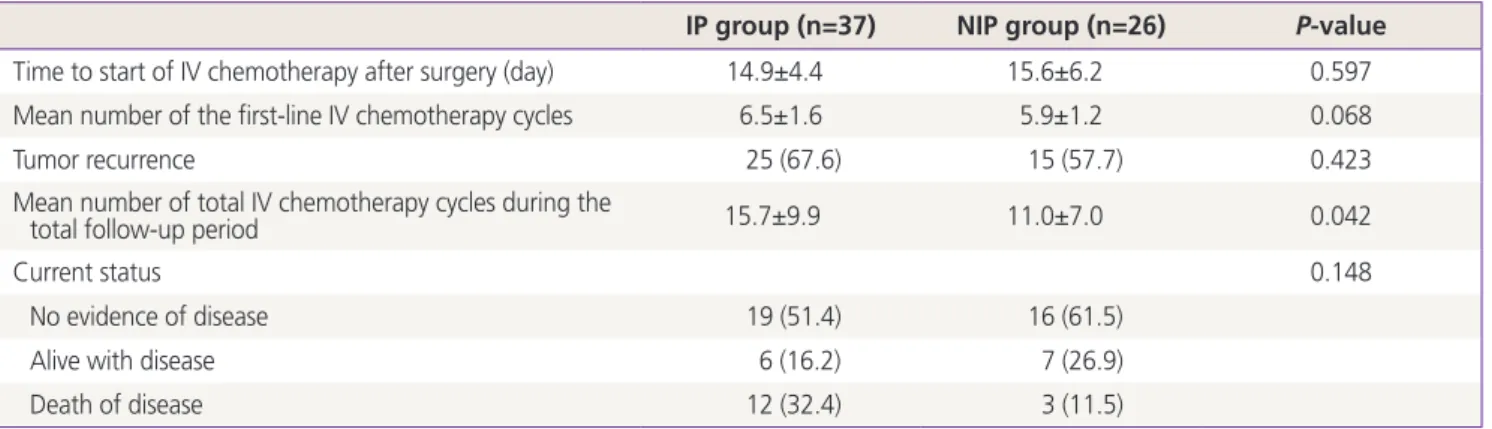
Table 3. Time interval and cycle number of IV chemotherapy and clinical progress
IP group (n=37) NIP group (n=26) P-value
Time to start of IV chemotherapy after surgery (day) 14.9±4.4 15.6±6.2 0.597
Mean number of the first-line IV chemotherapy cycles 6.5±1.6 5.9±1.2 0.068
Tumor recurrence 25 (67.6) 15 (57.7) 0.423
Mean number of total IV chemotherapy cycles during the
total follow-up period 15.7±9.9 11.0±7.0 0.042
Current status 0.148
No evidence of disease 19 (51.4) 16 (61.5)
Alive with disease 6 (16.2) 7 (26.9)
Death of disease 12 (32.4) 3 (11.5)
Data are shown as mean±standard deviation or number of patients (%).
IV, intravenous; IP, intraperitoneal; NIP, no-intraperitoneal.
group, respectively, without a statistically significant differ- ence (P=0.11). In both groups, the most common histologic subtype was serous papillary adenocarcinoma (67.6% in the IP and 65.4% in the NIP group), followed by clear cell carci- noma, with a majority of high-grade cases.
The mean time to the start of IV chemotherapy after surgery was 14.9 days in the IP group and 15.6 days in the NIP group (P=0.597), and the mean number of first-line IV chemotherapy was also similar between the two groups (6.5 vs. 5.9 cycles,
P=0.068) (Table 3).The median duration of follow-up was 32 months (range, 8–123 months) in the IP group and 26 months (range, 2–60 months) in the NIP group. In the IP group, 25 (67.7%) out of 37 patients relapsed after a median time of 14 months (range, 2–100 months) while in the NIP group, 15 (57.7%) out of 26 patients relapsed after a median time of seven months (range, 2–25 months). The 3-year disease free-survival (DFS) rate was 39.9% in the IP group and 35.8% in the NIP group, and the 3-year OS rate was 78.5% in the IP group and 79.2% in the NIP group (Fig 1). The median DFS was 21.0 months in both the IP and NIP groups (P=0.659). The median OS was 77.0 months in the IP group and it was not reached in the NIP group (P=0.435). The relative risk of recurrence and death was 0.864 (95% confidence intervals [CI], 0.447–1.673; P=0.665) and 1.673 (95% CI, 0.452–6.188; P=0.441), respectively, in
the IP group as compared with the NIP group. At the time of the present analysis, 19 (51.4%) patients in the IP group and 16 (61.5%) of the NIP group had no evidence of disease, and 12 (32.4%) patients and three (11.5%) patients died of dis- ease, respectively (P=0.148).
During the pre-IV chemotherapy examination, grade 2 or 3 anemia was observed more often in the cases of IP chemo- therapy (40.5%) than in the NIP cases (23.1%), but the differ- ence was not statistically significant (P=0.103) (Table 4). Simi- larly, the rate of any grade of nausea or vomiting was higher in the IP group (21.6%) than in the NIP group (8.4%) without a significant difference (P=0.287). It is notable that none of the patients who received IP chemotherapy experienced any grade of neutropenia or thrombocytopenia. During the first- line IV chemotherapy, hematotoxicities and gastrointestinal complications such as nausea, vomiting, abdominal pain, diar- rhea, and ileus were similar between the two groups.
Twelve (32.4%) patients of the IP group and nine (34.6%) patients of the NIP group experienced either discontinuation or cycle modification such as cycle delay or dose reduction in the first-line IV chemotherapy, but the rate was not sig- nificantly different between the groups (P=0.856). The main reasons for these changes were neutropenia grade 2 or higher (16 cases), or elevated liver-enzyme (3 cases), anemia (1 case), or thrombocytopenia (1 case).
Fig. 1. Kaplan-Meier analysis shows disease-free survival (DFS) and overall survival (OS) among the 63 eligible patients with stage III epi- thelial ovarian cancer who were treated with cytoreductive surgery followed by intravenous chemotherapy with or without intraperitoneal (IP) chemotherapy. The 3-year DFS (A) was 39.9% in the IP group and 35.8% in the no-intraperitoneal (NIP) group, and the 3-year OS (B) was 78.5% in the IP group and 79.2% in the NIP group. The median DFS was 21.0 months in both the IP and NIP groups (P=0.659). The median OS was 77.0 months in the IP group and it was not reached in the NIP group (P=0.435).
A B
Discussion
Our findings demonstrated that IP chemotherapy with single- dose cisplatin administered immediately after completion of
cytoreductive surgery in advanced EOC had no distinct effect on the prolongation of survival, although it is safe and feasible with a low toxicity.
In 2011, a Cochran meta-analysis [10] was conducted on
Table 4. Chemotherapy related toxicities before and during first-line IV chemotherapy
IP group (n=37) NIP group (n=26) P-value Before first-line IV chemotherapy
Anemia 0.103
Grade 1 22 (59.5) 20 (76.9)
Grade 2 13 (35.1) 6 (23.1)
Grade 3 2 (5.4) 0
Neutropenia (ANC <1,500/mm3) 0 0
Thrombocytopenia (<100,000/mm3) 0 0
Nausea/vomiting 0.287
None 29 (78.4) 22 (91.7)
Grade 1 6 (16.2) 1 (4.2)
Grade 2 2 (5.4) 1 (4.2)
Abdominal pain 0.862
None 33 (89.2) 22 (91.7)
Grade 1 4 (10.8) 1 (4.2)
Grade 2 0 1 (4.2)
Diarrhea 0.66
None 35 (94.6) 23 (95.8)
Grade 1 2 (5.4) 1 (4.2)
Ileus 1.0
None 35 (94.6) 23 (95.8)
Grade 1 0 0
Grade 2 2 (5.4) 1 (4.2)
During first-line IV chemotherapy
Anemia 0.371
Grade 1 19 (51.4) 17 (65.4)
Grade 2 17 (45.9) 8 (30.8)
Grade 3 1 (2.7) 1 (3.8)
Neutropenia 0.404
Grade 1 23 (62.2) 16 (61.5)
Grade 2 8 (21.6) 2 (7.7)
Grade 3 4 (10.8) 5 (19.2)
Grade 4 2 (5.4) 3 (11.5)
Thrombocytopenia (<100,000/mm3) 1 (2.7) 0 1.0
Discontinuation or cycle modification of the first-line IV 12a) (32.4) 9b) (34.6) 0.856 chemotherapy
Based on the Common Toxicity Criteria for Adverse Events ver. 4.0; Data are shown as number (%).
IV, intravenous; IP, intraperitoneal; NIP, no-intraperitoneal; ANC, absolute neutrophil count.
a)Due to neutropenia G2 or higher in 9 patients, high liver-enzyme in one, anemia in one, and thrombocytopenia in one; b)Due to neutropenia G2 or higher in 7 and high liver-enzyme in two.