Antioxidant Properties (ABTS, FRAP, Total Phenolic Content) of Alaska and Gochujang Pollock Roes and Fermented Pollock Roe Seasoning
Jong-Soo Jang
1, Ji-Young Hwang
1and Man Kyu Huh
2*
1Research and Development Institute, Deok-Hwa Food, Busan 49277, Korea
2Food Science and Technology Major, Dong-eui University, Busan 47340, Korea
Received October 12, 2018 /Revised October 31, 2018 /Accepted November 1, 2018
The Alaska Pollock (Gadus chalcogrammus) is distributed in an arc across the North Pacific Ocean.
Distilled water extracts (DWE) and ethanol extracts (ETE) of 1.0 mg/ml concentrations of raw Alaska Pollock roe, premium Gochujang Pollock roe, and premium fermented Pollock roe seasoning were evaluated for estimated 2,2'-azino-bis (3-ethylbenzthiazoline-6-sulphonic acid) (ABTS), ferric reducing antioxidant potential (FRAP), and total phenolic content. The ABTS scavenging activity of the raw Alaska roe DWE and ETE were evaluated at 50.1% and 53.1%, respectively. The ABTS scavenging ac- tivity of the Gochujang roe DWE was 68.7% and of the ETE was 70.4%; for the fermented seasoning it was 71.3% and 71.6% for the DWE and ETE, respectively. The ABTS EC
50values of the raw roe DWE and ETE were 12.49 ug/ml and 12.21 ug/ml, respectively. The FRAP EC
50values of the Gochujang roe DWE and ETE were 10.67 ug/ml and 10.56 ug/ml, respectively, and the EC
50values for total phe- nolic content for the fermented seasoning DWE and ETE were 10.45 ug/ml and 10.31 ug/ml, respectively. When Gallic was acid used as a control, the relative total phenolic content scavenging activity in each ETE was 52.0% (raw Alaska roe), 61.1% (Gochujang roe), and 63.6% (fermented sea- soning). In the present study, higher ABTS, FRAP, and total phenolic content were observed in the Gochujang Pollock roe and fermented roe seasoning than in the Alaska Pollock roe.
Key words : Alaska Pollock roe, 2,2'-azino-bis (3-ethylbenzthiazoline-6-sulphonic acid) (ABTS+), Ferric
Reducing Antioxidant Potential (FRAP), Gochujang, total phenolic content
*Corresponding author
*Tel : +82-51-890-1529, Fax : +82-51-890-1529
*E-mail : [email protected]
This is an Open-Access article distributed under the terms of the Creative Commons Attribution Non-Commercial License (http://creativecommons.org/licenses/by-nc/3.0) which permits unrestricted non-commercial use, distribution, and reproduction in any medium, provided the original work is properly cited.
Journal of Life Science 2018 Vol. 28. No. 12. 1461~1468 DOI : https://doi.org/10.5352/JLS.2018.28.12.1461
Introduction
The Alaska Pollock or walleye Pollock (Gadus chalcog-
rammus) is distributed in an arc across the North PacificOcean from the Pacific Northwest to northern Japan and are particularly abundant in the Sea of Okhotsk and Bering Sea.
Alaska Pollock support one of the largest fisheries in the world - the largest fishery where catches are used for human consumption [22]. Alaska Pollock is also a preferred base for is prized for its fillets, surimi, roe, and milt, a protein paste used for a variety of final products [8]. The highest quality surimi is sold to Japan, where it is a food staple.
Fillets are frequently used for popular products such as fish and chips. If collected, roe and milt are commonly exported to South Korea and Japan. Alaska Pollock roe, or fish eggs,
is a popular treat in Korea and Japan. As with most fish species, female Alaska Pollock have two ovaries, and roe is obtained from each fish as a pair of connected egg skeins.
The eggs are small, and it can be hard to distinguish in- dividual eggs while they are still in the skeins. On average, eggs in harvested roe are 1.3-1.5 mm in diameter [2]. Alaska Pollock roe may also be used as an ingredient in salad dress- ing or dried and used as seasoning for a variety of products, including sea vegetable snacks and salads.
In Korea, the roe is called Myeongnan (literally “Alaska Pollock's roe”), and the salted roe is called Myeongnan-jeot (literally Pollock roe Jeotgal). Myeongran-jeot is salt fer- mented Pollock roe and is one of many fermented food products used in Korean cuisine. For health benefits include anti-oxidants and anti-diabetics, reducing body fat, and boosting immune systems with intensive research and devel- opment on low sodium Jeotgal, this high value-added Myeongran will be helpful to keep reputation as one of the important traditional Korean fermented food globally [20].
The phrases "free radicals" and "reactive oxygen species"
(ROS) are frequently used interchangeably although this is
not always correct [16]. Free radicals are waste substances
produced by cells as digestive processes of foods in body.
Antioxidants are substances that can prevent or slow dam- age to cells caused by free radicals that the body produces to their participation in the normal cellular functions, i.e.
cellular homeostasis and its regulation. The sources of anti- oxidants can be natural or artificial. Certain plant-based foods are thought to be rich in antioxidants. Plant-based an- tioxidants are a kind of phytonutrient, or plant-based nutrient.
Based on the special chemical properties of formed free radicals, 2,2'-azino-bis (3-ethylbenzthiazoline-6-sulphonic acid) (ABTS+) assay has been used to determine the anti- oxidant capacity of food products [24]. For example, poly- phenol compounds, which widely exist in fruit, can quench free radicals inside human body, thus prevent oxidative damage by free radicals.
The Ferric Reducing Antioxidant Potential (FRAP) assay is one of the most widely cited assays for total antioxidant capacity [3]. Phenolic compounds such as flavonoids, phe- nolic acid and tannins are considered to be major contrib- utors to the antioxidant activity in plants. These antioxidants also possess diverse biological activities such as anti-in- flammatory, anti-carcinogenic and anti-atherosclerotic effects.
These activities may be related to their antioxidant activity [5].
Many researches have been taken regarding anti-oxida- tive effect from fish and shellfish, as well as their by-prod- ucts [7, 11, 12]. However, little information regarding anti- oxidants of a Pollock roe and its application has been reported. Many assays are available to measure antioxidant capacity, but no single method can truly measure the total antioxidant activity. The main objective of the study was to determine the antioxidant activity of Alaska Pollock roe ex- tracts, Gochujang Pollock roe and fermented seasoning Pollock roe by ABTS+, FRAP, and total phenolic content rad- ical scavenging assay.
Materials and Methods
Sample extract
Raw Alaska Pollock roe, premium Gochujang Pollock roe, and premium fermented seasoning Pollock roe were ob- tained from Deok-Hwa Food Co., Busan-ci, Korea. The pre- mium brand is a special processing of the company, which has made the raw material more advanced. Each roe of G.
chalcogrammus (100 g) was ground with pestles and liquid
nitrogen at -70℃ and homogenized prior to beginning ex-
traction experiments. Two solvents were used for the prepa- ration of the extracts, distilled water and 80% ethanol conc.
The distilled water extract (EWE) was prepared by weighing out (100 g) of the milled powdered roes were soaked in 500 ml of distilled water in a conical flask and stirring vigorously with a glass rod for proper extraction. For the ethanol extract (ETE), 100 g of the pulverized powdered roes and were soaked in 500 ml of ethanol for 24 hr also. The samples were treated with ultrasound (5510, Branson, USA) at room tem- perature for one hour. The mixture was further stirred with a magnetic bar at 65°C for 6 hr. They were squeezed out with the muslin cloth and filtered through Whatman filter paper No. 1. The sample was evaporated to remove solvent or excess water under reduced pressure and controlled tem- perature (60℃) by using rotary vacuum evaporator (N- 1001S-W, Eyela, Tokyo, Japan). To get dry powder, samples placed in a low temperature vacuum chamber (HyperCool, HC3110, Gyrozen Co., LTD, Korea). The extract was dried, weighed (5.0 g) and stored at -20℃ in storage vials for ex- perimental use.
ABTS+ free radical
The great diversity of methods and modifications is evi- dent from its different names. 2,2'-azino-bis (3-ethylbenz- thiazoline- 6- sulphonic acid) (ABTS+) is a stable free radical.
The antioxidant activity of the seaweed extracts was meas- ured on the basis of the scavenging activity of ABTS+ free radical according to the method described by Brand- Williams et al. [4] with slight modifications. ABTS+ free radi- cal method is an antioxidant assay based on electron-transfer that produces a violet solution in ethanol [6]. 1 ml of 0.1 mM ABTS+ solution in ethanol was mixed with 1 ml of the previous extracts of various concentrations (0.1, 0.5, and 1.0 mg/ml). ABTS+ was added to the solutions prepared with extracts and standard antioxidant substances and stirred. A solution of ABTS+ was prepared by dissolving 5 mg ABTS+
in 2 ml of ethanol, and the solution was kept in the dark
at 4℃. A stock solution of the compounds was prepared
at 1 mg/ml in DMSO. The stock solution was diluted to
varying concentrations in 96-well microplates. Then, 5 μl of
ethanol ABTS+ solution (final concentration 300 μM) was
added to each well. The plate was shaken to ensure thor-
ough mixing before being wrapped with aluminum foil and
placed into the dark. The radical scavenging reaction was
carried out at 37℃ in dark for 30 min. The optical density
(OD) of the solution was read using the Microplate Reader
at the wavelength 515 nm. Corresponding blank sample was prepared and L-Ascorbic acid (1.0 μg/ml) was used as refer- ence standard (positive control). Relative inhibitor rate of raw materials and other samples for L-Ascorbic acid was calculated.
Ferric Reducing Antioxidant Potential Assay (FRAP Assay)
The antioxidant capacity by ferric ion reducing power was measured according to the method of Oyaizu [19] with modifications. 1 ml of various concentrations of sample and 1 ml of 1% w/v potassium ferricyanide solution were added to 1 ml of the phosphate buffer solution (0.2 M, pH 6.6), and the mixture was reacted at 50℃ for 20 minutes, and then 1 ml of 10% w/v trichloroacetic acid was added thereto.
The reaction mixture was centrifuged at 12,000 rpm for 10 minutes, 1 ml of distilled water was added to 1 ml of super- natant, and 0.2 ml of 1% ferric chloride was added. Blank samples were prepared for both ethanol and deionized wa- ter extracted samples. Vitamin C (L-ascorbic acid) were used as antioxidant standards. After 10 minutes of reaction, the absorbance was measured at 700 nm. A calibration curve of ascorbic acid was established; the antioxidant capacity of the plant extracts was then expressed as mmol ascorbic acid equivalent/g dry extract.
Determination of total phenolic content
The total phenolic content of the sample extracts was de- termined by using Folin-Ciocalteu reagent following a slight- ly modified method of Ainsworth [1]. Gallic acid was used as a reference standard for plotting calibration curve. A vol- ume of 0.5 ml of the plant extract (100 μg/ml) was mixed with 2 ml of the Folin-Ciocalteu reagent (diluted 1:10 with de-ionized water) and were neutralized with 4 ml of sodium carbonate solution (7.5%, w/v). The reaction mixture was incubated at room temperature for 30 min with intermittent shaking for color development. The absorbance of the result- ing blue color was measured at 765 nm using double beam Microplate Reader. The total phenolic contents were de- termined from the linear equation of a standard curve pre- pared with Gallic acid. The content of total phenolic com- pounds expressed as mg/g Gallic acid equivalent (GAE) of dry extract.
Statistical analysis
The samples were prepared in triplicate for each analysis
and the mean value of absorbance was obtained. The results were expressed as the mean ± SD. Correlation co-efficient (R) to determine the relationship between two or more varia- bles among Radical Scavenging activity tests were calculated using the SPSS software (Release 21.0). The percent in- hibition was calculated as the decolourization percentage of the test sample using the following formula:
Inhibition % = (IA-As)/IA ×100
Where IA is the absorbance of the 100% initial and As is the absorbance of the sample. IA and As were the values which were subtracted the average absorbance of the blank wells.
The 50% inhibition (IC50) is defined as the concentration sufficient to obtain 50% of a maximum scavenging capacity.
A dose response curve was plotted to determine IC50 values.
To determine the IC50 value of the active component, the technique using 96-well microplates was employed.
Results
ABTS scavenging assay
ABTS scavenging activity of DWE of raw Pollock roe was evaluated 39.6% at 0.1 mg/ml, 44.0% at 0.5 mg/ml, and 50.1% at 1.0 mg/ml. ABTS scavenging activity of ETE of raw Pollock roe was evaluated 41.9% at 0.1 mg/ml, 46.2% at 0.5 mg/ml, and 53.1% at 1.0 mg/ml (Table 1). Thus, the in- hibition of ABTS+ scavenging activity increases with increas- ing extract concentrations. The all values of ABTS scaveng- ing activity of ETE for Pollock roe were higher than those of DWE for Pollock roe. However, the all did not show a statistically significant difference (p<0.05). ABTS+ scaveng- ing activity of DWE with premium Gochujang Pollock roe evaluated was 68.7% at 1.0 mg/ml and that of ETE was 70.4% at same concentration. ABTS+ scavenging activity of DWE with fermented seasoning premium Pollock roe eval- uated was 71.3% at 1.0 mg/ml and that of ETE was 71.6%
at same concentration. The all values of fermented seasoning Pollock roe were showed the highest inhibition activity of ABTS+ among three treated groups. There was significant difference among the three experimental groups (p>0.001).
The EC
50values of DWE and ETE of raw Pollock roe on ABTS were 12.49 ug/ml and 12.21 ug/ml, respectively (Table 4). The EC
50values of DWE and ETE of Gochujang Pollock roe were 10.59 ug/ml and 10.42 ug/ml, respectively.
The EC
50values of DWE and ETE of fermented seasoning
Pollock roe on total phenolic content were 10.03 ug/ml and
Fig. 1. Relative inhibitory effects on ABTS+ by ethanol extracts from various Pollock roes. Control is L-Ascorbic acid.
Raw: raw Pollock roe, Goc: Gochujang Pollock roe, Fer:
fermented seasoning Pollock roe.
Table 1. The assay of 2,2'-azino-bis (3-ethylbenzthiazoline-6-sulphonic acid) (ABTS) scavenging activity of premium Pollock roe at different concentrations
Pollock roe Concentration (mg/ml) Water Ethanol t-test
Raw
0.1 0.5 1.0
39.55±0.99 44.02±0.31 50.12±0.99
41.89±0.50 46.23±0.48 53.12±1.39
0.562
Gochujang seasoning
0.1 0.5 1.0
55.93±1.03 60.90±0.15 68.71±1.41
57.71±0.61 62.52±2.34 70.40±2.05
0.323
Fermented seasoning
0.1 0.5 1.0
62.00±1.48 67.20±0.67 71.32±0.99
64.25±1.82 68.39±0.75 73.01±1.36
0.462
F-test 22.402*** 27.646*** 0.380
*** = p<0.001.
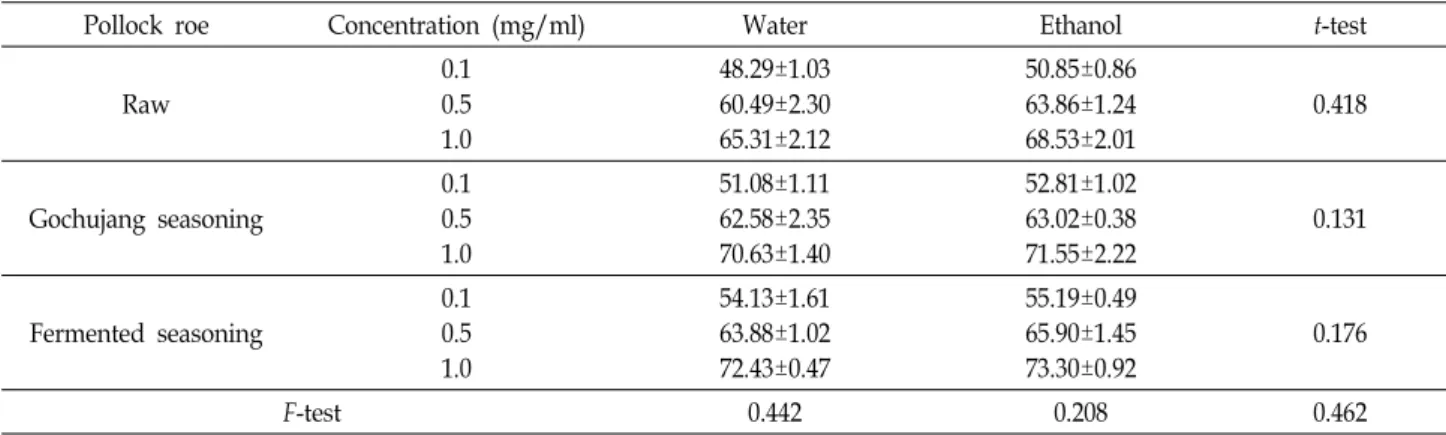
Table 2. The ferric reducing antioxidant potential (FRAP) assay of premium Pollock roe at different concentrations
Pollock roe Concentration (mg/ml) Water Ethanol t-test
Raw
0.1 0.5 1.0
48.29±1.03 60.49±2.30 65.31±2.12
50.85±0.86 63.86±1.24 68.53±2.01
0.418
Gochujang seasoning
0.1 0.5 1.0
51.08±1.11 62.58±2.35 70.63±1.40
52.81±1.02 63.02±0.38 71.55±2.22
0.131
Fermented seasoning
0.1 0.5 1.0
54.13±1.61 63.88±1.02 72.43±0.47
55.19±0.49 65.90±1.45 73.30±0.92
0.176
F-test 0.442 0.208 0.462
9.88 ug/ml, respectively. When the L-Ascorbic acid used as a control, relative ABTS scavenging activities of ETE raw Pollock roe, Gochujang Pollock roe, and fermented season- ing Pollock roe extracts were 64.8%, 67.3%, and 68.9%, re- spectively (Fig. 1).
Ferric ion reducing antioxidant power (FRAP) assay Antioxidant capacity of extracts was determined using
FRAP assay (Table 2). Raw Pollock roe was showed the low- est inhibition activity of FRAP among three groups. FRAP of DWE of raw materials was evaluated at 0.1 mg/ml was 48.3% and that FRAP scavenging activity at 0.5 mg/ml was 60.5%, and that of at 1.0 mg/ml was 65.3%. FRAP of ETE of raw Pollock roe was evaluated 50.9% at 0.1 mg/ml, 63.9%
at 0.5 mg/ml, and 68.5% at 1.0 mg/ml. FRAP scavenging activity of DWE with Gochujang Pollock roe evaluated was 70.6% at 1.0 mg/ml and that of ETE was 71.6% at same concentration. FRAP scavenging activity of DWE with fer- mented seasoning Pollock roe evaluated was 72.4% at 1.0 mg/ml and that of ETE was 73.3% at same concentration.
FRAP values were higher in fermented seasoning Pollock roe samples compared to other samples. However, there was a significant difference at p<0.05.
The EC
50values of DWE and ETE of raw Pollock roe on FRAP were 11.02 ug/ml and 10.70 ug/ml, respectively (Table 4). The EC
50values of DWE and ETE of Gochujang Pollock roe were 10.67 ug/ml and 10.56 ug/ml, respectively.
The EC
50values of DWE and ETE of fermented seasoning
Fig. 2. Relative inhibitory effects on FRAP by ethanol extracts from various Pollock roes. Control is L-Ascorbic acid.
Abbreviations of Raw, Goc, and Fer are same as Fig. 1.
Fig. 3. Relative inhibitory effects on total phenolic content by ethanol extracts from various Pollock roes. Control is L-Ascorbic acid. Abbreviations of Raw, Goc, and Fer are same as Fig. 1.
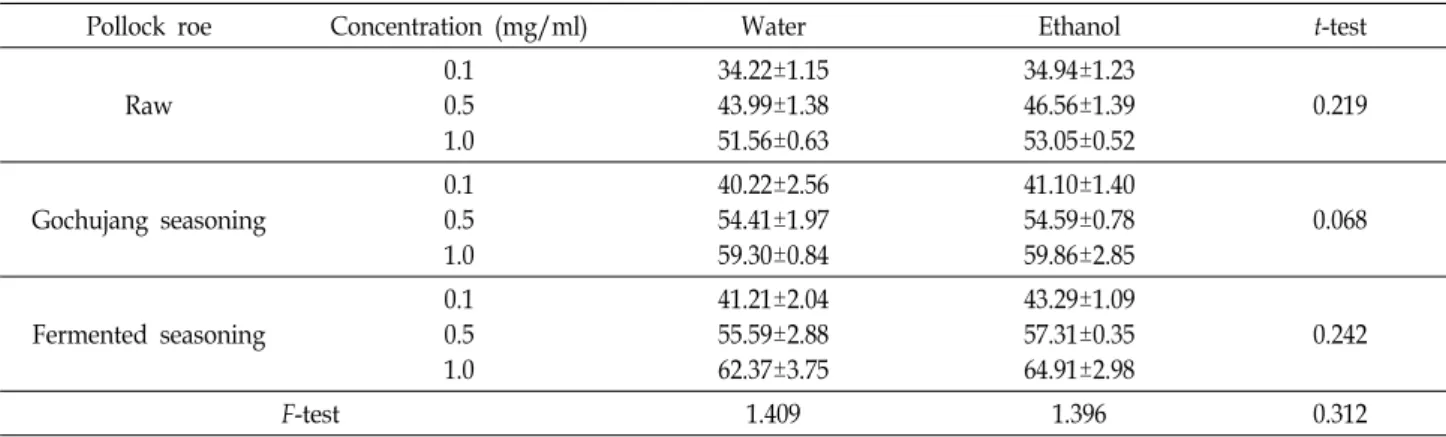
Table 3. The assay of total phenolic content of premium Pollock roe at different concentrations
Pollock roe Concentration (mg/ml) Water Ethanol t-test
Raw
0.1 0.5 1.0
34.22±1.15 43.99±1.38 51.56±0.63
34.94±1.23 46.56±1.39 53.05±0.52
0.219
Gochujang seasoning
0.1 0.5 1.0
40.22±2.56 54.41±1.97 59.30±0.84
41.10±1.40 54.59±0.78 59.86±2.85
0.068
Fermented seasoning
0.1 0.5 1.0
41.21±2.04 55.59±2.88 62.37±3.75
43.29±1.09 57.31±0.35 64.91±2.98
0.242
F-test 1.409 1.396 0.312
Pollock roe on total phenolic content were 10.45 ug/ml and 10.31 ug/ml, respectively. When the L-Ascorbic acid used as a control, relative FRAP scavenging activities of ETE raw Pollock roe, Gochujang Pollock roe, and fermented season- ing Pollock roe extracts were 64.7%, 67.5%, and 69.1%, re- spectively (Fig. 2).
Total phenolic content
The inhibition effects (%) in DWE and ETE of raw Pollock roe was found to be 34.2% and 34.9% on 0.1 mg/ml (Table 3). The inhibition effects (%) of total phenolic content on 1.0 mg/ml DWE and ETE of raw Pollock roe were found to be 51.6% and 53.1%, respectively. These results suggest that the higher levels of antioxidant activity were due to the pres- ence of phenolic components. The total phenolic content of DWE with Gochujang Pollock roe evaluated was 59.3% at 1.0 mg/ml and that of ETE was 59.9% at same concentration.
The total phenolic content scavenging activity of DWE with fermented seasoning Pollock roe evaluated was 62.3% at 1.0 mg/ml and that of ETE was 64.9% at same concentration.
The EC
50values of DWE and ETE of raw Pollock roe on total phenolic content were 12.48 ug/ml and 12.30 ug/ml, respectively (Table 4). The EC
50values of DWE and ETE of
Gochujang Pollock roe were 11.55 ug/ml and 11.49 ug/ml, respectively. The EC
50values of DWE and ETE of fermented seasoning Pollock roe on total phenolic content were 11.37 ug/ml and 11.13 ug/ml, respectively. When the Gallic acid used as a control, relative total phenolic content scavenging activities of ethanol extracts raw Pollock roe, Gochujang Pollock roe, and fermented seasoning Pollock roe extracts were 52.0%, 61.1%, and 63.6%, respectively (Fig. 3).
Discussion
Much study has been conducted to the recovery of bio- active compounds from different industrial food residues:
leaves, peels, barriers, seeds, wood, culls, rinds, pits, pulp, press cakes, marc, malts, hops, hulls, husks, spent grain, car- apace of crustaceans and shrimp, algae and other fish by products [10, 21].
In this study, it seems that the anti-oxidative power of
the natural production, raw materials is not much stronger
than that of the antioxidant capacity of the Gochujang and
fermented seasoning materials. Alaska Pollock roe contained
82.0% water, 17.2% protein, 0.8% total lipid, and other some
Table 4. The 50% inhibition (EC50) of ABTS+, FRAP, and total phenolic content
of
Alaska Pollock roe at different solventsSample ABTS+ FRAP Phenolic content
Water Ethanol Water Ethanol Water Ethanol
Raw Pollock roe
Pollock roe with Gochujang
Pollock roe with fermented seasoning
12.489 10.590 10.053
12.205 10.415 9.877
11.018 10.673 10.447
10.698 10.557 10.308
12.482 11.554 11.367
12.296 11.486 11.129
minerals [23]. Gochujang and fermented seasoning Pollock roes may be useful natural radical scavenging and potential supplement for the food. It can be corrupted due to a lot of nutrients. Korean Gochujang and fermentation treatments can reduce corruption by red pepper and high salt which is the cap sign of pepper. Fermented fish products have been consumed as the fish itself, fish sauce, fish paste, and other types of food throughout the world. Some of the examples of fish sauces are Jeotkal in Korea [18].
The additive Myeongnan-jeot could provide a comple- mentary approach to increase the production of specific an- ti-oxidative compounds for use as nutraceuticals or as in- gredients in the design of functional foods. Korea's Gochu- jang is an ethnic food made with representative food in- gredients and has a history of thousands of years [14].
Gochujang was mainly used for making enhancing the taste of food and for aiding the digestive system. Many studies have shown the effects of additives on the taste of gochujang [15] and the effect of different microflora on the quality im- provement of gochujang [9, 13]. However, there is limited information regarding the physicochemical characteristics and antioxidant properties of gochujang fortified with vari- ous types of red pepper varieties during the fermentation period [25]. Yang et al. [25] performed antioxidant activity measurements such as DPPH radical scavenging activity and FRAP assay, the total polyphenols and total flavonoids con- tents to evaluate the antioxidant activities of gochujang. The results showed that Gochujangs had consistently high values of total polyphenols and total flavonoids with antioxidant activities antioxidant activities during the 90 days of fermen- tation with five different varieties of red pepper. The strong the antioxidant activity observed various seasoning and fer- mented foods using fish products [17]. In the present study, ABTS+ scavenging activities of ETE of Pollock roe with Gochujang seasoning and Pollock roe with fermented sea- soning were evaluated 70.4% and 73.0% at 1.0 mg/ml, re- spectively (Table 1). FRAP scavenging activity of ETE of Pollock roe with Gochujang seasoning and Pollock roe with fermented seasoning were evaluated 71.6% and 73.3% at 1.0
mg/ml, respectively (Table 2). The values of total phenolic content of ETE of Pollock roe with Gochujang seasoning and Pollock roe with fermented seasoning were evaluated 59.9%
and 64.9% at 1.0 mg/ml, respectively (Table 3). Although Gochujangs and fermented seasoning could be high anti- oxidant function, Pollock roe has some antioxidant proper- ties. We could conclude that Alaska Pollock roes with proper seasoning, are good nutria with free radical scavenging activities. Raw Pollock roe (a) was 39.6% on 0.1 mg/ml at water extraction (Table 1). Gochujang seasoning (b) and Fermented seasoning (c) were 55.9% and 62%, respectively.
If b is subtracted from a, it has 16.4% antioxidant. If c is subtracted from a, it has 22.5% antioxidant. The both values were low than 39.6% at raw Pollock roe.
Acknowledgement
This research was supported by the Fisheries Industry Investment Support Project (2018) of BUSAN TECHNOPARK.
We would like to express our sincere gratitude to the BUSAN TECHNOPARK.
References
1. Ainsworth, E. A. and Gillespie, K. M. 2007. Estimation of total phenolic content and other oxidation substrates in plant tissues using Folin- Ciocalteu reagent. Nat. Protoc. 2, 875-877.
2. Bledsoe, G., Bledsoe, C. and Rasco, B., 2003. Caviars and fish roe products. Crit. Rev. Food Sci. Nutr. 43, 317-356 3. Bolanos de la Torre, A. A. S., Henderson, T., Nigam, P. S.
and Owusu-Apenten, R. K. 2015. A universally calibrated microplate ferric reducing antioxidant power (FRAP) assay for foods and applications to Manuka honey. Food Chem.
174, 119-123.
4. Brand-Williams, W., Cuvelier, M. E. and Berset, C. 1995. Use of free radical method to evaluate antioxidant activity. Food Sci. Technol. 28, 25-30.
5. Chung, K. T., Wong T. Y., Huang, Y. W. and Lin, Y. 1998.
Tannins and human health: a review. Crit. Rev. Food Sci.
Nutr. 38, 421-464.
6. Cornish, M. L. and Garbary, D. J. 2010. Antioxidants from macroalgae: potential applications in human health and
nutrition. Algae 25, 155-171.
7. Harada, K., Maeda, T., Hasegawa, Y., Tokunaga, T., Tamura, Y. and Koizumi, T. 2010. Antioxidant activity of fish sauces including puffer (Lagocephalus wheeleri) fish sauce measured by the oxygen radical absorbance capacity method. Mol.
Med. Rep. 3, 663-668.
8. Hintermeiste, C. 2017. Nutritional composition changes in Alaska Pollock (Gadus chalcogrammus) during and between Bering Sea A and B seasons. Master, thesis, Oregon State University, Oregon, USA.
9. Jang, S. J., Kim, Y. J., Park, J. M. and Park, Y. S. 2011.
Analysis of microflora in Gochujang, Korean traditional fer- mented food. Food Sci. Biotechnol. 20, 1435-1440.
10. Kallel, F., Driss, D., Chaari, F., Belghith, L., Bouaziz, F., Ghorbel, R. and Chaabounia, S. E. 2014. Garlic (Allium sat- ivum L.) husk waste as a potential source of phenolic com- pounds: influence of extracting solvents on its antimicrobial and antioxidant properties. Ind. Crop Prod. 62, 34-41.
11. Kim, J. S., Moon, G. S., Lee, K. H. and Lee, Y. S. 2006. Studies on quality changes and antioxidant activity during the fer- mentation of the salt fermented whangseoke. J. Kor. Soc.
Food Sci. Nutr. 35, 171-176.
12. Kim, S. M. 2003. The functionality of anchovy sauce. Food Industry and Nutrition 8, 9-17.
13. Kim, Y. S., Oh, B. H. and Shin, D. H. 2008. Quality character- istics of Kochujang prepared with different Meju fermented with Aspergillus sp. and Bacillus subtilis. Food Sci. Biotechnol.
17, 527-533.
14. Kwon, D. Y., Chung, K. R., Yang, H. J. and Jang, D. J. 2015.
Gochujang (Korean red pepper paste): A Korean ethnic sauce, its role and history. J. Ethnic Foods 2, 29-35.
15. Lee, S. Y., Park, S. L., Yi, S. H., Nam, Y. D. and Lim, S.
I. 2011. Quality characteristics of low-salt Gochujang added with Glycyrrhiza uralensis and Brassica juncea. J. Food Sci.
Nutr. 16, 348-356.
16. Lushchak, V. I. 2015. Free radicals, reactive oxygen species, oxidative stresses and their classifications. Ukr. Biochem. J.
87, 11-18.
17. Mheen, T. 1993. Microbiology of salted-fermented fishery products in Korea, pp. 231-247. In: Lee, C. H., Steinkraus, K. H. and Alan Reilly, P. J. (eds.), Fish Fermentation Technology, United Nation University Press: Tokyo, Japan.
18. Mun, E. G., Kim, B., Kim, E. Y., Lee, H. J., Kim, Y., Park, Y. and Cha, Y. S. 2018. Research trend in traditional fer- mented foods focused on health functional evaluation. J.
Kor. Soc. Food Sci. Nutr. 47, 373-386.
19. Oyaizu, M. 1986. Studies on products of browning reactions:
antioxidant activities of products of browning reaction pre- pared from glucosamine. J. Nutr. 44, 307-315.
20. Park, K. Y., Kwon, D. Y., Lee, K. W. and Park, S. 2018.
Korean Functional Foods. Composition, Processing and Health Benefits. CRC Press, Boca Raton, FL, USA.
21. Sadeghi, A., Hakimzadeh, V. and Karimifar, B. 2017. Micro- wave assisted extraction of bioactive compounds from food:
a review. Intl. J. Food Sci. Nutr. Engin. 7, 19-27
22. Strong, J. and Criddle, K. R. 2013. Fishing for Pollock in a Sea of Change: A Historical Analysis of the Bering Sea Pollock Fishery. Alaska Sea Grant, University of Alaska Fairbanks, Fairbanks, Alaska, USA.
23. USDA. 2018. National Nutrient Database for Standard Reference Legacy Release. Basic Report: 15266, Fish, Pollock, Alaska, raw. The National Agricultural Library, USA.
24. Walker, R. B. and Everette, J. D. 2009. Comparative reaction rates of various antioxidants with ABTS radical cation. J.
Agric. Food Chem. 57, 1156-1161.
25. Yang, H. J., Lee, Y. S. and Choi, I. S. 2017. Comparison of physicochemical properties and antioxidant activities of fer- mented soybean-based red pepper paste, Gochujang, pre- pared with five different red pepper (Capsicum annuum L.) varieties. J. Food Sci. Technol. 52, 792-801.
초록:고추장과 발효액이 첨가된 알래스카 산 프리미엄 명란의 ABTS, FRAP, total phenolic acid의 항산화 특성 분석
장종수
1․황지영
1․허만규
2*
(1덕화푸드㈜, 2동의대학교 식품공학과)