서 론
2001년, 유방암으로 등록된 환자가7200명(등록 안 된 환 자를 고려하면 실제 유방암 환자는 훨씬 더 많을 것으로 추 정 됨)으로 그 수가 급속히 증가하여 위암을 제치고 1위의 암이 되었다. 최근에 우리나라도 여성암이 점차 서구화 되 어 갈 것이 라는 암 전문의들의 예측은 있었으나 예상 보다 일찍 현실화 되었고, 이제 우리나라 여성에게도 유방암이 가장 위험한 암이 되었다. 이렇게 유방암은 우리나라 여성 들로 하여금 급속도로 증가 하고 있는 추세이다. 유방암은 선진국형 암으로 알려져 있듯이 미국의 경우 여성에서 가장
흔한 암이며 미국 여성 8명 중 1명에서 유방암이 진단된다.
우리나라의 경우 과거에는 유방암 발생률이 낮았으나 생활 방식이 서구화(출산율 감소 및 수유 감소, 만혼, 조기 초경, 만기 폐경) 되고 영양상태가 좋아진 것 점 등이 유방암 증가 의 원인으로 지적되고 있다. 우리나라는 현재 미국의 1/4 정도의 발생 빈도를 보이고 있다. 하지만 생활 방식의 서구 화로 인해 앞으로도 발생 빈도는 급격히 증가 할 것이 예상 되므로 유방암을 예방하고 관리 하는 것은 공중 보건상 중 요한 일이다. 같은 유방암도 나라에 따라 특징이 서로 다른 데 우리나라 여성의 경 우 열심히 일해야 하는 40대에 가장 높은 발생을 보여 서구에 비해 10여 년은 젊은 연령에서 발 생하기 때문에 개인의 정신 심리학적인 문제 및 사회, 경제 적으로 더욱 많은 문제가 있다. 주목해야 할 점은 점점 유 방암 환자의 나이가 젊어진다는 점이다. 이는 우리나라의 유방암이 미국이나 서부 유럽의 유방암과는 다소 다른 성질
본 논문은 2014년 3월 21일 접수하여 2014년 4월 30일 채택되었음.
책임저자 : 채문기, 삼성서울병원 방사선종양학과 서울시 강남구 일원로 81 삼성서울병원 Tel : 02) 3410-2644, 010-2839-1830 E-mail : [email protected]
유방암 환자의 방사선 치료시 Energy와 Wedge를 combine한 Hybrid plan의 유용성 평가
삼성서울병원 방사선종양학과
목 적 :본 연구에서는 기존의 방사선 치료 기법인 3D-CRT 방법을 기반으로 치료 Energy와 Wedge를 변형 시킨 Hybrid 치료계획을 세워, open rectangular field를 사용한 2D-RT와 현재 가장 많이 시행되고 있는 방사선치료의 형태인 3D-CRT, 그리고 Hyrid paln 의 각각의 치료계획에 따른 선량분포, 선량-체적 히스토그램을 이용하여 산출된 값들을 비교, 분석하여 Hybrid 치료계획의 유용성을 평가하고자 한다.
대상 및 방법 :본원에서 방사선 치료를 받은 환자 5명을 대상으로 전산화 단층촬영장치(RT-16GE)를 이용해 CT모의치료를 시행하여 영상을 획득 하였다. 치료계획실에서는 이미지 관심영역표시는 종양은 CTV으로, 정상장기는 폐, 심장으로 나타냈다. 치료계획은(pinncle-ver 9.2)은 표적에는 충분한 선량을 정상장기에는 선량이 최소화 되도록 치료계획을 세웠다.
결 과 :Homogeneity Index의 선량비교는 2D-RT (open rectangular field): 38.32, TW(conformal wedge field): 32.01 FIF(field in field): 29.22, HYBRID(energy combine, wedge combine): 30.57으로 나타났다.2D-RT, TW, FIF Hybrid V75_lung은 각각 112.33, 125.14, 121.3, 123.78.
V50_lung은 155.43, 159.62, 157.96, 159.06. V25_lung은 199.86, 200.22, 198.65, 200.31. V50_heart는 각각 26.07, 27.1, 26.85, 27.17 V30_heart
33.71, 34.37, 34.15, 34.65로 나타났다.
결 론 : HYBRID planning에서 표적에는 3D-CRT 에 비해 비교적 뛰어난 선량분포와 유방을 보호함을 보여주지만 폐와 심장에 많은 선량이 조사 됨을 치료계획 시 주의해야 하고 앞으로 해결해야 할 과제라 생각된다. HYBRID 으로 Energy를 혼합하여 사용한다면, 타겟에 보다 더 적절한 coverage가 이루어질 수 있을 것으로 보인다. breast 뿐만 아닌 Lung cacner 치료와 같이 불균질한 부위의 치료에 적용한다면 보다 더 최적을 결 과를 이루어낼 수 있을 것으로 사료된다.
핵심용어 :field in field, hybrid, 3D-CRT, DVH, 유방암
채문기, 박병수, 안종호, 송기원
을 보인다는 것을 암시하며 따라서 한국인의 유방암에 맞는 진단법과 치료법의 개발이 필요하다.
유방암 치료는 최근 많은 발전이 있었다. 특히 방사선치 료 분야에서는 유방암의 보존적 치료, 즉 유방암 부분 절제 수술 후 방사선치료를 통하여 유방을 보존하는 치료가 활발 하게 진행되어서 방사선치료는 유방암의 치료에 중요한 역 할을 하게 되었다. 과거 수 십년 간 유방 방사선조사는 유방 암 보존적 수술 후 시행하여 국소재발을 줄여 주고 장기생 존율을 증가시킬 수 있는 방법으로 정립되어 왔다 최근 국 내에서도 조기 유방암의 진단과 치료의 증가에 따라서 유방 암의 보존적 치료와 방사 선 치료 결과에 대한 임상 결과도 보고된 바 있다. 유방암의 평균 연령이 낮아짐에 따라 유방 의 미용에도 치료의 초점이 맞추어 지고 있다. 방사선 치료 역시 주변 장기에는 방사선을 최소화 하고 표적에는 더 많 은 선량을 줄 수 있는 형태로 발전해 가고 있다. 최초 2차원
최 초 2차 원 방 사 선 치 료 부 터 3차 원 방 사 선 치 료 (3- Dimensional Radiation Therapy),그리고 세기조절 방사선 치료(Intensity Modulated Radiation Therapy) 및 ARC Therapy등 치료 방법은 많은 발전이 있었다.
최 근 에 는 영 상 유 도 방 사 선 치 료 (Imaged Guided Radiation Therapy)와 나선형으로 방사선 세기가 조절 가능 한 Tomotherapy가 도입되면서 방사선 치료기법은 빠르게 변화 하고 있다. 하지만 고난이도 치료기법을 하기에는 많 은 치료시 많은 시간과 비용이 많이 드는 것이 사실이다. 이 에 본 연 구 는 이 러 한 불 편 함 을 해 소 하 고 자 Hybrid- Planning 기법을 고안하였다. 본 연구에서는 기존의 방사선 치료 기법인 3D-CRT 방법를 기반으로 치료 ENERGY 와 Wedge를 변형 시킨 Hybrid 치료계획을 세워, open rectangular field를 사용한 2D-RT와 현재 가장 많이 시행되 고 있는 방사선치료의 형태인 3D-CRT, 그리고 Hybrid plan
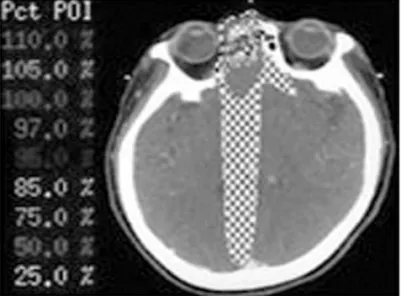
Fig 1. 3-Dimensional Radiation Therapy
Fig 2. Intensity Modulated Radiation Therapy
의 각각의 치료계획에 따른 선량분포, 선량-체적 히스토그 램을 이용하여 산출된 값들을 비교, 분석하여 hybrid 치료 계획의 유용성을 평가하고자 한다.
(Fig. 1)3-Dimensional Radiation Therapy (Fig 2)Intensity Modulated Radiation Therapy (Fig 3)Tomotherapy
(Fig 4)(Imaged Guided Radiation Therapy
대상 및 방법
2013년 1월부터 7월까지 본원에 내원한 유방암 보존절제 술 환자 5명(left breast cancer)을대상으로하였다.각각의 환 자는 방사선 치료용 자세 고정 장치 Breast board에 누운 자 세로 일정한 환자 자세를 유지하였다. 전산화 단층촬영장치 (RT16-GE)를 이용해 CT모의치료를 시행하여 영상을 획득 하였다. 치료계획실에서는 이미지에 관심영역표시는 종양 은 clinical target volume(CTV)으로, 정상장기는 폐, 심장,
유방으로 나타냈다. 치료계획(pinnacle-ver 9.2 philips)은 표적에는 충분한 선량을 정상장기에는 선량이 최소화 되도 록 치료계획을 세웠다. Hybrid 치료계획은 기존의 3-D CRT 에 사용된 beam과 같은 위치에서 Energy 또는 Wedge만을 combine하여 최적의 치료계획을 수립되도록 하였다. 치료 계획에 의해 얻어진 dose-volume histogram(DVH)를 바탕 으로 Homogeneity(HI), lung V100,V75 V50, V25, Heart V50 ,V30을 산출하여 비교 분석 하였다.
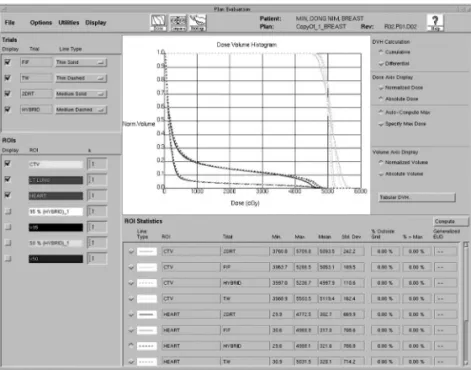
(Fig 5)breast plan with 2D,3D-CRT,Hybrid (Fig 6) dose-volume histogram
결 과
방사선치료는 1895년 뢴트겐에 의해 엑스선이 발견된 직 후부터 임상적으로 이용되어 왔으나, 현대적 의미의 방사선 치료는 1950년대에 고에너지 방사선 치료기(코발트-60 원 격치료기, 선형 가속기)가 발명되고 나서부터 본격화되기
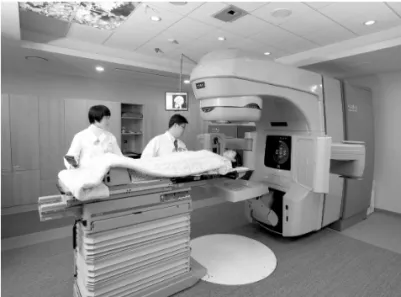
Fig 3. Tomotherapy Fig 4. Imaged Guided Radiationtherapy
Fig 5. breast plan with 2D,3D-CRT,Hybrid
시작하였습니다. 선형 가속기란 다양한 에너지의 엑스선과 전자선을 발생시키는 장치로서, 외부방사선치료의 대부분 에 이용되어왔다.
방사선치료의 발전은 과거 최초 2차원 방사선치료부터 3 차원 방사선치료_3-Dimensional Radiation Therapy (환자로 부터 얻은 CT, MRI와 같은 진단영상을 입체적으로 재구성하 고, 종양 부위에 방사선이 집중 조사될 수 있도록 방사선의 위치와 방향을 3차원적으로 조절하여 결정한 후 이를 환자 에게 적용-이 방법을 도입함으로서 정상조직의 방사선 손상 위험을 낮추는 동시에 종양 부위에 미치는 방사선량을 증가 시켜 치료효율을 높일 수 있다.), 그리고 세기조절 방사선치 료_Intensity Modulated Radiation Therapy (3차원 입체조형 치료의 일종으로, 개별 방사선 조사면에서 조사면을 수 개에 서 수십 개까지 세분화하고, 각 세분화된 영역마다 방사선의 양, 즉“세기”를 조절함으로써 종양 주위의 정상조직에 들어 가는 방사선량을 최소화하고 종양 조직에만 선택적으로 원 하는 방사선량을 줄 수 있는“맞춤형 방사선치료법”.) 및 ARC Therapy등 치료 방법은 많은 발전이 있었다.
최 근 에 는 영 상 유 도 방 사 선 치 료 _Imaged Guided Radiationtherapy(영상유도방사선치료란 방사선치료의 오 차를 줄이기 위해 방사선치료 직전에 치료 부위의 영상을 얻 고 위치 확인과 교정을 거쳐 방사선치료가 시행되는 보다 정
밀한 치료방법으로 종양 주위에 중요한 장기:척추신경, 눈, 직장 등……이있는경우에 효과적인 치료기술 이다.)와나선 형으로 방사선 세기가 조절 가능한 Tomotherapy(세기조절 방사선치료 전용기기로서 방사선 치료기에 컴퓨터 단층촬 영의 기능이 포함되어 있는 최첨단 방사선치료기. 방사선치 료 전 단층촬영을 통하여 치료 위치를 확인한 후 방사선치료 를 시행할 수 있어 종양에 국한하여 고선량의 방사선치료가 가능합니다. 또한 치료할 종양의 모양이 다양하거나 치료해 야 할 종양이 여러부위인 경우에도 적합한 치료기술)가 도입 되면서 방사선 치료기법은 빠르게 변화 하고 있다.
치료기법의 발달과 더불어 장비의 발달은 치료의 시간과 비용을 증가시켰다. 이에 본 저자는 이러한 불편함을 해소시 키기 위해 3D-CRT와 Hybrid planning을 통한 치료계획을 수 립한 후2D-RT(open rectangular field), 3D-CRT(conformal wedge field, field in field technique), HYBRID(energy combine, wedge combine)의 Dosimetric parameter에 의한 선량-체적 히스토그램(DVH)을 비교하였다.
Homogeneity Index의 선 량 비 교 는 2D-RT (open rectangular field): 38.32, TW(conformal wedge field):
32.01 FIF(field in field): 29.22, HYBRID(energy combine, wedge combine): 30.57으로 나타났다.
2D-RT, TW, FIF Hybrid V75_lung은 각각 112.33, Fig 6. dose-volume histogram
Table 1. Comparison of Homogeneity Index
HI (Homogeneity index) 31.41~46.7(38.32) 29.65~38.21(32.01) 24.04~35.41(29.22) 24.93~38.21(30.57)
2D-RT TW FIF HYBRID
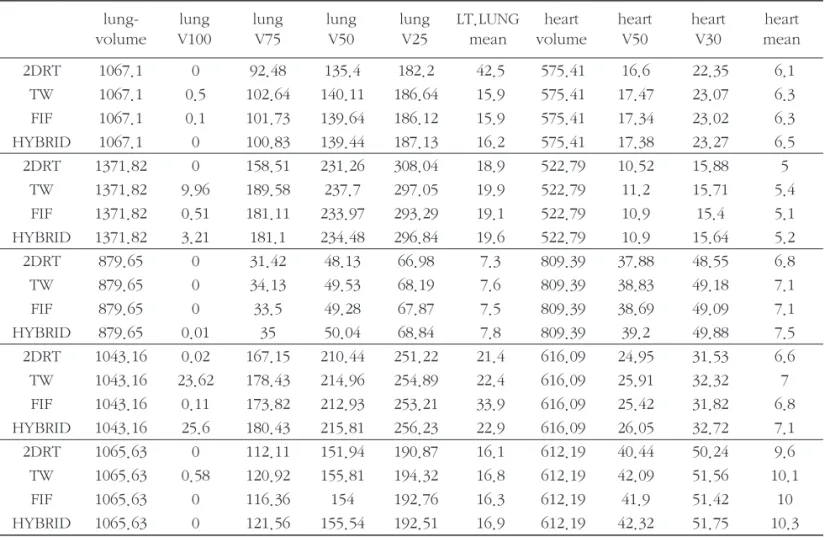
125.14, 121.3, 123.78. V50_lung은 155.43, 159.62, 157.96, 159.06. V25_lung은 199.86, 200.22, 198.65, 200.31.
V50_heart는 각각 26.07, 27.1, 26.85, 27.17 V30_heart 33.71, 34.37, 34.15, 34.65로 나타났다.
(Table 1)Comparison of Homogeneity Index (Table 2)Comparison of Vx_lung, Vx_heart
결론 및 고찰
3차원 CT영상을 이용하여 방사선치료계획을 어떻게 하 느냐에 다라 선량분포는 달라질 수 있다. 유방암 환자(left breast cancer)의 방사선 치료 계획시 방사선이 조사되는 폐 와 심장에는 저선량이 들어가고 표적에는 다량의 선량을 조 사하는 것이 중요하다. 본 연구에서 Left Breast Cancer의 2D-RT (open rectangular field), 3-D CRT (conformal wedge field, field in field technique), HYBRID (energy combine, wedge combine)의 방사선치료계획에 다른 선 량-체적 히스토그램을 비교하였다.
이 방법 모두 표적에 원하는 선량분포를 보이기 위한 Planning을 시행하였다. 치료계획에서 prescribed dose를 초과하는 부분이 많은 부분을 차지하는 것을 조심해야 한 다. HYBRID technique는 2D-RT (open rectangular field),3D-CRT 에 비하여 Homogeneity, 선량분포가 훌륭함 을 보여주고 있고, 폐와 심장에 조사되는 선량은 2DRT 보 다는 3D-CRT, 이보다는 HYBRID plan 이 비교적 많음을 보 여준다. 이는 ENERGY와 WEDGE를 combine 하여서 나타 나는 현상으로 사료된다.
유방암의 방사선치료 계획시 주관적인 판단에 따라 다양 한 결과로 나타나므로 적정한 치료계획을 결정해야 한다.
HYBRID planning에서 표적에는 3D-CRT 에 비해 비교적 뛰 어난 선량분포와 유방을 보호함을 보여주지만 폐와 심장에 많은 선량이 조사됨을 치료계획 시 주의해야 하고 앞으로 해 결해야 할 과제라 생각된다. HYBRID 으로 Energy를 혼합하 여 사용한다면, 타겟에 보다 더 적절한 coverage가 이루어질 수 있을 것으로 보인다. breast 뿐만 아닌 Lung cacner치료 시와 과 같이 불균질한 부위의 치료에 적용한다면 보다 더 최적을 결과를 이루어낼 수 있을 것으로 사료된다.
Table 1. Comparison of Vx_lung, Vx_heart
2DRT 1067.1 0 92.48 135.4 182.2 42.5 575.41 16.6 22.35 6.1 TW 1067.1 0.5 102.64 140.11 186.64 15.9 575.41 17.47 23.07 6.3 FIF 1067.1 0.1 101.73 139.64 186.12 15.9 575.41 17.34 23.02 6.3 HYBRID 1067.1 0 100.83 139.44 187.13 16.2 575.41 17.38 23.27 6.5 2DRT 1371.82 0 158.51 231.26 308.04 18.9 522.79 10.52 15.88 5
TW 1371.82 9.96 189.58 237.7 297.05 19.9 522.79 11.2 15.71 5.4 FIF 1371.82 0.51 181.11 233.97 293.29 19.1 522.79 10.9 15.4 5.1 HYBRID 1371.82 3.21 181.1 234.48 296.84 19.6 522.79 10.9 15.64 5.2 2DRT 879.65 0 31.42 48.13 66.98 7.3 809.39 37.88 48.55 6.8 TW 879.65 0 34.13 49.53 68.19 7.6 809.39 38.83 49.18 7.1 FIF 879.65 0 33.5 49.28 67.87 7.5 809.39 38.69 49.09 7.1 HYBRID 879.65 0.01 35 50.04 68.84 7.8 809.39 39.2 49.88 7.5 2DRT 1043.16 0.02 167.15 210.44 251.22 21.4 616.09 24.95 31.53 6.6 TW 1043.16 23.62 178.43 214.96 254.89 22.4 616.09 25.91 32.32 7 FIF 1043.16 0.11 173.82 212.93 253.21 33.9 616.09 25.42 31.82 6.8 HYBRID 1043.16 25.6 180.43 215.81 256.23 22.9 616.09 26.05 32.72 7.1 2DRT 1065.63 0 112.11 151.94 190.87 16.1 612.19 40.44 50.24 9.6 TW 1065.63 0.58 120.92 155.81 194.32 16.8 612.19 42.09 51.56 10.1 FIF 1065.63 0 116.36 154 192.76 16.3 612.19 41.9 51.42 10 HYBRID 1065.63 0 121.56 155.54 192.51 16.9 612.19 42.32 51.75 10.3
lung- volume
lung V100
lung V75
lung V50
lung V25
LT.LUNG mean
heart volume
heart V50
heart V30
heart mean
참고문헌
1. Bennett BR, Lamba MA, Elson HR: Analysis of peripheral doses for base of tongue treatment by linear accelerator and helical TomoTherapy IMRT. J Appl Clin Med Phys 2010, 11(3):31-36.
2. Wiezorek T, Schwahofer A, Schubert K: The influence of different IMRT techniques on the peripheral dose: a comparison between sMLM-IMRT and helical tomotherapy. Strahlenther Onkol 2009, 185(10):696- 702.
3. Wiezorek T, Georg D, Schwedas M, Salz H, Wendt TG: Experimental determination of peripheral photon dose components for different IMRT techniques and linear accelerators. Z Med Phys 2009, 19(2):120-8.
4. Georg D, Kroupa B, Georg P, Winkler P, Bogner J, Dieckmann K, Potter R: Inverse planning - a comparative intersystem and interpatient constraint study. Strahlenther Onkol 2006, 182(8):473-80.
5. Georg P, Georg D, Hillbrand M, Kirisits C, P?tter R:
Factors influencing bowel sparing in intensity modulated whole pelvic radiotherapy for gynaecological malignancies. Radiother Oncol 2006, 80(1):19-26, Epub 2006 Jun 12.
6. Hunt MA, Jackson A, Narayana A, Lee N: Geometric factors influencing dosimetric sparing of the parotid glands using IMRT. Int J Radiat Oncol Biol Phys 2006, 66(1):296-304.
7. Luan S, Wang C, Cao D, et al: Leaf-sequencing for intensity-modulated arc therapy using graph algorithms. Med Phys 2008, 35:61-69.
8. Shepard DM, Earl MA, Li XA, et al: Direct aperture optimization: A turnkey solution for step-and-shoot IMRT. Med Phys 2002, 29:1007-1018.
9. Søndergaard J, Høyer M, Petersen JB, Wright P, Grau
C, Muren LP: The normal tissue sparing obtained with simultaneous treatment of pelvic lymph nodes and bladder using intensity-modulated radiotherapy. Acta Oncol 2009, 48(2):238-44.
10. Ulrich S, Nill S, Oelfke U: Development of an optimization concept for arc-modulated cone beam therapy. Phys Med Biol 2007, 52:4099-4119.
11. Cameron C: Sweeping-window arc therapy: An implementation of rotational IMRT with automatic beam-weight calculation. Phys Med Biol 2005, 50:4317-4336.
12. Ansari DO, Esiashvili N, Dhabaan AH, Jarrio CS, Elder ES, Crowder M, Koontz-Raisig W, Shu HG: Is Intensity Modulated Arc Therapy (IMAT) Better Than Non-rotational Intensity Modulated Radiation Therapy (IMRT) for Pediatric Brain Tumors Int J Radiat Oncol Biol Phys 2009, 75(3):510.
13. Cao D, Holmes TW, Afghan MKN, et al: Comparison of plan quality provided by intensity-modulated arc therapy and helical tomotherapy. Int J Rad Oncol Biol Phys 2007, 69:240-250.
14. Clivio A, Fogliata A, Franzetti-Pellanda A, Nicolini G, Vanetti E, Wyttenbach R, Cozzi L: Volumetric- modulated arc radiotherapy for carcinomas of the anal canal: A treatment planning comparison with fixed field IMRT. Radiother Oncol 2009, 92(1):118- 124.
15. Cozzi L, Dinshaw KA, Shrivastava SK, Mahantshetty U, Engineer R, Deshpande DD, Jamema SV, Vanetti E, Clivio A, Nicolini G, Fogliata A: A treatment planning study comparing volumetric arc modulation with RapidArc and fixed field IMRT for cervix uteri radiotherapy. Radiother Oncol 2008, 89(2):180-191.
16. Doornaert P, Verbakel WF, Bieker M, Slotman BJ, Senan S: RapidArc Planning and Delivery in Patients with Locally Advanced head-and-neck Cancer Undergoing Chemoradiotherapy. Int J Radiat Oncol
Biol Phys 2011, 79(2):429-435.
17. Jacob V, Bayer W, Astner ST, Busch R, Kneschaurek P: A Planning Comparison of Dynamic IMRT for Different Collimator Leaf Thicknesses with Helical Tomotherapy and RapidArc for Prostate and Head and Neck Tumors. Strahlenther Onkol 2010, 186(9):502-510, Epub 2010 Aug 30.
18. Otto K: Volumetric modulated arc therapy: IMRT in a single gantry arc. Med Phys 2007, 35:310-317.
19. Sheng K, Molloy J, Read PW: Intensity-modulated radiation therapy (IMRT) dosimetry of the head and neck: a comparison of treatment plans using linear accelerator-based IMRT and helical tomotherapy. Int J Radiat Oncol Biol Phys 2006, 65:917-23.
20. Dae Woong Kim, Jong Won Kim, Yun Kyung Choi, Jung Soo Kim, Jae Woong Hwang, Kyung SinJeong, Gye Suk Choi: Dosimetric Comparosion of Three Dimensional Conformal Radiation Radiotherapy and Helical Tomotherapy Partical Breast Cancer.
Purpose :To compare the dosimetry for the left breast cancer treatment between three dimensional conformal radiation radiotherapy (3D-CRT) and Hybrid planning and to estimate usefulness of Hybrid planning
Materials and Methods :Five patients with left breast cancer were included in the study. They were planned using several different radiotherapy techniques including: 1)open rectangular field, 2)tangential wedge-based field 3)field in field, 4)hybrid planning(energy, wedge combine). For each patient planning was using Light Speed RT-16 CT and PINNACLE planning system-ver.9.2. Hybrid plan was made using same system and using the same targets and optimization goals. We comparing the Homogeneity Index(HI), normal organs at the does-volume histogram(DVH)
Results :In all plans, the Homogeneity Index(HI) of Hybrid planning was significantly better than other. Dose comparison of HI=
2D-RT:38.32, TW:38.32, FIF:29.22, HYBRID:30.57. 2D-RT, TW, FIF Hybrid V75_lung=112.33, 125.14, 121.3, 123.78.
V50_lung=155.43, 159.62, 157.96, 159.06. V25_lung=199.86, 200.22, 198.65, 200.31. V50_heart=26.07, 27.1, 26.85, 27.17 V30_heart=33.71, 34.37, 34.15, 34.65
Conclusion :In summary, 3D-CRT, Hybrid planning techniques were found to have acceptableCTV coverage in our study.
However the Hybrid planning increased radiation dose exposure to normal tissue. If you apply for treatment of inhomogeneity areas like lung, For best results will be achieved.
Moon Ki Chae, Byung Soo Park, Jong Ho Ahn, Ki Won Song
Usefulness evaluation of Hybrid planning through dosimetric comparision of Three Dimensinal
Conformal Radiation Radiotherapy and Hybrid planning for left breast cancer
Department of Radiation Oncology, Samsung Medical Center, Sungkyunkwan University School of Medicine, Seoul.
Abstract
Keyword :field in field, hybrid, 3D-CRT, DVH, breast cancer